

Can Past Trauma Mess up My Marriage? Mary DeMuth
Could your past trauma be affecting your marriage? Maybe you glimpse it in your struggles to be open, lack of emotions, or low self-image. But what if instead of burying it, you could confront it to heal? Mary DeMuth shares survivor stories, offering hope for marriages to overcome past wounds.


Show Notes
Learn mor eabout Mary's ministry:
- Connect with Mary Demuth and catch more of their thoughts at marydemuth.com, and on Instagram, Facebook and X @marydemuth
- And grab Mary Demuth’s book, Not Marked: Finding Hope and Healing After Sexual Abuse on her site.
- Intrigued by today’s episode? Think deeper about Overcoming Abuse by listening to How God Turned my Mess into His Message.
- Want to hear more episodes by Mary DeMuth, listen here!
FamilyLIfe Resources
- Double your gift this month when you give to FamilyLife!
- Find resources from this podcast at shop.familylife.com.
- See resources from our past podcasts.
- Find more content and resources on the FamilyLife's app!
- Help others find FamilyLife. Leave a review on Apple Podcast or Spotify.
- Check out all the FamilyLife's podcasts on the FamilyLife Podcast Network
About the Guest

Mary DeMuth
Mary DeMuth is literary agent, international speaker, podcaster, and she’s the novelist and nonfiction author of nearly 50 books, including 90-Day Bible Reading Challenge (Bethany 2023). She loves to help people re-story their lives. She lives in Texas with her husband of 32 years and is the mom to three adult children. Find out more at marydemuth.com. Be prayed for on her daily prayer podcast with 4.5 million downloads: prayeveryday.show. For cards, prints, and artsy fun go to marydemuth.com/art. Find out what she’s looking for as a literary agent at marydemuthliterary.com
About the Host
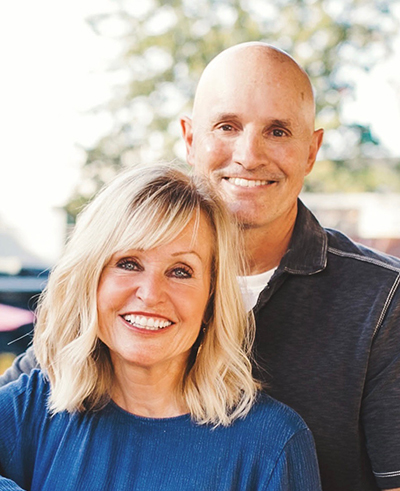
Dave and Ann Wilson
Dave and Ann Wilson are hosts of FamilyLife Today®.. Dave and Ann have been married for more than 38 years and have spent the last 33 teaching and mentoring couples and parents across the country. They have been featured speakers at FamilyLife’s Weekend to Remember® marriage getaway since 1993 and have also hosted their own marriage conferences across the country.
Episode Transcript
FamilyLife Today® National Radio Version (time edited) Transcript
References to conferences, resources, or other special promotions may be obsolete.
Can Past Trauma Mess up My Marriage?
Guest:Mary DeMuth
From the series:Healing from Sexual Abuse: My Story (Day 2 of 2)
Air date:May 17, 2024
Shelby: Hey, Shelby Abbott here. I just want to give a heads up before you listen to this next program. Today’s conversation on FamilyLife Today covers some sensitive, but important, subjects that might not be suitable for younger ears. Please use discretion when listening to this next broadcast. Alright. Now, let’s jump into it.
Mary: He had to get to a place and work through his own anger about it—not only against what did those boys did to me and those other men—but against me, because I wasn’t what people promised him I would be. He also got that promise: “It’s all going to be great once you say, ‘I do,’” and here he gets this damaged girl. For a while, what made it hard, was just that anger that made everything difficult. But once he dealt with that, [he] realized, “This is what I have. This is who I have in front of me. How do I love her? How do I serve her?”
Shelby: Welcome to FamilyLife Today, where we want to help you pursue the relationships that matter most. I’m Shelby Abbott, and your hosts are Dave and Ann Wilson. You can find us at FamilyLifeToday.com.
Ann: This is FamilyLife—
Dave: —Today.
Dave: If you had an hour with a pre-married couple, what would you tell them? Something they don’t know, that’s going to hit them when they get married?Ann: There are so many things I could say; but one of the things I would probably say is: “Your past—the baggage that you carry—will have a great affect on your future and on your present marriage.”
Dave: Is that the first thing you thought, or did you think that because of where we’re headed?
Ann: Well, because we’re talking about this today! We’ve already had one episode.
Dave: We were so naïve! I think most are, but we were!
Ann: We were.
Dave: All our junk from the past: “It’s in the past; it’s buried’ and it will not come into our marriage.” [Laughter]
Ann: And I was 19! We were kids! And we’re like, “Jesus has healed everything.”
Dave: Everybody brings some luggage in, but we had like a truckload. [Laughter]
Ann: I was going to say, especially, most people do have a truckload.
Dave: Yes.
Ann: And they might have a really good family background, but most of us have things that we carry in.
Dave: Yes; we’ve got Mary DeMuth back. You brought sort of a truckload into your marriage. [Laughter]
Mary: Sort of! A semi-truck; a couple of barges.
Ann: And if you didn’t listen to yesterday’s episode, go back and listen to Mary’s story. It’s a hard one to listen to; but as you’ll see, we’re going to get into—and we already did—God’s saving grace.
Dave: That story was something—
You probably thought the same thing; and Patrick, right? As you get married, both of you—did you have the same thought? “It’s sort of done. I’m not going to bring the sexual abuse [into my marriage]; my thoughts about sex; my visions of how that all works?” Did you think, “Okay, it’s in the past; God heals.”
Ann: And you shared it with Patrick before you got married.
Mary: Yes, I wasn’t deceptive or anything like that, but I think 100 percent of the listeners can relate to this: not only did I feel like I was healed, like you felt like you’re healed from all your things, but I had this promise that was given to me during the ‘90s or the ‘80s, at this point, before I got married: “If you save yourself for marriage, then on that marriage night, there’s this switch that happens. Suddenly, it’s easy, and you’re going to enjoy it.”
Nobody prepared me for the fact that it’s not easy, and it needed to involve a lot of communication. But I, through my trauma, had completely shut down and disassociated. I was just shoving things down that kept coming up. It was very hard exercise.
Ann: Oh, Mary! That was pervasive in the ‘90s, that’s it’s just going to be that magical switch [so] that, on your honeymoon, it’s going to be amazing. And it’s not always amazing.
Mary: That gets back to theology, and that’s a health and wealth gospel right there: “If you do these things—if you pull these levers—then God is obligated to bless you.” What happens if that doesn’t happen? Then you feel, either, disillusioned with God or you have to re-work your theology to move away from that kind of health and wealth thought.
Ann: What did you do?
Mary: I don’t know that I even—because I was so young, like you guys were so young—you don’t even have the capability of thinking, “Oh, my theology is wrong.” I just heaped shame upon myself and told myself to try to do better. That’s kind of my coping mechanism of all the abuse and neglect: “Well, by golly, I don’t know why I’m on this earth, but I’m going to achieve.” You can see I’ve written 50 books. [Laughter] I’m still working on this. [Laughter]
Dave: Still achieving!
Mary: Exactly! [Laughter]
Ann: Is that why you went to this conference with women?
Mary: Yes! I was so broken there, and wanted to be so much better, that I went to this, basically, “Sexy Wives Women’s Retreat.”
Dave: That’s not what it was called! [Laughter]
Mary: No, I don’t want to give the name, but I’m just saying that’s basically what—
Dave: —it wasn’t the FamilyLife® Weekend to Remember®, okay?
Mary: No, it was not; no.
Dave: Alright, great.
Mary: It was this other retreat; it was a conference.
Dave: Just for women?
Mary: Just for women. It was about how to be all that and a bag of chips for your husband. I was like [making a gasping sound]. I looked around the room, and I thought, “There are 60 percent of us in this room [for whom] what they’re saying is impossible, because we are so broken. I almost—this is the only time this has ever happened to me—there was this holy gumption in me that almost rose up (but I didn’t)—but I almost rose up in the middle of that conference [to] say, “You need to change, because there are so many of us who are broken by sexual abuse that what you’re asking us to do is impossible.”
Dave: You know what? I was just thinking, “You’re doing it now.” [Laughter]
Ann: Yes!
Mary: Yes, now, I’m doing it. [Laughter]
Dave: In a sense, I wish you would have too; but I’m thinking, “You are now.” This book, Not Marked, is helping people realize they aren’t marked. This isn’t their identity.
Ann: So, Mary, thank you for addressing it, because you’ve given us hope.
Mary: And this, as I mentioned before, was a joint effort on the part of my husband and me. He had to get to the place—just to be super frank—he had to get to the place and work through his own anger about it, not only against what those boys did to me and those other men, but against me, because I wasn’t what people promised him I would be. He also got that promise that: “It’s all going to be great once you say, ‘I do’.” Here he gets this damaged girl.
For a while—and what made it hard—was just that anger that made everything difficult. But once he dealt with that, he realized, “Okay; yes, it’s not fair, but a lot of women are damaged in that way.” So, he had to say, “Okay, this is what I have. This is who I have in front of me. How do I love her? How do I serve her?”
The best thing he did for me was to read Dan Allender’s book, The Wounded Heart.
Ann: Dave did, too!
Mary: And he was shocked afterwards. He came and apologized; he repented. And he said, “I had, literally, no idea how pervasive that trauma was. It affects every area of your life, and I am so sorry.” Thus began us finally having frank conversations about our sex life and how we can make it a mutually-enjoyable experience.
I finally was brave enough to say, “This, but not that.” You know, those kinds of things that are just excruciating to talk about. I could do that because he had worked through his anger of: “I didn’t get what I wanted.” I [thought], “I didn’t get what I wanted either. We’re both broken, so let’s acknowledge.” That, to me, is a huge encouragement to all couples. You might think that one—and this is not necessarily related to sex; you might think: “Well, he is the problem,” or “She’s the problem.” But the camaraderie returned in our marriage when both of us said, “We’re the problem.”
Ann: Whoo!
Dave: Hearing you say that, it’s so our journey! I [read] the exact same book! I just didn’t know. And I was disappointed in Ann.
Mary: Yes.
Dave: I was like, “You have to be kidding me. I don’t want to go on this journey. That’s your journey.” “But, no; that’s our journey.” [Laughter]
But at first, I was so angry; but reading that, saying, “That isn’t what your wife needs. She doesn’t need an angry husband. She needs a compassionate, empathetic partner, who can be gentle and sensitive, and say, “I want to hear your heart,” right? I had never said that to you. And then, laying on the spiritual part of it, it was like, “Jesus heals. You’re not receiving; you’re not understanding who you are in Christ.” All that was so wrong from me, as a husband. I think a lot of us do that.
To hear both of you say, “This is what you need,” in a sense, it means for us, as men—Patrick wrote about it—to say, “Okay, we’ve got to go before God and say, ‘God, soften my heart so I can be what she deserves and needs.’” How does a husband talk to his wife about this? Or even, how does a wife talk to her husband? Because I think some of our listeners are: “I want to go there. It’s scary; I’m afraid. I also don’t want to share anything.” But how do we start this conversation?
Ann: And you also talk about [how] telling your story brings freedom. Is that the first place that you tell your story?
Mary: I think it can be. The main thing is that it’s a safe person. But again, as I mentioned before, maybe, if it’s so scary for you, write it down and push the letter across to your spouse.
I don’t want to forget that there are men in the audience out there who have been sexually abused; and they don’t talk about it, because there’s further shame. Especially, no matter what it was, whether it was from a man or from a woman, there’s just this heavy shame; maybe he needs to write that letter and push it across the table to his wife. That will mess with you so much, just as much as it messes with a woman; because again, it attacks that image of God: “You are an object, not a human being.” That’s such a big lie of the enemy.
Dave: You and Patrick have done that—
Mary: —we have, but I was—
Dave: —now, for decades.
Mary: I was terrified! But I will tell the audience this: the first time is terrifying. After that, it gets so much easier. Once you’ve let the cat out of the bag, the cat’s roaming around your house; and now, you have to feed it. [Laughter] You begin to have a level of intimacy in your marriage that you’ve never had before. There’s a huge cost-benefit analysis—an ROI [return on investment], if you will—of sharing once, because it begins to open up some of those closets that you have shut to your partner.
Patrick gave me this illustration once—and I believe it’s in the book—of [how] sexual abuse causes you to disconnect from human beings, and not just in your marriage. He said, “It’s like you’re on a high dive, and the kids and I are in the pool. You’re pacing back and forth on the high dive, and you cannot jump into the pool. We’re splashing; we’re having fun. And what you do instead is, you walk back down because you’re afraid. You get back down, you come to the side of the pool, and you put your toe in; but that’s it.”
That pictured, for me, disassociation. I realized, “I need counseling, because I cannot join them. I can’t play with my kids; I have a hard time being a little kid with them. I’m disconnected from people I love the most. I need to reconnect with who I am and with who they are, and I need help.” Besides talking with him, I also had to get some help.
Ann: What do you mean [when] you talk about having more counselors than you realize; there’s more help than you realize? What do you mean by that?
Mary: Well, yes, I know there are people out there who cannot afford counseling; because that was me for so many years/for a decade. I would do is I would read a lot of books; I would read some of those Allender books. There are a lot more out there now; a lot of great resources in the Christian space. But also The Body Keeps the Score, which is a general market book. That book changed everything.
Ann: I haven’t read that. Who’s it by?
Mary: Bessel [van der] Kolk. He talks about [how] we hold trauma in our bodies. I read it, and I had a sense to it; I intellectually assented to it.
And then, I found who that guy was, who had abused me; and I don’t advise this to anybody, but on our anniversary, we went on a trauma tour. Don’t ever do this on your anniversary! [Laughter] We went back to all of those places that it had happened, and I remembered everything. There’s pictures of me smiling in front of the hemlock tree: “Jesus is so good.” Patrick did it with me; it was like this awesome tour of God’s awesomeness. We get to the Airbnb®, and then, I start vomiting.
Ann: This is your body keeping score.
Mary: My body kept the score of that trauma.
Ann: What do you mean when you talk about: “How God made you is how He heals you?”
Mary: Yes, one of the ways that God has healed me is through being a writer. God uses every book to heal me. The way in which you are bent is the way in which God heals you. I paint pictures; I write books. All of those creative ways that God has made me have been part of my healing journey.
Examine your life: how has God created you? He’s going to probably use those pathways and your strengths to be a part of that healing journey.
Ann: I think that’s fascinating. Dave, I think about you, because your upbringing was traumatic. And I think about music.
Dave: Yes, that’s what I thought.
Ann: You started playing guitar when you were eight. You’ve played so many things.
Dave: I wonder if it was an escape.
Ann: But also, that God has healed you through it, in a way, too. It was a release.
Dave: Yes, who would think God heals through The Beatles—[Laughter]
Mary: —but He does!
Dave: He sort of did, you know?
Ann: But I think it’s because you’re an artist as well.
For listeners to think through: “What are your gifts? What are your passions? What are the things that you do, that when you do it, you feel, ‘Aww! That fills me up’?” That’s part of the way God is healing you.
Dave: In some ways, I think God—you’ve already said it—heals you through talking about it.
Ann: Me, too.
Dave: As public speakers, as communicators, doing what we’re doing right now, talking about it—I think this conversation is going to help some men and women have conversations they’ve never had.
Mary: Yes.
Dave: As I sit here, thinking of two women who walked into their marriage with sexual abuse, whether your husband at the time knew it or even understood the depth of it, what would you change? Is there anything, if you look back and if you could do that again, you would do differently? Especially thinking of a woman who’s walking into a marriage right now, who’s like, “I’ve got their story. Help me!”
Mary: I would think, if we could have had the economics to do it—and again, we didn’t; so I can’t change it—but to go to counseling together and have a trauma-informed counselor be able to educate both of us about trauma and how it’s going to manifest in our marriage and to help my husband understand that this is a deep wound and help me understand—because I was like you: “Oh, it’s all healed!” A heads up would have been so helpful.
That’s what we’re doing today. We’re giving you a heads up of: “It does matter. It doesn’t work to stuff it. It’s like a beach ball—you can hold it down for a long period of time under water, but it will, eventually, pop up; because there’s air in it. The air is the story. You have to let the story out (let the air out). But in other capacities, you asked: “How else can I heal?” They can read books; they can talk to friends; they can explore their gifts; they can go to counseling. There are a lot of different ways. God is super creative, and He can use really creative ways to heal us.
Ann: I would have said the same thing, and I would have said to myself—I say this, now, to younger women:
Just know that God is gracious in His timing of healing. He could have healed me all at once. Wouldn’t that be great?! if all of it was healed: “Oh, you’re done! You’re healed. You’re great.”
But He’s gracious; and sometimes, it takes time. It’s like I always refer it to as an infection going on in your body. He’s so gracious to remove the scab; and then, some of the infection will come out. I’m always mad, like, “Wait a minute! I thought that was all healed,” and then, something else will come up where I’m triggered or a response will happen, and I realize, “Oh, He’s so gracious! I couldn’t receive all the healing at once; it was too traumatic. So now, I’m going to go back into it again and allow Him to heal some more.”
I wish it were all at once—and for some people, I’m sure it could be; but I think He’s gracious for even us, Dave, in our marriage. We’ve had to be really intimate and know each other so well, and that doesn’t come all at once either. It takes time; it takes Jesus.
Mary, one of the things I have appreciated about you is your love for God’s Word and how that—His Word—has healed you. That’s a passion for you. Will you just talk about that the last few minutes? Why is that important?
Mary: Well, what I love about the Bible is, first of all, we have to remember when it is prescriptive versus descriptive. You do see sexual assault in the Bible, but it is not prescriptive: “You should go sexually assault people.” It’s descriptive. Every time in the Bible, when you see sexual assault, violence follows or war follows, [thus giving] that understanding of: “God really hates this!” and “Really bad things are a result of sexual violence; it begets physical violence.”
Ann: I’ve never thought of that, like Dinah [Genesis 34].
Mary: Yes! If you think back to all those—Bathsheba is the same, it’s amazing how—Tamar, too [2 Samuel 13]—So, reading the Bible, and finding myself in it, and realizing that God is for the quartet of the vulnerable in the Old Testament, and I felt so much like part of that.
The other thing that I found in the Bible was this idea of what you said: “I am broken; I am wounded; I am weak; but those are the places where Jesus shines the best.”
Ann: Yes.
Mary: When we have it all together, we’re doing this [arm out]. We’re stiff-arming God. But when we know we’re a mess, we have this dance floor for Jesus to dance His best steps.
Ann: Yes.
Mary: You know, it’s so amazing.
Dave: What would you two say to the husbands? I’ve sort of said it, but coming from one of you or both of you to a husband who is married to a woman, and he’s just realized—maybe, he knew it, but now, he’s realizing: “Oh, this is a real deal in our marriage. She has been abused.” Maybe, he has, but I’m thinking he’s discovered she has [been affected by abuse], like when I realized. Again, he thinks, “Okay,”—probably like me—“it’s not a big deal.”
No, it’s a really big deal. It’s bigger than you have any idea of. I’ve already said that. What would you, as a wife and as a woman, say to this man? What does he need to know or do?
Mary: I would just go back to: “Love her as Christ loves the church.” [Ephesians 5:25] That means he sacrifices for her, which means he sacrifices sex, he sacrifices convenience, he sacrifices needs, and he sacrifices his own way of understanding it and thinking that he’s got it all figured out. That means you ask questions, and you find out: “Why does this hurt you? Why are you struggling?” And not in an accusatory way, but: “I want to understand you, because if I’m Christ to the church—if I’m serving and loving—I have to understand who I am serving and loving.”
And then, also, stop comparing yourself to ideal other couples.
Ann: That’s good.
Mary: Because nobody knows what is going on behind closed doors; but I think we think we do: “Oh, I’m not as cool as them.” And we feel bad. No! This is your marriage. These are two people God has brought together. You need to both, wife and husband, know each other in order to sacrifice and serve the other.
Ann: I would say that same thing. The Scripture that came to my mind was—in Scripture, when it refers to sexual intimacy, many times it’ll say, “And he knew her.”
Dave: Yada.
Ann: That’s what I would say to the husband: “Know her.” It’s not just an act when you know all of her. It’s the intimacy of every part of us. Take your time; know all parts of your wife, because the outcome will be better than you ever expected, because it’s more than just a physical act.
Will you pray? There are so many people who are being affected by this. Will you pray for them?
Mary: Yes.
Jesus, we thank You for those listening today, who may have a fractured story. We know that You are the Mender of all those stories. And Lord, I pray that You would place a safe person in their life to be able to share that story with. I pray that You will use their bent to heal them. I pray that You would send healers into their lives.
And I pray for marriages. I pray, Lord, that there would be enough safety in marriages that people wouldn’t feel afraid to share. And I pray for a revolution, Lord, and a revelation; a revolution of sacrifice and love for each other and a revelation of who You are and how You heal.
I know it’s a huge conundrum, Lord. I know that people, who have been abused, ask the question: “Where were You?” So, Lord, sometimes we can’t honestly answer that, this side of heaven; but You tenderly hold our stories. I thank You for doing that.
And I pray supernatural healing over those listening today. I know it starts with one step, but I pray it will be ten steps, and twenty steps, and a hundred steps; that this journey would be beautiful, and that they would experience You like no other way that they’ve ever experienced You. We experience You when we’re broken. Instead of stiff-arming You, Lord, and blaming You, we ask that You would come into those tender spaces in our marriage and in our lives to heal us.
I pray this in the beautiful Name of Jesus. Amen.
Ann: Amen.
Shelby: I’m Shelby Abbott, and you’ve been listening to Dave and Ann Wilson with Mary DeMuth on FamilyLife Today. I have certainly asked that question: “God, where were You?” I’m a sexual-abuse survivor myself, and I was just a little kid when it happened to me. I really appreciate her insight today (that Mary gave), and honestly, just her willingness to be vulnerable and honest, because it truly does help with the healing process as we listen to all of that.
Mary has written a book called Not Marked: Finding Hope & Healing After Sexual Abuse. This book is, obviously, deeply personal for her, but it also gives some added insight from her husband, Patrick, about how a spouse can really support their wife or husband who has gone through something traumatic like this. You can get your copy of Mary’s book, Not Marked, by going online to FamilyLifeToday.com, and you can find it in the show notes. Or you can give us a call at 800-358-6329; again, that number is 800-“F” as in family, “L” as in life, and then the word, “TODAY.”
You know, one of the things I love about FamilyLife®, and being a part of this ministry, is that we’re not afraid to talk about topics like we heard today. We want to help and be part of healing in people’s lives. We want to offer hope; we want to reach out to them and help marriages and families move toward Jesus and become a part of the solution in other people’s lives to help them see Jesus.
And that’s why I’m excited for the month of May, because any donation given will be matched, dollar-for-dollar, up to $550,000. That means when you give a monthly gift of $100, it actually becomes $200 a month. That’s the uniqueness of the month of May. So, I encourage you to head online to FamilyLifeToday.com; click on the “Donate Now” button at the top of the page, and it will walk you through how to become a partner with us to help reach more marriages and families. Or you can give us a call at 800-358-6329; again, that number is 800-“F” as in family, “L” as in life, and then the word, “TODAY.”
Now, coming up next week, join us as award-winning musician, Jamie Grace, sits down with the Wilsons to talk about mental health and the struggles she’s been through with Tourette’s [Syndrome], ADHD, and anxiety. That’s coming up next week. We hope you’ll join us.
On behalf of Dave and Ann Wilson, I’m Shelby Abbott. We will see you back next time for another edition of FamilyLife Today.
FamilyLife Today is a donor-supported production of FamilyLife, a Cru® Ministry.
Helping you pursue the relationships that matter most.
We are so happy to provide these transcripts to you. However, there is a cost to produce them for our website. If you’ve benefited from the broadcast transcripts, would you consider donating today to help defray the costs? Copyright © 2024 FamilyLife. All rights reserved.
www.FamilyLife