

175: Blended Holidays Are Complicated. Here’s How They Made It Work
What do red sweaters, a ski trip “familymoon,” and a Christmas sleepover have to do with healing after loss? A lot, actually. Join pastor and author Rob Bugh, pediatrician Rhonda Williams Bugh, and their adult kids Kyle and Nate as they revisit the rocky, grace-filled early years of blending two grieving families—and navigating those first blended holidays. It’s raw, real, and rich with hope and hard-won wisdom.


Show Notes
About the Guest
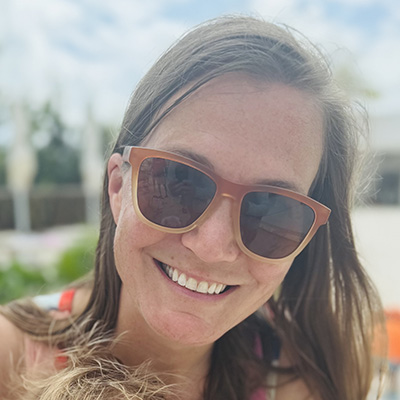
Kyle Bugh Exley
My husband Eric and I have been married for 13 years, and we’re fost/adopt parents to 4 kids ages 5-11, living in sunny Long Beach, CA. I used to work as a mental health therapist and foster care caseworker, but after having kids chose to be a stay at home mom. In my early 20s my dad remarried after my mom passed away, so we have been a blended family since 2007.

Nate Williams
Nate is Rhonda’s first born. He is located in the Indianapolis area with his wife Sara and two children Lucy (10) and Thomas (8). They have been members of Mercy Road church for over a decade and Nate serves on the production team. He has worked for his current organization since 2010, wearing many hats throughout his career, and is currently the Director of Systems Support. Nate is heavily involved with a men’s fitness and leadership group called F3. He enjoys coaching little league baseball and wrestling. Nate is passionate about cooking and nutrition, as well as weight training. Seeing concerts and snowboarding is where Nate likes to spend his leisure time.

Rob and Rhonda Bugh
Robert Bugh is a graduate of Southern Methodist University. He received a Master of Theology from Dallas Theological Seminary and a Doctorate of Ministry at Trinity Evangelical Divinity School. He has served as the Senior Pastor at Wheaton Bible Church in West Chicago, Illinois since 1994. Rob also serves as the chairman of the board of Greater Europe Mission. Following the death of his first wife, Rob married a long-time family friend, Dr. Rhonda Williams, a pediatrician who previously lost her husband to cancer. Rob and Rhonda’s crazy step family includes six young adults (3 are married) and one teenager.
About the Host

Ron Deal
Ron Deal is Director of FamilyLife Blended®️ for FamilyLife®️ and President of Smart Stepfamilies™️. He is a family ministry consultant and conducts marriage and family seminars around the country; he specializes in marriage education and stepfamily enrichment. He is one of the most widely read authors on stepfamily living in the country.
Episode Transcript
FamilyLife Blended®
This content has been generated by an artificial intelligence language model. While we strive for accuracy and quality, please note that the information provided will most likely not be entirely error-free or up-to-date. We recommend independently verifying the content with the originally-released audio. This transcript is provided for your personal use and general information purposes only. References to conferences, resources, or other special promotions may be obsolete. We do not assume any responsibility or liability for the use or interpretation of this content.
Season 7, Episode 175: Getting Ready for the Holidays
Guest:Dr. Rob and Dr. Rhonda Bugh, Kyle Bugh Exley, Nate Williams
Air Date: October 20, 2025
Rhonda (00:03):
As the stepmom, and Ron in your book, The Smart Stepmom, it is the hardest position to be in. It’s a lonely position, and you have this ideal as a mom that you’re going to bring this hurting grieving family together, and how do you do that?
Ron (00:29):
Welcome to the FamilyLife Blended podcast. I’m Ron Deal. We help blended families, and those who love them, pursue the relationships that matter most, and we help people get ready for the holidays. Through the years, we’ve done a number of episodes about managing the holidays, but we’re almost always talking to a married couple in those episodes. In this episode, we’re talking to a couple and two of their now adult children, all of whom have the benefit of hindsight to give you and me some perspective to those who are still in the trenches about this journey of managing the holidays with your blended family. So stay with us. We’ll get to that in just a minute.
Our next Summit on Stepfamily Ministry is this week. Yeah, this week. We’re in Nashville Thursday and Friday, October 23 and 24, 2025. If you’re just listening to this, join us last minute if you happen to be in the area and can make it. We would love to have you, but if not, we will capture the highlights and we will make them available to you online through our All-Access Digital Pass.
You know how podcasts ask you to leave a review every once in a while? We do that too. Well, Joanna left us a review. She was watching on YouTube. She said, “Absolutely brilliant.” Episode 159, she was talking about, Dr. Allison Cook. We were talking about navigating hard feelings in blended families, and Joanna says, “Absolutely brilliant. Thank you. I learned so much from this episode.” Well, we’re certainly glad to hear that. We hope it was a benefit to lots of other people as well. And yes, if you didn’t know, we do have our podcast on YouTube. You can watch if you’d rather than listen, but of course you can always listen through your podcast, app or online.
(02:21):
Be sure to subscribe if you haven’t already and leave us a review like Joanna did. That encourages other people to listen to the podcast, to tune in, and it helps people find the help and the hope that they’re looking for.
Let’s get to our conversation. Rob Bugh served as senior pastor of Wheaton Bible Church in Chicago for 27 years and he authored a book called When the Bottom Drops out. Rhonda Williams Bugh is a recognized pediatrician in Chicago. Together, their blended family includes seven adults, all married and 14 grandchildren. Man, if I don’t have my numbers right, Rob and Rhonda, you can correct me on that. They have been on FamilyLife Today and our podcast many times. They’ve spoken at our national events. Rob and Rhonda, it’s so good to see you again.
Rob (03:09):
Thanks Ron. It’s great to be here and we have 19 grandkids and number 20 arrives in about a month.
Ron (03:15):
I’m so glad you corrected me. Man, big difference between 14 and 19, 20 on the way. That is great. That is so great. Glad to have you guys with us. Let me introduce the other two that we’ve got. Nate Williams is Rhonda’s firstborn child. He lives in Indianapolis with his wife Sarah and two children. Nate was 21 years old when his father Thomas passed away and 23 when his mom married Rob. Nate, welcome to the podcast.
Nate (03:45):
Hey, thanks for having me.
Ron (03:47):
Kyle Bugh Exley—tell me if I got your name right—is Rob’s second daughter. She and her husband Eric, are foster and adoptive parents to four children, live in Southern California. Now, I’m wondering if even that’s right. She was 21, maybe 22 when her mom passed away and her mom’s name is Carol. She was 24 when her dad married Rhonda. Kyle, thanks for being here.
Kyle (04:15):
Thanks for having me.
Ron (04:16):
Do I have the number of kids correct? Is that even—
Kyle (04:19):
We do have four kids.
Ron (04:20):
Okay, alright, well hey, at least we got one fact right.
(04:25):
Well I’m so excited to have you guys here, Nate and Kyle, I don’t know if you know, but your parents are good friends of mine and I always enjoy time with them, but you can tattle. I want you to have permission right now. I’m so excited to talk to you because most time when I get to talk to the adults, we never really get to hear the other point of view of what’s going on in the household from adult point of view and from way back when you were younger point of view. And so unfortunately sometimes that perspective gets ignored a little bit. I say we just ignore Rob and Rhonda for a little bit and—are you guys in? I would love for you to just tattle.
Kyle (05:05):
Sure.
Ron (05:07):
Alright, well maybe you don’t have to tattle. I’ll leave that up to you. So tell me when you guys got married, I mentioned that earlier, I think you were 23, 24, somewhere in that age range. How did you feel about this when the families came together?
Nate (05:22):
For me, I was very comfortable with it right away. When my mom called me, I was at Taylor University, and I remember her telling me. Early on, she talked about how she would never remarry.
(05:38):
I never thought that was coming. And then I get a phone call saying, “I’ve started dating again,” and the meathead, my hackles up and I’m ready to, “Who is it?” And she said, Rob Bugh. And I said, “Oh well, good talk. Thanks.” It was that simple. Rob had been a huge part of my life, and I was very comfortable with the idea from the beginning. Suffice to say, it didn’t make things super easy. I mean it wasn’t super easy, the blending of our families, but I don’t think there was anybody else on this planet that I would’ve been comfortable with at the time.
Ron (06:20):
Yeah. Well that’s really interesting. So our listeners need to know, you guys went to church where Rob was a pastor, right?
Nate (06:29):
Yeah, and he was my dad’s best friend. We owned a family boat together. We vacationed together. Kyle’s been my sister longer than she’s been my sister. I mean, our families were very close, and I had always already had seen Rob as a father figure in my life. I mean, yeah, he was my pastor, but I knew him on a much deeper level as a child.
Ron (06:51):
So you had a running start.
Nate:
Yeah.
Ron:
Makes sense. Kyle, did it feel like a running start to you?
Kyle (06:56):
Yes. I mean I think the advantage of knowing the Williams family definitely helped. I think the thing that was hardest for me was just the quick timeline. So my mom died and then about six months later my dad started dating Rhonda. I think it’s also one of those things when you realize, “Oh, they started dating, it probably means they’re going to get married. They’re not just going to—it was a lot to go from sudden grief to trying to navigate that. But yes, I would agree that—I mean I can’t imagine we would be as close as adults if we didn’t know each other when we were kids because we were mostly, well, Nate and I were young adults. Most of us were young adults when they got married.
Ron (07:45):
Right. When reality hit you were young adults, but it’s good to know you did have some history. Kyle, I just want you to know you are not the first person. This is a very common story we hear in our ministry is that adult, excuse me, children of every age, whether they be adult like 35 or 40 adult, young adult or if they’re six years of age. There’s a common story around the reality of my parent is dating again, and sometimes that timeline thing is very much a part of it. I’m wondering if you wouldn’t mind putting some words on it. For you, it felt like a short timeline when he started dating her. What did that mean to you?
Kyle (08:32):
It felt like a struggle to continue to grieve, I would say. How do you do that while navigating a new relationship? And my dad and I are close, so I wanted to be supportive, but if we talk about ratting out our parents, I mean, I came home from a date and found them making out on our couch and turned around and ran right back out the front door because I was like, “This is so weird.” It’s just a lot of emotions. You have grief and you have trying to be supportive and happy and navigating what your new world will look like.
Ron (09:11):
Exactly. It’s a lot of different kinds of emotions all happening at once and you’re not really sure what you’re supposed to do with it or where you put it, how you make sense of it. So Nate, you seem to be okay, but did you at any point have the confusing emotions as well?
Nate (09:31):
Not as much, but there’s reasons for that. One was that—I mean we had a little bit more time removed from the death of my father, but also, I was away. I wasn’t physically present for their dating life as much. I lived in Indiana. I heard about them dating and I heard things were going well and when I was home and I would visit, we were there, but Kyle was in the area, and my other siblings were in the area, and Christine and Ryan had to live with them through it all and I wasn’t there. So I think that made it easier and had its own challenges.
Ron (10:13):
So their wedding took place. Rhonda, what month was your wedding?
Rhonda (10:19):
December 2007.
Ron (10:22):
Okay, so I’m thinking holidays, right? And you got married in December, right in the middle.
Rhonda (10:29):
We got married December 16th. It was crazy how we got married, did Christmas, he preached on Christmas and then had Christmas at Rob’s house. We waited to celebrate as a family and then Rob and I went on our honeymoon.
Ron (10:47):
So after the Christmas celebration, you went on the honeymoon?
Rhonda (10:50):
We waited until January because we first went on a family moon.
Ron (10:55):
Gotcha.
Rhonda (10:55):
We took all the kids to Colorado skiing.
Ron (10:58):
Okay, alright. And then you got away. Yeah, so man, there was a whole lot going on and pastor’s schedule, Rob, I know what that’s like around Christmas, so craziness until you finally could be able to get some time to slip away. Okay, so Nate and Kyle, I’m wondering, do you have any memories of that first Christmas and what are they?
Nate (11:22):
The sleepover.
Ron (11:24):
Okay, that sounds like a title of a horror movie. Tell me.
Nate (11:29):
They had the right idea to have all of us young adult kids have a sleepover in the living room because there was no place—but the reason being as silly as it was and it worked out, but the reason being was my mom and Rob really wanted to—enforce is strong but enforce togetherness and have us all together, have us all under one roof and symbolically or to make sure that we were all staying together. Throughout holidays and vacations, that’s kind of been a theme as well. We’d really try to stay as close together physically, even if it is not the most ideal for sleeping situations.
Ron:
You’re right.
Rhonda (12:10):
—35 of us.
Nate:
We’ll make it work.
Ron (12:14):
People all over the floors and sleep—yeah, okay, got it. Wow, what a picture. Okay. And do you remember that sleepover Kyle?
Kyle (12:24):
Apparently, that’s really funny. I don’t remember that at all.
Rhonda:
She’s blocked it.
Kyle:
I just remember, yeah, it all feeling new and weird and kind of fun and just—
Nate (12:39):
Do you remember decorating the tree, Kyle?
Kyle (12:42):
I mean, which time? We’ve always fought decorating the tree.
Nate (12:47):
So we would, well you and me, we would move each other’s picture up higher up on the tree throughout the evening.
Kyle (12:55):
Well, we move our own higher and each other’s down.
Nate (12:57):
Right.
Kyle (12:58):
Yeah, yeah, yeah.
Ron (13:01):
Yeah, the little status fighting sibling thing was going on already.
Kyle:
Yeah.
(13:06):
Yeah. You guys definitely had some history before the wedding took place.
Well, it’s really very telling I think that you remember but you don’t remember, and you got some feelings. Again, I think that’s all a part of the confusion that a lot of kids—again, of every age—experience. There’s just a lot happening that kind of man, you’re just all over the place. I can imagine that there were connections like the one with Nate that you guys had longstanding prior to your parents getting married. I could see that as being something, there’s some positives there. You’re already playing games on the decorations, but at the same time going, wow, this is different. It is like before, but it’s not like before. It’s clearly something’s different now and there’s this message about togetherness. How does that land on you back in the early, it doesn’t have to be that first, but just those first few months, how did all that land on you?
Kyle (14:13):
Yeah, like I said before, I think it’s really nice that we all knew each other. We moved to Wheaton when we were 10, when I was 10 and met them. So I’ve known the Williams for most of my life now. So I think, like I said, I don’t think we would be as good of friends if we hadn’t known each other because I think if you’re 23 and you meet an entirely new family, you’re just going to, and I moved out of state. I mean it would just be much different. So I am thankful for that and I’m thankful for, that I still really enjoy taking vacations with everyone. I think a lot of that is because of the forced togetherness and that was probably implemented early on, even if I don’t remember all of it.
Rhonda:
The red sweaters.
Kyle:
The red sweaters. Oh, I remember the red sweaters. That first family vacation right after they got married, we went to Keystone, right?
Nate (15:13):
Yep.
Kyle (15:13):
They made us go before we went skiing that day. They woke us up and had us all wear matching red sweaters and go stand on the side of a road to take a family picture in the beautiful mountains. Yeah, I think it was our only matching—
Nate (15:28):
And it was 10 degrees out.
Kyle (15:30):
Yeah, and it was a matching family photo. I think the only one we’ve ever taken where we’re all wearing the same sweater. I think I remember just a lot of the food traditions. I remember that being really, and in retrospect, I think Rhonda tried to do it all. She tried to make what she made for her family and then do what we did in our family, but that’s such a big part of holidays, right, the food you eat; and everyone has expectations, and everyone has their comfort foods for holidays. I think that’s the thing I just remember most is being like these holidays will always be different because it’ll always be not how we did it before.
Ron (16:13):
Absolutely, absolutely. It’s never the same. Even if you’re going through the same motions, there’s somebody who’s not there. You can’t not feel the sadness of who’s not there and what’s not there. The same cohesiveness or unity or family picture is dramatically different. Was that sweet, bitter for you guys, Nate, Kyle?
Nate (16:38):
Yeah. Yeah. I mean it certainly helped that I was used to extended stays around the Bughs because of our family vacations growing up, but certainly the holiday did change. It was Rob preached, and he was gone at church for the big sermon and Christmas Eve was different. We would do a buffet and finger food and hang out and then Christmas Day was the big meal as a family that I was used to, and we stopped as a Williams family traveling out to Iowa to see grandparents and extended family. But for me it was a new experience, and I enjoyed it. I enjoyed seeing the side of my pastor back home after such a big day like Christmas and seeing how that all worked and being able to, I guess just be around all of it. So it was certainly bittersweet, but I was comfortable with it.
Rhonda (17:52):
Kyle’s more the traditionalist.
Kyle (17:54):
Yes, but I think that’s accurate. I mean I think there’s probably a lot I don’t remember; the things—
Nate (18:02):
We had to sit up front; that was new at church too.
Kyle (18:05):
But yeah, it’s just a lot of different, it’s a lot of new. I mean I can’t imagine how hard that was for Rhonda trying to navigate all the traditions and all the food and all of that. I think now we have our new blended family traditions and it’s pretty impressive how you can make new traditions. But I definitely think those first few years, I mean yeah, it was just all new for everyone.
Ron (18:31):
Absolutely. And isn’t that a statement of your identity? It’s sort of like, okay, Nate, you’re part of the pastor’s family now. I guess we have to sit in a different place. That’s all that stark reminder and reality of “No, things are different, we’re different. I guess we belong in a different place,” and that’s adjustment. Everybody has to adjust to that over time and sometimes you’re open to it, sometimes you’re not open to any of those changes. Is that—what did she mean when Rhonda said you were more the traditionalist, Kyle? What did she mean by that?
Kyle (19:07):
I mean, I just love traditions. I love doing the same thing on certain holidays and
Rhonda (19:14):
You definitely liked the traditional things that we did. And so at first, I tried to do both sides and do everything including put up your little red plaque above the door that you made that you had up every Christmas and trying to combine decorations of 25 years and 27 years of marriage and put them all together in the house and blend them somehow. That was as much of a feat as anything. But I wanted, because I knew there were certain family members that really, and especially the Bughs, they were still really grieving the loss of their mother and I’m decorating for Christmas and trying to make them have a Christmas that feels somewhat good and have the same kind of feels, but it doesn’t work. We’ve done our own traditions since then, but that first one was big.
Ron (20:20):
I’ve decided Rob and Rhonda, you can talk now. I’ve made you wait long enough. I’m curious what you’ve been thinking or feeling as you’ve been listening to Nate and Kyle talk.
Rob (20:30):
Oh, I would just say none of this is new, Ron. I think there’s been healthy conversation, although sometimes it’s guarded over the years, and we get that from their perspective. I think for some of the kids, it was easier. Nate illustrates that for some of the kids it was even harder, much harder than what Kyle’s talking about. So when you’ve got seven kids, there’s a real spectrum or continuum of pain, if I can put it that way. It takes a while also depending on the age and depending on where people live, as Nate articulated, but it’s bitter and you can’t replace mom and dad and yet we don’t want to get stuck in the past and nobody wants to get stuck in the past and you got to move forward, but you move forward with a broken heart. I mean there’s certain wounds that are so significant that time just doesn’t heal them completely.
Ron (21:33):
Right. And you’re walking forward with that awareness as parents. For yourself, you got your own wounds that you’re dealing with, and you got seven kids that you’re concerned about, thinking about and trying to minister to them in their sadness and yet at the same time invite them to what’s new. Isn’t that a real bind as a parent, stepparent, to say, “I see that, I acknowledge that and come this way.” That’s a hard message, isn’t it?
Rhonda (22:06):
I think the main thing, and they brought it up already, we have worked really, really hard to try keep this large family together at various times and do things more together as a blended family. I mean we get together two times a year, would you say, all 35 of us.
Nate:
Usually.
Kyle (22:32):
Yeah, and not even just large. We all live very spread out.
Rhonda (22:36):
And you coast to coast.
Kyle (22:38):
Yeah, but I think we all prioritize that, which I think speaks to that we’ve done a decent job blending.
Ron (22:47):
Okay, so all four of you, I’d love for you to answer this and Rob and Rhonda, let’s start with you. The sweaters, the family picture, the be together sleepover, all of that that you were orchestrating right at the very beginning. In hindsight, would you do it the same? Would you nuance it?
Rhonda (23:08):
Given the same thing? Yes, I would’ve done it the same. Maybe not made them stand out in minus 60-degree weather, but—
Rob (23:16):
With the wind chill, it really was like the mean temperature was like 19 below and we were freezing and that didn’t help our cause. That didn’t help the respect our kids had for Rob and Rhonda.
Rhonda (23:30):
But as the stepmom, and Ron in your book The Smart Stepmom, it is the hardest position to be in. It’s a lonely position And you have this ideal as a mom that you’re going to bring this hurting grieving family together. And how do you do that? I have different ideas from many different people of how to do things and one of them was getting everybody the same sweater. That was from somebody else.
You just try and think of, how do you bring this family together? Especially in the early years. Like I said, I had a decorator take all of the Christmas boxes that we have of 25 and 27 years and say, decorate my house. I’ve got to work these things together and I’m biased. I have my traditions and my decorations, my kids’ decorations. I would put up all of my kids’ decorations if I could, but I need them blended. And so we did that. I initially tried to do both Christmas dinners and that doesn’t work. We don’t have that big of stomachs, so we altered it. So it does morph. I would do this first Christmas the same, but everybody was, I don’t know there, there’s a wide range of ages from 13 to 24, so you had to figure out how to make that special for all the ages.
Ron (25:12):
Yeah. What’s so challenging about what you’re talking about is yes, it’s hard to invite people into the new when there’s varying levels of motivation from all the different children about how open they are to that whole journey and process and how quickly they’re open to it. But your intent was good. Your intent is, “Yeah, let’s be together. Let’s be a family.” Sometimes the more you press for that, the less likely it is somebody wants to open it up, in part because their sadness gets in the way, their grief feels like that’s being trampled on. So it’s sort of like I can get there, but I’m not there yet. And a lot of children obviously can’t articulate that very well.
So I’m curious, Nate, Kyle, just as you’ve been listening, reflecting on this, if you were God for the day and you were talking to a family who’s just entering their first Christmas, would you recommend something that sort of communicates togetherness or how would you suggest they move into that from a child’s point of view?
Kyle (26:18):
Yeah, I think so. I think in retrospect, the red sweaters, we bring it up a decent amount. I mean it’s a fun memory, kind of make fun of our parents about it. It did bring us together and create those new traditions. I can’t imagine a situation in which that first holiday isn’t awkward at times or difficult for everyone involved, but I think forcing togetherness, creating new memories, I think that is kind of the only way you can get through it.
Ron (27:04):
Nate, Kyle, I’m wondering who were your early alliances within the family? Who did you feel safe with early on? Was there certain people, certain connections, siblings, adults, grandparents, extended, think outside your household as well and how did that sort of help you move into life?
Nate (27:23):
A hundred percent Kyle.
Kyle (27:26):
Sabotaging Nate.
Nate (27:27):
Yeah, no, to be fair, I mean Kyle and I had a longstanding friendship and then yeah, sure there’s tit for tat stuff that we had, but I mean I’ve always been very comfortable with her and she’s a very strong leader and being able to feed off her energy and know when things are wrong, if something’s going wrong on the Bugh side, I can tell through watching Kyle and try to adjust. And then my biological sister, certainly my youngest Christine, her and I had grieved together a lot more than I did with Kelly, the parents as well. I mean I just really leaned in on getting on Rob and my mom.
Kyle (28:11):
Joking aside and that was very nice, Nate. Thanks for your nice words. But I think its—I mean, yeah, it’s so great that I knew Nate. We were the same age, same year in school, and it was great to be able to be like, he’s still the same person. I can still talk to him the same way.
Ron (28:29):
So that definitely was an advantage.
Kyle (28:30):
Yeah, I mean I think obviously there’s varying levels, but I know Nate and I have had conversations about stepfamily dynamics a number of times over the years, and it’s always felt like we’ve been able to be honest with each other and talk about that and feel like we’re in this together. It didn’t feel like, oh, we’re trying to make this harder on each other. We’re trying to make it better and it’s fun. I mean I’m glad Nate’s my brother, that’s a great bonus. My siblings and I are all really close, so we’ve always been able to talk about things. My dad and I have been close, I think. I mean definitely adjusting to Rhonda as my stepmom was the hardest, but I am really grateful that now we’re close and that just takes time.
Rhonda (29:23):
Don’t you think we got really close when we had to do all the cleaning of the houses as we tried to sell them?
Kyle (29:29):
Yes. Rhonda would be like, “There’s another showing today, Kyle. We have to clean the house.” There was a lot. But I mean truthfully, I can’t believe what Rhonda has had to go through as a stepmom. It is not a role I would probably willingly take on seeing how hard it’s been for her and I’m thankful that now we’re very close. Yeah.
Ron (29:56):
It’s a journey. We talk about that a lot on this podcast, and you guys certainly have experienced that. Rob, Rhonda, tell our listeners how long you guys have been married.
Rhonda (30:04):
We’ll be married 18 years in December.
Ron (30:07):
Okay, so put some perspective on that. Nate, Kyle, how long was it before, not just you guys felt comfortable with each other because you had a friendship leading previously to the family coming together, but think about the family as a unit, your other siblings, kind of the big picture. How long would you say it took before things maybe really smoothed out and felt really good all the way around? I don’t even know if that’s a fair question to ask.
Nate (30:37):
Yeah, that’ll be hard for me to put a date on it. Like the last comment that Kyle had about my mom and her having to bond every time they had to clean the houses. I wasn’t there for all that. Being away, my togetherness time was holidays and vacations, and I went, I would come back to visit. So yeah, it’d be hard for me, I know to put a date on when everything—it seemed easier for me. I was detached from it where Kyle and Christine and Ryan all had to live in it, Alyssa. I’m sure there was more day to day. So yeah, I can’t answer that.
Kyle (31:18):
I don’t know that I remember a specific time where I was like, “Oh, this is a lot easier.” But I’m sure it was several years in. Yeah.
Ron (31:32):
Looking back, I’m asking all of you this question. Rob, Rhonda, let’s start with you. Looking back, what did you attend to well with the kids when it came to the relationships in the family? What did you attend to well and what do you wish you had paid a little bit more attention to or seen more clearly?
Rob (31:50):
Let start with dark side of that question. I have a tendency to overreact. It’s my temperament and I really regret times that I would overreact, and it was primarily both with Rhonda, where behind closed doors we would have some words, and I had a tendency to escalate some of those conversations. As I look back on that, that’s one of the things I did not tend to well. On the other hand, I had a fundamental commitment to her, which I didn’t express well, but she knew that. There was no plan B ever. I worked really hard to sort of make sure the kids were having a good time when we were doing stuff. We’ve had the privilege of doing a lot of fun crazy things together and that’s really been a unifying thing, and I tend to be at the center of that a lot or have been. Maybe as I’m getting a little older less so. But I wanted people to see that through the pain and through the difficulty we can find a joy in Jesus Christ that transcends circumstances and transcends pain and that’s really our starting point.
Ron (33:22):
Appreciate that. Rhonda, you have anything you would add?
Rhonda (33:24):
Well, one, in the early days we had a 13-year-old who doesn’t want a parent much less a stepparent, right? It was hard trying to figure out how to be a mom/stepmom to somebody who really didn’t know me that well and who saw me with Rob and Rob’s allegiance to me, the triangling that goes on and that was probably the most difficult period for me during the years of marriage.
(33:56):
That’s how we met Ron and reached out to Ron for counsel and that has probably been one of the hardest relationships as time goes on and they marry and you have grandchildren, that makes a bond that solidifies everything that seems to have happened in the past. Having grandchildren, it’s a new start. We’ve always been all of their grandparents from day one. Our spouses passed away before there were grandchildren, so we’ve always been their grandparents and so there’s no “step” in grandchildren other than sometimes they remind us that we’re not their real grandma or their real grandpa. Their real grandma and grandpa are in heaven. And we do talk about our previous spouses, and I think we do a really good job of that overall of talking about their grandparents, Tom and Carol that we loved and are in heaven. But I think that those first years were hard. I think we’ve done better as time has gone on, and we have a center; we have a place for everybody to come. We’re the home now. We’re the center and I’m still Rob’s wife at the end of the day and I don’t have to worry about all of the relationship building going on anymore as time has gone on.
Rob (35:33):
I would just add starting with these two, Nate and Kyle, that all of our kids to a person would say Rhonda’s been an incredible grandmother.
Nate (35:43):
And you a grandfather, you guys are great grand—you guys are wonderful grandparents.
Rob (35:48):
We are really involved even though our kids are in all four time zones. And Rhonda works really hard when we’re together, whether it’s in the Rockies or here in Chicago or wherever, Denver, to continue to coalesce and I’m just amazed at her energy and intentionality to that.
Ron (36:11):
Well, that certainly helps. It really does. It’s that constant pursuit that we believe for most people, pays off eventually. Usually not in the beginning the way you want it to, but eventually the hard part is the patience to get there. I’m curious, Nate and Kyle, what if anything—they were just talking about things that were tough—what if anything for you was tough to navigate or to try to figure out about your new family?
Nate (36:39):
I tended to shy away from a lot of it. I had my own personal demons throughout my twenties and thirties that I feel like I kind of hit a lot. And again, I was also not always present being the oldest and already had moved away and started my own family pretty quick into the dynamic of it all. So if things got tough, I just went away to my vices and ignored it and regret that for sure. I’m happy to be on the other side of all that, able to be a little more open and especially with my parents about spiritual things and becoming a man and a better father in the last few years.
Ron (37:23):
Yeah, good for you. I’m glad to hear that. Kyle, would you add anything stands out, it was just kind of tough for you navigating the new family.
Kyle (37:34):
It just takes time to feel like for me it was like—I’m trying to think of how to phrase it—but is Rhonda going to have my back the way she has her kids’ back or is she going to, I don’t know how to phrase that the right way. Not like I was a little kid but are we all in allegiance together or is there still, I don’t know, just some of that.
Rhonda (37:54):
Ron, one of the dynamics that you don’t know. So Kyle is probably the closest sibling to the youngest sibling. The stepson that I had that started at 13. Kyle’s like his mother—
Rob:
—for better or worse.
Rhonda:
—and so I think she’s trying to be careful about what she says, but she’s in a difficult position because she saw the conflict that was between myself and Ryan, and she loves Ryan as much as Rob loves his own son. So it was that conflict would go on and I’m sure there was a lot of hard feelings as far as that goes as well.
Ron (38:46):
Yeah. This is all back to that identity question. How do we fit, how do we belong when conflict happens? It sure feels like it pushes us on opposite sides and here we are trying to become family with one another. That’s awkward and weird. And where do the alliances lie? At the end of the day who’s with whom and with whom am I safe? Those are just questions that you naturally ask, even when you like each other. I mean, that’s one of the biggest things I want to say to blended families is even when things are great, even when you have a good first Christmas, even though you got married within a few days of it, even when things are going well and there’s momentum and positive pieces to the whole puzzle, you still feel like you’re unsure about certain things.
Everybody feels that way. That doesn’t mean it’s a disaster. That doesn’t mean it’s wrong. It doesn’t mean that you failed. In fact, that’s just part of the journey and hanging with it is what’s eventually sort of settles those pieces out, for most people, not every relationship. I wish I could guarantee that every relationship’s going to end up okay within a stepfamily. It’s not true, but we can be who we’re called to be in Christ, and it’ll move it in the right direction to whatever degree we have that influence. And I think that’s what you hold onto.
(40:19):
Let’s kind of wrap this back around to traditions for a second. You guys talked earlier about in the beginning you didn’t have any and you tried to merge everybody together and have a good first Christmas and to start off things went pretty well and some good memories and fun things about that. Let’s just think about Thanksgiving and other traditions. Were there new traditions that developed over time? What is that like for you guys now looking forward to the holidays?
Rhonda (40:46):
What we do, Ron, is we alternate Thanksgiving and Christmas. Our children know that if we spend Christmas together, then at Thanksgiving they will be with their in-laws and then the next year it rotates—if the next year we would be with Thanksgiving and they would be with their in-laws at Christmas. So it gives freedom to be with both sets of parents of our children as well. And so that’s one tradition we have.
Ron (41:19):
And that’s one of those things you just figure out along the way.
Rhonda (41:22):
Counsel.
Ron (41:23):
Yeah.
Rhonda (41:24):
Talk to other people who are doing the same thing. I got that hint from somebody else.
Ron (41:31):
That’s good. So many things I think for blended families are trial and error—
Rhonda (41:35):
Right.
Ron (41:35):
—figure it out, talk to somebody, get an idea, give it a go. If it works, keep doing it. If it doesn’t work, back off. Try something new. There’s just so many things that you cannot say this is the right way to do it. You have to figure it out for your family, I think.
Kyle (41:49):
Well, I think mean, so food and holidays has always been important to me, but I think that was what I think was hard. And then the one that I think of that we kind of established or mostly established is Christmas Eve. We usually always do just a ton of appetizers now. And Rhonda does cheese and fondue and spinach artichoke dip and smoked salmon and just kind of all the appetizers you want.
Ron (42:17):
I can tell food is important to you, that’s right.
Kyle (42:19):
But it’s also important. I think it helps me knowing this is what’s going to happen. This is my expectation. It makes you feel comfortable. That was what I think growing up in a pastor’s family. My dad was always at church on Christmas Eve. We were often with him. Christmas Eve was always a rushed affair to eat in between sermons, and we always just grilled steaks and ate it and opened one present and the Williams did all their presents, I think, on Christmas Eve and very different meal. So I think Christmas and food—I mean usually every family has their traditions and now we’ve made that new one together. But Rhonda said—I mean our holidays kind of take place now I feel like in so many different locations. So there is a flexibility to what’s going to happen this year depends on where we’re at.
Ron (43:18):
I want to come back to that sweet, bitter conversation we had. Nate and Kyle, you may not know I lost a son when he was 12 years of age. His name was Connor, and I’ve talked with Rob and Rhonda about it a lot through the years and just that journey of loss. That has taught me that there’s certain things that are just, in fact, most everything is sort of sweet, bitter, even the really pleasant things about life and our family and holidays and traditions and whatnot always means there’s another question mark hanging over our head. Where would Connor be? What would he be doing? What would life be like if he were in the room with us right now? And I just don’t think that goes away. I don’t think that goes away. I think we learn how to carry our loss and carry those people with us, and we don’t always have to talk about them in the midst of the whole family over at dinner for example. It doesn’t have to be a group conversation, but internally there’s this quiet piece of us that is sad and missing them and wondering what life would be like if they had, in your case, your parents had never passed away, for example. I’m just curious how that works for you, even 18 years into this journey, 20 years, 20 more years since the passing of your individual parents. How do you carry them? What does that look like? And what, if any, way does that intersect with the blended family of today?
Nate (44:48):
For me, it took almost 18, 20 years. There’s a quote I like, over time the fondness of memory will eclipse the pain of grieving. It wasn’t until very recently that I’ve started to feel that way where I can look at pictures of my dad fondly—and I’ve got one sitting right in front of me right now—where six, seven years ago I’d hide everything. All my dad’s stuff stayed in boxes, stayed away because I’d get that lump in my throat and my chest. And so there was some of that coming home. My sisters like going and digging out into the boxes and finding the old picture up frames or picture albums and stuff like that. I would avoid that at all costs. And now I don’t mind. It’s my walk with the Lord that’s certainly helped in the last few years, has gotten infinitely stronger than it ever has been growing up and through the process. And I think that’s helped with my grieving and looking forward to eternity. And so then these memories are fond again. And so the sweet is outweighing the bitter these days and it took all of 20 years to get there, but we’re here.
Ron (46:02):
I so appreciate you sharing that because I know there’s somebody watching or listening right now that they’re realizing at this moment how impatient they have been with their stepson or daughter, maybe their own child, and they’ve been really needing them to let go of that grief so that they can enjoy the present. And they’re being reminded that, “Yeah, that’s your need. That’s not their need and you’re going to have to slow your role a little bit.” So I appreciate you sharing that a little bit. Kyle, I’m wondering if you have a thought about that.
Kyle (46:47):
My husband never got to meet my mom, so I think for me, the conversations about my mom mostly happen with my siblings or with my dad, and that feels really good. But also it feels like a smaller circle because it’s not, yeah, none of my kids know her. I would say I feel like a lot of the grief about my mom feels pretty personal or I go through it personally without a lot of outside forces, but when my siblings and I get together, we often talk about her and it’s not that I can’t talk about it, it’s just that, yeah, the people I’m surrounded with daily, like my nuclear family now, none of them know her.
Ron (47:30):
Yeah. Now with your siblings, you can talk about your mother. Is there any hesitation to talk about her with your stepsiblings?
Kyle (47:38):
No. I mean, and that is nice too. Yeah, I mean they knew her, so we do. And I would say it doesn’t feel like it’s a taboo topic at all, just we do talk about it, but I feel like it’s also, we kind of tell more certain stories or things that we’ve all experienced.
Nate (48:00):
We’ve got a lot of fun stories that Kyle with your relationship with my dad growing up was great and a lot of fun stories of him dragging you behind the boat and stuff. So yeah, no hesitation talking about those types of things as a blended family, a lot of fun times. My dad and Rob liked to have fun and drag their kids around literally with them.
Ron (48:25):
That might need a little explanation for the listener.
Nate (48:27):
We are all—
Ron (48:28):
Because that could sound really bad. You guys went skiing a lot.
Nate (48:30):
We are in incredible water skiers, barefoot water skiers. Yeah, I guess I should define getting dragged by a boat, but yeah.
Ron (48:39):
We’re going to have to call the cops if we don’t.
Nate (48:43):
Kyle was absolutely one of the best on no skis.
Kyle (48:48):
So much better than you, Nate.
Rhonda (48:49):
Yeah!
Ron (48:51):
I would love to see that. Oh man, that is really something. I have heard stories about Rob Bugh, barefoot skiing. Kyle, I’d love to see a video someday if you do that.
Kyle (49:07):
Oh, we can get those.
Ron (49:07):
It’s amazing to me you guys pull that off. Well, as I’m listening to you guys, I’m just thinking, yeah, this is the journey, ups and downs, ins and outs and you keep moving forward and things that were unclear get more clear as time goes on. Let’s just open my last question. If any of you could pick out a person, a stepparent who’s sort of in your similar situation or a biological parents in your situation or a young adult, even somebody older or younger than you when your parents—what would you say to them about the journey to just sort of try to offer a little shoulder hug advice about what’s likely ahead for them? What would you say? I’m going to start with Rob and Rhonda.
Rob (49:57):
I would say, and this has been, I’m speaking personally and I think this is true, and Nate’s been expressing this in his journey, that fundamentally we have to fix our eyes on Jesus. We don’t walk backwards. We don’t live life looking in the rear-view mirror, but we rest in Jesus’ authority, his sovereignty, and we look to him his empowering presence to get us through the wilderness. I mean, stepfamily life is a wilderness. It’s like Israel in the wilderness and there’s lots of difficulty and lots of irritants. And yet to the extent we as Hebrews tells us of Moses, we persevere because we see him who is invisible. That gives us a patience, even a joy in the face of life-changing loss.
Ron (51:01):
That’s good.
Rhonda (51:02):
Yeah, and I think when you look and reflect on what we’ve gone through these last 18 years, I’ve learned so much about myself. I had one identity being married to a different person and then to be married to Rob, but also to be a stepmom as well as a mom to my own bio kids, I’ve learned so much about myself. And at the end of the day, I have to shy away from my perfectionism, my desire to control the situation, and it still creeps up all the time because I had to have the perfect first Christmas. And it still does interfere a lot because I do feel the need to kind of with this large family, be the matriarch. And sometimes that comes across soft and sometimes that comes across hard to the others. You learn a lot about yourself and that balance. And when it’s all said and done, Jesus is the center of my life and I’m Rob’s wife for as long as he gives our time together. And that’s what I have learned to focus on instead of trying to figure out why I made Kyle mad. It’s more I need to remember what God has done in my life now and what He’s placed me in and what He wants me to do.
Ron (52:35):
That’s good. Kyle.
Kyle (52:37):
I would say I have learned over the years to just try and focus on the good things that happen, the good relationships, the fun times we have. Like Rhonda was just saying, there’s still conflict and there’s still arguments and issues, but if that’s what your takeaway is from a seven-day family vacation, I could focus on the fight or I could focus on all the other good moments. And so we are able to have a lot of fun together and I think that has helped a lot just to focus on the fun and the good memories and nothing’s ever going to be perfect, but have that be the takeaway.
Ron (53:19):
It’s a good word. Nate.
Nate (53:21):
Leaning on Jesus and for me and is beyond this podcast and conversation that I’ve just been really learning obedience and doing the next obedient thing will help you navigate any wilderness or any difficult situation. Love God and love others. And if you’re focusing on that and trying to do just the next obedient thing, following Jesus’s will, it makes things so much easier. That would be my advice for anyone going through a blended family situation or just life in general.
Ron (53:59):
Well said. Rob, Rhonda, Nate, Kyle, thank you so much for being my guests today. I appreciate you guys.
Rob (54:05):
Thank you, Ron.
Rhonda:
Thanks Ron.
Kyle:
Thank you.
Nate (54:07):
Thanks Ron.
Ron (54:08):
Thank you to our listener or viewer for hanging out with us today. If you’re not part of a small group or you’re looking for a live event, be sure to check out our searchable map with in-person and virtual groups. Yeah, virtual groups for blended families. You can find one of those as well as the live events that Nan and I are doing, Gayla Grace is speaking out and about and others as well. In addition, FamilyLife offers marriage and parenting groups, Weekend to Remember conferences, and our annual marriage cruise. So check the show notes to get linked to all of those events. And by the way, in that searchable map, you can look by zip code or location or somewhere around the world to find an event that’s going to be near you.
And here’s something for you professional counselors, coaches, and mental health practitioners. Twice a year, I offer a 12-hour continuing ed training called Smart Stepfamily Therapy.
(55:04):
Go through this virtual training and get added to our recognized provider list. The next training is December 18 and 19, 2025. December 18, 19, 2025. And for those of you that may be looking for a counselor who really understands The Smart Stepfamily principles, you can check out our growing international list of providers. Again, the show notes will get you connected.
Okay, next time we’ve got Summer Butler. She’s coming back. She’s going to talk about her latest resource—this one’s for kids—that’s helping kids navigate between home dynamics.
That’s next time on FamilyLife Blended. I’m Ron Deal. Thanks for listening or watching. And thank you to our production team and donors who make this podcast possible.
FamilyLife Blended is part of the FamilyLife Podcast Network. Helping you pursue the relationships that matter most.
We are so happy to provide these transcripts to you. However, there is a cost to produce them for our website. If you’ve benefited from the broadcast transcripts, would you consider donating today to help defray the costs?
Copyright © 2025 FamilyLife. All rights reserved.
www.FamilyLife.com