

What Should I Do When My Spouse Gets Emotional? Ted Lowe
Your spouse is emotional. What should you do? What should you say? What if you don’t agree? Author Ted Lowe knows changing how you think and respond in moments like this could change your marriage—and he’s got ways to do it.


Show Notes
-
Head to weekendtoremember.com to save 50% on all getaways through January 26, 2026.
- Find resources from this podcast at shop.familylife.com.
- See resources from our past podcasts.
- Find more content and resources on the FamilyLife's app!
- Help others find FamilyLife. Leave a review on Apple Podcast or Spotify.
- Check out all the FamilyLife's podcasts on the FamilyLife Podcast Network
About the Guest

Ted Lowe
Ted Lowe is a speaker, writer, and the founder of MarriedPeople.org. For 10 years Ted served as the director of Married Life at North Point Community Church in Alpharetta, Georgia, and is the author of Your Best Us: Marriage Is Easier Than You Think and Married People: How Your Church Can Build Marriages That Last. Ted lives in Cumming, Georgia, with his five favorite people: his wife, Nancie, and their four children. For more info about Ted, visit tedlowe.com.
About the Host
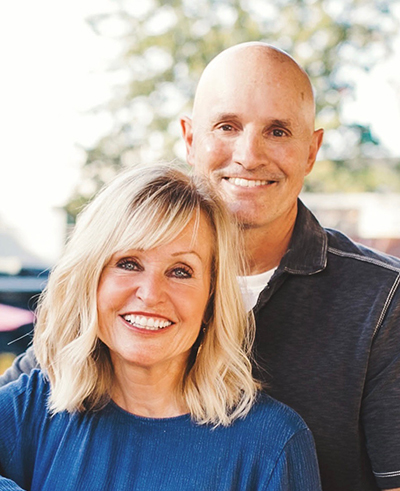
Dave and Ann Wilson
Dave and Ann Wilson are hosts of FamilyLife Today®.. Dave and Ann have been married for more than 38 years and have spent the last 33 teaching and mentoring couples and parents across the country. They have been featured speakers at FamilyLife’s Weekend to Remember® marriage getaway since 1993 and have also hosted their own marriage conferences across the country.
Episode Transcript
FamilyLife Today® with Dave and Ann Wilson – Web Version Transcript
This content has been generated by an artificial intelligence language model. While we strive for accuracy and quality, please note that the information provided will most likely not be entirely error-free or up-to-date. We recommend independently verifying the content with the originally-released audio. This transcript is provided for your personal use and general information purposes only. References to conferences, resources, or other special promotions may be obsolete. We do not assume any responsibility or liability for the use or interpretation of this content.
What Should I Do When My Spouse Gets Emotional?
Guest:Ted Lowe
From the series:Us in Mind (Day 1 of 3)
Air date:January 12, 2026
Ted (00:04):
I thought that empathy was just about being with someone during the tough stuff, but it’s also being there with them during the fun stuff. It’s [paraphrase]: “Rejoice with those who rejoice and cry with those who cry.” And one study said: “How you celebrate with your spouse is more predictive of a strong relationship than how you fight.”
Ann (00:29):
Welcome to FamilyLife Today, where we want to help you pursue the relationships that matter most. I’m Ann Wilson.
Dave (00:35):
And I’m Dave Wilson. And you can find us at FamilyLifeToday.com. This is FamilyLife Today.
Ann (00:48):
We were speaking at a Weekend to Remember® marriage getaway this one weekend. As I was speaking, I was talking about how, as women, we can help our husbands to be better. And then, I asked this question: “Let me ask you this: ‘Do you feel like your husband is happier since he married you?’ And I said, ‘Is your husband better since he married you?’” Because we can have a pull on our husband’s lives that helps determine where he goes.
Dave (01:15):
This was Hershey, Pennsylvania, I think.
Ann (01:17):
Yes!
Dave (01:18):
And I’m sitting in the back when you’re saying that; and I’m like, “Yeah, this is awesome. I hope every wife’s hearing this.” But then the next session—is this the woman that came up?
Ann (01:26):
This woman comes up to me; she’s sobbing; she’s crying on my shoulder, and I’m patting her. My whole shoulder is drenched. I’m like, “What happened? What’s wrong?” And she goes, “I’ve realized something at this weekend.” She said, “I married this man, and we divorced. And then, now I’m married to another man; and our marriage is disintegrating. I’ve always thought it was my husband’s fault; but to be honest, they’re worse since they married me.”
She said, “I’ve seen them and all I do is criticize. I thought my criticizing would motivate them. My first husband ended up becoming an alcoholic; and now, my second husband is an alcoholic. I wondered, ‘Does what I say?—could I have an impact? Could that affect him and what he’s thinking about himself?’”
Of course, we all make our own decisions, and this woman is not to blame for some of the things necessarily; but the question is: “Can we impact our spouse by what we say to them or think about them?”
Dave (02:30):
And the answer, obviously—well, you know what?—I don’t know the answer; we’ve got an expert in the studio. Ted Lowe is with us, and he’s going to answer that question for us; right, Ted? You’re going to answer that question.
Ted (02:40):
Sure, let’s go with that. We’ll go with: “Yes, okay.”
Dave (02:42):
You’re over there, smiling. No, we read your book, Us in Mind. And I love the title because you talk a lot about the mind: How Changing Your Thoughts Can Change Your Marriage. Help us understand this: “Is that true?” “Is that what happens?”
Ted (02:55):
During Covid, I started really pouring [over], like, “The couples who are happy: how do they think? Do they think differently than couples that aren’t happy?” It turns out they just think in a different way; they think in a way that unhappy couples don’t. And then, I started seeing all the research on just the power of our thoughts and how that impacts how we think about ourselves and how we think about our spouse—to answer your questions—and how we think about their emotions and how we think about, you know, before we respond and even how we think about: “What’s the purpose of all this?” Why aren’t we even trying here when it comes to marriage?”
I found out that just our thoughts are so important; because they’re not our actions and they’re not our attitudes, but they lead to both.
Ann (03:38):
And we don’t generally think about that; because our thoughts: “They’re just in our heads; how harmful can that be?”
Ted (03:44):
Right! I didn’t know not to believe every thought I had. I didn’t know that this voice in my head—that I call ”Fred”/”Fred in my head”—I didn’t know that Fred was a liar. I didn’t know to not just believe everything that I was thinking and be driven by everything I was thinking.
Scripture is very clear—to test and approve your thoughts—“Take captive…” and you test and approve: “Is this God’s good pleasing and perfect will here?” I was just letting all my thoughts run on autopilot. I think most people—I don’t know if I can say that fairly—but it feels like a lot of people, at least, think the same way. They never think to question their own thoughts, and they’re just determining so much of our relationships.
Dave (04:28):
You’ve been in marriage ministry around couples for decades; so obviously, you already knew what makes a good marriage. As you studied that, how did you end up where you end up with the mind thing?
Ann: Were you surprised?!
Ted (04:40):
I was very surprised, actually. It took me back a little bit because there was one area specifically that I thought, “Oh, wow; how have I done this this long?” I’ve been doing marriage ministry for 20-plus years. I thought, “How have I missed this?” It was the power of empathy. I keep seeing all the research, especially with couples that were happy, that they were really good at being empathetic. And then, it hit me one day: “Well, the reason you’ve missed it is because you’re so bad at it.”
Ann (05:11):
Yes.
Ted (05:11):
“You’re so bad at this, actually.”
Dave (05:13):
Hey, you’re a minister; you’re supposed to be good at it.
Ted (05:15):
I was good at it with lots of people except, I think, with my bride.
Dave (05:20):
Oh, yes; that is me!
Ted (05:21):
She would say too, if she were here, she was the same way. When we first got married, our arguments would go a little bit like this: she would share something going on with her. I would immediately jump into: “Well, here’s what you could do…”; for instance, she came home; and she had mentioned this same coworker a couple of times. I say, “Hey, you know it feels like we’ve talked about this person several times. I know you don’t like confrontation; but maybe, you should have a tough conversation with her. It’s going to make things so much easier, long term,” which sounds pretty logical. I get some kind of response like “Blah, blah, blah.” I’m like, “Okay, that’s not what she’s wanting.”
And then, so it was the same type of conversation—same cycle of conversation—just change the topic. And then, one day, she says something to me; she says, “I don’t want you to fix this; I want you to feel this.” Which as a fixer, I’m like, “Why are we talking about it if we’re not wanting to fix it?” But she’s also a fixer, so I think we were both not great at this. When the other one was having an emotion that they were struggling with—especially, if they’re sad or frustrated—we would try to fix each other.
Ann (06:26):
This is us, totally us. And I do it to my kids; I did it last week to my daughter-in-law. She’s telling me this sad thing. And then, I put Jesus in it, like, “Well, here’s what Jesus wants you to know…” That’s not what she needed—that’s true—but that empathy part—
Ted (06:44):
When someone’s emotional, they’re functioning out of the emotional part of their brain. The logical part of their brain has gone offline, so you’re not knocking on a door; and it’s closed. You’re trying to resonate with them. A lot of times when people are emotional, they’re not very logical. They talk in extremes, or they talk in: “This is never going to get better.” What we want to do is we want to rescue them by helping them to see more logical.
But the craziest thing—and this happened throughout the research, where I’d just have these moments, where, “You’ve got to be kidding me,”—the thing that brings people to the logical part of their brain is not logic; it’s empathy. When you’re sitting across from someone, who’s empathetic, they look at you; they just acknowledge, “Well, I can tell you’re really frustrated with the kids right now.” That’s what cools the emotional part of their brain and brings them to the logic part; it’s empathy.
(07:38) Jesus was so good at this; oh, He was so good at this. We all learned the verse: “Jesus wept.” But when you think about Jesus making that decision—if I’m Jesus, and I’m coming to a situation, where I’m about to raise the person from the dead, who all these people are crying about. I walk in four days late; they’re all weeping, gnashing of teeth, going, “Where were You?”—I’d be like, “Hey, not another tear; I’m about to fix this in grand fashion.” And what does He do? He cries with them; He weeps with them; it says: “Jesus wept.”
What a model in those moments—“Just be with me,” “Just be with me,”—that’s all Nancy was wanting for me in those moments when she’s talking about a coworker [problem]: “That’s really frustrating.”
This guy was taking me to the airport after I had talked about this whole thing of empathy. One of the things I’ll say is: empathy is not about seeing things from our point of view. It’s about seeing things from our spouse’s point of view.”
Ann (08:32):
That’s good.
Ted (08:33):
One of the phrases we tell couples, all the time, to use is: “If I were you, I’d feel the same way,” “If I were you, I’d feel the same way.” I’m sharing this on stage. This guy’s taking me back to the airport after I’m done. He says, “That stuff really works!” He said, “Every year my wife is [in charge] over a conference. She gets stressed out every time, but she does such a great job. I was like, ‘Honey, there’s no need to stress out because you’re so good at this; you always crush it. Everybody tells you; they celebrate you afterwards. You need to learn that you are so good at this.’” He said it would frustrate her beyond belief.
And he comes in; and he said, “She’s sitting there in a little roller chair, up by the desk; and says/he goes, ‘How are you doing?’ She said, ‘I’m just so frustrated…’—and goes off.” He says, “Wow; you know what? If I were you, I’d feel the same way.” He says, “She spins around in her little roller chair, and goes, ‘Thank you so much!’” But just those moments of—and it’s so much easier—empathy is so much easier.
Dave (09:28):
Is empathy something you can develop?
Ted (09:30):
Oh, I was terrible at it!
Ann (09:32):
We are terrible; both of us are terrible at it.
Dave (09:34):
Well, thanks for sharing that with the world. You’re supposed to say, “If I were you, I’d be terrible at it.”
Ted (09:43):
Yes; “We were so terrible.” And the other phrase we use now is: “That’s understandable.”
Ann (09:49):
That’s a good one.
Ted (09:50):
Because a lot of times, I think we’ll withhold empathy; because we think we’re signing off on an emotion we don’t agree with.
Ann (09:55):
See, that’s what it is. I was thinking, “Why don’t we?!”
Ann: We know life is full of challenges, and families today need biblical truth more than ever. Isn’t that true?
Dave (10:09):
That is true.
Ann (10:11):
As a FamilyLife Partner, your monthly gift helps bring the truth into homes every single day through podcasts, events, and resources.
Dave (10:20):
So let’s make a lasting difference together. Become a Partner today; just go to FamilyLifeToday.com and click the “Donate” button.
Dave: I spoke at a men’s breakfast at this church, locally here in Orlando, and there’s 400 to 600 men show up every Wednesday at 6:00 AM. I was asked to come and speak. I’m driving up there, I’m seeing this line of cars. I’m like, “What in the world?! Who has all these men show up?”—I asked several of the guys there in tables. It was this powerful meeting. I go, “How did this ministry develop? Why are so many men here?” And they all go, “That dude over there,”—who’s the leader of the men’s ministry of this church—”he is the most empathetic guy I’ve ever met. This whole ministry is built on that value: empathy.” I go, “Empathy?—a men’s ministry?” And he’s like, “That guy walks around his place, and you feel loved; you feel seen; you feel heard.” It’s just what you said. Can you imagine bringing that into a marriage?
Ted (11:21):
Oh, it just changed our relationship more than anything has in years and years. “That’s understandable”; we just so withhold it. I’d been traveling way too much, and I come in; and the next day, I’m just out of gas. Nancy walks in; she goes, “How you doing?” I go, “You know what? I’m really tired. And to be honest, I’m a little depressed.” She goes, “That’s understandable.”
(11:44) I was like, “That’s all I need to hear.” Because, in that moment, I was so tired; I didn’t want to have to do anything.
When we give somebody advice, they feel like: “This emotion I’m having, not only is it not okay with them, I need to change what I’m doing in this moment.” What do I do in that moment?—had she said, “Well, you should be very excited that you’ve been traveling, and that you’re providing for our family, and you’re serving the Lord. You’re serving the Lord, Ted. How could you be tired?” But instead, it was just this moment of going, “Oh, I don’t have to change anything; I don’t have to do anything.”
But it is the toughest thing in the world for me to do, because I am not wired like that; I am wired to fix: “All I do is study marriage; I can fix this situation.” There’s a great book—it’s a few years old—but I’ll never forget one of the studies in it. It’s called How to Improve Your Marriage Without Talking About It. One of the things he talks about in the book—it’s actually co-authors we’re talking about—is that when a woman, and sometimes men, are standing in an emotional puddle, what men want to do is yank them out of the puddle with advice. What they want us to do is step in the puddle.
Now, here’s the thing for that, for me, at least: “Why four wet feet is the answer to two wet feet makes no sense to my brain parts; none.” But it makes sense to my heart; because when I do this, it just blends us. Again, it is just so much more simple than the opposite. You think of the opposite: when someone’s needing empathy, and you give them the opposite of that—you’re giving them logic—they’re getting frustrated. Then, that leaks: it leaks onto the rest of today; sometimes, longer. Just say, “I’m so sorry.”
(13:13) It’s true with our kids too. My 17-year-old daughter, when I think about the times that she and I have had interaction that I wasn’t proud of myself about, it’s just because I lacked empathy. She has so many emotions; I’d be like, “Well, you’re running late because you haven’t organized. Maybe, that calendar-thing I did this week.” Hey, she’s stressed out, because she’s forgotten… “Well, we’ve talked about the calendar.” Yeah, that’s just what she’s wanting right now is a calendar talk in the middle of emotion. You guys, I’m on the journey here, friends. It’s the constant thing, but it’s so fun when you do it right.
Ann (13:58):
This is so convicting to me, because I’m a woman.
Dave (14:01):
I’m glad it’s convicting to you; not to me at all.
Ann (14:04):
I’m a woman, so you’d think I’d be more empathetic. I can be to other people; but generally, especially with our kids, I want to fix them because I hate for them to be in pain. For some reason, I think this little antidote I’m about to share is going to fix everything. They don’t need to be fixed. I’m still trying to figure out how to do this. Where did you start?
Ted (14:26):
Well, I think for us, just having a couple of phrases: “That’s understandable,” and “If I were you, I’d feel the same way,”—
Ann: Those are good.
Ted: —or “That seems really hard.”
Dave (14:34):
You got to make sure you tell me what you mean by that. “If I were you,” could feel condescending; “Because “I’m me, I wouldn’t feel that way. But because you’re so—
Ann: —”weak.”
Dave: —”weak, you’re going to feel that way.” You’re saying it in a way, where: “If I was in your shoes/if I was dealing with what you’re dealing with…”—that’s what you mean, right?
Ted (14:51):
Absolutely. “If I were having to deal with this, too, I would feel the same way.”
Ann (14:55):
I have a friend—we walk all the time—and I’ll tell her, “This is my schedule, and this is what’s going on…” Here’s all she said, “I would be dead if I were you right now! I don’t even know how you’re doing this!” I cry when she says that: “Thank you for understanding what I feel!”
Dave (15:11):
And I’m over here, saying, “Pack another bag. We’re going; let’s go.” She needs me to be crying with her and adjusting the schedule.
Ted (15:18):
I think we all understand empathy when we’ve lost a loved one. The people that walk in and give us the platitudes, like, “God’s got a plan,” and “God needed an angel,” and “He always knows what’s going on,” “They wouldn’t want you to do ‘x,’ ‘y,’ and ‘z.’” That doesn’t work. What we do love in those moments is somebody comes in, and goes, “I am so sorry; I’m hurting with you. I don’t know what to do, but I’m going to pray with you.” Those are the people we’re drawn to. Just bring that down from that dramatic level. It’s still the emotional need that we’re needing.
You go, “When do you start?” I think a lot of people say, “Well, wait a minute; we have wisdom with each other.” No one knows me like Nancy; no one has more wisdom for me than Nancy, and I think she would say the same thing about me for her. It’s not that you don’t give them advice; it’s all about a time and a place. When they’re emotional, it’s not the time; and it’s not the place. It’s like a kid who’s had a tough baseball game. You pick them up and you start talking; you start giving them coaching tips and tricks—
(16:18)—and they’re heartbroken—what you do is you bring it on the backend. They’re about to step out of the car, and you go, “Hey bud, listen; here’s something I think you could work on today. I think, if you would…” Instead, after every game—someone told us six years ago—“Man, I love watching you play”; that never goes wrong.
I think it’s the same thing—it’s like it’s okay for us to give our spouses advice and wisdom when they’re ready—and even, ask permission. One of the things we’ll say is: “If I had some thoughts about ‘x,’ ‘y,’ ‘z,’ would you want to hear them?” You’re asking for permission.
I think, again, the thing that brings them back to the cooler place, into more logical, is empathy. It’s even looking at them and mimicking—not mocking—but mimicking the look on their face. Studies show that that’s real soothing to them. We use this little phrase where we’ll say: “I see you,” “I get you,” and “I got you..” Our heads are down so much with our phones. There’s something so powerful—just when your spouse is talking, especially if their emotional—just put your phone down and look at them. Just look at; and sometimes, that’s all empathy requires is: “You are right here with me,” and “You are hearing this”: “I see you.”
“I get you,” is— it’s like you tell them: “Here’s your emotion,” and “Here’s the topic,”—”I can tell you’re so frustrated about work,” “I can tell that you are so excited about the kids making better grades,” “ I can tell you’re still grieving the loss of your mom, and you’re hurting so bad.” It’s just that acknowledgement; again, it’s cleaner and it’s simpler. Isn’t that God’s way?
Ann (17:45):
Yes.
Ted (17:45):
It’s always easier; and sometimes, it doesn’t make sense to us; it’s just the way to go.
The other thing I got so excited about empathy was: I thought that empathy was just about being with someone during the tough stuff, but it’s also being there with them during the fun stuff. It’s: “Rejoice with those who rejoice; and cry with those who cry.” One study said, “How you celebrate with your spouse is more predictive of a strong relationship than how you fight.”
Ann (18:12):
I thought that was fascinating.
Dave: How great is that?!
Ted (18:15):
How many times do we catch ourselves because their emotions don’t make sense to us? We don’t understand when they get so excited that college football season is starting; and you’re like—and while we want is roll our eyes—and instead, going, “Look at them; they’re like a little boy; they get so excited about this.” When they smile, smile back. People go, “Marriage is so complicated.” No; when they smile, you smile back. You don’t roll your eyes at things that are important to them.
Ann (18:39):
Okay, so Ted, here’s this mom listening, who has four kids at home that are under ten. Her husband says, “Hey, it’s football season!”—or it’s hunting season or it’s golf time—and this mom is thinking, “And you’re going to be gone all the time.” How do we smile in the midst of that?!
Dave (18:56):
This might be personal, Ted; I don’t know.
Ted (18:58):
Yes; well, as someone who married, and has a family of four, I remember those days.
I think it’s when they’re in that emotional part of the announcement of: “Guess what season it’s in?”—that those are the moments that you celebrate, going, “And you love it so much. I love watching your face; you turn into a little kid. You are adorable, doing this.” And then, a little bit later—you’re not responding off it—because what you’re saying at that point: “This is an inappropriate celebration,” “This happy emotion that you have is not okay with me.”
The thing about, when we rejoice what somebody’s rejoicing, studies show that it amplifies what’s going on in their brain, chemically. It amplifies already feel-good emotions. We want our spouse, when they’re excited about something, to tell us first.
Ann (19:47):
Oh, that’s good.
Ted (19:48):
Now, to that mom: I will say it is all about approach—whether that’s a husband to his wife—wife, it’s just saying: “Baby, I love this,” and “I love that you love this. Can we talk, through, a little bit how we can make this manageable for our family? I like you around and I need you around. Can we talk through that to make it balance?”
People only talk about things when they’re frustrated about things; you only talk about the credit card when someone’s made a charge that they shouldn’t. You only talk about parenting when you think the other one’s done it wrong. Couples can talk about—and you guys know this at retreats, right?—they can talk about some really deep things, because they’re not in the middle of a conflict, [when] your brain’s in totally the wrong spot.
So when they’re in that cool spot, talk to them like that. But I think you want to be the one [to] whom your spouse looks. When they get good news, you don’t want them to think of anybody else [than] you, going, “Oh, they’re going to get excited with me,” especially if they don’t like it”
(20:44) My wife is so great with finances. She doesn’t shop a lot; but when she does, she takes down the global economy. She walks in the other day with six bags from Old Navy, just stuffed. She goes, “Come with me to the bedroom.” She does what I call “sale abrasions,” where she will take each item out, one by one, to reveal.
Here’s what I used to do. Because she would reveal all items and then she would go, “Guess how much!” And I used to go, “I don’t know; just tell me.” I finally have learned she wants me to act like I am playing a game show with her. She wants me to celebrate this moment with her. So I lock in, and I guess that number: “I’m thinking $147.” She goes, “Nope!” She gets all excited. It’s crazy; but I thought, “Why would I not celebrate that with her?”
Ann (21:32):
Because she’s excited!
Ted (21:33):
She’s excited: “Why would I take that from her? Why would I be a literal killjoy? Why not just take two minutes and get excited?” She manages our finances so brilliantly. It’s just a two-minute thing; and we need to celebrate those things, right?
I’ve been mowing the same lawn—I’ve been mowing since 2006—and I’ll go, “Come with me outside!” We go outside; and she will be, “It looks so amazing!” It’s the same lawn, but it’s just—people say, “What’s the big deal? In life, you’re talking about Old Navy sales and a freshly-cut lawn,”—but life gets really, really hard. Everybody listening knows that. But when we make these little deposits of celebration, it’s so powerful. We need that with each other.
Ann (22:15):
I can—now, that our kids are older—I feel like I can celebrate more easily. But I’m thinking of the young mom, who can be resentful of her husband being excited about hunting season. I wish I would’ve done that when I [could have been] like, “It’s football season!” I wish I would’ve put on the jersey, and said to the kids, “It’s football season!” Because then, Dave wouldn’t have felt like, “Oh, I can’t celebrate it here; because they’re all mad about it.”
Dave (22:39):
In many ways, I feel like you did. You were a football mom, a football wife, a chaplain’s wife; that’s a whole other thing.
But what you’re saying, Ted, I think it’s the gospel: “The two shall become one.” When you said earlier about the mud puddle—or being in a puddle—I think whenever you’re in a puddle, or whenever you’re on a mountain, the DNA of the human soul is: “We don’t want to be there alone.” Whether it’s the valley, and we’re struggling; or when we’re celebrating, even if you celebrate alone, it’s empty. You want to know: “Are we one?” And when my husband or wife shows up—and like you said, doesn’t throw the towel and say, “Hey, if you grab, I’ll pull you out,”—but walks in the mud puddle; that’s with; that’s two becoming one. I love what you said:—
Ann (23:24):
Me, too.
Dave (23:24):
—”I see you,” “I get you,” “I got you.” When you said that—even when I read it—I thought, “That’s what Jesus does. That’s the gospel: ‘I see you,’—
Ann (23:33):
—coming to earth.
Dave (23:34):
“’I get you,’ and ‘I got you; I went to the cross; I’ve got it.’”
That’s what we can live out in our marriage. I don’t know—when you said that—I was inspired to think, “Man, if my wife, my sons, my daughters-in-law, my grandkids felt like I’m a person that sees them, gets them, got them”; that’s Us in Mind.
Ann (23:54):
I’m going to call our kids and apologize tonight.
Dave (24:02):
Okay; you just love having Ted Lowe on here; don’t you?
Ann (24:05):
I totally do. I think what he’s talking about is fascinating; and I think people will really like his book, too.
Dave (24:11):
Yeah, we’re going to have him back tomorrow as well; so come back tomorrow with us. But if you want to get his book, it’s called Us in Mind: How Changing Your Thoughts Can Change Your Marriage. You can find it at FamilyLifeToday.com; just click the link in the show notes.
Ann (24:24):
As we’re talking about this, you may be wondering if we have anything else or any other ways we can help you. You can go to FamilyLife.com/MarriageHelp, and we have some of our best resources there for you; and it’s free that you can get some answers.
Dave (24:47):
FamilyLife Today is a donor-supported production of FamilyLife®, a Cru® Ministry.
Helping you pursue the relationships that matter most.
If you’ve benefited from the FamilyLife Today transcripts, would you consider donating today to help defray the costs of producing them and making them available online?
Copyright © 2026 FamilyLife. All rights reserved.
www.FamilyLife.com