

Overcome Pain and Spiritual Abuse to Love God’s Word Again – Faith Womack
You’ve feel like a failure for not studying enough–or you’ve even been hurt by twisted Scripture. In family chaos, the Bible gathers dust while guilt builds. If you’re hungry for truth without the baggage, tune in. Faith Womack, YouTube’s Bible Nerd, shares her rough, raw origins—from spiritual abuse and miscarriage to building a ministry—and reframes Bible engagement as joyful, everyday discipleship. No more boring; just God’s Word as the anchor you need.


Show Notes
- Learn more about Faith and where to get your copy of No More Boring Bible Study at biblenerdministries.com
- Begin the Easter story early with Resurrection Eggs. Start your family tradition now!
- Follow Faith on Instagram @biblenerdministries
- Thanks to the Christian Standard Bible for sponsoring this episode. Learn more at CSBible.com.
- Follow us on all social platforms: Facebook | Instagram | YouTube
- Find resources from our podcast at shop.familylife.com.
- Download FamilyLife's app!
- Help others find FamilyLife. Leave a review on Apple Podcast or Spotify.
About the Guest
Faith Womack
About the Host
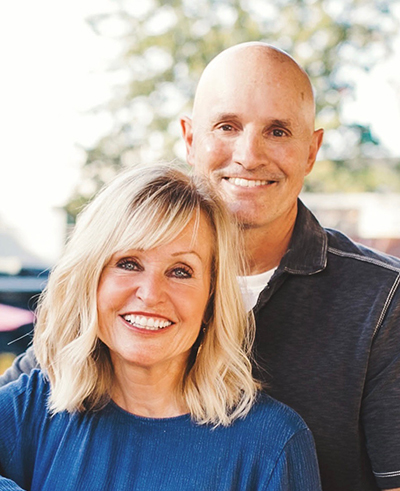
Dave and Ann Wilson
Dave and Ann Wilson are hosts of FamilyLife Today®.. Dave and Ann have been married for more than 38 years and have spent the last 33 teaching and mentoring couples and parents across the country. They have been featured speakers at FamilyLife’s Weekend to Remember® marriage getaway since 1993 and have also hosted their own marriage conferences across the country.
Episode Transcript
FamilyLife Today® with Dave and Ann Wilson – Web Version Transcript
This content has been generated by an artificial intelligence language model. While we strive for accuracy and quality, please note that the information provided will most likely not be entirely error-free or up-to-date. We recommend independently verifying the content with the originally-released audio. This transcript is provided for your personal use and general information purposes only. References to conferences, resources, or other special promotions may be obsolete. We do not assume any responsibility or liability for the use or interpretation of this content.
Overcoming Pain and Spiritual Abuse to Love God’s Word Again
Guest:Faith Womack
From the series:Overcoming Pain to Love God’s Word Again (Day 1 of 2)
Air date:February 25, 2026
Faith (00:04):
We prioritize what we believe is valuable. I think, so often, we’re like: “I ought to do this,” “I ought to do that,” “It would be nice to do Bible study.” But we don’t really think about the power of the Word; Hebrews 4:12 tells us it’s alive and active. It’s not just some old dead book that doesn’t apply to us today. It’s literally the light—the light to our path—it is the lifeline!
Dave (00:31):
Welcome to FamilyLife Today, where we want to help you pursue the relationships that matter most. I’m Dave Wilson.
Ann (00:37):
And I’m Ann Wilson, and you can find us at FamilyLifeToday.com. This is FamilyLife Today.
Dave (00:50):
Alright. Of all the years we’ve done FamilyLife Today, I don’t know if we’ve had a woman named Faith in the studio.
Ann (00:56):
Isn’t that a good name?
Dave: I’m not sure we have—have we?
Ann: No. Well, we probably have.
Dave (01:00):
Faith Womack is with us!
Ann: Woohoo!
Faith: Thanks for having me, guys.
Dave: Do you know a lot of people named Faith?
Faith (01:05):
No.
Dave (01:06):
Is there a story behind your name?
Faith (01:08):
As I was told it, my mom and my dad were doubting that they could afford another baby, and weren’t so sure about it. I think my dad wanted a boy. They didn’t have a name chosen. My dad, in a moment of weakness, was like, “Faith, because I need to have faith.” I see that—as the Lord, from the very beginning, kind of setting me apart—I see His hand of mercy in my life, really.
Dave (01:32):
Wow, that’s a powerful name. I mean, you are—
Ann: I love that name.
Dave: You are the Bible-Nerd-Woman-Faith-Nerd Ministry girl; I know that’s not what it’s called.
Ann (01:43):
You said, “Nerd” too many times.
Dave (01:44):
No, she’s—you named it yourself.
Faith (01:48):
Actually, early on, in making content, they started calling me the “Bible Nerd.” I said, “You know what? Let’s own it.”
Ann: You liked it.
Faith: Yes, we are nerdy. And yeah, just fully embraced it. I got to give that to my audience.
Dave (02:01):
Tell us what Bible Nerd Ministries is.
Faith (02:03):
I started making content about seven/eight years ago, and I was really just lonely. I had just done biblical and theological studies as my undergrad degree and moved out—my husband’s a pastor, and we moved out to a new church—and kind of wanted to start a Bible study. Nobody really seemed interested in it. I said, “Alright, I’ll go online.”
I sat down in front of my webcam, at a really pixelated picture, and just started talking to whomever out there wanted to talk about the things I was wrestling with. I had a miscarriage, was praying through that. Slowly, but surely, the Lord really brought me to some of the best people online who want to know God’s Word, and wrestle with Scripture, and be faithful to Scripture. They started calling me the “Bible Nerd.” I eventually, went to seminary and shared what I was learning.
(02:46) From there, the ball kept rolling. I feel so grateful that the Lord is able to work in, through, and despite me; because I’m definitely not perfect. But through it, the Lord’s just refined me in my love for the Word and ability to communicate it well. I look back now, I’m like: “That was God,” and “Thank You, Lord, that I wasn’t too afraid to step out in faith and just try something.”
Ann (03:11):
Faith, when you look at your Bible—this is a—
Dave (03:13):
I hope you’re watching on YouTube.
Ann (03:15):
—John, I hope that you can zoom in on her Bible—because this tells us everything. This is an appendage; this is a piece of you; this is something that really matters to you. You can tell by the way it’s worn; it’s marked up. I wish mine looked more like that; because it’s a testament that you believe: “This is God’s Word. I need it for everyday life. I need it to live by; it’s my breath in my lungs.”
Take us back to the beginning; because, for you, this has a real—
Dave (03:47):
You opened the book with an interesting perspective about why context matters, correct interpretation matters. Tell that story.
Faith (03:58):
I grew up in a family of a lot of cultural Christianity, not like regular attendance at church, or even wouldn’t really be able to defend their faith. I’m not taking really any knocks at my family, but I think there’s a lot of barriers to that if you don’t know what you believe and why. My parents decided to go to church once they started having kids. I was raised in some really good churches, but I wasn’t discipled in the home. Part of that was because my parents weren’t actually living out what they proclaimed to be truth.
(04:31) Growing up—really, towards the end of my high school years—my father, in particular, made a really bad habit of taking Scripture and twisting it to say what he wanted it to say. In particular, he took it to a lot of extremes; there’s probably a level of mental health concerns there—quit his job because God told him to; stopped paying on the mortgage, because God told him to believe that he wasn’t called to work because of some random Proverb he twisted; or God called him to divorce his wife—things like that that aren’t biblical or Scriptural. I wasn’t mature enough in my faith; I was probably 16. I didn’t know how to pinpoint exactly what he was twisting.
Ann (05:12):
Well, what did you think about that?—like, “Hey, I’m leaving your mom because God told me to,”—as a 16-year-old, what did you think?!
Faith (05:23):
Full honesty here: I could only see my mom as the wrong one; because she physically walked out the door, and moved in with her family. But also, it looked like really moving, like, “Wow, you’re willing to quit your job! You’re willing to stop hanging on your house!”
Ann: You were inspired, in a way.
Faith (05:44):
Yeah, it was extreme faith! At that point, I had been walking with the Lord, and doing morning and evening Bible studies; but wasn’t mature in my faith. I still couldn’t pinpoint why there was a disconnect. I kept praying, “God, please get him a job.” It took a little bit of time—not very long—but eventually, I went to Covenant College. I studied biblical and theological studies.
In Week One, they’re doing orientation, just walking through the basics of basic doctrine, core beliefs. I think they were talking about common grace, if I believe—but it doesn’t really matter—I was like, “Oh, man; this is so different than how my dad has talked about Scripture and the way that we treat Scripture. This is so different: the way that they’re talking about God’s sovereignty, His control over all things, than how my dad has described it to me. I remember calling him up, and being like, “Dad, I got to talk to you about what I’m learning.” He would have nothing to do with it.
Ann (06:31):
You were excited, like, “Dad, you’re going to love this!”
Faith (06:33):
Yes; “This is eye-opening! This is life-changing!” He wouldn’t really have anything to do with it. In so many words, basically just said, “I’ve decided what I believe Scripture is telling me to do.” That was really eye-opening for me and made me hunger more and more for: “What does the Bible really say?” and “What is truth?” and “Can we just twist Scripture? How can we just twist Scripture if we really believe it’s true?” That took me on a lifelong journey—eventually, went to seminary—and now, share it with others; because if we really believe it’s true, we’ll treat it like it is.
Ann (07:10):
Part of that was through your pain. As you were discovering more and more, theologically and biblically, how did that affect your relationship with your dad?
Faith (07:20):
Well, for a long time, I was afraid; I was afraid. In Christian culture, we often say, “Honor your mother and father,” so you don’t really ever stand up for things or disagree with them. There’s a Bible verse—I believe it’s from Exodus 20—where it’s really a blessing: “If you honor your mother and father, you’ll live long.”
He [my dad] took that blessing and turned it into a curse; he said, “Faith, you’re cursed to die young; because you’re not respecting me. You’ve set some boundaries with me.” That was a light bulb moment for me: “This man is willing to twist God’s blessings into curses. This man does not honor Scripture.” And that was kind of the final for me. I think it sent me—and praise the Lord for this; this is His mercy of my life—it sent me to my knees to continually recheck myself: “Is this my pride? Is this my arrogance? Is this really Scripturally-based? Does he have any room to have a right standing to say that to me?” It did, frankly, make me fearful; I was fearful of my life. Ironically, a few years later, my older sister did pass away early, young in life.
There are a lot of people who can be so scared of life, and fearful of consequences or the result of their actions; but when you’re pursuing the Lord, and living faithfully unto Him, I think you don’t have to fear anything but God. A true fear of God will kind of put everything in its right place. For me, I knew there was a pan—and when he used that blessing, and turned it into a curse—that kind of crossed the line for me. It’s only been confirmed more and more—when I set boundaries, with my father—it was only confirmed more and more. I was then able to step far back enough, to say, “Wow, look at all this Scripture he’s misused; and this Scripture…” and “The Lord does not tell us, ever, to divorce our wife”; things like that. I don’t ever want that man to feel shamed or rejected by me—like I felt from him—but I do have to speak for truth.
(09:31) I do have to stand for something that I think a lot of people deal with in different ways. A lot of kids are looking to their parents to be their savior, to show them the ropes. Parents are stumbling through. You guys wrote a whole book about it!
Ann: “We don’t know.”
Faith: Yeah, No Perfect Parents. Y’all are wrestling with it, too. I’m wrestling with it, as a parent. I think, when we all have our eyes fixed on Christ as our Savior, that puts everything in its right place.
Ann (09:46):
What would you say then to the parents if they don’t know the answers? How should they communicate that to their kids?
Faith (09:53):
Say that: “I don’t have the answers, but I know the Lord does. He’s the perfect place to go with our questions. Let’s go there.” Be that humble fellow-follower of Christ. I think there’s a level to which parents feel so afraid, in their leadership of the family and their discipleship of the family, that they feel like they have to take on a savior role that they were never intended to take on.
Ann: —have all the answers.
Dave (10:17):
How’s your relationship now with your dad?
Faith (10:20):
We actually still do not talk to this day. He’s a bit of a hermit—still hasn’t held jobs or
taken care of basic things in life—it’s been sad to watch that happen and continually see him choose arrogance: “I want Scripture to mean this for myself.” I can’t step in and save my dad, and that’s been a really hard thing for me. I can’t step in and save my mom either. I believe that I’m a light in my family—I get to point people to Scripture—but everybody has their problems. My biggest weakness is I want to step in and try and take them away, and solve them; and I can’t do that.
Ann (10:55):
Don’t we all?
Faith (10:56):
Yeah, I can’t do that. It’s been a growing experience for me to learn how to follow the Lord. When I’m called to step in to help, or things like that, I can do that; but then, also honor boundaries, and my marriage, and my kids.
Dave (11:13):
We’ve said this many times here that: “Often, the pain or struggle in our life becomes the foundation or platform for what we do.” It’s true in your case as well. There’s a sense that some of that struggle is why you are so passionate: “This Word has to be understood correctly, taught correctly, applied correctly; it is truth. How do you get to the truth, that’s in there, correctly?” It’s who you are, and it’s blessing the world. It came out of, in some ways—
Ann: —from pain.
Dave: —a foundation there of pain and hurt.
Faith: Definitely; yeah.
Ann: For sure.
Dave: And that’s what God does—He takes it and turns it—and says, “Okay, I’m going to use this.”
Ann (11:52):
So good.
We know life is full of challenges, and families today need biblical truth more than ever. As a FamilyLife Partner, your monthly gift helps bring the truth into homes every single day through podcasts, events, and resources.
Dave (12:13):
So let’s make a lasting difference together. Become a Partner today; just go to FamilyLifeToday.com, and click the “Donate” button.
Ann (12:24):
I love that you’re a mom; you have two boys. Even as parents—when I look at the title of your book, No More Boring Bible Study—
Dave (12:33):
Every parent: “Make sure the Bible’s not boring!”
Ann (12:35):
Exactly! But even—
Dave (12:36):
Because it’s not boring, but we often make it boring. Our kids are like, “No, not another Bible study with Mom,” or “…Dad.”
Ann (12:42):
I know! I think today could be:
You’re younger, in terms of being married, compared to us. Kids—your boys are six and seven, did you say?—some people are looking at your Bible [study], as young moms, like, “I don’t even know how in the world you’re making this happen.”
And the other thing is: “How can I get my kids to love the Bible?”
I think this is going to be a great conversation and great topic.
Dave (13:05):
So let’s talk about that: “How do you study the Bible, like you study; and you’ve got a six- and seven-year-old.
Ann (13:11):
And you’ve been doing it for a while, based on your Bible.
Dave (13:13):
You had a two- and three-year-old crawling around, probably,—
Ann (13:16):
—babies.
Dave (13:17):
—pulling your hair; diapers. How does a mom, or a younger family, study the Bible when they’re living in chaos?
Ann (13:26):
How does she read her Bible, let alone study it?
Faith (13:29):
Yeah.
Dave (13:29):
—in the bathroom with the door locked? Is that what they do?
Faith (13:31):
Some days.
Dave (13:32):
That’s what we did.
Faith (13:32):
I’m being real. Yeah, I went to seminary with a nine-month-old; I was still nursing. What would that be?—a two-year-old and a nine-month-old?—yes.
Dave (13:41):
Full time?
Faith (13:43):
Yeah, yeah.
Dave (13:43):
Oh.
Faith (13:44):
I rocked through it in two years, by the Lord’s grace. That shows a passion and a fervor. I couldn’t get enough of it.
Dave: You had like 16 hours a semester?—
Faith (13:51):
Yes.
Dave (13:51):
—in two years.
Faith (13:52):
Yes. It shows you, though, what you have fire and fervor for—when you pursue it, it doesn’t matter how much sleep you miss—the endorphins, or the excitement, or just the love of it will just take you. I could not do that now, y’all; I could not. I dream about getting my doctorate; but man, I’m not getting up at 4:00 am anymore.
Ann (14:09):
You will.
Faith (14:10):
I’ll say this—the person listening is, like, “I’m not getting up at four.” You don’t have to get up at four. But when you truly—“Do you believe it’s true?”—because we prioritize what we believe is valuable. I think, so often, we’re like: “I ought to do this,” “I ought to do that,” “It would be nice to do Bible study.” But we don’t really think about the power of the Word; Hebrews 4:12 tells us it’s alive and active. It’s not just some old dead book that doesn’t apply to us today. It’s literally the light—it is the light to our path—it is the lifeline!
For me, often, what it looks like is—I am not afraid of morning cartoons—if my boys need 30 minutes of morning cartoons, that is when I’m getting my Bible study in. Now, if it’s a school morning, it might be audio Bible; or it might be after I’ve dropped the boys off at school. Other times, it’s the evenings. Those are typically times where we have to ourself, but there is no shame in what I call the toilet time. If you are scrolling, you have time, as much as we hate to hear it. If you’re watching other podcasts, you could be listening to the audio Bible. There’s so many pockets of time to make it work. I think we find a lot of excuses of why we don’t have time to read the Bible when we need to, instead, put all our energy into finding reasons why we should.
Dave (15:23):
We all make time for what is important to us.
Ann (15:27):
Have you guys seen the social media?—how they’ll have these clips, as if our Bibles were our phone. You’re standing in line, reading the Bible; you’re in the bathroom, reading the Bible.
Dave (15:38):
You wake up, reading the Bible.
Ann (15:39):
You’re in the car, reading the Bible in between red lights. It’s true!—if we really did see it as: “This is God speaking to me.”
Dave (15:48):
Did something happen, when you’re in seminary, with the Word? Or was it always there?
Faith (15:54):
I think it was my undergrad degree, Biblical and Theological Studies. Every day I would leave our lectures—my husband was also taking the same classes as me; he’s now a pastor—we would walk out of the lecture hall. We’d stand, right there outside the door; and I’d be like: “I can’t believe this is so cool!” and “This is so cool to see!” That’s when we really fell in love over the love for the Word and theology. It really just set me on a lifestyle of: “I’m never going to have it mastered. There’s always going to be more to study and more to learn.”
When we become apathetic to the Word, I think it’s because we’re underestimating the Word. We don’t realize just how much there is that applies to us today. Whether it’s the exile, or Revelation, or Exodus, there’s constantly so many passages of Scripture that will cut to the heart, like Hebrews 4:12 talks about. It’s so convicting; it’s so moving; inspiring—all the things—if only we will go to it, hungry, and looking.
Dave (16:45):
Well, it’s interesting: I can remember, in seminary—I know you’re going through the book of Psalms—
Faith (16:50):
Yeah.
Dave: —you’re diving. I can remember sitting in seminary class— and my professor, Scott Ray, said, “Okay, I’m going to walk you through Psalm 11 from a Hebrew text, and teach you how to study it; and then you’re going to do this,”—I remember, literally,
40-some years ago, Psalm 11 came alive like I’d never seen or heard in my life. I’d read it many times—but as he dove in, and word studied, and put together pieces—I still can remember it.
The Word—when you understand it—and I would say, as a pastor, 90 percent—maybe, I’m exaggerating; maybe, not; you tell me—90 percent of our church-going people have no idea how amazing the Word of God is. They’ve never experienced it like that. They read it, they hear it—although, most—
Ann (17:42):
—never tasted it themselves.
Dave (17:43):
—although, most church people hear the word of God for 30 minutes once a week, and that’s about it. It’s an important book to them; but they don’t understand: “It is the Word of God.” It is your second chapter: “Is It True?” “Yes! It’s the truth, and so we should know it that way.”
You’re doing that online; and people are getting, what I got in a seminary class, anytime they want—boom; click on it—let you teach them what it really means.
Faith: Technology is so cool.
Ann (18:12):
How did you decide, even with your book, what did you want people to know?
Faith (18:18):
I think we all want to read our Bibles; we all want to love the Bible; and then, it moves to: “Well, nothing’s really going to get us into the Word unless we have that conviction of: ‘This truly is true, ‘This truly is valuable,’ ‘This truly will change my life.’” And so we move from—“Do we believe it’s true?”—to “Then, if it’s true, then this is how we, therefore, read it…”—hermeneutics—that’s a study of how to read; and then, interpret and, eventually, apply it to our lives.
And then, throughout the book, I talk about what it’s not; because a lot of us put the Bible in boxes: “Oh, it’s just a poem,” “It’s just a story,” “It’s just wisdom; it’s not really much more than that.” And so my chapters are titled: “Not Just a Poem,” “Not Just a Story,” “Not Just a Movie” to try and show us how there’s so much more in Scripture than maybe what we come into it, expecting.
Dave (19:06):
So help parents; because I know parents are listening, going, “Okay, I want to help my son,” or “…daughter”—five-year-old, ten-year-old, fifteen-year-old—”understand the Word correctly. How do I, as a parent, help teach them this book and understand it?”
I know you talk about context; you talk about hermeneutics; exegesis—all that’s in there—I’m like, “This is a Layman’s Hermeneutics 101,” which is awesome. But if I’m a parent, I’m like, “Well, I’m never going to seminary. If I pick up Facebook, and read it, will that help me be able to teach this to my kids?”
Faith (19:39):
Absolutely. I love that desire. So many people want to disciple their kids in the truth, but they don’t know where to begin. They’re going to hate me saying this, but I’m not going to lie to them. It starts, first, with them loving the Word; it starts, first, with them being anchored in the Word; and then, that trickles down to your kids.
Someone asked me earlier, “When do you Bible study with your kids?” I was like, “Honestly, all day is a Bible study. My kids don’t know what it’s like to be an adult, who’s not always talking about the Bible. Because that’s what my husband and I do—dinner, and breakfast, and driving to school, and all the time, are all—
Ann: What’s that sound like, Faith?
Faith: Okay; so the other day at breakfast, my son wanted to wear a crucifix. I was like, “Okay, let’s talk about the debate around icons and crucifixes. Some Christians wear a little Jesus on a cross, and some don’t want to have Jesus on that cross; and why.
Dave (20:27):
—and a lot of non-Christians.
Faith (20:29):
Yeah.
Dave (20:29):
Same thing.
Faith (20:30):
Same; yes. That’s very popular in Hollywood right now; especially, crosses on things. My husband was able to chime in, and be like, “Well, in church history, ‘Da-da-da-da.” They get to see that it’s something we’re wrestling with. We’re asking questions about: “What’s not just rules? But it’s something that actually is life-giving to wrestle with?” or “If Jesus was on the cross, do we want to always view Him on the cross; or is it just a cross, and it’s finished? Let’s talk about that and give room for debate.” He may only be seven, but he gets it; he gets it a whole lot more than I think we want to think.
(21:00):
We’re like: “Oh, that’s for seminary,” “That’s for the adults to debate.” But in all reality, my seven-year-old was great with the conversation; he loved it. He felt like we were treating him like an older adult or something, like, “Hey, I’m welcomed into this debate. I’m welcomed to wrestle with theological conversations, even just as a seven-year-old.”
I really try and focus on mirroring to him: “This is what adulthood, as a Christian, looks like. It means being in the Word every morning. It means wrestling with Scripture, asking questions, listening to sermons, going to church, even if we’re late. That’s just called being an adult.” I don’t think he will grow up and be someone who doesn’t know what it looks like to not live unto Jesus.
Ann (21:40):
I like that. Well, your question is exactly—I just had someone DM me; and they said, “I’m very new in my faith. I have a seven—no, a six-, four-, and one-year-old. The Bible’s very new to me. I don’t even know where to begin. I want my kids to know this, so where do I start? And then, how do I teach my kids?” You answered that a little bit in terms of it is every day; and you said it starts with you.
Let’s talk to our listener, who’s like, “I want to read my Bible. Where do I start?”
Faith (22:13):
I would encourage you: “If you’re not doing a Bible-in-a-year plan, to start maybe in the Gospels; and just look at what is revealed about Christ. The four Gospels are written at four different angles; they’re giving four different pictures of who Jesus is. Matthew’s writing to Jews to show them that Jesus is the promised Messiah. Mark’s writing to Christians, who are suffering, so he really highlights Christ’s suffering. John is so different than all the others, very theological. But if you make your way through the Gospels, at whatever pace you can manage, and just look at who God is; and then, point that out to your kids—have them identify: “What do you notice about Jesus in this story?”—”Oh, He touched the woman,” “Why would He…” Ask the questions; teach them how to ask questions. You’re not really going to teach them anything wrong, because all you’re doing is looking at God.
Ann: That’s good.
(23:02):
Now, if you come to Scripture, and you’re always like, “Well, this means, therefore, we have to do this…” or “We wear this kind of clothes.” If you’re always looking for your takeaway from Scripture, yeah, you might get weird moments, where you twist Scripture; or maybe, even apply it in weird ways.
But if you’re just going into Scripture, looking at how God reveals Himself in Scripture, you can’t really go wrong; because it’s the story of God redeeming His people for His glory. So it’s the story of God doing His good, beautiful, redemptive work. And if you train up your kids on how to see that, identify that, and ask questions all around it, you can’t really go wrong. You are mirroring to them what it looks like to grow in your walk with the Lord, and to wrestle with Scripture, and study it. Again, I think we need to mirror what it looks like to be students of the Word and not necessarily masters.
Ann (23:56):
Okay; I’m super inspired by Faith—her book—No More Boring Bible Study.
Dave (24:02):
—which you can get at FamilyLifeToday.com. Click on the show notes and buy the book there. I’m telling you what: I’m inspired, too.
Ann: Me, too.
Dave: We’re in the Word every day—but I don’t know—there’s something that happened today that says,—
Ann (24:13):
—”Let’s go deeper.”
Dave (24:14):
—”Let’s go deeper,” and “This can impact our marriage; can impact your marriage.” We got another day with her tomorrow, so we’ll be back with Faith tomorrow.
Ann (24:20):
One of the greatest passions of my life is growing spiritually stronger, going deeper, learning more, connecting to Jesus more. Maybe, you feel like that, too—like you just want more; you want to learn more—you want to grow, and you want to go deeper. You can by going to FamilyLife.com/StrongerFaith.
Dave (24:45):
FamilyLife Today is a donor-supported production of FamilyLife®, a Cru® Ministry.
Celebrating 50 years of helping you pursue the relationships that matter most.
If you’ve benefited from the FamilyLife Today transcripts, would you consider donating today to help defray the costs of producing them and making them available online?
Copyright © 2026 FamilyLife. All rights reserved.
www.FamilyLife.com