

When Grief Resurfaces: Ron and Nan Deal
Loss lingers in blended families—resurfacing during weddings, graduations, birthdays—stirring developmental grief no one sees. Couples grieve unevenly, risking distance; church often silences sorrow instead of shepherding it. If you’re overwhelmed by grief, exhausted by “move on” pressure, and craving space for honest pain, listen in. Ron and Nan Deal unpack why lament is biblical, not weakness, offering a faithful path through unresolved sorrow that keeps you connected to God and each other.


Show Notes
- Get your copy of Mindful Marriage in our shop
- Sign up for Blended and Blessed at blendedandblessed.com
- Thanks to the Christian Standard Bible for sponsoring this episode. Learn more at CSBible.com.
- Follow us on all social platforms: Facebook | Instagram | YouTube
- Find resources from our podcast at shop.familylife.com.
- Download FamilyLife's app!
- Help others find FamilyLife. Leave a review on Apple Podcast or Spotify.
- Check out all the FamilyLife's podcasts on the FamilyLife Podcast Network
About the Guest
Faith Womack
About the Host
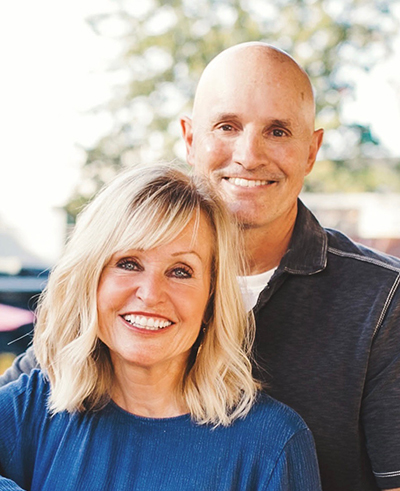
Dave and Ann Wilson
Dave and Ann Wilson are hosts of FamilyLife Today®.. Dave and Ann have been married for more than 38 years and have spent the last 33 teaching and mentoring couples and parents across the country. They have been featured speakers at FamilyLife’s Weekend to Remember® marriage getaway since 1993 and have also hosted their own marriage conferences across the country.
Episode Transcript
FamilyLife Today® with Dave and Ann Wilson – Web Version Transcript
This content has been generated by an artificial intelligence language model. While we strive for accuracy and quality, please note that the information provided will most likely not be entirely error-free or up-to-date. We recommend independently verifying the content with the originally-released audio. This transcript is provided for your personal use and general information purposes only. References to conferences, resources, or other special promotions may be obsolete. We do not assume any responsibility or liability for the use or interpretation of this content.
When Grief Resurfaces
Guests:Ron and Nan Deal
From the series:When Grief Resurfaces (Day 1 of 1)
Air date:February 27, 2026
Ron (00:04):
Western culture says you could master grief. Grief is something, it’s an illness, it’s a problem, and you need to master it and get over it. And that is the language we use. That’s the assumptions we have about grief in our lives, and I think the church has adopted that without even realizing.
Ann (00:29):
Welcome to FamilyLife Today, where we want to help you pursue the relationships that matter most. I’m Ann Wilson.
Dave (00:36):
And I’m Dave Wilson. And you can find us at FamilyLifeToday.com. This is FamilyLife Today. All right, so we did a show earlier this year with Mark Vroegop.
Ann (00:54):
It was one of my favorite interviews.
Dave (00:55):
Why?
Ann (00:56):
Because he talked about lament. His book was called “Dark Clouds, Deep Mercy,” and the subtitle is How to Reconcile a Good God with a Hard Life. And it was so real, so raw, but also there was so much application, and I just resonated with his heart and he was very honest.
Dave (01:15):
Yeah, I remember I walked in a church in Kentucky, and this woman saw me and she said, “I just listened to you this morning with Mark Vroegop. That was one of the best shows I’ve ever heard. And I said to her, I said, so that I’m guessing something, let me ask you, have you gone through a deep valley? And she goes, “Yep, I’m in one right now,” and I’m like, “Yep.” “And it was very helpful.”
Ann (01:37):
And at some point in life, all of us will face some dark clouds and deep valleys, and we have some guests with us today.
Dave (01:45):
Yeah. They’re probably thinking, “Oh, great. They’re going to introduce us as the guests that know about dark clouds and deep valleys.” And that’s sort of true. Ron and Nan Deal are with us, the director of our blended ministry of FamilyLife, and we are glad to have them on.
Ron:
Thank you.
Nan (01:59):
Thanks guys. Good to be here.
Ron (02:00):
Always good to be here.
Dave:
I mean a lot of people of FamilyLife know your story. Just give us some thoughts as you think through Dark Clouds, Deep Mercy, and even as how that affects marriages and families. Where would you start?
Nan (02:16):
Well, I’d like to say I love Mark’s work. It is so important in the grieving community, and I’ve been on this path with the loss of our son Connor. It’ll be 17 years and truly has been the hardest work I’ve ever done and continues to be my Dark Cloud, Deep Mercy. Jerry Sittser wrote a book, A Grace Disguised, which when you talk amongst grieving people, especially grieving parents, that’s their favorite. He lost his mom, his wife, and his daughter in a car accident. And in that book, what Sittser did was he gave us permission to grieve. He gave voice to it. Let me read this quote. “I did not get over the loss of my loved ones. Rather I absorbed the loss into my life like soil receives decaying matter until it became a part of who I am. Sorrow took up permanent residence in my soul and it enlarged it. You don’t get over it. You carry it. You learn to live with it, and it is a part of you.” And what I think Mark has done now—and it is now the favorite, second favorite amongst parents when we sit with them—he’s shown us a way to grieve and a way to grieve healthily. I’m so grateful for this work because churches, evangelical people and Western America, Western civilization just we don’t know how to grieve, and we don’t know how to sit alongside people grieving and some losses just take a little bit more time than others. And so what Jerry did for us, he just said, yes, you can be a griever and what Mark is doing, he’s saying, let me show you a way to lament and hand it to God.
Dave (04:11):
Hey, why do you think your statement, I know it’s true, is we don’t know how to grieve.
Nan (04:17):
We don’t.
Dave (04:18):
Why do you think—is it because we’ve taught it poorly in church? I know church can often be the place where you hide, you put on a smiley face even when you’re going through a valley, or is it something else?
Ron (04:31):
Well, ironically, I think our church theology and practice is more informed by Western culture, as Dan was saying than actually theology.
(04:40):
Because lament is all over the scriptures. That’s Mark’s whole point of his book is lament is there. It’s God’s way of telling us how to move through our grief. But Western culture says you could master grief. Grief is something, it’s an illness, it’s a problem, and you need to master it and get over it. And that is the language we use. That’s the assumptions we have about grief in our lives. And I think the church has adopted that without even realizing it. And so we expect people to get over stuff. We expect people to not bring it up again. We expect people to not let sadness and sorrow reoccur on birthdays, holidays, special days,
Nan (05:22):
Milestone moment days, for sure.
Ron (05:24):
At some point you should be over this, right? Well, no, that’s the sense of mastery that we tell ourselves in our Western culture because we’re a control-oriented culture. We just think we can bootstrap this thing and beat it, and that is not the way grief works, especially deep intense grief.
Ann (05:43):
You guys have been working with blended families and especially you Ron, as you’ve both talked to couples that have gone through divorce, couples that have lost a spouse, couples that are merging and blending into these great new families. Is the sense of grief and lament different or similar to losing a child?
Ron (06:04):
There are commonalities between all types of grief I would say. There are certain things that are similar. It’s the intensity of it, it’s the depth of it, it’s how massive it is that varies and that has implications for how far outreaching it is throughout our lives. We’ve used the analogy before talking with you guys about the earthquake of Conner passing away at age 12. Then there’s the aftershocks that come after that. And all of those are things that are ripples because of the earthquake. And we’re 17 years out and the aftershocks are still continuing in our life. We wake up and we have a grandson.
(06:44):
And he gets Connor’s middle name and it’s beautiful and sweet and horrible all at the same time. And so there’s another aftershock that comes just with the passage of time and the growth of our family. I could go on and on and on about that type of thing. Other kinds of loss, divorce, death of a spouse, unwanted departure of a partner, for example and you’re a single parent and you’re dealing, they all come with aftershocks, and they vary from situation to situation. But what’s similar is that we have to lament that stuff. Not only the initial earthquake, if I could say it that way, but we have to then continue to lament the ongoing aftershocks and the repercussions.
Dave (07:27):
How common is it that the aftershocks in a blended family or divorced family are a result of the initial trauma? I’m even thinking of my situation. My little brother dies. I’m seven and it was probably months and mom and dad are divorced. And part of it was they had a bad marriage probably anyway. I’m a little boy. I don’t really know. I would if I was a teenager. My sister and my brothers could tell you it was already bad. But the percentage of marriages that don’t make it after that kind of trauma are pretty high. So then I’m watching my brother die, and now I’ve got a mom and dad is split up, and I don’t have a dad anymore. Is that common?
Ron (08:09):
Hardship leads to hardship I think and difficulty to more difficulty. And it’s just true. Different kind of family configurations have advantages and disadvantages have strengths and weaknesses. And so unfortunately that just means when things are hard, they sometimes get harder for people.
Ann (08:30):
Well, when I think about that, I like that word aftershocks because I’m thinking of you Dave.
Dave (08:35):
I don’t. I don’t want aftershocks.
Ann (08:36):
No, but I was thinking because Dave’s mom used to talk about it all the time. After Dave’s little brother died, which was in October, every October, Dave was sick—every October. And even as an adult, he has very few memories of his little brother, but the aftershocks remain in your body even.
Ron (08:57):
They do
Ann (08:59):
Which is crazy. And then I’m thinking of his mom dealing with the death of a child and then also seeing her son who’s still there just a few years older that’s suffering through it. And man, that’s just hard. And his mom ended up, and this is where I think too, some of the aftershocks, we don’t deal with it in a healthy way. And that’s when she started her drinking battle because it’s so painful at times. And Nan, you’ve talked very openly about this of how sometimes it’s just hard to trust God in the midst of it.
Nan (09:38):
Numbing is a pretty common thing in the grieving community, and it’s an easy quick fix to a horrific pain that you just don’t want to carry. And it’s relentless at the beginning and it’s relentless for a year or two.
(09:57):
And we think well after the funeral in a few weeks—no, it just kind of keeps going and keeps going and keeps going. And that’s the thing, sometimes people just don’t understand. Or those yearly times, like you’re talking about with Dave, we have our yearly times. We talk to parents all the time where they say, “Oh, the end of October is here and I’m feeling anxious.” Well, you’re feeling anxious because the holidays are upon you again. You’ve got family-oriented holidays back-to-back, and then Happy New Year and you’re entering a new year without your child moving with you. It’s just a lot.
Ron (10:42):
There’s another kind of grief that I think families who go through death or divorce of a parent, for example, and later form a blended family; that there’s a developmental grief we call it.
Nan (10:51):
For sure.
Ron (10:52):
And so you think about a child—I was talking with a couple not too long ago. They were both widowed at a pretty young age, married and had a bunch of kids collectively, the two of them and the kids kind of adapted pretty quickly into the blended family experience. But fast forward 10 years and all of a sudden somebody’s graduating high school and dad’s not there for that child. Or a child goes on to college, gets the degree they’ve always dreamed of, and on graduation day, then mom’s not there for that particular child. And weddings and births of grandchildren and every one of those developmental milestone moments is another aftershock and another season where children who were maybe four when mom passed away and don’t really have a lot of memories and really didn’t know how to process it, now they’re adults and they really do have an imagination where they can imagine what life would be like if mom or dad were still around. And so that’s why we help prepare people for—it’s a developmental process. Grief is—it’s not a one and done. It’s not going to just kind of roll and you’re going to move past it, and the kids are going to move past it and then life is free and clear. Nope, actually it’s going to resurrect itself over and over and over again, and you just get prepared to enter into that grief whenever that time comes.
Dave (12:14):
Hey, before we keep going, let me just say this to the listener. Every single day, families around the world are facing real struggles and FamilyLife is here with gospel-centered help and hope. And when you become a FamilyLife Partner, your monthly support fuels this work.
Ann (12:29):
And with your monthly gift, you’ll become a part of a community that receives insider updates, which is pretty amazing.
Dave (12:37):
Yes, it is.
Ann (12:38):
And who doesn’t want to be a part of an insider community? You also get invitations to special events and more because together we’re helping families really grow stronger in Christ. So join us.
Dave (12:51):
Yeah, just go to FamilyLifeToday.com and tap the donate button at the top of the page.
Help our listeners understand how to navigate the pain, the lament, the valley, the clouds as a couple. You’ve had to do that. We all have to do it in some sense, but there’s the nuance of I’m not the only one grieving and my spouse is grieving in a totally different way. And there’s times when I think you should be over it by now or you shouldn’t be over it by now. It isn’t just one person; it’s a marriage and so you’ve had to do that. A lot of our listeners are like, “I’m not sure how to do this with her or with him.” What can you say to help them?
Nan (13:37):
Tremendous amount of grace for yourself, where you’re at and all those seasons that come and a tremendous amount of grace for that other person. I will never forget, I was walking into the house with our youngest son, Brennan, who at the time was 10 when Connor passed. And our older son, Braden was 14, so 10, 12, 14. I’m with the 10-year-old, he’s with the 14-year-old. I had gone out to get Brennan something for school, don’t remember, came in. He and Braden are on the couch watching a TV show. And you have to understand; our son was in the hospital for 10 days hooked up to everything. He was in a coma, then he was on ECMO. So I had 10 days of hospital trauma. They’re sitting on the couch watching House, that TV show.
Ron (14:28):
A medical show,
Nan (14:28):
A medical show. There’s somebody intubated and hooked up. And all I wanted to do was throw something at both of them and go, “We’ve just been through—” And the Holy Spirit just said, look at them. They’re together. They’re bonding. This obviously is something they need. And I just took Brennan and we went into our bedroom, turned on the TV, and we watched Food Network because that worked for us. I could have gotten really angry and mad and “I have been through so much, how dare you.” But they did that for months and Brennan and I did Food for months. And by the way, he is a very good cook these days. But we had to extend each other grace, and we had to give ourselves grace for what we needed.
Ron (15:17):
We’re just going to do it difference sometimes.
Nan (15:21):
Yeah.
Ron (15:21):
You got to create space for that and do some self-care when the other person like Nan did and go into the other room. But at the same time, you’re also looking to connect with one another around the things you can, which reminds me of what Mark shared with you guys on that program, the four-step process for lament that really is reflected in the scriptures. And I mean you could even reflect on how you do this as a couple or as an individual, turn, complain, ask, and trust. I thought it was so rich and the depth of all of that turning is about choosing to talk to God in the pain he said. And by the way, Nan and I have noted in the past that this is what tethers you to God.
Nan (16:05):
Yeah, it does.
Ron (16:05):
Talking to God about your pain, ironically, interestingly, you may be mad with God in your pain, but you’re still tethering yourself to Him. In other words, that’s a very subtle but very powerful thing to do when you don’t know how to trust Him. But at least talking to Him keeps you in His presence.
Ann (16:25):
Did you guys ever struggle with that? I know that when my sister passed away at 45 and I was 39, I could barely pray. I couldn’t even describe why my heart was so grieving. And I would pray things like, “I’m mad at you, God, I don’t get what you’re doing.” And I just couldn’t find the words at that time. And I would go to worship, which felt great, but I couldn’t even contain myself. I would cry the entire time. And so I remember one time just saying, “God, I submit. I think it’s the dumbest thing that you took her. I think it’s the dumbest thing that this happened. It’s ridiculous to me based on her four surviving children and her struggling marriage. I don’t even get it.” But all I could pray was, “but I trust you.”
Ron (17:20):
I think you were turning and choosing to talk to God about your pain.
Nan:
Definitely.
Ron:
Even though you didn’t have a lot of words.
Ann (17:26):
And I didn’t feel good about Him.
Nan:
True.
Ron (17:28):
You were giving the words you had. And I thought it was so interesting just a second ago you said, I didn’t have words to share. That’s what Romans 8 is about, where the spirit is grieving on behalf of creation back to God. This isn’t right. And he’s the one who gives words for us when we don’t have the words. There’s a great lament aspect to Romans 8 that we miss sometimes. And so in other words, you bring what you have.
Nan (17:58):
I think now that I’ve learned to truly lament, like after that day on Connor’s birthday this past year, an hour long, I was crying, I was weeping, I was lamenting, I was complaining, I was asking, and then I surrendered the pain to God and said, “I don’t want this and I don’t want to carry this anymore, but I want to trust you with this.” I felt His comfort saying, “I just am so sad for you too. I see how much you miss your boy, and this has been long.” I mean, I just felt comforted by Him that day. I felt this, “I see you and I need you to hold on and one of these days it’ll be eternity, but I see that you’re suffering. And I know this has been a long lonely isolating road.” I felt comforted that day.
Dave (19:03):
I don’t know if I can make this a guarantee, but it does seem that God’s comfort comes when we get honest, when we complain, when we don’t hold in what we’re feeling. We go to church and we just cover it up and nobody there is going to be honest. And so you leave church and you’re like, “It was nice, but I don’t feel like my soul was touched.” We had a phrase in our green room at the church that I started 35 years ago that as the artist and the worship leaders and the pastors before we walked on the stage, we’d always see this sentence and it said, “Never underestimate the pain in the room.” Because there’s a tendency to walk out there and sometimes, you’re doing it. You’re doing a happy worship song and that’s good. There’s nothing wrong with that. But even when you set that up, we always remind ourselves, “Hey, God is good. We’re going to talk about that today. But hey, let me just say this. If you walked in today and He doesn’t feel good or you’re in a valley right now, we understand and this song can feel this way to you, but still sometimes it’s good to sing even when you’re in that valley.”
Ron (20:06):
Dave, I love that. Let me tell you how good God is with lament. Mark’s, right. This is sort of the equation that laments; turn, complain, then ask, which is that posture of humility, “Okay, Lord, you’re God I’m not,” and then you’re going to trust in Him to show up. But did you know that there’s one lament where there is no ask and there is no trust statement. There’s no moment where the shift takes place. And it’s Psalms 88. And the reason I love it so much is because it’s just an outpouring. It’s just a complaint and there’s no resolution whatsoever. This is how good God is. He wants us to know that it’s okay, that on certain days you just can’t find the words to say, “Yet will I trust you.” It’s okay. He’s all right with that. He’s even given us a model of how to do that in the ugliness of pain and sorrow. There are other times where you will be able to turn a corner and you will be able to trust in Him, but I think He is so good. He wants us to know we don’t have to be perfect in this grief journey. It is messy stuff, and He’s okay with that.
Ann (21:16):
This is so helpful you guys. And the thing that keeps going through my mind too, it’s conviction actually, is we need to allow our kids to grieve as well and to lament, because I know even with adult sons, when they’re really struggling and they’re sad, I don’t want them to be sad. And yet sometimes they are. And so I feel like this is good for parents to listen to too, to allow their kids to lament and be sad and to grieve alongside them and turn them back to it’s okay to be sad, but to teach them to go to the Father and those things and go through all the things that we talked about. It’s okay to complain but in the end, tell them. Tell them everything.
Nan (22:00):
Yeah. Tell me more is a phrase I like to use with my boys. Tell me more about that.
Ron (22:06):
Yeah. If we don’t steward our pain, we don’t grow up into Jesus. Our faith doesn’t deepen. If somebody else is always rescuing us from our pain, then we really don’t grow up. So yes, it’s coming alongside. It’s saying, tell me more. It’s being there with them, but at the end of the day, it’s allowing them the space they need to steward their own sorrow.
Ann (22:32):
And for God to work.
Ron (22:33):
Right.
Nan:
Exactly.
Ann:
So good.
Dave (22:36):
And Ron, you have an event coming up in April. You want to tell us about it?
Ron (22:39):
Yeah. Every year our Blended and Blessed livestream designed specifically for couples and blended families. It’s free, 2026. It’s free unless you just happen to be in the live audience in Oklahoma City, we’re going to charge you 10 bucks for your lunch. But other than that, you can livestream from anywhere in the world for free and your church can host it for you and a bunch of couples, as many people as you can put in the room for free. We are so excited. Got some great speakers lined up this year. We’re going to be talking about hope in the journey. I hope folks will join us. BlendedandBlessed.com or just look in the show notes.
Dave (23:15):
Thanks guys. I’ll end with this. If you want to hear the interview we did with Mark Vroegop, you can go to FamilyLifeToday.com, click on the link in the show notes, and I’ll add this. There’s a lot of pain in our marriages that we don’t know how to navigate that sometimes they’re just the marriage pain. And Ron and Nan have a book. It’s been out for a while now, but we’re going to put it in the show notes as well; The Mindful Marriage. If you’re struggling in your marriage, this will help you navigate that pain. I don’t know of a book better. So go to the FamilyLifeToday.com, click on the link in the show notes and get either of those or both.
Ann (23:50):
Thanks Ron and Nan, we always love being with you guys.
Nan:
You guys, good to be with you.
Ann:
So if something on today’s episode clicked with you, we just want you to know you are not alone because every single marriage has its share of just highs, but lows too.
Dave (24:09):
And the question is where do you go for help? That was always our question.
Ann (24:13):
Yeah.
Dave (24:14):
We are so thankful that you listened today and we want to share one of our favorite resources. It’s a free guide filled with helpful marriage wisdom from real life couples who’ve been right where you are.
Ann (24:26):
And you can grab your copy today at FamilyLife.com/MarriageHelp. Again, go to FamilyLife.com/MarriageHelp for your free guide that’s full of marriage tips.
Dave (24:46):
FamilyLife Today is a donor supported production of FamilyLife®, a Cru® Ministry, 50 years of helping you pursue the relationships that matter most.
If you’ve benefited from the FamilyLife Today transcripts, would you consider donating today to help defray the costs of producing them and making them available online?
Copyright © 2026 FamilyLife. All rights reserved.
www.FamilyLife.com