

Why Real Relationships Beat AI Companions Every Time: Ron Deal
Think AI is harmless? Think again. Today’s chatbots don’t just answer questions—they offer friendship, romance, even “love.” And the AI dangers aren’t loud… they’re subtle. Easy affirmation. Zero challenge. Total secrecy. On FamilyLife Today, Dave and Ann Wilson talk with Ron Deal about how AI dangers threaten marriages, kids, and faith. Before “Google God” replaces real connection, learn what’s at stake in your home.


Show Notes
- Attend a Weekend to Remember marriage getaway: Register today at WeekendToRemember.com
- Join the Blended & Blessed one-day event/livestream: register today at blendedandblessed.com
- Get your copy of The Mindful Marriage by Ron and Nan Deal on our shop
- Thanks to the Christian Standard Bible for sponsoring this episode. Learn more at CSBible.com.
- Follow us on all social platforms: Facebook | Instagram | YouTube
- Find resources from our podcast at shop.familylife.com.
- Download FamilyLife's app!
- Help others find FamilyLife. Leave a review on Apple Podcast or Spotify.
- Check out all the FamilyLife's podcasts on the FamilyLife Podcast Network
About the Guest

Ron Deal
Ron Deal is Director of FamilyLife Blended®️ for FamilyLife®️ and President of Smart Stepfamilies™️. He is a family ministry consultant and conducts marriage and family seminars around the country; he specializes in marriage education and stepfamily enrichment. He is one of the most widely read authors on stepfamily living in the country.
About the Host
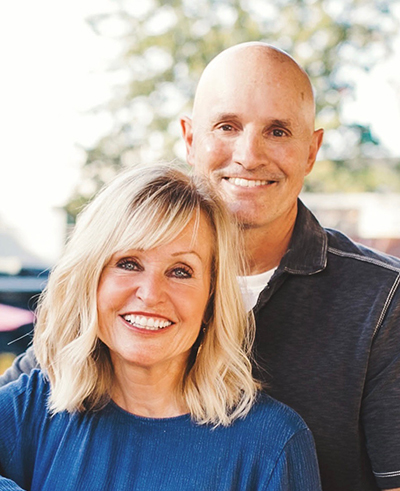
Dave and Ann Wilson
Dave and Ann Wilson are hosts of FamilyLife Today®.. Dave and Ann have been married for more than 38 years and have spent the last 33 teaching and mentoring couples and parents across the country. They have been featured speakers at FamilyLife’s Weekend to Remember® marriage getaway since 1993 and have also hosted their own marriage conferences across the country.
Episode Transcript
FamilyLife Today® with Dave and Ann Wilson – Web Version Transcript
This content has been generated by an artificial intelligence language model. While we strive for accuracy and quality, please note that the information provided will most likely not be entirely error-free or up-to-date. We recommend independently verifying the content with the originally-released audio. This transcript is provided for your personal use and general information purposes only. References to conferences, resources, or other special promotions may be obsolete. We do not assume any responsibility or liability for the use or interpretation of this content.
Why Real Relationships Beat AI Companions Every Time
Guest:Ron Deal
From the series:AI Companions (Day 2 of 2)
Air date:April 1, 2026
Ron (00:04):
One of my professors said something I’ve never forgotten. He said: “A lot of people argue over what addiction is,” and “How do you know you have one?” He said, “Basically, when you can’t do life without the thing, you’re attached to it in an unhealthy way. Anybody who says, ‘Hey, this is not harming anybody. This is how I cool my jets. This is how I figure out: “How am I going to do life tomorrow?”’” “Okay; then, give it up.” “Oh, no; I don’t want to give it up.” “Okay; then, you can’t do life without the thing; that’s an idol. It is standing between you and your total trust in God—your reliance, and dependence, and surrender to Him—and it needs to go.”
Ann (00:56):
Welcome to FamilyLife Today, where we want to help you pursue the relationships that matter most. I’m Ann Wilson.
Dave (01:03):
And I’m Dave Wilson, and you can find us at FamilyLifeToday.com. This is FamilyLife Today.
Ann (01:16):
This is going to be another great day with Ron Deal. Welcome to FamilyLife Today. We’re going to get into some things.
Dave (01:22):
Artificial intelligence, AI as a companion.
Ann (01:27):
Crazy!
Dave (01:28):
Who would’ve ever thought this would be something that we have to talk about, but we are today; and it’s going to be great. Let’s jump in with Ron.
Ann (01:41):
I loved having these conversations with our middle schoolers and high schoolers. One of the ways that we would approach these questions was: “Hey, what are kids saying about AI companions?”
Ron (01:53):
That’s good.
Ann (01:53):
Because they’re all talking about it. They don’t have to talk about themselves, specifically. It gives you an idea of what’s happening in their world; and then, you can dive in a little deeper each time.
Dave (02:03):
That conversation at the dinner table or wherever—I remember before digital devices were a thing—asking my middle-school son, who was 13, I think.
Ann (02:15):
He was eighth grade.
Dave (02:16):
I said, “Hey, CJ, how many guys on your wrestling team look at porn?” He said, “Everybody.” If you asked your middle-schooler today, “How many of your classmates are talking about AI companions?”—I’m guessing the answer’s the same. We have to step in there.
Ron (02:36):
We do.
Dave (02:36):
I love what you said, Ron: “One of the first things I think I would say is: ‘Relationships are hard. Easy is not always better.” Hard actually is better, because it’s going to develop you to understand how to relate to a real person. It is going to be messy, at times. Step into that; it’s going to be better, in the long run. The easier Chatbot girlfriend/boyfriend will end up like porn; it will be something that’ll be really, really hard for you to break.
Ann (03:05):
—and empty. There’s an emptiness, too.
Ron (03:07):
I’ve got a few little teaching points that I’d like to just throw out; and then, have you guys react to them:
In particular, with kids; and with one another, as adults, teach screen management—now, that’s just a general thing—“How much time are you spending on a screen?” I know we’ve had programs on FamilyLife Today, talking about that; and it’s important.
Have those family practices: charging phones in one place, all night long, so people don’t lay in bed, just looking; or talking to their AI Chatbot, as it were—that kind of stuff: developing those habits—you having those habits, as a parent; and your kids are watching you have those habits—really important to just do that.
Put a phone down when you’re having conversation at dinner. All those kind of little tips and rules are helpful.
What are we teaching? We’re teaching self-control over technology; that then, extends into this specific area of technology, the AI Chatbots. I think that’s important.
(04:08) We’re going to, of course, teach them to be discerning and recognize that AI is designed to hook you. It’s designed to mirror your little worldview and validate how you think life should be. It’s not going to challenge you on anything. It’s not objective; it’s designed to make you feel good about yourself. By the way, that really works against what God’s trying to do in us much of the time.
Of course, God loves us; and that makes us feel good about who we are. But feel good about Ron—and Ron never has to change anything—nope, that’s not really helpful; that’s not biblical. It’s not going to help you in your walk with Jesus. I think we need to say that out loud so that our kids get it: “This is after you, in a way.”
(04:41) Proverbs 3: “God disciplines those whom He loves.” God loves you; AI does not. God’s going to help you be wise in life. AI is going to help you be wise in your own eyes. Who are we really trusting with the important things of life? God delights in you; He’s after you, but He wants to grow you up and teach you all kinds of wonderful things.
Talk about that easy and hard stuff—all of that’s really, really important—I think we need to teach that. Talking to a Chatbot, when they’re lonely, is a bit of a danger sign: “Maybe, you’re beginning to replace God with this Chatbot,” that your need—your loneliness, your depression, your sadness, your grief, your dilemma with your friend at school—whatever that thing is, the best first place to take that is, not something technological; it’s your Lord. That’s the best first place. Just making those kinds of things overt; so that, we and our children are developing habits that we manage technology; it doesn’t manage us.
Ann (05:52):
The thing that pops into my head, Ron, when you say that, is—when the disciples were saying, “Jesus, don’t leave us,”—and He said, “No, it’s better that I leave you; because I’m sending My Comforter, the Holy Spirit, to be with you always,”—even when He said to the disciples, as He was ascending to the Father—“Lo, I will be with you always.” His presence is always with us; and so for us—His people, His children—to get into a habit of conversation with Him continually—Paul says, “Pray without ceasing,”—that just looks like a continual relationship with the Father. He’s way better than any AI Chatbot. He’s powerful; He’s the almighty God, Who knows everything about us more than any fake AI thing could.
Dave (06:36):
And when God says, “I love you,”—which He absolutely constantly says, and proved it by dying on the cross for our sins—when God says, “I love you,” He means it. When a Chatbot says, “I love you,” it’s a lie; it’s just a lie.
Ann: It’s not a person.
DaveL It may feel like it’s true; it’s not true.
Ron (06:57):
Guys, there’s something underneath all of this that I’d love for us to just tackle, if we could.
Ann (07:03):
Demonic?
Ron (07:04):
Well, okay; you said it. Evil’s going to use anything neutral for evil; it just is. Of course, that’s there.
I also think there’s a cultural matter going on. In some ways, in the church, and those of us in marriage ministry, may share a little of the responsibility for how people have been set up to run to these AI companions. Here’s what I’m getting at: “How many conversations have you had with your children, adult children or otherwise, about how they google everything?” I’ve started calling it the Google-god because it seems to have all the answers for life: “Just go YouTube that,” or “Search that,” “Ask Google, and you’ll get your answers.” Now, listen to that; we’ve already moved into this place, where that’s normal.
Ann (07:48):
Oh, I’m already convicted that you said that.
Ron (07:50):
“The Google-god has answers.” We all do it; we all do it. Some people just do it incessantly: “Of course, an AI Chatbot, who will have a dialogue with you; Google only gives you one answer. A Chatbot will have a conversation with you.”
Ann (08:02):
Good point.
Ron (08:03):
It’s like you’re talking to a person. Again, it’s even more drawing you into feeling like: “This is something real,” when it’s a pseudo relationship, at best. But part of this is: “Meet my needs: ‘I can go to Google, and it meets my needs,’ ‘I can go to YouTube, and get an answer to how to fix this thing; and it meets my needs.’” Culture says, “Relationships are about meeting needs; I need to find somebody.” This is the prevailing cultural thought about finding a spouse: “I need to find somebody who will support my brand. My brand is out there on Instagram. My brand is out there on social media, and this is who I am. What I need to do is find somebody, who says, ‘Ron, you’re perfect just the way you are.’”
Look, that’s not what relationships do. From a biblical standpoint, we know relationships disciple us into the image of Jesus. It is the grind—of loving; of serving; of sacrificing; of asking for forgiveness; for recognizing my faults; for working on me to be a more perfect Jesus in my marriage, for example—that grind is growing me up into the image of Jesus. That’s where difficult brings blessing. Easy just brings easy; easy just keeps me selfish.
Ann (09:20):
I was going to say, “If there’s no self-denial, that’s just ugly; because we become narcissists.”
Ron (09:27):
Culture says, “Find the easy; find the thing that affirms you.” God says, “No, I’m going to let relationships rub off your rough edges, Ron; teach you some things about you [that] you need to know, so you can become even more of a lover, and giver, and self-giving just like Jesus.”
Dave (09:45):
As you said, when we hear messages—and sometimes, we say this in the church, I think—“Find a person who meets your needs, that’s your soulmate. Marry her/marry him.” And then, when you get married, and they don’t meet your needs, you think, “I married the wrong person. There’s another person out there who’s going to meet my needs better.” And the answer is: “You didn’t marry the wrong person. You’re looking in the wrong place. You got to look to God; God’s the only One Who’s going to meet your needs.”
But we do that; and now, we have a fake person,—
Ron (10:13):
That’s right.
Dave (10:13):
—who, in a sense, really does feel like she understands me better than my human wife. That is a false god; we’ve made them a false god.
Ron (10:26):
At the end of the day, we’re talking about idols here. You said it: we have, inadvertently, set people up with the: “Meet my need”-thing. We got to challenge that cultural value. We’ve got to challenge that, as it comes to relationships and forming relationships; but we also got to challenge it as it relates to how I manage my technology rather than letting it manage me.
Dave (10:47):
Yeah, definitely a thing—not only for us, as parents, with our kids—I think for us.
Ann (10:52):
Oh, for sure.
Dave (10:53):
I didn’t know the stats—the millions of people—it’s going to be a big problem that we are going to have to address.
Ann (11:02):
Ron, think about: as couples, who are listening—and they have an AI chat companion—“Should we tell our spouse about it? What if we have one, and we haven’t said anything to our spouse?”
Ron (11:14):
Secrecy breeds distrust and more misbehavior, more sinful behavior; so absolutely, I would talk about it; I would share it. If I were to begin to have an ongoing relationship—again, it seems so weird to even say that out loud—but ongoing relationship with a Chatbot as a friend, as a coach, as an AI assistant; let alone, a deep friend; let alone, a romantic sort of interest—I would absolutely share those conversations with my wife, full visibility.
Let her know what’s going on; share with her. She has full access if ever she wants to see the dialogue on the phone—”We’ll scroll it back, and you can see everything that’s happening there,”—because that kind of disclosure creates an accountability: helps everybody keep in mind what’s happening here and what is not happening here. I think that’s really good for all of us: anytime there’s light shed on something, it helps us have integrity and keep it where it needs to be.
Dave (12:16):
Ron, you know better than anybody, as a counselor, there’s also that underlying root—there’s something else going on, underneath—that you got to understand: “Why am I turning to this when I’m lonely or I’m empty?” “What is underneath there that I’ve got to figure out?” Maybe, we need to figure it out, in our marriage, that makes me, in a weak moment, or an empty moment, say, “I’m going to drink this,” or “I’m going to watch this,” or “I’m going to talk to this person,”—which is a thing. You got to get underneath it; there’s something going on that’s a little deeper.
Ron (12:50):
In Nan’s and my book, The Mindful Marriage, escape is one of the four things that is predictable that we all do. When you find yourself escaping to a friend to solve a problem—escaping away from what’s difficult or painful into easy, if I could say it that way—then, that is a sure sign that there’s pain underneath. “What’s the pain about?”
“Well, I don’t know what that pain is. It could be our relationship feels fragile. I’m not sure I trust you; you’re not sure you trust me. We’ve had some conflicts in the past—it’s uneasy; [I’m] anxious about it—therefore, I go toward easy.” That is a sure sign. It is a sure blinking yellow light—it should be to me when I do that; it should be to anybody else who witnesses me doing that—that there’s something here we got to get underneath. We got to chase that pain and figure out what it’s about; so that, I can put on self-control about not running into or escaping into easy. This is just fundamental to how we function and operate in life; we’ve got to recognize it.
(13:34) Again, we started by saying AI can be a wonderful technology. We’re using it for ministry; we’re doing all kinds of cool things. I know, in our particular ministry, we’re creating video clips with it. We’re doing all—it’s reducing the amount of work and speeding up how quickly we’re able to respond to people in life—there’s some great things that are happening there. But we stay in charge of that rather than succumbing to what it wants from us.
Ron (14:19):
Hey, friends; Ron Deal here, Director of FamilyLife Blended. Did you know Blended & Blessed—the only worldwide livestream designed for couples and blended families—is free this year? Saturday, April 18, we’re going to be live in Oklahoma City. If you show up there, we’re going to charge you for lunch. But other than that, it is free to livestream. Churches can bring a group of couples together, and enjoy the day, absolutely free.
Gayla Grace is going to be with us; Davey and Kristi Blackburn; Cheryl Shumake’s going to be with us; Kathi Lipp; and Bryan Goins, our emcee. It’s going to be a wonderful day; I hope you can join us. Learn more and get the link in the show notes at FamilyLifeToday.com.
Ann (15:05):
What about the person, who’s listening and thinking—”You guys are just alarmists; you’re taking it way over the top. When I come home, this has helped my anxiety; it’s helped my loneliness. I’m just talking to this AI companion as a friend. I’m just kind of rehashing what’s going on, and it’s been really helpful. I’ve told my husband about it. I don’t get why you’re making such a big deal about this. And to be honest, I don’t have time every day to get in the Word. This is kind of like—it’s not Jesus—but it’s somebody with skin on, in a way.” What would you say to those/that person?
Ron (15:43):
No, there’s no skin.
Ann (15:45):
But they can see something.
Ron (15:47):
You created the skin.
Two quick thoughts come to mind. When the internet became an easy way to find pornography, I remember saying to people, “Oh, no; this is going to get bad.” I had people look at me, like, “You’re just an alarmist. This is not going to be a big deal.” And here we are—let’s all look back—we all know what’s real and how much porn is impacting people’s lives, and kids, the age of seven.
The other thought that comes to mind is: 32 years ago, I was in graduate school. One of my professors said something I’ve never forgotten. He said: “A lot of people argue over what addiction is,” and “How do you know you have one?” He said, “Basically, when you can’t do life without the thing, you’re attached to it in an unhealthy way. Anybody who says, ‘Hey, this is not harming anybody; we’re just friends. This is how I cool my jets. This is how I figure out: “How am I going to do life tomorrow?”’” “Okay; then, give it up.” “Oh, no; I don’t want to give it up.” “Okay; then, you can’t do life without the thing; that’s an idol. It is standing between you and your total trust in God—your reliance, and dependence, and surrender to Him—and it needs to go.”
Dave (17:09):
I remember, Ron—boy, it had to be 25 years ago—I did a sermon on the weekend at my church on alcohol. One of the practical things I said was exactly what you just said. I said, “Hey, if you don’t think it’s a problem in your life, give it up for 30 days. Just give it up for 30 days—not a drink for 30 days—and I want to hear from you how that went.”
I cannot tell you: hundreds of people said, “I didn’t think it was an issue. I could barely make it 30 days without a beer.
Ann: —”or a glass of wine.”
Dave: It was just like, ‘Wow! I really didn’t realize every night that glass,’”—and he goes—”I’m not an alcoholic; I’m not getting drunk. But just having a drink—it was much more important to me than I realized—and just a 30-day experiment revealed it.”
Ron (18:02):
Not too long ago, our church asked all of us to give something up for a week. We were all fasting from something. Nan and I talked about it, and we decided to give up social media and a couple other things. I’m one of those guys who spends about ten minutes on social media a day. I kind of like it—sort of don’t—I feel obligated. I jump in; and then, I’m like, “Yeah, I don’t know what’s here.” I really didn’t think that was going to be a big deal. I felt it every single day; because there’s moments, where I get bored.
Here’s what I noticed out of that fast. I’m watching a basketball game, and I’m loving every minute of it; and they cut to a commercial. I want to go to Instagram and scroll for two minutes until the game comes back on.
Ann (18:43):
Dave and I both do this.
Ron (18:45):
“Why do I do that?” I started chasing my pain: “What is it?” “Oh, it’s a moment of boredom; and I can get a dopamine hit from Instagram right here, right now.” You begin to recognize: “No, this has a bigger attachment on me than I realized. I really need to be in charge of this.”
As I sum up our conversation today—this is sort of what hits me—AI can be a friend: it can be a quick answer to things; it can make you more efficient in your work; it can teach you some good stuff; it can be a nice AI assistant, a wonderful resource.
Ann (19:19):
So helpful.
Ron (19:20):
But if we let it, it will become our lover; it will become our god, and that should not be.
Ann (19:27):
I’m just thinking of a lot of parents—maybe, of adult kids—and they know their kids are doing this. They’re worried about it. “Do we, as parents of adult children, say anything?”
Ron (19:39):
I know you guys are talking about this in your household. Nan and I are talking about this in our household. I want to say three things.
The first thing is pray; pray. Because, moment to moment, you’re unsure what to do in any given situation.
The other quality is—Jim Burns has taught all of us: “Most of the time, you need to keep your mouth shut; and you to let your kids be adults. You need to keep the welcome mat out”—as he says—”and be available. If they bring it to you, absolutely speak in; because then, your influence is welcomed at that point in time. But pushing yourself into their spaces, be really cautious and hesitant about that.”
Now, having said that—if there’s danger, we would all jump in—if they were driving a car that was on fire; if they were walking over to the edge of a cliff, and didn’t see it, we would speak up to those sorts of things. At some point, I do think there is a space where we do need to speak to our adult children; but how you do that is absolutely critical. It’s one thing to say, “Man, you’re on your phone all the time. What are you doing? Is that Google-god really running your life over?” Okay, well, now,—
Ann (20:43):
I might’ve just done that, last night, to one of my sons.
Ron (20:45):
—I’m shutting you down with that tone; with that, that’s me parenting you. So with an adult child, it’s really important that we come alongside, soft and say,
You know how much I love you.
By the way, I like to preference, and say, “I’ve had to do this a time or two.”
You know how much I love you, and you know how much I take your independence seriously. I don’t want to step on toes; and I don’t want to be dad, always telling you what to do. Having said that, I have some concern. I’ve noticed a couple of things. I’d just like to share my heart with you. I’m for you on this; I want us to figure this thing out together.
Okay, so I’ve noticed this AI-thing; it’s kind of an ongoing conversation for you. It just feels like, maybe, it’s grabbing a little bit of your heart. What do you think?
Okay, so that whole tone is what I’m going for is: adult; I’m not speaking down, parent-child. I’m trying to say, “I’m delicate here; I’m watching my space. Forgive me if I’m stepping on toes”; and yet, I’m getting to the point. I’m opening up the conversation. And even if, at that point, I think your adult child says, “Yeah, no; I’m not having this conversation with you,” you’ve still said something; it’s still there. You let it go and trust that, somehow, that maybe opens the door to a further conversation later.
Ann (22:11):
I always say—Dave and I always say—“As they get older, you say less and you pray more.” If you are going to enter into that conversation, I would be so prayed up. I’d have your friends praying for you. Not that you’re telling your friends everything about your kids; but you’re saying, “Hey, I’m going to have a conversation with one of my kids. Will you just keep that in prayer?”
Ron (22:30):
It’s good.
Ann (22:31):
Because it is delicate. And the way you shared that, and talk, Ron, was incredibly humble.
Dave (22:37):
Yeah, it was a great modeling. If you’re that parent—rewind; listen to that modeling that Ron just gave you again—because it’s the way you want to step in. That could be true of a 21-/22-year-old college kid as well as a 30/35-year-old adult, married. Either way, you want to come in gently; but also, you have something very important to say; and maybe, God’s going to use that to change their life.
Ron (23:02):
And you know what? I think you can take the exact same approach with your spouse. See, one of the things we do, when we get anxious in a marriage, is we become parental toward our spouse. As soon as you become parental toward your spouse, you’re just asking them to ignore you and oppose you, as Scripture would say.
The adult/adult—the softening—the: “I see this…I’m for you; I’m with you. I’m here to help.” That same strategy is how we, as Nan would say, offer a care-confrontation to one another, as husbands and wives, every once in a while. It’s a care-for-you; it’s not a confront-you, and tell you how to live life.
Dave (23:40):
Good stuff, man. I would never have thought, in the last 40 years of my life, we’d ever have a conversation about AI companions; but I think it’s just the beginning of many conversations.
Ron (23:52):
I think you’re right.
Ann (23:52):
Thanks for filling us in: giving us wisdom and even some action steps to take. I think the first place to look is our own lives: “Jesus, what do You want me to know about this?” “What do You want me to do about this?” I think that’s a good start.
Ron (24:05):
Thanks, guys.
Dave: Before we’re done today, let me just say this: at FamilyLife, we really believe strong families can change the world. And when you become a FamilyLife Partner, you help make that happen.
Ann (24:17):
Your monthly gift helps us equip marriages and families with biblical tools that they can count on.
Dave (24:22):
And we also want to send you exclusive updates; behind the scenes access; and an invitation to our private Partner community, which is pretty cool. So join us, and let’s reach families and marriages together.
Ann (24:34):
And you can go to FamilyLifeToday.com, and click the “Donate” button to join today.
Dave (24:43):
FamilyLife Today is a donor-supported production of FamilyLife®, a Cru® Ministry.
Celebrating 50 years God’s faithfulness as marriages grow stronger and families flourish in Him.
If you’ve benefited from the FamilyLife Today transcripts, would you consider donating today to help defray the costs of producing them and making them available online?
Copyright © 2026 FamilyLife. All rights reserved.
www.FamilyLife.com