

Uncommon Trust: Learning to Trust God When Life Doesn’t Make Sense
When life tips over, how do you keep trusting God? Pastor Erik Reed, author of Uncommon Trust: Learning to Trust God When Life Doesn’t Make Sense, shares his family’s journey through unimaginable loss—his son’s medical tragedy, kidney transplant, and death at 15—and the daily, vulnerable faith that carried them. This episode doesn’t offer easy answers, but it shows how Scripture, surrender, and community beat a path toward wholeness.
- Show Notes and Resources
- Get your copy of Erik’s book, Uncommon Trust: Learning to Trust God When Life Doesn’t Make Sense at your favorite bookstore.
- Save the date! Blended & Blessed® is happening April 18, 2026. Find details at blendedandblessed.com
- Thanks to the Christian Standard Bible for sponsoring this episode. Learn more at CSBible.com.
- Follow us on all social platforms: Facebook | Instagram | YouTube
- Find resources from our podcast at shop.familylife.com.
- Download FamilyLife’s app!
- Help others find FamilyLife. Leave a review on Apple Podcast or Spotify.
- Check out all the FamilyLife’s podcasts on the FamilyLife Podcast Network


About the Guest
Erik Reed
Erik is the Founder and Lead Pastor of The Journey Church (tjclive.com) in Lebanon, TN, a church that exists to show Jesus as incomparably glorious. He also founded Knowing Jesus Ministries (kjmin.org), a non-profit organization which exists to proclaim timeless truth for everyday life. Erik has been married to Katrina since 2002, and has three children: Kaleb (who went to be with the Lord on December 1st, 2019), Kaleigh Grace, and Kyra Piper.
About the Host
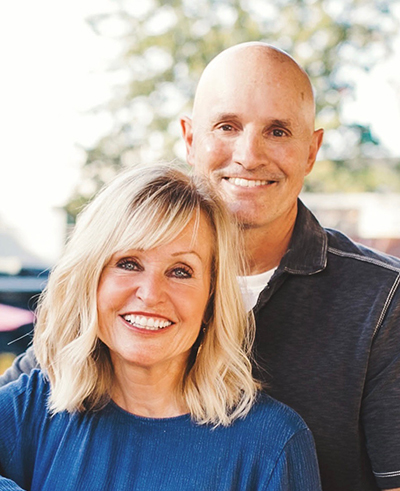
Dave and Ann Wilson
Dave and Ann Wilson are hosts of FamilyLife Today®.. Dave and Ann have been married for more than 38 years and have spent the last 33 teaching and mentoring couples and parents across the country. They have been featured speakers at FamilyLife’s Weekend to Remember® marriage getaway since 1993 and have also hosted their own marriage conferences across the country.
Episode Transcript
FamilyLife Today® with Dave and Ann Wilson – Web Version Transcript
This content has been generated by an artificial intelligence language model. While we strive for accuracy and quality, please note that the information provided will most likely not be entirely error-free or up-to-date. We recommend independently verifying the content with the originally-released audio. This transcript is provided for your personal use and general information purposes only. References to conferences, resources, or other special promotions may be obsolete. We do not assume any responsibility or liability for the use or interpretation of this content.
Uncommon Trust: Learning to Trust God When Life Doesn’t Make Sense
Guest:Erik Reed
From the series:Uncommon Trust: Learning to Trust God When Life Doesn’t Make Sense (Day 3 of 3)
Air date:April 8, 2026
Erik (00:04):
To trust the Lord/to trust anything is to put full confidence and dependence on that thing. The Hebrew verb there, “to trust,” is actually imaged by somebody lying face down on the ground with their back exposed. You’re in your most vulnerable position; you’re trusting whoever’s in the presence of you to not harm you/to not take advantage of you. You’re fully exposed.
This idea of trusting God with all your heart—every fiber of your being; nothing held back and not lean on your own understanding—that’s the contrast. The way that we learn to trust God is we have to know Him; we come to know Him through His Word. It’s not our opinions of God that matter; it’s: “Who is God?” “How has He revealed Himself?”
Ann (00:51):
Welcome to FamilyLife Today, where we want to help you pursue the relationships that matter most. I’m Ann Wilson.
Dave (00:58):
And I’m Dave Wilson. And you can find us at FamilyLifeToday.com. This is FamilyLife Today.
Dave (01:11):
I’ve often preached—see if you can finish—
Ann (01:14):
Yes, you’ve preached a lot.
Dave (01:15):
Well, I was just wondering if you can finish this sermon theme. Sitting there in the front row—
Ann (01:21):
I do listen; I just don’t always remember.
Dave (01:22):
I know; and I know you’re going to be able to finish this. I’ve often said that: “It’s not the size of your faith that matters; it’s—
Ann (01:27):
—“the size of your God.”
Dave (01:28):
Yes, and so—
Ann (01:30):
Wait; do I get an A?
Dave (01:31):
Yes; you did it. Way to go! Give me five. I didn’t know if you listened; but you heard it—
Ann: I’ve heard that hundreds of times.
Dave (01:38):
—hundreds of times in 30 years.
But often, we think, “I need greater faith.” Jesus is the One Who said, “No, you just need mustard seed-sized faith/small faith.” But if that faith is in a God you don’t know, or you can’t trust, it doesn’t matter what size your faith; it’s really the size of your God or the understanding of who He is.
Ann (01:57):
I think that’s really important because, when we go through hard or tragic times, or even times we just can’t make sense of it—and we can’t understand how God would allow this to happen or allow us to walk this path—that’s when we go back to that and think, “Is that real? Is it true?”
Dave (02:12):
That’s when we find out: “What kind of God do we believe in?”
Ann (02:15):
Yeah.
Dave (02:16):
It really is.
We have Erik Reed back with us: a pastor, a dad, a husband. Man, we’ve had—
Ann: —author.
Dave: —a couple of days with you, talking about your book, Uncommon Trust: Learning to Trust God When Life Doesn’t Make Sense.
First of all, welcome back to FamilyLife Today.
Erik: Thank you; thank you. I’ve enjoyed being with you guys.
Dave: I don’t know if we can catch our listeners up from our last two broadcasts.
Ann (02:38):
I just said this, though/I just told Erik: “I don’t think I’ve cried through an entire two days of interviewing as I have lately. But this story is so compelling—hard—and yet, it really does make us put our eyes back on Jesus.”
Dave (02:55):
I’ll try to give a quick synopsis. Erik, you can really jump in.
It’s really a story of a dad and a mom, who have their first-born son, and have a totally unexpected outcome—he’s going to need medical help his whole life—ends up needing a kidney transplant at almost two years of age.
Go ahead and tell us, in one minute or less; recap.
Erik (03:18):
You were on track: a good kidney/a bad kidney—needed to remove the bad kidney; live a normal life after that—and they took both [out by] accident, which propelled us into a very abnormal life. We needed to get a kidney transplant; it took two years to get that—lots of surgeries; lots of ups and downs—even on the way toward that.
There’s a physical journey we’re going through to get him to a transplant; and at the same time, we’re going through a pretty profound spiritual journey of trying to figure out: “Where is God in the middle of this?” and “How to I make sense of this and what’s happened?” and “How do we navigate these things?”
I outlined some of the things I started to wrestle with, even through Daniel 3:
God is able to save us.
He may not save us, but He’s in the fire.
He’s going to use your fire for others.
He showed us that we’re going to need others in the fire. Just like Shadrach, Meshach, and Abednego had each other, we were going to need community/we were going to need other people to help us stand firm and stay strong.
(04:01) Honestly, I took those things back to my wife, who had a real hard time even being in the room with him. I said, “This is what I think the Lord is saying is how we’re going to get by.” Those become the guiding principles for us over the next several years of trying to live our lives—to not know what our future held—but trust the One Who held the future.
I love what you said: “It’s not about the size of our faith; it’s the object of our faith.” It’s Christ; it’s the living God. It’s not our faith; it’s the object of our faith. That’s really easy for me to say; it’s quite a journey to get to a place where I trust the object of my faith.
Dave (04:50): Yes, you end up burying Caleb at age 15.
Erik: Correct.
Dave: You got 15 years, the ups and downs.
Ann (04:57):
Wait, let’s go to that. The first day [with us], you recounted walking your two daughters to the hospital room, saying goodbye to their brother. And so you’ve gone through some hard, hard things. He passes—but go back to those 15 years with him. Were those good years?—what was that like?
Erik (05:21):
Yes; they were gifts from God every day. In fact, that’s one of the lessons my wife and I, from this, were forced to adopt—but thankful to adopt—is: “Every day we had with him/every day we’ve had with our girls, is a gift. It’s not a right; it’s a gift. It’s a deposit; it’s not a withdrawal.” That helps us to recognize: “Be thankful for the gift of this day.”
Fifteen years, yes; my son got his transplant at two. He had to have some medicines and some medical procedures; we went in and out the hospital for infections and all kinds of things over the course of the following years. But my son went to school. He loved sports; he was a Tennessee ball fan, who suffered like me. He loved hockey; the National Predators were our team. We went to hockey games all the time together. I got to coach his T-ball team. A lot of the things that I wanted to do and be, as a dad, to a little boy, I got a chance to do all those things. We dressed up as Ghost Busters and ran around Walmart® like we were capturing ghosts in our little ghost capturer [outfit]. We just did a lot of fun things.
(06:14) But one of the things, by necessity, we knew we had to do was teach him about the Lord, and for him to understand that his life was on purpose and in God’s hands, and that God was using his story; and that none of these things were accidental, in the sense of the world—none of these things were outside of God’s plan for him—and to embrace that. We were having big/giant theological conversations with this little boy his whole life.
Ann (07:00):
What’d that look like?
Erik (07:01):
It looked like just a bit at a time/a piece at a time of teaching moments—when he would be in surgery; where he’d be dealing with an issue—we’d just be explaining. “Why do I have to have this feeding pump at night?”—it would just be ongoing; it would just be all the time.
We’d be talking about: “Where’s God in the midst of these things?” We’d get our Bibles out; we’d have family worship. My lessons would be very much about: “Why are things like this in the world?” “Why do we see broken circumstances?” “How do we trust God, even if He doesn’t change our circumstance?” The lessons we were learning we were just sharing, because we were still learning them. Of course, now I’m pastoring at this point; so I’m leading a church to understand these things.
(07:45) Those years were wonderful—years two through thirteen—for Caleb. He went to school; he gamed online with his buddies—loved it—he played on the junior high basketball team. All of those things that a normal kid would do, he did. If you didn’t know his story—which so many people knew his story—but if you didn’t, you wouldn’t necessarily know anything was wrong. He’s a little bit smaller than some of the people his age; but there was nothing drastic that would make you think, “Oh, mercy; what’s going on with that little boy?”
But he had a lot going on. When he was 13 years old, he started to have some issues/some eyesight issues. We went to the doctor; nothing got picked up. He started having some really bad headaches, so we knew something was off. He got to a point, where it was like, “Okay, let’s just take him to the hospital.” We were so used to the hospital; going to the hospital was just normal for us. People hear: “Go to the hospital,”—they usually freak out—it’s like it’s just like going to your neighbor’s house for us: “Let’s go see all of our buddies at the hospital.”
(08:47) We go up there; and they start running some tests, but nothing’s kicking up. Then, he went unconscious. He would stay unconscious for three weeks. It was during that time that they discovered that he had something called fungal meningitis, and it caused him to have a stroke. Our bodies would just be exposed to whatever caused that and just kick it out/the immune system would just kick it out. But he’s on immune-suppressing drugs, because of the kidney transplant. So what our bodies would kick out, his body doesn’t have that defense system.
We had no idea if he would even survive/come out of the coma. I remember, during that time, writing articles just to process in my own mind because: “Here we are; we’re back in the fire again/in the heat of it.” Proverbs 3:5-6, in that moment, became really a staple for us: “Trust in the Lord with all your heart, and lean not on your own understanding. In all your ways acknowledge Him, and He will make straight your paths.” That’s a really easy verse, as Christians, to read; and it’s a very hard verse to live. It’s so easy to say: “Just trust God”; and that’s the right answer!
Dave (09:47):
You put it on the wall; it’s a slogan.
Erik (09:48):
You put it on your kitchen wall.
Ann (09:49):
And what does it even mean to trust the Lord with all your heart?
Erik (09:52):
Yes, that’s a great question. To trust the Lord/to trust anything is to put full confidence and dependence on that thing. The Hebrew verb there, “to trust,” is actually imaged by somebody lying face down on the ground with their back exposed. You’re in your most vulnerable position; you’re trusting whoever’s in the presence of you to not harm you/to not take advantage of you. You’re fully exposed.
This idea of trusting God with all your heart—every fiber of your being/nothing held back and not lean on your own understanding—that’s the contrast. The way that we learn to trust God is we have to know Him, and we come to know Him through His Word. It’s not our opinions of God that matter; it’s: “Who is God?” “How has He revealed Himself?” It’s getting into the Word; it’s diving in with others to learn who God is and to walk with Him in fellowship and communion with Him.
The more we know God the more our trust for God begins to grow, but the battle we will always face is: “What is the deterrent of our trust?”—it’s leaning on our own understanding.
Dave (10:53):
Well, there you’re getting to the theology of who God is.
Erik: That’s right.
Dave: Help us understand who this God is. What does it mean that He’s sovereign?
Erik (11:01):
Yes, that’s a great question. I had a really powerful conversation with my daughter, my youngest, Kyra—six years old at the time—we were riding down the road together. She was crying; she was thinking about her brother. She said, “I miss Caleb.” And she said, “Dad, why did God do it this way?” I gave her the really easy, good answer; I said, “One day, when Jesus returns, He’s going to make all things new; and your brother’s going to be restored, and sin will be no more and death will be no more.”
I’m thinking she’s going to be like, “Oh, okay; I get that Dad.” And she goes, “No, but if God’s going to do it that way one day, why didn’t He just start it that way?” I said, “It did start”—again, I’m trying to give her some basic—I’m like, “You know, it did start that way; but then we sinned and rebelled.”
She’s like, “No, no, Dad, I know all of that. But I know one day God’s going to make it where none of these things happen again. Why didn’t He make it where it couldn’t happen to begin with?” It was in that moment that it hit me; I was like, “This is a profound question,”—
Dave (12:00):
I was going to say that’s not a six-year-old/that’s a sixty-year-old question as well.
Erik (12:04):
—which told me her little mind is trying to grapple with understanding like, “How do I understand God in this world, where my brother’s gone, and God could have done something different?”
I said, “Sweetheart, that is a question that philosophers and theologians have written major books about. But let me give you the best answer I can think of.” I said, “There’s something about this kind of world—where we experience love, and then loss; and hurts, and pains, and sadness; and have to anticipate future days, where those things are—there’s something about this kind of world, where God fixes it at the end/makes it new at the end, that gives Him more glory and us more joy and more understanding of who He is, than a world that would not have had those experiences. And that’s the only answer I know to tell you.”
Ann (12:56):
How’d she respond?
Erik (12:57):
She said, “I just want that day to come.”
Ann (13:00):
Don’t we all?
Erik (13:01):
And I said, “Yes, baby, that’s why the Bible ends with: ‘Come, Lord Jesus, come! [Revelation 22:20]’” and “We live like that.” Here’s what it’s really done: as a family, we’ve gone from saying [to a question], “How many?” at the restaurant—“Five,” to “Four,”—and every time we say it, it stings. Yet, we long for the day where that loss is not a reality anymore, where all things are made new. We long for heaven. Life with him there and us here makes us long for life there. I think that’s one of the things that suffering, and pain, and loss do in this world is that God actually loosens our grip on this world. The more people we lose, [whom] we love to the next world, the more we long for that world and lessen our grip on this one. I think that’s right.
Ron Deal (13:53):
Hey, friends; Ron Deal here, Director of FamilyLife Blended. Did you know Blended & Blessed—the only worldwide livestream designed for couples and blended families—is free this year? Saturday, April 18, we’re going to be live in Oklahoma City. If you show up there, we’re going to charge you for lunch. But other than that, it is free to livestream. Churches can bring a group of couples together, and enjoy the day, absolutely free.
Gayla Grace is going to be with us; Davey and Kristi Blackburn; Cheryl Shumake’s going to be with us; Kathi Lipp; and Bryan Goins, our emcee. It’s going to be a wonderful day; I hope you can join us. Learn more and get the link in the show notes at FamilyLifeToday.com.
Dave (14:39):
How does walking through a valley, like you’ve walked through, affect your marriage? And how does a husband and wife walk through it together?
Erik (14:46):
It will either make or break you. We have watched families that have gone through trials—whether it be we knew them in the hospital or because of our circumstances, we’ve watched marriages end—we learned later that the majority of marriages that have children with special needs and different issues usually end in divorce; because it’s so stressful. There’s no normalcy; the routines get ripped wide open.
For us, first off, we’ve always just said, “Our commitment is: ‘You’re stuck with me; I’m stuck with you.’ So it’s either: “Let’s find a way to make it work and be enjoyable, or we’re going to make it work and be miserable.” I think, really though, that commitment to say, “There’s no quitting for us,” forces us to then to say, “So how do we walk with each other?” in a way that, when she’s upset, I know when to lean in and when to give her space; I know when to talk about things and when not to talk about things.
(15:39) But those are hard things. There have been days when I’ve wanted to talk about Caleb, and I don’t want to trigger her into being upset; I just keep it to myself. That’s hard, but it’s also trying to learn: “I don’t want to unnecessarily cause grief for her.” I may want to say something—and I can just say it, and enjoy being able to talk about it, and move on—and now, she’s wrecked the rest of the day. It’s just learning/it’s knowing each other. It’s knowing each other, and it’s being honest with each other and sensitive to each other’s needs.
(16:22):
[She and I] talked about this/it’s like, “There’s nobody else on this earth, who has walked through what we’ve walked through, together.” We shared this, together, in such a way that there’s nobody in the world, who we can say, “We share it similarly.” It’s forged a bond that is just like: “We’ve suffered together.”
This is one of the reasons we do respite weekends. I have a ministry called Knowing Jesus Ministries. We produce resources, and articles, and videos, and teach theology. And one of the big aspects is helping people develop a theology of suffering. We do these respite weekends, where families, who have lost children, come to our home for the weekend; and we just minister to one another.
For me and Katrina to do that together is important for us, because it’s good for us. We don’t come; give all the answers. We’re blessed by the people, who show up, and talk and share their own experiences. It’s just been phenomenal to have that together.
Katrina’s growth and spiritual maturity, it was forced—both of ours; I mean, we were both in very similar places—going through this, it forces you to figure out real quick what you think and what you believe. She was in the same journey as I was in learning to forgive and learning: “Who is this God that we’re putting all of our chips on? Who is He?”
Ann (17:40):
I’m curious—when you came home; or you were probably at the hospital/you both were—when you shared with her the story of seeing the doctor, who botched the surgery, and it had taken you a while to forgive him—but when you saw him, you told him, “I forgive you”; and he just broke down—what was her response when you shared that?
Erik (18:00):
She broke down, crying, as well.
Ann (18:02):
—because?
Erik (18:05):
Because we were entangled in this together. You know, she held bitterness and resentment just like I did. My forgiving him, face to face, was like an us forgiving him. She felt very much a part of that. She was also just amazed that God orchestrated that encounter/honestly, just an elevator encounter.
Katrina—at Caleb’s funeral, one of the things that I mentioned to the people gathered was—“You know, I’m the guy that’s on the stage at church preaching. My wife is the most quiet, unassuming behind-the-scenes person—she’s a hospitality queen—she loves to have people over; she loves to cook for people.” You have to hunt her down; she’s not going to be here [in the studio]/you’re just not going to find her. If I would have told her—like, “You’re coming with me to be on this podcast,”—oh, my goodness, she would have just melted to the floor; she’s, “No!”
What I said at Caleb’s funeral was: “People do not realize the strength of her faith——because, if you’re a mother, who has to walk through years of all of these questions and uncertainties about your son; and then, you hold his hand when he passes into glory; and you can wash your face, and love your girls, and keep taking the next step forward in faith, without wavering—you are a mature believer. She may not write books, and she may not stand up and ever give a speech, but she has a faith worthy of imitation.”
Dave (19:30):
Yes, it had to be something to be able to be the one who gave a part of her own body/her kidney to save her son’s life.
Erik (19:38):
Oh, mercy; yes, and did it selflessly. She’d never even had a surgery before, and she’s going and having a nephrectomy done. But it was never a question for her—she was scared—but it was never a question, like, “Of course, I’m doing this.”
Ann (19:50):
“This is what we do as moms.”
Erik (19:51):
“This is what I’m here for! I’m here to take care of this kid.”
Dave (19:55):
Talk to the mom—or dad, husband/wife, sister: you’ve got daughters, who are sisters to Caleb—and you have credibility, because you’ve walked down this valley; some of us wouldn’t—who’s just hearing you, and going, “I just can’t get there; I don’t see myself able to get to that kind of trust.” What would you say to them?
Erik (20:16):
I’ll say a couple of things:
For the person, who is trying to imagine being in our scenario and imagine being okay with going through our scenario, that’s not how it works. God doesn’t give you grace to imagine going through the trial; He gives you grace in the trial. So don’t get yourself worked up to say, “Do I have the kind of trust that can imagine going through the most horrific thing and being okay with it before it ever happens?” No, that’s not how that works. You’re given grace in the hour of need. Grace is not something that’s stored up on the grocery shelves for you to stock up on. It’s hand-to-mouth every day.
Ann (20:56):
They saw Him in the fire.
Erik (20:57):
That’s it: “…in the fire.” This is what I would say for the person in the fire then—I would say this: “Surrender,” “Surrender,”—say—“Lord, help me to trust You.” You don’t have to have all the answers; you don’t have to even do it in a way that looks beautiful to the outsider, looking in. What you have to do is go humbly before your God, and say, “I trust that You have my life, and I’m not going to worry about tomorrow. ‘Tomorrow has enough troubles of its own.’ I’m going to ask You to be my Provider just like ‘You feed the birds of the air and clothe the lilies of the field,’ I’m going to ask for today’s grace [Matthew 6:25-34].”
And He gives it; He’s faithful to help you take the next step. I can say that, as somebody, who is still trusting every day for grace to take the next step. He is faithful—and He is no respecter of persons; your degree does not impress Him—so He will give it to the man and woman listening to this today, too.
Ann (22:06):
Well, this has been a great time with Erik, and a really heavy topic; but I think it’s just such a necessary topic. I know that every one of you, as a listener, has gone through something hard; it’s been hard to trust God with, and it doesn’t make sense.
I think, just this past week, I was over at our son’s house. Three of his kids are sick; he was sick; his wife is sick. I go over there, and it is just hard. Sometimes, learning how to trust God in the everyday hard moments—in marriage, with raising a family, with circumstances that are going on around us, with our jobs—those are hard, too. I don’t know about you; but I think Erik’s hope in Jesus—in His Word, in community—it just reminds me of: “Yes, that’s where our hope lies; it’s with Jesus.”
(22:59) For me—and maybe, you have found this, too—it’s a daily surrender of my will, of my frustration, and being honest with God, like, “Lord, I don’t understand what’s happening, but I’m going to trust You. I’m going to lean on You. I’m going to still be in Your Word, even though, sometimes, I don’t feel like it. I’m going to still be obedient, and I’m going to still lock my eyes on You. I’m going to tell You all the things that I’m feeling that are hard, but I’m also going to surrender to You because You’re a good God; You’re with me, and You love me.”
I don’t know where you are, but I know that I need to be reminded of that all the time; because He loves us, and He sees us. I think Erik, in these past few days, has done such a tremendous job of reminding us of all those things. Again, his book is called Uncommon Trust: Learning to Trust God When Life Doesn’t Make Sense. And it’s just practical—it’s real encouragement—it’s hope as you’re going through the deepest hardships. It’s reminding us and showing us how to anchor our faith when life makes no sense. Again, you can find his book at FamilyLifeToday.com. All you have to do is click the link in the show notes.
Man, I’ve loved this whole time with Erik; and I hope you have to.
Dave (24:22):
We meet a ton of couples who say FamilyLife helped them when they needed it the most. And that’s what being a FamilyLife Partner is all about: helping others find that same encouragement and tools that you found right here.
Ann (24:35):
And we’d love for you to join us. Click the “Donate” button at FamilyLifeToday.com, and become a Partner today.
Dave (24:45):
FamilyLife Today is a donor-supported production of FamilyLife®, a Cru® Ministry.
Celebrating 50 years of helping you pursue the relationships that matter most.
If you’ve benefited from the FamilyLife Today transcripts, would you consider donating today to help defray the costs of producing them and making them available online?
Copyright © 2026 FamilyLife. All rights reserved.
www.FamilyLife.com