

Blended Family Dynamics: Practical Moves for Stepparent Success–Ron Deal
Ron Deal lays out the raw reality of blended family dynamics: like insiders vs. outsiders, why parenting becomes a hotspot, and what actually helps step parents survive and thrive. Ron uses plain stories, tough truths, and biblical reasoning to show why unity can make or break families. And he’ll unpack you-got-this tips for bio parents can empower their spouses.


Show Notes
-
Don't miss the boat on romance! Secure your spot on the Love Like You Mean It Marriage Cruise. Head over to lovelikeyoumeanit.com before June 30, 2026, and use promo code COUNTDOWN27 to score exclusive stateroom discounts!"
- Thanks to the Christian Standard Bible for sponsoring this episode. Learn more at CSBible.com.
- Follow us on all social platforms: Facebook | Instagram | YouTube
- Find resources from our podcast at shop.familylife.com.
- Download FamilyLife's app!
- Help others find FamilyLife. Leave a review on Apple Podcast or Spotify.
- Check out all the FamilyLife's podcasts on the FamilyLife Podcast Network
About the Guest

Ron Deal
Ron Deal is Director of FamilyLife Blended®️ for FamilyLife®️ and President of Smart Stepfamilies™️. He is a family ministry consultant and conducts marriage and family seminars around the country; he specializes in marriage education and stepfamily enrichment. He is one of the most widely read authors on stepfamily living in the country.
About the Host
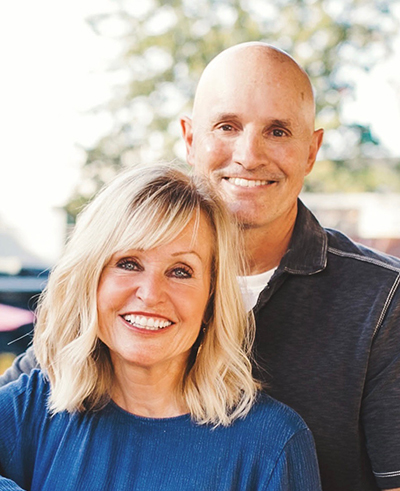
Dave and Ann Wilson
Dave and Ann Wilson are hosts of FamilyLife Today®.. Dave and Ann have been married for more than 38 years and have spent the last 33 teaching and mentoring couples and parents across the country. They have been featured speakers at FamilyLife’s Weekend to Remember® marriage getaway since 1993 and have also hosted their own marriage conferences across the country.
Episode Transcript
FamilyLife Today® with Dave and Ann Wilson – Web Version Transcript
This content has been generated by an artificial intelligence language model. While we strive for accuracy and quality, please note that the information provided will most likely not be entirely error-free or up-to-date. We recommend independently verifying the content with the originally-released audio. This transcript is provided for your personal use and general information purposes only. References to conferences, resources, or other special promotions may be obsolete. We do not assume any responsibility or liability for the use or interpretation of this content.
Blended Family Dynamics: Practical Moves for Stepparent Success
Guest:Ron Deal
From the series:Blended Family Dynamics: Practical Moves for Stepparent Success (Day 1 of 1)
Air date:June 11, 2026
Ron (00:04):
So everyday kind of stuff, stepparents can help get things done around the house because it’s part of the family expectation and part of the system and they’re an extension of that parenting relationship. But when it comes to the big stuff, we’re going to let bio parents take the lead on the tough stuff because you’re the one who can see it through.
Ann (00:30):
Welcome to FamilyLife Today, where we want to help you pursue the relationships that matter most. I’m Ann Wilson.
Dave (00:36):
And I’m Dave Wilson, and you can find us at FamilyLifeToday.com. This is FamilyLife Today.
Welcome to FamilyLife Today. We’re going out to the Caribbean.
Ann (00:53):
Yeah, we are.
Dave (00:54):
Going to get my bald head burnt again.
Ann (00:58):
This is a fun week because we’ve been already listening to some talks that we’re given on the Love Like You Mean It® marriage cruise ship. And we’re going to listen to those, and we have been listening to them all week. And this is a treat today because we’re going to listen to one of our favorite communicators, Ron Deal.
Dave (01:15):
Yeah, Ron’s amazing. He’s the director of our blended family here at FamilyLife, and he gave a talk on the dynamics of insiders versus outsiders in a blended family. And it was great stuff. And just let me say this, you can join us on the boat in February 27. Just go to FamilyLifeToday.com and use the code Countdown27, and you get a discount now through June 30th. So if you’re like me, you like deals and you like discounts.
Ann (01:41):
And all you have to do is go to FamilyLifeToday.com to sign up, put that discount key word in there, Countdown 27, and you can join us.
Dave (01:51):
Okay, here’s Ron.
Ron (01:57):
Here’s the thing about parenting in blended families. It’s really the number one hotspot. Couples in first marriages tend to fight about sex, in-laws, and money. Couples in blended family marriages tend to fight about—one of the flashpoints is parenting. And this could be parenting, co-parenting as in cooperating with the other household if you have one in your equation. And it could also be about the parent-stepparent internal dynamic going on for you in your marriage and in your family. And here’s the thing about it. This parenting hotspot ignites a lot of difficulty, not just in parenting stuff, but in your marriage, because those two things, as you’ve noticed, are intimately connected. Your parenting relationship and your marriage relationship. You can’t separate those two things. And so we want to just spend a little time today talking about what is an essentially good model. In blended families, one of the dynamics we have is we have insiders and we have outsiders.
(02:55):
What do insiders get? Well, first of all, let me explain what an insider is. An insider is a biological parent and their children. You have the same last name. You have the same emotional connection. You came from the same home. You’ve been through the same hard with one another. You’ve lived life together. These are your kids. You’re their parent. There’s no question about that. You are absolute insiders with one another. You remember back in seventh grade when you had a friend and you were an insider with that friend, or maybe you had other people that you wanted to be their friend and you were trying to get in, but you knew you were an outsider. You remember how hard you tried and you kept hoping they would open the door and allow you in? You got it. That’s it. Biological parents are insiders. We’re family.
(03:41):
Stepparent comes up to that and says, “Boy, I’d like to get in. That looks like fun.” They’re an outsider. Somebody’s got to loosen the binds here and say, “Come on in. We’re glad you’re here.” Now that’s often the biological parent until the stepparent says, “Your kids need some correction” and now, I’m like closing ranks back on the end. You with me? See how quickly that little dynamic happens? And what’s the stepparents experience of this? I’m an outsider and I’m stuck. There’s nobody on my team at all. It’s you guys against me. Well, that stinks. I don’t like that at all. And by the way, spouse, you’re the one who’s supposed to be letting me. Now it’s about your marriage. See, it’s never just about parenting. It’s all about the marriage. Now, what do insiders get, bio parent and children? Insiders get grace in conflict, which means if you make a mistake, your kids are quick to forgive you.
(04:38):
If they make a mistake, you’re quick to forgive them. Why? Because that’s your kid. It just is sort of the sweetness of being family with one another. We have lots of that. You have an insider status as a parenting figure in their life. You have the right to kind of open the door and walk in the bedroom. No, it’s nice if you knock. I get that. Politeness. But you have the right to be in their world and in their life, to speak up into their existence, about their decisions, about what’s going on in their world. And by the way, pause. I’m mindful of five-year-olds and 15-year-olds and 25- and 35-year-old adult children. The dynamic is different with adult children. You’re not necessarily trying to parent them, but you still have insider status. How about those other things? They automatically love you.
(05:21):
They automatically approve of you. They automatically trust you. Why? Because “You’re my mom,” or “You’re my dad.” That is so clear. What is unclear is the role that the stepparent has as an outsider with the children on day one. This is what they have to overcome. The kids are easily angered. If you make a mistake, they hold it against you and they hold it against you hard. They’re not quick to forgive a stepparent. They’re not sure they trust you. See, that’s that other stuff. They’re deciding whether they love you. They’re deciding whether they approve of who you are. They’re deciding if they trust. I trust you enough to take me to soccer practice and wash my underwear and get dinner on time. I trust you enough for that, but don’t you dare try to step into my world and tell me what to do.
(06:03):
So there’s layers and levels and the stepparents navigating all of this stuff from day one. And you’re trying to find your way into the family. Find your way into the fold and be accepted and be an insider. Like that’s ultimately, of course that’s what you want. And they want that for you too, but it comes with rules. It comes with expectation about when and how and to what degree. And that’s why stepparenting is sort of crazy making. Some days you’re in and some days you’re out and you’re never really sure. That’s the ambiguity of it. You’re never really sure how that’s going to work. So back to our video, when that mom looks at her kids who are watching TV 10 hours a day and she says, “It’s okay. It’s not that big of a deal.” She has this automatic insider thing working with her.
(06:54):
They’ve lived life together. This is the pattern that she’s established, and it’s worked for them and everything’s cool and great. And stepparents say, “I don’t know. That seems like that’s hard. I think we ought to tighten that up a little bit, less than 10 hours of TV a day.” He’s trying to do something on behalf of the kids and in his mind, this is helpful. But the moment he’s saying, “Wait a minute, I think that needs to change and he’s going to change those rules.” He went ahead and changed it. We call that a unilateral stepparent change, right? That’s not going to help. Then all of a sudden, mom and stepdad are just sort of at odds with one another. And part of it is what’s behind it. The emotional connections and attachments are just complicated and really, really different. So what do we do?
(07:43):
What I want to just share with you now is some core principles. You may be sort of already in the middle of this, you may be just beginning, whatever that is. I’ll leave that up to you to sort of figure it out, but let’s just sort of talk through four pillars of stepparent success. So there you go. Three foundations for biological parents. Number one, declare your loyalty to your spouse. There’s something exceedingly important about bio parents saying to their children, “Look, I’m a lifer with this husband and wife of mine. They are my world and they are my life. And this is till death to its part.” It’s really, really important that your kids understand that you are committed to your spouse. Why? Because their level of desire to allow that outsider in is contingent on how committed you are to that person being in your life, being in their life.
(08:43):
If you’re not motivated towards your marriage, why would your children be motivated to let them become an insider in their world and their life? It hangs on you, biological parent. You ever hired a babysitter and then before you walked out the door, you gave the kids the speech? “All right, kids. She’s in charge and you need to listen to her while”—did anybody ever give your kids? Why did you do that? You’re extending your parental influence and power to that person who has to fill a void while you’re out of the house. And oddly enough, it actually works. It works. Somehow, she gets through the night and the babysitting goes well, and the next time she wants to come back to this house because she feels supported by the parent. How many of you ever, before you walked out, said to your kids, “All right kids, she’s not in charge.
(09:31):
Just run all over, do whatever you want. I’ll let you off the hook when I come home.” What do you expect to have happen? A, they’re going to take advantage of that because that’s what kids do. And B, that babysitter’s never come back to your house. That’s a horrible environment. You see the point. If you’re not deeply committed and you don’t make that clear to your children over time by how you act and what you say, then why in the world would they?
Number two, pass power to the stepparent. That’s what I just talked about. You got to pass power, and you got to back them up. When we would leave our kids with our favorite babysitter, when our kids were really young, Amy, we would give the speech and then it didn’t take long. And I also added onto it. “And if you disobey her, Amy, here’s what you can do to take away privileges.
(10:16):
They’re not going to watch a movie till they clean their room, get everything done, da da da da, to your satisfaction. Then they get to enjoy the movie time. And you can follow through on making them not watch that.” I said that in front of our kids. So I’m empowering her. She knows what to do. She’s going to do it in my style. We’re a team, so to speak. And my kids know that Amy is empowered. And then I would turn to my kids and I would say, “And if you give her trouble, you get double trouble from me when I get home.” I had to do that with our youngest a few times, had to follow through with double trouble. He got two consequences, not just one. He learned his lesson. That’s the point. Amy’s in charge. But if she’s not empowered, she has no ability to get anything done.
(11:00):
And I instead empower my child over her. That’s a recipe for a disaster. So here’s the point. Bio parents, you’re the big dog in the house. Why? Because you’re an insider. These are your children. You have clarity in your role and relationship with them. The little dog is the stepparent on day one, and they’re trying to find their way and navigate that space into what’s going on in their home. And they can’t get stuff done without you lifting them up. There’s your little visual model of the dynamic that you’re going for as husband, excuse me, as bio parent and stepparent. Now, there’s a positional authority and a relational authority. When we say to Amy, you’re in charge, that’s positional authority in life. Everybody in the room has a positional authority in your life. You have a boss, you have somebody who tells you what to do, where to go and when and how.
(11:53):
You have all kinds of things in our world, positional authorities that tell us what to do. And what the parameters are. A relational authority person is like a biological parent who has a relationship and that insider status gives you lots of strength and power to be able to do what you need to do. Stepparents on day one are positional authorities. You’re a babysitter, you’re a teacher. What’s it like for a teacher who has parents who say to their kids at home, “No, you don’t have to listen to Mrs. Deal. She doesn’t matter.” Let me tell you, those are teachers who retire because they hate that environment. This is why that bio parent, stepparent, working together as a team to empower the outsider stepparent to be able to get stuff done is so critical. If you don’t do that, then you leave that outsider stepparent just hanging out there or even worse, trying to come up with all the solutions on their own.
Dave (12:55):
You’re listening to FamilyLife Today and we’ve been listening to Ron Deal, the talk he gave on the Love Like You Mean It cruise last February. We’re going to invite you to join us this next February, but right now let’s go back and hear the rest of that talk from Ron.
Ron (13:11):
Level two, stand together as a team, talk, negotiate, and support your shared decision. This is parenting 101. Every couple has to do this, bio or step. Talk. What do you think we should do? Let’s figure that out together. Let’s make a plan. Yes. Let’s go that direction. Okay. We’re united. All right. Action. The action part we’re going to get to in just a second, but that whole negotiation process is really important. You bio parents on the inside, you got to step outside that circle and go over here and connect to your partner, the stepparent. You got to be a team. You didn’t ever have to consult anybody as a single parent. You just made decisions and you made rules and that’s the way single households roll. Right? Now you got to pause. Now you got to bring them in. Now you got to honor this new relationship and connection.
(13:58):
And you got to figure out a way to be a team. And sometimes that means talking through, well, you do it this way. And maybe the stepparent to your kids has kids of their own. You’re stepparents to one another. You with me? Now you have a lot. Well, you’ve done it this way for 15 years and I’ve done it this way for six years. And what are we going to do? That is the question. And there’s no short circuiting this process. You’ve got to figure out how we’re going to do this in our home. I’ve had people ask me, “Well, can I just parent my kids my style and she’s going to parent?” Nope. I mean, you can for a day, right? But pretty quick, these kids have all the chores, and these kids never have to do anything. You’re going to have sibling conflict like crazy.
(14:35):
It’s just not going to work. If you’re going for familyness, you got to be a unified parenting team and direct towards familyness. And so that’s that negotiation part. Look at points two and three. Bio parent takes the primary role with role and stepparent takes the secondary role. Primary role is with the babysitter. I’m primary and babysitter is secondary. They still get to be parental. They still get to follow through with action based on the parenting rules of the household, but they don’t really stand on their own strength or power or relationship. They’re an extension of parenting, primary and secondary. And if there’s a big issue, the babysitter’s not dealing with it. The parent is dealing with it. So everyday kind of stuff, stepparents can help get things done around the house because it’s part of the family expectation and part of the system, and they’re an extension of that parenting relationship.
(15:30):
But when it comes to the big stuff, we’re going to let bio parents take the lead because you’re the one who has the ability, the strength, the know-how, and that really tight emotional connection with your kids to see it through. Taking away the car keys, not letting a four-year-old watch the movie time. Those are kind of equivalent, by the way. Four-year-olds and 16-year-olds. Those are moments of great distress for children. And this is when children have “GASS.” We do know this, right? GASS, that’s an acrostic, by the way, for what kids do. G-A-S-S: guilt trips, anger, silent treatment and sadness. These are the kids kids use against us as parents. Can I get an amen? Anybody ever had GASS from your kids spew in your direction? Guilt trips, anger, silent treatment, sadness. It’s all about trying them, trying to get life to be what they think it ought to be.
(16:19):
We should not be surprised that our children have GASS when we set limits and have boundaries, and that’s the way it rolls. But the point is the bio parent’s going to take the lead on the tough stuff because you’re the one who can see it through. Now, what happens though if you’re not willing to take the lead? What happens if you kind of go wimpy? You just won’t see it. Well, that’s a problem. And remember, in all cultures across all continents, what stepparents want is more action to correct behavior, misbehavior. But if you’re unwilling to correct the misbehavior bio parent, what kind of pressure does that ramp up in a stepparent who’s watching things just go crazy in the house? Well, now they want to jump in, but they can’t jump in because they’re a babysitter. They just can’t see it through. So if you’re that parent who has been soft in parenting, don’t follow through.
(17:17):
Okay, let’s just be honest about it. That’s the pattern. It’s time. It’s time to push through. It’s time to find an extra gear and begin to do the parenting stuff when it’s necessary. Now do that in concert. You’re a team, husband and wife, parent, stepparent, you’re a team, but you got to see it through. And if you’re unwilling to do that, don’t expect GASS to go away. GASS just keeps spewing and flying everywhere left and right. Let me just kind of show you how it works. The degree of authority to discipline. What does that mean? That means how much status does the child give you in their eyes that you’re a parent, that you can tell them yes, no, make decisions, offer guidance. Status is important. That’s how much they look at you in that fashion. So biological parents, they have a lot of power and always will.
(18:12):
Why? Because you’re my dad. You’re my mom. You’re an insider. End of story. Now, biological parents can throw away their power, but it’s really hard to do. I mean, your kids, they’ll cut you a break. They’ll forgive you. They’ll let you back. If you’ve been inconsistent presence in their life, but you want to show up again, they usually let you. On the other hand, stepparents on day one, come in with very little in the tank, very little trust. And they’re trying to figure out where to put you, how to put you, how to think of you. Are you like my teacher at school? Are you like my coach or my camp counselor? Yes. That’s a good way to think about who you are to them on day one. You’re like a babysitter. You’ve got a little bit of power only because you live in concert with their parent.
(18:56):
And the parent says everybody has to clean up after themselves after dinner. And so the stepparent can say, everybody needs to clean up themselves after—you with me? This is how you do it on day one. But over time, what’s happening is that the stepparents role is going up and down and in and out. It’s not a linear, up to the right sort of thing. It is in and out, back and forth, great, lousy, all the above for the average stepparent. That’s a typical journey. And somewhere you go from being an outside babysitter to being like my uncle or my aunt or my grandma or my grandpa, you are a presence, you are becoming family. You’re just not a mom or a dad. And some stepparents with some stepchildren can reach this really high, incredible influence, place and space in their life. Nobody can predict whether you will ever end up in phase two or three.
(19:45):
It’s a function of the relationship you have with the kids, and you just go with it. You just discover it and find it. And someday you wake up and you’re there and you didn’t even know how you got there. That’s pretty common. But the point is you do the best with where you are there, and you do it in concert with the other parent and that’s the teamwork that makes the dream work. You got to manage the emotional process of your household and your parenting decisions. You have to prioritize being a team. You have to manage that. If you don’t, don’t expect unity and don’t expect familyness to be developing over time because the subtext to this whole thing is how do we bring an outsider in? And if you don’t do it in the parenting moments, the family’s not going to do it as a unit.
(20:33):
Does that make sense? This is really critical to the whole family’s journey together. Because I can tell you one more story about a couple, about a woman who came to a seminar in Houston, Texas. She’s in the audience. Her husband couldn’t make it. She was there. They were three months away from getting married. She was marrying a guy with three teenage daughters. By the way, the hardest combination research shows is stepmoms and stepdaughters in the adolescent years. So here she was getting ready to bite off a bunch of stuff. She took copious notes. She came up to me afterwards and said, thank you very much for this day. I had a whole bunch of thoughts in my head about what I was going to do to help those girls. And I understand my role now and I’m going to go about it very differently. I said, “Good for you.” And she walked away.
(21:10):
Seven years later, I go back to Houston, and I’m doing another event at another church and guess who walks in? It’s Holly. And this time Mike is with her, her husband. And I get to meet Mike, and we sit down and I said, “So what happened?” And she tells me about their seven years into their family, and they just had what they called their family moon. You see, it was their wedding anniversary and Holly, she and Mike went to the kids and said, “Hey, we’re going to get away for the weekend and celebrate our anniversary.” And the girls said, “Well, you know, we’ve been through a lot of hard things and difficulties.” And she told me that her youngest stepdaughter and her were just difficult, tough, seven years in. And all of a sudden there seemed to be this little shift and the girls said, “We would like to go and celebrate your anniversary with you.”
(21:54):
And Mike and Holly’s first thought was, “No way, Jose. You are not going.” And then they rethought and they thought, “You know what? If they want to celebrate, maybe this is an us moment.” And so they went on what they called their family moon. And if you read The Smart Stepmom book, you will read that in the preface, that much of the story, which you won’t read about is how 16 years later I went back to Houston, spoke at another event, and in walked Mike and Holly. And I’m going, “Hey, what are you guys doing? How’s things going in your household? What are you guys doing here? You guys have heard this before?” And they said, “Yeah, we’ve brought five couples from our church.” They’re now teaching and mentoring other people. Yes. You may be sitting here today going, “Oh, we don’t need to be doing that.”
(22:36):
Someday, maybe. And so I get to meet all these other couples that they’re now mentoring. And I pull Holly aside and I go, “So how’s it going? ” And she says, “You know that stepdaughter that I had such a hard time with?” She said, “Just the other day, she and I were going Christmas shopping for her dad and we’re walking through, and we see some people that we know and they’re standing by a car. We go over to join them and she pulls me aside. She says, “Holly, Holly, before we go talk to them, I need to ask you a question. You have been in my life now, what, 16, 17, 18 years? You’ve really been my mom. Would you mind if I called you Mom?” Okay. I can’t promise mom labels, dad labels to anybody. That’s not the point, really. The point is relationship.
(23:23):
The point is perseverance. The point is keep going, trusting God, going in the right direction, doing what you can. Your family’s cooking. Boy, is it slow sometimes. That’s a long time to find that little sweet moment for a stepparent’s heart. You never know what God’s doing behind the scenes. Keep going.
Dave (23:52):
That was Ron Deal from the Love Like You Mean It cruise in 2026. Let me tell you, you don’t want to miss the Love Like You Mean It cruise in 2027. So there’s a deal going on right now that you can get a discount if you sign up now through June 30th.
Ann (24:07):
You can use the code Countdown27 to get those savings, and all you have to do is visit FamilyLifeToday.com.
Dave (24:15):
Again, Countdown27, FamilyLifeToday.com.
Ann (24:18):
We want to hear from you. You can leave us a voice message with your questions, concerns, praise reports, or whatever. All you have to do is go to speakpipe.com/FamilyLifeToday. Again, that’s speakpipe.com/FamilyLifeToday, or get the link in the show notes.
Dave (24:45):
FamilyLife Today is a donor-supported production of FamilyLife®, a Cru® Ministry, celebrating 50 years of helping you pursue the relationships that matter most.
If you’ve benefited from the FamilyLife Today transcripts, would you consider donating today to help defray the costs of producing them and making them available online?
Copyright © 2026 FamilyLife. All rights reserved.
www.FamilyLife.com