

Don Everts on the Power of Community
Author Don Everts knows what it’s like to feel disconnected in your own neighborhood. But he also knows why community is critically important.


Show Notes
- Host a high-impact church event without starting from scratch by using code STRONGFAMILIES between June 16–30 to get a FREE video-based study and planning support when you buy 10+ workbooks go to shop.familylife.com
- Find books by Don Everts on our shop
- Folllow Don in Instgram @evertsdon
- Thanks to the Christian Standard Bible for sponsoring this episode. Learn more at CSBible.com.
- Follow us on all social platforms: Facebook | Instagram | YouTube
- Find resources from our podcast at shop.familylife.com.
- Download FamilyLife's app!
- Help others find FamilyLife. Leave a review on Apple Podcast or Spotify.
- Check out all the FamilyLife's podcasts on the FamilyLife Podcast Network

About the Guest
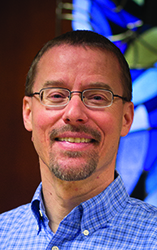
Don Everts
Don Everts is the senior pastor of First & Calvary Presbyterian Church in Springfield, Missouri, and is a writer for Lutheran Hour Ministries and the Hopeful Neighborhood Project. Don has spent almost three decades helping people on college campuses and in the local church become good stewards of their God-given gifts. Along the way, his wife, Wendy, has been helping Don do the same. His many books include The Reluctant Witness, The Spiritually Vibrant Home, and The Hopeful Neighborhood, all of which feature original research from Barna and biblical insights for our everyday lives.
About the Host
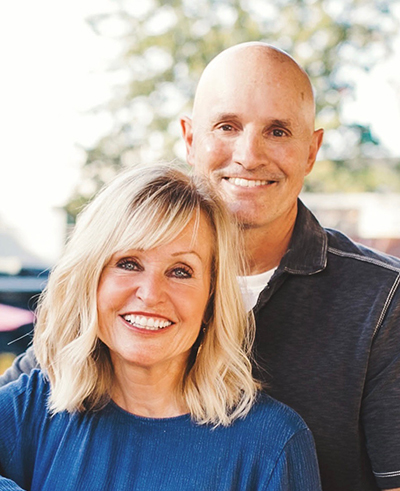
Dave and Ann Wilson
Dave and Ann Wilson are hosts of FamilyLife Today®.. Dave and Ann have been married for more than 38 years and have spent the last 33 teaching and mentoring couples and parents across the country. They have been featured speakers at FamilyLife’s Weekend to Remember® marriage getaway since 1993 and have also hosted their own marriage conferences across the country.
Episode Transcript
FamilyLife Today® with Dave and Ann Wilson – Web Version Transcript
This content has been generated by an artificial intelligence language model. While we strive for accuracy and quality, please note that the information provided will most likely not be entirely error-free or up-to-date. We recommend independently verifying the content with the originally-released audio. This transcript is provided for your personal use and general information purposes only. References to conferences, resources, or other special promotions may be obsolete. We do not assume any responsibility or liability for the use or interpretation of this content.
Don Everts on the Power of Community
Guest:Don Everts
From the series:Power of Community (Day 1 of 2)
Air date:June 29, 2026
Ann (00:04):
So do you remember that day when the sheriff pulled into our driveway?
Dave (00:09):
I’ll never forget. Why? What about it?
Ann (00:11):
Yeah, let’s share that story.
Dave (00:23):
Welcome to FamilyLife Today where we want to help you pursue the relationships that matter most. I’m Dave Wilson.
Ann (00:29):
And I’m Ann Wilson and you can find us at FamilyLifeToday.com. This is FamilyLife Today.
Dave (00:43):
Well, I was trying to sell a motorcycle. A guy came with his nephew to say, “I want my nephew, who’s sort of mechanic, to test out your bike.” So he takes it for a quick ride around the neighborhood. He comes back in, and a sheriff is following him into my driveway. It’s a woman and she gets out and says—
Ann (01:02):
She’s pretty gruff.
Dave (01:04):
Oh, she looks at me and this guy who wants to buy it and his nephew. We’re all just standing there and I’m looking around the neighborhood like, “There’s a sheriff’s car in my driveway.” I’m like, “Can we help you? ” And she goes, “Gentlemen, do you know what state you’re in?” And we’re like, “Yeah, we’re in Michigan.” “It’s a helmet state.” It isn’t anymore, but it was at the time, and he wasn’t wearing a helmet. And I’m like, “Oh, he’s just test driving my bike. He only rode around the block.” Yeah. And then she looks in my garage, and I have a street sign that’s not supposed to be there, from one of my sons that took it.
Ann (01:34):
It says Wilson Street.
Dave (01:36):
Yeah. And she goes, “And you see that street sign? I could put you in jail for that street sign.” And we’re literally standing and I’m like, “Oh no, I’m going to get arrested in front of my neighbors.” And then she goes—
Ann (01:48):
The pastor.
Dave (01:48):
“But I’m not going to do it.” We’re like, “You’re not? Why not?” She goes, “Because I’m your neighbor, and I go to your church.” And she starts laughing and I’m like, “What?!” And she goes, “I live right around the block. I’ve been wanting to do this for years.” And I just thought, “Man, it’s good to have neighbors like that, because I could be in big trouble.” And every neighborhood has a lot of neighbors. And we’re going to talk about neighbors today. Is that why you brought it up?
Ann (02:15):
That’s why I brought it up. That’s a good transition.
Dave (02:17):
I mean, I had no idea that—I mean, I saw a sheriff car drive around a neighborhood. I had no idea she went to our church.
Ann (02:23):
She’s really great too. And man, she had you good.
Dave (02:26):
She was funny.
Ann (02:26):
She talked and laughed about that for years.
Dave (02:29):
Oh yeah, it was funny.
Anyway, we’ve got Don Everts in the studio at FamilyLife Today. Don, welcome back.
Don (02:34):
Great to be with you guys.
Dave (02:35):
And you’ve written a book about neighborhoods.
Don:
Yes.
Dave:
It’s called The Hopeful Neighborhood: What Happens When Christians Pursue the Common Good. I can’t wait to talk about this. But tell our listeners a little bit about yourself, because you’re not Mr. Neighborhood Man. You’re actually a pastor, a dad, a husband. Tell us what you do.
Don (02:53):
I did campus ministry for 14 years, working with college students; and then, ever since then, I’ve been pastoring in the local church, working with everyday people, who drive minivans, and have mortgages, and are trying to figure out how to be faithful believers. So that’s kind of what I do. And then, on the side, I get nerdy with research.
Dave (03:14):
So why a book on the hopeful neighborhood? What were you trying to get at?
Don (03:18):
It was kind of two things. Part of it was processing some dissatisfaction I was having in my own life. There’s a longer backstory, but the long and short of it was I began to realize that I was living above place; and living above place is a phrase that’s used to refer to people who are living their everyday life with little to no meaningful interaction with the people in the place right around actually where they live. So I drove to my job, I drove to my church, I drove to my kids’ activities, but I actually was having very little meaningful interaction with the people in place, literally with my literal neighbors.
Ann (03:57):
I thought it was interesting though at the beginning of your book how you shared you were going around, you were in a new neighborhood, you’re going around meeting all of your neighbors and then you got to one next door neighbor, shook his hand—
Don (04:09):
Yeah. Boy, when we first moved into our 30th neighborhood and my next-door neighbor, I went over and shook his hand. I think he was watering his lawn or something like that, something with his lawn. After about 10 minutes of talking, he said, “Do you want to know something?” And I said, “What’s that?” He said, “You’re the first person in this neighborhood who’s ever come over to introduce themselves and shake my hand.” I said, “Oh, okay. When did you move in?”
Dave (04:32):
Thinking he’s probably just brand new.
Don (04:33):
Totally.
Dave (04:34):
Yeah.
Don (04:35):
Yeah. Over 20 years.
Dave (04:36):
What?!
Don (04:37):
Over 20 years he had lived there. At the time it was like, “Man, people are lame. Why aren’t people—
Ann (04:46):
Yeah, you’re judging your neighbors.
Don (04:47):
Totally. “Why aren’t people—” And we had people over at our house all the time and we had basement church because we had some neighbors who were starting to get curious about Jesus. And so my kids led a little church service in our basement for them, and my neighbors were drinking beer while it was going on. It was like we’re involved,
(05:02):
But then, something happened, and not overnight, we just slowly started disengaging with Piermont. Piermont’s the name of the subdivision we were in. We’re driving to my son’s water polo matches and my daughter was a cheerleader and I’m going to work and we’re doing all these other things, driving other places. I was reading a novel called Jayber Crow, which is by Wendell Berry. He’s a Christian writer and he has a lot of convictions about what the Bible calls us to in terms of being faithfully laboring for the people and the place right around us. It’s a story that’s a vehicle for him to say, “This is what we’re supposed to be doing.”
(05:43):
I just never recovered from that moment and thinking, “I don’t think I like this part of my life now and I’m not sure when it happened. And does God have opinions about how we should be relating with the people and place right around us? I know He said, ‘Love your neighbor.’ I know He said that, but did He actually mean our neighbor? What did He mean? Who is my neighbor?” So it just got under my skin. And then around about the same time, a little bit after that, we started doing a research project with the Barna Group on how Christians relate with their neighbors, and how neighbors perceive Christians and churches, and all of that. And so then I had all of this research in me as well and just dove in the Scriptures and never quite got over it.
Dave (06:32):
How do people perceive Christians?
Don (06:35):
So it’s not great, which is interesting. We can talk about church history because Christians have been known throughout the centuries. We are the neighborhood people. We are the ones who help others when others don’t. We are the ones. So one of the things that we ask people is, who is best suited to help solve problems in your community? And people trust more than Christians to make a difference in their community and help solve problems in the community. They trust the government more than they trust churches and Christians. They trust just average community members more than they trust churches and Christians. They trust charities. They trust businesses more than they trust churches and Christians.
Dave (07:15):
That is so sad.
Ann:
That is so sad.
Don (07:17):
Especially given what’s in our Christian heritage and what’s in the scripture when it relates to this.
Dave (07:23):
Yeah. When you say our Christian heritage, you mean we were known, the church, the community of the Christ was known as the rescuers, the ones that showed up—
Ann:
We started hospitals.
Dave:
—even when plagues happened.
Don:
That’s it.
Dave:
And you could get sick. We showed up. What happened?
Don (07:39):
It’s interesting how the early church—when you think about the early church—who were so known as people who radically loved others and loved their neighbors in a time when they were treated terribly by their neighbors. So they were being persecuted by the very people they were sacrificing their lives to love. And that’s part of—depending on which historian you read—that’s part of why the church grew like crazy in a 300-year period when it was outlawed. Alan Crider argues in his book, The Patient Ferment of the Early Church, which I highly recommend, fascinating, very readable. He argues that it was because of the patience of the early Christians. One of the early church leaders said, “The entire world is a stage, and everyone’s watching Christians to see how they will respond to persecution.” They didn’t respond to reviling with reviling. They didn’t hit back.
(08:37):
They didn’t even get bitter. They loved open-handed, just like Jesus, who said,
(08:43):
“Love your enemies.” They actually did it. Just talking about our context and the people who are listening right now, one of the things that has changed, neighborhoods are changing around us. There’s gobs of research that post-World War II, a lot has changed to make neighborhoods less interactive with each other. It has to do with the Highway Act. It has to do with air conditioning. It has to do with TVs. I mean, you can actually trace, in history, why there’s just generally less interaction in neighborhoods. But then one of the particular issues I think that we have is as we’ve moved from a kind of a Christendom era, where Christianity was trusted and respected to a post-Christendom era where it isn’t, that feels a certain way to believers. It’s maybe not active persecution, but we feel it. I think we’ve gotten a little scared and a little bitter and a little closed off because of that.
(09:38):
So I think we have our own issues that we’re dealing with, and the early Christians were tempted by that. That’s why, in this book, I dive into 1 Peter because he’s writing to those in Asia minor who are being persecuted, and they’re being tempted to kind of curve in on themselves. He writes them to go, “No, no, you’re exiles, but you’re elect exiles. God has chosen you to be right where you are.”
(10:00):
And then what does he tell them to do? He says, “Don’t return reviling for reviling, do good. Who’s going to hate you for doing good? Be a light where you are.” He just had to remind them of how to respond.
Ann (10:10):
We still need that reminder.
Don (10:12):
And I think we need to be reminded again.
Dave (10:13):
Well, I mean, it’s a sad commentary, in some ways, on the most important commandment: “Love God with all your heart, mind and soul; and love your neighbor as yourself.”
Don:
Yeah.
Dave:
Do you remember this book came out—I don’t know how long ago—Gabe Lyons, David Kinnaman, unChristian.
Don (10:28):
Yeah, sure.
Dave (10:29):
So it was a survey, research: “This is what the non-believing world says about Christians.” I think there were seven marks. And I remember I picked up the book—
Don:
Yeah, it’s not good.
Dave:
It was very bad, hypocritical, judgmental. I remember picking up the book going, “Okay, let’s see what they think.” And then I read it, and I read the whole thing, and I’m like, “They’re right.”
Ann (10:49):
So convicting.
Dave (10:50):
So you know what I did? I said, “We’re doing a series at our church called ‘I’m Sorry.’”
Don:
Wow.
Dave:
“We’re going to walk through these and say, ‘Here’s what the people that live around us think about us.’ I’m not saying it’s right or wrong, this is their perception. What’s true about it? How can we do better?’” So we send out little series thing: “Hey, the series coming up, a church is going to say, I’m sorry for whatever.” I get a call, or our church gets a call and say, “Hey, will you come on WJR and talk about this?” WJR is one of the biggest radio stations in Detroit.
Don:
Wow.
Ann (11:20):
Secular.
Dave (11:21):
And they couldn’t believe a church is saying, “I’m sorry.” So they think, “Hey, this would be an interesting conversation.” I go on, Frank Beckman interviews, “Why are you guys saying, ‘I’m sorry?’” So I tell him this book came out and I read it. I’m like, “I agree and we need to apologize for this to our neighbors.” I was in a meeting and my assistant Debbie said, “Hey, it’s like a five-minute deal. You’ll be back in a meeting.” So I get done with this—
Ann (11:40):
And she calls me and says, “Hey, Dave’s going to be on. Make sure you listen.”
Dave (11:43):
So I get done with this little interview and Frank says, “Hey, by the way, would you be willing to stay on and take some questions?” I’m like, “Okay.” And he goes, “Okay, station break.” And I go, “Hey, it’s going to be a few more minutes. Won’t be very long.” He comes back on and I have no idea what’s happening. He goes, “Hey, the place is lit up. All these people want to ask you a question. Okay, let’s go live.” “You’re with Dave. Ask him a question.” You know what it was? It’s really interesting. It was church people mad at me, yelling at me.
Don (12:13):
For apologizing.
Ann:
Yes.
Dave (12:14):
Basically saying, “You are going to apologize. They need to apologize.” I literally said to one person, I go, “This is exactly what they’re saying about us. We’re not humble. We’re not teachable. We’re not willing to own up to our own faults.” So you’re saying that’s what our neighbors are sort of saying about us. So the question would be, how do we get better? What do we do? How do we change the perception? Because it’s not just a perception.
Ann (12:40):
And maybe what we asked too, what did Peter say that we need to be reminded of?
Don (12:43):
Yes, it’s great. I mean, it’s interesting because Peter talked about two things that—well, I mean, he talked about a lot. You can read his letters in the Bible—but apropos to this, one of the things he’s talked about was do good. Then he quotes from Psalm 34, which talks about be a creator of shalom.
(13:01):
So one of the things he talks about in doing good is pursue the common good of the people and place right around you. Let’s set evangelism to the side for just a second and he does get back to it. But just set it aside for a second. What he says to them is, “Pursue the common good of the people around you, be a blessing.” And he even says like, “That’s not illegal.” That’s how he puts it. It’s not illegal to be a blessing to other people. And so one of the things that we can do is apologize. What a great thing to show that posture and to share that. And the other thing is to say, “Well, let’s be a blessing.” I mean, that’s what we’re called to do. We’re called to love our neighbors. Jesus says, “Let them see your good works so they’ll give glory to your Father in heaven.”
(13:41):
Do good works, clean up garbage, bake cookies and bring them to people. Welcome the person who just moved into the neighborhood. Go over to the guy you’ve lived with for 20 years and you’ve never shaken his hand and go and shake the guy’s hand. Things that we can do just to pursue the common good. So there’s lots that we could talk about there. And Peter, I mean, that was his encouragement. And the early church did that. I mean, they had pandemics. They stayed and when everyone else was running, they stayed and they cared for people who were sick. They were the ones who were taking these babies that were abandoned on the edge of town and they were adopting them. The babies of the very people who were persecuting them. They just were pursuing the common good. We could just stop there full stop. That’s something we could do.
(14:23):
And boy, would it change—Kinnaman and Lyons would have to write a different book.
Dave (14:32):
As a pastor, I have definitely felt the tension of serving marriages in our church. I mean, it’s a passion of ours and couples aren’t falling apart, but they’re not really connecting either. So things can look fine on the surface or on the outside, but there’s always some drift happening underneath. And you see this as a leader and you know marriages need support, but figuring out what to do, often it can feel overwhelming. So we’ve walked with a lot of churches through this and most just need a simple place to start.
Ann (15:04):
And we have that for you. So if you thought about doing a marriage event but didn’t want to build it from scratch, this is a great way forward. When you purchase 10 or more workbooks, we’ll include the full video study. Just use the code StrongFamilies. Did you hear that? StrongFamilies.
Dave (15:24):
That’s one word.
Ann (15:24):
Yep. Through June 30th. And you can go to FamilyLifeToday.com and click the link in the show notes and just again, enter the discount code StrongFamilies.
Dave (15:39):
I know you know we live in Michigan and we have snow, and we got—one year I had back surgery and I wasn’t going to be able to shovel so I bought the biggest stinking snow blower you’ve ever seen.
Don:
Nice.
Dave:
Because I knew Ann was going to do it. I wanted to make it easier for her. Well, we still have that thing. I’m not kidding. Every time I snow blow our driveway, I’ll be bringing it back to the garage—
Don (15:58):
“Hey Dave,” is that what you get?
Dave (15:59):
No, Ann—
Ann (16:00):
That’s me saying that.
Don:
Oh!
Ann:
“Hey Dave!”
Dave (16:01):
Ann’s in the garage going, “Go do Dean and Nancy’s. Go do Nick and Pam’s.” I’m like, every time I look at her, “I know. Okay.” Every time I do—
Ann:
“But Dean hurt his back, and he needs—”
Don:
Yeah. Yeah.
Dave (16:16):
—it takes 15 minutes. They end up walking out. We have a conversation: “Thank you so much for doing this.” It’s just being a blessing for the common good.
Don (16:22):
In little ways, yeah.
Ann (16:23):
Dave, the reason I do that is because we had a neighbor who was in her 80s, Mrs. Hover, and every single time—
Dave:
When you were growing up.
Ann:
Yeah. Every single time my mom—it was my mom; my dad was usually at work—my mom would go out and shovel, and I would help her. And then Mrs. Hover made a plate of cookies every single time. Those cookies were so amazing. My mom didn’t care about the cookies. She cared about Mrs. Hover, but it was just a great example for me. And those are easy things we can do.
Don (16:52):
In our research, it came out that—so a quarter of people in the United States live alone, live by themselves. A number of people say that no one comes over to their house, ever.
Dave:
Wow.
Ann (17:05):
Ever.
Don (17:06):
So in the medical field, they talk about there’s a chronic loneliness is sweeping the country. And the interesting thing is in the medical literature, the people who have chronic loneliness—because it breaks you down—they prefer to call it depression. But the doctors are like, “It’s chronic loneliness. You have no one in your life and humans aren’t meant to live that way.” So even like save the snowblower, don’t even have to cook anything. You know what I mean?
Ann (17:30):
Yeah.
Don (17:30):
Just to knock on someone’s door, just to say “Hi.” In our current context, it does not take much to be heroic. It does not take much to make a difference in a neighborhood. I mean, if people are listening and they’re like, “I don’t know how to help my neighbors.” Just say “Hi” and talk with them and take an interest. There are so many people who are alone in their homes.
Dave (17:51):
Yeah. When they go out to the mailbox, walk out.
Don (17:53):
That’s right.
Dave (17:54):
When we had a blackout, it was like, “Wow, I get to talk to my neighbors.” Nobody was in their house. The air conditioner was off.” Have you read Bob Goff’s Everybody, Always?
Don (18:02):
Yeah, I’m familiar with it. Yeah.
Dave (18:03):
You remember? I got to read part of the story.
Ann (18:05):
Let me read it, Dave. Bob Goff, he’s such a fun author to read.
Dave (18:09):
Oh, we saw him speak. He’s the most whimsical, crazy—it was powerful.
Ann (18:12):
He’s so funny. He makes me laugh so much. But he tells the story and maybe some of our listeners have heard this story, but I’ll just read parts of it. But he begins and says, “For the last 22 years, we’ve put on a New Year’s Day parade to celebrate our neighbors. Our parade starts at the cul-de-sac at the end of our block and ends at our front yard. Our whole family wakes up early every year, and we blow up over a thousand helium balloons. Before we start taking the balloons out of the house, we give thanks for our neighbors and for the privilege of doing life for them.” And then he goes on, he says, “Our block has only 20 houses if you count both sides, so our parade isn’t very long. In our first year, there were only eight of us standing at the beginning of the parade route.
(18:55):
We stood together at the end of the cul-de-sac, trying to look like a parade. Someone said, ‘Go!’ and we started walking down the street, waving to our six neighbors who were watching. Now, there are probably 400 or 500 people who come now each year. Kids pull wagons full of stuffed animals and pet goldfish. There are no fancy floats. Bicycles with baseball cards in the spokes are the norm. And hey, here’s why we do it. We can’t love people we don’t know, and you can’t either. Saying we love our neighbors is simple, but guess what? Doing it is too; just throw them a parade. We don’t think Jesus’ command to love our neighbor is a metaphor for something else. We think it means we’re supposed to actually love our neighbors. So engage them and delight in them and throw a party for them. When joy is a habit, love is a reflex.”
Dave (19:51):
Yeah, I got to read this next part. I just thought it’s so powerful. He says, “Because we’ve been putting on the parade for decades, we know all the people who live near us. I don’t know if they’ve learned anything from us, but we’ve learned a ton about loving each other from them. God didn’t give us neighbors to be our projects. He surrounded us with them to be our teachers. A week before the parade each year, we knock on a few of our neighbor’s front doors and pick a grand marshal and a queen from among them. Being picked as the queen is a big deal in our neighborhood. My neighbor, Carol, got the nod one year. A decade later, people still bowed to Carol when they saw her at the corner market or the gas station and called her ‘Your Majesty.’ It was just beautiful. One year, because of the battle raging inside Carol, she didn’t think she would be able to walk the parade route from the cul-de-sac to our house where the parade ends.
(20:39):
I have an old Harley Davidson motorcycle with a side car. That year I put Carol in the sidecar and gave her a ride. She was the hit of the parade, because all the neighbors knew about the cancer she had been staring down.
(20:51):
Carol, elegant as always, waved to everyone, and they waved back. Just before we got to the end of the parade route, Carol turned to me and took a deep, thought-filled breath. It was as if she was going through the highlight reel of her life when she said, “You know, Bob, I’m really going to miss this parade.”
(HYPERLINK “https://www.rev.com/transcript-editor/shared/JHk9DaKsoCUGEFDa8dHJXgA2VXiOzkb3L7OtARm-Ur7pQ2NQko_-ya625kw8KqFz3iwQO-9Ymf3O-z2OQtcz_FXv3LY?loadFrom=DocumentDeeplink&ts=1271.52″21:11):
I looked at my neighbor in the side car next to me, and said, ‘Me too, Carol. Me too.’ Even as I did, I asked God if He would let Carol have at least one more parade with us. One year later, on New Year’s Day, Carol was clinging to life by a few threads and was far too weak to get out of bed. She’d made it to the day of the parade she had once presided over as queen. This was an ambition I think had sustained her during the last months of her courageous battle. Just before the parade started, my sons Richard and Adam went across the street and carried Carol from her bedroom to a chair they placed in front of her living room window facing the street. Carol could hear the music and knew the parade was coming soon, but she couldn’t see past the corner of her window.
(21:53):
What she didn’t know was that we had changed the parade route and within a few minutes, all 500 people walked right through her front yard.
(22:02):
I sat next to Carol, holding her hand, as hundreds of her friends and neighbors walked to her window, pressed their noses against it and waved to her and bounced balloons. As they did, through her tears, Carol lifted her weak hand slowly to her mouth and blew each one of them kisses goodbye. A few days later, Jesus lifted Carol up to heaven. It would be her second parade of the week. I don’t know if the streets of heaven are paved in gold, but I’m kind of hoping they’re lined with balloons. And at the end of the parade, I bet we’ll find Jesus blowing us kisses, rubbing our noses and welcoming us to our next neighborhood. I just hope I get a house somewhere near Carol’s again.” I mean, I knew I was going to cry when I read that. It’s just so touching, of what you’re saying, Don.
(22:48):
That’s a Christian being a blessing to an entire neighborhood.
Don (22:53):
That’s right. An interesting thing that the research showed us—because some people may be thinking, “Well, I want to focus on growing my faith,” or “I’m focusing on those things rather than loving others and putting energy there.” After hearing that story, this won’t surprise you that the research told us that people who are pursuing the common good in their neighborhood say that doing that has made them feel closer to God. So it’s false that there’s this dichotomy, “Do I want to invest in my own growth, or do I want to blow snow for people or bake cookies or whatever it is?” And that’s not a dichotomy. I mean, the research tells us that your faith grows as you do this. It’s almost like Jesus knew what He was talking about.
Dave (23:39):
When he said, “If you want to find your life, lose it.”
Don (23:41):
“Lose it,” yeah.
Dave (23:43):
Yeah, that’s a beautiful way to be a Christian and a good neighbor.
Ann (23:52):
That was a great encouragement and reminder today.
Dave (23:55):
We can all make a difference.
Ann (23:58):
Yeah, we can.
Dave (23:59):
Just got to say, “God, use me,” and then step out and we can change our neighborhood. Again, the book is called The Hopeful Neighborhood: What Happens When Christians Pursue the Common Good. And you can get it at FamilyLifeToday.com. Just click on the link in the show notes.
Ann (24:14):
Our vision at FamilyLife is every home, a godly home, and we need your help to get there. And when you become a FamilyLife Partner, your monthly support makes that vision actually possible.
Dave (24:27):
So the question is, will you come alongside us and alongside families in need?
Ann (24:32):
And you can go to FamilyLifeToday.com and become a partner. Just click the donate button at the top and again, you can go to FamilyLifeToday.com.
Dave (24:45):
FamilyLife Today is a donor-supported production of FamilyLife®, a Cru® ministry; 50 years of helping you pursue the relationships that matter most.
If you’ve benefited from the FamilyLife Today transcripts, would you consider donating today to help defray the costs of producing them and making them available online?
Copyright © 2026 FamilyLife. All rights reserved.
www.FamilyLife.com