

Don Everts on Truly Loving Your Community
“What’s it look like to love my community?” Don Everts helps you get intentional about your relationship to your neighborhood, caring in ways that matter.

Show Notes
- Host a high-impact church event without starting from scratch by using code STRONGFAMILIES between June 16–30 to get a FREE video-based study and planning support when you buy 10+ workbooks go to shop.familylife.com
- Find books by Don Everts on our shop
- Folllow Don in Instgram @evertsdon
- Thanks to the Christian Standard Bible for sponsoring this episode. Learn more at CSBible.com.
- Follow us on all social platforms: Facebook | Instagram | YouTube
- Find resources from our podcast at shop.familylife.com.
- Download FamilyLife's app!
- Help others find FamilyLife. Leave a review on Apple Podcast or Spotify.
- Check out all the FamilyLife's podcasts on the FamilyLife Podcast Network

About the Guest
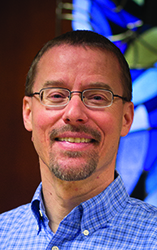
Don Everts
Don Everts is the senior pastor of First & Calvary Presbyterian Church in Springfield, Missouri, and is a writer for Lutheran Hour Ministries and the Hopeful Neighborhood Project. Don has spent almost three decades helping people on college campuses and in the local church become good stewards of their God-given gifts. Along the way, his wife, Wendy, has been helping Don do the same. His many books include The Reluctant Witness, The Spiritually Vibrant Home, and The Hopeful Neighborhood, all of which feature original research from Barna and biblical insights for our everyday lives.
About the Host
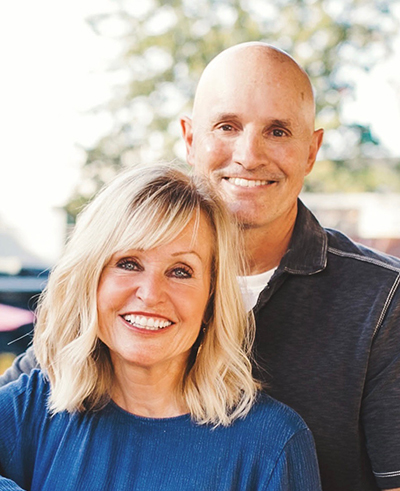
Dave and Ann Wilson
Dave and Ann Wilson are hosts of FamilyLife Today®.. Dave and Ann have been married for more than 38 years and have spent the last 33 teaching and mentoring couples and parents across the country. They have been featured speakers at FamilyLife’s Weekend to Remember® marriage getaway since 1993 and have also hosted their own marriage conferences across the country.
Episode Transcript
FamilyLife Today® with Dave and Ann Wilson – Web Version Transcript
This content has been generated by an artificial intelligence language model. While we strive for accuracy and quality, please note that the information provided will most likely not be entirely error-free or up-to-date. We recommend independently verifying the content with the originally-released audio. This transcript is provided for your personal use and general information purposes only. References to conferences, resources, or other special promotions may be obsolete. We do not assume any responsibility or liability for the use or interpretation of this content.
Don Everts on Truly Loving Your Community
Guest:Don Everts
From the series:Power of Community (Day 2 of 2)
Air date:June 30, 2026
Dave (00:04):
So we just moved into a new neighborhood.
Ann (00:06):
Yes.
Dave (00:07):
And one of the best things—I don’t know what you’re going to say about this new neighborhood—it’s not the house. It’s not even the location. It’s our neighbors.
Ann (00:18):
It’s Roman and Helen.
Dave (00:20):
I was going to say Roman.
Ann:
Yes.
Dave:
Welcome to FamilyLife Today where we want to help you pursue the relationships that matter most. I’m Dave Wilson.
Ann (00:34):
And I’m Ann Wilson and you can find us at FamilyLifeToday.com. This is FamilyLife Today.
Dave (00:48):
We’re pulling in and we’re moving boxes in—actually, it might have even been before that—our neighbor right across the street, who looks exactly like Anthony Hopkins—
Ann (00:58):
He does.
Dave (00:59):
—comes walking down to the end of the driveway with this big smile. I mean, I think he’s—
Ann (01:04):
—polish accent.
Dave (01:05):
—genuinely was excited to introduce us to the neighborhood. And he has become a really good friend.
Ann (01:12):
Really good friend. He came here when he was 18 years old from Poland—got to hear his story—how his wife’s from Poland, from the village he grew up in. And they didn’t even know each other, but they met here in the United States and got married.
Dave (01:25):
Yeah, and now every time our garage door is open, he texts and says, “Hey, your garage door is open.” I mean, he’s just that guy watching out for us. And here’s what I thought.
Ann (01:34):
And our other neighbors, too, have been great.
Dave (01:37):
Yeah, and I thought, “The way we feel about Roman—just this genuine, love-filled man—does anybody feel that about Dave and Ann Wilson in this neighborhood?” Because I think that’s what we’re supposed to be: the light of Christ. As we come into a new area, we should represent that. So we’re going to talk about that today.
Ann (01:58):
But I also think, Dave, we’ve gotten really lazy. Like back in Michigan, sometimes it’s easy just to pull in the garage, put the garage door down and go in without talking to anybody, especially if you haven’t had a very good day.
Dave (02:13):
Yeah, so today we’re going to change that. We’re going to change us, and we’re going to change others. We got Don Everts back in the studio with us. Don, welcome back to FamilyLife Today.
Don (02:22):
Always love being with you guys.
Dave (02:24):
Now, you’re sitting over there smiling. I mean, you’ve written a book called The Hopeful Neighborhood. The subtitle is What Happens When Christians Pursue the Common Good. So you’re over there smiling because what we’re talking about is exactly what you’re hoping happens, right?
Don (02:37):
Well, and I’m smiling because I just moved into a new neighborhood too.
Dave (02:41):
And by the way, this is your 31st neighborhood.
Don (02:43):
It is my 31st, for those who are keeping track at home. That’s right. That’s right. I’ve moved around a lot and maybe it’ll be my last. I’m hoping. I’m hoping. But yeah, we just moved in and it’s been fun to get to know the neighbors. I’m smiling because we’re kind of navigating the same thing of like, what is my relationship to this neighborhood going to be? Am I going to have a relationship?
Ann (03:05):
I think that’s a good question, and should we have?
Don (03:07):
And should we? No one expects me to. It’s culturally normal to not, and yet with the research we’ve done on neighborhoods and digging back into the Scriptures and what the Scriptures have to say about how we’re meant to be a blessing to the people and place right around us I think, actually, God invites us to. Life is more beautiful if we kind of become a part of this like web of people and place and pets and trees and streets and sidewalks and all the things around us. So I’m smiling because what a wonderful thing to be thinking about.
Ann (03:43):
You just alluded to what happened?—of what made us stop being outside and what took us inside? I was curious, like what are those things?
Don (03:52):
I think there are a wide variety of reasons. I think one interesting one here in the modern era is we have a huge emphasis on evangelism, which I’m a fan of. Most of my books are about evangelism. But I think that we have equated like being a faithful Christian and relating with the people around us is mostly done by sharing the gospel message. Now, is that a way of loving people? Totally, absolutely. Now do most people trust us enough to hear it from us? No, they don’t. But it’s interesting because in the early church, an interesting thing was said about the first Christians. It was said that they had eloquent behavior. Think about that for a second. It wasn’t that they had eloquent words. They had eloquent behavior. That’s an early historian in those first centuries when they were being persecuted, and yet they were loving the people and place around them in gorgeous ways, in beautiful ways.
(04:49):
Early historians said that Christians had a strange way about them that drew people to them. Well, that strange way was Jesus’ way of laying your life down for other people, and lifting others up, and seeing their dignity and blessing them and picking kids up. So I think one of the things that has changed is I think that maybe because the culture around us is shifting and we’re kind of this post-Christendom era where like the culture is less Christian around us—and I think some people are kind of tempted: “I’m going to close off, and every now and then, I’ll just lob an evangelism grenade out and hopefully God can use it. Probably, I’ll be persecuted and they won’t respond.” If that’s our most engaging, winsome picture of how we’re supposed to be relating with the world around us, no wonder we’re kind of isolated and closed off. We pop up from our home, and we run over to a Christian huddle, and then we pop up from there and go run over to another Christian huddle.
(05:43):
I think we can huddle up like that, and we’ve lost this picture, this biblical image of—I mean, it’s right there in the garden. Keep and care for the people and the place right around you. Peter, in the New Testament where they’re being persecuted in Asia minor and they’re being tempted to close themselves off. And Peter writes this gorgeous letter that says, “Oh guys, guys, you are elect exiles. You’re elect by God right where God wants you. It feels like you’re an exile. So love the people around you.”
Dave (06:13):
Yeah. And it’s interesting. I think a lot of us, we want to get our neighbor to our church. Christmas is coming or Easter’s coming, we’re going to make an invite and it’s the only time we ever talk to them. “Who are you again? You live next door.” It’s like if we were over there helping them in their yard or we saw there was a need and we showed up with no agenda. We’re just there showing up.
Ann (06:36):
They don’t feel like they’re a project that we are working on.
Dave (06:38):
Yeah. And then when we make the invite, they’re probably going to go, “Yeah, I know you. I trust you. What are you talking about?—church what?”
Don (06:44):
That’s right.
Dave (06:45):
But if you just lob the thing and they’re probably going to say no. And you’re going to think it’s them and it’s probably us.
Don (06:51):
Yeah, that’s right. And it’s interesting in Peter’s letter, for example, we talked in the last episode about how he encouraged them to pursue the common good. Just love people, do nice things for them. A little later he says, “When people ask you the reason for the hope that is inside of you, be ready to talk about your faith.”
Ann (07:09):
Interesting.
Don (07:09):
It’s like as you are laying your life down and you’re living a beautiful upside-down Jesus life with the people and place right around you; they’re going to ask you at some point. You’re going to build trust. You’re going to have gained a hearing. And he’s like, “So be ready.” I mean, be ready to talk about it. And that’s the other way we can love our neighbors is like to be ready to say, “We’re like this because we follow this weird, ancient Rabbi, and we live this life for Him. Because of my wife and how incredible she is, our neighbors are already coming to our church, but it’s not because we invited them to church. It’s because we invited them over for a meal.
Ann (07:43):
It’s that D.L. Moody quote that says, “Out of a hundred men, one will read the Bible, and the other 99 will read the Christian.” Your neighbors have been reading your wife. They’ve been reading you, Don. They’ve been reading your family and they’re thinking, “I haven’t read my Bible, but what I see in that family is something that’s attractive.”
Don (08:03):
Some people think we make a good testimony by pretending we have it all together and all that. That doesn’t convince anyone of anything. I mean, it’s being authentic and having people in your life and loving them in practical ways. That is what makes a difference. Our research told us—we asked non-Christians, “Is there anything in your community or your neighborhood that you think churches or Christians could be helpful with?” And they said, “Yes.” So there are actually things that they’re like, “Yeah, actually Christians could be helpful.” The other encouraging thing is that, in general, they don’t trust churches or Christians, generally, but they have a high trust for people who live in the neighborhood.
Ann (08:46):
Interesting.
Don (08:48):
If the last era, the era of Christendom, was maybe an era of like church-centered programs, or massive programs and that sort of thing, people don’t want those right now—the non-Christians. But someone who lives in their neighborhood, they’ll trust them because they live in the neighborhood.
Dave (09:03):
Now, have you done anything as a family in your neighborhood?
Don (09:07):
Oh yeah.
Dave (09:07):
I’m putting you on the spot.
Ann (09:08):
Yeah. Tell us some of the things your family’s done.
Don (09:10):
Well, I mean, being married to Wendy is a little like cheating. So we did basement church for a while, just having people in our church. We turned our garage into a hockey rink. You know how a lot of people have fire pit? Well, we put ours in the front rather than the back and people come by all the time, “Hey, you want a hot dog?” and people stop by. Going to our neighbors and inviting them to holiday type things. “Hey, we’re doing this for the holidays.” So all those, kind of preceding kinds of things. Block parties are great. All those things are ways of getting to know your neighbors, starting to be a blessing there. We make it a practice to just sit on our front porch rather than the back porch.
Dave (09:58):
As a pastor, I have definitely felt the tension of serving marriages in our church. I mean, it’s a passion of ours and couples aren’t falling apart, but they’re not really connecting either. So things can look fine on the surface or on the outside, but there’s always some drift happening underneath. And you see this as a leader and you know marriages need support, but figuring out what to do, often it can feel overwhelming. So we’ve walked with a lot of churches through this and most just need a simple place to start.
Ann (10:31):
And we have that for you. So if you thought about doing a marriage event but didn’t want to build it from scratch, this is a great way forward. When you purchase 10 or more workbooks, we’ll include the full video study. Just use the code StrongFamilies. Did you hear that? StrongFamilies.
Dave (10:50):
That’s one word.
Ann (10:51):
Yep. Through June 30th. And you can go to FamilyLifeToday.com and click the link in the show notes and just again, enter the discount code StrongFamilies.
When I was a kid, nobody had trampolines, nobody back in the day, but my family did. I don’t even know how my dad got this square—it was a square trampoline. The first day we moved into the neighborhood, we took that square trampoline, and we put it in the front yard, purposely.
Don:
Wow.
Ann:
My dad said, “You guys want some friends? Put this out in the front yard.” Every kid on our street was in the front yard. I like that idea about your fire pit because people are just walking by and you can say hi to them.
Don (11:35):
That’s right. So there’s little things that we’ve done. There’s bigger things, too. We’ve invited neighbors to move in with us when things have happened.
Dave (11:42):
You really have done that?
Don (11:43):
Sure. When there have been situations where they need help, where things are going on in life and “Come on over,” and your washing machine doesn’t work, “Come on over.” But the prerequisite for a lot of those things—and this isn’t rocket science, but it also is challenging—is to actually know people. When we did this research with Barna at Lutheran Hour, we said, “We need to make some tools that can help people get to know their neighbors better.” So this will be silly—because it’s hard—if you’ve lived in a neighborhood for a long time, it’s hard to reengage and go, “I totally forgot your name and I know I say hi to you”—
Ann:
So awkward.
Don:
—”all the time, but I’ve forgotten your name.” How do you re-get to know people? So we’ve created this neighborhood map, a simple little thing people can do to go and try to get to know people.
(12:29):
We created this thing called “Neighborhood Bingo.” And so it’s this bingo board and there’s little things that you have to do to create a thing and whether it’s like, ask them what the name of their pet is, tell them you forgot the name of their pet. So there’s little things that we can be doing just to begin to reengage with our neighbors. For those of us—if there’s people listening who are like, “I’d love to do things to love my neighbors. I don’t know any of them.” Well, then start there.
Dave (12:54):
Yeah. Just get to know them. And I think one of the things I hear you saying is like, have eyes, eyes to see your neighbors. It’s easy, even as a pastor, I saw my people at my church and my eyes were on them. How can I serve them? And like I’m a shepherd there, but it’s like, we’re shepherds. We’re the light of the world in our neighborhood and we need eyes to see. I’ll never forget, one day, I get a phone call from Ann, she’s driving home and I find out—and I don’t even know how the story’s going to end—she picks up some lady on the side of the road.
Ann (13:29):
Yeah, this was, I’m driving home. When I get up in the morning before I turn off—right after I turn off my alarm, I say a quick prayer, “Jesus, I give You my life today. I give You everything in me and I pray that You would give me Your eyes, You’d give me Your ears, and You’d give me Your mouth to be able to speak.” And so you guys, God, here’s those prayers and answers those prayers. And so I was driving home from work one day. I’m talking to my mom and dad who were then in their late 80s, and I talked to them every day. That was a big thing. They wanted me to call them every day. So I called them and my mom had Alzheimer’s, but my dad’s really quick and I said, “Hey, I just went by someone that sat on the sidewalk.
(14:14):
I’m going to turn around and go see what’s up.” Because I could see she was older and she just sat down in the middle of a sidewalk on a busy road. My dad—this is so like my dad—
Dave:
This is so her dad.
Ann:
“Hey, keep me on the phone. I want to hear what’s happening.”
Don (14:28):
Because he was curious or because he wanted to protect you?
Ann (14:30):
No, he was curious.
Dave:
He’s curious. He’s like, “There’s an adventure about to happen.
Ann:
It’s an older woman, and so I turn around. I go to this woman and she’s sitting, and I can tell she’s probably in her late 80s as well. She has a huge bag and a purse. I sit down on the sidewalk with her and I said, “Hey, I noticed that you sat down. Are you okay?” She’s so funny. She says, “Honey, I am tired and it is hot, and I have a ways to go to get to my house.” And I said, “Well—”
Dave (15:01):
This is probably five or ten blocks from our neighborhood.
Ann (15:05):
Yeah.
Dave (15:06):
It’s pretty close.
Ann (15:06):
So yeah, she’s pretty close to us. I said, “Well, I’m on my way home. You don’t know me, but I am so happy to drive you home.” And she said, “That would be wonderful.” So she gets in my car and now I have to introduce her to my dad and my mom, “Hey Dad, this is Betty.”
Don (15:24):
They’re on the speakerphone here.
Ann (15:25):
They’re still on the speakerphone. So I say to Betty, “Do you have an address?” And she said, “Honey, I know where I live. I’ll just tell you where to go.” So I start driving and she tells me a street and I just kind of type it into my phone. I’m thinking, “I don’t know where that street is. And this is my neighborhood.” And so we’re driving, she says, “Take a left, take a right.” And then she says “Hmm” and she starts crying. She said, “I don’t know where I am.” And I can tell because my mom has dementia. I thought, “Oh, something’s up.” And so I know that there’s an assisted living home close to this place. So I drive to that parking lot and I said, “Does this look familiar?” And she’s crying even harder. She says, “No.” And I said, “Well, maybe you have your ID in your purse,” because she can’t even remember her last name now.
(16:14):
And so she says, “Leah, let me find something.” So she has this big bag and a purse, but the only things in this big bag, she pulls out a wig.
(16:26):
And then she pulls out this huge thing of makeup and then this is the most fun—it’s a funny thing, she pulls out this huge alarm clock, a black big alarm clock with the bells on the top that goes ding, ding, ding, ding.
Don:
Yeah.
Ann:
And I said, “Betty, you are super prepared.” And she said, “Honey, you never know what you’re going to come across. You always need these things with you.” And then I find a wallet, but there’s nothing in the wallet, but at the very bottom of her purse in a pocket, I find a card and it has a name on it. And I said, “Do you know this name?” I read the name and she said, “Yeah, that’s my daughter’s name.” And so I Google the daughter’s name, and I find out, oh, she’s in the neighborhood. I know this street.
Don:
The daughter is?
Dave (17:11):
The daughter’s street is near where we live.
Ann (17:13):
And so I drive to this—it’s pretty close to us, this home and in the driveway is a police car, a fire truck and the sirens are going off and Betty says, “Oh no, I think I’m in trouble.” And so I pull into the driveway, this man comes running out and he yells, “Ann Wilson, you have my mom.” And I said, “What?” He goes, “Of course, of course. We have been praying, ‘Father God, find our mother.’” And it was his mother-in-law and he said she’s been living in their home just a few weeks. She has dementia.
Dave (17:55):
He knows Ann because they go to our church.
Ann (17:56):
They go to our church and he said, “We prayed God send an angel to find her and bring her home.” And he said, “Thank you for finding her and seeing our mom.” And it makes me teary thinking about it. She passed away not too long after that and they asked me to come to the funeral and share that story; because they said, “We want people to know that God always sees them, that there’s someone in the neighborhood that’s watching out for them, like God will send his people to you.” I thought that was the sweetest story.
Don (18:31):
And the beautiful thing, Ann, what I love is that it started because you sat down next to her.
Dave (18:37):
Ann saw her.
Don (18:38):
You saw her, you sat down next to her. People listening like, “How do I engage with my neighborhood?” Just look, just watch. And there are going to be opportunities to be light. There are going to be opportunities to just be friendly. There are going to be opportunities to just have fun and that is eloquent behavior. That’s what they called it in the early church. And there’s a reason why Jesus said, “Let your light shine and people will give glory to your Father who is in heaven.” What you did, you let your light shine, but the glory goes to God. People are more impressed by God because of what you did. And so that’s kind of the hope. If people are listening, they’re like, “I want to share the gospel with my neighbors. I don’t like them, but I want to share the gospel with them.” Well, maybe start by liking them or getting to know them and being kind and loving them, pursuing the welfare of your neighborhood and then God will give you—you’ll gain a hearing over time. If He’s pursuing someone, there’ll be an opportunity to share the gospel and eloquent behavior draws people in and they go, “Why are you hopeful?”
Dave (19:41):
Yeah, I think it’s so easy to see and move on. I’m honestly thinking if I was driving that day and saw this woman, I would’ve kept driving. Yeah, there’s a woman sitting there and Ann has this heart—
Ann (19:54):
But it’s that prayer.
Dave (19:54):
—that says, “I got to stop. I got to stop.”
Ann (19:58):
It’s that prayer at the beginning. I feel like when we offer our lives to God, He’s like, “All right.”
Don (20:04):
You’re available.
Ann (20:05):
Yeah, you’re available today.
Dave (20:06):
So when you’re walking around your neighborhood, which we do a lot, it’s like, you walk by a neighbor, stop.
Don (20:11):
Yeah.
Dave (20:12):
Just say “Hi.” And it may lead to a conversation. I know some of you are thinking, “I don’t want to stop. I don’t want to talk to them.
(20:18):
I want to get my steps in.” And it’s like, no, we’re called to be the light of the world. And you know what’s really interesting? It’s one of my mantras when I was preaching is that very passage, Matthew 5:14, when Jesus says, “You are the light of the world. A city set on a hill cannot be hidden.” The word in the Greek, “set on a hill,” is “strategically placed on a hill.” So in a sense, He’s saying to the disciples and to us now as disciples, “I’m strategically placing you in neighborhoods to be light. Don’t close your garage door and shut your door and turn off the lights and hide.” I mean, there are times where we need to refill—
Ann (20:54):
I have to share this story.
Dave (20:55):
—walk across the street and say, “Hi” to your neighbor. You got another story?
Ann (20:58):
I have not done this well over the years—I just have to say—because sometimes it’s messy. We’d like it to be the story of the woman sitting on the sidewalk. But man, when we lived in California and we were going to seminary, we’re pouring into and trying to love our neighbors. And then there was this one lady. I was drained after a while because she would just talk and talk. And I have to admit; she came to my door one time and you could see through it.
Don (21:25):
You were pretending you weren’t there.
Ann (21:26):
I fell on the floor, flat on my stomach, because I just did not want to talk to her that day. And so I’m saying we don’t all do it perfectly. Another time, we had a woman, who was not in a great situation and marriage. It was a little abusive. So she lived with us for a little bit with a daughter. They had a little dog and that dog upstairs went to the bathroom all the time in that upstairs bedroom where they were staying and like, “Ugh.” That’s why I’m saying it’s not always convenient. It’s not always easy.
Dave (21:54):
It’s messy.
Ann:
It is.
Don (21:56):
This is part of why—after we did this research and realized like, “Man, how do we do this? And we don’t have the muscles that maybe the early church had or whatever.” So we developed this network across the country, and even around the world, people are starting to do it, called The Hopeful Neighborhood Project, which is just people who are like, “I want to be helpful in some way in getting to know my neighborhood, in helping my neighborhood.” And so we created HopefulNeighborhood.org. It’s just like a place—there’s neighborhood coaches who will hear some ideas, people are sharing best practices with each other, sharing stories with each other—because sometimes we fall on the floor and we pretend we’re not there. We need to hear the story from someone else and go, “Okay, okay. I can do that. I can do that.” Or to get ideas, it’s embarrassing that we’re out of practice because Christians should be like industry leaders when it comes to being good neighbors.
(22:44):
We really should and we’re not. And that’s okay. We’ll just admit it and repent and then say, “We have to grow. How can I get some help in this? How can I get some ideas? I’ll just sit out front.” That’s an act of being available.
Ann (22:57):
Yeah.
Don (22:58):
“We’ll see what God does.”
Ann (22:58):
And I would say too, whatever you do, whatever you pray about, bring your kids. If you have kids in your home, bring them in.
Dave:
Bring them into it.
Ann:
Have that conversation.
Don:
Absolutely.
Ann:
And pray at the dinner table, “Lord, help us to love and see our neighbors,” and “What would that look like?” And then talk to your kids about it and pray about your neighbors. It gives them a worldview. It gives them a vision for their neighborhood of how God can use them, not just sharing the gospel, but just in loving them.
Don (23:25):
Every first day of school, because kids are all—first day of school, part of my speech, sending them off, I always say, “I want you to keep an eye out for someone who’s new to the school in your classroom, or someone who doesn’t have anyone to play with on the playground.” Because we can get so caught up in ourselves. It’s actually like your life is found by giving it away and by looking out for others, and we want to pass that on to our kids and maybe they’ll do better than we.
Dave (23:54):
Tell you what, that’s good stuff. I hope you as a listener feel motivated.
Ann (23:58):
Yeah.
Dave (23:59):
Say “God, I want to make a dent where I’m sent. I’m sent right here in my neighborhood, so God use me and He will.”
Ann (24:05):
I feel totally inspired. We can do better at this, and I want to be better at this. Again, this is Don Evert’s book called The Hopeful Neighborhood: What Happens When Christians Pursue the Common Good.
Dave (24:16):
And you can get at FamilyLifeToday.com. Just click the link in the show notes.
Ann (24:20):
We know life is full of challenges and families today need biblical truth more than ever. And as a FamilyLife Partner, your monthly gift helps bring the truth into homes every single day through podcasts, events and resources.
Dave (24:36):
Become a partner today. Just go to FamilyLifeToday.com and click the donate button.
Ann (24:45):
FamilyLife Today is a donor-supported production of FamilyLife®, a Cru® ministry; celebrating 50 years of helping you pursue the relationships that matter most.
If you’ve benefited from the FamilyLife Today transcripts, would you consider donating today to help defray the costs of producing them and making them available online?
Copyright © 2026 FamilyLife. All rights reserved.
www.FamilyLife.com