

The Long Game Matters: Real Talk about Step Grandparenting–Ron Deal
Grandparenting is sweet. Step Grandparenting? That can get complicated fast. On FamilyLife Today, Dave and Ann Wilson talk with Ron Deal about blended-family holidays, divided loyalties, awkward beginnings, and the long game of building trust with step-grandkids. From Captain America costumes to painful Christmas memories, this conversation hits the real tensions families carry—and how undeserved kindness, a dollop of patience, and a generous helping of joy can slowly change the story.


Show Notes
- Host a high-impact church event without starting from scratch by using code STRONGFAMILIES between June 16–30 to get a FREE video-based study and planning support when you buy 10+ workbooks go to shop.familylife.com
- Explore today's featured grandparenting resources and listen to the FamilyLife Blended podcast by visiting familylifeblended.com, where you can also find details on the Legacy Grandparenting Conference.
- Thanks to the Christian Standard Bible for sponsoring this episode. Learn more at CSBible.com.
- Follow us on all social platforms: Facebook | Instagram | YouTube
- Find resources from our podcast at shop.familylife.com.
- Download FamilyLife's app!
- Help others find FamilyLife. Leave a review on Apple Podcast or Spotify.
- Check out all the FamilyLife's podcasts on the FamilyLife Podcast Network

About the Guest

Ron Deal
Ron Deal is Director of FamilyLife Blended®️ for FamilyLife®️ and President of Smart Stepfamilies™️. He is a family ministry consultant and conducts marriage and family seminars around the country; he specializes in marriage education and stepfamily enrichment. He is one of the most widely read authors on stepfamily living in the country.
About the Host
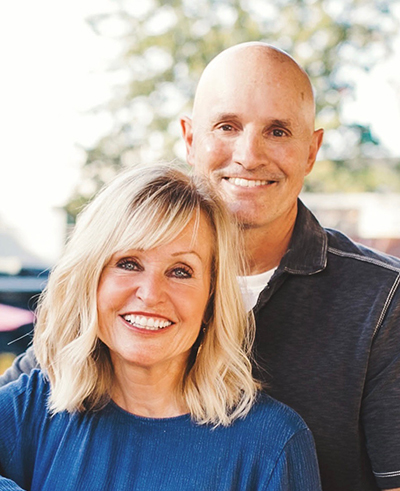
Dave and Ann Wilson
Dave and Ann Wilson are hosts of FamilyLife Today®.. Dave and Ann have been married for more than 38 years and have spent the last 33 teaching and mentoring couples and parents across the country. They have been featured speakers at FamilyLife’s Weekend to Remember® marriage getaway since 1993 and have also hosted their own marriage conferences across the country.
Episode Transcript
FamilyLife Today® with Dave and Ann Wilson – Web Version Transcript
This content has been generated by an artificial intelligence language model. While we strive for accuracy and quality, please note that the information provided will most likely not be entirely error-free or up-to-date. We recommend independently verifying the content with the originally-released audio. This transcript is provided for your personal use and general information purposes only. References to conferences, resources, or other special promotions may be obsolete. We do not assume any responsibility or liability for the use or interpretation of this content.
The Long Game Matters: Real Talk about Step Grandparenting
Guest:Ron Deal
From the series:The Long Game Matters: Real Talk about Step Grandparenting (Day 1 of 1)
Air date:July 1, 2026
Ron (00:04):
We all know if you have a son or a daughter-in-law, you know things change. And they’re supposed to, because leave and cleave means something. All of a sudden, the kids aren’t with you on days that you would prefer, but to have the heart and attitude that says, “We’re going to bring the joy. No matter what day we can get together, we’re just going to make the best of it.”
Ann (00:31):
Welcome to FamilyLife Today, where we want to help you pursue the relationships that matter most. I’m Ann Wilson.
Dave (00:38):
And I’m Dave Wilson and you can find us at FamilyLifeToday.com. This is FamilyLife Today.
Well, I tell you, I never thought I would enjoy being a grandparent as much as I do.
Ann (00:58):
Why? Wait, you didn’t expect it?
Dave (01:01):
I did not. No. There are little critters coming into our empty nest world that I was sort of enjoying.
Ann (01:07):
What do you like about it?
Dave (01:08):
Honestly, I mean, I could—you don’t want me to go there right now, but it’s legacy.
Ann (01:13):
It’s been pretty remarkable. I don’t think I go that deep about it. But I do feel this sense of I want to give them all the best of what Jesus has for them and what we have and what we’ve learned. And I feel overwhelmed by gratitude, but also by a little bit of responsibility.
Dave (01:31):
Oh yeah. So let’s talk. Ron Deal’s in the studio.
Ann (01:34):
He’s a grandparent.
Ron:
I am.
Ann:
Kind of a new grandparent.
Dave (01:38):
What do you feel when you think about being a granddad?
Ron (01:40):
Eighteen months my grandson is, and it is a joy and it is everything everybody said. You get to just the best of the best of parenting.
Ann (01:50):
We have to tell our listeners what he calls you. This is the funniest. I’ve never heard of one that’s so unique and funny.
Ron (01:57):
You know all the conversations you have before you become a grandparent. “What are they going to call us? What name do we want?” And Nan, of course, became Nana. And I decided to let my son and daughter-in-law and my kids sort of have a conversation and figure out what they wanted.
Ann (02:12):
We did too. We let our kids decide.
Ron (02:14):
They came to me and they said, “We want to call you ‘Big.’”
Dave:
Big?
Ron:
As in “Big deal.” That is my grandfather name, Big.
Dave (02:24):
All right. So we can talk grandparenting.
Ron (02:27):
Yes.
Dave (02:27):
But we can also talk something that’s rarely talked about is step grandparenting.
Ron (02:31):
Right. It’s a big subject.
Dave (02:33):
And that’s your world living as the director of our blended family ministry. It’s a different dynamic, right?
Ann (02:39):
Are there a lot of step grandparents?
Ron (02:40):
You guys, listen to this. Within a few years, the prediction is that every grandparent for every two grandchildren, they’ll have one step grandchild.
Dave (02:51):
For every two.
Ron (02:52):
For every two biological grandchildren, there will be one step grandchild. In other words, this is incredibly common. Very, very common.
Ann (02:59):
And nobody talks about it.
Ron (02:59):
And no, we don’t talk about it at all. So imagine you’re in your mid 60s, you’ve been married some time, and you have kids and all of a sudden, one of your adult children marries somebody who has a child from a previous relationship—one, two, or three kids. So your son or daughter just became a stepparent, and you just became a step-grandparent. Now, if you’ve got biological grandchildren already, you got a relationship, you got fun and games, you got rhythm, they call you Big and life is good and you have all this stuff and time invested. And now, all of a sudden, there’s a 13-year-old and a 15-year-old that you don’t even know, but they’re family.
Ann (03:42):
And that’s exactly what happened to some of our best friends is they had their two grandkids from some of their kids and then they had their daughter get married and her husband brought in three and they were older. I think the oldest at the time was 10. And so now they had these little baby grandkids. Now they have almost teenagers.
Ron (04:04):
That’s right.
Ann (04:04):
And so it’s a whole different world and it changes the whole family dynamics.
Ron (04:09):
We call that an inherited grandparent situation. You’ve inherited step-grandchildren and boom, here you go. And so you have easy with the biological grandkids with whom you’ve had many years in life and relationships, and they’ve never known you as anything other than their grandfather. But now you have step-grandchildren who are going, “Hey, how are you? ” That awkward—
Ann (04:31):
I don’t really know you.
Ron (04:31):
—first meeting and you’re my grandfather now. How does that work? Obviously, it’s like a new friendship.
(04:38):
You got to start from ground zero. You got to build something here. Now that’s just one scenario. There’s another scenario where maybe you’ve been divorced earlier in life or maybe you were widowed. I know tons of people in our ministry. In fact, we’re hearing more and more from people who had a 30-year first marriage and it was marvelous. And then somebody gets cancer and dies and the remaining spouse at over 60, sometimes over 70, they get married again and instantly their new spouse’s adult kids and grandkids become stepchildren and step grandchildren. And so you all of a sudden, get these immediate relationships with people you don’t know, don’t have any history with and yet you’re connected. So this is the kind of thing that people have the best of intentions and marry into thinking, assuming, “I have goodwill, you have goodwill. We’re all good people.
(05:30):
We’re going to get along just fine.” Only to discover, yeah, this is harder to navigate than we thought it would be. And here’s the thing I want to say about it. I mean, one of the beautiful things about being a grandparent is you have an opportunity to influence another generation, more children.
(05:45):
Now, you got to develop enough relationship that your voice matters, but you can have the same sort of influence in the life of a child. Now here’s the funny thing about step-grandparenting. There’s a middleman. It’s the adult generation, if you will. So think three generations, the children, their parents and now the grandparents, step-grandparent. You got to go through their parents to get to the kids. For some step-grandparents, that’s easy because their parent is your child. For some, their parent is not your child. You got to get to know that person, earn their trust so they’ll give you access to the children. So there’s a little bit longer road to get to influence. I mean, bottom line is we all did this as parents. If you met somebody and you didn’t really like them, you didn’t let them have access to your children. So there it is.
(06:41):
If they don’t trust you—
Ann (06:42):
There has to be trust formed.
Ron (06:44):
You got to build that sense of connection and safety is what’s going to come with the trust. They’re going to go, “Okay, you’re a safe person. I’m blessing your time with my child.”
Dave (06:55):
And would you say as a grandparent, you don’t go any farther than they let you with their kids?
Ron (06:59):
One of our principles that we teach with stepparenting, this would apply here in grandparenting, is pace with the people you’re trying to get to know and build a family connection with. You pace with them and their timing. If they let you into their heart immediately, you run in. If they’re like, “Yeah, hold up. You can wash my underwear for me, but I don’t really want you to ask me any questions about me and my life.” Then that’s all you get right now. That’s where you got to pace. I mean, this is the principle that you would naturally do if a new coworker walked in, you’re going to find something to connect, start a conversation, but you’re going to pace with them. You push yourself on people and they’re like, “Ooh, back up. That’s way too fast.”
Ann (07:41):
What does the conversation sound like with your kids about this?
Ron (07:45):
With your adult children?
Ann (07:46):
Adult children.
Ron (07:47):
So imagine just going to them and saying, “Hey, look, we’re so happy for you guys. We’re thrilled. We want to be a blessing to you, to your children. Tell us how we go about connecting with your children. What’s comfortable for you? How should we do that? You know them better than I do. Give me a clue. What is it that I can do that would connect with child A, child B, child C?” And so use them as the experts as they are on their children. And what you’re really doing is you’re inviting their permission and you’re showing them, “Here’s my heart and my intention. I want to be a blessing. I’d like to offer some time and energy. Yes, can we pick them up after school for you? Yes, can we do these errands,” but we also want to just be an influence. So what we’re doing is we’re building equity with the adult parent and ultimately, getting access to these kids.
Dave (08:38):
What if that adult parent, and maybe it’s a stepdaughter, son, says to you and you say, “Hey, are you good with me sharing my faith with them and taking them to church maybe or really helping them get closer to God?” And they say, “No, we would like you not to do that.”
Ron (08:56):
Okay. So here’s the thing, your heart is sad and something inside you maybe wants to say, “Well, I’m going to do it anyway.” And I would say I would rather you pace with the child. Play the long game because the short game is I go around you and I do what you don’t want—
Dave (09:14):
And now you’ve lost your—
Ron (09:15):
—and now you’ve lost your influence. You’ve not only lost access to the grandchildren; you’ve lost trust from that adult child. So in other words, you’re playing the long game, pace, slow down, pray, pray, pray that that will soften over time.
Ann (09:31):
And model, model.
Ron (09:32):
And then the modeling is always the opportunity to still be a light. And someday you’re able to put words on that as the child grows and develops and asks their own questions and you have your own dialogue and conversation. And so you’re looking for those opportunities, but if you press in a direction the parent doesn’t want you to go, you can be cut off in a heartbeat.
Ann (09:57):
As a mom, have you ever lost your temper and thought, “Wow, how did that escalate so fast?” Because mom anger usually isn’t just about the spilled milk or sibling arguments and that gets you angry, but there’s often something deeper going on.
Dave (10:14):
We have been there and guess what? We’ve got a five-session video series from author and mom of four, Janelle Breitenstein. And let me tell you, she gets real. She gets real about her life and her anger and her own struggles with anger and what God has taught her through them. And let me tell you, you’re going to discover practical tools, biblical encouragement, and you’ll get insight into the fears and triggers fueling your reactions.
Ann (10:38):
It’s so good. So you can sign up today at FamilyLife.com/MomAnger. Again, that’s FamilyLife.com/MomAnger.
Dave (10:54):
I’m guessing the answer is yes but are there jealousies that can happen as step-grandkids come in and they sense—even your own kids sense, “Well, you’re spending a lot more time with the step-kids than you are my own kids.”
Ann (11:08):
Or vice versa.
Dave (11:09):
Or it’s the other way around. I mean, it happens in a blended family anyway, but now you’re taking it up one more level and maybe you just really want to bring this other group into our family and make them part of the Deal’s legacy. And so you go out of your way, and I feel like you’re neglecting my kids, which are your bio grandkids. Does that happen?
Ron (11:30):
It does happen. And it also happens the other way because it’s easy to invest in your biological grandchildren. You have so much in the bank with them that that becomes the easy relationship you move toward and you’re less investing towards the step grands. So I mean, another sort of upside-down dynamic of blended families is competing attachments and that is relationships naturally compete against one another. In a biological family, sorry, I digress just a little just to give some context to this. In a biological family when mom and dad love each other, their children don’t get jealous of mom and dad being in love with each other.
(12:03):
They don’t feel like they’re left out. They’re thrilled mom and dad love each other. When mom and dad are not happy with each other, the kids want you to be back together again and close and connected. And when dad spends time with their number one child, mom’s not jealous of that relationship. She’s thrilled. My husband’s investing in our children. See, relationships enhance one another in biological connections. Initially in blended families, the relationships compete. And so it feels like, oh, you’re spending time with your child, but I’m being left out. So you don’t want me in this mix, or you don’t love me as much as you love your kid. That’s the way it feels sometimes. Same thing with step-grandparent relationships. We move toward the bio kids, but we stay away from the step-grandkids. It feels like favoritism. It feels like to choose one is to not choose another.
Ron (12:49):
To include one is to exclude another. And people tend to be hypersensitive to that in part because they’ve already lived through some rejection or pain or difficulty. And so they’re sort of already on edge there. All of that to say, yes, this favoritism thing can creep in. It’s really jealousy because jealousy is the fear of being replaced.
(13:10):
And so if you feel like somebody else holds the place in your heart or someone else’s heart that matters to you, you want to push them out, you want to compete, all of that adds up to this tension. And one of the things that we help people understand is try to make your intentions clear. So go to one of those parties, whether it’s adult child, whoever it might be and say, “Look, I just want you to know you matter, you’re important. We’re going to invest here. How else can we invest in a way that makes you feel comfortable and honored and appreciated? And just so you know, I’m also trying to spend some time over here with this person. Please know that’s not personal. That’s not choosing them over you.” Sometimes just saying that stuff out loud sort of helps temper the fear a little bit, but then it’s the walking it out because the proof is in the pudding.
(14:00):
So walking it out. I spend time over here, we invest, we give, we’re 100% showing up. Then I invest over here, invest and give and showing up. And that’s the best you have. Somebody might still feel left out, but over time that ongoing investment in all the directions needed sort of helps people begin to feel like, “Okay, I see where this—Ron really cares, this person’s really invested in us and it’s not us against them. I guess we’re all in this thing together.”
Ann (14:34):
What are some other questions that you get or that we need to know?
Dave (14:37):
Here’s what I was thinking, holidays.
Ron (14:39):
Yeah.
Ann (14:39):
Oh yeah.
Dave (14:40):
I mean, I know that’s tough for a blended family. Now you got—
Ann (14:42):
It’s tough for regular families.
Dave (14:44):
Yeah, everybody.
Ron (14:45):
I was talking with a family not long ago. They’d each been married before, so they come together with their children. Their former spouses are now married also. So you have those new homes that the children go to. So there’s three households with five adults and parent and stepparents, five, parenting the five children. But you go up a generation and the grandparents, there’s seven sets of grandparents. Why? Because one of those stepparents, his parents divorced when he was a kid, so he’s got stepparents as well. So you add it all up. There’s 14 step grandparents and grandparents and five couples, parents, step. That’s 27. Are you with me?
Ann (15:26):
It’s crazy.
Ron (15:27):
And so how many households are trying to figure out Christmas and Thanksgiving and birthdays and who gets to show up when and how?
Ann (15:33):
I’m imagining as a grandparent, I’m like, “I don’t even know who to invite.”
Ron (15:37):
Exactly.
Dave (15:38):
You’re in trouble.
Ron (15:39):
So one of the things we teach in our ministry is get out in front of special events, especially in the early years of your marriage, you’ve got to form some norms here, so people sort of know what to expect going forward, but you got to coordinate. You got to look at calendars, you got to make phone calls, you got to spend time, check in with this household, this household, we can do this, you can do that and try to make a plan and then know something’s going to disrupt a plan and you got to go with that flow. At the end of the day, what you’re trying to say to children is “We’re just glad you’re here. It’s four days after Christmas, but we’re going to act like it’s Christmas morning and we’re going to celebrate with you being here and we’re not going to let a day, or a calendar dictate our joy.”
Ann (16:22):
And I’ll just add this too, Ron. As parents of adult children and grandparents, this is not our job to say everybody’s coming to our house on this day. That’s really important, even if you don’t have a stepfamily. As parents of adult kids, we take that pressure off them and we say, “Guys, we would love to be with you. We understand your schedules can be really complicated. And so we want to be available in whatever way works for you.”
Dave (16:51):
“Where do you want us? When do you want us? The front door is open. You’re welcome here but tell us what you want.”
Ron (16:56):
That’s the attitude to have. We all know if you have a son or a daughter-in-law, you know things change and they’re supposed to because leaving cleave means something. All of a sudden, the kids aren’t with you on days that you would prefer, but to have the heart and the attitude that says, “We’re going to bring the joy no matter what day we can get together; we’re just going to make the best of it.” Blended families absolutely have to do that because it’s a level of complexity that is even beyond that. And so do what you can, plan where you can plan, flex where you have to flex, but make the best of it.
Dave (17:32):
Yeah. And I mean, when you said we’re going to bring the joy, I thought that’s a good—
Ann (17:36):
I like that.
Dave (17:36):
—visual. That’s a good word because you can bring the resentment.
Ron (17:40):
You can.
Dave (17:41):
You can walk in even though you agreed to it, but you’re sort of bitter. It’s the third day. You’ve been with the other parents the other—and so you ruin the day.
Ron (17:50):
You do.
Dave (17:50):
And you’re with your kids. You’ve got everything you want and because you won’t be an adult in some ways and say, “Okay, I’m going to bring the joy.”
Ron (17:58):
And guess who is low on the priority list for next year’s Christmas plan?
Dave:
Exactly.
Ron (18:03):
You just made it a lot more difficult. Dave, you just said something really important there. Often this dynamic is I need my adult children and my grandchildren to parent me by showing up when I need them to show up. And let’s chase that. What’s behind that? This is always the question. Do I not feel loved if you don’t show up on Christmas? Do I not feel important and special? You know what? That’s about me, not about you. I can’t make you, my Savior. That is upside down. And so at the end of the day, this is an opportunity for you to look deep within and ask the hard questions about yourself and grow beyond that limitation so that you’re not putting off on other people a need that you have that the Lord wants to fill.
Ann (18:50):
I can’t tell you how many times I’ve sat with parents of adult kids, and they are so disgruntled that their holidays are no longer the same because of this new person coming into their family to mess everything up. And I’m telling you, I like the idea of you bring the joy and the grace. And I will say having all sons, we say, “Hey guys, go wherever is going to make your wife happy. If she wants to be with her family for the day, we’re fine with doing it whenever if you can make it or if we can make it or whatever that looks like.” And that’s been really good for us. I’m telling you, I can have a little pity party on that holiday day.
Ron (19:34):
Doesn’t mean you’re not sad.
Ann (19:35):
Yep. But I am going to put all of that aside on the day that they come.
Dave (19:39):
And you don’t do the passive aggressive, “Oh no, we’re fine. Go to her house.” I mean, you really have to—
Ann (19:48):
“I’m sure you had fun there, but we’re here by ourselves.”
Dave (19:52):
You got to check your attitude. Say, hey—
Ann (19:53):
And check your heart of what’s beneath it.
Ron (19:55):
There’s one more group I want to talk to for a minute about this whole step grandparenting dynamic. We kind of said earlier the grandparents need to go through the gatekeepers, the adult children.
Dave (20:04):
Yep.
Ron (20:05):
I want to talk to the adult kids for a second. Imagine you have good reason to not be thrilled about this step-grandparent in your world, in your kid’s world. Imagine your mom and dad divorced at some point in your life. Maybe you were young, maybe it happened after being married for 25 years and they called it quits and now dad or mom or both have gone on and re-partnered and somebody else. So now there’s dad’s new wife wanting to spend time with your kids at holidays or Christmas or they live down the block, and they just want to show up. And there’s something in you that just is really hurting over the past, and the past shouldn’t have happened and now this present, I can’t accept it because if I say yes to you, step grandmother to my kids.
Ann (20:54):
Maybe my dad had an affair with my stepmom.
Ron (20:56):
Whatever that scenario is. There’s good reason to have pain and hold resentment. What I’m saying is good reason. It’s understandable that you would feel that way. I just want to encourage you to really wrestle with that. I mean, at the end of the day, you know that getting revenge by keeping the grandparent away from your children, it doesn’t settle the past. It doesn’t fix the past. It doesn’t make a statement to your parent that you shouldn’t have never done what you did to mom, blah, blah, blah, blah. None of that repairs anything. At the end of the day, you’ve got a forgiveness journey to be on and it’s not going to be an easy one, but my goodness, your children may be missing out on a blessing. They shouldn’t have to suffer along with you, so struggle with that, wrestle with that. No, you don’t have to love dad’s new wife when you’re not even sure who she is and how much you like her or trust her.
(21:56):
You don’t have to love her. You do need to be kind. I think scripture calls us to be gentle, to be loving, something about loving enemies, I think. It’s in there and this is one of those moments and so wrestle with that. Do that hard work and see if you can’t find a way to be friendly. That’s it. Just be friendly. Start there. See where the Lord takes it.
Dave (22:19):
I know that this isn’t a grandparenting story, but on Christmas from my life growing up, my dad was an airline pilot, lived in Miami. So he was based in Miami. I lived in Ohio. Every Christmas I can remember from probably eight years old to probably 15, I got on an airplane on Christmas morning and flew from mom’s house to be with dad because he wanted me there for Christmas. So I got snow and then I got palm trees and I was sort of resentful because I didn’t want to leave mom. I never knew what she thought. She never once complained. She never had any displeasure. She drove me to the Toledo Airport every year. She dropped me off and I probably was about 13 when I was walking to the gate. I always had my own personal stewardess. A flight attendant took care of me.
(23:12):
There’s nobody on the flights then. And they realized this is a boy without a dad. So they had compassion. But I remember I looked back and I saw her walking away and she was crying. And I remember thinking, “This is really hard for her.” And she never showed me that. She showed me, “I love you. I love your dad,” even though I know she had deep, deep wounds and “I’m being the adult here and my boy’s not going to even see how sad I am.” I saw it and I’m like, “Wow, that’s what we need to be, be the adult.”
Ann (23:44):
She showed kindness even to your dad.
Dave (23:47):
Yeah. And to me it was a blessing. So we can be a blessing even when it’s hard. Man, what a conversation that was.
Ann (23:54):
That makes me sad for you as a little boy.
Dave (23:57):
I’m not a little boy anymore, but I get to be the adult now.
Ron (24:00):
That’s right.
Dave (24:00):
I get to do what my mom did. Hey, by the way, FamilyLifeBlended.com.
Ron (24:04):
Yes. FamilyLifeBlended.com. We got all kinds of resources, including the FamilyLife Blended podcast with close to 200 episodes at this point where people can listen to all kinds of conversations regarding topics that matter for their family.
Dave (24:18):
Yeah. Great stuff.
Ann:
Thanks, Ron.
Dave (24:20):
We meet a ton of couples who say FamilyLife helped them when they needed it the most. And that’s what being a FamilyLife Partner is all about, helping others find that same encouragement and tools that you found right here.
Ann (24:32):
And we’d love for you to join us. So click the donate button at FamilyLifeToday.com and become a partner today.
Dave (24:43):
FamilyLife Today is a donor-supported production of FamilyLife®, a Cru® ministry; celebrating 50 years of God’s faithfulness as marriages grow stronger and families flourish in Him.
If you’ve benefited from the FamilyLife Today transcripts, would you consider donating today to help defray the costs of producing them and making them available online?
Copyright © 2026 FamilyLife. All rights reserved.
www.FamilyLife.com