

Why Don’t I Feel Close to God? For Christians Who Just Don’t Feel It: Brant Hansen
Everyone else seems to feel God. Worship moves them. Prayer lights them up. Meanwhile, your faith feels flatter than a three-day-old Coke. If you’re wondering, “Why don’t I feel close to God?” Brant Hansen, author of Blessed Are the Misfits, gets refreshingly honest about faith for people who don’t fit the emotional Christian mold. Are you spiritually defective—or have we confused certain personalities and feelings with what genuine faith is supposed to look like?


Show Notes
-
Connect with Brant on Instagram.
- Connect with Brant on Facebook.
- Learn more about Brant on his website.
- Listen to Brant and Sherri’s podcast, The Brant and Sherri Oddcast.
- Get Brant’s book, Blessed Are the Misfits.
- Thanks to the Christian Standard Bible for sponsoring this episode. Learn more at CSBible.com.
- Follow us on all social platforms: Facebook | Instagram | YouTube
- Find resources from our podcast at shop.familylife.com.
- Download FamilyLife's app!
- Help others find FamilyLife. Leave a review on Apple Podcast or Spotify.
- Check out all the FamilyLife's podcasts on the FamilyLife Podcast Network
About the Guest

Brant Hansen
Brant Hansen uses his media platforms to advocate for the healing work of CURE, a global network of surgical hospitals for children with disabilities in developing nations. He’s a syndicated radio host and the author of Unoffendable, Blessed Are the Misfits, and The Truth about Us. In addition to speaking on the subject of The Men We Need, he frequently speaks at churches, conferences, and corporations on the topics of forgiveness, faith and the autism spectrum, and the kingdom of God.
About the Host
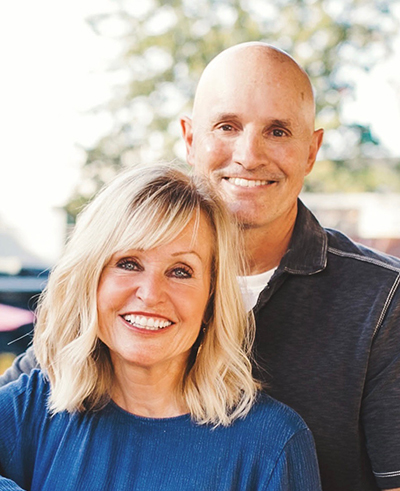
Dave and Ann Wilson
Dave and Ann Wilson are hosts of FamilyLife Today®.. Dave and Ann have been married for more than 38 years and have spent the last 33 teaching and mentoring couples and parents across the country. They have been featured speakers at FamilyLife’s Weekend to Remember® marriage getaway since 1993 and have also hosted their own marriage conferences across the country.
Episode Transcript
FamilyLife Today® with Dave and Ann Wilson – Web Version Transcript
This content has been generated by an artificial intelligence language model. While we strive for accuracy and quality, please note that the information provided will most likely not be entirely error-free or up-to-date. We recommend independently verifying the content with the originally-released audio. This transcript is provided for your personal use and general information purposes only. References to conferences, resources, or other special promotions may be obsolete. We do not assume any responsibility or liability for the use or interpretation of this content.
Why Don’t I Feel Close to God? For Christians Who Just Don’t Feel It
Guest:Brant Hansen
From the series:Why Don’t I Feel Close to God? For Christians Who Just Don’t Feel It (Day 1 of 3)
Air date:September 7, 2026
Brant (00:04):
The Truth is the Truth whether I feel it or not. The Truth is the Truth whether you feel it or not. Your feelings do not determine reality. And you can see where our whole culture actually buys into this idea that our feelings actually determine reality.
Ann (00:24):
Welcome to FamilyLife Today, where we want to help you pursue the relationships that matter most. I’m Ann Wilson.
Dave (00:31):
And I’m Dave Wilson, and you can find us at FamilyLifeToday.com. This is FamilyLife Today.
All right, let me read you the opening paragraph of a book that I think you’ll relate to. It starts this way. “You know that feeling when God is right there, this close, and you can just feel His loving arms around you, and you can literally hear His voice whispering in your ear, telling you how much He loves you? I don’t. I never have.”
Ann (01:11):
What did you think when you read those words?
Dave (01:14):
I thought “This guy feels what I feel.” I’m not kidding. I don’t think you feel that often.
Ann (01:21):
No, I read that and I thought, “No, I can’t imagine what that would be like,” because I do feel Him all the time. But when I read it, I though “Dave is totally relating to this.”
Dave (01:30):
Yeah. And I’ve often felt like I’m less spiritual or there’s something wrong with me because my wife doesn’t feel this way, my son doesn’t feel this way, but I do. So often I felt like “I just keep that quiet. I don’t say it out loud.” So I always thought, “I wish we could have the author of that paragraph in the studio.” We got Brant Hansen—
Ann (01:50):
Because he wrote those words.
Dave (01:51):
Yeah, from a book called Blessed Are the Misfits. Brant, welcome back.
Brant (01:55):
Thank you. It’s cool to hear people talk about that.
Dave and Ann (01:59):
Really?
Brant (01:59):
Yeah, because there’s not much space in church culture, I think, to talk about that. And I asked this question one time when I was talking at a big church and they had the worship music and all this stuff. And it was well done, a big theater environment. And I asked, “Does anybody feel like you’re missing something when everybody else has their arms up raised? There’s a big emotional moment; maybe you’re not feeling it.” I think about half of the people raised their hands.
Dave and Ann (02:28):
Really?
Brant (02:30):
That’s a lot of us.
Dave (02:31):
Yeah.
Brant (02:32):
And you are kind of made to feel like—maybe unintentionally—“Maybe I’m just not spiritual.”
Dave (02:38):
Exactly. Yeah.
Brant (02:39):
I just wanted to be honest about that, because there’s nothing wrong with that. But if we think spirituality is emotion, we’re in trouble because we’re not all cut out of the same cloth. And it’s not strictly a man versus woman thing. One of the couples that came up to me immediately afterward was a woman with her husband. And she said, “I’m so glad to hear you say that.” She said, “I’m an engineer and I’m very analytical, and my husband is very emotive. And I’ve always thought I’m missing something, because his spiritual life looks so different. And he expects that from me, but that’s just not who I am.”
Ann (03:13):
I think I judged Dave for years when we were first married, thinking, “What’s his problem? Is he not connected to Jesus?” Not realizing, we’re all made in such a different way. I don’t judge anymore, but I think we can judge one another.
Dave (03:27):
But the other side is, “I can’t feel what they’re feeling. Why do they feel something that I can’t feel?” So I feel less than, like, “That’s what I should be feeling and doing.” And I’m not saying I don’t sometimes raise my hands and be emotional because I do; but there are times where I feel less than because I’m not experiencing the same thing it looks like they’re experiencing.
Brant (03:48):
Okay. So that’s why I wanted to write the book. I think it’s very freeing when we realize that “Wait a second, that’s not actually spirituality. Spirituality is not emotion. It’s faithfulness. It’s faithfulness. I can do that.” But what happens is you wind up judging yourself sometimes if you’re cut out of this cloth. There’s so many people who are listening right now that can relate to this, where maybe they know people who’ve lost their faith. “It just feels like a show to me. It feels like an emotion-based thing.” They’re thinking analytically, “Why do we do it this way?” Or like with me as a teenager or a young adult, “Maybe God’s given up on me. Maybe I’m not having that experience that everybody else is having. I’m not hearing His audible voice speaking to me or wrapping His arms around me because I’m such a sinner.
(04:36):
There’s something wrong with me.” And it makes you eventually walk away frustrated.
Ann (04:41):
Like, “I don’t get it.”
Brant (04:42):
“I don’t get it.” But what He’s really looking for is loyalty.
Ann (04:46):
Yeah, obedience.
Brant (04:47):
Obedience.
Dave (04:48):
Faithfulness.
Brant (04:49):
Right. So I can do that.
Dave (04:51):
I mean, in some ways when you say that, Brant, I’m like—again, I’m going to exaggerate, but it feels like it’s more faithful. It’s like, if I’m loving Ann in a marriage relationship and I don’t feel it anymore, which many married couples are going, “That’s where I am right now. I don’t feel it.”
Ann (05:08):
A lot of us go through that.
Dave (05:09):
Yeah. I mean, it’s part of marriage.
Brant (05:11):
It’s part of relationship.
Ann:
Yes.
Brant:
It’s part of emotions. As human beings, our emotions change, sometimes based on factors that have nothing to do with us.
Ann (05:20):
But when people say, “I fell out of love,” sometimes I think, “Well, of course you did. That’s not what love is.”
Brant (05:27):
Right. So if you try to manufacture these experiences that give you goosebumps, and you equate that with spirituality, well, “The people who don’t get goosebumps; I guess they’re not spiritual.” Or if I can’t do it, maybe your relationship with God has changed and matured in a new way where you needed that earlier on in your relationship with God. You really did, and it was a gift. But now, there’s a new maturity, just like the marriage relationship. I think that’s God’s love language, in fact, is when we do it just because He’s good and He deserves my loyalty, and I need to obey Him. My emotions may come and go—and this goes for people like you, Ann. You may be more emotional in your relationship with God, but there’s probably, sometimes you go through a trough.
Ann (06:10):
Oh yeah.
Brant (06:10):
It doesn’t mean you—
Ann (06:11):
It’s dry.
Brant (06:11):
Yeah. It doesn’t mean you did something wrong.
Ann (06:14):
Right. But I do get introspective and think, “Lord, did I do something? Did I sin? Where are You? Are you still close?” David felt like that in the Psalms: “Where are you, God?”
Brant (06:25):
Yeah. Well, and he also had to speak truth to himself when he was feeling down: “Why are you so downcast, oh my soul? Put your trust in God.” And he finishes Psalms where he’s down, and downcast, with reminding himself repeatedly of what’s true. So for somebody like me, who doesn’t feel this, I still know what’s true. I still have to put my mind on what’s true, and what’s noble, and what’s right, and what’s pure and lovely and admirable and praiseworthy and excellent. And I have to remind myself that God hasn’t left me. All of Scripture repeatedly, “I’m with you. I’m with you. I’m with you.” Why would He have to say that if we were going to feel Him around all the time?
Ann:
That’s a good point.
Brant:
Why is that a hundred times in the Scripture? He must have anticipated that we’re going to feel like He’s not there sometimes.
Dave (07:14):
Now when you speak at church or anywhere, every day you’re on the Brant and Sherry Oddcast, your podcast, so I’m guessing you talk about this a little bit there.
Brant (07:24):
Yeah.
Dave (07:25):
But when you speak about this, because not a lot of people talk like this, Blessed are the Misfits, do people—
Ann (07:31):
Or even like the subtitle: Great News for Believers who are Introverts, Spiritual Strugglers, or Just Feel Like They’re Missing Something. I think people would read that and think “Yes!”
Dave (07:43):
Well, that’s why I wonder, is there a line afterwards, a line of people going, “Can we talk? Nobody says this.”
Brant (07:50):
Yes. And in fact, I did a radio interview about it and I’ve never had this happen, but I was talking about this very thing. And so the host was wonderful. She was great. She asked a lot of great questions. And I was like, “Well, thanks for the—” We talked right after coming off her show. “Thanks so much.” She’s like, “Can you hang on for a second? My producer wants to talk to you.” It was a young woman who’s married. She was in tears. She said, “I have never been emotionally moved by an interview before, but you’re talking about my husband, and I thought there was something wrong with him. And now I know it’s not. That’s what he’s been telling me.” Different things trigger different people. There’s certain things for me that I can’t talk about my kids growing up without getting weepy. But generally speaking, just church stuff, I don’t feel God around necessarily, but I know He’s there.
(08:38):
The Truth is the Truth whether I feel it or not. The Truth is the Truth whether you feel it or not. Your feelings do not determine reality. And you can see where our whole culture actually buys into this idea that our feelings actually determine reality.
Dave (08:51):
Oh yeah.
Brant (08:52):
But that seeps into Evangelical culture, too, and church culture. It’s like, “This is not true.”
Ann (08:57):
It feels like, in different eras, emotions and analytical thinking are swaying and they’re all going back and forth. I feel like we’re in a more emotive kind of—
Brant:
Totally.
Ann:
You do think that?
Brant (09:08):
Absolutely.
Ann (09:09):
Whereas maybe my grandparents, they weren’t crying and they weren’t—
Dave (09:13):
Well, the question is why? Why do you think that culture is like that now?
Brant (09:16):
I think the conceit of the human being is that we’re hyper-rational. We all think we’re super-rational. The truth is, most of the time, we use our rationality to back up what our emotions are telling us. So we’re—still, the emotion is leading us places. But I think if you reject the idea of transcendent truth, we’re all just left with our feelings. So that wins the day. I also think that we’re so used to shopping. We’re so consumeristic. And I’m very thankful for the products that are at our fingertips, but we’re used to choosing everything. So why can’t I just choose my reality? My desires are always catered to, so my desire has to be transcendent. So I think that’s a big part of it, just the loss of hope in God.
Dave (10:02):
So you think a lot of that’s creeped into the church?
Brant (10:03):
Yes, absolutely.
Dave (10:05):
And our faith?
Brant (10:05):
Yeah. I mean, that’s overtly what the church has tried to do too, right? Is recreate this rock concert experience, in some cases, or recreate a motivational speaker. I understand it. I get the thinking, but that’s not going to speak to everybody. In fact, I don’t think it speaks to the majority of people who are looking for something more. And I’m very thankful to realize this because it means I can participate, too. I can walk with God. I can talk to Him even if I don’t feel it. It’s okay. And sure enough, He answers my prayers in different ways, and I see that faithfulness from His side. So it’s very freeing to realize this.
Ann (10:52):
Every couple has them—the conversations you keep meaning to have, but never quite get to. Life fills up and later becomes the plan. Weekend to Remember® gives you the dedicated time and space to finally have those conversations without the distractions pulling you away.
Dave (11:12):
And here’s the good news, from September 7th through the 21st, registrations for the Weekend to Remember are half off. And here’s how you do it. Go to FamilyLifeToday.com. Click on the banner at the top of the page to make the time before this window closes and use promo code Save50. Trust me, this will change your life.
Ann (11:39):
Let me ask you, because Dave has said the same thing from the pulpit. He would say he’s very skeptical by nature. As soon as he says that I can see certain people just have a sigh of relief like, “Wait, is that okay? You’re a pastor and you can still be skeptical?” You’ve said the same thing. Where does that come from?
Brant (11:58):
Well, in my experience, it’s funny because being on the radio, I’ll have people that hear me say something like, “Well, brother, you just need to trust God.” And you have no idea what my story is. I think some of us are born dissenters. We’re born analysts. We question everything.
Dave (12:16):
Well, you got to tell us your story now.
Brant (12:17):
Well, yeah. I mean, my dad was a pastor and I got Bible, Bible, Bible; preaching. He’s a good speaker, charismatic presence, talented. And also, our home life was traumatic, like terrifying. I was scared for my life. Then I would go to church and hear more preaching, and more preaching, and more preaching. And this is the same guy that’s terrorizing us, and I feel like we’re not safe. Eventually they got divorced, remarried. My mom just wanted to make it work. Divorced again. I just grew up scared. So if somebody’s like, “Brother, you just need to—” “Man, at least I’m here.”
Ann (13:02):
Based on all you’ve gone through.
Brant (13:04):
Come on, right. So allow me the skepticism. As it turns out, the skepticism, for me, has chased me back to Jesus, because He’s actually the One that calls out this human nature that would explain my dad, or explain me, at times; explain—and He actually does something about it. Who else anywhere acknowledges human brokenness and actually does something about it? Most everybody else wants to deny human brokenness, in spite of all that we can see that’s so obvious. We know. Everybody knows, we’re messed up. But then, to actually call it out and do something about it. Where else do I go for that?
Dave (13:47):
I mean, is that what kept you in the faith? Because you hear that story and eight out of 10 people would walk away.
Brant (13:54):
Yes. Honestly, I’m so skeptical. I’m not exaggerating. I mentioned this in the book, too, but I used to do talk radio. I interviewed a guy who was the founder of Skeptic Magazine.
Dave (14:03):
Oh yeah, you said that in the book.
Brant (14:04):
Yeah, the American Humanists Association president at the time.
Dave (14:07):
Did you read this part what he said?
Ann:
No.
Brant (14:09):
We would debate stuff. And I would ask him questions like counter asking this person, where does his logic come from? And he, to his credit, he was a kind guy. He was just like, “I got to admit, you’re actually more skeptical than I am.” This guy’s the founder of Skeptic Magazine.
Dave (14:28):
He’s like the president of skeptics.
Ann (14:30):
Give us an example of a conversation you might have.
Brant (14:32):
Well, about the idea we can only have science to know reality. Well, how is that a falsifiable statement? Because science itself, you have a scientific method, you have to have a falsifiable hypothesis. I said, “What you’re saying is philosophical. It’s not scientific at all. What’s your basis for that philosophy?” And that’s what, “Well, you’d make a valid point.” I’m legitimately asking these questions, but honestly, I don’t think—there are so many people who don’t believe in God now—the record, according to Gallup recently that say they don’t believe in God. I actually think they do believe in God.
Ann (15:10):
Really?
Brant (15:10):
Yep. Because what they do gives them away.
Ann (15:14):
What do they do?
Brant (15:16):
Well, they’ll appeal to standards of fairness.
(15:18):
They believe that love is more than just chemistry bouncing around your brain, electrical impulses. They act like things actually matter. Paul even talked about that in Romans. He says, “Men suppress their knowledge of God.” It’s human. We do a thing called denial. We know it at some level, and we want to suppress it. But when I see people doing that, it reinforces my faith. Because you see that a lot of this, we think these people are so smart because they doubt, but doubt doesn’t make you smart. That’s a modern lie. For somebody who’s analytical, I’m chased back around to Jesus. The alternatives don’t make sense to me. Jesus Himself is so compelling, and He is medicinal for somebody like me. To just read the gospels, He’s like the only guy that makes any sense.
Dave (16:07):
Now, when you think about your faith—because I was trying to relate it again to marriage and your marriage with Carolyn. I mean, do you feel loved by God like you do in your marriage? Or is that not part of it?
Brant (16:21):
This is not discouraging, I hope, but no, I don’t feel that.
Dave (16:27):
Is it any different than your marriage?
Brant (16:29):
Yeah. Carolyn’s right there. I feel for her and I feel compassion for her sometimes. I’m rooting for her, and she’s right there in my care, and she loves me. So it’s so obvious and so tangible. It’s hard for me to know how to translate that to God. I’m not trying to be discouraging at all. It’s just that is a struggle for me. However, when I visit, like I work with these hospitals, international, I get to visit the ORs and I get to be with the kids and stuff and see how God prioritizes these people. I feel that. Maybe I’m broken for whatever reason. Maybe it’s from my past or whatever, my own dad stuff. But I know, I know He loves me. I know it as I know gravity. I think we can know that.
Dave (17:24):
That’s what I was getting at. Because I know Ann loves me.
Brant (17:28):
Yes.
Dave (17:28):
She shows me all the time. If there was a book written about her love for me, it would, just like the Bible, I know it. And I know God loves me as well. Most of the time I don’t feel it. I mean, not most of the time, but it isn’t an emotional affectionate feeling that I have. There are moments, but most of the time it’s based on truth. And I feel the same thing from Ann. There are moments where I feel her love for me, but it doesn’t matter. I know she’s committed to me and loves me, and that’s enough. Does that make sense?
Ann (18:02):
Well, let me ask you this. Do you ever feel like God doesn’t love you?
Brant (18:07):
No.
Ann (18:08):
Do you?
Dave (18:08):
No, I honestly, I mean, early in my Christian walk, I didn’t know the Word. I didn’t know Truth and so I questioned it. But over, now, 40 years of walking with Him, I’m like, “No, He loves me.” Even in my worst moments where he shouldn’t—
Ann (18:23):
Yes.
Dave (18:24):
—I am absolutely convinced the truth of the Word of God says He loves me and I know it. I am secure in that.
Brant (18:30):
There is a sense of security. Each morning, I try to do Psalm 23 while I’m walking the dog—out loud. “The Lord is my shepherd. I lack nothing,” it starts. That’s a strong place to start. And I’ve seen Him answer prayers, and I’ve seen Him in ways that are utterly inexplicable. If I was just going at it from scientific, coincidental odds; that’s crazy. I harken back to those things. I made a list in my head the other day of three of those things that happened, and there’s no explaining that.
Brant:
But I know. But the feeling thing, if someone’s listening and they’re alarmed, well, I’m letting you into my head—it’s a vulnerable thing—and into my heart. But I’m very thankful for the grace of God that lets us all into His Kingdom with our own hobbled whatever. And should it happen—if you’re alarmed, but then maybe in a year or two—you go through a long, dark night of the soul, where you keep pursuing God, but you don’t have those old feelings like you used to,
(19:31):
I hope you remember “He’s still there, still loves you. He hasn’t changed. It’s okay.” That’s a really secure place to be—
Ann:
It is.
Brant:
—even if you don’t have the “in love” feelings.
Ann (19:41):
Yeah. I think when I was younger, too, I would feel like God loved me or didn’t love me based on my actions or lack of obedience. I think that’s why the Word is so important. I love that you’re quoting, and you’re memorizing, and saying out loud Psalm 23. Because sometimes, we have to remind ourselves over and over, and that’s what God’s Word does. That’s what other people do. That’s why we can’t do it alone because there’s an enemy of the soul who will tell us the opposite: “You’re a failure. God doesn’t love you. You don’t know God. If you aren’t experiencing Him or feeling Him, you must not be a follower.” So I agree. I think that’s really important. I also thought it was so fascinating for you, Brant, as you were reading the Word and you would say, “We are aliens.” You’re like, “Yes, this is what I’m feeling.” Was that back when you were a new follower, and you’re reading the Bible?
Brant (20:34):
Honestly, it’s always appealed to me.
Ann (20:36):
It’s appealed to you.
Brant (20:38):
It appeals to me that we’re aliens and strangers. I already feel that way. So that’s a nice place for me to be. Culturally, I always felt like—and some people are like this too; you’re kind of—more of an observer than a participant, even social stuff in high school.
Ann (20:52):
You’ve always felt like a misfit.
Brant (20:53):
Yeah, always felt like a misfit. So we get a leg up on everybody else in this “aliens and strangers” thing. We know what that’s like. I’m not afraid of that. I’ll be the oddball. It’s okay. And you know what’s wonderful is talking about this in book form, when people come out of the woodwork and they’re like, “That’s me too,” or “That’s my son,” “That’s my husband,” “That’s my daughter,” you do feel more like you’re part of the family. That’s very helpful. And to have other people say, “You’re right,” it’s good, even at this point in my life. We need to hear things over and over and over and over and over. And you keep having to go back to that. And that’s why I’m saying, like in the Bible, that He would say, “Fear not. I am with you. I will help you. I will strengthen you.
(21:34):
I will uphold you with my righteous right hand. I am with you. Be strong and courageous. I’m going with you wherever you go.” Over and over. If we all felt 100% that He’s right there, why would He have to say that over and over? He’s doing this because He loves us. That alone tells me He loves us. He must know me, for Him to say that over and over.
(21:56):
He must be patient with people like me. So if somebody else is like, “Bro, we got to throw you overboard. What are you talking about?” “Well, okay, but He’s going to go with me if you throw me overboard.” And there are so many people, this is the most freeing thing for them to hear. They’ll be weeping realizing, “God didn’t leave me.”
Dave (22:18):
Yeah. And I think what you just said—I’m in the kitchen with a listener. They are hearing the voice of God through Brant—what you just said. They need to hear that.
Brant:
Good.
Dave:
Because you and me, they don’t often feel it, and they’re like, “That’s truth.” And if you’re skeptical like me, “Does God speak?” He just did.
Brant:
Good.
Dave:
He just did to you.
Brant (22:39):
And how wonderful is that? Somebody reminded me of a Scripture, so I memorized it a few days ago, from Lamentations, where it’s like all this horrible stuff’s going to happen. “Yet I call this to mind.” And then he reminds himself of the goodness of God. So you have to remind yourself of what’s true. So that’s what I do. That’s all.
(23:01):
We have a very distracted culture. We have to remind you, because we forget stuff. Some of the most basic stuff. I’ll even look in my own old books, or somebody could do this with your own journals. I’m like, “Hey, that’s a good thought. I wrote that. I forgot totally.”
Ann (23:14):
And I have Scripture all over the house.
Brant (23:16):
Yeah.
Ann (23:16):
It’s written down, and my grandkids are like, “Nonni, what’s this? Oh, I just need to remember this is what Jesus says.”
Brant (23:22):
That’s what it means to be human. And in fact, in Deuteronomy, God is saying, “Look, tie this around your wrist if you have to. Put it on the doorpost.” He knows. They’re living in a religion-soaked culture. And yet, He’s like, “You’re still going to forget.” So I can’t imagine in this culture, where everything is so distractable, we’ve got everything pulling at us nonstop. Of course, we need Scripture all over the place. I need to commit it to memory and then, say it over while I’m walking the dog, so I’m reminded of what’s true.
Dave (23:54):
I tell you, I always love me some Brant Hansen.
Ann (23:56):
Me too. His book is called Blessed Are the Misfits: Great News for Believers who are Introverts, Spiritual Strugglers, or Just Feel Like They’re Missing Something.
Dave (24:07):
And you can get your copy by just clicking the link in the show notes of FamilyLifeToday.com. And guess what? We got Brant back tomorrow.
Ann (24:14):
All right, let me just say this. We know life is full of challenges and families today need biblical truth more than ever. Isn’t that true?
Dave (24:23):
That is true.
Ann (24:24):
And as a FamilyLife Partner, your monthly gift helps bring the truth into homes every single day through podcasts, events, and resources.
Dave (24:34):
So let’s make a lasting difference together. Become a partner today. Just go to FamilyLifeToday.com and click the donate button.
Ann (24:45):
FamilyLife Today is a donor-supported production of FamilyLife®, a Cru® ministry; celebrating 50 years of helping you pursue the relationships that matter most. I
If you’ve benefited from the FamilyLife Today transcripts, would you consider donating today to help defray the costs of producing them and making them available online?
Copyright © 2026 FamilyLife. All rights reserved.
www.FamilyLife.com