

Why Am I Carrying This Marriage? Debra Fileta
You gave in last time. And the time before that. When marriage starts feeling lopsided, keeping score can feel less like selfishness and more like simple fairness. Counselor Debra Fileta joins Dave and Ann Wilson on FamilyLife Today to unpack selfishness in marriage—and finding your way back to “we.”


Show Notes
- Thanks to the Christian Standard Bible for sponsoring this episode. Learn more at CSBible.com.
- Follow us on all social platforms: Facebook | Instagram | YouTube
- Find resources from our podcast at shop.familylife.com.
- Download FamilyLife's app!
- Help others find FamilyLife. Leave a review on Apple Podcast or Spotify.
- Check out all the FamilyLife's podcasts on the FamilyLife Podcast Network.
About the Guest
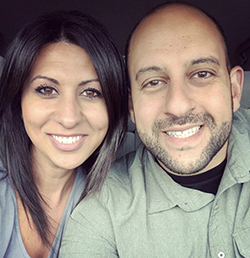
Debra Fileta
Debra Fileta is a woman in love with Jesus. That love has been the driving motivator propelling her forward in her pursuits as a wife, a mother, a licensed professional counselor, speaker, and author. Debra specializes in dating, marriage, and relationship issues along with a spectrum of mental health disorders and issues. She is a regular contributor at Relevant Magazine and Crosswalk.com and has also had her work featured in numerous other Web sites and publications. She has worked with The 700 Club, Focus on the Family, and Saddleback church. The majority of her work is featured at her blog, TrueLoveDates.com, where she reaches millions of readers each year. Debra and her husband, John, have three children and live in Pennsylvania.
About the Host
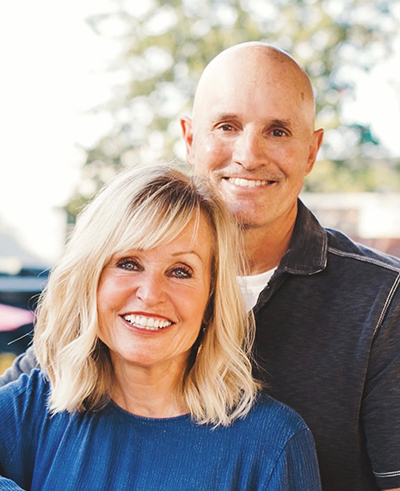
Dave and Ann Wilson
Dave and Ann Wilson are hosts of FamilyLife Today®.. Dave and Ann have been married for more than 38 years and have spent the last 33 teaching and mentoring couples and parents across the country. They have been featured speakers at FamilyLife’s Weekend to Remember® marriage getaway since 1993 and have also hosted their own marriage conferences across the country.
Episode Transcript
FamilyLife Today® with Dave and Ann Wilson – Web Version Transcript
This content has been generated by an artificial intelligence language model. While we strive for accuracy and quality, please note that the information provided will most likely not be entirely error-free or up-to-date. We recommend independently verifying the content with the originally-released audio. This transcript is provided for your personal use and general information purposes only. References to conferences, resources, or other special promotions may be obsolete. We do not assume any responsibility or liability for the use or interpretation of this content.
Why Am I Carrying This Marriage? Debra Fileta
Guest:Debra Fileta
From the series:Why Is Marriage This Hard? Debra Fileta (Day 2 of 2)
Air date:October 23, 2026
Dave (00:05):
So after 41 years of marriage, which has been awesome.
Ann (00:09):
Okay. Yes.
Dave (00:10):
What would you say is different about me from maybe the beginning?
Ann (00:16):
Oh, that’s a good question.
Dave (00:24):
Welcome to FamilyLife Today, where we want to help you pursue the relationships that matter most. I’m Dave Wilson.
Ann (00:30):
And I’m Ann Wilson, and you can find us at FamilyLifeToday.com. This is FamilyLife Today.
Dave (00:44):
What would you say is different about me from maybe the beginning?
Ann (00:48):
You are way more other-centered than self-centered.
Dave (00:52):
Really?
Ann (00:53):
Oh yeah.
Dave:
Really?
Ann:
What did you think I was going to say?
Dave (00:56):
I had no idea. I just wanted to know what you’re thinking.
Ann (00:58):
Okay, what would you say? Oh, that’s kind of scary.
Dave (01:01):
No, I think we’ve talked about this many times. You are so affirming. You believe in me. I feel so believed in, and that is one of the greatest gifts anyone could ever give.
Ann (01:13):
I feel like you believe in me way more than I believe in myself, and that’s a great place to be.
Dave (01:18):
I’m laughing because we have sitting across the table in our studio, a therapist who’s probably analyzing us right now like, “Oh boy, I could see all their childhood wounds coming out.”
Ann (01:30):
I’m glad she didn’t see us back in the day, hon. Let’s just say that.
Dave (01:33):
Yeah. But we’ve got Debra Fileta with us, and she is a therapist and an author and a mom of four kids. And your first book was really about dating, right?
Debra:
Yeah.
Ann:
True Love Dates.
Debra:
Yeah, True Love Dates.
Dave:
But you’ve moved on to write about marriage and we’re also going to talk about some other stuff in terms of psychology that you wrote. But first of all, I want to say thanks for being here. It’s great to have you and your husband, John, in town.
Debra (01:57):
I thought for sure Ann was going to say the haircut.
Ann (02:02):
Oh, why didn’t I say that?
Dave (02:04):
I thought you mentioned something about sarcasm earlier, how it’s hurtful.
Debra (02:09):
I thought I was being just honest, but—
Ann (02:12):
I’d say that was pretty honest and that is a big change for sure.
Dave (02:15):
I think it’s funny. There was a day when that bothered me and now it’s just like, I love being a bald man. Yeah, to shave in the shower.
Debra (02:22):
Well, you both look great. Let me just affirm that.
Ann (02:24):
You’re so sweet.
Dave (02:25):
Well, your book, Choosing Marriage, let’s talk about this subtitle. We’ve already talked about many things, the walls that we bring in. If you missed our previous conversation, you got to go listen to it. But the subtitle is Why It Has to Start with We>Me. So I’m guessing that has something—I know. I’ve read the book talking about going from pride, humility or the selfish problem in our marriages. Help us out with this.
Debra (02:50):
Yeah. We is greater than me. I think that is the formula for a healthy marriage. When you think of marriage, I think oftentimes we look at it like a competition. Who’s doing more around the house? Who has the most power in the relationship? There can be this competition rather than seeing us as truly one.
(03:17):
When we’re truly one, it’s a we thing. And now I am beginning to lose myself, but in the best way possible. When John and I met, you guys didn’t hear this story at lunch. I used to go by Debbie. Everyone called me Debbie. When John and I met, he literally just started calling me Deb without even asking my permission. And it was kind of funny because at first it threw me off. I’m like, I don’t like the word Deb. Debs are serious and Debbies are fun and Debs are boring. But he just started calling me Deb and it stuck. So now 14 years into marriage, you can tell by how someone knows me by what they call me. If they call me Debbie, it’s the pre-John era. My parents, my cousins, my high school friends, if they call me Deb, it’s the post-John era. If they call me Debra, it’s work related.
Dave (04:09):
There you go.
Debra (04:09):
But I use that story because in a way I lost part of myself when I got married. My name shifted, even something as small as that, but in the best of ways, because in marriage, God calls us to lose ourself, our selfishness, all of the things that he didn’t call us to be, not our personality and not our hobbies and interests and our calling, but all of the things that God didn’t intend for us to carry; those sins and struggles. We’ve come to the table of marriage to be sharpened, to be changed, to grow, to mature.
Ann (04:47):
That’s so interesting because I’m thinking about when I was a young mom with three boys under five, I would continually say, “I have no life anymore. I have no life anymore.” And then as my kids got older and I got older, I changed that. Oh, that was such a wrong way to see it. My life did change. Everything about it changed, but there was beauty in that change. I saw it as, oh, I can’t do this anymore and I don’t have time to do that anymore. And yet there’s this beauty to that. And I think marriage can be the same way. It is different. It’s no longer me. It is we. And you’re saying there’s a real beauty in that.
Debra (05:25):
There is. And it’s something that’s so unnatural because as a single person, your whole life is dedicated to self.
Ann (05:32):
Yes.
Debra (05:33):
You’re thinking about yourself, what you’re going to eat, what you’re going to wear, where you’re going to go, your schedule, your budget. It is just about you. And all of a sudden, you have to share everything from the remote to the fridge to the bed. I mean, someone told me before I got married, invest in a king size bed. And I was like, “What kind of a marriage advice is that?” She was right. Everything. And there’s so much that you have to learn to overlook with regards to the minors so that you can reserve your energy and power for the majors, the things that really matter. Not everything can be a big issue. I actually think of what I call our bathroom drama. Let me talk to you a little bit about selfishness. When it comes to just something as simple as how we get ready, John’s side of the sink looks pristine as if we just moved in.
Ann (06:27):
Dave’s too. There’s nothing even on the counters.
Debra (06:29):
Nothing. My side is a little bit chaotic, but I know where everything is. And then the toilet paper roll, these little, tiny things that start bugging you. He is the king of leaving one square left on the roll.
Ann (06:45):
When they’ve used the toilet paper, there’s just the cardboard.
Debra (06:49):
Or the cardboard.
Ann (06:50):
Yes.
Debra (06:50):
So then I’ll go replace it.
Dave (06:52):
I’ve never done that by the way. Okay, go ahead.
Debra (06:54):
I’ll replace it, but I’m just like, I’m not going to put it on. So I just prop it on there.
Ann:
Come on.
Debra:
We’re both annoying in different ways. And I think that’s the stuff that begins to come to the surface.
Dave (07:07):
I mean, it becomes a really, as you’ve written about and you know a big deal that you don’t foresee—
Debra:
These little things.
Dave:
—how selfish you really are until you get married. I remember Tim Keller and The Meaning of Marriage says three things happen to every married couple. First, they realize their spouse is selfish. Then they realize I’m selfish too, but third is I’m nowhere near as selfish as they are. And it’s really true. I’ll tell this really quick, but I was invited years ago to play in this charity golf outing by a fellow friend of mine on Detroit Lions. And long story short, each foursome gets a celebrity and they pay $1,000 and they get a celebrity and they don’t know who the celebrity’s going to be. And I was invited to play as a celebrity because of my buddy. And I said, “Dude, you know I’m not a celebrity.” He goes, “I know, but you’re not going to pay so it’s free for you.” So I get there, I walk up to this foursome and I introduce myself and they look at me like, “Why did you introduce yourself?” I said, “Oh, I’m your celebrity.” And they look, “Magic Johnson just walked behind. Why don’t I get him? I get you.”
(08:09):
And then the guys say—it was two guys and two women—and then they said to me, “So who are you? We don’t know your name. Why are you a celebrity?” And I said, “I didn’t want to tell them I’m a pastor and a chaplain of the team.” Someone would freak them out. So I said, “I’m a friend of Drew Stanton, the guy who’s running the thing.” And they go, “Yeah, but you must have some other reason that you’re a celebrity.” And so finally I say, “Well, I’m the chaplain of the Detroit Lions.” And this guy looks at me and goes, “Oh, great.
(08:36):
That means we can’t drink and we can’t curse because you’re a pastor.” And I go, “Well, it gets better. I’m a bad golfer too, so let’s go.” Anyway, long story short, we get to the eighth or ninth hole, standing on the green, getting ready to putt, and this wife walks from the other cart up to me and she goes, “So I hear you’re a marriage expert. They say you’re a writer in marriage and blah, blah, blah.” She goes, “I got a marriage question.” I go, “Okay. This is classic. I could never have scripted this.” She goes, “I’m in my second marriage. What’s the problem with marriage?” That’s what she says. We’re standing on a green and she’s looking at me like you’ve got 30 seconds. What’s the problem with marriage? I go, “Oh, I can answer that in one word, selfishness.” She looks at me and she goes, “You are so right.
(09:21):
My first husband was the most selfish man ever.” I mean, it was classic. And I look back at her and I go, “I’m not talking about your first husband. I’m talking about you and I’m talking about me.” And I could tell in her face, she’s like, “You’re right.” There’s a problem there called selfish. Your whole book is about that’s at the root of this thing. So how do we deal with our own selfishness? Because we want to deal with our spouses, but we really need to deal with our own. How do we move from pride to humility?
Ann (09:55):
Hey, before we dive in, I just want to remind our listeners that our vision for families at FamilyLife.com is to follow Jesus, to impact children, parenting, marriages, not just here, but around the world. We can’t do that without you.
Dave (10:12):
Yeah. And it’s why we do what we do, but you probably don’t know this. We have hundreds, even thousands of financial partners, people that pray for us, but also say, “I don’t want to just pray. I want to be a part of this ministry and I’m going to give part of my income every single month to FamilyLife to help this ministry impact the world.” So you can be a partner with us. In a sense, you’re impacting others just through our voice and through this program.
Ann (10:37):
And we need you.
Dave (10:38):
Yeah. And if you’re sitting there thinking, “Man, I didn’t even know they had monthly supporters like that.” Yes, we do. And they literally are partners. We are partnering together to change the world for Jesus Christ. So here’s how you can do that. Just go to FamilyLifeToday.com, click on the donate button and become a partner.
Debra (10:59):
I think it’s important to first and foremost recognize our selfishness. When we’re oblivious to it, we have no hope.
(11:07):
To really do an assessment between us and the Lord, like God, just open my eyes. What are the areas where I am holding onto self, elevating self? And then something else too that I really think helps is just changing my mentality and seeing the ways that God has forgiven me and what God has done for me. And it kind of begins to change my heart to extend that same grace to my spouse. And I do believe it starts with the little things in marriage. In the surveys I did, I surveyed over a thousand singles and a thousand married couples to get some data for this book. And it was really interesting because the majority of married couples said it’s not the big things that they feel are destroying their marriage like addictions and pornography. Not that that’s not an issue, but what’s actually affecting their marriage day in, day out is these little things, these little lifestyle selfishness type things, the tension that begins to build.
(12:07):
I mean, think about it. Most of these arguments that we have are about these little things. And if we don’t learn to extend grace to communicate in a healthy way, if we don’t learn to build those muscles with the little things, when the big things come, we’re not going to be able to handle them. And so it really does start with learning what it looks like to be selfless in the little things. But I will add, I think a lot of Christians are walking around believing that they’re being selfless when they’re actually being passive. And that’s something I think is really important to differentiate.
Ann (12:43):
Yeah. Talk about that.
Dave (12:44):
Talk about that; that’s interesting.
Debra (12:45):
Passivity is when you’re not communicating your needs. Passivity is when you don’t know how to say no and you’re just doing things out of guilt. Passivity is when you don’t want to rock the boat and cause conflict, so you’d rather just not talk about something. That ends up destroying your marriage because you cannot be passive and not expect that there’s some root of bitterness that starts to take hold of your heart and life. Maybe you’re not actively saying it, you’re being quiet and you’re letting your spouse kind of lead and you’re not saying what you need, but deep down, the root of bitterness and resentment begins to kind of creep into your heart. You can only be passive for so long until it’s going to come out in some conflict or argument or rage. So I think we have to really be cautious and say selflessness is thinking of others first, but that doesn’t mean that I don’t communicate what I need.
(13:45):
That doesn’t mean that I pretend that I’m fine when really, I’m not, because that actually ends up causing more damage to the relationship than good.
Ann (13:55):
I think I did that a lot in our younger years when we were first married because I thought, I’m not going to bring it up because it’s not that big of a deal and I want to be this good Christian wife. I found myself stewing about things. And when I would go back and think about what was I thinking about, I was constantly complaining about Dave over little things as you said, Debra, like he never puts his dishes in the dishwasher or why isn’t he praying with the kids? Or why is he gone again tonight? But I didn’t say anything, but man, I would keep thinking about it and then I would kind of pat myself on the back like I do this and I do way more than he does. I think that’s typical in a lot of marriages. But then what would happen because I didn’t say anything, then I would just blow up at one time and Dave’s thinking, what is happening?
(14:45):
Where did this come from?
Debra:
Where did this come from?
Ann:
Is that kind of typical?
Debra (14:49):
Absolutely. And if you really get to the root, the question is why am I not communicating what I need? Maybe you don’t know how to put it into words. Maybe you don’t think it’s serious enough. Maybe you’ve grown up just kind of stuffing your needs or not feeling like they’re important. And so the question is why? What makes me passive? Because when you get to the why, then you can begin to resolve things and it’s so important to be able to feel that you can share with your spouse what you need.
Ann (15:21):
So talk to a listener that maybe has done that. They are listening and thinking, that’s exactly what I’ve done over the years. What’s our next step? How do you take that step into that conversation?
Debra (15:32):
First starts with learning to identify your needs. I think sometimes we stuff those needs for so long and it turns into criticism.
(15:41):
My spouse isn’t helping with the dishes. He doesn’t do anything around the house. The question is, what do I need? The answer, I’m feeling burnt out. I’m feeling exhausted. I need some help. I need support. I need to feel like you’re a teammate. When you can figure out what you need, it begins to become about you rather than about your spouse. And that’s how we want to approach the conversation. You don’t want to go up and say, Dave, you’re just so lazy. I do everything around here. You’re not helping. But more of Dave, I’m feeling burnt out. I’m feeling exhausted and it would mean so much to me if, because now it’s about me. I’m not attacking him. Now it’s about me and what I need and what I feel versus about him and what he’s not doing because that totally changes the dynamic of the conversation.
(16:31):
And you can still have a positive conversation and share your needs. I think sometimes people think that sharing what they need and being honest is always going to lead to conflict.
Ann (16:42):
Yes.
Debra (16:43):
But that’s not the truth.
Dave (16:44):
And I think sometimes maybe as a Christ follower, you don’t want to share what you need because it feels selfish. Right. It’s not about me. It’s about laying down my life for you. I’m not going to bring up my needs because then it’s about me. But you’re saying that could be a positive way to actually serve your spouse by saying, this is what I need, right?
Debra (17:01):
Absolutely.
Ann (17:02):
Okay. I have to give her this example. And as a therapist, I’m going to ask Deb, okay, what would you do with this?
Dave (17:08):
I have no idea where you’re going.
Ann (17:09):
Okay.
Dave (17:09):
This could be scary.
Ann (17:09):
So we’ve shared this before, but when our kids were little, I was having a day that I felt overwhelmed and I was sitting at the kitchen table crying. And I say to Dave, I am the worst mom. I feel like I’m failing. I can’t keep our lives together. And this is, he says, I’m going to be right back.
Dave (17:28):
Okay. This is a really bad illustration of what—okay, I was very young and didn’t know anything.
Ann (17:34):
I know. And you would never do this today.
Dave:
Never, ever.
Ann:
He goes upstairs; he comes down with a three by five piece of paper. And I thought he wrote me an encouraging note of encouraging me as a mom and a wife, like, “You’re doing a good job, honey.”
Dave (17:48):
That’s what she thought.
Ann (17:49):
And so he handed me this paper, and it was numbered one to 10, and I look at him like, “You are the sweetest”—Get more organized. Number two—and I’m thinking, “Wait, it has to get better.”—Use your time more wisely.
Dave (18:04):
Okay, that’s enough.
Ann (18:06):
And then I took it and I ripped it up and I threw it in his face.
Dave (18:09):
She threw it right in my face.
Ann (18:10):
So I’m trying to be vulnerable and not withdraw. As a therapist, we’re in your office. What would you say when your spouse doesn’t respond in the way you were hoping?
Debra (18:22):
Here’s what I would say. Dave, I’m proud of you that you tried to meet your wife where she was at. Your heart was in the right place. And now I need you to spend some time listening to Ann to figure out what actually works for her because what works for you is a list of things we need to change, but that’s not what works for her. So Ann, you’ve got to get better at telling Dave in those moments what you need because he can’t read your mind. He’s a completely different person. He doesn’t know what you need in those moments unless you tell him.
Ann (18:57):
And that really was our conversation. This was a breaking point for us in terms of it took us to a better place.
Dave (19:02):
Yeah. I mean, actually when she did rip it off and throw it, I said, “Yeah, what do you need? Help me understand.” And she told me.
Debra (19:09):
And Ann, here’s where you went wrong. You shared your feelings and you stopped there. So I want you to share your feelings as well as what you need.
Ann (19:19):
Oh, that’s really good.
Debra (19:19):
There’s two parts to it. It’s like, “Here’s how I feel.” Maybe he doesn’t know what to do with those feelings. Do you want me to pat you on the back for us? Do you want me to jump up and down? Do you want me to cry? But when you tell me this is what I feel and this is what I need, then I have a roadmap.
Ann (19:36):
Go one step further because I’m thinking of all the women that I talk to. And so they’ll say, “So I did that. I said, ‘This is what I need.’” And I did tell Dave, “I need you to sit in it with me.”
Dave (19:48):
And now I do. I just sit.
Ann (19:49):
He does. But I’ve heard someone say, “So then I told him, this is what I need from you. And my husband has not done anything since I told him that and I was super vulnerable.” And then that bitterness has started to. So how would you counsel them?
Debra (20:05):
I would look at it as marriage is not a once and done conversation. This is a process and we’re being molded and shaped with each conversation. This is a work in progress. So we keep sharing what we need. We keep giving clues. We keep connecting with one another. We keep seeing what the other person needs. We keep making deposits before we make withdrawals. We keep seeing our role because that’s the only thing we have control over.
Ann (20:36):
That’s good.
Debra (20:37):
And then we trust God with what we can’t control. So this isn’t a once and done thing. I mean, it takes you so many years to get to this place of dysfunctional interactions. You can’t expect them to go away overnight. It takes years of unlearning and relearning and learning what the other person needs and having conversations. There’s even a roadmap called the speaker listener technique, which you might have heard about before. It’s from The Gottman Institute, but I kind of give you a layout of what does it look like to even begin to have a conversation about what you need and what you’re feeling because some people don’t even know where to start. So when you begin learning these things, give yourself grace. Give your spouse grace. This isn’t an overnight thing. Training for marriage, just like training for a marathon, just like training for medical school takes a significant amount of time and energy and effort and work.
(21:33):
When you begin to do those things, it’s going to start moving in the right direction.
Dave (21:38):
And as you say in Choosing Marriage, it’s choice after choice, and a lot of them are little. I know for me, when Ann told me that, this is decades ago, here’s what happened. I began to understand, oh, this is what she needs. But here’s the trick is when I’d be in other situations and I would know what she needed, I would still feel this selfishness in me like I don’t want to do it. And that’s where I would like, Jesus, change me. I can’t do it. I don’t have the power within me to serve her right now. I know what serving her looks like. She’s told me, I don’t want to. And it’s like that’s where the power of the gospel I think meets us and says, I’ll give you that power right now. And then little choices like that piled on top of each other, you have a whole different marriage.
(22:24):
You just start one choice at a time to say, Jesus, I surrender. Give me the power to be the man, the woman you want me to be, and then walk into that.
Debra (22:32):
Amen. Like we talked about in our last conversation, with my God, I can scale any wall and that’s the key. It’s not just the wall, it’s not just me, but it’s with my God. Psalm 18, I can do this with God’s help. Whatever that wall is, conflict or bitterness or resentment or exhaustion, God can give me what I need to overcome this into a fruitful, positive, beautiful, grace-filled marriage.
Ann (23:04):
Okay. You may not know this, but we want to hear from you.
Dave (23:08):
Yeah, like literally hear you.
Ann (23:11):
You can leave us a voice message with your questions, concerns, praise reports, or whatever. Maybe Dave said something that you totally disagree with.
Dave (23:22):
Why’d you have to pick on me? Maybe it’s you said something.
Ann (23:25):
Maybe, probably.
Dave (23:26):
Or maybe it was inspiring. See? See, I was nice.
Ann (23:29):
No, I know you’re always nicer than me.
Dave (23:32):
I don’t think so. Or maybe you just want us to answer a question or explore a certain topic. Whatever you want to say, you get to call and say.
Ann (23:41):
All you have to do is go to Speakpipe.com/FamilyLifeToday. Again, that’s Speakpipe.com/FamilyLifeToday or get the link in the show notes.
Dave (23:55):
Again, it’s Speakpipe.com/FamilyLifeToday.
Ann (24:02):
I always love being with Debra Fileta.
Dave (24:04):
How’d I know you’re going to say that?
Ann (24:05):
Because I say it every time because she makes me really think hard and kind of evaluate where we are in our marriage, and we all need that. I don’t know if we all want it, but we need it.
Dave (24:16):
Yeah, we need it. And you might need her book. In fact, I think you do need her book, or you know someone that needs your book. And if you want to do that, if you want to buy it, go to FamilyLifeToday.com, click on the link in the show notes and pick up her book. Again, it’s called Choosing Marriage: Why It Has to Start With We>Me.
Ann (24:45):
FamilyLife Today is a donor-supported production of FamilyLife®, a Cru® ministry; celebrating 50 years of helping you pursue the relationships that matter most.
If you’ve benefited from the FamilyLife Today transcripts, would you consider donating today to help defray the costs of producing them and making them available online?
Copyright © 2026 FamilyLife. All rights reserved.
www.FamilyLife.com