

171: How To Navigate In-Law Relationships: Building Bridges, Not Battlegrounds
In-law relationships can be delicate and challenging, especially when they involve a former spouse. Ron Deal speaks with Dave and Ashley Willis about how to prevent feelings of powerlessness and frustration as we build bridges, not battlegrounds, in difficult relationships. Establishing healthy boundaries can safeguard our mental health and encourage healing from past wounds. Honest conversations convey respect—even when relationships are full of tension. Grace-filled discussions that reflect our ability to see the best in others and extend forgiveness when we’ve been wronged allow God’s love to reach hardened hearts.
God wants to redeem relationships, and as we do our part with difficult in-law relationships, God will honor our efforts.


Show Notes
- Listen to the podcast Grandparenting and the Blended Family.
- Learn about Dave and Ashley and get their Married Into The Family book.
- Join us in Nashville for the Summit on Stepfamily Ministry
- Email blended@familylife.com for small group coaching or check out The Smart Stepfamily free series to get started.
- Our small group searchable map
- Ron's list of certified counselors
- Clinical Training
About the Guest
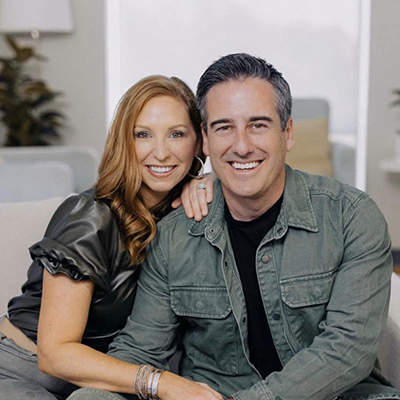
Dave and Ashley Willis
Dave and Ashley Willis met on Ashley’s first day of class at Georgetown College in Kentucky in the Fall of 1999. They married the week after Dave’s graduation in May of 2001. Since earning their bachelor’s degrees in communication arts, Dave earned a master’s degree in communication studies from the University of Kentucky and Ashley earned a master’s degree in biblical counseling from Luther Rice Seminary in Georgia.
They spent thirteen years in full-time pastoral ministry until God called them to build stronger, Christ-centered marriages as their full-time focus. They’ve spent the past decade ministering to married couples from all over the world as part of the team at XO Marriage, which is the nation’s largest marriage-focused Christian ministry. Dave and Ashley are the authors of multiple books including the bestseller, The Naked Marriage. They’re also the hosts of The Naked Marriage Podcast, which is currently the most downloaded Christian marriage podcast in the world.
Dave and Ashley have four sons ranging in age from elementary school to college. When they’re not doing marriage ministry, Dave and Ashley love hanging out with their sons, traveling, watching good movies, and going on long walks with their rescue dog. They live near Augusta, GA where Dave also serves as a teaching pastor for Stevens Creek Church.
Ashley and Dave individually provide one-on-one biblical counseling, mental health coaching, and marriage coaching. The Willis family loves laughing, hanging out by the pool, and eating large amounts of Mexican food, pizza, and froyo.
About the Host

Ron Deal
Ron Deal is Director of FamilyLife Blended®️ for FamilyLife®️ and President of Smart Stepfamilies™️. He is a family ministry consultant and conducts marriage and family seminars around the country; he specializes in marriage education and stepfamily enrichment. He is one of the most widely read authors on stepfamily living in the country.
Episode Transcript
FamilyLife Blended®
This content has been generated by an artificial intelligence language model. While we strive for accuracy and quality, please note that the information provided will most likely not be entirely error-free or up-to-date. We recommend independently verifying the content with the originally-released audio. This transcript is provided for your personal use and general information purposes only. References to conferences, resources, or other special promotions may be obsolete. We do not assume any responsibility or liability for the use or interpretation of this content.
Season 7, Episode 171: How to Navigate In-Law Relationships: Building Bridges, Not Battlegrounds
Guests: Dave and Ashley Willis
Air Date: August 25, 2025
Ashley: One way we can help to kind of ease some of these tensions is giving a little bit. Don’t completely be like, “No, I’m never doing anything you want,” but saying, “Hey, I can do this. I just can’t do all of this because we have some other plans.”
Dave: Or even give them a choice like, “I can do this or this, which would be more important?”
Ron: Welcome to the FamilyLife Blended podcast. I’m Ron Deal. We help blended families, and those who love them, pursue the relationships that matter most. Should we call them in-laws or outlaws? And if they’re former in-laws, should we call them stay outlaws? I don’t know, but that’s what we’re talking about today. We’re going to get to that in just a minute.
I hope your Fall small group is about to launch. And if you don’t have one, I got two thoughts for you. First one is start one. There are small groups all over the country because someone like you said, “We’re doing this. We’re just going to invite a few couples. We’re going to bring them into our home or a room at the building, and we’re going to have a small group.” You can even use our free small group series. The Smart Stepfamily is the number one most watched series. You can just get started. Really, it’s not that difficult. And we have people that will gladly help you and coach you through that if you want it. But you can just get started. There’s a link in the show notes to help you get going.
The second thought is, use our searchable map to find a small group that might be just around a corner in your area. You can search for any group and there’s virtual groups that you can attend from anywhere. Listen, we all need community, and this is a great way to get it. So check the show notes for a link.
I think the number one email question I get is how do I find a qualified counselor or a marriage coach to help us with our blended family situation? Well, I just want you to know we have a growing list of what we call Smart Stepfamily therapy providers. There are people, they’re coaches, they’re counselors who have gone through my advanced clinical training and they are ready to help.
By the way, if you’re a coach or a counselor, you can learn from that training and get pre-approved for 12 hours of continuing education if you need that. Check the show notes for a link to the list and to the training. If you know a counselor or a pastor or somebody that could benefit from that, please point them to it. We want more qualified people helping families out there in the real world, so let us help.
We heard from Nicole. She was asking if we had any resources for grandparents and step grandparents. Well, actually, yes, we do. It’s kind of complicated. The book I co-authored with Dr. Gary Chapman, Building Love Together in Blended Families, that has an entire chapter on that subject. The Smart Stepfamily book has material for grandparents that is scattered throughout the book. You just got to read it and find it.
And we’ve addressed that subject a lot on this podcast. Both Gayla Grace and I have done workshops for the Legacy Coalition, which is a grandparenting ministry. Those are available online. So you can basically see we’ve got a bunch of stuff on that subject. Again, look in the show notes; we’ll get you connected to all of those resources.
And that’s a relevant question to our topic today. We’ll get to that here in a minute. Dave and Ashley Willis are marriage authors. They’re conference speakers. They’re podcasters. They do a lot of work. Maybe you’ve heard of The Naked Marriage podcast that they did for a long time; that’s still out there and now they are content contributors for FamilyLife. Dave and Ashley, so great to have you with me on the podcast. Thanks for being here.
Dave: Hey, thanks Ron. It’s awesome to see you.
Ron: It’s good to have you guys. Hey, listen, just by way of introduction, I want our audience, our listeners and viewers to know that you have written a book called Married Into the Family: The Not-So-Secret Guide to In-Law Relationships, and our listeners and viewers have complex families, and so we’ve got to talk about this I think on multiple levels. It seems to me there are the in-laws and then the outlaws, like I said earlier.
And because there are in-laws and there are grandparents and they’re still invested in children’s lives, they still want to be connected to what’s really going on. So we’re kind of talking about the married end of the family folks, the divorced out of the family folks. We got to have that conversation in a lot of different directions. We can also think about brothers-in-law and sisters-in-law and extended family. Yeah, there’s a lot there that’s going on.
And years ago, by the way, little joke I started telling stepmoms, for example, that their husband’s ex-wife is her ex-wife in-law and stepdads have an ex-husband in-law we like to say. So there’s all kinds of dimensions going on here with this, and most of it leads to a sense of powerlessness.
So here’s my first question for you guys. When it comes to in-laws and this whole conversation, one of the themes that I hear from people when they really have frustrations is they’re feeling powerless over these people who are connected to their world and their life and their marriage and their family, and they’re struggling to figure out what to do about that. I’m curious, is that one of the central complaints that you guys have heard through the years?
Ashley: Absolutely, and I think you’re right. It can feel so complicated, it can feel powerless. I think that you talked about Ron, we’re all coming from different backgrounds and there’s layers to it. There’re feelings where we can sometimes if it’s our parents maybe who are causing the friction or our adult child causing the friction, we can feel like we’re caught in between a rock and a hard place. And just when we maybe think something is working, all of a sudden, the dynamics change and it’s not working. And so I think that’s where that feeling of powerlessness comes from.
But we’ve walked through this ourselves. We’ve had some difficult in-law situations, and we just hope that as we talk about this, that people feel hope because you’re not powerless. There are things you can do. First and foremost, God is with you through this, and we want people to know that because there’s times where you’re like, “Well, I don’t know if anybody gets this,” but God gets it. And also there’s things we can do and boundaries we can put in place to be able to really enjoy in-law relationships and also not let it infringe on our marriage bond. Because I think that’s the fear really, that causes a lot of friction and a lot of that powerless feeling.
Ron: Yeah, I want to follow up with that. So there’s that feeling that, wait a minute, the presence of these people—whoever those people are, whether they’re current in-laws or former outlaws—their emotional presence in your life is somehow causing a rift or some conflict in you, in your marriage or in your family. What do you do if you feel like your spouse is not standing up for the marriage, is not following through, not setting boundaries, however you want to say it? What does a person do with that feeling?
Dave: And that’s really the key issue I think, because when in-law relationships create a wedge between a husband and wife and start to create a lack of unity and a lack of peace in the marriage, that’s really when we feel that stress the most when things start to unravel. And God wants you to protect the unity and the peace of your marriage. He doesn’t want anybody, any influence, any outside force to come in and create drama or tension or division there.
And so if your spouse isn’t standing up for the marriage, then I think the two of you have to do the difficult work and have potentially the difficult conversations of sitting down together and saying like, “Listen, we have to, by God’s design for marriage, we have got to put each other first and protect the sacredness and unity of this bond. And I feel like what it feels like to me is that you’re allowing this other person, whoever that other person might be, to come between us.”
Now, as you do that though, I think a key is to really believe the best in each other and to give your spouse a lot of grace, recognizing that they want the same thing you want most likely. They want unity in the marriage and they’re trying to navigate a really difficult situation. They’re trying to be a peacemaker perhaps in a situation where maybe they’re the only one being a peacemaker in this world where other people are trying to be dramatic. And don’t blame them. Don’t blame them for the person or for the situation. Or “If you would’ve never married that jerk, we wouldn’t have to deal with these people.”
And don’t blame yourself. Don’t say, “Gosh, why did I get myself wrapped up into this in the first place?” And maybe even their presence is a reminder of choices you wish you’d made differently. But the bottom line is God doesn’t want us to dwell on things that can’t be changed. He wants us to embrace His grace. He wants us to start right where we are and do the things that are in our power to change. And these people are in your life and maybe they’re going to be in your life forever because of kid dynamics and those sorts of things.
And so the prayer is “God, give us a roadmap forward for how to navigate that. What boundaries do we need to put in place to make sure we’re protecting our own marriage and our own sanity frankly, and our kids as well, of course? And what can we do to really promote health and healing in these really complicated dynamics and make it fun? What would it look like for us to get to a place where we can be around these people that are maybe a little bit tense right now and actually enjoy it? What would need to happen for us to get to that place?”
And really talk together and decide together with your spouse. You can’t make these decisions independent of your spouse. You got to make these decisions together. You might think, now these people are connected to me, not to you, so it’s my choice.
Ron: Right.
Dave: You can’t look at any decision in marriage that way because the moment you got married, every decision impacts you both.
Ron: Yeah, your usness needs the unity so that you can stand against whatever it is together.
Okay, I can hear somebody pushing back, Ashley, and they’re saying, “Okay, I get what Dave just said.” And by the way, it seems to me that this conversation goes one of two ways. It’s either, the frustrated, powerless partner who’s going, “My spouse won’t stand up for us. They won’t stand up to their parents or to their former ex” or whatever the case is. Or it’s somebody saying, “I’m the one stuck in the middle. I’m the one trying to navigate this terrain and make peace with everybody, and I can’t figure this space out.” For that person who’s the frustrated partner and they just heard, “Well, I want what Dave just said. That’s what I’m going for. And I’ve had that conversation with my spouse about their parents, and nothing seems to change. Now what do I do?”
Ashley: Man, well, I’ll be honest with you. We’ve been there, and Dave, he has been the frustrated spouse who didn’t have a spouse standing up to a family member who was just really causing a lot of strife and trying to have authority within the marriage that is not obviously theirs. And so I was in that position of feeling powerless because I felt like I was being dishonoring to put boundaries in place.
And so at that point, Dave tenderly coming to me and saying, “Ashley, something’s not working here and it’s causing friction between us.” I knew that, but I had also been kind of within a structure, within a family where they had some toxic patterns that were not recognized really for generations. And so here we are now, Dave and I, trying to break that toxic pattern. And when you’re trying to tell someone who you love that you don’t want to live like they lived in certain aspects of how their marriage was and their family dynamic—
Ron: That’s a hard conversation.
Ashley: That is a hard conversation. And being a pleaser by nature, always. I’m a recovering people pleaser; it really was tearing me apart. And so what we did is, and this was a decision we made together, is we decided we need help. We cannot do this on our own. We need to go to a Christian counselor. And so we went to a Christian counselor, he listened to us, and he handed us the book Boundaries by Townsend and Cloud, which has been around forever.
And that really was a turning point for us because it gave us something that we could cling to and say, “Okay, here’s something we can do to start putting boundaries in place.” And so I knew that because it was my family member who was causing a lot of the stress that it needed to come from me as the family member to kind of establish these boundaries. We were establishing them together because we were in agreement about the boundaries, but I needed to be the mouthpiece basically. And then Dave would be with me, physically with me, when I would verbalize these things or even on the phone, in the car so that I felt like I wasn’t going through it alone. And little by little—it started really hard. I’ll be honest with you. This person really pushed back. When there’s a person who’s used to having control in your life and they’re losing it because they no longer have the kind of control they want, they will pitch a fit. And so I would just tell anybody who’s maybe in a similar situation to be ready for that and be prayed up for that, but don’t get dirty with them.
I would say hold your ground, be kind. If you find that you’re getting flooded with emotion, you can’t be kind, then say, “You know what? We need to pause here because I love you too much to just say things I would regret. But I want to come back to this, but we can’t keep having this negative dynamic, and here’s the boundary.” And I will say that they might throw a fit. They might say, “I don’t want to talk to you anymore,” or “You’re changed. You’re not one of us anymore.” They might try all kinds of different things because they are not in a healthy place themselves.
But when you hold tight to your boundaries in a loving way, you know that it’s out of love. It’s not to be cruel. It’s not to make them feel like you’re having the power and they’re not. This is not a power play. This is about health and relationships. And when you know that and you lovingly establish it eventually, because they’re your family, because they love you, because they want to see you, they want to see your kids, they want to be part of your life or you want to see your grandkids, whatever the dynamic is, eventually they will start to respect the boundary, but it may take some time. I know for us it took a long time, right, sweetie. I mean, it wasn’t overnight.
Dave: And that’s the difficult part of this is that none of this happens quickly most of the time. We all want that. Just what button do I push to make all of this okay? And there’s usually not the magic button. It’s committing to a process and it’s committing to continuing with it and maybe getting counseling. Ron, I’m so glad you mentioned right at the start of the show that you have these counseling resources available. And I just think in these kinds of situations especially, it can be so helpful to get that outside voice, to listen to both your perspectives and to really speak into it. The way that we had, that was a game changer for us. And I think it could be for your listeners as well.
Ron: I will say to listeners and viewers who are reading The Mindful Marriage, that book’s really going to help you do some serious inward looking at what your pain is as it relates to this and your pain as it relates to you perhaps not having this conversation with that loved one or person or former spouse. What keeps you from having that dialogue? You chase that and then that gives you a sense of what it is you’re running from and what holds you up, and you got to deal with that. Otherwise you’re always going to remain stuck, I think.
And I just also want to add what you guys are describing is so good, and I think it applies as well to former spouse relationships. What’s unique about that is that it’s often anger that keeps former spouses in contention with one another as opposed to love with a mother or a father or something like that. It’s about our love connection that the boundaries are blurred, and with former spouses, it’s about the anger and hurt of the past that keeps the boundaries from being blurred. But the dialogue needs to be the same. You talking to them about things that you’d like to see different or changed.
And by the way, if behavior escalates, like you guys said, things get worse, often things get worse before they get better, and that’s evidence that you’re doing the right thing. And I think people really miss that. I heard it in something you said, you feel dishonoring when things get worse. You feel like you’re doing the other person a disservice or you’re doing the wrong thing. Maybe you feel like you’re sinning in God’s eyes or something. What do people wrestle with that? Let’s talk about honor dishonor, leave and cleave. To me, those things are all sort of wrapped up into one another and it gets all tangled and then we get paralyzed. Yes?
Ashley: Absolutely.
Dave: Yeah, that’s so good, Ron. Well, first off, honoring is something that as Christians especially, we’re called to do. Like that we honor our father and mother, we honor that—God gives us a lot of instruction on honoring. And when we do it, what happens when we show honor the way that He calls us to is we get more peace in our own lives. In a lot of ways it’s protecting our own hearts from having bitterness grow there.
Now, honoring, what honoring does not mean is that we’re praising or enabling really unhealthy or toxic behavior, or we’re allowing people to walk all over us. It’s not those things at all, but what it does do is it’s looking for opportunities to show respect, to show gratitude when appropriate. And in our situation, Ashley was describing these family members that were really being unhealthy for a season of time, and for me trying to navigate, how do I honor them when at the time they were being so dishonoring to me. Now thankfully that’s all changed and by—I mean, we’re in a much, much better place and I’m so thankful for that.
But part of how I would convince myself, alright, what does it mean to show honor to them is I would show gratitude for, okay, these are the people who raised and gave life to the person I love the most on Earth. When you’re talking about your ex whom you share kids with, there might be all this anger toward them, and maybe a lot of that anger is rightfully so. I mean, maybe they cheated on you, maybe they mistreated you, and it’s so easy to hold onto that and define them in those terms.
But when you look at them and say, “No, this person gave life to the most precious gift in my life, my child, the son or daughter or kids that we share together. And by honoring them in that way and looking for ways to show gratitude, looking for ways to help our children collectively be able to honor their other parent, that’s going to bring not only peace to me; it’s going to bring more peace into our home.
But our human nature is to say, “No, I want my kids to see all of the rotten things that they did and to see them for who they are.” And that’s not the child’s responsibility to carry. They’re not in a place to be able to do that, and ultimately, that’s going to harm them and even harm the kids’ relationship with you in the long run.
So finding a way to say, “Lord, help me have the wisdom to show honor even when it’s not being shown in return by the way that I’m treating those difficult people. I’m modeling the way I would like to be treated. I’m modeling for our children the way that we treat other people even in difficult situations. And I’m doing my best to be a peacemaker even if there’s been a lot of drama.”
And so it’s not easy. It’s certainly not easy, and there are times you might have to still have some difficult conversations or put some boundaries in place to say, “I think we need to just step away for a while because this is getting heated and I don’t want us saying things that we’ll regret saying.” But don’t let anger or bitterness be what’s motivating anything you’re saying or doing. Because when we do that, everybody loses,
Ron: Okay, biblical concepts, leave and cleave. and honor your father and mother. Sometimes people feel like those things put them at odds with one another. How do I leave and cleave and yet show honor to my parents and navigate this little delicate space in between those two things? So maybe we should talk about what leave and cleave means and doesn’t mean. What would you guys say about that?
Ashley: Well, leave and cleave is that you’re leaving your family of origin and you’re forming a new family. And that’s beautiful. This doesn’t mean you abandon them and don’t have a relationship with them, but you are starting a new family. And yes, your family may have a lot of similarities to both of your families of origin, but you also are going to do things maybe in new ways that it hasn’t been done before. And for some family members, they’re totally fine with that, but for some they don’t like it, and they don’t like too that there’s a switch in priority by God’s design. It’s God first, then your spouse, then your kids, then your family, and then your friends and so on.
And so I know for us, that was one of the huge sticking points is there was this huge misunderstanding of what leave and cleave meant. I remember one family member said, because I was trying to explain this biblical concept, and listen, we’re not trying to be mean to you. We’re just trying to form a new family and to have our autonomy while also respecting and loving you and honoring you but as adult, married people. We had a family member say, “No, but leave and cleave only applies to the man, not the woman.” And this person really believed this. I was perplexed, but I thought, “No, I guess there’s people out there that believe that and have had a misunderstanding.” And I was like, “Listen, I promise you this is not—why would it be one sided? That doesn’t make any sense.”
Ron: Right, he leaves, but you don’t, and so you’re still—right that’s not going to work.
Ashley: Exactly, but they were convinced of this. And so we lovingly just tried to establish this. Again, we’d have these conversations and there’d be times where this person would really be losing their temper and Dave so wisely, and with just God’s grace nearly probably bit his tongue off.
And then when there were moments where it was calmer, he would speak into it and say, “Listen, we love you all. We want to have a great relationship with you guys. This is coming from a place of love. We wouldn’t be here talking about this with you if we didn’t care about you. We are for you and not against you.”
Some of the boundaries we had in put in place to really kind of be able to establish our own family and to have a healthy family dynamic is I actually, I found myself in these situations where my family would try to get me alone, and in order to have more of the power in my life, they would talk badly about Dave.
And the counselor as we were working through trying to establish boundaries, he said, “You have to, we’re in agreement that that’s not okay on both sides. We can’t allow family members—and I’m not talking about an abusive situation where your family brings you in and is like ‘He’s hurting you. She’s being’—that’s a different kind of situation. But if it’s just slinging mud about your spouse and just nitpicking and trying to just give them jabs, that’s not okay.”
And so I would find myself in that situation and I would have to say, “Listen, I love you all too much to allow you to say these hurtful things about my spouse. I love him. He’s the man that God brought me. I’ve devoted, I’ve said vows to this person, and when you try to bring him down, you’re bringing me down too. So I’m going to have to go to the other room. I’m going to have to leave. I’m going to have to get off the phone because this is something that is just not okay with me. Now, if we can come back together and you won’t talk negatively about him, that’s great, but I can’t allow this to keep going on.”
I remember at first it was very much like, “What are you talking about? We’re just giving you our opinions.” And it was very much nitpicking and very mean. And so they didn’t like it at first, but over time, when we lovingly held to that boundary, they did respect it. And I can’t tell you, I mean, I can’t tell you last time I ever heard something negative about Dave. And so God can do a great work. This can work.
Ron: Oh man, this is such a great story, and I just want to press in just a little bit because this is where the rubber meets the road. This is the tough stuff of life where we have to navigate these delicate spaces with people that we love, and we care for. What did it take from you, Ashley, to rise up in that moment and speak to people you care for and say, “Yeah, thanks, but no thanks. I’m not going to, as I have done in the past, entertain this kind of talk. I’m not going to do that anymore. And here’s why”? I mean, where did you find the courage to do that? Because at the end of the day, if you don’t find the courage for that moment, nothing changes.
Ashley: Right, right. To be honest, Ron, it took a while. Dave was very, very patient with me. It took me a while to recognize—
Dave: Well I wasn’t perfect in this.
Ashley: Well, neither one of us, my goodness.
Dave: She’s building me up like I never had an angry thought or said a careless—I mean, I was—
Ashley: Not to them though; not to them.
Dave: —frustrated and angry and wounded and resentful. There were a lot—I felt all of that. And there were times that I would act out in that. And so I didn’t handle this perfectly, but I did recognize that, okay, if I’m the one that is saying all these things that I want to say, it’s not going to go well. And there were things that I said—I didn’t just sit there in silence, but I recognized that, like Ashley said earlier, the really difficult challenging boundaries, they had to be established by her with my support instead of—or else I was going to just be seen as the enemy.
Ashley: Exactly. And so to answer your question, Ron, I mean honestly, it’s a lot. How did I find the courage? I got to the point where I first of all recognized this is not healthy, which took me a little bit; through counseling I was able to see it. Because again, how my family did things was not necessarily how we wanted to. And so it felt honestly wrong at first. “Well, no, this is just a different way.” And I realized—and there’s so many healthy things about my family. I don’t want to act like it was all unhealthy, but just in this priority, this priority dynamic of marriage being the top priority and how everything kind of flows out of that, and so I had to first recognize it.
And then I just really got to a place where I knew that if I didn’t say something, that we would just live in this toxic dynamic and constantly feel frustrated. And I was just tired. I was tired of feeling that way and feeling powerless and feeling frustrated and constantly feeling pulled. I just knew that in order to have peace that I needed to say something, and so I would pray about it, I would talk to Dave about it.
When I first did it, to be honest with you, because I am such a pleaser by nature, my voice was shaky. I think I had a rash growing up my neck because it felt so hard and foreign, and I just so wanted to make sure my family knew that this was coming from a place of love. And this wasn’t pushing them away. This was saying, “If we’re going to remain close, here’s some things that need to be in place.”
And I remember—I don’t remember all the words that were spoken, but I remember it was very awkward. There was silence and then there was a lot of just yelling and things like that. But I did feel even though it wasn’t change right away, I felt empowered, and I knew that Dave and I were in it together. I knew that this was something that was coming from a place of kindness and love and not from cruelty.
And so the more I would pray about it and the more I would talk about it, and I would even; to be honest with you, I would practice with you. We would go through scenarios like “Okay, so if this is said, then what do we say? And then maybe they would say this, and then what do we say?” So kind of almost role-playing, and that really is effective because then you’re not just left with like, “Oh no, where do I even start?” And the more that we did this, the more I felt like it became a more, a less intimidating task.
Ron: We’ve coached ex-spouses for years to write out a script, I mean the old three by five card or put it into your phone or whatever it is, so that when the moment comes, you don’t have to come up with those words because you’re going to be flooded and you’re not going to be thinking real clearly at that moment in time, but to just have something there. So the rehearsal, all of those are really good tips.
And at the end of the day, I mean this is leaving. I mean, sometimes people hear leaving and cleaving and they think, “Yeah, we moved into our own home.” No, no, no, no. I’m 58 years old. I’ve been married 39 years, and I’m still leaving the influence of who I was as a boy with my parents. And I’m still figuring out who that person is and who I need to be today. That’s leaving. It’s an emotional process that goes on our entire life. And sometimes you have relationships that are right in your face, and you got to figure out how to deal with it right now. And sometimes it’s more of that subtle, “But this is just who I am,” sort of thing that gives us an excuse to not really be responsible for ourselves.
Ashley: Exactly, exactly.
Ron: It takes on so many different forms, but at the end of the day, this is growing up stuff, right?
Ashley: Right.
Dave: It’s growing up and just realizing that we’ve got to break free from who we were. I love the way you said that, Ron, who I was. I mean, you’re still the same person, but your whole priority structure has changed from the moment that you get married.
Ashley: And I think it’s reminding your family. I know we’ve talked a lot about it from the standpoint of adult kids talking to their, a parent maybe who’s not respecting the boundaries. And it goes both ways. But I would say reminding your family that you’re not abandoning them. Because I think there’s a huge fear of abandonment. I do think that and looking back—I mean this is more than a decade ago that we were dealing with all this.
But I remember when I became a mother, I had so much more empathy for my family and how they felt because I’m like, “Oh, I get it. I get where this can go off the rails if we’re not in a healthy place.” And so having that empathy really, I think when we come from a place of empathy and not—again, not making, Dave talked about this earlier, not making excuses for bad behavior, not allowing it to be perpetuated, but really having empathy and like, “Hey, I can get where you’re scared you’re not going to see me as much and you’re sad about that, and that’s okay. I know this is hard.”
I mean, I was 20 when I got married. That’s hard for a parent. I was the oldest child. They weren’t ready for it. I wasn’t ready for it. And I have a lot of empathy for that, I think, the older I get.
Ron: Yeah, that’s good. And by the way, that has great application to our blended family audience because through the years, this has been a primary question that we’ve had from people. “Well, wait a minute. If God first, your spouse second, these are my kids and I’m marrying this guy and he’s marvelous and wonderful, but my kids only have me and that’s it. And I’m the real investor in their life.
So are you saying that I abandon them now, leave and cleave? The principle we give people is yes, the principle holds true. The marriage needs to be your primary allegiance, but that never, as you guys have aptly said, means abandoning people that you love and care for. You don’t abandon your parents. There’s another command in the Bible about honoring your parents and remaining connected to them and caring for them.
And you’re going to do the same thing with your biological children that you bring into your blended family. You just reposition your heart in such a way that allegiance, primary one, is marriage till death do his part. But responsibility, priority one, is children, care, love, nurture, provide for, and in effect, we tell people, move toward your children even as you’re moving towards your spouse. There’s a delicate balance in this space. Nobody loses here. This is not winners and losers. These are winners and winners, but there is a shift in that ultimate priority.
And if that doesn’t take place, then there’s that constant temptation to shift back your heart toward children and parental stuff and caretaking and not be a fully, fully 100 percent invested spouse in the marriage. Otherwise, if the marriage comes second, then it probably will falter to the kids and whatever their wishes are, whatever seems to get in the way. That’s how we set ourselves up. This whole in-law thing is not so much about them as it is about us, I think.
Dave: It’s true.
Ron: At the end of the day, what I’ve enjoyed about what you guys have shared is that sometimes people think setting boundaries is about getting somebody else to change and be a different person. Good luck with all that, especially when it comes to a former spouse. You’re not going to get them to change. It’s about us changing how we are when we’re with them.
Ashley: Yes.
Ron: And when they’re at their worst, who am I and how do I bring my best self to that? And when they’re a decent person, who am I going to be in that situation? So it’s about us.
Okay, I want to get to some stuff in your book Married Into the Family, you guys got some great tips in there. You got an outline of 10 types of dysfunctional in-law relationships. I’m just curious, what are the top one or two that you hear a lot about?
Dave: I think all of those can play out, that list we gave, which has been one of the most popular aspects of the book because I think people read through that and they’re like, “Oh, wow.” They see certain people in certain roles. And even it can be a self-assessment where it’s like, “Man, where am I in here? Am I leaning into any of this?” I think that all of us can lean into what we call the elitist or the judges, and you think, “Oh no, elitist is just somebody that has loads of money or this or that, and that’s not me.”
But no, all of us, because of our pride, can feel like my way of doing things is the best way to do them. And if any way that you’re different from me in terms of how you behave or your value system or the way you communicate, that must be wrong because it’s different than me. And we all have to watch that, especially as people are joining our family through marriage, that it’s a welcoming environment. We’re not putting them through the ringer of saying, you got to jump through all these hoops, or you got to be more like me. No, love them where they are as the unique person God created them to be and learn from them. Have a curious spirit of saying, what can I learn from them from the way they do things and celebrate those differences.
So I think a lot of those dysfunctional in-law relationships, which are really just dysfunctional aspects of our personalities, the in-law part, we can all have these, whether we have in-laws or not, it comes down to just pride and selfishness, which if we’re honest, all of us struggle with a little bit.
Ashley: Another kind of type of in-law is the smotherer. I mean, that’s something I think sometimes we have people who just love us so much and kind of want to spend every waking hour with us and almost, we almost feel smothered. And again, I feel like this comes from a place of just wanting to be together, but it can really infringe on a marriage when someone, they’re the people who show up any time of day and somehow found a key to your house and just come in and make themselves at home. And there’s just not that boundary line of like, Hey, we just need to be informed. We love you, but there’s just a little boundary here.
Dave: We might be naked. You don’t want to walk in.
Ashley: We might be naked. You don’t know what’s happening. And so it’s like just having that respect because that’s what it’s about, is respect. And I think that that’s something, especially in talking to couples over the years, a lot of times the smothering dynamic comes up when children come along and all of a sudden your parents are grandparents and they’re just so excited and there can be a lot of overstepping and advice giving that what it wasn’t asked for, and you just don’t know how to navigate that. And so we go into that because a common one that a lot of people deal with.
Ron: As you guys are talking, it occurs to me for a lot of families, the very first time their child doesn’t let them smother them is when that child grows up and finds a spouse. And all of a sudden, now my child is posturing themselves differently when they’re with me, so it has to be my daughter-in-law’s/son-in-law’s fault. It has to be about them. And that’s the immediate bind that all of a sudden, it’s sort of like me and my child against my new daughter-in-law or son-in-law, and what a difficult awkward place to be in. And it just goes back to what you’re saying—that child has to be the one who talks to their parents, has to be the one who says, “I get that. From your point of view, I see it, but no, it’s not about my spouse, it’s about me making different choices”—
Ashley: Exactly
Ron: —”with you.” And if they don’t do that, my goodness, then the tension’s going to remain between the in-laws forever and a day.
Ashley: That’s so true. I know in kind of coaching people through this, we’ve often said—I remember we were working with a husband whose mother just didn’t understand why he couldn’t come every Sunday after church and have lunch with the family. And we coached him and said, “Listen, come at it from this posture and saying, ‘Mom, you raised me to be a loving husband and to prioritize my wife, and we have a busy work week. Sunday after church I want to come once a month to your house and spend that time with you, but we can’t go every Sunday because we want to have some time together and we want to have our own kind of traditions that we’re trying to establish. And you raised me that way because you want me to have a thriving marriage.’”
And just kind of pointing back to that this is about all of us loving each other, and I’m not abandoning you. I’ll come one Sunday a month, but I just can’t do every single one. I do think we need to have one way we can help to kind of ease some of these tensions is giving a little bit, don’t completely be like, “No, I’m never doing anything you want,” but saying, “Hey, I can do this. I just can’t do all of this because we have some other things.”
Dave: Or even give them a choice. I can do this or this, which would be more important. And coming back to the unity of the marriage and all of this, I know just the multilayered of X is being involved and when your spouse feels like, Hey, you’re disrespecting our boundaries or the unity in our marriage, listen to them, but believe the best in each other.
I’ll give you a quick example. I was counseling a couple who were friends of ours and they were in a fairly new blended family marriage with each other. And they were having a difficulty because the husband felt like every time I talk to my ex-wife, which I have to do because of our kids and different situations, I feel like my wife’s getting upset and I don’t know how to comfort or coach her through that. This is just something that has to happen.
And she was feeling like, well, I just feel like you’re disregarding kind of boundaries. But they didn’t really have boundaries in place. And as I sat down and I really gave them both a chance to talk and say, well, explain to me when are these conversations taking place that you’re really getting upset by? What we identified is that when they were in bed together, just at the end of the day, that’s when his ex-wife was most likely to call
And he’s having a conversation with another woman in their bed. While at the time she didn’t really think of it this way, she felt like the sacredness of their marriage bed was being violated by him, essentially inviting another woman into the intimacy of that space. Not at all in a sexual way, but to her it felt like a violation of the safeness and sacredness of that space for their marriage.
Ashley: And attention.
Dave: And attention, right. And so something as simple as that of just saying like, I’m not going to talk to my ex in our bed or after these certain hours. These certain hours are just our time. I’m going to put my phone away but believe in the best in each other. Him listening to his wife and saying like, okay, I don’t understand why she’s upset, but I’m choosing to believe that there’s something there, a blind spot maybe that I have that I want to listen to.
And for the wife in that situation to say, I’m going to choose to believe my husband’s not trying to disregard my feelings or devalue our marriage in any way, but to really listen to each other. There are so many feelings involved in all this when we’re talking about ex-in-laws, all these situations where we’re just seeing the same situation from a different perspective and feelings run deep on all this.
And so with all these situations, especially with your spouse, go in with a lot of tenderness and grace, be willing to listen more than you talk, try to see their point of view, and maybe some blind spots are going to be revealed on the way that help both of you come to a solution that you can reach together where everybody can win. Because Ron, like you said earlier, this isn’t about, none of these situations are about winners and losers. It’s how can we all win together here?
Ron: That is so, so good. And that conversation seeking emotional safety for each other, it’s got to be high on your list.
What do you do if holidays or special days—I’m imagining somebody who was widowed and their spouse’s parents, are grandparents still to the children, stay engaged and involved through that person’s single parent years. Maybe they help out a lot and they’re really involved in the kids’ lives and the family’s life. And then that person marries again. They find a new partner, they marry again, and there’s new considerations, right? There’s a new marriage, maybe they’ve got stepchildren themselves, their partner brings in some kids, still you want the involvement of those other grandparents, in fact all sets of grandparents, your parents, your first spouse’s parents. Now there’s a new spouse and their parents, there’s just more people and it gets crowded when you’re trying to figure out that out. And everybody has expectations for where you’re going to be on Thanksgiving. And so now you got to have conversations and it’s about the transition.
I find that stepfamilies have multiple transitions through the years and things change, and we need to do something different again. Is there a good way to approach those conversations to sort of softly, gently walk into that space, blame it on the transition, like, Hey, I know things keep changing for us and they’re going to change again. I need to talk to you about Thanksgiving this year or something like that. Yeah. What are your thoughts?
Dave: Yeah, the transition, certainly where the messes tend to happen the most. I think just like a transition, let’s say you’re driving. You’re driving down the road going 60 miles an hour, a transition mimics a turn at that point, well, you can’t make the turn at 60 miles an hour or else the whole car’s going to flip over. You have to gently slow down. You have to put your turn signal on letting everybody know what’s about to happen. And you have to gently go through that turn.
And I think transitions in life are the same where most of us are going through life at 80 miles an hour, run, run, run, and then these transitions happen. But what most of us aren’t doing well enough is slowing down, signaling to everybody that this transition is coming, helping us all prepare, going through it slowly and making sure everybody’s seat belts are on and continuing on.
So how that relates in these conversations is I think you have to over communicate, be willing to slow down recognizing that people are going to each experience this at their own pace and let people know what they can expect to say. Like this is what we’re going to be able to do this year. Let people feel like they have a voice in it. Give a lot of grace when people are feeling overwhelmed by those changes because any form of change can be hard, especially for some personalities it’s extra hard. You got to love everybody through it and know that people are going to be disappointed no matter what decisions you make.
And it’s never our desire, hopefully not our desire to go out intentionally to disappoint people we love. But every choice you make is going to disappoint somebody, even if it’s just yourself you’re disappointing. And we just have to have a lot of grace for all that.
Ashley: I mean, grace is the key word. And I think too, realizing you can still celebrate these big moments on a different date and being willing to give some flexibility.
Dave: For sure.
Ashley: It brings so much peace because it’s really not about that actual date, it’s about being together. So if it’s two days after the actual holiday or birthday or whatever, that’s okay if you can still do it. I think sometimes when we get so harped on this, it’s got to be on this day. And again, I think this is where a power play can come in for some families, I think take yourself out of that game. Don’t even make it about that. Make it about being together and look at the whole calendar.
If it’s constantly one family who always gets the date, you got to step up as the person who is related to that family member who’s maybe causing a stink over that and say, Hey, we love being with you guys, but this year we’re actually going to go with this family over here because for the past two years they’ve not had the day. And even though it’s not even about that day, it’s about being together. We want to honor them in that way. And so we’ll see you guys. We’ll have to miss this gathering I guess since it’s always scheduled. But we’ll be with you guys a day later and we’ll still celebrate.
I think that when we get so, I don’t know, controlling about having to look a certain way, that’s where we miss out. We’re missing the whole point because we’re missing that it’s about relationship. It’s not just about having control over this certain date and time.
Ron: Yep. Oh, that’s so good. And if there’s one thing blended families need to learn to do is be flexible because when you just throw that many players into the pot, there’s just so many things like that. So flexing is really good.
Okay, last little area. So I’m sitting here reflecting on our conversation and I’m thinking, yeah, so many things we’ve talked about are sort of the best-case scenario. You have those hard conversations, and it takes a while, but eventually the other side sort of acquiesce or at least accommodates and things get a little better and things change.
But I also know there’s people who are sitting here going, but man, that’s never going to happen with this person in my life. What if you really don’t like your in-laws and they’re just political, religious, whatever. There’re so many things that are just different and it’s hard and their values are different. And again, maybe these are outlaws, and you just have very little motivation to even try to figure it out. What’s the minimum? How do we as faithful Christians, what does love look like in that situation?
Ashley: That is a great question,
Dave: And I don’t know that there’s a one size fits all answer because every person is so unique, every situation is so unique. And so I think a lot of these principles certainly apply in all of our situations, but the way that actually looks in application might look different in every unique dynamic. And so if you’ve got people in your life, in your family, your spouse’s family, your ex’s family that want to be involved, and we’re assuming that they’re wanting to be involved and you’re maybe wanting a little bit less of that, I think if they’re doing anything that causes us or our kids to be unsafe, truly unsafe through their behavior, whether that’s physical, emotional, those things are just out of bounds.
And we got to tell them like, “Listen, right now because of your behavior, or maybe because of this addiction you’re wrapped up in or whatever it might be, we will love you. We want to help you through that. But until that’s really dealt with, we can’t have you around the kids. We can’t have you in our lives because it’s just unsafe for everybody. But we want to help you get through that.”
If it’s more just a matter of, I just don’t like them, they’re combative. They always want to argue about politics, thy always—I think in those situations you kind of have to go in more with the sense of humor and just say, “We’re not going to agree on much of anything, but we agree on the fact that we all love these kids or we agree on this and we’re going to make it about that.” It doesn’t mean we got to hang out and do life together outside of that, and we’re going to free ourselves from the pressure of all trying to be best friends or anything. But we’re going to celebrate the fact that, “Hey, we all love these kids and want what’s best for them.” And so we’re going to find a way for us all to be able to invest into their lives and support each other as we do it in every situation that’s going to probably look different of exactly how that looks.
Ashley: Exactly. And putting maybe a time limit on it so you can show up. You can be there and then say, “We’re going to be there for an hour.” And holding tight to that because I know that for some spouses there’s some really awkward situations where it’s just flat out cruel to even expose them to that. And I mean, if it’s truly where you’re bringing your spouse and they’re going to be berated or talked about, then don’t go. I mean, don’t expose your spouse to cruelty from your family or from your ex’s family or whatever it is.
And maybe that’s something where you need to go make an appearance. Ideally, it’s best if you both can go, but every now and then, if it’s that toxic, maybe you go make an appearance, bring the gifts or whatever, and then bow out quickly and just showing like, I’m going to be here because we’re all family, but I’m not going to stay a long time because I don’t want you talking about my spouse. I think that’s one way to do it.
But I think that if we can still have an olive branch of some kind, that’s the goal. And again, Dave said it can look a lot of different ways, but I do feel like it’s God’s heart to have healthy, multi-generational families, and so we want to do whatever we can to be able to reach out. But it doesn’t mean we have to be besties. I mean, sometimes I think—I’ve talked to a lot of women and they’re like, “I have nothing in common with my mother-in-law.” That’s not me. I really do have a lot in common with my mother-in-law, so it makes it pretty easy.
But just because you don’t, are never going to be besties with your mother-in-law, that’s not necessarily a bad thing. You can still honor her. You can still respect her. You can be kind to her even if you have nothing in common, because the main thing you have in common is you both love her son. And so focus on that and then love her that way because it’s your son’s parent. I think sometimes we overcomplicate it with our own longings that haven’t happened, and so we go around half-hearted, and it affects the relationship. But I think sometimes we just have to say, “Well, this is what it is right now. I’m going to pray that maybe someday we might be closer, but I’m going to still love and honor this person.”
Ron: That is so, so good. As much—as the Bible says, “As much as it depends on you, live at peace with all men.” We can’t change them. There’re certain things you’re never going to be able to affect but do your part and let that be your love offering and there it is.
And don’t poke the bear. How about that?
Dave: Don’t poke the bear.
Ashley: Oh, that’s really good advice.
Dave: Don’t poke the bear. Yeah, that’s good.
Ashley: Do not poke the bears.
Ron: Dave, Ashley, thank you so much for being with us today. I appreciate it.
Ashley: Thank you so much.
Dave: Thanks for the great work you do. We appreciate you and your ministry.
Ron: Alright, God bless guys.
Well, to our listener and viewer, you want to learn more about Dave and Ashley, check the show notes, we’ll get you connected to their ministry.
Hey, I hope someone from your church is making plans to join us in Nashville for the next Summit on Stepfamily Ministry. It’s October 23 and 24, 2025. We’re going to be talking about all things stepfamily ministry and the local church. So join us; show notes will tell you how.
Next time, I’m going to be talking with our own Gayla Grace about her new book Beautifully Blended. Don’t miss it.
That’s next time on FamilyLife Blended. I’m Ron Deal. Thanks for listening or watching. And thank you to our production team and donors who make this podcast possible.
FamilyLife Blended is part of the FamilyLife Podcast Network. Helping you pursue the relationships that matter most.
We are so happy to provide these transcripts to you. However, there is a cost to produce them for our website. If you’ve benefited from the broadcast transcripts, would you consider donating today to help defray the costs?
Copyright © 2025 FamilyLife. All rights reserved.