
178: We Struggled to Blend. Now We Help Blended Families Thrive
Their first Christmas nearly broke them. Five kids, two parenting styles, zero prep. But Scott and Deana Thayer didn’t quit—they built a blended family from mismatched traditions, co-parenting chaos, and grace-fueled grit. As a couple now helping blended families thrive, the Thayers share hard-won wisdom, church-sized challenges, and the “95/5” rule that saved their sanity. Blending isn’t easy—but it’s worth every messy, beautiful step.


Show Notes
About the Guest
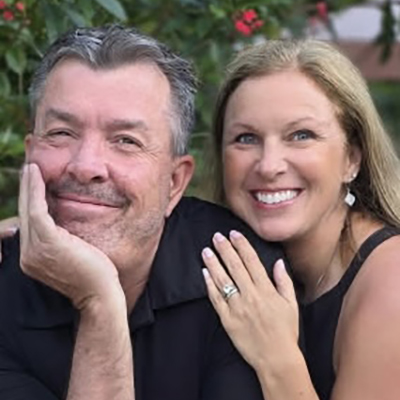
Scott and Deana Thayer
Scott and Deana Thayer have been married for thirteen years. They are newly minted empty nesters with five recently launched young adults between them. For the past ten years, Deana and Scott have drawn on their stepfamily experience to lead blended family ministry through premarital coaching, mentoring, and small group facilitation. When not working with blended families, the Thayers enjoy traveling and were thrilled to recently complete their goal of visiting all seven continents.
About the Host

Ron Deal
Ron Deal is Director of FamilyLife Blended®️ for FamilyLife®️ and President of Smart Stepfamilies™️. He is a family ministry consultant and conducts marriage and family seminars around the country; he specializes in marriage education and stepfamily enrichment. He is one of the most widely read authors on stepfamily living in the country.
Episode Transcript
FamilyLife Blended®
This content has been generated by an artificial intelligence language model. While we strive for accuracy and quality, please note that the information provided will most likely not be entirely error-free or up-to-date. We recommend independently verifying the content with the originally-released audio. This transcript is provided for your personal use and general information purposes only. References to conferences, resources, or other special promotions may be obsolete. We do not assume any responsibility or liability for the use or interpretation of this content.
Season 7, Episode 178: We Struggled to Blend: Now We Help Blended Families Thrive
Guests:Scott and Deana Thayer
Air Date: December 1, 2025
Scott (00:02):
There is 5% of the time where you’re asking yourself, what did I do? Why am I here? Who did I marry? Whose kids are these? This was the worst decision in my life and I want out. 95% of the time it’s the exact opposite. This is the best thing since pause and pour coffee or sliced bread or whatever it might be. I love this woman. I love her kids. Everything is happy.
Ron (00:34):
Welcome to the FamilyLife Blended podcast. I’m Ron Deal. We help blended families, and those who love them, pursue the relationships that matter most. And my guess is since it’s December 1st, what you’re pursuing at this point are Christmas gifts. Or at least if you’re like me, you’re beginning to think about it, maybe just a little. Or if you’re not like me or you’re like me, you’re going to get there, one way or another. I don’t know. But you should be thinking about gifts if you’re not. Either way, welcome to FamilyLife Blended. Speaking of Christmas gifts, Gayla Grace’s new book, Beautifully Blended is a beautiful gift book if you didn’t know that. It is super soft cover, so perfect to share with a friend or family member or maybe just get it for yourself. Lots of encouragement inside. That could be a good Christmas gift. I’m just saying.
(01:25):
We love your feedback. Someone listening on Apple Podcast gave us a review recently, Episode 129. They said, “Wow, thank you for having the Whitney’s on. Their testimony was life changing. Please, please, please, if anyone is struggling with stepchildren, FamilyLife Blended is here and Episode 129 will bring you comfort.” That’s what they said. We appreciate that very much.
And on YouTube, Rosa simply said, “Thanks for your ministry.” Yeah, we’re here for you, for your family and Christian leaders who want to serve stepfamilies better. One way we can help is through The Smart Stepfamily video series. It’s available for free. Yep, that’s a keyword, free on RightNow Media. This is the most widely used video curriculum available for individual couples or small groups. There is a small fee for the study guide, which we recommend that every couple have one of those, but you heard me correctly.
(02:27):
The video series itself is free. It might be a great way to start the new year. Check it out today. The show notes will get you connected.
Okay, Scott and Deana Thayer live in Colorado Springs. Deana works for Focus on the Family in the publicity department. Scott previously worked as a pastor. Now he works in the tech world. They have been married for 13 years and they’re empty nest now. But when they started, they had five kids within five years of age. Boy, do I want to hear about that. They have led stepfamily ministry in two churches; one in Seattle, and now in Colorado Springs where they live. They attended our Summit on Stepfamily Ministry in Irvine a few years ago, and again, they just attended it a couple months ago in Nashville. Scott and Deana, welcome to the FamilyLife Blended podcast.
Deana (03:18):
Glad to be here. Thank you for having us.
Scott (03:20):
Yeah, thanks for the invite.
Ron (03:22):
Well, Scott, did I get that right? In your previous life you were in ministry, is that right?
Scott (03:28):
That is correct. I was able to serve for about 14 years in ministry, working with students and families and then transitioned into high tech sales as I was coming through my divorce actually.
Ron (03:43):
I’m curious. I’ve heard a lot of people who were in ministry in one form or another and then went through a divorce situation say to me, I didn’t think I could ever be in ministry ever again. Scott, did you ever have that feeling? And you are in ministry again. I mean you guys are doing blended ministry. We’ll hear more about that later on, but I, just wondering if that’s an experience you had.
Scott (04:08):
I never personally felt that way because I know of the power that God has to restore the human and as you look in scripture, you see numerous examples of imperfect people serving Jesus.
(04:23):
Unfortunately, churches at that time didn’t feel the same. So I knew I was bound for ministry at some point in time because that’s my giftedness, that’s my heart. I love people. I love sharing the word of God with people and providing guidance. That’s a driver for me, but I just knew that it needed to look different. So rather than being a vocational minister, we went the route of lay ministry and being what they call it as a tent maker in the Christian world where I work in the secular world, but then I serve like crazy with my spare time.
Ron (05:02):
Wow, awesome. That is really great. Love that. Okay, Deana, you’re working on your PhD right now, what in?
Deana (05:09):
I am working on a doctorate in educational leadership. That is correct.
Ron (05:14):
Okay, alright, so you guys are smart people. That’s what I know. Alright. Savvy, you got skills, ministry, leading, all kinds of stuff. How stepfamily smart were you guys when you got married?
Deana (05:30):
We had a long way to go at the beginning. I think—
Ron (05:34):
That pause was like a pregnant pause. We were all waiting, what are they going to say?
Deana (05:38):
I mean we’re so grateful this isn’t the case now, but when we were starting out 15 years ago, starting our dating journey, there still were not a lot of resources for blended families. We did find one book, but we read it and frankly, it almost scared Scott off of the whole thing. So it was not as encouraging as maybe we would’ve hoped and we didn’t know what we didn’t know really.
Scott (06:07):
Right.
Deana (06:07):
So we dove in I think fairly uneducated. Do you agree?
Scott (06:10):
I would say—yeah, I would support that. And by the way, I wanted to say something. Deana’s the smart one. I’m the one with common sense that chose Deana. She’s the one pursuing the doctorate. I am not.
Ron (06:25):
You got the street smarts; got it.
Scott (06:26):
Yeah, exactly. Another thing when we were first starting out is we didn’t really know how to interact with our children, interact with each other and so we were looking for resources that might help. And like Deana said, there was only one. It almost scared me off, but then about a year and a half or so into our blend, Ron, we found your material and that really helped shape our expectations of what the family needs to look like and helped us guide our ministry as well. So yeah, that gives you a little insight, I hope.
Ron (07:02):
It does. It does. A lot of people I think, come in blind. They sort of have a false hope about what their family is going to be after they tie the knot. Looking back, what do you wish you’d seen a little better?
Deana (07:15):
For me it was 100% the patience piece. I think I wanted it to be great right away and I think that’s fairly common. We can go in with some really unrealistic expectations. I also think there can be a little bit of arrogance in terms of, I’ve done this marriage thing before, I’ve got it sorted out. And what we’re not taking into account is, but you haven’t had instant family with somebody else’s children. That’s completely different. So I would say I really wish I had known to pack a lot more patience, to be aware that this is going to take time. And also to recognize that just because you’ve had this one experience, all that really means is you have experience with that one situation. It does not mean I’m going to know what to expect here. That would’ve helped a lot. What about you?
Scott (08:09):
I second that. I also wish I would’ve seen the process through the eyes of my children more.
Deana (08:17):
That’s good.
Scott (08:17):
And understand that they’re not where I am at that point in time, that they’re going to be behind me in the blend and behind me in accepting what’s happening. But not just that the overall experience and the number of times that they experienced the divorce over and over again from a loss perspective, I wish I would’ve seen it more so from their eyes than what I wanted them to see.
Ron (08:46):
Let me follow up Scott. So can you think of one or two things you might’ve done different had you seen it that clearly?
Scott (08:54):
Yes. So when we were first together, we lived in a family home near my children’s school. As we about five or six months in, we decided to move 74,000 miles away from my children’s school. I know, you’re told a billion times never to exaggerate, right? No, but we moved farther away and although that seems small, I didn’t take into consideration how that felt for my kids driving far away from everything they knew for the past eight, nine years being their family home, their surroundings, their school. And although it was only a 30-minute drive and I expected them to be “Okay, no problem.” It felt to them as they were being taken away from everything they knew. I wish I would’ve had more sensitivity around that.
Deana (09:53):
And I’m over here getting spicy because this highlights it perfectly. The move was closer to where my kids’ school was, but still a new house for everybody. So I was actually eager to leave that home because it was the home he had shared with his ex-wife and my kids felt like interlopers, right? They’re coming in, you guys already have your bedrooms, we’re over in the guest room. What is this? So you can see just even that one description to be able to be sensitive to one group of children, you have to maybe find out that you’re not prioritizing the needs of another set of biological children. And that’s the tension that we weren’t as aware of early on.
Ron (10:36):
Oh yeah. And it’s a really good example of you both have legitimate things that you’re mindful of and it leads in a different direction, literally physically. Do we live here or do we live there? And what are the implications for that? And by the way, I want to push in on that phrase, prioritizing the kids’ needs. I absolutely want parents and stepparents to be really sensitive to, what are the implications of this for the children? Prioritizing their needs doesn’t necessarily mean that one side wins and one side loses. I mean I think you can be—I’d love for you guys to react to this—I think you can be mindful of, this is going to be hard for this group and we need to be sensitive to that, push into that, try to be gentle with that, but we’re still going to make the change. It’s in the loving in light of what’s having to change. It doesn’t necessarily make it easy, but it certainly connects hearts to children that are having to bear some weight of some transition. What do you guys think about that? React to that.
Scott (11:49):
I would say that the key there is communication. Communication on a level that the child will understand. Obviously, we spoke to our 14-year-old differently than we spoke to our 9-year-old. There are different levels of understanding there, but the key is to communicate: “This change is going to be hard. Yes, I understand your feelings around this. I want you to be heard around it. Here’s why we’re doing it and we’d love for you to come on board” type of a statement. That way they know that we hear them, we feel their pain, we know it’s not easy, but we’re still leading this family and we’re driving the bus, so this is where we’re heading, but we acknowledge your pain.
Deana (12:37):
That’s so accurate. We really wanted to always invite their input, but we were clear that it might not impact the ultimate decision that we make.
(12:48):
So we wanted to have a family where, hey, we care. Your voice matters here and we’re the adults and there are going to be hard things. Now, is there space to talk about that? Is there room for that? Absolutely. But their feelings, we had to make it clear that their feelings weren’t always going to change the direction of the choices we were making for our family. And that’s kind of that clarity piece of making the marital relationship primary, showing the primacy of this, which is actually extra important we think in a stepfamily. They have to see that this is solid, even if there’s decisions we make that they don’t love at the time.
Ron (13:24):
Those little moments are subtle, but yet do not underestimate how powerful it is to just say things like, “Hey, we want to talk to you about X decision that our family’s going to have to make. Just want you to know we care. We want to hear what you have to say. But at the end of the day, the two of us are going to be making the decision.” That kind of stuff, just that little passing remark shows that solidarity, shows we’re the team in charge of this home and we’re going to remain in that posture together. And so important for empowering the stepparent and on and on it goes. Yeah. What about, I’m curious about other differences that you guys may have had in the beginning just in terms of style, rules or rhythms of family life. Do you have anything you had to navigate there?
Scott (14:15):
We’re still working on it. We got—I’m kidding. Actually, and honestly, we are. I mean we’re 15 years, wait, 13 years in as a married couple and we’re still finding things that we’re unpacking. But one is Christmas and oh my goodness, we had a rude awakening at Christmas. I love being Santa Claus. I enjoy my kids sending me a list. And their wishlist can be, I want the moon and I just want them to dream as much as they possibly can and then I’ll hopefully deliver on—I can’t deliver the moon, but I can hopefully deliver some gifts and presents that they like.
Ron (14:56):
Okay.
Scott (14:58):
Deana, on the other hand, she’s very systematic and if you get a chance to meet her and get to know her or she’s very, what do you call it, detailed. I think that’s the nice way to put it with what she wants her kids to do. And so even leading up to the actual Christmas shopping season was a budget that was brought in. I didn’t care. I just wanted to go buy gifts.
Ron (15:23):
Spreadsheet. I mean, did we have spreadsheets?
Deana (15:25):
We did actually at one point.
Scott (15:25):
Yep, we did. At one point I said, “You know what? I just can’t keep track, or I just need to give a spreadsheet so I can share with her what we’re doing.” And when it came to the Christmas list, remember I’m the write down whatever you want and I’ll just do what you can or do what I can. Deana, why don’t you share with them what you did?
Deana (15:46):
So my kids were given the task to choose four categories. They got something to wear. Let me see, let me do the whole rhyme. Something you want, something you need, something to wear, something to read. And within those categories, they could share a few things they would like under each of those categories. And I would often have them send me links, even make it easy, let me just click and buy. So often my children knew what they were getting, or at least among from the buffet of what they might be getting and his kids it was much more of a surprise. So that was a very different paradigm and that took some adjusting.
Scott (16:31):
Yeah. So yours had all those four things and mine just had something you want.
Deana (16:35):
Yeah, just a lot of things you want.
Ron (16:47):
I totally see a collision of two trains in the middle of the wilderness when you guys start doing Christmas with those two totally different ways of traditions for how you’re going to do gifts. Is that what happened?
Deana (17:02):
That is what happened. And Christmas morning was the collision because we found out, notice we say found out, we now know we should have talked about this in advance. Hey, what are some of your traditions around how you handle Christmas morning? Did we do that? No, we did not. Please learn from us and don’t make the same mistake. But we got to Christmas morning literally and learned that we had very different styles of even how we open the gifts. So surprisingly I let my kids tear into stuff. I mean, they’re only getting maybe four things, and they know what they are. So we just have a free for all. Scott, do you want to describe how you do it?
Scott (17:40):
This is where I’m more methodical and it’s selfish because I want to see my kids’ reactions to the gifts that I buy them because I love being Santa Claus. And so we did the, alright, Zach, you open a gift, Blake, you open a gift, now Shaylin, you open a gift. And we went in that order so that we can all rejoice and celebrate with them. Didn’t go so well the first Christmas morning. My bio kids were upset and wondering, “What’s going on? Why is Mark tearing into all the gifts at one time and why is he not waiting his turn?” And Mark on the other hand was like, “Hey, what’s wrong with those guys? Why aren’t they opening their presents?”
Deana (18:19):
Why do we have to stop and watch?
Scott (18:20):
Yeah, I want to see what I have now. I want to start playing with my Legos. So it was a fun first Christmas morning.
Deana (18:31):
That adjective is with his tongue clearly in his cheek.
Ron (18:35):
Well, the kids were thinking that, and I’m sure you guys were thinking that. On some level you’re going, “Well, they’re crazy talking about each other. She’s crazy. He’s crazy to let it happen this way.”
Scott (18:48):
These were my traditions. And where’s the fun in knowing what you’re getting for Christmas as a kid? And I’m thinking, “What in the world. We got—”
Deana (18:56):
Well, you’re forgetting I plan so far ahead by the time they gave me their list September, October. So they would sometimes open things and be like, “Oh yeah, I forgot I asked for this.” So it was still a surprise.
Scott (19:07):
October’s late by the way.
Ron:
There’s some method to your madness. Okay, so what everybody listening or watching right now is saying, “Yeah, we got our thing. Theirs was Christmas, Christmas day, but we’ve got our thing where we’re just sort of on opposite sides about this. We just have two very different ways of doing it.” And by the way, what I think is so interesting about little traditions and rhythms like this is that none of us ever really know how deeply rooted we are into those traditions until somebody goes and messes with it and then you go, “Wait a minute, this is not the way we do it in this family.” And all of a sudden you drive that stake in the ground and you’re like, “No, we’re going to hold onto this.” So what was the journey for you guys to try to navigate forward after that first Christmas?
Deana (19:55):
Well, the thing for us is the first one was kind of a disaster as we described. It was just messy. But I would say we walked away with some principles for how we get on the same page. How do we get unified as a couple if we find out we’re not matching on something? So Christmas is just a microcosm, but these things have worked for us in other areas, parenting, how do we handle chores, that kind of thing. So on the Christmas thing to close that loop, we actually have ended up doing it the way Scott’s used to. Scott and his children were used to. And some of that is because they really cared about that.
(20:32):
So we talk a lot about there’s times where the biological parent needs to win. Sometimes that might be around consequences or big decisions like where they go to school, maybe that you handle co-parenting with your ex-spouse. So sometimes you say, “This is just a biological parent decision.” This wasn’t one of those, but that’s a principle we’ve used. Sometimes you need to defer to that bio parent. This was one where it more came down to sometimes, we need to defer to the person who has more skin in the game, who just cares more. The tradition is more meaningful. My kids really weren’t upset about watching their siblings open gifts and they can exercise patience and grace and kindness to do that. And so in this case, this was really a big deal to them. So we deferred there and we’ve used that other times too, who essentially cares the most. Sometimes we need to default to them and just show that courtesy because in a blended family, you’ve got to bring a lot of sensitivity and a lot of willingness to adapt as well. So sometimes you’re going to adapt to that person who, “Hey, for me, this issue is really important.”
Ron (21:39):
Deana, I can imagine since your kids had to make a bigger sacrifice to move in that direction that you took some time to try to talk it through with them, check in with them, try to give him some lead. How did you go about that?
Deana (21:51):
Yes, the next year, thankfully much better. And we did talk about it in advance and why that matters. And also what was fun, and Scott will tell you also some of my nerdiness is we had our family values hanging on the fridge. I had a scripture for each of them, a song for each of them. I’m sure he was like, “What is this?” And so I was able to tie it to some of our values. This is a way that we exercise kindness toward people. That was one of our family values. And we had Matthew 7:12 as the verse for that about the golden rule, essentially “Do to others as you would have them do to you.” And so, “Hey, would you love to just be deferred to and let someone enjoy you opening a gift and watch the look on your face?” “Yeah, actually we would like that.” And they were able to see it in line with some other things we’d done previously. So I think we prepped much better the second time. But you’re absolutely right. I had to prep them differently because the change was happening for them and not for Scott’s children.
Ron (22:47):
I love the tie in with family values making overt. This is an example of the kind of thing that we’re talking about here. Yeah, that’s great. That’s great.
Okay, so fast forward, it’s been 13 years, you guys have been married 13, right? And you’re empty nest at this point. I have no idea where the kids are, whether they got families of their own, but what do you anticipate with Christmas this year?
Scott (23:08):
We are hoping to get everybody together. And as you, those who are empty nesters know that’s nothing short of a miracle, especially when you have five adult children who are in their own careers and also have their own significant others. So our hope is to gather everybody at our house in Colorado or to gather everybody up in Seattle where the majority of our children reside and spend time with them there. Gift giving at this point has somewhat fallen off for most of them. It’s more so we just want to spend time and provide each other with experiences more than just presence. So we do have, I guess I can’t remember, do we have budgets that go all the way up to where they are now?
Deana (23:57):
We do, but it’s so loose now. I mean, for instance, on our family moon, which we highly recommend for blended families, we went to Great Wolf Lodge. So last year we pulled off the miracle and got all five down at once. That was the first time that’s happened since we’ve moved to Colorado
Scott (24:13):
For Thanksgiving.
Deana (24:14):
And it was actually Thanksgiving, but we did our Christmas then and they asked to go to Great Wolf Lodge, “Let’s go to the water waterpark.” And that’s a sentimental memory for them. So Scott’s right, a lot of it now has shifted into how do we make memories together? How do we have some cool experiences? It’s just harder to get all seven of us together at once.
Ron (24:33):
Yeah, you got to make lots of sacrifices when they get to be adults and grandkids come into the picture and all those kinds of things. Yeah, you’re doing that a lot. And by the way, I think that’s a nice little frame for anybody listening or watching right now. It’s funny when we fast forward life or look back at our own lives when we became adults, when did we go see our parents? Did we get together with our siblings? And how did that happen? And some people were there and some people weren’t. And we are fully accepting of that flexibility when it involves our life or the fast forward adult life, but we won’t have that flexibility in a blended family home because it is sort of like, “No, it should be this way,” “It should be that way.” Well, sometimes you got to start that flexibility stuff long before you want to in order to create more of that family identity and new tradition that helps to define our family so that we know who we are moving forward. That’s one of the things we talk about a lot is that those rhythms, the daily stuff, but the weekly, but then the yearly rhythms, like Christmas. For you guys a couple of years in sounds like it smoothed out or at least it got a lot better than it was the first year. When you’re looking back now at all of that, did that help your family identity? Did it help kids see themselves as family to one another and see you guys as stepparents to one another? What would you say?
Deana (26:02):
I think it did help. I even think interestingly, if we look back now, I think some of the speed bumps you might call them, were bonding moments, actually.
(26:13):
We look back at the struggle and now you can point to it as, “Hey, we got through that.” And when you’re trying to merge families and for everyone to kind of figure out what is their place in the family—we had disrupted birth orders, we had kerfuffle’s over who’s sharing a room and who’s not. But as you start to accumulate victories so to speak, even if they’re small ones—hey, we got a house that was new to everyone, everyone had to adapt. Or we figured out how to do Christmas or whatever it might be. Now you point to you’ve got this track record of we are figuring it out as a family. And I think that helps so much. Sometimes even when things go sideways. We’ve been on vacations where tropical storms came through and things, but you have a memory now and it’s a bonding moment, even if it was disappointing at the time. Those kinds of things.
Ron (27:06):
Yeah, the memory making stuff is really, really important. I can see how that builds over time. I’ve often said to people, you need the kerfuffle’s, I’ll use your word. You need those moments actually, ironically enough, because as you move through them—hopefully you move through it—you figure something out about how to be family with one another.
(27:22):
You’re helping to bring definition to the ambiguity that you walked in with. And the more definition you get, the less ambiguity there is, the more clarity there is about how we fit together as a family. And that’s part of the refining fire, I think. I want to ask you guys about co-parenting. What was your co-parenting experience? And I mean if there was one or two takeaways that you’ve learned in 13 years about the impact that it had on your kids, and maybe any observations about how to do it well or do it better, what would you share?
Scott (28:05):
For clarity, when you say co-parenting, you mean how I parented with my ex, correct?
Ron (28:10):
Yes, with the other households.
Scott (28:13):
That was rough. I’ll be completely candid and it’s not really a secret either. There were definite differences on the expectations that we had of the children. There were definite differences in allowances as far as what we allowed them to do, both in an out of the home being rules versus no rules, guidelines versus no guidelines, expectations versus low expectations. So it was really rough to be completely candid, and it impacted the kids in such a way to where there were times where coming to dad’s house was awful.
(28:59):
And each of them had a period of time where they stopped coming to dad’s house because I expected them just to do their homework, go to school and be all around a good student, good child, and a good sibling. So there were rough times for me in that situation. I’m happy to say that they’ve all come through and over the last I’d say three or four years, maybe five years, each of them have thanked us for our consistency, and thanked us for the discipline and the guidance that we did provide; that we did not fall to their wants and their needs. But it didn’t make it any easier when you don’t see your daughter for a number of years—
Ron (29:52):
Oh my goodness.
Scott (29:52):
—and when there’s no desire to come hang out or go on a family vacation. So it was rough. It was rough, but like I mentioned, are they better off for it? No, I don’t think so. I think there’s some damage that was done, but they’re working through it, so I’m happy to go into more detail—some detail I should say, not more, but if the desire is there.
Ron (30:34):
Just one follow up, Scott, and that is how did you wrestle with the loss? I mean, somebody’s listening, watching right now, who’s going? Yeah man, I’m right in the middle of that. Can’t make contact. You’re giving me some hope, Scott, but how did you survive the time when you didn’t have connection with them?
Scott (30:56):
Three things. Number one, a very supportive and understanding wife and someone who was empathetic to what I was going through, and patient. Also a wife who loves my children like they are her own. Second was a supportive group of friends and family around me who I can express my frustration with and empathize with them and they console and pray with us. And that was our blended family group at the church and some others. And then third, and I credit this to my dad, my late father who gave me the ability to persevere and play the long game in all situations, not just in this particular situation. I looked five, 10 years down the road, what do I want my relationship with my kids to look like? There were times where we could have legally pursued custody of the children, but we would’ve lost in the long run because you don’t want to build up an area of forcing kids who want to come live with you, who don’t want to live with you, and build that resentment. It’s different in all circumstances, different in all situations. I understand that.
Ron (32:17):
But you were afraid of winning the battle and losing the war is what you were afraid of.
Scott (32:20):
Exactly. And that’s exactly what it was in our situation. Now there are situations where the child’s in danger—
Ron (32:26):
Yeah.
Scott (32:26):
—go get them.
Ron (32:26):
Oh sure.
Scott (32:27):
Right. But in this particular situation it was, yeah, we can win the battle but lose the war. So that long game perspective really helped me in that way.
Ron (32:38):
I appreciate that. Deana, before you talk about your co-parenting situation. So what was that like for you to be the wife who’s trying to be supportive of her husband’s circumstances?
Deana (32:53):
I think it was challenging for me. I had to lean into being willing to ask questions honestly because men and women do relate to these kinds of painful experiences a little bit differently. And I don’t know that I immediately knew how to show up in a meaningful way for Scott, so I kind of had to ask and learn. But what’s great about Scott is he also is the person who’s going to do the task at hand. And interestingly, it was almost exclusively one child at a time that wouldn’t come for a season. So Scott was really great at, “Hey, there’s still four kids here and their eyes are on us, and we need to show up for them, and we need to still be consistent and have stability and let them know that in this house they can really count on what to expect.” I liken it to we value being the back of a shampoo bottle, rinse and repeat. We wanted those kids to know the expectations in our home even when they didn’t like them, but that they could just count on us to be almost boringly consistent. And so when he was having a hard time and missing one child, I missed them too. And I think as a mom, what—even the parts I couldn’t enter into because of not being their biological parent—I could enter into because I’m a mom and I get the pain of that, of thinking about being disconnected from a child. So some of the things that I did once I asked him and he leaned into saying sometimes it’s just I just need you to be present. He literally said that to me once, I just need you to be here. But also part of it was there was a season where I was the driver on still going to our group and still going to church. Those things didn’t feel super fun to Scott all the time. I’m going to have to talk about how hard this is right now.
(34:47):
Why are we even leading this group? You almost can get this imposter syndrome. Our kids don’t even want to be here. What kind of resource are we? And to just say, “Let’s just keep showing up.” I think that was one thing I did that ended up proving valuable and being available when he did want to talk. He didn’t always want to talk about it, but to be available when he did, I think was also helpful.
Ron (35:08):
That’s good. That’s good. I appreciate that. Your co-parenting situation, did that create any unusual stress for you guys? What’d you find that was helpful?
Deana (35:16):
Yeah, we had an interesting situation with my ex, and I think this goes back to the primacy of the marriage relationship in a blended family. Our challenge was more there was a lack of boundaries.
(35:29):
My ex wasn’t always great at that; would come to pick up the children and just come right in the house and all kinds of things. So having Scott there really helped to establish those boundaries over time and I think that helped me feel a lot safer and was also better for the kids. I think that’s just confusing to them when there weren’t clear boundaries of, where does this parent end and this family begin and all of that, that’s tricky. So our situation was a little bit messy at times. We didn’t share the same moral paradigm either, so my kids were seeing a different setup in the other home than we are presenting here with having, believing in some biblical ethics around some other things. So that was tricky. But having Scott there really helped for the boundary setting and then the one that’s just going to it is going to last the longest I think for most people is just the financial co-parenting. That’s just really hard. We still have one kiddo in college and so just figuring out how do we do that and what happens if one parent isn’t as great at that and you want to convey to your children that you’re honoring your responsibilities but not throw the other parent under the bus. So I think we’ve had, both of us have had disparities between homes but in different ways. So it was really interesting just to see that play out.
Ron (36:55):
Absolutely. Have you found a good answer for that, by the way?—for that issue of the other homes not doing their part and you are. I would think it would involve a hard honesty, but with a “So can we talk now about you child going to your dad and asking about that,” trying to empower the adult child? I would never do that with a younger age child or child at home, but a college age child to try to have that conversation would be another growing up moment for your child for sure. I don’t know. How did that work for you guys? You still navigating that?
Deana (37:37):
Yeah, it’s exactly right. We had to talk about this very differently when they were younger and it’s different now. So the two things that I can say—we’ve made a lot of mistakes as you heard about our first Christmas morning, not cute—but two things we did well around this I think was we told the truth without going into any kind of character assassination. So when my kids were younger, they were in a school that wouldn’t release report cards if there was outstanding tuition at the end of the year. So that’s an example. So they would sometimes get in my car at the end of the year, “Why didn’t we get our report cards?” and all our other kids did. We just got very good at just saying we’re not going to hide and protect, but we also aren’t going to undermine. So I would just simply say, “Oh, your dad hasn’t finished paying the bill for school.” Leave it at that. I didn’t say, “Oh, he’s the worst.” Nothing. There’s no need for that. That’s their parent. They love him, they should love him.
(38:29):
But there also comes a point where it’s okay to just say, here’s just the facts of the situation, very short and sweet and I would just tell them, “And as soon as that’s solved, we’ll get your report cards,” end on something positive. Now it’s very different. I try to let them know what we’ve done and empower them to then respond. So we’ve had a few years even in college where there’s letters coming from student accounts and so I will just say, and I have already done it for this upcoming school year, “Hey, just want you to know I’ve already checked in the portal, our half of tuition has cleared. So if you get any funny letter or something, feel free to ask your dad about that.” And it just takes it off of us. It’s not undermining there again, it’s not mean, it’s just letting you know what we’ve done. And that’s actually another tip. Sometimes you have to fight for it, but we would really say whenever you can see if the school will create two payment plans so that you aren’t trying to share or give one spouse money and hope they send it to the school. That’s yucky. We did that for a while, did not go well. So whenever possible, just ask, “Hey, can we just have this so separated out?” Keeps it a little bit cleaner.
Ron (39:31):
Yeah, that’s a good suggestion. I like that. Hey, communication came up a little while ago and I know you guys sort of created this 95%, 5% communication tool. We’d love for you to share that with our listeners. How’s it work?
Scott (39:45):
Pretty simple, candidly. There is 5% of the time where you’re asking yourself, what did I do? Why am I here? Who did I marry? Whose kids are these? This was the worst decision in my life, and I want out. 95% of the time it’s the exact opposite. This is the best thing since pause and pour coffee or sliced bread or whatever it might be. I love this woman. I love her kids. Everything is happy. Now, we’re all going to be there and those people who say they’re never in their 5%—
Ron (40:19):
Either are extremely blessed by God or are in—they’re liars or they’re in deep denial. Okay, move on.
Scott (40:28):
Yeah, okay, moving on. So the key is communication. And as long as we’re both in opposite spectrums, any given time, we’re okay. If I’m in my 95% and she’s in her 5%, we’re going to be all right. It’s the time when we’re both in our 5% that it’s critical that we communicate and say, “I’m having a rough time right now. I know you like an immediate resolution to a current problem or a current issue, but I need some time.”
Deana (40:58):
And that is how we use it. We’ll actually tell each other, “Hey, I’m in my 5% right now.” And that’s just a signal to, “Hey, I might need some space. Maybe I’m not going to be in the best frame of mind to talk. This blended thing is just feeling really hard right now.” It says all of that by just saying, “I’m in my 5% today. I’m going to need a minute.” It just lets us have some grace for each other and we usually pop back out of our 5% pretty quickly. But it gave us a little way to talk about a big thing without having to unpack all this. We can just say, “I’m in my 5% right now. I’m going to need a minute.” And it’s been super helpful.
Scott (41:35):
And also to be clear that we will resolve this. This isn’t just going to be a hanging chad that we’re never going to touch on, but—
Deana:
We’ll close the loop.
Scott:
And my 5%, but trust me, we will come back to this and figure it out.
Ron (41:49):
So if you were on the receiving end of that comment from the other, they’re in their 5%, what kind of self-talk did you do and what did you consider your role to be at that point?
Scott (42:00):
Yeah, it was hard at first. I took a lot of that as a personal attack. I’ve done something that has caused her to be in her 5% and I got defensive with it. There were times when it made me go to my 5% and I go, “Fine, if you’re in your five, I’m in my five. We’ll see you later.” I had to combat the feeling that she’s my enemy and realize that she is the ally and that we’re fighting against the enemy together, whatever that might or however that might personify itself in our relationship. So for the first little while, it was rough because of my past and my experiences not to feel attacked or I’m going to be left again. So that was hard.
Ron (42:50):
Yeah, it triggered your ghost of marriage past it sounds like. It triggered just the pain in your heart. And by the way, I’m talking to our listeners who are familiar with The Mindful Marriage resource that we have out now, and I actually think this is a great framework, guys, to think about your 5% language is anytime that you’re really dysregulated and you’re taking ownership of that and letting the other person be aware of it. But what dysregulation does is it tends to trigger dysregulation. So in one partner it triggers in the other, and then you have that pain cycle that you’re stuck in as a couple. And what’s really important is that each of you manage your space, manage your 5% if we’re going to use this language. Your dysregulation is yours to manage. It’s not the other person’s job to come and fix it. And Scott, you felt the blame of it. You felt the weight of it and that was part of your reactivity to things that have happened in the past. And learning how to calm that down so that you don’t inadvertently bring more negative exchanges between the two of you. All of that is a lot of emotional work.
(44:03):
You’re having to
You’re having to put on that self-control and try to manage where you are and figure out a path to bring a better you back to the relationship. Sounds like a lot of learning opportunity for you guys.
Deana (44:19):
So much learning opportunity, to stay out of defensiveness, to keep an open posture and to be willing to revisit it once they’re feeling better. But it also was helpful because as you slowly get better at putting yourself in the other person’s shoes, so to speak and say, wait, there’s days where this situation is hard for me too, so I need to make room for they’re having a hard time. I think we got better at it over time, honestly. But yeah, it is true. There’s a lot to manage.
Ron (44:57):
I want to loop back around and talk about ministry for a minute because I know you guys are passionate about ministering to blended family couples. You’ve got experience in a church in Seattle, I believe, and now in Colorado Springs. At what point did you begin to step in a local church and try to lead, and how did you feel when that, did you feel worthy of that or what did it take?
Scott (45:20):
It came from us needing help. We shared early on that we didn’t go into the blend with eyes wide open.
(45:30):
And we found ourself needing support, needing the help of others around us who are like us. We are both committed to the permanency of this marriage, and we wanted this to last, but we couldn’t do that alone. So at the church that we went to up in Redmond, Washington, they gave as most churches do. They do their small group drive, and this church is a rather large church. And so there was a booklet of all the different small groups and life groups that you can connect with. We’re sitting there on a Sunday morning flipping through the book and there’s really nothing for us. I mean, if we were hikers and wanted to go on a two mile hike every weekend, there’s a group for that. And I’m not a hiker. There’s cars for that. There’s groups for morning coffee and all those types of groups, but nothing for us and where we were at.
And so God just put it on our heart to go speak with the pastor who I knew because of my past ministry life and said, “Hey, can we start a group for people like us? We don’t know what it’s going to look like except that we need help and support.” So they were amazingly supportive of us moving forward. So much so that they sent us to one of your conferences down in Southern California to get some training on how to run a blended group. And so came back and we started it and we had these dreams. We even talked about bringing in who’s going to bring refreshments and what are we going to talk about and an agenda if you, of course, right, an agenda of what was going to happen.
Ron (47:09):
Spreadsheet.
Scott (47:10):
And from day one—yeah, spreadsheets, right. Who’s going to say what and how are you going to say it? And from day one, that went out the window, and we just let God take over and it was beautiful. We were concerned and nervous about only being us and one other couple that we didn’t know and that would be kind of awkward. So you’re divorced and remarried, what happened? That’s not something you want to ask someone you just met, right? So we were nervous about that, and God blew the doors off. We had a number of couples show up and some of those couples are dear friends today. So it was fantastic. And yes, we were able to do ministry, but we were ministered to equally as much and it was a complete blessing to do it in Washington and now be a part of a similar ministry in Colorado.
Ron (48:07):
Guys, there’s somebody listening right now and they’re going, “I want a group like that and there’s nothing around me.” And let me just say we have a searchable map at FamilyLife.com. Come to our website, you can search for parenting stuff, marriage stuff and blended family stuff. Not necessarily things that we’re putting on, but things that like your group in Colorado Springs, I hope is on the map by the way. It’s free. And if it’s not, we want to add that because we want people to be able to find groups like that. But I also want to wrap around and say so much of what’s happening still in the ministry world is happening because of couples like you who saw a need, you needed some support and it may have been selfish in its motivation initially, but who cares? Get it going, get it started. Other people can benefit from it as well. So Deana, both your experience there and in Colorado Springs, what have you learned about leading groups and blended families and what people need?
Deana (49:02):
I mean, I’ve learned so much. There are times we drive away and think, “I think we got more out of that tonight than the group did.” I mean, Scott’s accurate when he says that it administers to us as well and we feel very fortunate. But we have learned a few things. We’ve learned first of all, in terms of the what—what are we going to talk about? That we really like to have some kind of curriculum that we’re going through, whether it’s The Smart Stepfamily or a book of some kind. But with that, we’ve learned to really hold it loosely because you don’t know on any given night if someone’s going to come and they’ve got a court battle coming up or they are suddenly estranged from their children experiencing parental alienation, a huge financial fallout. And we have to be ready to just set that aside and come alongside that couple for the night and just listen and be there and pray.
(49:50):
So that’s one thing I’d say we learned. Yes, have a framework be ready with a jumping off topic for the evening, “Hey, we’re going to discuss this tonight,” but also be ready to throw it out the window because there might be something else you need to address.
And then I think another thing we’ve learned is just how much this is needed. We have had seasons where we’re not sure, are people interested? Is it going to go? We’ve even ourselves had a little time where our own group was kind of on life support, like, “Is this going to happen?” But it’s incredible that when somebody is seeing help and hope and encouragement, they tell their friends and that word of mouthpiece is huge because there’s a relational element to the group now. It’s not just content and let us give you some strategies.
(50:39):
It’s we’re doing life together. And that’s contagious and no one should do blended family life alone. That’s really what we think. It is so powerful simply to sit in a room of other people who “Get it” when you’re explaining the challenges of visitation or a holiday or whatever it might be. We’ve heard that time and time again just to be with other people who understand. So I think that’s another thing we’ve learned. There is a need. People want this. People find it valuable and we want to keep providing it for as long as we can.
And we also want to be about myth busting. I think that’s another thing I’d say. If you talk to the divorced people in the room, they’re going to be probably the biggest advocates for marriage permanence of anybody. They aren’t the ones saying, oh yeah, just throw it away. And we’ve seen church, both of us have experienced this. Churches, ministries who maybe are a little nervous to come alongside blended families with this idea that are we somehow advocating divorce. Talk to people who’ve lived it. They’re not advocating divorce. They’re seeing firsthand the ripple effects of this on their kids, and extended family members, the strain in the marriage sometimes.
(51:45):
They’re going to be the first people to say, “Oh, marriage should last a lifetime.” So what Scott and I want to be about and what we’ve learned is that there is value in helping marriages last a lifetime even when they’re not the first one.
Ron (52:03):
That’s good. That’s so good. Scott, why do you think churches buck?—other reasons besides, “Well, we don’t want to be advocates for divorce,” or somehow misinterpret what it is we’re trying to do. Because we all know churches struggle to do this. What do you think holds them up?
Scott (52:22):
I think two things. One is inadequacy.
(52:27):
They don’t really understand what blended families need and how to minister to those families, and so they just stay away from it. The second thing I think is like what Deana said, they don’t want to appear like they’re supporting divorce and that they’re endorsing it because now we have a ministry for it. To which I say, we have ministries geared towards pornography, towards addiction, towards all these other potential vices and sins that are out there, are you endorsing it by having those groups? Absolutely not. You’re supporting and loving those who are going through it and building, trying to find a way out of those situations. So number one, I think there’s that level of inadequacy. And two is the fear of potentially endorsing it because of the false stigmatization and an amazing amount of unfair shame put around divorce and remarriage in churches today—some churches.
Ron (53:33):
So well said. So well said. That’s exactly what our experience is. By the way, I sometimes add two more thoughts and what are we saying to widowed people? It’s sort of like we’re so focused on we don’t want to condone divorce, so we’re going to neglect all the widowed people. Why should that be the case? There’s that thought and then there’s my next thought and that is, look, divorce was never the plan for anybody. Nobody wants that. Nobody set out to experience that. But now that it’s happened, I mean, what is your point about church leader about saying, well, we don’t want to be perceived as encouraging or condoning this. What’s your point? That sin somehow makes you an outcast and you shouldn’t be able to approach the Lord in that?
(54:26):
In the worst-case scenario, the worst divorce scenario where somebody just abandons the spouse and just totally goes off the rails and they don’t care, they’re hurting everybody and they don’t care. So that person cannot approach the throne of grace because if that’s what we’re saying, then we might as well just stop church. There’s a bunch of sinners in there and they’re all thinking they’re going to receive mercy. And I don’t know if we want them thinking that that would be the wrong thing for Christians to—well, no, that’s the whole point. That’s why we’re there because we all fall into that camp.
Scott (54:58):
And to those people who say that, I’d say, well, what would you say to the thief on the right of Jesus?
Ron:
There you go. There you go.
Scott:
Right?
Ron:
Exactly.
Scott:
When he asked for grace and mercy and Christ said to him, “You’ll be with me in paradise today.” I mean it is unfair in my opinion for us to withhold grace and mercy and love from people, period.
Deana (55:20):
And also, I hope we can remove that idea of you need some special qualification to minister to blended families. We had a lot of imposter syndrome, I would say, and I would say it was misplaced. We’re not anything fancy. We’re not therapists. We’re not anything, but we may be a little further down the road than some other people and maybe we can just offer some insights or maybe we can pray with someone. So I think churches need to not be so scared that it takes something special to start something like this.
Ron (55:49):
And even if you’re not down the road further, you’re a facilitator. That’s all you have to be is turn on the video, let it play.
Deana:
That’s right.
Scott (55:54):
Open the door.
Ron (55:55):
Let the conversation happen. The Holy Spirit will do the work. Just let the material teach. You just facilitate, get people together. So much good happens in that environment. Scott, Deana, thank you so much for being with me today. Appreciate you guys. Appreciate your heart and your passion for helping others. Thanks for being here.
Scott (56:15):
Our pleasure. Thanks for having us.
Ron (56:18):
Well, to learn more about The Smart Stepfamily video series that we referenced and the study guide that goes with it, check the show notes. We’d love to get you connected and maybe after today you’re inspired that you’re the one who needs to start the group in your local community.
And speaking of special opportunities, it’s not too early to get this on your calendar. Our spring Blended and Blessed livestream is going to be Saturday, April 18th, 2026. This time we’re going to be in Oklahoma City, so join us for the live audience if you’re anywhere in that neck of the woods, and get this, we’re going back to free. Anyone attending virtually and any church hosting Blended and Blessed, will not have to pay to attend online. We’re going to make people who show up in person pay to cover your lunch. But other than that, the cost is coming down a lot.
(57:09):
Tell your church leaders and get it on your calendar, Saturday, April 18th, 2026; that’s Blended and Blessed.
I’ll remind you that we are a donor-supported ministry. All gifts are tax deductible. If you want to give to pay this forward, use the link in our show notes. Your support goes a long way towards helping us.
The number one email question I get is, “How do I find a qualified counselor for marriage and family?” Well, we have a growing list of Smart Stepfamily therapists and coaches who have invested time and energy in being helpful to blended families. They’ve gone through my advanced clinical training. They’re ready to help.
By the way, the next virtual training for coaches and counselors is going to be this month, December 18, 19. That’s virtual 12 hours. You get CEs the whole bit. But if you’re looking for a local counselor, someone who can do virtual coaching, perhaps check the show notes for a link. We’d love to get you connected to that list and just feel free to reach out and contact those people once you locate them.
(58:07):
Okay, next time on FamilyLife Blended, I’m going to be talking co-parenting with our good friends, Jay and Tammy Daughtry. And we’re also going to be talking about step grandparenting after an untimely pregnancy. That’s next time on FamilyLife Blended.
I’m Ron Deal. Thanks for listening or watching. Thank you to our production team and donors who make this podcast possible.
FamilyLife Blended is part of the FamilyLife Podcast Network. Helping you pursue the relationships that matter most.
We are so happy to provide these transcripts to you. However, there is a cost to produce them for our website. If you’ve benefited from the broadcast transcripts, would you consider donating today to help defray the costs?
Copyright © 2025 FamilyLife. All rights reserved.
www.FamilyLife.com