
181: Beauty in the Broken: A Kintsugi Approach to Blended Family Life
Overwhelmed by blended-family brokenness? Ron Deal and Wynand Jacobs dive into the messy, unpolished reality of blended families in New Zealand. Using Kintsugi as a gospel metaphor, they explore God’s power to reform shame into beauty, grief into testimony, and mistakes into stories that shine. It’s a masterclass in the divine alchemy of blended family life.


Show Notes
About the Guest
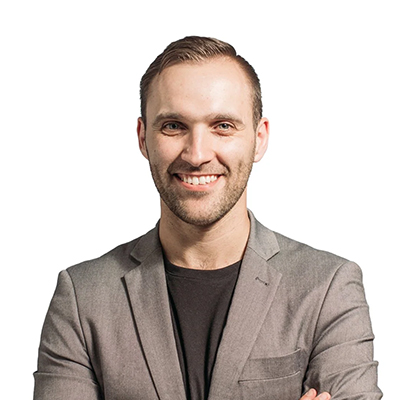
Wynand Jacobs
For as long as Wynand can remember, he’s been passionate about helping people understand each other. This passion led him to develop as a coach, author, and speaker and when that journey turned into a speciality working with married couples it became apparent that working with the team at FamilyLife would be the perfect “marriage”.
Wynand and Ellré originally hail from South Africa, but when they felt the lead of God to come to Aotearoa in 2017 they were in for the adventure that would shape them into the couple and family they’ve become today. “Dream big and do hard things” is their motto and they’re always ready to trust God to do the impossible through their lives.
On weekends they enjoy beach walks and breakfast at their favourite cafes. Ellré is a professionally trained musician and plays the cello and piano. Wynand plays guitar and occasionally you can still find them performing a guitar & cello duo at weddings and small events.
About the Host

Ron Deal
Ron Deal is Director of FamilyLife Blended®️ for FamilyLife®️ and President of Smart Stepfamilies™️. He is a family ministry consultant and conducts marriage and family seminars around the country; he specializes in marriage education and stepfamily enrichment. He is one of the most widely read authors on stepfamily living in the country.
Episode Transcript
FamilyLife Blended®
This content has been generated by an artificial intelligence language model. While we strive for accuracy and quality, please note that the information provided will most likely not be entirely error-free or up-to-date. We recommend independently verifying the content with the originally-released audio. This transcript is provided for your personal use and general information purposes only. References to conferences, resources, or other special promotions may be obsolete. We do not assume any responsibility or liability for the use or interpretation of this content.
Season 8, Episode 181: Beauty in the Broken: A Kintsugi Approach to Blended Family Life
Guest:Wynand Jacobs
Air Date: January 12, 2026
Wynand (00:00):
I would like to say that Christians would be accused of being the most hopeful people in the room, but I don’t always see that. But can we look at our suffering, and we don’t have to just be positive about everything. That’s okay. So we can sit in our pain and our suffering, we can grieve for our loss, whatever that may be, and then realize through this suffering, how may it be redeemed? And that’s the work of a Savior. That’s the work that a Creator can only do. Good thing we have access to the Creator and the Savior who so loved the world that He gave His son as the solution to our brokenness.
Ron (00:48):
Welcome to the FamilyLife Blended podcast. I’m Ron Deal. We help blended families, and those who love them, pursue the relationships that matter most. One of the really exciting and cool things for me is that we have listeners all over the world who tune in to this podcast and share it with other people. And some of our listeners are in New Zealand, and that’s relevant because today I have the opportunity to interview Wynand Jacobs, who is the Executive Director of FamilyLife New Zealand. There he is now. Welcome Wynand to the FamilyLife Blended podcast.
Wynand (01:24):
It’s a pleasure to be here, Ron. Thanks for having me.
Ron (01:29):
Wynand, I don’t know exactly when this special episode is going to release, but Nan and I are planning to be with you in person in New Zealand in September of 2025. We’re going to be on a multi-city speaking tour, as you know, and we’re going to be sharing principles from our book The Mindful Marriage with couples and talking to church leaders about the importance of marriage and family and blended family ministry. We are so looking forward to seeing you. We have told you that many times, but we love New Zealand. We’ve been there one time, and we’re just thrilled to get to come back and to hang out with you and your team. So we look forward to that on a personal level as well as just experiencing the glorious beauty that is New Zealand and the people there are so kind and I mean, they’re just lovely to be around. We thoroughly enjoy everything about New Zealand. So there you go. There’s my plug. For anybody who’s ever thinking about going on vacation to New Zealand, you definitely need to go.
Okay, back to business. Wynand, tell us what’s going on with marriages and families in New Zealand. Just give us a little bit of the lay of the land and tell us a little bit about what FamilyLife New Zealand is doing there.
Wynand (02:39):
Yeah, well, first of all, we’re looking forward to welcoming you to the land of the long white cloud.
Ron (02:44):
Okay, pause, pause, pause. You got to explain that to our listeners and viewers. The long white cloud?
Wynand (02:50):
The long white cloud. So New Zealand is by all means, actually an island, a big island. And so there’s always clouds coming in from the ocean and it can have multiple seasons in a day, but we love it. I think the sheep to human ratio in New Zealand’s about four to one. We’ve got a lot of sheep in New Zealand, which is awesome, and some people might think of that as the long, fluffy white cloud, you know the sheep.
Ron:
Oh, I got you
Wynand:
It has sort of a double meaning there.
Ron (03:21That’s hilarious. I can testify to all the sheep that are in New Zealand, but one of the cool things about your country is that there are no natural predators. Now, my wife is deathly afraid of snakes, but there’s no coyotes, there’s no wolves, there’s no what? I mean, nothing, right?
Wynand (03:40):
Yeah, yeah. Well, it’s funny, my son’s into finding out about the deadliest this and deadliest that, and we asked the question on ChatGPT, what’s the most dangerous animal? And so he said the mosquito, because it kills more people than any other creature. And since second most dangerous surprise is actually humans. Okay? So don’t worry, it’s a safe place. The humans in New Zealand won’t act predatorial against you, so you are safe. We’re a very peaceful nation. We love that. But going to your second question there about the state of marriages, because yes, in many ways New Zealand is a peaceful nation. And look, of course, I’m generalizing when I say what I’m about to say, but there’s also, as part of being a peaceful nation, we also have a tendency of sometimes bottling things up and actually not addressing things. And so passive aggressive is also something that often plays out.
(04:41):
And relationship dynamics can sometimes be interesting. In terms of marriage breakdown—I actually did some research for the 2022 stats—we had about 5,800 families with children under the age of 17 who had a divorce in that year. Now we’re talking about 1.7 million families. It’s not a massive population, but 5,800 I think was the number of kids that that year were now going to navigate life without the biological mom and dad together. About a third of marriages in New Zealand break up by their 25th wedding anniversary. And this is also considering the fact that not everybody gets married, okay? So the marriage rate has dropped down, and people often cohabit.
So you’re talking about the stats of marriage in New Zealand or the state of marriage, and one in every four families, households in New Zealand are actually headed up by a sole parent. So relationship breakdown is real in New Zealand. And then obviously there’s also stories of recovery and people not necessarily with their former spouse, but new marriages, blended families, which is why I’m seeing more and more people and specifically pastors that we deal with because we come alongside the church and help them. Just noticing there’s more and more blended families that have unique challenges that they’re needing help for. And obviously I’m always pointing them to, hey, you should check out Ron Deal’s resource because you have created such great content on this topic.
Ron (06:33):
Well, we appreciate that. I know in other conversations that we’ve had with you and other people there, you’re just seeing a natural rise in divorce, in instability within homes and FamilyLife New Zealand has the same goal that we have here in the United States, and that is to provide strength and health to households so that God is glorified through how people treat one another there and the next generation comes to know Him. And so you have many of the same ministry objectives that we do here of course.
I want us to talk a little bit today about how we manage the brokenness of life. And what I mean by that is life is just hard. And from my own fracturing of my own selfishness and how that impacts my personal relationships to just how the world responds and the things that life brings to all of us, we are going to experience some sadness, some suffering, some brokenness.
(07:37):
Something’s not going to go the way we wish that it would go. I’m reminded of Psalm 38, excuse me, Psalm 34:18, “The Lord is close to the brokenhearted and saves those who are crushed in spirit.” Now, Wynand, I find that to be a very reassuring verse. The Lord is close to the brokenhearted. But those of us who are going through something difficult still find ourselves feeling brokenhearted, we still feel crushed in the midst of that, even when the Lord is with us. Just in a general sense, how do we think about brokenness in light of God, who He is and His presence in our lives?
Wynand (08:24):
Two words that come to mind is painful and uncomfortable. One, brokenness, first of all, is painful, but then second, how many of us are actually comfortable about our brokenness? Our tendency is to be quite uncomfortable about even this idea that there could be something broken about me. And so I think that we tend to lean towards covering up our brokenness. “No, I’m okay. I’m actually okay,” when really, I’m not.
And there’s some interesting, well, something that really, I guess brought a lot of light on this topic for me recently is around two different types of trauma. Now, I’m not a psychologist, but I’m just an avid learner. And this might not be the right term, but this was the way it was explained to me in simple terms. Type A and type B trauma being one type of trauma is something that happened to me that shouldn’t have. And another type of trauma is something that didn’t happen to me but should have.
(09:39):
And I’m the person that I never really grew up with, that I can remember, something significantly bad happened to me. I wouldn’t think of myself as having trauma to deal with. But once I started learning this aspect of the other type of trauma, things that should have happened that I didn’t receive, I realized that “Hey, I’m actually broken too.” There are things in my life that is trauma that I wouldn’t have considered trauma in the past, but it’s been a real journey of saying, “Well, that’s pain and that’s brokenness.” And I didn’t want to say that I’m broken, or I think “I’m fine.” But the reality is the more comfortable I’ve become in knowing that, hey, there are broken aspects of my life and that is not all bad. So it’s a journey of going from being uncomfortable in our brokenness to actually becoming comfortable.
Ron (10:39):
Wow, that is really, it’s kind of a juxtaposition of terms when you stop and you think of it like that. Of course we’re not comfortable with sorrow, brokenness, fracturing things, life not going the way we want it to be. But at the same time, can we find a wow, can we embrace that this is the journey? And this is—that’s hard because my pride doesn’t want to own or admit that something’s not cool. I want to just act like I’m in control of everything. And by the way, I am, as I say this, I know I’m revealing about myself in terms of my blame, shame, control and escape reactivity. Control is one of my big factors and so somewhere deep inside, I still want to think that I can be in charge of it all and that I won’t have to be comfortable with something not being as it should be. That I can somehow conquer it and make it right. Is that common do you think?—that we wrestle in that way?
Wynand (11:47):
It is. It is. And so we don’t necessarily recognize; we’re not always of things that are happening subconsciously. And I think this is what I’m learning about what trauma does to us. It’s like we form these responses, but we’re often unaware of those responses. And so when I say, when I talk about brokenness, there could be something that happened. I know this happened, but then I want to be in control. I don’t want to relent. And when I say comfortable in the brokenness, it still hurts and there’s a healing process, but it’s about surrendering that control of, I’ve got it all down and becoming comfortable with this reality that, “Hey, maybe I need some help.”
Ron (12:44):
The people that are watching or listening to us today have definitely experienced some difficulty in life. They thought marriage was going to bring out the best in them, but the worst is what happened. Or death stole their dream of their marriage, their family. Now they’re trying to love again. They’re trying to have another family. There’s a new dream, but the pain of the previous fracture still lingers. So what do we do with this?
Wynand (13:15):
Well, here’s the thing. Someone recently just used this term going on the potter’s block. And I like that because it’s, it’s referencing that scripture that talks about us being the clay. God being the potter and us being the clay. And there’s something about clay that it cannot really be molded and shaped into something unless it goes through this process of yielding, of being made soft so it can take on a new shape. So if you’ve seen a potter do this work on the spinning, the spinning block, on the potter’s block, they’re putting water on all the time so that clay can sort of stay soft until it’s shaped into this beautiful thing. And maybe it was broken, but then you shape it into something different. So I think there’s this recognition of actually needing to be made whole, but then also there’s this process that we need to go through and it’s yielding, it’s becoming soft to that process in order to restore.
Ron (14:36):
Yielding is not a word I like.
Wynand (14:39):
Yeah, that yielding and control do not play well together.
Ron (14:42):
They do not play well in the sandbox together. That’s absolutely right. Yielding is that, boy, surrender, release, turnover. I’m hearing not my will, but thine coming. Wow. Yielding is difficult. Talking about potter and clay, this is kind of reminding me of kintsugi. I know you are drawn to that kind of art. Maybe somebody who’s listening is not familiar with it. Tell us a little bit about that and what we can learn from it.
Wynand (15:20):
I’m a visual person. I’m a words person as well, but I like to connect a visual to a word. As you know, Ron, one of our core values at FamilyLife is gospel saturated. We desire to be gospel saturated, always learning and trusted friends. Those are the three core values. This gospel saturated one. I’ve really been sitting on it for a while, and I used to think that it means we’re all about introducing Jesus or telling people about Jesus. And although that’s true, the best image that I can think of when it comes to explaining or visualizing gospel saturation is kintsugi. Now, kintsugi is the Japanese art form of putting broken pottery back together again with a gold inlay. And the end product is actually way more valuable than the piece at first. Now, let me put some more skin on that skeleton, so to speak.
(16:30):
So I’ve got with me a jar, which this is actually not a real kintsugi piece, but it’s this idea. This is beautiful. We actually, and that’s a thing, this is just a decoration. The decoration was made of something that is extremely valuable. The story goes, I think it was a samurai who was at the king, and he broke one of his pottery pieces, one of his cups or something, and he felt very ashamed about that, and he actually ended up putting it back together with this gold inlay. And the piece had more honor once it was restored than it ever had before. And how I tie that to the gospel is you can see these inlays, these gold lines on this pot for those watching. These lines accentuate the brokenness, right? It actually very—it vividly shows where the cracks were, but of course now it’s held together with these gold inlays.
(17:38):
Now, this is what I believe Jesus does when He restores our lives. He does not put our broken pieces back together in a way that ever hides we were broken. He actually allows His glory to shine through those broken pieces. Our brokenness become our testimony that gives Him glory. And of course, the gold in here refers to our story is now becoming something beautiful that encourages others and gives God glory. This is what I mean about being gospel saturated. I’m not trying to present a person that is perfect or plastic or that has never had any brokenness. I’m presenting without Jesus, I am just these broken pieces, but the gold that keeps me together is His love, is His forgiveness, is the work that He’s doing in my life if I can yield to the potter’s hand.
Ron (18:44):
It’s such a beautiful picture of what can be—what redemption really can be. But let me just play devil’s advocate because I know somebody’s listening and they’re going, “Hey, I don’t want gold shining, calling attention to the fractures that I’ve had in my life. I want to pretend like everybody else, and you can’t see those because I don’t want to be on display. I don’t want to be that vulnerable. And isn’t God sort of repelled by our brokenness anyway? I mean, after all, we’re so imperfect. How in the world would He deal with my imperfection? So somebody who’s wrestling with thinking about that part of them being a way for God to shine through us, how do we wrestle with that?
Wynand (19:36):
Yeah, well, we do need to wrestle with that. And we do need to realize that the biggest lie that keeps us away from a relationship with God is distance and shame. So this idea that God is far, the Bible actually says He’s close to the brokenhearted. And this idea that when God looks at us, He flinches. I’m going to take it back to identity. My son is six. He’s as energetic as you can imagine a six-year-old boy to be, and he loves ice cream. In fact, my daughter, who is three also absolutely loves ice cream and chocolate.
Ron (20:21):
I like these kids already.
Wynand (20:22):
I wish they would eat the other food that we give them as easily as they do these things. However, we’re getting an ice cream, and we are walking on the side, on the side of the road. Now, this is not a real story. This is a fictional story just in case. So imagine we were getting an ice cream and Jonah’s licking away at his ice cream, and he’s not looking at where he is going. He’s not watching where he is going, and he falls into a hole, and he’s got ice cream all over his face. And I just paid for that ice cream and now it’s mess. And I walk away; pretend I don’t know him. Well, what dad would do that? No. My response as a dad is, “Hey, Jonah, let me pick you up. Let me clean that ice cream off your face. In fact, let me get you a new one and maybe I’ll even get you a bigger one.” This is the response of a loving father. Now, did Jonah stop being my son when he had his ice cream full of face, his face full of ice cream?
Ron (21:33):
No, of course not.
Wynand (21:34):
In fact—I love this analogy—if a sheep was stuck in the mud, does it become a pig?
Ron (21:47):
I hope not or you got four million pigs.
Wynand (21:49):
Yeah, exactly. Exactly, exactly. We got some pigs, but the sheep are definitely up there in number. Your position and your brokenness and the muck that you find yourself in, whatever that might be, does not determine your value or your identity or your relationship to a heavenly Father. It’s the prodigal son story. It’s me sitting in my shame thinking, “I’ve done all these bad things against my father, how will he ever accept me?”
Ron (22:24):
No way he can take me back.
Wynand (22:26):
No way he can take me back. What we didn’t know is that father is probably sitting on his porch every day looking for the day, waiting for the day that his son will return. He’s already got the feast ready. He’s already got the ring and the robe ready. And this is the story of a God who gives us more than what we had to start with when He restores us. So yes, maybe I don’t want to go through this process of being restored, of allowing the potter to take me or the artist to take my pieces into the workshop. Remember, I don’t go on display directly first. I need to go to the workshop, and it’s a process of getting these pieces together, of getting the inlay filled out with gold and drying. And once that work is done, then I get put on display. But I need to allow myself to run to the Father for that restoration. But this is what shame does, and I’ll land on this is shame keeps us away and we just, that distance keeps us away from the very thing which is going to restore us.
Ron (23:38):
Exactly. Because when shame dominates, we can’t trust that God is good, that He’s loving, that He really does want to repair. And not only will He just take us back, well, you made a mess of things, Ron, but He wants to actually shine through who I’m becoming, and He takes great pride in my becoming and honors that. You were talking earlier about kintsugi, how it has more honor as a result of the repair and the effort that’s gone into that. For me to trust that about God and lean into that, that’s a difficult thing I think for most of us.
Wynand (24:27):
Yeah, and to give you an example, so Andy Bray, late Andy Bray, who was our former director here at FamilyLife New Zealand, him and his wife, Nikki Bray, really championed this ministry and built it up to a space. 25,000 New Zealanders have been reached by FamilyLife events. And I mean that’s a lot if you consider we only have about 1.7 million families in the country, a massive impact. But what many people, well, those that listen to him at the Weekend would know because he shares his story. This was his second marriage, and he shares on why that was the case. But the reality is we can allow our shame or our mistakes from the past define us, or we could say, starting today, me and Jesus, we are going to build a beautiful future and I’m going to make my mistakes count. Never waste a mistake is something I think I heard a wise man say, that never waste your losses or waste your mistakes, learn from them, build from them, and recover stronger than you were before.
Ron (25:48):
I want to tag on that, but before I do, Nan and I had the incredible opportunity of meeting Andy and Nikki probably 10 years ago. I know he’s passed away at this point, but we met the two of them. We happened to be on the FamilyLife cruise, and they were on the cruise. And we sat down at dinner one night and just said, “We want to get to know you guys.” And we had no idea that they also had lost a child.
(26:17):
And they didn’t know we had lost a child. And over dinner that night, we cried and laughed and shared and went deep, very, very fast. And Andy shared about his physical ailments that were gaining ground on him at that season of his life. And so what you’re talking about I think is so, so true even through the hardest elements there is this God that is putting us back together. And sometimes that involves putting us together with other people who have been through a similar circumstance. One of the reasons we’re so high on blended family small groups here at FamilyLife Blended is because we know the power of sitting down with somebody else where you go, “Wait, what? You too?” And before you know it, you are friends and there is a connection and you help each other, you support each other, you love on each other. That is such an important thing. Everybody listening to me right now needs at least two or three couples walking a similar road, if not a small group you meet with on a regular basis. Let me encourage you to do that.
(27:32):
Nan and I in our journey, I think we even share this in The Mindful Marriage, but there was a point in our work with our counselor who was helping us when our marriage blew up in 2007. Nan had been sharing about the difficulties she experienced in her family of origin and with a great deal of compassion and empathy Dr. Hargrave just sort of leaned forward in one moment and just looked her in the eye and said, “Listen, when you put yourself into the Lord’s hands, and when you really embrace this part of you, the worst part of you becomes the best part of you.”
(28:10):
Now, Nan will tell you when she tells that story, she says the next thing she said to him was, “What are you talking about?” In the midst of pain, somebody listening to me saying the same thing, in the midst of a painful, difficult season of your life, you don’t want to hear the happy talk. You don’t want to hear the, “Hey, when you’re past all of this difficulty, it’s going to”—but there is a truth there that you’re sharing with us today that kintsugi teaches us that yeah, it is true. You don’t necessarily want to hear it, but there is a growth. There is a journey. There is a season. The hardest things in our life when we submit them to the Lord and allow Him to work on us through those difficulties, they can become the best part of us. That does not mean we’re happy about them. I am never going to be happy about losing my son. I can tell you that right now. But I also have seen what this journey has resulted in for me and for others and how it’s helped to transform some things in my life and our family and marriage. And that doesn’t negate the pain.
(29:21):
Those two things live side by side, the pain of that loss as well as how God is redeeming it. And I just think that is a hard road for many of us, but we have to do it. Whether somebody’s today listening, been through divorce or death, or they got a co-parent situation that is just awful and there’s conflict all the time between households and kids are suffering. That’s all real and nothing, we’re not saying anything today to take away the reality of that or the pain of that, but we are saying is trust the Lord with it.
Wynand (30:01):
Yeah, yeah. As you’re speaking, Ron, I’m reminded of, we did some work a few years back on this idea of, I think it’s called Logotherapy. Viktor Frankl had this framework for working with the Jews in the Nazi concentration camps, who under his watch, none had suicided. But before then, people were just taking their lives every day because they were in such a grave, grave situation. And I’m testing the memory to see if I can remember this, but it was around three things you needed to have purpose. I think the book was Man’s Search for Meaning, and it talks about having a community, having a project to work on, and having a redemptive perspective of our suffering.
Ron (31:05):
Wow.
Wynand (31:05):
These are the three ingredients that bring meaning to our lives. A community that I’m a part of, a project, something productive that I’m working towards, but this one, a redemptive perspective of my suffering. This suffering that I’m going through right now, how will it be redeemed? On the other side of this pain when I’ve healed, what’s going to be possible? It’s that hope. It’s been said, a good friend of mine often says, as a Christian, we are merchants of hope. It’s like, well, this is what we carry. And I don’t know about you, but sometimes I’m, I would like to say that Christians would be accused of being the most hopeful people in the room, but I don’t always see that.
Ron (32:00):
It’s not always the case.
Wynand (32:01):
It’s not always the case, but can we look at our suffering, and we don’t have to just be positive about everything, that’s okay. So we can sit in our pain and our suffering, we can grieve for our loss, whatever that may be, and then realize through this suffering, how may it be redeemed? And that’s the work of a Savior. That’s the work that Creator can only do. Good thing we have access to the Creator and the Savior who so loved the world that He gave His Son as the solution to our brokenness. And that is, in my opinion, what gospel saturation is all about, being saturated with this reality that God through Jesus is the answer to my brokenness, but it doesn’t happen in an instant.
Ron (32:57):
One other thing I want to ask you about before we wrap up, and I’m going to connect, so the redemptive perspective, let’s connect that to community. That was one of the other three. What happens when we say, “Lord, not only am I going to trust you with my brokenness; I’m going to share my brokenness with someone else for their good.”
Wynand (33:21):
Yeah. Yeah. So this is exactly what happens, and this is what happens when you tell your story because you’ve been there but look where you are today. You’ve made it through. You have a story to tell. Sure you’ve got some battle scars along the way, but that gives perspective to the person who’s just walking through that suffering right now. And by sharing that perspective, you are helping—you are being, in some ways, a merchant of hope.
Ron (33:57):
And there’s strength in that. Everybody gets stronger. You kind of live on borrowed power from other people. When you don’t know how to find your way, but they’ve found their way and they’re just here beside you, somehow that strengthens us, I think.
Wynand (34:15):
I’m thinking of that song. Lean on me when you’re not strong.
Ron:
There you go.
Wynand:
I’ll be a friend. I’ll help you carry on.
Ron (34:23):
Yeah, yeah. And another line in that.
Wynand (34:25):
Yeah. Yeah, go for it.
Ron (34:26):
Another line in that song is, I’m going to need a friend at some point, and you’re going to need, and then, so it’s the give and the take. It’s the receive and the share.
Wynand (34:35):
We all need somebody to lean on.
Ron (34:40):
Nice, very nice. That’s good. On that note, pun intended.
Wynand (34:46):
Yeah.
Ron (34:47):
Thank you very much for being with me today and being my guest.
Wynand (34:49):
Thanks, Ron. It’s always a pleasure. Thanks for what you do.
Ron (34:52):
God bless you. Thank you.
Well, to our listening and viewing audience, if you didn’t realize it, FamilyLife is a global ministry. We have a footprint in over a hundred countries and it’s donors like you that keep us going. All gifts are of course tax deductible so if you don’t mind, take some time to consider what you might share with FamilyLife.
If you haven’t subscribed to this podcast yet, please do that. We don’t want you to miss anything that’s coming up or what is already been released. Look back through. There’s lots of titles. Scroll through the list. There’s bound to be something that will be helpful for you. And yes, we are on YouTube if you would rather watch; you can subscribe there as well.
And if you’re looking for live or virtual events or small groups, you can find them on our searchable map.
(35:44):
That’s where you’re going to find blended family ministry in your area that you didn’t even know about. Maybe there’s a church down the street that has a group or a class or a workshop or a retreat coming up, and you didn’t even know that it was there. You can find it on our searchable map. Check the show notes, and we will get you connected. And if you have a ministry and you’re not listed on our map, now’s the time. We want somebody else to find you.
I’m Ron Deal. Thanks for listening or watching. And thank you to our production team and donors who make this podcast possible.
FamilyLife Blended is part of the FamilyLife Podcast Network. Helping you pursue the relationships that matter most.
We are so happy to provide these transcripts to you. However, there is a cost to produce them for our website. If you’ve benefited from the broadcast transcripts, would you consider donating today to help defray the costs?
Copyright © 2026 FamilyLife. All rights reserved.
www.FamilyLife.com