

191: Father’s Day Feels Weird: Blended Family Grief and Hope
Father’s Day feels weird, or even stings, when the chair at the table is empty—or when your stepkids pull back because they’re still hurting. Ron Deal talks with the widowed and remarried Brian and Debbie Doyle–about grief, holidays, and blending families with adult children. If you’ve ever worried about stepping in or stepping too hard, this conversation gives you permission to move with patience, empathy, and faith.


Show Notes
About the Guest
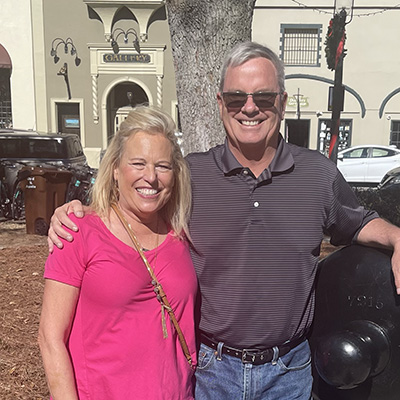
Brian and Debbie Doyle
Brian and Debbie have been married for two years and their blended family is now made up of eight children and soon to be ten grandchildren – and growing. They were each married for over thirty years to their spouses before they went to be with the Lord. Their ministry backgrounds include serving with Athletes in Action, a ministry of CRU; the Navigators, Promise Keepers and Iron Sharpens Iron. Brian is the Founder and President of ISI which began in January of 2000.
Together, they make it a priority to pray for their children and grandchildren and visit as often as possible. They are navigating the blessings and challenges of a blended family of adults while loving the next generation of grandchildren. Brian and Debbie live in either Kansas City or in Jacksonville when they are not traveling.
About the Host

Ron Deal
Ron Deal is Director of FamilyLife Blended®️ for FamilyLife®️ and President of Smart Stepfamilies™️. He is a family ministry consultant and conducts marriage and family seminars around the country; he specializes in marriage education and stepfamily enrichment. He is one of the most widely read authors on stepfamily living in the country.
Episode Transcript
FamilyLife Blended®
This content has been generated by an artificial intelligence language model. While we strive for accuracy and quality, please note that the information provided will most likely not be entirely error-free or up-to-date. We recommend independently verifying the content with the originally-released audio. This transcript is provided for your personal use and general information purposes only. References to conferences, resources, or other special promotions may be obsolete. We do not assume any responsibility or liability for the use or interpretation of this content.
Season 8, Episode 191: Father’s Day Feels Weird: Blended Family Grief and Hope
Guests:Brian and Debbie Doyle
Air Date: June 1, 2026
Brian (00:01):
I’m a presence in their life. I’m their mom’s husband. I’m the grandfather of the grandchildren, but I am not their dad. And I want them to be able to miss their dad and mourn the dad and grieve the loss of their dad, just like anybody would. So I want to be a blessing, not a demanding person, a blessing to the kids.
Ron (00:34):
Welcome to the FamilyLife Blended podcast. I’m Ron Deal. We help blended families, and those who love them, to pursue relationships that matter most. And why do we do that? Well, because relationships disciple. They disciple us and they can grow us up in healthy ways or in unhealthy ways, and we want to help you shoot for the healthy ones.
If you’re new to this podcast, you’ve stumbled onto the largest blended family equipping ministry in the world. We’re a division of FamilyLife. We’ve got multiple resources that you can read, you can watch, you can listen to, or you can attend. And a lot of that stuff is free, keyword, free. All you got to do is just check us out online, FamilyLife.com/Blended FamilyLife.com/Blended, or you can just look in the show notes and we’ll get you connected.
If you’re looking for a small group in your area or perhaps a virtual group that you can join, we’ve got a searchable map at FamilyLife and you can search for a whole lot of stuff, not just blended family classes and small groups, but marriage, parenting, all kinds of things, workshops.
(01:45):
You can of course look for the Weekend to Remember® marriage conference. You can find my speaking schedule where I’m going to be if you’re interested in any of that. So it’s all available to you to search for free. And by the way, if your church has a small group, you can add that to the map for free. We really want people to find blended family groups. So make that available on our map. Again, it’s easy to do. Here’s the point. You don’t have to walk this road alone. All right? We’re here to help you. We want you to help each other. Again, look in the show notes and you can find that map.
So Father’s Day, it’s just around the corner. And each year, we take a moment to acknowledge that special days like this can be, well, a little awkward for stepparents. We always talk about that at Mother’s Day.
(02:35):
It’s really challenging for stepmoms. And I think that’s true for a lot of stepdads as well. But stepparents aren’t the only ones who sometimes have a struggle with special days and holidays and just trying to navigate that space. Sometimes days like this throw biological parents into situations that they never thought they would be in and they certainly weren’t prepared for. Well, that’s some of the stuff we’re going to be talking a little bit about today. My guests are Brian and Debbie Doyle. Brian has been in ministry for over 30 years. He helped found the Iron Sharpens Iron men’s conference ministry. If you’ve ever heard of that, it’s a great event. I had an opportunity to be a part of that a number of years ago and thoroughly enjoyed it. Brian is also a board member with the National Coalition of Men’s Ministries and the Fatherhood Commission.
(03:26):
He’s authored several books. Brian and Debbie were both married for over 30 years to their first spouses before being widowed. They have been married now to each other for two years and their blended family has eight children. We’ll double check that with them in just a second. And soon to be 10 grandchildren, I believe. They live in Kansas City and Jacksonville, and I’m seeing nods of their heads. Brian, Debbie, great to have you guys with me today. Thanks for being here.
Brian (03:54):
Thank you, Ron. Good to be with you.
Ron (03:56):
Ten grandchildren?
Brian (03:57):
Yeah, number ten will be coming this spring.
Ron (04:00):
Oh my goodness. And how in the world do you keep up with ten? I’ve got one, okay? And I think he is amazing. And we thoroughly enjoy our time with him. Just last weekend, I got to spend some more time with Austin and love it. Ten! How do you do this?
Debbie (04:17):
I’m retired for one thing, and I can easily spend time with grandchildren in Kansas City, and there’s five of them there. And Brian’s grandchildren actually live all over the place. So we go visit all of them because we have the freedom to do that at this time in our life.
Ron (04:38):
It does come down to travel, doesn’t it?
Debbie (04:41):
It does.
Ron (04:43):
Yeah. And I imagine you guys hit the road a lot and take advantage of every ministry trip or whatever it is that you might be on and try to, if there’s any grandkids in the area, try to catch in on them. So between Kansas City and Jacksonville, Florida—we mentioned that earlier—you guys today, right now, you’re in Jacksonville?
Brian (05:03):
We are.
Ron (05:04):
And how much of the year do you spend in Florida?
Brian (05:08):
Well, it’s not really something we figured out yet. You mentioned we’ve been married two years. When we got married, I was still launching children.
(05:19):
So my youngest daughter, Susie, was going to University of North Florida here in town, and my number three son was here, and he was just graduating from University of Central Florida and getting a job here in Jacksonville. So Jacksonville was still a hub for us, not as much as it was for Debbie, but for our family and for the other kids who had already left and been launched, they would come back. Now that said, now everybody’s gone, everybody’s launched. My kids are working, they’re out of school, and so there’s nobody here living in the home with us. So whether we’ll continue having two places or not, that’s something still to be decided.
Ron (06:09):
Yeah. I think it’s definitely a moving target for a lot of blended families feel that lots of kids, lots of grandkids in different places is often a common story. And so, trying to navigate the “Where are we going to live? What’s the most advantageous place to be?” I think that’s a common conversation. You guys have already started—fill in the gaps a little bit for us. Brian, how many children did you bring into the marriage? And Debbie, how many?
Brian (06:34):
So I have five. My kids are 22 to 30. And so the older four are married and the older three have begun to have children or have children. And Debbie’s family, you want to—
Debbie (06:51):
Yeah. I have three children, ages 36 to 41. My daughter’s 41, and then another daughter, 39, and then a son 36. And they all live in Kansas City in the same neighborhood.
Ron (07:09):
Yeah. And that’s where the five grandchildren are in Kansas City.
Debbie (07:12):
And the five grandchildren, yes.
Ron (07:14):
Yeah. And they’re in the same neighborhood, so they’re close to one another.
Debbie (07:19):
Right. When we lost my husband, none of us—well, one, my daughter lived in Kansas City with one grandchild, and we were in California and Phoenix. And so with the loss of my husband, we all decided to gather back in Kansas City and support each other. And it’s been going on now for six years, and it’s been a very good support system for all of us.
Ron (07:49):
You know, that’s really interesting. I don’t think I knew that coming into this conversation, but it seems like there was a lot of wisdom in you guys trying to move closer to one another.
Brian (08:02):
Yeah. I would say as someone who has observed this and reflected on it, it was very intentional. So Mike, Debbie’s late husband suggested she move back to Kansas City where they had done ministry for better part of quarter of a century. So a lot of relationships, church, friends, all those kind of things, not just immediate family. And then once she got here, the other two children who were in California decided this was a time where we needed to be together. So they intentionally moved, took their careers, their family, and they came out to Kansas City. So the family has supported one another, and it’s really been nice to be part of—very intentional. That’s, I’d say the key word here is you grieve a significant loss much better together than apart.
Ron (09:05):
Yeah. And what about you? Where were you situated when your wife passed away?
Brian (09:10):
Right. So my story is very different in some ways. Some ways it’s the same, but Barbara passed when she was 54 and our kids were younger. They were 14, 16, 18, 20, 21. So they were at home. Some were in college, going to school here at University of Central Florida. One was away at school, but the four were living with me. And then the other was still based out of the home. So I had all five kids essentially home. And as a dad, it gave me the opportunity back to the relationships grieving together, processing this loss together. We did it together. I immediately—my church was very good. They had GriefShare. I did it a couple of times. I learned something I didn’t know, and I shared it with my children, and I helped them to kind of learn to grieve what certainly up to this point has been their most significant loss and navigate our new family norm.
Ron (10:21):
Yeah. And we talk about that a lot on this program, helping children grieve. Adults continue to grieve in a different way, in a different space, if you will. So you had teenagers, and my goodness, how would you describe those conversations looking back? Maybe early on, and it sounds like it’s been about ten years.
Brian (10:44):
Yeah. So it’s been early 2018, so it’d been eight years.
Ron (10:50):
Okay.
Brian (10:50):
Well, I mean, immediately the kids—I mean, they’re kids.
Ron (10:55):
Yeah.
Brian (10:56):
They’re looking at you with their big eyes going, “What do we do now?” I mean, we all kind of know that we’ve just lost kind of the glue to the family.
(11:10):
And so, and I did not know. I did not have the answer. I’m a leader, so I know how to lead and all that, but this was—I’ve been an elder for a dozen years shepherding people, but this is a different deal. So again, back to the blessing of GriefShare, my own local church. In fact, they said, “We’re going to start GriefShare again in the fall. Might be something you’d be thinking about. ” I go, “Well, the Fall seems—it’s March so what do you do in the spring?” “Well, we’re doing it, but we’re halfway through it.” I go, “I think I’m just going to go for it.” So I jumped into GriefShare halfway through. But the key to GriefShare, in my opinion, was not the content. I knew the content or a lot of the content. I knew the Bible verses and things like that.
(12:00):
What I didn’t know was what it was like to lose your wife.
(12:06):
And so being in a place with other people who had current, significant loss was a huge help. So I would just say, my counsel to men who experienced loss, who kind of shrugged me off and say, “I’m fine.” I go, “Yeah, actually you’re not fine. You need to be around other men and women, frankly, who are currently experiencing significant loss.” And so that’s what I did. And so I jumped in and then I’d come home and I would tell my kids what I learned. And then I just, they’re kind of looking at me, obviously, and I learned that I had some disciplines, like I would on Sundays, I would go into the bedroom and close the door and just have some time with photo albums and letters and cards where I would have my time of grief. I had to learn, Ron, that I needed to step into grief in order to heal.
(13:14):
Guys will say, “Well, it just makes me sad when I do things like that.” I go, “Bingo.”
Ron (13:19):
There you go.
Brian (13:20):
That’s exactly what you need to do.
Ron (13:36):
I don’t know if you guys know this, and Debbie, I’m going to come back to you in just a second. I’d like to hear how the journey went for you with your children. But I don’t know if you guys even know this, but Nan and I lost our 12-year-old son. We’re coming up on 17 years that we’ve been missing Connor. Last night, Nan and I lead an online virtual support group for parents who have lost a child through the while we’re waiting ministry that we love, absolutely love, and just volunteer with.
(14:07):
And last night I was with other men, and we were talking about our grief, and I was talking about my sadness and something that has recently triggered that. And it’s absolutely true what you just said. It’s the process of taking what’s inside of you and somehow moving it outside of you in the presence of other people who don’t have any answers for you, but they do have a warm hug, and they do have a similar journey and immediately you don’t feel alone anymore, and you don’t feel as heavy anymore. And I’m not even sure I can describe how that works, but I do know that it does work. And I also know that if parents don’t have their own grief journey in a fashion that moves them forward, we’re not getting over anything.
(14:57):
We’re just moving through our grief, but if we don’t do that, then we hardly have any bandwidth and wherewithal to help our children navigate that space. Because you’re right, they’re looking at us like, okay, now what? What happens now? How do we manage this? And so the sharing of your journey with them is a marvelous way to help them kind of watch and see somebody do grief, at least trying to be informed by faith and navigate it in some capacity.
(15:34):
Debbie, I’m curious, what was it like for you and looking back maybe, well, how would you describe that whole journey for you and your kids? And I’m wondering what your reaction is to what I just said.
Debbie (15:45):
Yeah. I also went through GriefShare pretty quickly and got in with a group of women and men and shared in their process of grieving. And I feel like it—well, Brian and I have talked about this several times. When you lose the patriarch of your family, you lose a lot of direction and a lot of, “Okay, what do we do next?” Because I was just the supporter. I encouraged my kids to do whatever Dad said. Now we didn’t have that direction and even though they were adult children, one wasn’t married yet, and then they were still seeking some direction from their dad. So I could support them, but a limited way. And I think that’s probably why we came together in Kansas City to all live together in the same neighborhood, different homes, but it’s helped us support each other and it’s been a good thing for me.
Brian (17:08):
We would talk, we’ve talked several times about the dynamic—and you probably have already nailed this or given this years of thought. I have not, but we’ve talked about the difference between losing a dad, husband, and losing a wife, mom. Of course, temperament, personality, all that plays into it, but just looking at the roles that my wife played, the roles that Mike, Debbie’s husband played, it was—I mean, I know I could just speak as a man. That first year I took my laptop out of the office. I was working on my home, but I took it out of my back office, quiet place, put it right in the kitchen table, because that’s where she worked.
(18:01):
And she would greet people and people would be coming in and out, the kids, and hugging and greeting and, “How you doing?” and lots of communication. I said, “I need to be doing that.” So I tried to do that, and I’m sure I did it a little bit, but I realized that I could not replace my wife. What I needed to do, I needed to be the best father that I could be. That’s what I needed to do. And that includes my youngest one who I mentioned, my younger one, Susie, who was just launching, just graduated this past May or graduated about a year ago. And so I needed—I finally, after a year, I realized I needed the body of Christ. I needed my family to come alongside in a very intentional way. I mentioned that Debbie’s family was intentional, so I became intentional and I recruited my sister-in-law on one side of the family, my sister-in-law on another side of the family, and my oldest daughter’s mother-in-law, who were all very tight with our family, to come alongside me, and I called them “Team Susie.”
(19:22):
And those three women brought the mom touch that of course no longer existed, and Dad could not do the mom touch. So some of these things you kind of learn on the fly as you try to understand God’s plan for a family, and God’s plan for individuals, and especially young people who need both that masculine, male touch, and both the woman, female touch.
Ron (19:49):
Well, I’m sitting here thinking about a viewer or listener who is divorced. And I just want to say to them, look, this all pertains to you. I mean, listen to this journey that Brian and Debbie are describing. All of the bases were covered and then they weren’t. And divorce tells you the exact same story. Now it happens in a very different way, but the bases are covered in your home, in your household, by what mom does, by what dad does. Everybody has their domains that they’re really good at and you kind of function well in that space. And you don’t have to function in the other parents’ domain because they’re in that domain and there’s not room for you. They do what they do well, and you do it. And then all of a sudden there’s this big black hole in your life and everything’s not covered and there’s things getting sucked into the black hole.
(20:38):
And the progression there that I heard from you, Brian, I think was you felt like you had to fill that black hole. You had to be dad and mom. And so you tried to at least put on a little bit of that capacity on, and then you figured out, wow, this is not really me. I got to be the best father I could be. I just got to function well in that space. And maybe I can recruit other people to help fill some of the gaps going on in the household. It’s not going to be replacing mom, but it’s something and it’s—was there an inadequacy thing in you? Were you just like, no, thank you. I’ve got options. I’ve got people I can recruit.
Brian (21:19):
Well, I mean, having a—at that point, probably Susie was like 15 years old, and I could not provide what her mom could provide. And I recognized that there were things that I could do that she really benefited from, but that touch, that feminine touch—I’m a men’s ministry leader—that feminine touch just wasn’t there. And so I needed to recruit the feminine touch, just like if you’re a mom, you need to recruit the masculine touch. You can’t pull it off. So I stopped trying and I recognized I’m going to be Susie’s dad and I’m going to find some women that love her already to be a little bit more intentional and involved in her life.
Ron (22:13):
Debbie, I’m curious, got any reflections on your side of this?
Debbie (22:18):
My daughter that was not married had the hardest time grieving and she was the oldest of the family. So I’m not sure. I think her father was her cheerleader, her support system. She had the same ministry he did and it was difficult for her, but she’s doing much better five years down the road, so that’s wonderful. And she was also a great support system for me because she’s been gifted with a lot of driven leadership, I should say. She would often say to me, “Mom, what are you doing this week? You need to plan two or three lunches with ladies. You need to get out there and do some ministry. Tell me everything you’re planning.” So that was just extremely helpful to me, that she could focus kind of on me and help me through this since she wasn’t married. So anyway, I found that very, very helpful and she got me through it.
Ron (23:40):
I don’t care what age our kids are, they will help us.
Debbie (23:43):
Yeah.
Ron (23:44):
In fact, they will over function for us if we let them. I think that’s one of the cautions we give parents is, don’t let your kids parent you. I mean, you still got to be doing some self-care so that you have something to give, more to give than you need from them. But at the same time, I think it’s God’s little grace and mercy on families when they go through a significant loss that they do find ways of caring for each other. They do find ways of filling little holes. Somebody steps up, somebody else takes on another responsibility and we look out for each other and that’s a good thing.
Brian (24:20):
And you know, that’s kind of what Mike, Debbie’s late husband said to the oldest daughter, kind of gave her a charge “Lookout after mom.” So of course she, “Yes, sir.” She took it on. Debbie lost her husband of 37 years. She was wounded and she was in a tough spot and very sad and broken and having her oldest child come alongside and care for her and they lived together for a while. That was super helpful. I mean, probably good for both of them. It gave the daughter something tangible to do to make a difference. And then it gave Debbie someone who was still caring for her. Again, it’s back to this dynamic of losing that man, that dad, that husband versus the mom and the wife.
Ron (25:27):
Okay. Let’s jump forward in your story just a little bit. So both of you had, coming into the grief journey, you had some ideas about what role you would play in the lives of children. And then there was some realities that kind of showed you, “Well, it’s a little more like this.” How about when you were dating, getting married, looking back now, did you have some initial ideas of what you thought one another would do for your adult kids?—or the ones that were still at home in Brian’s case? And what has been the reality of what your spouse, your new spouse can do for and with your kids?
Brian (26:05):
Well, I’ll launch this into it. You don’t know what you don’t know, so to some extent you’re making it up as you go along and you’re listening and reading and maybe getting some Ron Deal books and reading through and doing things like that. But the adult, I mean, everybody’s launched or almost launched, certainly on Debbie’s side. So these were adults. And I would say one thing that scared the living daylights out of me as a man who lost his wife is that I had two close friends who were ministry veterans who basically blew up their life by moving very quickly from their wife passing to getting remarried. And I watched it up close and personal. And so I wasn’t going to do anything. And I would just say that was super helpful. So for my kids, it was years down the road before—
Ron (27:14):
So you took your time very intentionally.
Brian (27:16):
Well, not only took your time; it was like I had plenty to do. I mean, remember I had teenagers, so in order to do my job as a dad, I needed margin and space and opportunity. And again, with the younger one, who needed a little bit extra time, you were launching kids out of high school into college, getting people married. And then at the appropriate time, God got my attention. And quite frankly, I mean, it’s too long of a story, but essentially it was from God’s Word, from a God’s man at God’s Word at a conference like you might do, Ron, where the presenter speaker said, “It’s not good for man to be alone.” And of course, I’m listening, but kind of not listening, but kind of listening. And I go, “Well, I already did that. I was married, checked that box 30 years.” It’s like the Holy Spirit said, “Yeah, and now you’re alone.” I go, “Well…” And then later he goes back to the text again.
(28:19):
And I said, “Well, I’m not even lonely because I have Susie, my youngest daughter.” And it’s like the Holy Spirit said, “I’m so glad you’re not lonely, but you are alone.”
(28:29):
So that was the beginning of me really thinking maybe the Lord would have something here. I didn’t give him much thought, but God intervened through a mutual friend and before you know it, Debbie and I are getting to know one another and I’m getting to know her adult children who they had their own lives, but again, I admired them greatly for the way they were caring for one another. It was a real privilege to be part of this and see that dynamic and have a small part of it. For Debbie though, it was a little bit different.
Debbie (29:08):
I thought about the role I would have with his daughter and son that were kind of still living with us and I knew I couldn’t replace their mom because she had somewhat of a personality like me, but still different and I knew that I couldn’t ever compete with that.
Ron:
Good for you, by the way.
Debbie:
I felt a little intimidated by it, but I knew that the Lord had so brought Brian and I together that I knew this was God’s will and I did not doubt that I was supposed to be here. And so I just did what I normally do and that is take care of the home, cook dinner, just listen, and be a part of whatever is going on. And it seemed to work. And I didn’t try to take over on holidays and set my own traditions in. I just said, “What do you guys do for your holidays?
(30:21):
What do you cook? What all do you do?” And we just went by what they were used to. So I think that was helpful. We made the foods they liked. But one thing I really appreciated about Brian—so the timing of us getting married was just so perfect because I only had one grandchild and so we had nine coming. Well, we didn’t know this, but nine were coming in the future very quickly within three years or two years.
Ron (30:55):
Wow.
Debbie (30:56):
And so we realized how God had perfectly put us together at this time because now we could be grandparents to these children who would never know a grandmother or a grandfather any differently. I mean, we were it. So my grandchildren and our grandchildren now absolutely love Brian. We found out that he was very gifted with children. In fact, when I would go see them, they say, “Where’s Grandpa? Where’s Grandpa? We want Grandpa.”
Ron (31:35):
That works wonders, by the way.
Debbie (31:37):
Yeah.
Ron (31:37):
And there’s a wraparound. I don’t know if you guys have experienced this, but some families feel that the adult children who are still on friendly terms with their parents’ new spouse, right? But once they see how you are with their kids, your step-grandchildren, that that can have a wraparound dynamic where those adult children are now more fond of you because of what you do for their kids. And they appreciate the love and respect you on a different level as a result of the grandparent relationship you have with their—I don’t know if you guys have felt any of that, but that happens sometimes.
Debbie (32:14):
Yeah. That’s a good point.
Brian (32:17):
Yeah. I sense that and I think that’s appropriate. I do think that the adult children who are still grieving, some of the kids—
Ron (32:28):
Absolutely.
Brian (32:30):
—it’s not like they’re grieving; they’re done. I mean, it’s hard to lose your mom. It’s hard to lose your dad. And I think you mentioned earlier on expectation. My expectations were kind of high and remain pretty high, that there’d be a lot of merging and there’d be a lot of acceptance. And for the most part, there really has been. But you can only go at the pace of how that child is grieving. I can’t force it. Debbie can’t force it. You just have to go at their pace. You have to be patient, be willing to linger and do the work, like you said, and the grandchildren is part of that.
Ron (33:14):
I want to point out to our viewer listener some real wisdom in what Brian just said. We’ve talked a lot here about stepparents moving at the pace that children will receive you. But there was a layer to what he just said that I don’t want anybody to miss. You also have to move at the pace of their grieving. And here’s what I mean by that. Kids on some level will let you in. And then when grieving sort of resurrects just through the natural course of the calendar—dad’s death date, dad’s birthday, Father’s Day is rolling around the corner and that’s going to be one of those times where they miss dad—and when that happens, there’s a natural sort of withdrawnness, pullback from children. Adult, young, teenagers, I don’t care what age, there’s a natural sort of sorrow. And with sorrow, I’m not moving towards you as quickly as maybe I was in the past.
(34:07):
I’m sort of pulling away a little bit. Not every child does this in exactly the same fashion, but it’s not uncommon either. And so all of a sudden, you had progress, but when grief resurrects, you have a little bit of distance and things chill a little bit. Not a problem, not to panic, just see it for what it is, but recognize that you want to step around beside that grieving moment and join them in that Father’s Days around the corner. I mean, let’s stay with that for just a second. What are you guys anticipating for Father’s Day? I know you’ve only had a couple as a blended family dynamic and not everybody’s all in one spot. Maybe there’ll be a few of you together around Father’s Day, but that’s a natural time for people to want to hold on to what they had, and they miss it a little bit more.
(34:53):
In particular, I’m thinking, Brian, your adult stepchildren and them missing their father. So what are you guys anticipating? Do you have a sense of what might happen?
Brian (35:03):
Well, I think that’s on me. I need to do what you just said. I need to be able to navigate that, not take offense, recognize that I’m a presence in their life. I’m their mom’s husband. I’m the grandfather of the grandchildren, but I’m not their dad.
Ron (35:28):
Yes.
Brian (35:29):
And I want them to be able to miss their dad and mourn the dad and grieve the loss of their dad, just like anybody would. So yeah, so that’s on me not to be able to do what you just said, Ron, to be able to take a step back with the expectation that this is going to be a challenging time. And I want to be a blessing, not a demanding person, a blessing to the kids.
Ron (35:55):
Yeah. A pro tip I would add to what you just said so beautifully, by the way, is to the degree that you feel like you can, join them in celebrating their dad. Say, “Tell me another story about him. What did you love about Father’s Day?” Just something that sort of steps into that space and communicates the message: “Your dad is a worthy man and I’m sorry you miss him and I am standing on another spot in your heart. I am not in his spot.” And that will carry so far in terms of building mutual respect and admiration for one another over time.
Brian (36:35):
Yeah. So good. Well said. Yeah.
Debbie (36:37):
I think that is really good. I’ve noticed that his youngest daughter just loves to talk about mom. And so I’ve realized I should ask her questions about her mom.
Ron:
Yes.
Debbie:
“What did your mom do when you did this?” or “What would she like?” or “How would you spend time together?” And those things have been very helpful for bonding us together.
Ron (37:07):
Yep. If you’re new to FamilyLife Blended as a viewer or listener, you just got to hear me say the words competing attachments. That is exactly what we’re talking about right now. Children naturally have this sense that new and old people compete. And my love for my mom competes with now this stepdad who also loves my mom and wants time and energy from her. And I love my dad, that’s Brian’s kids, but I’m now competing with his new wife who wants time and energy, and her grandchildren get some of my dad’s time. And those are competing attachments. So when you say to somebody, “Tell me what your mom would do.” You are saying, without saying it, but you are communicating, “I’m not competing with your relationship with your mother.” That is good and right and will, and “I am going to celebrate you and your mom, and I will never come between the two of you.”
(37:59):
Even though she’s deceased, living or deceased, doesn’t matter. “I will never come between you.” All of that means there’s no competition. And if there’s no competition, then children, grandchildren can warm up to you guilt-free, stress-free. Everybody stands on their own space, and I don’t have to choose somebody wins and somebody loses. Because if you force stepchildren into that dynamic, you as a stepparent will be the one who loses. That’s almost a given. And so yeah, no competing attachments. That goes a long way towards everybody just feeling safe and comfortable and relaxed around each other. And now you can just get along, which is a good space to be in.
Brian, I want to wrap back around to something, men’s ministry. We mentioned that at the top and you’ve alluded to a couple of things. I’m curious, let’s step into that professional world for you just for a minute.
(39:06):
Why are you so passionate about men’s ministry?
Brian (39:10):
Well, even in the context of what we’re talking about today, I was a young man who was discipled by an older man who invested time with me. Yes, I went to church. Yes, I was in Bible study. Yes, I was in a small group, but I also was discipled. I was mentored. Different men in my 20s and 30s invested sacrificial time with me. And you don’t think too much about it because you just figured it’s happening to everybody. Of course, you realize it’s really not happening to everybody. But here’s something, Ron.
(39:46):
So here I am, I’m 60 years old, just turned 60. My wife has cancer and she passes away. And I was ready to lead my family. I was ready to lead my kids. I was ready to navigate grief. I was ready to walk by faith. During that cancer time, I was ready to shepherd my extended family because my extended family was hurting like crazy. And so I was able to shepherd to step up. Now, why was I able to do that? Well, because of men’s ministry. Because as a younger man, I was discipled to become a man of the Word, a man of prayer, a man who would yield to the lordship of Christ, a man who would follow Jesus passionately. You can’t just turn it on when the crisis happens. Guys think, “Well, if that happened to me, I’d really want to—I hope I would step up.” And I just tell him, “Yeah, you won’t.
(40:46):
You won’t. You need to step up now so that way you’re ready when it does happen.” And so we use a tagline at Iron Sharpens Iron and probably in your ministry as well. We build men, but we build men with others in mind.
(41:03):
We build men with the future in mind because when you build godly men, everybody wins. Because someone built into my life, it was my family, my extended family, it’s Debbie’s family. Everyone’s benefiting because as a younger man, I was discipled. That’s what we want to do. We want older men to disciple younger men with a vision of how they’re going to be a blessing to other people as they get older.
Ron (41:32):
I want to encourage every man listening to this podcast and every woman listening who’s going to elbow her man get involved in men’s ministry, get involved in something in your local church. Let other people pour into you. I try to expose myself on a regular basis to people who are older, wiser, got more life experience than I do. I want to constantly be learning. At the same time, I want to be pouring into the next generation and the guys around me to whatever degree that I can. And that’s a beautiful thing when the church does what the church needs to do. Are you seeing a need in Iron Sharpens Iron? You’ve been doing conferences for a long time and if our listeners don’t know, look them up. Just Google that and find out where they’re going to be and you can be a part of it. Are you seeing a need for stepdad, single dad, co-parent, widow dad, all that kind of training at your events?
Brian (42:28):
Well, I think what I see is the consistent need for what we’re talking about is a mentoring-type relationship more than a teaching.
(42:38):
Guys who go through crisis and navigate rocky roads, they need older men who are trusted confidents. So the principle, Ron, is that we need—the church can’t do what God designed a man to do. The church can have classes, keep having classes. People can write books, keep writing books, but you need a man that you can talk to, who’s been there, done that, who’s going to navigate, or at least understands what you’re going through, who can come alongside as iron sharpens iron, love on you, accept you, and help you take steps of faith to be the man that God’s called you to be. So whether it’s co-parenting, stepparenting, any kind of fathering, you need to grab someone. You need to ask someone for help. You need to say, “I’m going through, this is my challenge. I need guys to help me go through it, so I go through it together.”
Ron (43:48):
Last question. Let’s make a leap. I don’t know if this is going to work or not. You guys tell me. That principle of what you just talked about, coming alongside somebody, speaking, mentoring, being a part of their world and their life, being a presence in their life kind of sounds like not a bad model for stepparenting adult children. Yes? What do you think?
Brian (44:11):
Well, it’s a good point. You’re available, right?
Ron:
Yeah. You can’t assume an authoritative position over that adult child. They’re not looking for an authority from you, and so that doesn’t even make sense. But coming alongside, befriending, yeah.
Brian (44:30):
I think Debbie and I are doing some stuff with younger couples, and we do it on a weekly basis, and we talk to them a lot about Psalm 127, and carving arrows, making arrows, and launching arrows, and that the arrows are now launched, and it’s different when they’re launched. So really, whether it’s children that were born to me or children that were born to Debbie, those arrows are launched. And we use terms like always welcome, never expected, and simple things, respecting that they are adults and they’ve got their own life. So then you add that added caveat of, you’re missing your dad in this case, or Debbie, you’re missing your mom, so will even take more gentleness and more care and more grace to be able to navigate that friendship with an adult child.
Debbie (45:38):
Yeah. I agree. I think even with my own children, I want to give them advice. They’re not asking.
Ron (45:47):
Yeah. I know. Believe me, I got that too.
Debbie (45:52):
And we’ve learned at all these conferences we go to; unsolicited advice is criticism. And that as a stepparent, that also applies. And when they want to ask, they’ll ask. And then the Lord will open the door, and we can give some opinion. But anyway, so it’s hard to just step aside and not give advice.
Ron (46:21):
That’s right. It’s a delicate space to be in.
Debbie (46:24):
Yeah
Ron (46:25):
Move toward not so much, wonder about kind of softly, is there an opportunity here? I don’t know. I don’t want to miss it, but at the same time, I don’t want to be critical, inadvertently. I’m reflecting, Debbie, on that wisdom that you shared earlier. I really think there’s a lot of wisdom in that. That posture of I’m here to come alongside. I’m going to move at your pace. I want to get inside your world. I want to hear what’s important to you and not try to force my way or rituals or history or whatever on you, but I’m trying to join you in your world and in your life. I just think there’s a lot of wisdom in that posture, initially in particular, for stepparents of children of any age, and particularly teenagers and adults. And I think that’s a really nice model or a process for stepparents to try to implement.
(47:20):
And by the way, if you’re listening or watching right now and you’re going, “Yeah, I blew it. I didn’t do that. Now what?” Well, okay, there needs to be some repair, but I think moving toward that same posture with request for forgiveness or with an acknowledgement of, “Boy, I blew it and I’m sorry,” with an acknowledgement, “I’d like to start over,” that might create an opportunity. And of course, even then, the repair is going to come at the pace of that adult child, but I think you can try again.
Brian (47:55):
Yeah, well said.
Ron (47:56):
Wow. Brian, Debbie, thank you so much for being with us today. Appreciate your thoughts and contributions.
Brian:
Thank you, Ron.
Debbie:
Thank you.
Ron:
And bless you in the days ahead with the next 10 grandchildren. Who knows?
Brian (48:08):
That’s right.
Debbie:
Yeah.
Ron (48:09):
Oh, God bless. Thank you.
Debbie (48:11):
Thank you.
Ron (48:12):
Well, thanks for being with us today. If you have not subscribed yet to the FamilyLife Blended podcast, we want you to do that on YouTube or your favorite podcast app. And yeah, we’re on all those outlets, so just follow. We don’t want you to miss anything.
If you want to know more about their ministry, Iron Sharpens Iron, specifically the men’s conferences that are happening around the country, look in the show notes. If there’s a stepdad in your home, my book, The Smart Stepdad, might be a good Father’s Day gift, while The Smart Stepmom might be the gift that you would give to a biological dad and his wife, the stepmother to his children. Those resources can be found, again, the show notes will get you in the right place.
A quick reminder that FamilyLife is a donor supported ministry. All gifts are tax deductible, and you can give directly to FamilyLife Blended, our division of FamilyLife.
(49:08):
You can help us continue to reach families around the world. Again, the show notes will point you in that direction as well.
One more thing before we go, probably the number one email question I get is, how do I find a qualified counselor or for our marriage and our family, in particular for our blended family? Well, I want you to know if you don’t know, we have a growing list of what we call Smart Stepfamily Therapists and Coaches who have invested time and energy in being helpful to blended families. They’ve gone through my advanced clinical training and they’re ready to help. So look in the show notes for a link to that list. And if you’re a coach or a counselor or you know somebody who is, you can learn more about this training. It is pre-approved for 12 hours of continuing education. We’d love for you to go through it because we want to expand our list and the referrals that we can make.
(50:00):
Okay, next time, our good friend, Dr. Jim Burns, is back with us to talk about parenting adult children, especially adult children who stray from the faith or distance themselves from you. That’s next time on FamilyLife Blended.
I’m Ron Deal. Thanks for listening or watching and thank you to our production team and donors who make this podcast possible.
FamilyLife Blended is part of the FamilyLife Podcast Network. Helping you pursue the relationships that matter most.
We are so happy to provide these transcripts to you. However, there is a cost to produce them for our website. If you’ve benefited from the broadcast transcripts, would you consider donating today to help defray the costs?
Copyright © 2026 FamilyLife. All rights reserved.
www.FamilyLife.com