

Blended Family Challenges You Didn’t See Coming: Ron Deal
You said “I do.” The kids didn’t. And somehow, you’re all supposed to become one big happy family? Blended family challenges can turn that Disney-level dream into a severe reality check. On FamilyLife Today, author and counselor Ron Deal joins Dave and Ann Wilson to unpack the expectations, competing loyalties, and complicated relationships that make stepfamily life harder than anyone anticipated—and what families can do when blending isn’t going smoothly.


Show Notes
- Thanks to the Christian Standard Bible for sponsoring this episode. Learn more at CSBible.com.
- Follow us on all social platforms: Facebook | Instagram | YouTube
- Find resources from our podcast at shop.familylife.com.
- Download FamilyLife's app!
- Help others find FamilyLife. Leave a review on Apple Podcast or Spotify.
- Check out all the FamilyLife's podcasts on the FamilyLife Podcast Network.
About the Guest

Ron Deal
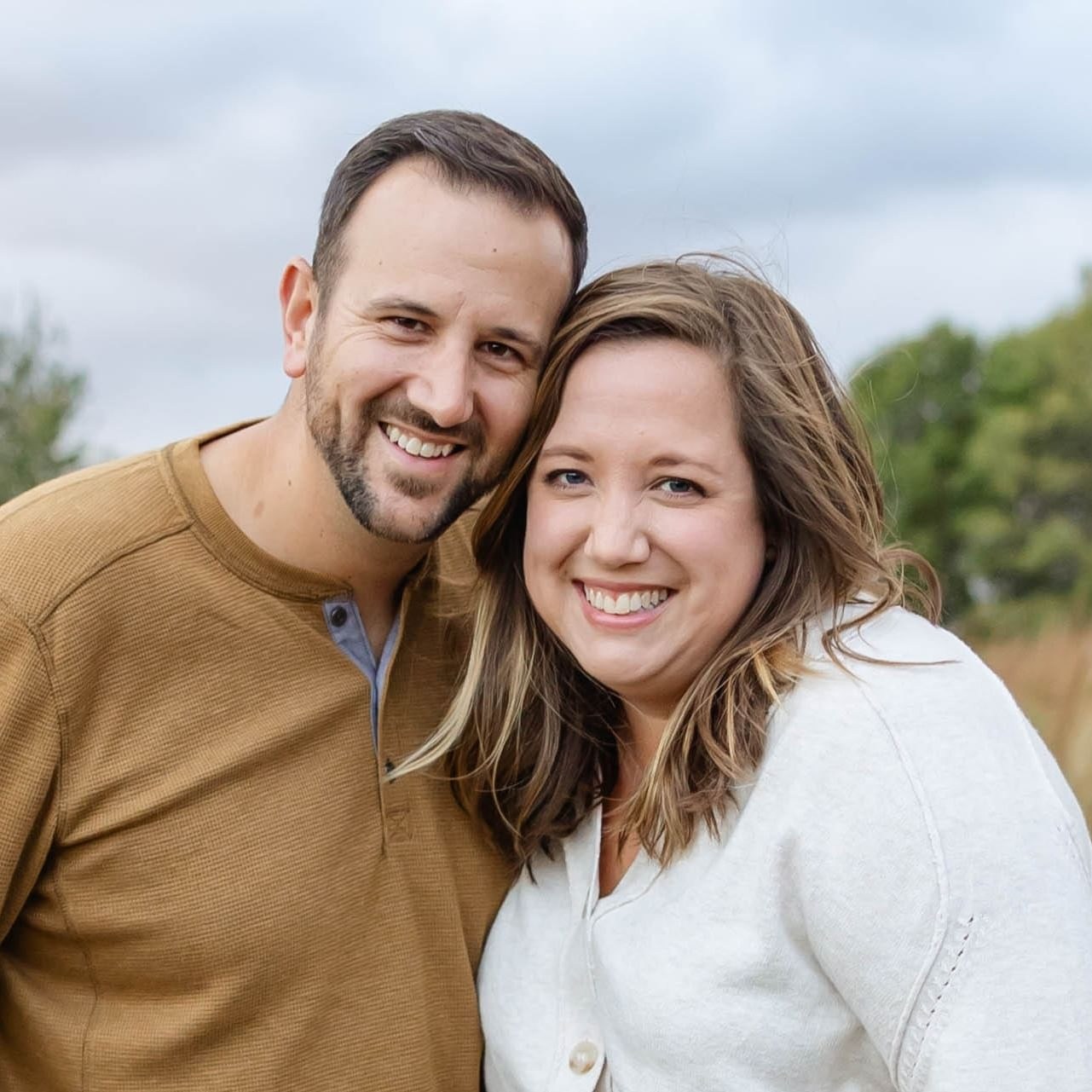
Ron Deal is Director of FamilyLife Blended®️ for FamilyLife®️ and President of Smart Stepfamilies™️. He is a family ministry consultant and conducts marriage and family seminars around the country; he specializes in marriage education and stepfamily enrichment. He is one of the most widely read authors on stepfamily living in the country.
About the Host
Dave and Ann Wilson
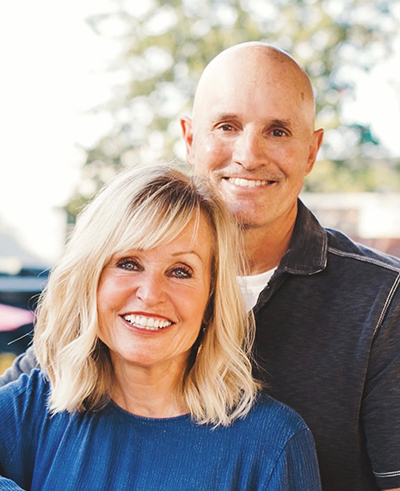
Dave and Ann Wilson are hosts of FamilyLife Today®.. Dave and Ann have been married for more than 38 years and have spent the last 33 teaching and mentoring couples and parents across the country. They have been featured speakers at FamilyLife’s Weekend to Remember® marriage getaway since 1993 and have also hosted their own marriage conferences across the country.
Episode Transcript
FamilyLife Today® with Dave and Ann Wilson – Web Version Transcript
This content has been generated by an artificial intelligence language model. While we strive for accuracy and quality, please note that the information provided will most likely not be entirely error-free or up-to-date. We recommend independently verifying the content with the originally-released audio. This transcript is provided for your personal use and general information purposes only. References to conferences, resources, or other special promotions may be obsolete. We do not assume any responsibility or liability for the use or interpretation of this content.
Blended Family Challenges You Didn’t See Coming
Guest:Ron Deal
From the series:Why Isn’t This Working? (Day 1 of 2)
Air date:November 18, 2026
Ann (00:04):
If I said something was well blended, what would that mean to you?
Dave (00:08):
Chocolate milkshake.
Ann (00:10):
I knew you were going to say that.
Dave (00:11):
A big chocolate milkshake with thick ice cream, maybe some malt, maybe definitely whipped cream with the cherry on top.
Ann (00:19):
Man, that sounds good.
Dave (00:20):
And about 48 ounces.
Ann (00:21):
I was just thinking of a smoothie. You just throw it all in there and it’s so amazing, but it has to be well blended to be good.
Dave (00:27):
You know, that’s the difference between you and me. You are healthy with the smoothie, and I am unhealthy with the chocolate.
Ann (00:34):
But you’re skinny. What is that?
Dave (00:35):
I don’t know about that.
Ann (00:43):
Welcome to FamilyLife Today, where we want to help you pursue the relationships that matter most. I’m Ann Wilson.
Dave (00:50):
And I’m Dave Wilson, and you can find us at FamilyLifeToday.com. This is FamilyLife Today.
Ann (01:03):
Why are we talking about blending things?
Dave (01:05):
Well, we’re talking about it because we have Ron Deal, the director of our blended family ministry at FamilyLife, and he’s in the studio with us today. Welcome to FamilyLife Today, Ron.
Ron (01:14):
Thanks guys. It’s always good to be with you and I am so hungry for a chocolate shake right now. Thank you very much for that.
Dave (01:21):
You’re welcome. And you know what? After this, we should go get one together.
Ann (01:25):
That sounds good.
Ron (01:26):
Let’s do it.
Dave (01:26):
That would be nice. But you’re in the studio today talking about some online courses.
Ron (01:31):
Yeah, we have online courses, online on demand, which of course means that people can move through these courses on their own time, in their own way, at their own pace. Sit at home, being comfortable and do the online course and just sort of move through it in a way that serves you. And we have the Love Like You Mean It course, Bob Lepine’s based on his book and video series, The (Nearly) Complete Guide to Better Married Sex, Financial Freedom for Couples, How to Talk Money in Marriage, Light Bulb Moments with Jeff and Shaunti Feldhahn. My goodness, our own Brian Goins teamed up with some people and put together a series for men. It’s called Chaos: A Bold Theory on Manhood. Again, all of these are online and on demand. We now have courses that are specifically about blended families and blended family ministry. For leaders, we have one called the Certificate in Blended Family Ministry, which is like a mini course that you can go through that basically gives you the basic understandings of how to set up a ministry in your church, what it entails, what it looks like, what the options are.
(02:39):
We’re very excited about that one. But the one we’re going to be talking about today is a course designed for couples, and it’s meant to help them improve their marriage and their blended family situation. And it’s called—
Dave (02:51):
Chocolate milkshake.
Ron (02:53):
No, not chocolate. It’s called well-blended.
Dave (02:57):
So that’s where this whole well blended idea came from. So let’s talk, what does well-blended mean? What’s it entail?
Ron (03:03):
Well, let me turn it around for a minute. Let me ask you a question. How long did it take the two of you—I mean, once you started having children, how long did it take each of you to look at the other and go, “Oh my goodness, this person is completely committed to loving this child that we have just had together.” How long did that take?
Ann (03:23):
That’s a good question.
Dave (03:24):
My first thought is seconds. I mean, in the hospital, I mean, I’m looking at Ann and I’m not sure I’ve seen a love for our child like that. I mean, a little jealous in some ways, like I wish he loved me the same way. But it was instant, I think for both of us.
Ann (03:41):
Yeah. I would say the same for you. You were all in. Absolutely. Why do you ask that question, Ron?
Ron (03:47):
Well, the truth of the matter is probably even before the child was born.
Ann (03:50):
That’s what I was going to say. Yeah, you’re already connected.
Ron (03:53):
And that’s exactly the point. It was automatic when it’s your child, a shared child that you’ve had the pleasure of creating together in God’s good grace. It’s just unquestioned that the other person is absolutely committed to loving this child and is going to see it through. Well, in a blended family, you can imagine that’s a journey for stepparents and stepchildren to look at one another with the same sort of commitment to loving them. I’m not questioning stepparents and their desire to want to have a great relationship with their stepchildren. The desire is often there, but the know-how. And sometimes there’s moments where it’s pretty common for them to wobble a little bit. I just got an email today from somebody, a stepdad who’s trying so hard and he’s just like, “I can’t figure out the secret sauce to connecting with these kids.” And he’s just wrestling with that.
Dave (04:47):
Well, Ron, I remember my dad was remarried when I was in probably eighth grade. I think it was seventh or eighth grade. I can remember going down to see him in Florida where he lived with his new wife and her friends came over and I remember this. This is interesting. I remember her saying, “Oh, this is Dave’s son.” My dad’s name was Dave. And I remember thinking, “Oh, I’m not your son.” And it took a while. I can’t tell you how long, but it was a while, probably more than a year. Of course, I wasn’t living with them. I was in and out of her life, but it took her a while before she was saying, “This is our son.” So it’s exactly what you’re saying. It wasn’t instantaneous.
Ron (05:26):
Right. There’s the wobble, right? In biological families, it’s instantaneous nanoseconds at most. In blended families, it’s a bit of a journey and sometimes there’s some wobbles in the process. Okay. All of this brings us to our first clip. This is me speaking at our 2019 Blended and Blessed livestream.
In biological families, love, trust, safety, that sense of dedication to one another, the sense that I can trust you as my parent, I can trust you as my spouse, this is our child, that there is no difference between us, all of that comes the day the children are born, the moment they’re born. It is an automatic dynamic. Love, trust, safety, emotional trust with one another all comes as a bundle immediately. In blended families, turns out that happens to be a bit of a process. Love and affection for one another sometimes comes last. And what sets you up to be able to get to love and affection for one another is a sense of trust, a sense of safety with one another.
(06:32):
If I, as a stepchild, can’t trust you as my stepparent, why in the world, how in the world would I ever get to love you as my stepparent? I think faithfulness and gentleness, two of the fruit, set you up to discover and experience trust and safety that then leads to love and affection. So getting faithfulness and gentleness right is a really important process. So let’s start with faithfulness. The Beatles sang it, “All you need is love.”
(07:09):
It ain’t true. And it’s funny when you say that out loud, people sometimes go to me, “That’s not right. Come on. All you need is love, right?” That’s the mantra. It feels good. It’s romantic. There’s a sense that if you say it’s not true, that somehow, you’re kind of saying love is not enough, but we all know intuitively love is not enough. What is love without faithfulness? What is love without a sense of trustworthiness? If your partner in a marriage relationship isn’t trustworthy, how far does love get you in that relationship? At best, love without faithfulness leads to doubt and insecurity. It’s like, I love you, but I don’t know if I can lean into you. And at worst, it leads to hurt and isolation. And we all intuitively know it. All we have to do is just stop and think about it. I’ve written a book with Greg Pettys and David Edwards on stepfamilies and finances.
(08:01):
I’m very excited about the project. We’ve finally integrated the relational dynamics of stepfamily living with the financial dynamics going on within the home. And one of the stories that we tell in this book is about there’s a designer in the Netherlands who has created—are you ready for this? He’s created a floating prenuptial house, all right? And here’s the way it works. The house is somehow like two Tetris shapes that are knit together with one another and they fit together. And the idea is you find the love of your life, and you get married and you live in this home. It’s a houseboat, so it’s a floating prenuptial house. And if anything ever goes wrong in your marriage relationship and you decide to go your separate ways, if you drift apart as a couple, you could just unhook the Tetris shapes and he can go in his half and she can go in her half and you can drift apart literally and each have a home.
(08:49):
Now when you talk about that and you say that story out loud, you just intuitively go, “That’s not going to work.” Everybody knows that’s a setup. That is planning to fail, right? Everything in that whole process says we marry and we move into this house so that when we go our separate ways, it’s really convenient for us to go our separate ways. That’s a setup to fail. There’s no sense of trustworthiness or faithfulness in that process. By the way, in the finances book, we want to do the opposite. We want to help you take your single and single parent or whatever your dynamic is, two Tetris shapes of finances that you already have, and we want to help you put it together and finance togetherness. But when you think about it in the opposite way, we all know that’s not going to work. Without a sense of permanence, there’s no trust.
(09:35):
And without trust, how do you sustain intimate love in a relationship? Love is not all you need.
Dave (09:43):
Well, Ron, I can’t believe you disagreed with my John Lennon and the Beatles, but I have to agree with you. Love is not enough. The trust and faithfulness that you just talked about, that’s a really, really good point.
Ann (10:02):
I think it’s good to know that it does take time as we learn to trust each other. Even that connection with a stepparent or a stepchild is a process and that trust and love can take time. But Ron, I really think, I’m guessing that a lot of blended families are comparing themselves with maybe a ghost that’s saying everybody else. It probably did happen instantaneously.
Ron (10:29):
Yeah. Oh, that can be kind of haunting them when they look at other families, for example, that seem to have that harmony, cohesiveness, and you feel divided in your life, in your home. Yeah, that’s disconcerting and discouraging for people. I think this notion that love needs faithfulness to go with it is really an important point. Let’s just pause for a minute and think vertically, as you guys like to do, and let’s think about the love of God and how often in scripture the love of God is communicated to us along with His faithfulness and trustworthiness. I want you to think about that. It is often that they are mentioned side by side, not every time, but that’s part of it. Never will I leave you; never will I forsake you, is a statement of His faithfulness, His trustworthiness. I’m here, period, end of story, not going away.
(11:25):
You think about Psalm 136 that says His love endures forever. Look at that. It’s coupling His love. How long? Forever. Endures. You can count on it. It puts them together, love and faithfulness. And it says it 26 times, by the way, in that one chapter. What if the story about God was His love endures as long as you do everything He says and never make a mistake?
(11:51):
Guys, where would we be? What kind of life would we have with the Heavenly Father if we lived in fear of doing one thing wrong and He’s going to turn on us? Love goes away, safety goes away, we can’t count on Him anymore because I’ve failed in some aspect of our life. Just think about that. Think about if the Heavenly Father did to us what we often do as parents to our kids, sort of convey that message of, I love you as long as you make me happy. I love you as long as you perform well in school, as long as you get the grades, you get the degree and go into the profession we want you to go. Whatever those conditions are that sometimes parents inadvertently, sometimes purposefully, but most of the time inadvertently put on their kids, what if that was God? I think we’d live in complete fear of God.
(12:42):
He wouldn’t be safe and approachable and somebody we can go to with our failings and our faults and ask for forgiveness. All of a sudden, because love is conditional, it could go away. Now we’re worried all the time.
Dave (12:58):
Yeah. And as you say that I’m thinking that is so true in a family and a marriage relationship at the same level. I know that one of the things I tried to do when—we have three sons that are married now, but when they were boys in our house and they would see Ann and I maybe get in a conflict, you could see them whether it’s in the family room or kitchen table, there’s a sense of fear like “What’s going on with Mom and Dad?”
(13:22):
And every once in a while, didn’t do this perfectly, but every once in a while, I would turn to them and say, “Hey, just so you know, Dad’s not going anywhere. We’re going to work this out. This is part of what happens when you’re in love. You sometimes have conflicts, but it’s that faithfulness that I hope you know that you can still trust me.” And I’m thinking, okay, in a family where there’s one husband and one wife, that’s really important. I can’t imagine how important it is when a family now is blended because there’s already been some lack of trust in some way. There’s all kinds of reasons why it ends up blended, but there’s got to be that fear sitting there with the kids as well, right?
Ron (13:58):
Exactly. And sometimes in a blended family situation, let’s say husband and wife are having some strife, not only is there the sense of the kids are watching, is this creating insecurity for them, but sometimes it’s flipped on its head. The kids are watching, are they getting happy that we’re having conflict? Are they sort of okay if we were to be pulled apart by what’s going on? And that too just adds a sense, I can’t trust my environment in this house to support the marriage that we’re trying to fight for. I mean, think about that. Without that sense of confidence that comes with faithfulness and trustworthiness, everybody walks on pins and needles. It’s sort of like we’re living with a lack of security about the future. That’s why we talk about in this new course, well-blended, how important it is, how important it is. I got to repeat that, that each person walk with integrity and faithfulness in order to build trustworthiness over time in the new blended family dynamic.
(14:59):
As long as there’s a lack of trustworthiness, well, we’re insecure, we’re walking on pins and needles, who knows what’s going to happen? But you know what? My stepdad, I’m not sure I like him, but my goodness, I can count on him. You know what? I sort of love him on certain days and other days I’m not so sure, but my goodness, he is a man of his word. He has integrity. You know my stepmom, I’m still trying to figure her out. We’re still trying to connect and see how deep our relationship can go, but I don’t have to worry that she’s just going to throw me to the side or cast me away. She’s not a wicked stepmother. She’s a loving stepmother who’s committed to me. She’s proven that. That sort of stuff really begins to overcome those doubts and insecurities that people have about one another, and it facilitates that bonding and connection that the family has to have to move forward.
Ann (15:57):
We’ve traveled around the world, and I’m always amazed that families around the world bring incredible joy and impact, but they also really struggle with the same issues.
Dave (16:07):
Yeah. I mean, it’s amazing. They all have the same issues. The wife doesn’t like her husband. The husband doesn’t like his wife. They can’t resolve conflict. You name it. They don’t know how really to make Jesus the center of their marriage. It’s the same things we struggle with.
Ann (16:20):
Exactly. But families make a difference in the world. A family centered on Jesus impacts everyone.
Dave (16:27):
That’s why we do what we do. Every single day we’re trying to help marriages and families here, there, around the world, find Jesus as the center of their marriage and find hope and then not just see their marriage transform, but transform their neighborhood. And let me invite you to join us in this mission. What’s that mean? Pray for us. We need your prayers. But also, I don’t know if you know this, but this ministry is a donor supported ministry. In other words, people give financially to make this happen and we would love to have you as a partner.
Ann (16:59):
Because we can’t exist without you, without monthly partners reaching families for Jesus.
Dave (17:05):
So if you’d like to join, here’s all you need to do. Go to FamilyLifeToday.com, click on the donate button right there. And man, wouldn’t it be a joy to be a partner with you? You can help change the world.
Ann (17:22):
Practically speaking, what other things can we do to develop that trust? What’s that look like?
Ron (17:26):
I guess the first one I already said, just be faithful in the little things. And let’s emphasize little. If you say you’re going to be there, show up. To the best of your ability, be true to your word and don’t underestimate if you break your word, how that can harm this fragile relationship. See, that’s sort of what we’re seeing is that some stepfamily relationships, not always all, but often in the beginning, many, are just sort of fragile. And so it doesn’t take much to fracture it. So you want to be true to your word, you want to stick that out. You want to be trustworthy in the marriage. You want to show them I’m committed. You and I, stepparent, stepchild, we may not have each other figured out yet, but I want you to see that I’m committed to your mom, your parent. I want you to see that that’s true to my heart.
(18:15):
I’m going to be right by her, by him, whatever the case is. And that helps a child gain a little confidence in who they are. This clip that we just listened to, our theme for Blended and Blessed that year was out of Galatians 5. We were talking about the fruits of the Spirit. Well, right before the fruit of the Spirit in Galatians 5, he talks about the works of the flesh. So let’s just say this, one of the ways you break trust and show yourself not to be trustworthy is by living those works of the flesh, jealousy and envy and strife and pride. And obviously when people see that in you, it becomes harder for them to want to trust you, to lean in to who you are. And so there’s a discipline there. Make sure you’re walking by the fruit of the Spirit rather than the works of the flesh.
Dave (19:03):
Yeah. I could even add, Ron, I know watching my dad in his second marriage, he had to prove to his new wife that he was going to control his sensuality. That sort of led to the divorce with my mom and dad. And it was like, okay, I have to earn trust, prove faithfulness that I’m a new man and that’s no longer who I am and that’s not something I’m going to pursue anymore. And I remember as a middle school boy and then a high school boy watching my dad sort of change his whole life, which built trust not only with me, but definitely with my stepmom.
Ron (19:38):
Yeah. No, that’s absolutely true. In fact, this brings me back to that initial point that we made. Love without trustworthiness really doesn’t get you very far in a relationship. And again, here’s an obvious example that you just brought up, but it helps to make the point. We’ve all known situations where somebody had an affair and maybe it was something you lived through or maybe it was something a friend of yours went through. Well, let’s just say the wife had an affair. Well, she can say to her husband, “I love you.” Those feel like empty words in the midst of an affair or right after like, “Okay, you’ve ended that, but it’s still to be determined really now, what does your love mean to me? So you have feelings for me, you love our family, our kids, the idea of us, but can I trust you?” At that point, there’s been a huge fracture in trust.
(20:32):
Love only gets you so far. It takes both. And so for you in that situation with your dad, well, he had already proven something else that maybe he wasn’t trustworthy and now he had to get back on the right track, and he had to start walking that and maintain his integrity. Otherwise, that sort of ghost sort of haunts and just hangs around the room making people wonder, will this relationship last?
Dave (20:59):
And the hard thing, but the good thing about trust is you have to not just earn it one time. There’s got to be consistency. I watched my dad have to not—it’s like one month, two months, okay, is he really going to live this out? But over six months, a year, three years, five years, it’s like, okay, trust is rebuilt. It takes a long time. It’s torn down in a second.
Ron (21:20):
That’s right.
Dave (21:20):
It’s rebuilt over a long time, but man, that’s exactly what you’re talking about. Integrity is proven over time.
Ron (21:27):
And you can forgive somebody for something that tears down the trust. Forgiveness can be there, but trust not there for a long period of time, like you just said. One of the things that occurs to me, there’s other ways to build trust. One of them is to discipline our tongues. The words that we say is one of those things, Dave, that just can tear down trust fast. So being overly critical of your partner, of children, of people, being angry and having a temper and showing yourself to be, “Oh, you’re that kind of person that I’m supposed to run in fear from. You scare me because of how you react.” To discipline ourselves in that manner. Let me throw another one in for blended families is not being critical of the other home. So let’s say you’re the mom and the stepdad, to be an overly critical mom of her former husband in front of her kids, or for the stepdad to be critical of the biological dad, wow.
(22:25):
The kids just look at you and go, “Okay, nope, you’re out.” Harsh judgments come quickly because of the words that we use. And so to restrain your words, to put a bridle on them, say kind things or don’t say anything at all, as my mom used to say, that really matters. It doesn’t feel like a lot today, but over time those little things can really build up trust. And then the last thing I’ll just add for stepparents is we like to talk about being stubborn, stubbornly persistent in continuing to pursue the heart of your stepchildren. Rejection sometimes happens. Sometimes they’re not rejecting you, they’re just not necessarily open to you either, and those are discouraging times. Continuing to press in, just being gentle, staying right there on the nip of their heels so if they ever turn around, you’re right there and you can have a relationship. That persistence, stubborn persistence, often we find pays off over time.
Ann (23:27):
Ron, this is so helpful and it’s only a glimpse of what families can get online with this course.
Dave (23:33):
Yeah, and I was thinking, “Man, oh man, what would it have been like if we would’ve had a course like that when my family blended?” There were a lot of things, even as I hear you, Ron, that my dad and even… My mom never did talk bad about my dad after he left, and my stepmom never talked bad about my mom, so they did some things, but I can remember as a kid just not knowing what to do. What is our new reality? There was not really any help available. There were not classes or courses, and now we have this course, way to go. I’m just going to tell you, you’re a blended family or you’re starting one, or maybe you’ve been in it for years and you still haven’t… Go online to FamilyLifeToday.com and order the course, well-blended, and I’m telling you, it’s going to change your life.
(24:17):
I always love having Ron Deal in.
Ann (24:18):
Me too.
Dave (24:19):
He’s amazing.
Ann (24:20):
He is wise.
Dave (24:21):
There’s nobody better in the world at stepfamilies and challenges stepfamilies face from—we wrote about that in 2022, but here’s the deal, you can learn more about FamilyLife Blended, their conferences, podcasts, articles, everything. Just go to FamilyLifeBlended.com.
Ann (24:45):
FamilyLife Today is a donor-supported production of FamilyLife®, a Cru® ministry; 50 years of helping you pursue the relationships that matter most.
If you’ve benefited from the FamilyLife Today transcripts, would you consider donating today to help defray the costs of producing them and making them available online?
Copyright © 2026 FamilyLife. All rights reserved.
www.FamilyLife.com