

Did I Mess Up My Kid? Ron Deal
It’s on mental replay—the way your own brokenness leaked into your parenting. Wondering how to forgive yourself as a parent when a redo isn’t an option? FamilyLife Blended director Ron Deal joins Dave and Ann Wilson on FamilyLife Today for a painfully personal conversation about the parenting regrets we can’t simply undo.


Show Notes
- Thanks to the Christian Standard Bible for sponsoring this episode. Learn more at CSBible.com.
- Follow us on all social platforms: Facebook | Instagram | YouTube
- Find resources from our podcast at shop.familylife.com.
- Download FamilyLife's app!
- Help others find FamilyLife. Leave a review on Apple Podcast or Spotify.
- Check out all the FamilyLife's podcasts on the FamilyLife Podcast Network.
About the Guest

Ron Deal
Ron Deal is Director of FamilyLife Blended®️ for FamilyLife®️ and President of Smart Stepfamilies™️. He is a family ministry consultant and conducts marriage and family seminars around the country; he specializes in marriage education and stepfamily enrichment. He is one of the most widely read authors on stepfamily living in the country.
About the Host
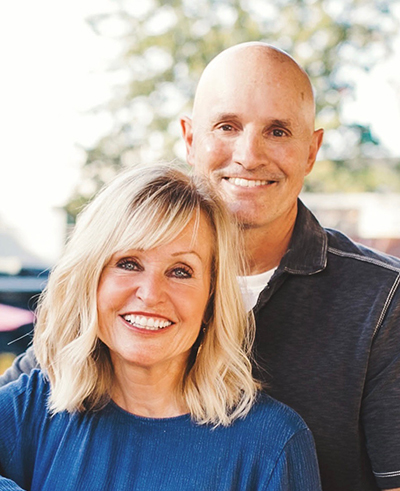
Dave and Ann Wilson
Dave and Ann Wilson are hosts of FamilyLife Today®.. Dave and Ann have been married for more than 38 years and have spent the last 33 teaching and mentoring couples and parents across the country. They have been featured speakers at FamilyLife’s Weekend to Remember® marriage getaway since 1993 and have also hosted their own marriage conferences across the country.
Episode Transcript
FamilyLife Today® with Dave and Ann Wilson – Web Version Transcript
This content has been generated by an artificial intelligence language model. While we strive for accuracy and quality, please note that the information provided will most likely not be entirely error-free or up-to-date. We recommend independently verifying the content with the originally-released audio. This transcript is provided for your personal use and general information purposes only. References to conferences, resources, or other special promotions may be obsolete. We do not assume any responsibility or liability for the use or interpretation of this content.
Did I Mess Up My Kid? Ron Deal
Guest:Ron Deal
From the series:Did I Mess Up My Kid? Ron Deal (Day 1 of 1)
Air date:October 16, 2026
Ron (00:04):
When he first got sick and we took him to a doctor the next day, they didn’t really find anything. You trust the medical professionals in your world. He wasn’t okay. Two days later, we’re rushing him to the hospital and then a week later he’s gone. And you just rewind those moments of your life and you go, “What did I miss?”
Ann (00:38):
Welcome to FamilyLife Today, where we want to help you pursue the relationships that matter most. I’m Ann Wilson.
Dave (00:44):
And I’m Dave Wilson, and you can find us at FamilyLifeToday.com. This is FamilyLife Today.
Okay, let’s talk about parenting guilt. What a great topic.
Ann (01:03):
Oh man, I wore that cloak for a long time.
Dave (01:07):
We all do.
Ann (01:07):
Shame, guilt, like I’m messing up my kids.
Dave (01:11):
We got somebody out in the studio today that’s probably never had that guilt.
Ron (01:13):
Oh my goodness.
Dave (01:15):
Ron Deal—
Ron (01:15):
What time is it?
Dave (01:16):
—from our blended ministry is in the studio. Ron, have you had that?
Ron (01:20):
Absolutely.
Dave (01:21):
Has any parent not had that?
Ann (01:22):
Do you think there’s a parent that hasn’t had it?
Ron (01:25):
Somebody who’s unconscious.
Ann (01:26):
Or a total narcissist.
Ron (01:28):
A total narcissist.
Dave (01:30):
I mean, I can remember, obviously our kids are older. Our oldest just turned 40. That just scared me.
Ron:
You’re not that old.
Dave:
We’re not that old. We had them as teenagers.
Ron:
That’s another story.
Dave:
I can remember, especially with him because he’s number one, literally saying things and in that moment thinking he’s going to be on a counselor’s couch. I just wounded him for life, like a regret and guilt. I think it’s every parent.
Ann (01:57):
Oh, and it’s not even funny. I cried so many nights thinking like, why did I say that? Why did I do that? I should have done this. I should know better. And it can be so overwhelming.
Ron (02:09):
It can be. You guys are reminding me of our good friend Brian Goins, what he says about parenting. What is parenting but preparing your children for therapy? I mean, of course we’re going to feel bad about something. We know we’re imperfect people. We want everything for our children. We want them to be richer than us and more stable in their lives and all of it.
Ann (02:30):
We don’t want them to have pain.
Ron (02:31):
We don’t.
Ann (02:31):
We recently had Abbey Wedgeworth on, and she wrote a book called Help! I’m Ruining My Kids. Isn’t that a great title?
Ron (02:38):
It is a great title.
Ann (02:39):
But let me ask you this, Ron. As stepparents, do they feel that even more so?
Ron (02:46):
I think so. If you’re conscious of what influence you’re bringing to the lives of the children that the Lord has given to you under your care, you’re mindful that something’s not quite awesome in terms of how you’re parenting them and the influence that you’re bringing and that that is going to have some sort of negative impact on them. And it may not be something that was your fault. It just may be something that you’re in the room for or you’re a part of or sort of passively connected to and you still feel bad.
(03:16):
I mean, nobody ever wants to see a child suffer. And so whether you can take the immediate blame for that or it’s sort of an indirect connection to whatever’s happening, you feel bad about that.
Ann (03:29):
Well, I’m even thinking of maybe somebody that’s just recently gone through a divorce. They’re not remarried, but they’re thinking, “I just wrecked my kid because we got a divorce.”
Ron (03:39):
Yeah. And if you didn’t choose the divorce, your spouse did, you’re still sitting there going, “And I’m watching my kids suffer because of this breakup of our family.”
Dave (03:48):
I mean, that’s my childhood. My mom did not choose it, even though she had to initiate it. It just got so bad. But I know she felt so much guilt and a protection like he’s lost his dad. How do I navigate this? Then when my dad remarried, I sensed my stepmom trying to save me from the trauma she knew I went through. So she was over the top.
Ann (04:12):
And she had been through a divorce.
Dave (04:14):
Yeah. So I mean, there’s that complexity.
Ron (04:17):
Let me just say something. You’ve hit on something. Let’s talk about this. For single parents, for blended family couples, people, foster parents, adoptive parents who have a child now under the care who has been through something hard in life or they wouldn’t be in the foster care system, for example, you want to help and you want to sort of love that pain out of them and you’re trying. And yet when you see the sadness show up again in their face, you see the anger and how they react to something, you go, “That pain’s still there. It’s not quite out. What can I do?” That sense of guilt is I think even double on top of the regular parent guilt. Can I say it that way?
(04:54):
Where we all just want good things for our kids and we know we just blew it. Somebody else blew it. You want to try to help move that pain out of them and you can’t seem to get there and you feel guilty about that too. It’s paralyzing. One of the biggest problems we face with the biological parent in a blended family especially who feels sad for their kids and guilty over what the kids have been through, then tries to make up for that by letting them off the hook, by going soft on behavioral management, by going heavy on compassion and love and care.
Ann (05:28):
By buying them everything they ever wanted.
Ron (05:31):
You got it. Sympathy. And that paralyzes that person from following through with parental activity, if I could say it that way. The behavioral limits stuff that we’ve all got to do in parenting. And so you feel like if I buy them stuff, if I’m soft on discipline, then they won’t have any more hard. Well, guess what? That’s a setup when a stepparent enters the picture and goes, “Boy, your kids get away with everything. How come you’re letting them off? Why is that?” You know what? Somebody’s got to stand up and do what’s right and the stepparent tries to take over and fix like your mom or your stepmom, Dave. She tried to fix what had happened. And now all of a sudden that puts a stepparent in a bad position trying to parent in ways that a spouse or children won’t let them do.
Ann (06:18):
Ron, one of the stepparents just heard that’s like, “What are you talking about? This family has needed me to step in.”
Ron (06:25):
I really believe a lot of what we call wicked stepmothers or abusive stepfathers are people who are just trying too hard to fix stuff they didn’t bring about, and they don’t really have any control over now, but they’re loving big with their hearts. But unfortunately, they’re taking a position with a child of authority that the child doesn’t recognize and that the other biological parent who has gone soft with the kids and has been paralyzed now undercuts the stepparent. So you are really sabotaged in trying to repair. You’re offering what you think is something helpful for the children, but unfortunately, it just keeps you pushed out further and further as an outsider and the family won’t let you in and won’t let you have that voice. And it sabotages not only your parenting, but listen to this, that always sabotages the marriage at the exact same moment.
Ann (07:23):
We know life is full of challenges and families today need biblical truth more than ever. And as a FamilyLife Partner, your monthly gift helps bring the truth into homes every single day through podcasts, events and resources.
Dave (07:38):
So let’s make a lasting difference together. Become a partner today. Just go to FamilyLifeToday.com and click the donate button.
Okay. So I’m sitting here from where we started thinking, okay, I have regrets.
Ron (07:55):
I do too.
Dave (07:55):
Let’s talk about them.
Ron (07:56):
Yeah.
Dave (07:57):
Do you have any?
Ron (07:57):
Oh yeah.
Dave (07:58):
What would they be? Help! I’m ruining my kids. What’s a regret?
Ron (08:01):
When my oldest son was four or five, I was outside trying to fix something. I had a hammer and some wood. I don’t even remember what it was I’m doing.
Dave (08:08):
It does not sound good.
Ron (08:08):
He’s sitting in the driveway watching me hammer something and get frustrated. And by the way, when I’m not good at something, that’s when I lose my cool. That’s my sense of inadequacy coming out. I know that now. I didn’t know that, let me see, 28 years ago when he was three. And I got frustrated and threw the hammer down into the cement and broke the hammer.
Dave (08:32):
Broke it?
Ron (08:33):
Yeah.
Dave:
You threw it pretty hard.
Ron:
Pretty powerful, huh? Should I be proud of that? I don’t think so. I threw the hammer down, I broke it. And then I look up and there’s my three-year-old just watching the entire thing. And I was like, he saw all of that. He saw my anger. He saw my frustration. And then I start thinking, I saw my dad do this. This is where I got it. I’m repeating what my son’s going to repeat what I just did. And I felt horrible. Now that’s a simple little moment. It was sort of ridiculous really at the end of the day, but I knew it left something in my child because I had been the recipient of watching that frustration. I know how that stuff stays with you. And I thought, I blew it. What do I do now? I got that regret.
(09:17):
Not showing up for my family in consistent ways during the years where I was chasing my identity and my work and I was so focused on that when I’d be home, but I really wasn’t home. I think I was 80% home, but that 20% I felt guilty over.
(09:33):
I think there was seasons of me being a dad where I was a hundred percent involved and I have a strong relationship with my kids, but there were moments where I was unavailable and I look back and I thought lost opportunity. I have regrets with Connor. For those listening or watching don’t know, our son passed away when he was 12. Our middle son, it’s been 17 years now and we made decisions to move to a city, to take a certain job, to do a certain thing and that’s where he passed away. I think about that. I think, okay, if I hadn’t chased that opportunity, would he still be here? I mean, that’s deep in me. The emotion rises up because I just wonder, was that me?
(10:21):
And there were days when he first got sick and we took him to a doctor the next day, they didn’t really find anything and we just said, okay—you trust the medical professionals in your world. He wasn’t okay. Two days later, we’re rushing him to the hospital and then a week later he’s gone. And you just rewind those moments of your life and you go, “What did I miss?” Now in my right mind, I can tell myself I don’t hold the world in my hand. I think loss makes us go, “I’m really small. I am tiny in the universe, and I thought I was large. I thought I controlled the world.”
Ann (11:10):
I thought I could protect all my people.
Ron (11:12):
I thought I could do all that stuff. And that’s sort of the way we approach life. And then loss teaches us, no, no, no, no, you’re really small. I am big in my Heavenly Father’s heart. I am so valuable to Him, but in terms of controlling life and the world, I am tiny. And so I know in my right mind, I am at peace with that. It was not up to me, but in my heart, because I miss my son, I just wonder, could I have done something? I don’t know how we as loving parents who want the best for our children, I don’t know how we’d not wonder those things and have regret.
Ann (11:57):
For sure. When you go before God, what does He assure you when you tell Him all those regrets?
Ron (12:06):
Yeah. He reminds me He’s the big one. He’s the one who sifts everything through His hands and allows what He allows. Even though I don’t like it that Connor’s gone, I know that’s not on me.
Ann (12:21):
Yeah. But it’s still—you would sit there and think through all that.
Dave (12:26):
Do you have any?
Ann (12:27):
Of course I do. Let me hear yours first.
Dave (12:31):
Hear mine. I mean, honestly, it pales because it wasn’t life or death. One of my sons was on staff with me at the church and my co-founder laid into him one day in a meeting. And Steve is a great leader, but sometimes he could get angry.
Ann (12:50):
And you were present.
Dave (12:51):
And I was sitting here and my son was there and another staff member was there, and he just laid into him. And if it had been you, Ron, or anybody else on my team, I know I would’ve said, Steve, this is inappropriate. It was very angry. And what he was saying was not even true, but he was just taken out. But I said nothing because it’s my son and I don’t want to be accused of nepotism. So I let it happen.
Ron (13:17):
What a bind.
Dave (13:18):
I found out later the other staff member kicked my son under the table like, dude, this is so bad. You don’t deserve this. And his dad said nothing. Talk about a regret because I think later, he’s like, Dad, how did you just sit there and let me get beat up like that? I’m like, well, I didn’t want him to think—that was one of those moments where you just step in. I don’t care what you think of me. I’m going to defend my boy here because it’s wrong what’s happening to him like I would anybody else. He got the opposite because he’s my son instead of favoritism. That’s a regret.
Ron (13:56):
That’s one of those double binds where you just didn’t feel like you could win for losing.
Dave (13:59):
Nope.
Ann:
Yeah. What I regret at this point in my life, when I look back, I regret that I didn’t know who I was in my identity yet. And because of that, I, in the early years, parented out of a performance. I cared what people thought of my parenting. I thought when they looked at my kids, it reflected on me. And so I was very conscious of what they were and they weren’t doing. I mean, I have that story of we were at this event with all of our friends, probably 30 of us, and all the food’s laid out, and I’ve shared this before, but somebody says, “Hey, let’s pray for the food.” It’s all the adults, all of the kids, so many of us.
Dave (14:41):
All church people.
Ann (14:41):
It’s all quiet. Somebody’s getting ready to pray. And our son says, “This food looks like poop.”
(14:48):
And I was mortified. The pastor’s kid? What? Yes. And so by the time he had had this whole attitude the whole time he was 14, and when we got to the car, I got in the car, he was getting in the car, but I shouldered him into a snowbank and he fell into the snowbank and then I locked all the locks on the car and I wouldn’t let him in. What does that have to do with him and his attitude? It was me and me caring about what his performance reflected on me. And I’m like, who cares what everybody thinks? All of our kids have things, we have things. And I feel like there’s so many—I parented out of a brokenness for so long and I apologized so often to all of them and cried, but I still, as a listener, I’m just saying, man, deal with your stuff that’s inside.
(15:47):
Maybe you don’t even know what it is, but maybe God’s showing you some of your pain points.
Ron (15:51):
I actually think—I mean, because I have the same type of stories—when you kind of get clear of that moment and you look back and you go, “Man, I lost it. I did this.
(16:01):
That was inappropriate. I don’t even know why I did it.” That is a little bit of a litmus test. Think of it as an assessment and it’s trying to shout to you, “Hey, Ron, you got something inside you got to wrestle with. There’s something in there. You need to figure out what this thing is.” So for you, now that you’re on this side of your identity, you can look back and you go, “I can see how silly that was. What my child did is not a reflection of who I am or my worth in the world or whether God loves me or whether I’m a decent parent or not.” But the other side of it, you couldn’t see that at all. Same with me throwing the hammer. Wow, just because I’m not adequate to fix something doesn’t mean I’m not a man, I’m not good, I’m not valuable.
(16:46):
It’s just, that’s not my skillset. I now get that, that I didn’t get way back when my oldest son was three. So allow those moments of dysregulation, of lack of control—
Ann (17:00):
Of stupidity.
Ron (17:01):
—to be, of stupidity, let’s call it what it is. Allow those moments to show you something, to teach you, to beg you to do the work, to understand that part of you.
Dave (17:12):
Now what do you do with the regret? If it feels like it’s clung to you and you want to shake it off, you shared yours with Connor. I’ve got mine. We’ve all got them.
Ann (17:24):
You’re asking what’s wrong with me?
Ron (17:26):
Yeah.
Dave:
Yeah, but I mean, at this point—
Ann (17:28):
So you’re saying now it’s just regret.
Dave (17:29):
—you want to say, okay, I’ve got to let it go because help unruin my kids. You didn’t ruin your kids. In some ways they’re better because of those moments. And again, there are moments that you do think that left a mark.
Ann (17:42):
And you have to repent and go back.
Ron (17:44):
Absolutely.
Dave:
But if you’re carrying it around like a weight, a burden, at some point I think God wants to say, “You got to let go of it. It’s decades ago. I want you free today.” Help our parent do that because there’s some going, “I can’t let go.”
Ron (17:58):
Okay. Let’s say there are some things we’re talking about here that involve sin and you really did hurt somebody, and you might need to go and ask for forgiveness. I don’t care how long that’s been. That might be the appropriate thing to do. I think sometimes we ask for forgiveness and we still can’t let go of the regret. We still beat ourselves up over that.
(18:19):
Ultimately, I think we’re still searching for something. I can just speak for me. For me, this whole thing of adequacy adds up to how well I did today in this, this being a dad and being a husband and being an employee and doing my work, somehow that all added up to whether or not I was a person of worth and value. And until I finally understood that and realized what I was ultimately chasing, I couldn’t let go of my regret. Now I see it for what it is and I go, “Wow. Well, first of all, that’s not how you earn worth. That comes from Jesus loving me and making me more than I am. And turns out I don’t have to be that adequate.” That was the most liberating thought I’ve ever had. I’ve been a Christian for, I don’t know, 45 years of my life or something before I went, “Whoa, nothing says I have to be adequate.” Nothing in scripture demands that of me.
(19:14):
Jesus is happy to embrace me as an inadequate person. This is the narrative of everybody in the Bible.
Ann (19:21):
Yeah. We’re all broken.
Ron (19:23):
So I guess I’m still loved. I guess I’m still a contributor to this world. I can bring light to darkness and it’s okay that I blew it. Now, there’s residue from that moment of where I blew it. There’s a little bit of impact on my kids and yeah, I can try to clean that up to whatever degree life allows me to, but the rest of it, I just got to release since it really doesn’t add up to anything of substance anyway. Now that’s what’s been helpful for me, how somebody else wrestles with a regret. They’ve got to find their way through it.
Dave (19:57):
Is that what you do? When Ron said release, I can picture you because you’re so visual just going, letting that baby float up to the heavens like those lights.
Ann (20:06):
I have to see myself handing it to Jesus. I see the regret in my hand, and I hand it to Him. In my head I picture handing it to Him. And usually in my mind, because we use our imaginations all the time, so why not use it for this? In my mind, I picture Him getting rid of it. He’s the one that allows it to float up or bury it or whatever. And then I can’t re-dig it back up because it’s easy to go back and say like, it can feel heavy again later. And so it’s that constant surrender, like I’m not going to dwell on that. It’s been forgiven. He’s taken it and I’m going to live in freedom today. What about you?
Dave (20:45):
I was just thinking of a thing we used to teach college athletes about how to apply your faith or your walk with God into competition. In other words, don’t pray the Lord’s prayer and go out there and play like idiots, not in terms of ability, but bad attitudes and cursing. It’s like, I want to take Jesus onto the court with me, onto the field with me. And so we would teach these we call the Principles of Athletic Perfection by Wes Neal, and one of them was called Focal Point. And focal point was an Old Testament idea of the priests in the Old Testament have tassels on the hem of their garment. And God said, “I want you to have those so when you look at them, you’re reminded who you are, who I am, what you’re doing.” We get in these competitions and we as a team decide, okay, we want to be a witness and a light for Jesus in this public softball tournament.
(21:40):
What’s our focal point? And so our pitcher said, “Before every pitch, I’m just going to do this with the ball. Nobody will know what I’m doing. It’s not going to be a showy thing, but I’m just going to hold it up for a second and everybody in the field will look at it and just go, we’re out here for Jesus. This is what we’re about.” So I think in a sense, it’s like find something visual. And what Wendell taught us back then is he said, okay, what that focal point means is, okay, nail to the cross the error you just made. Okay, I’ve just booted a ball, two runs scored. I was playing shortstop.
(22:09):
That focal point go, okay, it’s over. Forget it. But he also said this, nail to the cross the home run you just hit. It’s in the past too. So you’re not living off that, you’re not.
Ann:
So apply that to parenting.
Dave:
For a parent, it’s like, okay, I blew that moment. Obviously, if you can, go to your son, go to your daughter. Say I’m sorry. I didn’t mean to throw that hammer. I was out of control. You saw that. Maybe he doesn’t understand at three and maybe he’s 13 and go, “Hey, remember that? I want to bring that up again because I want to make sure whatever it is, say you’re sorry.” Probably most kids are pretty quick to forgive.
Ann:
For sure.
Dave:
They may not. It may be a really deep wound but makes that the first thing. Then the second thing is have some kind of visual.
(22:48):
Maybe it’s a cross hanging on your wall. I don’t care. Maybe it’s a mark on your hand. I don’t know what it is, but something to go, okay, I’m going to nail that to the cross. It’s dead and bury. Jesus died for that. I’m not going to live in it anymore. It doesn’t define me. Yes, it’s a regret. I wish I could have done that one better, but I didn’t and God’s going to use it in some way.
Ron (23:05):
I think this is so amazing because what we’re saying is return to righteousness. I blew it. I said something. I was a bad influence. Return to righteousness and now I’m back to being a good influence. And I think there’s something liberating about that. I used to talk about have the audacity to embrace grace. Act like God’s grace actually adds up to something in your world and your life. And the regrets that you have are sort of in the past because you’re living out of that new identity again. And yes, sometimes we repent, ask for forgiveness, all that stuff’s got to happen with repair, but living out of the new helps us to feel settled in that peaceful self rather than ruminating on something we blew and messed up and can’t change ever.
Ann (23:51):
God’s grace. We all need it.
Ron (23:54):
Parents nail it. Nail it.
Ann (23:56):
Nail it to the cross.
Dave (23:57):
Nail it.
Ann (23:58):
And go back to righteousness.
Dave (24:00):
So Ron, tell our listeners and viewers where they can find you.
Ron (24:04):
FamilyLifeBlended.com is where the blended family ministry lives. We’d love for people to come. We’ve got all kinds of resources for them: video, audio, live events. You name it; we’ve got it.
Dave (24:16):
And Mindful Marriage is there.
Ron (24:18):
Yes, The Mindful Marriage is available in the FamilyLife store.
Ann (24:21):
And you can get our book, No Perfect Parents. We talk about all of this in that book.
Dave (24:27):
Oh yeah. In fact, the last chapter is called “Our Top Five Parenting Regrets.” And I didn’t even mention the one I talked about today. That wasn’t even in there, so there’s others. But again, all that’s at FamilyLifeToday.com. Just click on the link in the show notes and hopefully that’ll help you.
Ann (24:45):
FamilyLife Today is a donor-supported production of FamilyLife®, a Cru® ministry; 50 years of helping you pursue the relationships that matter most.
If you’ve benefited from the FamilyLife Today transcripts, would you consider donating today to help defray the costs of producing them and making them available online?
Copyright © 2026 FamilyLife. All rights reserved.
www.FamilyLife.com