

Gray Divorce & Why Long Marriages Fall Apart: Ron Deal
Gray divorce doesn’t usually begin with a lawyer. It begins with two people slowly living separate lives under the same roof. Ron Deal joins Dave and Ann Wilson to explore why long marriages drift apart, the warning signs couples often miss, and how small choices today can reshape the years ahead.


Show Notes
- Grab your copy of Ron and Nan Deal's book, The Mindful Marriage, and check out other resources at Shop.FamilyLife.com
- Visit FamilyLife Today.
- Find additional support for your marriage at our Weekend to Remember getaways and Blended and Blessed.
- Thanks to the Christian Standard Bible for sponsoring this episode. Learn more at CSBible.com.
- Follow us on all social platforms: Facebook | Instagram | YouTube
- Find resources from our podcast at shop.familylife.com.
- Download FamilyLife's app!
- Help others find FamilyLife. Leave a review on Apple Podcast or Spotify.
- Check out all the FamilyLife's podcasts on the FamilyLife Podcast Network
About the Guest

Ron Deal
Ron Deal is Director of FamilyLife Blended®️ for FamilyLife®️ and President of Smart Stepfamilies™️. He is a family ministry consultant and conducts marriage and family seminars around the country; he specializes in marriage education and stepfamily enrichment. He is one of the most widely read authors on stepfamily living in the country.
About the Host
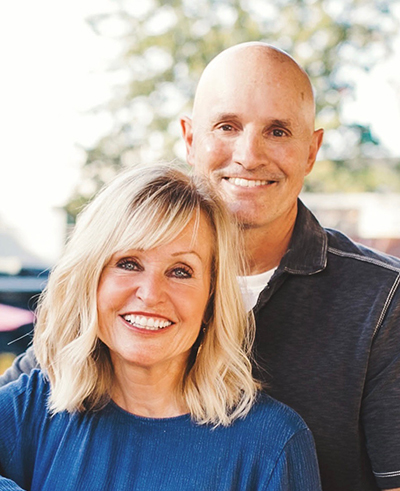
Dave and Ann Wilson
Dave and Ann Wilson are hosts of FamilyLife Today®.. Dave and Ann have been married for more than 38 years and have spent the last 33 teaching and mentoring couples and parents across the country. They have been featured speakers at FamilyLife’s Weekend to Remember® marriage getaway since 1993 and have also hosted their own marriage conferences across the country.
Episode Transcript
FamilyLife Today® with Dave and Ann Wilson – Web Version Transcript
This content has been generated by an artificial intelligence language model. While we strive for accuracy and quality, please note that the information provided will most likely not be entirely error-free or up-to-date. We recommend independently verifying the content with the originally-released audio. This transcript is provided for your personal use and general information purposes only. References to conferences, resources, or other special promotions may be obsolete. We do not assume any responsibility or liability for the use or interpretation of this content.
Gray Divorce & Why Long Marriages Fall Apart
Guest: Ron Deal
From the series: Gray Divorce & Why Long Marriages Fall Apart (Day 1 of 1)
Air date: August 17, 2026
Ron (00:04):
I had a professor in graduate school who said, “Yeah, marriage is like that old grandfather clock.” For those of you that don’t know what a grandfather clock is, it’s that thing at the end of the hall in your grandmother’s house. Two big dumbbells or what do you call them? And you would pull those and it would wind it. Marriage is like that grandfather clock. If you don’t go wind it up every once in a while, it just runs out of energy. It just stops.
Ann (00:31):
Welcome to FamilyLife Today, where we want to help you pursue the relationships that matter most. I’m Ann Wilson.
Dave (00:38):
And I’m Dave Wilson and you can find us at FamilyLifeToday.com. This is FamilyLife Today.
Okay. Let me read you a stat that you might find surprising. 40% of divorces are now between people 50 years old and older.
Ann (01:01):
That is surprising, isn’t it?
Dave (01:03):
Yeah, here’s another one. The divorce rates have almost tripled in recent decades of people age 65 and older.
Ann (01:10):
What is happening?
Dave (01:11):
We’re going to find out. We’ve got Ron Deal in the room.
Ron (01:13):
Hey guys.
Dave (01:14):
Not that you’ve gone through this, but there’s a term for it now, right, Ron?
Ron (01:18):
It’s called the gray divorce.
Ann (01:20):
This is gray as in color gray.
Ron (01:22):
That’s right.
Dave (01:23):
Yeah. I mean, it’s so prevalent that there is now a term. Explain it, first of all, and then let’s talk about what’s going on.
Ron (01:30):
Well, first of all, let me ask you a question because I have to say, as I was prepping for this conversation, I was surprised by some of the things that I discovered. I’ve been hearing about the gray divorce for over a decade now. Family sociologists have been tracking this and looking at it and studying it. And essentially, over the last 15 years in the United States, there’s only one group of people in which the divorce rate has risen and it’s those over 50 years of age. The other cohorts, ages have begun to decline a little bit, but 50 and over, it’s gone up.
Ann (02:04):
Tripled?
Dave:
65 and over.
Ron (02:06):
That’s right. Tripled. I’m glad we came back to that because it scares everybody. Is this the end of us? If you’re married and you’re over 50, are you going to—no, actually, here’s the perspective we need to keep in mind. Still, even though it’s tripled, the divorce rate for couples over 50 is half of what it is for couples under 50.
Ann (02:26):
See, that’s reassuring.
Ron (02:27):
That is reassuring. It’s important.
Dave (02:30):
But there’s a trend.
Ron (02:31):
I think there’s a trend.
Dave:
It’s moving up.
Ron:
And I thought—here was my assumption before I did my preparation. My assumption was it’s 30, 35, 40-year marriages that are finally unraveling and coming to an end. Would you?
Dave:
Yeah.
Ann:
Sure.
Ron:
You kind of had that assumption too. Actually, no. It’s a very small percentage. That’s a third of all of these 50 and over gray divorces. It’s people married for a really long period of time. Two thirds of them are blended family remarried couples.
Ann (03:01):
That caught your attention.
Ron (03:03):
Absolutely.
Dave (03:04):
So they’re married 10, 15, 20 years.
Ron (03:06):
That’s right. Maybe six years. I think the gray divorce phenomenon has more to do with blended family dynamics than it does necessarily long-term marriages that unravel. So there’s a little bit of both. Two thirds are remarriages for one or both partners, blended families. They got adult kids, grandkids, the whole bit. And only a third of them are long-term marriages that finally come apart.
Dave (03:31):
But if you’re listening right now and you’re a blended family and you’re over 50, that’s a scary stat.
Ron (03:37):
It’s a little striking.
Dave (03:39):
Two Thirds.
Ann (03:40):
We don’t want to scare our listeners.
Ron (03:41):
Yeah. No, the point is, be aware and be intentional.
Ann (03:45):
Yeah. Intentional because all of us, no matter how long we’ve been married, as we say all the time here on this program, we drift toward isolation.
Ron:
That’s right.
Ann:
If we are not intentional to bring ourselves back, this is something that can happen to any single couple.
Ron (04:02):
There’s actually been some research where they talked to those long-term couples and they said, “Why did your marriage come apart after 30, 40 years?” And about 20% of them said, “It’s because we just drifted. We just sort of pulled apart from each other over time.” And we know that’s a real thing. I mean, couples with young kids, you guys have talked about this. The kids, you’re so wound up in caretaking and going and going.
Ann (04:26):
There’s no time for the two of you.
Ron (04:27):
Exactly. And if you sort of settle your marriage, and let me say what I mean by that, settle your marriage—you stabilize your marriage is a better way of saying it, in activity around the kids. You and I, we’re not quite sure how to do that, but we know how to do life with children and we can get by. Well, kids go away. They grow up. Life changes. You get to a new season and then you’re really strangers.
Ann (04:51):
You feel like I don’t even know you. As you said, you’re a stranger to me.
Ron (04:54):
And that is a reality for a lot of couples. Nan and I—let’s push pause. Our testimony outlined in The Mindful Marriage, I don’t know that we’re classic drift. I would say we loved deeply and intensely, and we fought deeply and intensely and never could really get past those arguments and those issues. And so somewhere around the 30-year mark, and we’ve been married 40 years now, but somewhere around the 30-year mark it, sort of, all came to a head, and we were like we have got to push into this in a very significant way. And thank God by his grace and mercy, we are in a completely different place now than we ever have been. So I get this. I mean, I really understand how good, well-intentioned people wake up one day and go, I don’t know how to be married to you anymore.
(05:44):
Here’s what I really want our listeners. I don’t think that represents bad people. God haters. I mean, vicious folks are just finally throwing their marriage to the trash can. I think it’s a lot of really well-intended, Christian people included, who are trying and just sort of stuck in a rut.
(06:04):
And that ultimately gets to a place where they go, “I just don’t know how to do this. Maybe we should quit.”
Ann (06:10):
Let me ask you, Ron, have we discovered, I mean, I’ve read, and you probably know the stats better than I do, that 70% of divorces are being initiated by women. Is that true?
Ron:
That is true.
Ann:
70%. So when it comes to this age group over 50 or so, are a lot of those being initiated by women?
Ron (06:29):
We call them walkaway wives. That’s the phenomenon that you’re referring to. And I think it’s a reality. I’m not sure how many of the gray divorces are walkaway wife situations. I do know the dynamic could be at play in a situation where somebody’s just frustrated and she’s been fighting for more in the relationship for a long time and then she just gives up the fight. And at that point she’s done. And by the way, when we try to save marriages that are in that place, by the time somebody gets to the, “I’m really done,” it’s super hard to save because she’s fought for so long, she has no more fight left.
Ann (07:05):
There’s no hope left.
Ron (07:06):
Right. And so we always want to hold out for hope and repair and restoration of that relationship.
Chancel Cooper, FamilyLife Director of Media (07:16):
Hi, this is Chancel Cooper, Director of Media here at FamilyLife. I find it amazing that FamilyLife has been helping families for 50 years. That’s before there was internet or even the Sony Walkman. If you know, you know. Since the 1970s, FamilyLife has been pointing families and marriages to Jesus. And all along the way, it’s been through prayers and support of fateful ministry partners. So whether you’ve been with FamilyLife since all the way back in the 1900s or if you just found us, we want to invite you to celebrate 50 years of God’s faithfulness. And if FamilyLife is a blessing to you, would you consider partnering with us by giving a gift today? Just click the donate button at FamilyLifeToday.com. That’s FamilyLifeToday.com.
Dave (08:11):
Talk about what do you think the contributing factors are to couples at 50, 60, maybe 10 years married, maybe 30, 40 years married, but they say, I quit.
Ron (08:21):
Okay. So I think there’s two stories here. The long-term marriages, those are the ones that they found themselves in a rut and haven’t found their way out. Or of course there’s always circumstances where somebody has an affair or somebody just sort of completely gives up on the relationship and the other person tries and tries. And those narratives happen for couples married 30, 40 years, just like they happen for couples married two or three years.
(08:48):
So there’s that story. The other story is that big bulk of these gray divorces that have something to do with the complexity of living in a blended family, multi-generational remarriage situation. And there’s a lot that we could unpack. Everything from, wow, you and I got married at 60 and we both had had really difficult first marriages, and this seemed like the great fit. And actually you and I do get along really well. It’s adult children. It’s former spouses. It’s now we don’t know how to navigate the space of parenting the kids that are still hovering in orbit around our relationship. And those blended family complexities, as we’ve talked about so many times on this program before, get in the way of the couple really thriving in their relationship.
Dave (09:37):
Yeah. I want to even wonder how many blended marriages are a guy or gal comes from a former marriage, has kids and marries a woman or a guy who’s never been married. So that person comes in thinking, this is going to be awesome. Not understanding you married into a complex world with kids and cousins, right?
Ron:
Yes.
Dave:
I mean, it’s both and, but if you didn’t know that that’s the world you’re stepping into, it’s a shock.
Ron (10:06):
Yeah. It can be a rude awakening.
Dave (10:07):
Yeah. What about just the boredom that can creep into a marriage over decades? I mean, I’m not acting like we’d never experienced that. You become empty nesters and for a year you’re like, “This is awesome.” No kids. They’re off on their own.
Ron:
Freedom.
Dave:
Yeah. And you’re like, “This house hasn’t been quiet in years.” And maybe Ann didn’t feel this, but for me it was like, “This is wonderful.”
Ann (10:35):
It felt very sad to me.
Dave (10:36):
Yeah. I knew she was going to say that. But then even after 18 months or so, it feels sort of sad to me too. It’s like, wow, it’s very quiet. Let’s get a dog. But then if you don’t really work on the relationship, the next thing you know, you are just drifting because there isn’t something pulling you together.
Ron (10:55):
You’re hitting on something really important. That quiet in the house pushes to the surface. This is all about you and me now. And what do we talk about? And I will say, Nan and I have lots of great conversations. She’s very vocal. I’m pretty expressive with emotions and all kinds of things. I’m not afraid to share any of that. But after 40 years, what else there is there new to talk about? You have to work at this.
Dave (11:20):
Yes, you do.
Ron (11:21):
You’ve got to find something. And not just what’s happening in the news or whatever the crisis of the day is, but something of substance. FamilyLife has said this for 50 years now. Marriage is by nature entropic. It runs out of energy. I don’t care how long you’ve been married, how well you know each other, how much you love each other. It takes energy. And me contributing and you contributing, us trying to find our way to that. So the quiet in the house lovely at first and then it’s a bit scary like, wow, this is about us. For somebody listening right now and you have younger kids, what I would say is keep the energy going. That’s why date night’s so important. That’s why a little couple devotional time where you connect to keep the energy in your marriage going because you can just give all your energy to children and activities and Instagram.
(12:14):
And then you wake up one day and you’re like, I don’t even know where to begin with you.
Ann (12:19):
I talked to countless couples that are right there. They’ve put the kids and we all know it’s overwhelming when your kids are little under your roof of the activities of school, of the dynamics of relationship that you’re constantly talking about. And it’s very, very easy to let your relationship with your spouse kind of—you let it go a little bit and place it to the side. And we’re saying, put God at the very front, then your spouse, because you’re exactly right, Ron. If you have not had a conversation with your husband because you’re so busy with the kids, after a while, you don’t know what to say.
(12:56):
We’ve had couples come up to us say, “We don’t even know how to talk anymore besides what’s happening in the world today. We don’t know how to go deeper.” And that’s pretty common.
Ron (13:06):
If you’ve had a disappointing relationship at some point in your life—again, two thirds of these gray divorces is a remarriage for somebody forming a blended family with multiple generations and you have been burned before. You may be listening to us right now and going, “Yeah boy, I tried that. It didn’t work, the first marriage. It cost me a lot. That feels really risky to me.” And I just want to say yes, it is risky. And that’s what investing in marriage involves for everybody. But for you in particular, there’s something, a residue on your heart that is about self-protection. And so you kind of wall up and pull back rather than leaning in and opening up yourself to your partner. And that comes with a risk and a cost.
Dave (13:58):
And some of it could be sit down with a counselor.
Ann (14:00):
Oh yeah.
Dave (14:01):
I mean, there’s part of the gray divorce and it could be, man, we’ve been married 40 years. Counseling is not going to help at this point.
Ron:
What’s the point?
Dave:
We went to a counselor in year 38. Yes. And I remember saying to him on the first day there—it was a five-hour session because I needed a lot of help. But I remember at the end when he’s giving me my assignment, I said, “Man, I should have been here 30 years ago.” And he goes, “You’re here now. Let’s go.” And I’m like, “Man, stuff I didn’t unpack from my childhood that I should have, I now am doing it. ” And I think it in some ways kept us from gray divorce. It’s like, okay, the next 20 can be better than the last 30 because we got somebody to help us. A third party that’s got a faith component to it says, “I’m going to help you and God’s going to help you.
(14:46):
Let me navigate you through that,” that can change everything.
Ron (14:50):
We have been to counselors so many times throughout our life. Part of what you’re looking for there is somebody to help you recognize your rut and jump out of that rut. I really think when you’re in the rut, you can’t see how tall the walls are. You don’t know how deep you are in this thing.
Dave (15:05):
Even when your spouse tells you. You can’t see it.
Ron (15:08):
You can’t.
Dave (15:08):
Yeah.
Ron (15:09):
Absolutely. You get stuck in that space and you’re sort of like, “I don’t even know what to do anymore.” Because in my mind, I’ve tried everything I know to do. That’s why it’s a rut. So seeing somebody talking to somebody is often just about getting some perspective on what’s happening so that you have new choices that become available to you.
Dave (15:28):
I mean, what else, Ron, would you say or Ann? If a couple’s listening and they’re like, “We’re headed there. We’re not getting divorced, but I could see us possibly feeling that.” Or “We can feel the isolation, the drift,” blended or not? They’re year 20, 30, 40, or maybe year 10, 5, but they’re in their 50s and 60s and they feel this we’re roommates. We live here. We’ve been married for years. We’re really roommates. There’s not intimacy. And I’m not talking sexual. There’s just not—
Ann (15:59):
Or maybe both.
Dave (16:00):
There’s nothing really magical here anymore. And again, I’m not going to say it’s going to be magical like it was when you’re newlyweds, but there’s nothing really—I don’t want to run home. I’m here. I’ll go watch TV. You go watch TV. I’m not going anywhere. But man, if we don’t change something, I feel like I could be a statistic.
Ron (16:18):
Conventional wisdom, stuff you hear from the pulpit and sometimes in a lot of marriage books, I hate to say it, but would say something like, “You need to tell your spouse what’s your—” if you’re in that spot, I’ve been there.
(16:30):
That’s the last thing you’re going to do because you do not feel—there’s no safety in the relationship. You guys have fought about this a hundred times. For you to say, “You know what? Our marriage stinks,” is probably just going to be another blow up. Rather, first of all, go to your knees in prayer, begin to search and really ask God, what is it you’re requiring of me? To me, this is spec versus log stuff. Matthew chapter 7. It’s so easy to see it that the other person’s doing wrong, that you’re so frustrated with, you need to refocus and start saying, what are the logs in my eye that I can do something about?
(17:06):
So I can bring a better me. Again, this is the material that we’ve discovered that has changed our marriage that we put into The Mindful Marriage book. It is a refocusing on who I am and what I can bring that’s different. But then I also want to say, as we just discussed, go talk to somebody. Sit down with somebody who can help bring a little perspective to the process. Maybe you’re going to go as a couple, or maybe you’re just going to go as an individual, but you need some sort of perspective or an intervention from outside your coupleness. When you’re really in the trenches and stuck, something outside of you is helpful to offer a spark, a new perspective, a new thought, a new idea so that you’re just not ending up in the same rut.
Dave (17:53):
Yeah. And something just hit me is the Book of Revelation, when Jesus says to the church—I think it’s Ephesus—
Ron (18:04):
You’ve lost your first love.
Dave (18:05):
Yeah. So he says to the church, “You’ve lost your first love.” And then what’s he tell them to do?
Ron (18:09):
Repent.
Dave (18:10):
Repent.
Ron (18:10):
Remember and do the things that you did at first.
Dave (18:13):
Yeah. And so, I mean, obviously that’s a walk with God. When we first found Jesus, we’re passionate and we’re reading the Word and we’re praying. I mean, all those things you were doing, I think he’s saying sort of that. But I think in a love relationship, he’s like, “Okay, so you’re 50 years old and it’s dead. You’re just roommates. Hey, why don’t you turn, repent. I’m not going to live this way anymore. Maybe she won’t respond, but I’m going to do this. I’m going to do the things I did at first. Let’s go on dates. Let’s talk. Let’s hold hands. Let’s kiss.” I mean, all that little stuff, that’s hard to do. You get stale. You get lukewarm.
Ron (18:51):
Especially when you feel like a victim.
Dave (18:53):
Right. I’m not going to initiate.
Ron (18:55):
Yeah. I’m a victim of what you’re not doing or what you are doing that’s wrong. Then I feel justified in withholding myself. So the repent part is about me dealing with logs.
Dave (19:08):
Me.
Ron (19:09):
Me.
Dave (19:09):
Yeah. Not her.
Ron (19:10):
The remember part is, okay, how do we get into this? What is this about? What’s this journey that we’ve had. There’re so many great moments. There’s so much worth fighting for here. Do the things you do. Now I got to push myself into action that’s a contribution to the relationship. Obviously, this passage is about a vertical one, and they’ve lost their first love for God. Same dynamic happens, I think, in marriage and earthly relationships.
Ann (19:36):
And I think too, sometimes we wait for our feelings to get there and then we’ll act on them. This is an obedient act of your will. You may not even want to say, “Hey hun, let’s go on a date.”
Ron (19:48):
I guarantee you, you won’t want to.
Ann (19:49):
You won’t. That’s good, Ron. I like that you said that. You won’t want to, to initiate a hug or to sit next to your spouse if you’re feeling isolated. But just make the right move and not all the time, but many times then there’s a little ember that’s sparked. And I think just doing that, just ask God to give you the power to do that is really important. Dave and I did a conference where this couple just stood up as a sharing time. They’d been married how long, Dave?
Dave (20:17):
At the last summit?
Ann (20:17):
Yeah.
Dave (20:18):
No, actually I bumped into them during a break.
Ann (20:21):
Oh, that’s right.
Dave (20:22):
And they go to our church. I didn’t know them. I go, “Hey, how’s this hitting you? How’s this going?” And they go, “This has saved our marriage.” I go, “Okay, tell me your story.” And again, this is back of the room, five minutes. They said, “We came to the first summit,” which was three months prior. “We did the weekly date nights,” because we encourage them to do a weekly thing. We sent them a weekly email from Dave and Ann saying, Hey, we’re encouraging you, da, da.” They said, “And here we are back.” And he says—
Ann (20:45):
Well, and—
Dave (20:45):
He literally said, “We were roommates.”
Ron (20:49):
Grandfather clock had run out of energy. You helped him wind it up.
Ann (20:52):
They both said, “We both had divorce in our minds, but we never said it.” And I remember saying to them like, “Well, why did you want to get divorced?” And they said, “Because there was nothing left. We have nothing to talk about. We live separate lives. We have different jobs. We come home for dinner, and we don’t talk about nothing. And we don’t know how to talk about anything.” All this was, was a place to, “Here’s a couple questions in the book.” And they just started answering.
Dave (21:20):
And they’re probably in their 60s.
Ann (21:21):
Yeah. No, I’d say 50s.
Dave (21:23):
Yeah. Kids are gone. It’s this couple.
Ron (21:26):
Yeah.
Dave:
So it’s gray divorce.
Ann (21:26):
And it’s a second marriage.
Ron (21:28):
We’re talking right now to somebody listening and they’ve got a friend and they’re like, “Oh, I think they’re in this gray divorce thing.” Or they’re a fresh blended family and they’re sort of struggling. Or maybe somebody’s listening right now and you’re a ministry leader. It’s like the church can stimulate energy in relationships. And honestly, our material that you guys have written is so great and Nan and I have invested relationship material. It’s good. It’s great. It gives people direction and some answers. Just diving in is half the battle. Just having the dialogue and conversation, getting people in a room together for a small group or a class is so valuable. If we could just invite the church to find your little place to intervene and step in, I think a lot of unnecessary broken relationships could be saved.
Dave (22:19):
Yeah. I mean, it’s a FamilyLife value, influence or impact your corner of the world. Ron can’t do it. Nan can’t do it. Dave and Ann can’t do it. You can. We don’t know your neighborhood. You do.
Ron (22:31):
That’s right.
Dave (22:31):
And God’s given you an influence there that only you have, but it takes somebody like you to say, “Okay, God use us. Here I am, send me. ” And guess what? He will.
Ron (22:40):
I’m sitting here thinking about Jim and Sandy Stephenson at Friends Church in Yorba Linda, California, who brought me in last week to do a stepfamily conference. They’ve been married less than 15 years. Each divorced young in life, met, married later in life, started going to a blended family group to get some help with their dynamic and their relationships. And within a few years, started teaching it. And now for eight years they’ve been mentoring younger couples. They’ve been pouring in the lives of others. Are they perfect? No. They’re the first to tell you, but they have something to give. And sometimes facilitating is just about getting people in the room and the Holy Spirit does the teaching and the training. Your job is to just make it happen. And I think about all the people’s lives—I did an event last week for them and probably 25 of the people that came to that event were directly touched by this one couple.
(23:37):
You have more to give than you realize.
Ann (23:43):
One of the questions that we get most often this time of year, and I get it personally, is when women come up to me and say, “What study should we do with our small group this year?” Have you gotten that?
Dave (23:55):
Yeah, I get it from guys. I get it from couples. And here’s the thing, you can pick. We’ve got the Art of Marriage, we got the Art of Parenting, we got Vertical Marriage, we’ve got all kinds of video studies and workbooks tailor-made for you and a group of couples in your home that literally can change their life. We’ve done this and you want to do it as well. Let me tell you right now, the FamilyLife videos and workbooks are 25% off right now through the end of August. So you can go to FamilyLife.com/shop. You don’t need a discount code. You just go there, pick the one you want to do. You put it in, you hit play and you watch God work.
Ann (24:33):
It’s so good, you guys. I really hope you’ll take advantage of this sale. Again, it’s 25% off. Just go to FamilyLife.com/shop.
Dave (24:45):
FamilyLife Today is a donor-supported production of FamilyLife®, a Cru® ministry; 50 years of helping you pursue the relationships that matter most. I
If you’ve benefited from the FamilyLife Today transcripts, would you consider donating today to help defray the costs of producing them and making them available online?
Copyright © 2026 FamilyLife. All rights reserved.
www.FamilyLife.com