

Healing Father Wounds with Kia Stephens
Hurt, neglect, rejection, or abandonment from a father can feel like it tumbles into all of life. Author Kia Stephens gets real about her own painful path through father wounds–and how she began moving forward.


Show Notes
- Host a high-impact church event without starting from scratch by using code STRONGFAMILIES between June 16–30 to get a FREE video-based study and planning support when you buy 10+ workbooks go to shop.familylife.com
- Connect with Kia Stephens and catch more of their thoughts atkiastephens.comand onFacebook,InstagramandX@kianstephens.
- Thanks to the Christian Standard Bible for sponsoring this episode. Learn more at CSBible.com.
- Follow us on all social platforms: Facebook | Instagram | YouTube
- Find resources from our podcast at shop.familylife.com.
- Download FamilyLife's app!
- Help others find FamilyLife. Leave a review on Apple Podcast or Spotify.
- Check out all the FamilyLife's podcasts on the FamilyLife Podcast Network
About the Guest
Kia Stephens
Kia Stephens is the founder of Entrusted Women, which she created to equip Christian women communicators of color. A contributing writer for iBelieve.com, Beloved Women, Proverbs 31 Ministries, and Crosswalk, she is a recurring speaker at She Speaks, the Beloved Women’s Conference, and the Entrusted Women’s Conference. Kia’s writing has been featured on (in)courage and Ann Voskamp’s blog. She has also been a featured guest on the Proverbs 31 Ministries Podcast, Chrystal’s Chronicles with Chrystal Evans Hurst, Better Together with Barb Roose, and The Dream of You Podcast with Jo Saxton.
About the Host
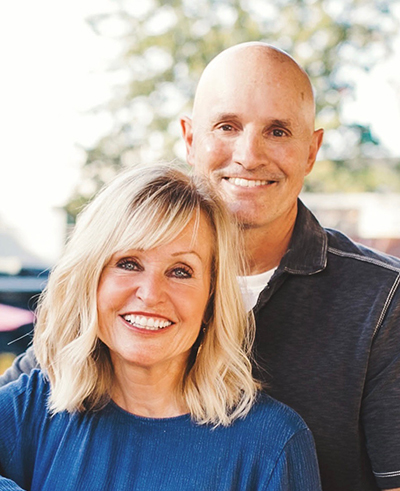
Dave and Ann Wilson
Dave and Ann Wilson are hosts of FamilyLife Today®.. Dave and Ann have been married for more than 38 years and have spent the last 33 teaching and mentoring couples and parents across the country. They have been featured speakers at FamilyLife’s Weekend to Remember® marriage getaway since 1993 and have also hosted their own marriage conferences across the country.
Episode Transcript
FamilyLife Today® with Dave and Ann Wilson – Web Version Transcript
This content has been generated by an artificial intelligence language model. While we strive for accuracy and quality, please note that the information provided will most likely not be entirely error-free or up-to-date. We recommend independently verifying the content with the originally-released audio. This transcript is provided for your personal use and general information purposes only. References to conferences, resources, or other special promotions may be obsolete. We do not assume any responsibility or liability for the use or interpretation of this content.
Healing Father Wounds
Guest:Kia Stephens
From the series:Overcoming Father Wounds (Day 1 of 2)
Air date:June 15, 2026
Kia (00:04):
I’m sitting across from him, and that’s when it hit me. “You don’t know this person. You don’t know what to talk about. You don’t know how to get the conversation going. This is not going to be an 80s TV sitcom.” That’s when it hit me there. I’m a dreamer, so I dream it up in my head. I just expect it to manifest until I’m sitting right there in reality and I’m like, “Oh, it’s not going to be like that.”
Dave (00:38):
Welcome to FamilyLife Today where we want to help you pursue the relationships that matter most. I’m Dave Wilson.
Ann (00:44):
And I’m Ann Wilson. You can find us at FamilyLifeToday.com. This is FamilyLife Today.
Dave (00:58):
All right. So we’re going to talk about, in my mind, a critical topic today.
Ann (01:02):
I think it is, too. I think everybody, at some point, could resonate with this.
Dave (01:08):
I’m not sure we’ve ever talked about specifically this one.
Ann (01:11):
No.
Dave (01:12):
I can remember the first time I heard this phrase, “father wound.” I think late 20s, had no idea I had one, never even thought about it. And I was reading Robert Lewis’s book Raising a Modern Day Knight, and he used that term. And as soon as I read those two words together, I knew immediately it was like, “I have that. I don’t even know what it is. I know I have it.”
So we’ve got Kia Stephens in the studio today. Kia, welcome. First time ever on FamilyLife Today, right? Welcome.
Kia (01:42):
Yes. Thank you for having me, Dave and Ann. It’s a pleasure to be with you.
Ann (01:46):
We’re really glad you’re here. Your book, Overcoming Father Wounds, and I like, too, the subtitle Exchanging Your Pain for God’s Perfect Love.
Kia (01:56):
Yeah.
Ann (01:58):
So many of us, just hearing that overcoming father wounds. I don’t think I knew I had a father wound, but I did. And as Dave started working on his and talking about it and we went to seminary and we got into some counseling classes of how to counsel.
Dave (02:15):
We thought we were going to learn how to counsel others.
Kia (02:18):
When you got counselors, yeah,
Dave (02:20):
We got to dig into our own self.
Ann (02:21):
Oh, and that’s when I started to see like, whoa, I’ve got a bunch of wounds. But for you to write about it, that’s something that has resonated with your heart.
Dave (02:30):
So Kia, tell us what you do. I know you’re with Entrusted Women. What is that?
Kia (02:35):
I started off, I wanted to write a book. I really have wanted to write this book since I was in high school. I felt like the Lord—yep—it’s actually 26 years that the Lord gave me this impression on my heart; because I knew there was a neediness on the inside of me. I couldn’t unpack what that was. So literally, when I was in college, I started working on this book off and on. I graduated, got married, and I discovered a conference for women writers. I was going to take this book there, and I was going to get discovered. I was going to be famous. Let’s all have a good laugh. And I was teaching at the time—elementary school teacher—that’s what my trade is. And so I had my little book baby on an external hard drive.
Ann (03:22):
Your little “book baby.”
Kia (03:23):
My little book baby on an external hard drive. That’s when I discovered—okay, I started to realize it’s about father wounds. I was in the classroom having a meeting with a superior and I go to move my computer from the teacher desk to a student desk, and my little external hard drive with my little book baby was on there. And when I transferred that laptop over to the student desk, the external hard drive slipped out the USB, fell onto the floor, and I had dropped it many times before, but that time I realized I lost everything.
Ann (03:54):
No.
Kia (03:54):
And I literally went into a little depression, but that was God’s sovereignty, and it set me on a path to start blogging. And it was really great, because it gave me an opportunity to engage with the women that I believed I was called to reach. And so I started engaging with them and then got sidetracked with Entrusted Women—you mentioned that—where I saw a lack of minority representation in the Christian writing and speaking world. I would go to these writing conferences. There would be like 10 people there. So I said, “What is a way that I could reach this demographic that’s not being reached and share the information so that more people can get an opportunity to publish a book?” So that was a sidetrack, but it was the very thing that God used to open the door for me to get a book deal.
(04:43):
I speak on that subject and then outside of that, I run around like a chicken with my head cut off because I have teenagers; married for 20 years. Praise the Lord!
Ann (04:58):
A lot of couples are giving marriage whatever time and energy is left after work, kids and everything else and it’s starting to take a toll. I bet a lot of you can relate to that.
Dave (05:10):
I can.
Ann (05:10):
And many are growing spiritually as individuals, but they’re not connecting spiritually as a couple.
Dave (05:16):
As a pastor or leader, you see this tension and it can feel overwhelming trying to know what to do next. You don’t have to figure it out alone. We build some simple tools to help you take that very first step.
Ann (05:29):
And if you’ve wanted to do something for couples but you really didn’t want to build it from scratch, this is a super practical way to move forward. Purchase 10 or more workbooks and we’ll include the full video study. All you have to do is use code StrongFamilies, that’s one word, StrongFamilies through June 30th. Just go to FamilyLifeToday.com and click the link in the show notes and again, just enter the discount code StrongFamilies.
Dave (06:01):
How did this story come? Obviously, it’s a very specific topic, which as you hear it and read it, I think a lot of us go, “Oh boy, I didn’t even know I had this,” but I think it impacts a lot of people. So what’s your story?
Kia (06:15):
My parents got married with little knowledge of each other. My mom was the daughter of a Baptist pastor who was a great man, really well-known in the community, but he was not an affectionate father. I think it starts there, right? Because to say it started with me would be a fallacy. We need to see, “How did we get here?” My mom had the notion that you get married, and it’s just a fairy tale, and it just works out. So she met my father who was actually her waiter on a cruise ship. She went with some of her girlfriends and my father, he’s still a good-looking man. He’s still a good-looking man and he was even more good-looking then. He’s Haitian so he has an accent. He speaks many languages. He knows about food; he’s a chef. So he was really a charmer and my mother was naive.
(07:14):
He’s several years her junior and they struck up a relationship. When the ship docked and he had free time he went with them and they kind of fell in love, kept this relationship going until his tenure on the ship ended and then he moved to the States and they got married.
Ann (07:33):
Wow.
Kia (07:35):
In the living room of my grandparents’ home.
Ann (07:38):
Whoa. So your grandfather married them, probably the pastor.
Kia (07:41):
I don’t know if he married them, but I know that my grandfather had reservation. And so now you have this relationship that’s really set up to fail from the very beginning, and it did. It spontaneously combusted and my parents had a tumultuous end. I was three. I thought I was a baby, but I was actually three and—
Ann (08:05):
Any siblings?
Kia (08:06):
No siblings.
Ann (08:07):
Okay.
Kia (08:08):
I said one is enough. My early memories of my father are at visitation centers. I remember there being cubicles that I would go in, and we would have a time limit. I’d spend time with him, then we’d leave. I have one remembrance of going to his apartment complex and there was another woman there. I remember being in the kitchen looking at them, but I wasn’t really paid attention to. And then outside of that, I have more recollection of him leaving gifts on the front porch of my grandparents’ home, which I appreciate, because I know that that is more than some people received. And I do have one memory of him taking me to get a bicycle. That was the extent of my relationship with my father growing up, which I was okay with. You don’t really know that something is dysfunctional or not the way God intended until you see it up close.
Ann (09:11):
That was your normal.
Kia (09:12):
That was my normal, right? So when I went to college, I remember being in a dorm room of a friend, and I asked her about this bookshelf that she had in there. I said, “Where’d you get that from?” And she said, “Oh, I made it with my dad.” It was like a ton of bricks, because she was saying in that one statement, “I have a relationship with my father, and this is what we did together.” And I hadn’t done anything with my dad. And for whatever reason, it brought to the surface a lot of emotion and pain that I had surrounding my relationship with my father. And I remember just doing my best to not show that I was emotionally shaken up by that and get to my dorm room and just sob.
Ann (10:02):
What do you think it is that you were feeling that made you just break down?
Kia (10:07):
Jealousy, loss, grief is like that. It comes in waves. I wouldn’t have been able to have the language to say I was grieving, but I was grieving what she had that I didn’t have, and I wanted—I simultaneously wanted that and also knew it was probably going to be impossible for me to get it. So then that’s a little bit of acceptance, right, where you have to accept the things you cannot change.
Dave (10:33):
I mean, what’d you end up doing with that? Did you tell anybody or was It just you kept it inside?
Kia (10:39):
I went to someone who was like a mentor for me and told her; and little did I know she also had a situation with her biological father. And so it was so comforting and then she rolls out for me this prescription. I’ll call it a prescription. I’m kind of a prescription girl. I want you to tell me what to do so I can fix this. And if you fixed it like this, then I should be able to fix my situation in the exact same way that you did.
Ann (11:08):
And it probably won’t take long either.
Kia (11:10):
No, you just add water and stir and “Voila!” I wrote this letter to my dad detailing all of the events that I could remember that he missed from kindergarten on up to high school; and “I want you to be in my life. I want us to start from where we are right now.”
Ann (11:32):
When you wrote it and sealed it and sent it, what was your hope?
Kia (11:36):
My hope was that he was going to write me back, and all of a sudden, we were going to have an ’80s TV sitcom relationship, right?
Dave:
The Huxtables.
Kia:
Yep. The Huxtables. I’m a child of the ’80s and I don’t know who didn’t grow up in the ’80s on the Cosby Show—
Ann:
That was our favorite show.
Kia:
—Family Ties, Family Matters, Growing Pains. We see these ideal families, and we see the relationship and the father’s comedic and he’s funny and he’s—
Ann (12:10):
And he’s there.
Kia (12:11):
He’s present all the time. He doesn’t even, he works occasionally. And we live in a really expensive brownstone in New York, but our father is always here. He just occasionally delivers a baby. That’s what I was thinking; that we were going to have that type of chemistry. And I remember he did write me back, but I was always the initiator. I was always initiating.
Ann (12:38):
Well, what did he say when he wrote you back?
Kia (12:41):
I don’t remember much. I remember him saying, “I love you.” I remember him saying, “I love you.” I remember that his handwriting was hard for me to decipher. I mentioned he’s Haitian and he kind of writes like part Creole, part English, part “I can’t read your handwriting.” So I made out what I could. But I remember when I got back home from college, and we went to this Mexican restaurant—my dad loves Mexican food—I’m sitting across from him, and that’s when it hit me. “You don’t know this person. Having a conversation is not going to be easy. You don’t know what to talk about. You don’t know how to get the conversation going. This is not going to be a ’80s TV sitcom.” That’s when it hit me there. But I’m generally, I’m always this visionary, that I’m a dreamer so I dream it up in my head.
(13:37):
I just expect it to manifest until I’m sitting right there in reality and I’m like, “Oh, it’s not going to be like that.”
Dave (13:45):
So what’d you do with that thought? I mean, did it discourage you?
Kia (13:48):
No. I’m a fighter. I am a fighter. So I pursued more. I pursued more. I gave more gifts. I didn’t have any money, but I would take some photos from my mom’s photo album. She had those—you know when you went to Olan Mills? I don’t know if y’all did Olan Mills, and you’d pose. They had the little background that dropped down. I took those, which I know she probably paid a nice little penny for, and I would make gifts for my father.
Ann (14:15):
Come on.
Kia (14:16):
I desperately wanted the ’80s sitcom, and I was going to do whatever I had to do to get it. And so now, in my 40s, that’s why I did it. All of this time I’ve been saying, “I just want you to love me. I just want you to see me. If I do this, will you see me? Will you meet my emotional needs? Will you be the father that I never had? Will you tell me that I’m beautiful, and I’m intelligent, and I’m valued, and I’m wanted?” So I’m just going to do this one more thing because I just want to be loved.
Ann (14:52):
We all want to be loved and seen.
Kia (14:54):
We all want to be loved and seen.
Dave (14:54):
Especially by our dad. That’s where it starts. And he never did?
Kia (15:00):
He does in his own way now. I think that him leaving the gifts on the front porch of my grandparents’ home, that was him trying.
Ann (15:10):
—was his way of trying.
Kia (15:11):
When he bought that bike, that was his way. My father wasn’t fathered.
Ann (15:15):
That’s what I was going to say. Your dad was already handicapped coming in, as most of us are.
Kia (15:21):
Yeah. And my mother wasn’t fathered in the way that would help her to choose wisely.
Dave (15:29):
What did you do with the wound?
Kia (15:31):
I think when you begin to identify that you have a wound, number one, you have a choice. Because I knew with this book, with the title Overcoming Father Wounds, there’s going to be three types of women. One woman is going to—
Dave:
And men, by the way.
Kia:
And men. One woman’s going to be like Dave, that’s going to say, “Oh, I got this. I have a father wound.” Another type would be someone who looks at the book and says, “I have it, but uh-uh, not today, Satan. I’m not going to deal with that.”
Ann (16:04):
Why do you think we do that? Why do we avoid it?
Kia (16:07):
I would say fear.
Ann (16:08):
Me too.
Kia (16:09):
I use this analogy of being in the dark, and there’s a rattlesnake right next to you, but you’re in the dark so you don’t know unless you hear the tail kind of shake. But when you turn the light on, it’s like “There’s a rattlesnake. What am I going to do?” And you can run; you can do all these things. And I think delving into your wounds is like turning the light on. You might kind of know there’s a rattlesnake in the room, but if I don’t turn the light on, I don’t know for sure and I don’t have to deal with it. Similar to your father wounds, like “I think I might have it, but life is okay. Our marriage is, we’re okay. We’re still together. We stayed together longer than my parents did.”
Ann (16:59):
Which is interesting because—Dave, I would say you’re an avoider of conflict. He recognized he had a father. I’m talking for you, but I think you recognized it for sure. But it wasn’t until we got married that anger started popping up. There were consequences of it, and he didn’t know where it was coming from. I didn’t know where it was coming from. And so maybe you’re in that situation you don’t want to deal with, but I would guess that you have certain consequences that are popping up, and it stems back from—
Dave (17:31):
Yeah, you have a sense, like you said, there’s a snake in the room. I don’t want to turn the light on because I don’t want to deal with the snake. And that snake’s not really going to bite me. And then you—
Kia (17:42):
It’s fine curled up in the corner.
Dave (17:45):
But then at some point, you realize, or somebody else sees it—“Do you realize you’re really an angry person?” or you’re whatever; you’re wounded and you’re like, “I have been bitten.” And now you’re like, “Oh, I’m just denying it.”
Ann (18:00):
Ooh, the venom’s in you.
Dave (18:01):
Yeah, and it’s like, I’m pretending I’m good. “Hey, look at me. I’m good. I’m successful. I’m doing this. I’m doing that.” And the whole time, you’re really trying to be loved and seen by your dad. And it’s crazy to think that’s underneath it all. And if you don’t deal with it, you’re going to be a sort of messed up dude.
Ann (18:18):
I like the snake analogy. So number one, “I got this.” Number two is “I have it, but I don’t want to deal with it.”
Kia (18:25):
I don’t want to deal with it.
(18:26):
Yeah. I’ve had a lot of women say that actually like, “Oh, uh-uh.” I think it’s scary. It’s just so scary to unpack what you didn’t receive and to find out, “Oh, this is why I’m like that. I’m needy. I’m desperate.” “I was desperate in my first marriage. That’s why I married him.” “I was desperate in college. That’s why I dated him.” Or “I have trust issues. I don’t trust men. I don’t trust God. I don’t trust—” It’s scary because I think we generally have a pretty inflated view of ourselves. We don’t have a sane assessment. And so to be told “Not only do you not have a sane assessment, but here’s the long laundry list of everything that you are dealing with—and it does tie back to your family of origin.”
Dave:
Oh yeah.
Kia:
That takes courage. That takes a willingness to dig in deep.
(19:28):
And I remember going to a counselor, she says to me, “Have you written a forgiveness letter to your father?” I looked at her like, “Lady, first of all, he wasn’t even there, and I came to you for another issue altogether.”
Ann (19:47):
Why are we going to this?
Kia (19:48):
“Why are we talking about this?” But I had access to a forgiveness letter template. And so I take this template home, and I follow all the steps and write it to my dad; and I realized, “I cannot get through this.” When I got to the part where I was talking about “I wanted him there,” I really wanted my dad there to interrogate the dates and these relationships that I found myself in when I was middle grades and high school, because I have regrets about that. It’s like, “Why did you do that?” I wanted him to be there to say, “No, you don’t know her value. You don’t know her worth. You can’t hold a candle to her. You should not be here.” I wanted him to be there for that. And when I got to that part in the letter, I sobbed. I sobbed. Once I finally got through writing it, I dragged this chair into my bedroom. And it’s the empty chair technique that counselors use, and I read the letter to my dad. It was very cleansing for me, and healing for me, to do that.
(21:00):
I can’t say that it got rid of all of the sorrow and all of the grief, but it was a huge dent in my grieving process. A lot happened there for me.
Ann (21:15):
I think that’s really wise. I’m just imagining our listeners, one, some are thinking, “I do have this. I haven’t wanted to deal with it, but I could do that letter, and I could pull a chair into the room, and I could read that letter to my imaginary father sitting in the chair.” I think that would do a lot of good.
Dave (21:37):
Yeah, I think it’s a start.
Ann:
Yeah.
Kia:
It’s a start.
Dave:
Because you think it’s like, “Okay, wrapped up! Now I can move on.” And it’s a step. And I think tomorrow we got to talk about, “Okay, so what’s healing look like?” And I’d love to hear you talk about how did this affect your marriage?
Ann (21:55):
I think if you do the healing letter, I would read the letter, but I’d also talk to your Heavenly Father.
Kia (22:01):
Definitely.
Ann (22:02):
And talk to Him about like the truth of what you have lost and what you feel. You’re saying it to your dad, the dad that’s not sitting in the chair, but you’re reading it to him. But I think, too, to talk to God and to be honest with Him and to say, “This is what I lost. This is what I missed. This is what I didn’t have.” And then just sit for a minute and let Him, because He hears every one of those prayers. He catches every one of those tears. He knows those moments when you were four years old and your dad wasn’t there, and when you were a teenager and there was no male authority figure to look at you and say, “You are beautiful and I am here for you.” He’s always been.
Kia (22:45):
I couldn’t agree with you more, Dave and Ann. I think that’s been a beautiful part of the journey: learning what it looks like for God to be your Father. I grew up in the Baptist church so I’ve heard these statements of like, “God is a father to the fatherless.” It’s kind of like trite because you’ve heard it so much, and it seems ambiguous and impossible to achieve. But as I’ve continued to be brutally honest with the Lord, and share my thoughts and my feelings, and sit in silence or just cry, mulling over Scriptures that say, “I knew you in your mother’s womb. I formed you. I know how many hairs are on your head.” Those things are very comforting for me, knowing that I can share my feelings with God. We don’t serve a God that’s static. We serve a God that’s not afraid of our emotions or intimidated by them, and He’s not going to say, “You’re too emotional. What are you doing?
(23:50):
You’re crying again about that same thing?” which is what some of us have experienced, right?
Dave (24:00):
Man, what a great day with Kia Stephens talking about what a topic, Overcoming Father Wounds: Exchanging Your Pain for God’s Perfect Love. Who doesn’t need to do that?
Ann (24:12):
So good. And we’re going to hear her again tomorrow, but you can get a copy of her book just by clicking the link in the show notes at FamilyLifeToday.com.
Dave (24:21):
We meet a ton of couples who say FamilyLife helped them when they needed it the most. And that’s what being a FamilyLife Partner is all about, helping others find that same encouragement and tools that you found right here.
Ann (24:34):
And we’d love for you to join us. So click the donate button at FamilyLifeToday.com and become a partner today.
Dave (24:45):
FamilyLife Today is a donor supported production of FamilyLife®, a Cru® ministry, celebrating 50 years of helping you pursue the relationships that matter most.
If you’ve benefited from the FamilyLife Today transcripts, would you consider donating today to help defray the costs of producing them and making them available online?
Copyright © 2026 FamilyLife. All rights reserved.
www.FamilyLife.com