

How Churches Can Include Single Parents: Ron Deal and Gayla Grace
What if the families who feel like “misfits” in church are actually the majority? Therapist Ron Deal and author Gayla Grace explore the pain of exclusion, sharing practical, gospel-centered strategies for how churches can include single parents. From language tweaks to small groups and intentional hospitality, this episode inspires hope, challenges assumptions, and equips leaders and volunteers to create a church where every family feels truly seen.


Show Notes
- Find Ron and Nan's book, "The Mindful Marriage: Create Your Best Relationship Through Understanding and Managing Yourself" in our shop.
- Join us for our yearly Blended and Blessed event, go to blendedandblessed.com
- Find more blended resources at familylife.com/blended
- Find resources from this podcast at shop.familylife.com.
- See resources from our past podcasts.
- Find more content and resources on the FamilyLife's app!
- Help others find FamilyLife. Leave a review on Apple Podcast or Spotify.
- Check out all the FamilyLife's podcasts on the FamilyLife Podcast Network
About the Guest
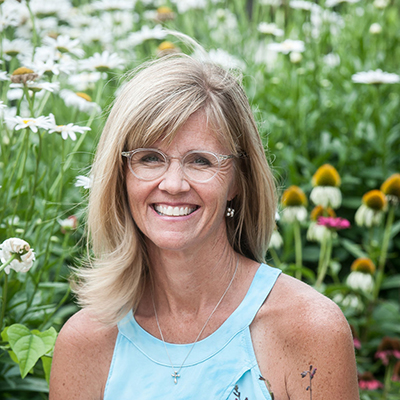
Anna Meade Harris
Anna Meade Harris is the Senior Director of Content at Rooted, co-host of the Rooted Parent podcast, and the author of God’s Grace for Every Family: Biblical Encouragement for Single Parent Families and the Churches That Seek to Love Them Well (Zondervan, 2024), winner of Christianity Today’s 2024 Book Award in the Marriage, Family, and Singleness category. She and her husband Tom are members of Church of the Cross in Birmingham, AL. Anna enjoys gardening, great books, running, hiking, ice cream, and spending as much time as possible with her three grown sons. She wants to live by a mountain stream in Idaho someday.
About the Host
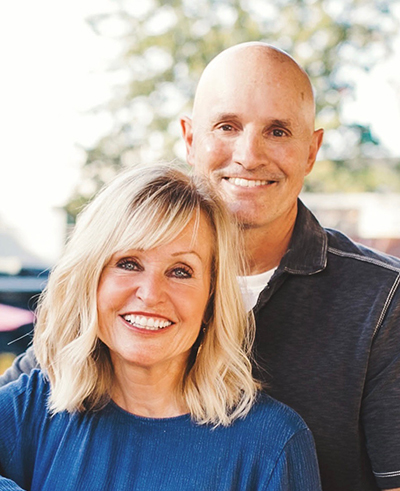
Dave and Ann Wilson
Dave and Ann Wilson are hosts of FamilyLife Today®.. Dave and Ann have been married for more than 38 years and have spent the last 33 teaching and mentoring couples and parents across the country. They have been featured speakers at FamilyLife’s Weekend to Remember® marriage getaway since 1993 and have also hosted their own marriage conferences across the country.
Episode Transcript
FamilyLife Today® with Dave and Ann Wilson – Web Version Transcript
This content has been generated by an artificial intelligence language model. While we strive for accuracy and quality, please note that the information provided will most likely not be entirely error-free or up-to-date. We recommend independently verifying the content with the originally-released audio. This transcript is provided for your personal use and general information purposes only. References to conferences, resources, or other special promotions may be obsolete. We do not assume any responsibility or liability for the use or interpretation of this content.
How Churches Can Include Single Parents
Guests:Anna Meade Harris, Ron Deal, and Gayla Grace
From the series:How Churches Can Include Single Parents (Day 1 of 1)
Air date:January 27, 2026
Ron (00:04):
Here’s the thing that I think we need to ponder and, maybe, shift in how we do church. For years, we sort of said: “Let’s put the married young couples over here,” “Let’s put the married, with teenagers, over here,” “Let’s put the single parents over here,” “Let’s put the singles in a singles group.” We divided everybody up. I think the strategy needs to shift. I think we ought to give people opportunities, for example, in small groups or Sunday school classes to be with lots of different kinds of people.
Ann (00:41):
Welcome to FamilyLife Today, where we want to help you pursue the relationships that matter most. I’m Ann Wilson.
Dave (00:48):
And I’m Dave Wilson. And you can find us at FamilyLifeToday.com. This is FamilyLife Today.
Dave: Alright; it’s a fun day!
Ann (01:02):
It’s a fun day. You know why?
Dave (01:04):
Well, I want to know what you think a fun day is.
Ann (01:06):
It’s having Ron Deal and Gayla Grace with us. That makes a really good day.
Dave (01:10):
That’s what I was thinking, too.
Ann (01:11):
Were you?
Dave (01:12):
Yeah. I wonder if they’re thinking it’s a fun day. What do you guys think, Ron and Gayla?
Gayla (01:17):
Absolutely; it’s a fun day, Dave.
Dave: What else are you going to say?
Ron (01:20):
It will be interesting, for sure.
Ann: …”interesting”; that’s a good word.
Dave (01:24):
Yeah. Well, for those of you who don’t know; which means, I don’t know where you’ve been hiding; because everybody knows that Ron and Gayla lead our blended ministry, here, at FamilyLife. We love having you guys on. Again, I don’t know if you love having us on; but it doesn’t matter, because we’re hosting you today.
Honestly, we want to get your feedback on a show/a broadcast we did recently with Anna Meade Harris, who wrote a book about being a single mom and how that is sort of received by the local church. Her book was called God’s Grace for Every Family: Biblical Encouragement for Single-Parent Families and the Churches That Seek to Love Them Well.
First of all, when you hear that, what are your first thoughts about churches and single parents or blended families?
Ann (02:18):
—or singles?
Ron (02:19):
Yeah, my first thought is, “Absolutely; I’m so glad she wrote that book.” For a long time, I’ve said, “Single-parent ministry and stepfamily ministry are cousins. They are close cousins because it’s one phase that leads to another phase in people’s worlds and lives. Blended families often have children who move between their home and a single-parent home. The gap between what the church is able to do—and how it responds to singles, single-parents, divorced, widowed, never-married, whatever the backstory is—there’s a big gap there. As evidenced by the Barna “State of the Family Report” that came out last fall. FamilyLife was a co-sponsor on that major study that basically affirmed, Dave and Ann, what Gayla and I have been saying for a decade now; and that is: “The non-traditional family is the new traditional family,” and “The church is way behind in terms of how it connects to, supports, and involves ministry on behalf of families in a variety of contexts.” It’s a very important matter.
Gayla (03:24):
What I keyed on was the title had the word, “grace,” in it. When we talk about singles, single-parents, blended families—with the church—grace needs to be a part of that. Oftentimes, it’s not. It’s easy to feel marginalized within the church when you’re in a non-traditional family. We need to feel that grace.
Ron (03:50):
—instead of judgment?
Gayla: Yes.
Ann (03:51):
Let me ask you, Gayla, because you were a single mom for a while; and now, blended. When you went to church after you became a single mom, did you feel a little different or ostracized at all?
Gayla (04:05):
Absolutely. Some of it we bring on ourselves because we know, particularly for me, I had walked through divorce. I know what the Bible says about divorce. You begin to speculate as to what other people around you are thinking; maybe, even what they’re saying about you. Automatically, you go into a place of feeling a little perhaps ostracized or, at least, marginalized.
Ann (04:31):
Maybe we, as individuals, don’t feel that or haven’t gone through that. We definitely have friends and family who have faced that, and it’s relatable.
Gayla (04:39):
Right.
Dave (04:39):
Let’s play a little bit of the clip. I’d really love to hear your thoughts; you work every day with people living a similar life to what Anna experienced. Let’s hear this clip; and then, I’d love to hear your feedback.
[Previous Interview with Anna Meade Harris]
Ann (04:54):
I’m thinking of you walking in to church the first time, whenever that was, after Jeff had passed away. You’re sitting there without him; what’d that feel like?
Anna (05:07):
Terrible; I was also the only single mother in the church.
Ann (05:13):
Oh, did you feel that?
Anna (05:15):
Oh, yes. Our pastor was so attuned to it; and they really, really looked out for me. I tried the Sunday school classes, and it’s just hard. You go in a class and the topic is marriage. You’re like, “Okay, I’ll go to a different class.” I’ll go to that class, and everybody’s 25 years older than I am. I often found myself going to sit in the church library by myself, which I would have a wonderful time. It was interesting because other people, who didn’t feel comfortable in classes, started navigating [there]. We ended up with a class of our own, who are privately thought of as “the misfits.”
Dave (06:06):
They weren’t all single parents. They were just—
Anna (06:08):
No; a lot of them were single adults,—but they just didn’t fit—
Dave: —somewhere.
Anna: —people who didn’t feel like they had a place to go during the Sunday school hour, so we had our own class; that was wonderful fellowship.
But sitting in the actual service, it just hurts when things—sometimes, the announcements—someone would get up to make the announcements. I remember this one so clearly: “The family retreat is coming up in a couple of weeks, and we’ve had
37 couples sign up.” I had been considering going to the family retreat. I was a little bit: “Where am I going to sleep?”—versus my kids—opposite sex; all that kind of thing. But I heard 37 couples signed up, and I probably—I know I shouldn’t have reacted this way—but I thought, “Uh-uh, I’m not—
Dave (06:59):
You’re not going to be the one who’s—
Ann (07:02):
—“I’m the misfit again.”
Anna (07:03):
“I’m the misfit again: ‘Where am I going to sit at mealtime?’” And it’s not that going and sitting—I’m an adult; I can go sit at a table with a bunch of couples—but it is, frankly, tiring. Everything is a struggle; everything is hard; you’re doing everything alone. It would be really nice if church was more aware that everything is a struggle and everything is hard.
Dave (07:28):
Do you think it’s better now than when you were sitting there?
Anna: [sighs]
Dave: The answer’s, “No”; I’m a pastor; I know.
Ann: —based on the sigh.
Dave: That’s why I apologize; it’s like, “Oh, my goodness; I think I had a blind spot.”
[Studio]
Ron (07:44):
Dave and Ann, as I listen to that, my first response is: “My heart just aches. I can relate to it—in which, I think a lot of listeners or viewers can relate to something in their life; a time in their life; a season; perhaps, a circumstance—where you felt alone in your experience, sitting in church with a whole bunch of other people. For me, it was going back to church after my 12-year-old son passed away—and just feeling completely isolated—and not knowing who to talk to, or how to engage other people, and not really connecting to what was happening around me. That whole misfit experience, I think, is really real.
Gayla (08:28):
And it’s just very isolating. It’s so easy to, all of a sudden, feel like, “I don’t belong here.” And that’s the most dangerous thing—that’s not the message a church wants to send—but that’s where we go.
Ron (08:41):
What we tell people in our ministry is: “You’ve got to go the extra mile to build a bridge that says to people, who might—not everybody feels this way, but they might feel like they’re an outsider: ‘I don’t know where I fit,’ ‘I’m sure if I’m welcomed here,’—all those kind of self-doubt questions that people ask. You go the extra mile to make it really clear that they’re welcomed; they belong; they’re part of this.”
Ann (09:05):
What does that look like, Ron?
Ron (09:07):
Well, let me give you a very concrete example. As she was talking about the experience of: “Okay; look who’s signed up for the family retreat: 37 couples.” Couples equals family—that’s the clear message—and she heard it loud and clear. It’s like, “Oh, then, me, as a single parent, I guess that’s not for me; I’m not going.” Well, that may not be what they intended to say, but that’s what came out.
Twenty years ago, when I left full-time church work, the last family retreat that we did—I was the marriage and family pastor—we did a family retreat, in which we specifically said, “This is family—as in all singles, never-married—you are welcome to come on this retreat. We want all our single parents to come. We’ve made provision; if there’s any cost, we want to help cover that for you. (09:52) We want all of our married couples and families—if you’ve got teenagers; if you’re an empty nester—you know what? This is really a church retreat. If you’re breathing, you’re a part of a family; and we want you to come to this retreat.”
And then—oh, by the way, we orchestrated the time—not broken up into: “Okay, single parents, you’re over here in this room,” and “First-time married couples with children under the age of five, you’re in this room,”—we didn’t do that at all. We put people together in their class discussions; we put them together in their activities. We made sure we orchestrated togetherness, because that’s what the church’s intended to do. We have to be intentional about orchestrating those sorts of bridges of grace to one another so people know they belong, feel welcomed and want to be a part.
Dave (10:38):
Some churches don’t say things like that from the stage. Why do you think that’s true?
Gayla (10:44):
Well, I think it’s just simply that they don’t know. But here’s where the reality is, Dave: those of us, who are in non-traditional families, then we need to be the one to speak up. I’ve gone to my pastor after Mother’s Day, and said, “Please don’t ask mothers to stand up on Mother’s Day, because stepmom’s don’t know what to do.” We have to take initiative to go to those in leadership, and say, “Please start talking language that can relate to everyone.” My pastor was happy to change their language; it’s just a matter of they needed help being educated.
Ron (11:20):
Back to your question, I don’t know exactly. I think it depends—church to church, pastor to pastor, what the reasons are—but I do think, sometimes, we’re so cautious about not offending people that we end up doing nothing. I think it can have the opposite intended effect; we inadvertently alienate when we really want to try to create openness. Really, pastors have big hearts; we’re not knocking pastors. You want to be the church—you want to be reaching out—but you have to go the extra mile.
Let me give you an example: recently, I’ve run into a situation, consulting with some churches about marriage and family ministry, where they say: “Oh, no; we don’t bring up things like we don’t do couples events,” “We don’t do special things on Mother’s Day or Father’s Day, because not everybody’s a mother; because not everybody’s married, and we don’t want the singles to feel left out; so we don’t do marriage events at all.”
I’m like, “Whoa, okay, hold on. Everybody’s thinking about relationships, whether they’re married or not married. Someday, they might be in one; or maybe, they were in one and they’re still trying to process where they were. I think what you do is you just go out of your way to say to people: ‘You’re welcome to be a part of this. This thing might not pertain to your family; but in two months, we’re doing a thing that for you that does.’” Instead of being afraid, and doing nothing, I think we need to be proactive and invite and welcome everyone.
Ann (12:45):
Gayla, let me ask you: “Could you coach us?” Because I know that Dave has had people approach him, as a pastor, saying, “Hey, I feel like you’re missing us.” Coach people on how they could say something. I guarantee so many have felt that label of being a misfit—or not sure; maybe you’re thinking, “I’m just attending; I’m nobody. I’m not going to go bother the pastor,”—but how would you approach a pastor if you feel like, “Yeah, I feel like we’re missing this in the church”?
Dave (13:16):
And this wouldn’t just be for pastors. This advice would be for anybody. We can miss it in our neighborhood or in our small group. You don’t have to be a pastor to not know how to include.
Gayla (13:29):
Yeah, I think you always want to start with some kind of gratitude, though, to make sure that they don’t feel like we’re just dogging on them. For instance, with my pastor, I said: “Thank you for wanting to recognize moms. Can we extend it a little bit and also realize that we’ve got adoptive moms; we’ve got foster moms; we’ve got stepmoms; we’ve got grieving moms—we’ve got all kinds of moms—let’s just extend our language to a larger audience.” That speaks volumes. But we just need to be careful that they don’t feel like, “Well, I am never going to get it right; so I’m just going to avoid it all together,”—which is what Ron is saying. It’s a matter of giving them some language that can help.
Ron (14:09):
Guys, let me jump in here. I think, sometimes, pastors just don’t realize the numbers. One of the things we found in the Barna study—we know blended families are a large percentage—but did you know that, in the Christian community today—listen to these numbers from the recent study that we helped co-sponsor—more than a quarter,
28 percent, of all parents are single parents; 28 percent. That has more than doubled since 1950. The family has changed. The typical structure is very different in the average church than it was.
But listen to this: if you drill down, and you go, “Okay, of parents who have children under the age of 18—so they’re really in the child-rearing years—the number goes up to 41 percent are single parents. We cannot—
Gayla: —ignore that.
Ron (14:56):
We cannot ignore that. I’ve used this example before: if somebody walked into your church, and said, “Well, we don’t know what just happened; but half your church went blind. You can’t just hand out regular Bibles anymore. You’re going to figure out…” We would go way out of our way to get Braille Bibles available for everybody who needs the word of God. Forty-one percent is a big number when you’re talking about parents raising children; that’s just reality.
Again, I always say, “People, if that’s not the composition of your church, it is the composition of your community around your church. So if you have any sort of outreach mentality,”—which I hope you do—”you’re going to go; we need to be relevant fast. We need to figure out ways of saying, ‘You’re not a misfit. This is your home; this is where you belong.’” Or rather: “We’re all spiritual misfits. We’re all bathing in the blood of Christ and enjoying His grace. Come join the party; you belong here.” That message is so important and powerful.
Ann (16:01):
You’re listening to FamilyLife Today. I’m Ann Wilson. And before we continue with our conversation, I just want to remind listeners: we know life is full of challenges, and families today need biblical truth more than ever. Isn’t that true?
Dave (16:15):
That is true.
Ann (16:17):
And as a FamilyLife Partner, your monthly gift helps bring the truth into homes every single day through podcasts, events, and resources.
Dave (16:26):
So let’s make a lasting difference together. Become a Partner today. Just go to FamilyLifeToday.com and click the “Donate” button.
Ann (16:38):
Ron, help us—and you, too, Gayla—how can we, as a church, what could this look like? In that library, suddenly, you have a lot of blended, single; should there be classes? What can we be doing that would be different?
Ron (16:54):
Guys, I got so many thoughts about that. Let me just hit a couple of them.
First of all, think over your entire church calendar year, you’re not saying: “We’ll never do a marriage thing, and drill down into the grind of marriage; because it doesn’t include everybody,”—no, no, no. Couples need that; they absolutely need that. But then, so do single parents need somebody to drill down into that experience of being an alone parent in your home, and everything’s on your shoulders, like: finances, and decision-making, and all that kind of stuff. They need that. It’s over the course of the year: “We’re going to try to minister to this group, and this group, and this group.”
But here’s the thing that I think we need to ponder; and maybe, shift in how we do church. For years, we sort of said “affinity groups”: “Let’s put the married young couples over here,” “Let’s put the marrieds, with teenagers, over here,” “Let’s put the single parents over here,” “Let’s put the singles in a singles group,” and “Well, if you’re college age, that’s different than a 20-something or early 30-something.” We divided everybody up. That sort of worked, I think, in church life. I think maybe it worked because we had a larger group of married couples raising kids; and then, everybody else was sort of a smaller little [group]. I don’t think that’s the composition of churches anymore.
(18:14) I think the strategy needs to shift. I think we ought to give people opportunities—for example, in small groups or Sunday school classes, to be with lots of different kinds of people—let me tell you: single parents have something to say to married couples, like: “You couples complain a lot about each other. You need to learn some gratitude for the person that you get to lie in bed with every night, and talk about life, and make decisions”; “I don’t get that.” There’s a perspective that everybody has to share, where iron sharpens iron.
You got single adults sitting in a room with couples. Everybody’s learning how to put on self-control—about single sexuality, about married sexuality—there’s a commonality there we don’t need to avoid. I think we need to learn from each other and be in relationship with each other. I actually think that will help close the gap for single parents, who maybe have financial issues; and they feel unseen or they don’t feel like they belong. Mixing—no more affinity division—but more of a collaboration, maybe, is a way to say it.
Ann (19:16):
So Ron, are you saying, “Don’t hide out in the library”?
Ron (19:18):
That is what I’m saying. I want to say something about that—here’s what I would say about that—if your church is not doing anything to minister to where you are, go rogue, just like Anna did. She went rogue; they created their own thing. Guess what? You can get it done. You don’t have to always wait on permission to become a church on the move; if you will, a group of people on the move. Hopefully, you could work within your church structure; that would be the most ideal thing, because more people will be blessed by it then.
Gayla (19:48):
Yeah, that’s what I was going to say. There’s not a one-size-fits-all, because every church has a different structure. I do think that we need to be sensitive to: “Do you have small groups that meet at a certain time?” We’ve always said: “For blended family couples and single parents, you need childcare if at all possible. If you want these people to attend—and it’s a Wednesday night, but there’s no childcare—you might’ve missed the mark right there.”
Ron (20:11):
Guys, let me just add this to our conversation today; I think this needs to be said. Let’s jump around the other side. There may be somebody listening with a little hesitation: “I don’t know about the single parent thing,” or “We help people in that situation; we might end up with a whole lot more single parents; because somehow, we’re giving permission to that.” No, no, no, no, no, no; what we’re doing in the church is redeeming the transitions that are hard for people that make or break their spiritual walk with the Lord. We all know single-parent families attend church at a far lower rate than anybody else. Why? Because you’re hurting; you’re struggling; it’s hard. You’re wrestling through stuff; you’re not sure you belong anyway. You feel like a misfit.
Ann: You’re exhausted.
(20:57):
Ron: It’s just easier not to go! Exactly; all of those things. So instead of that dynamic, we’re making room for people, and we’re saying, “We’re not blessing sin,”—never, ever, ever. All of this stuff we’re talking about today is coupled with good biblical teaching on following God in obedience; and “Here’s what He has in store for us…” “Here’s the ideal; here’s what we’re moving towards”; and yet, “The real is: life is hard and difficult. We’re going to get in the trenches with one another,”—that’s church.
I think, within a generation, we’re reversing the trends. Instead of having more of this, or that, or the other thing, we’re having more and more people who are walking with God; and children who are growing up in homes, where they feel like they are loved in the body of Christ. That’s how lives get changed.
Ann (21:36):
I’m wondering, you guys, if you could just close by exactly what you’re saying, Ron. I think there’s a lot of shame involved—if you’ve been through a divorce; if you’ve—there’s just feelings of feeling inadequate; or maybe, “I feel like I failed,” or “I’ve been betrayed.” Can you just talk to those individuals as we close, of just reminding them of how God sees them?
Gayla (21:58):
I think about what you have often said: “There are no second-class citizens. We’re all first-class citizens in need of a cross. We are all full of sin. We all are striving for living life as God would call us to, but we’re not going to get it right.” And the more that we allow others to see that part of our heart that is broken, the more that we can minister and come together in the body of Christ. I think a lot of it is just transparency, vulnerability, letting your guard down. It’s okay that you’re broken, because somebody else is broken, too, in a different way. Just don’t hide it.
Ron (22:40):
Yeah, that’s it; at the foot of the cross, the ground is level. Nobody is elevated up towards Jesus more than somebody else. We’re all the same. And that perspective is very important for people who, from the outside, look really good. They need to remember a humility about their world and their life and that they need the blood of Jesus just like anybody else. Your sin may not be that person’s sin, but it’s sin. And that’s me; that’s you. That’s all of us. As long as we keep that perspective, then we’re going to be open to people; we’re going to say, “You’re in a time of need; you belong here.”
Ann (23:20):
“God loves you; He’s with you.”
Dave (23:23):
Yeah. I think, as you’ve already said, I think we need to always remember: they’re going to feel that mostly from us, the people in the pews—not just the pastor or the church—but the people of the church: “What do they feel like?” Gayla said it earlier, the title of the book is Grace: “Are they feeling judgment?” “Are they feeling grace?” If we want them to know what Jesus thinks, it’s got to be resembled in how we look, and say, and treat them.
Speaking of extending grace to blended families, do you have anything going on, ministry-wise, for blendeds?
Ron (23:58):
Oh, yeah. Gayla and I will both be a part of our next Blended & Blessed® that happens every spring. It’ll be April 18 this year; we’ll be in Oklahoma City. And get this punchline: it’s free! If you’re in person, you got a little fee; so you can buy lunch, $10. But if you’re online, the virtual version of Blended & Blessed, which means a livestream, worldwide, anybody can participate anywhere. Churches can host it and put a bunch of people in the room for free.
Dave: Wow.
Ron: This is the best it’s ever been, and we’re so excited to be able to offer that to churches and to couples. You can get the link for Blended & Blessed: just click the show notes, and it’ll get you connected.
Dave (24:39):
That’s at FamilyLifeToday.com.
Ann (24:47):
FamilyLife Today is a donor-supported production of FamilyLife®, a Cru® Ministry.
Helping you pursue the relationships that matter most.
If you’ve benefited from the FamilyLife Today transcripts, would you consider donating today to help defray the costs of producing them and making them available online?
Copyright © 2026 FamilyLife. All rights reserved.
www.FamilyLife.com