

How Do We Pass Our Faith to the Next Generation?: Collin Outerbridge
You carted them to church. Youth group. Maybe even the mission trip. So why are so many kids leaving the faith once they start thinking for themselves? Dr. Collin Outerbridge has studied unchurched and de-churched Gen Z—and he’s a dad in the thick of it. He joins Dave and Ann Wilson to unpack what’s competing for your kid’s heart and how parents can respond before, “I don’t believe this anymore.”


Show Notes
- Learn more about Dr. Collin Outerbridge and Nona Church.
- Listen to Collin Outerbridge’s podcast: pod.link
- Watch Collin Outerbridge’s Kids These Days series on YouTube.
- Learn more about how digital screens influence us: familylife.com.
- Find resources from these episodes: shop.familylife.com.
- Find more content and resources on the FamilyLife app: familylife.com/app/.
- Leave a review for FamilyLife Today on Apple Podcasts: podcasts.apple.com.
- Listen to and review FamilyLife Today on Spotify: open.spotify.com.
- Explore the FamilyLife Podcast Network: familylife.com/podcast/.
- Weekend to Remember marriage getaway: weekendtoremember.com.
- Thanks to the Christian Standard Bible for sponsoring this episode. Learn more at CSBible.com.
- Follow us on all social platforms: Facebook | Instagram | YouTube
- Find resources from our podcast at shop.familylife.com.
- Download FamilyLife's app!
- Help others find FamilyLife. Leave a review on Apple Podcast or Spotify.
- Check out all the FamilyLife's podcasts on the FamilyLife Podcast Network
About the Guest
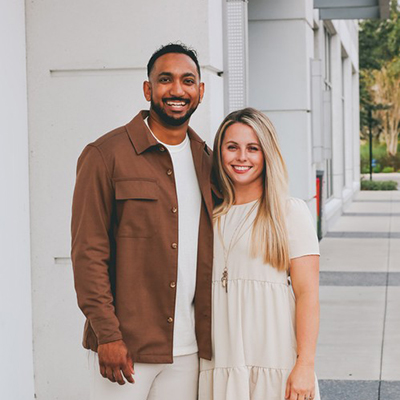
Dr. Collin Outerbridge
Collin and Stacey planted Nona Church in Orlando, Florida with a heart to build a diverse community of faith to serve the Lake Nona Community. The son of Caribbean immigrants and a southeast Orlando native, Pastor Collin is passionate about creating churches that are multicultural and multi-generational, reflecting the diversity of our city.
Pastor Collin received his M.A. from Fuller Theological Seminary in Pasadena, CA and holds his Doctorate of Ministry with a dissertation focus on Generation Z and the future church.
Pastor Collin and Stacey are childhood sweethearts and the proud parents of their four children.
About the Host

Dave and Ann Wilson
Dave and Ann Wilson are hosts of FamilyLife Today®.. Dave and Ann have been married for more than 38 years and have spent the last 33 teaching and mentoring couples and parents across the country. They have been featured speakers at FamilyLife’s Weekend to Remember® marriage getaway since 1993 and have also hosted their own marriage conferences across the country.
Episode Transcript
FamilyLife Today® with Dave and Ann Wilson – Web Version Transcript
This content has been generated by an artificial intelligence language model. While we strive for accuracy and quality, please note that the information provided will most likely not be entirely error-free or up-to-date. We recommend independently verifying the content with the originally-released audio. This transcript is provided for your personal use and general information purposes only. References to conferences, resources, or other special promotions may be obsolete. We do not assume any responsibility or liability for the use or interpretation of this content.
How Do We Pass Our Faith to the Next Generation?: Collin Outerbridge
Guest:Dr. Collin Outerbridge
From the series: Why Kids Leave the Faith—and Can Parents Do Anything About It? (Day 1 of 3)
Air date: September 28, 2026
Dave (00:04):
So job one for every Christian parent is what?
Ann (00:09):
Raise your kids to love Jesus.
Dave (00:11):
Yeah. I mean, I think every Christian parent—oh, you lay in bed at night, you pray, you fret, you worry, you’re anxious, especially in this day and world: “What do I need to do? How do I need to be to have a son or daughter who, when they’re 20, when they’re 18, when they’re 16, they’re standing for Christ?”
Ann (00:27):
I think every parent longs for, prays for it, and so this is your segment today. You’re going to be really excited about our series today.
Dave (00:41):
Welcome to FamilyLife Today, where we want to help you pursue the relationships that matter most. I’m Dave Wilson.
Ann (00:47):
And I’m Ann Wilson. And you can find us at FamilyLifeToday.com. This is FamilyLife Today.
Dave (01:00):
We’ve got a doctor in the house, Dr. Collin Outerbridge?
Collin (01:06):
Yeah, Outerbridge. Outer like space, bridge like the Golden Gate.
Dave (01:09):
And you are a doctor in what we’re talking about today.
Collin (01:12):
Yeah.
Dave (01:12):
Talk about your dissertation.
Collin (01:13):
My wife and I planted a church a couple of years ago with a real passion and desire to reach the next generation. And we wanted to learn a bit about what the research shows that the next generation is looking for in a kind of community and a kind of church. And so we decided to focus that effort, not just in planting a church, but also by understanding academically, what does the next generation need? And so I wrote my dissertation on looking at unchurched and dechurched Gen Z communities across the country. And we identified some key characteristics that would be helpful in connecting them to the good news of Jesus.
Ann (01:48):
Collin, were you surprised when you were studying this, when you’re going over the stats that are coming up, were you surprised at all or were you thinking, this is what I kind of figured?
Collin (01:57):
Yeah. I think in my pastoral work, what we saw anecdotally was confirmed academically.
Ann (02:03):
Okay.
Collin (02:03):
When the research identified these clear points of disconnection for the next generation, it was helpful in that it created a dynamic where we could think strategically about creating the kind of community that people that are still spiritual, still interested in faith and maybe disinterested in church might be able to find the kind of community they were looking for.
Ann (02:24):
And are you guys, you and your wife, are you thinking about this for your kids because you’ve got four?
Dave (02:29):
I mean, it’s personal.
Collin (02:29):
Oh yeah, absolutely. We feel like we’re right in the middle of it, trying to help our kids discern and navigate a new world and a new culture that is very different than the one that we grew up in. And we’re trying to think about how to create the conditions where they can see and follow Jesus and know that it’s not only a courageous thing to do, but the best thing to do for their life.
Dave (02:51):
So as you think through, Ann and I watched you give a series on this whole idea, but I’m guessing a lot of what you said in that series—and we’re going to talk through some of those ideas—came from what you learned in your dissertation. What are some of the things you jumped out of that?
Collin (03:05):
Yeah, absolutely, absolutely. I think there’s a lot of research right now around why young people are disconnecting from church, maybe deconstructing their faith and perhaps even de-converting. But I don’t find that there was a great theological framework for how parents can understand the playbook that’s being utilized to lead to those types of undermining moments in faith for kids. Parents need a framework that allows them to be able to understand, discern, and put language to what’s actually happening to their kids. I think it can be so disorienting, right? When your kid comes home and says, “Hey, I’m not sure I believe in this anymore,” and they were the youth group superstar, right? Or they go to college and they say, “Hey, I think I’m out on faith,” and you went on a mission trip with them when they were kids.
Ann (03:54):
Oh you remember they were seven and they gave their life to Jesus. Now they’re like, “I don’t even know.”
Collin (03:58):
Yeah. And you had the privilege of being a part of that story. And so I think what can happen sometimes is that parents can feel like they’re getting hit by a ton of bricks with this news and with this information. And so the question that I’ve been asking is what does it look like for us to get upstream? What does it look like for us to identify what’s happening in the lives of our kids? So that way as parents, we can help them navigate that in a way that’s proactive as opposed to reactive.
Dave (04:23):
So that’s where the idea for the series came.
Collin (04:25):
Yep.
Dave (04:26):
So walk us through a little bit of, you’re back in the Old Testament, you’re looking at a king called Nebuchadnezzar in Babylon. Tell us where that came from.
Collin (04:34):
One of the key things that we were discovering is as parents are responding with fear about the news that they’re getting about their kid walking away from faith, we began to evaluate the scriptures and say, “Okay, is this new or is this old?”
(04:50):
And there’s a belief that we have that the enemy, our enemy is not a creator. Our enemy is a copycat. As we thought about that, the question then became, okay, does God give us a clue or a framework or a playbook or an insight into the strategy that the enemy is using to undermine faith? And when we came to Daniel chapter one, what we found is that the story of Babylon and the story of Daniel really is the game plan that the enemy has been using for generations to undermine faith in young people. And so being able to clarify that and know that allowed us to begin to think about, how can we put this in a practical way for families so that they have language to discern what’s going on in their own home?
Dave (05:36):
Yeah. So give us a little background on Daniel.
Collin (05:39):
Daniel is a Hebrew boy. He’s a teenager. King Nebuchadnezzar has raided Jerusalem. They have taken all of the high talent, high capacity, high potential Hebrew people and relocated them to Babylon. King Nebuchadnezzar is an expert at ending civilizations and making people Babylonian. And what we find in Daniel chapter one is the game plan that he used to make people that used to be one culture, his culture. And I think there’s a one-to-one correlation here where if you look at the Old Testament, oftentimes Old Testament characters are archetypes for New Testament or spiritual realities. As an example, Israel is a sign of God’s people. And in the New Testament, we find that we are still the people of God. Hosea is another great Old Testament example of a relationship that God has with those that are unfaithful to Him and He’s still faithful. And what we find in Revelation 14 is that Babylon is used to describe the culture of the kingdom of the enemy, our enemy.
(06:46):
And so when we look at Babylon in the Old Testament, we’re actually getting a picture into the spiritual realities of how the enemy tries to accomplish his works and purposes in every generation.
Dave (06:56):
Yeah. I mean, the title, if I’m right, was “New Days, Same Old Plays.”
Collin (07:00):
Yeah. New Days, Old Plays, right? That’s exactly what it is. New Days, Same Plays.
Dave (07:05):
What happens in Daniel is still happening.
Collin (07:07):
A hundred percent.
Dave (07:08):
So walk us through it.
Collin (07:09):
I think what we see in Daniel chapter one in seven verses are five key elements that our enemy uses to create a new kind of culture in the life of our kids that is antithetical to the culture of the kingdom. Imagine for a moment, these Hebrew boys are taken out of the language that they know, the community that they know, the God that they have worshiped, and they’re now placed in a new city. And the goal is for Babylon to rule the entire world. That’s what they want to do. And they know that they can’t start a war with every single culture to pull that off. So the best way to win the world is to just make everyone Babylonian. So Nebuchadnezzar’s game plan is to take these Hebrew boys and over time, basically kill their faith one generation at a time. And so we see this work itself out in Daniel chapter one, step number one: fictionalize the faith.
(08:05):
Nebuchadnezzar takes a couple of articles from Israel, and he places them in the place of worship that’s in Babylon. And I think it’s such an interesting picture that Nebuchadnezzar doesn’t try to end the faith by destroying all of the figures and points of reference for the Jewish people. He knows that that would spark outrage. Instead, what he tries to do is create a dynamic where the faith of the Israelites is like the faith of any other community or part of the population.
Ann (08:35):
So you’re saying in the temple, he took things out of the temple and brought them into Babylon?
Collin (08:41):
Exactly. And the goal there is, if I create a world where you don’t have to lose all of your faith, then I put you in a position where you just have to forget it. D.A. Carson has this great quote where he says, “What one generation believes, the next generation forgets, and the third generation denies.”
Ann (08:59):
Wow.
Collin (09:00):
And so Babylon has a long-term view here. The goal is to just get you to forget. And by the time your next kin, your next generation is raised up, they’ll deny the faith that once your family believed.
Ann (09:11):
What do you think that looks like today?
Collin (09:13):
I think it looks like minimizing the faith, fictionalizing the faith. And so I think we need to be careful when we see culture telling Old Testament stories, as an example, and spending a lot of money to make really popular movies that don’t actually tell the biblical story. What ends up happening in the cultural imagination is that those stories that we hold to be true become fictional. And because we live in such a biblically illiterate culture, our young people begin to connect their imagination, not to the stories of Scripture, but to whatever version the media has put out there for what that story is actually about. That’s step one, because what Grandma and Grandpa used to believe, the next generation forgets. They don’t know the true story of the Scripture, right? And then we’re just one generation away from people denying that story ever being true or having any relevance.
Dave (10:10):
Hey, Dave Wilson here to talk about the Love Like You Mean It marriage cruise. It’s the best cruise in the world to save your marriage, help your marriage, enhance your marriage, and also have a lot of fun in the sun. Leaves out of Florida February 13th through the 20th. You’re going to love it. Music, comedians, and great messages that help your marriage. And let me tell you, this thing sells out. Almost every year it’s sold out and you got to get on. So we have a promo code for you. So here’s what you do. Go to LoveLikeYouMeanItCruise.com, LoveLikeYouMeanItCruise.com, use the promo code FamilyLife. That’s one word, FamilyLife. And get on this boat now and save your marriage and have a great time while you’re doing it. We’ll see you February 13th.
So if I’m a parent and I’m trying to understand this with my own kids, what do I do?
(11:03):
What’s my strategy?
Collin (11:04):
Yeah. So I think the strategy here is to open up conversations with your kids about what is happening. I think as we look at all of the elements that are involved in undermining faith in our kids, the key element is what kind of question can I ask that helps a young person understand what is happening to them? So as an example, if you see a story being told about the faith that’s halfway true, but not all the way true, instead of just saying, “Well, I guess they’re telling the story, that’s good enough,” we should lean in as parents and say, “Hey, what about that story is true? And what about that story is untrue? And what’s the message that the media is trying to get into your heart that might be counter to the message that God wants you to have?”
Ann (11:48):
Have you had to do that with your kids?
Collin (11:50):
Oh yeah, absolutely. I think one of the things that we love to do with our kids is watch their shows or watch content that is connected to the world that they’re in. And one of the primary things we do after we’re done is we say, “Hey, what is the message that was being conveyed there?”
Ann (12:06):
So you’re not saying, “We’re never watching anything.”
Collin (12:09):
No. Actually, we have the opposite approach. With my oldest daughter, we actually give her the aux chord is kind of the way that they talk about it. We let her play all of the music in the car. So if I’m driving to and from practice with her, she puts on her music, and I do my best to not be judgmental about it. And that’s how I know I’m getting older because it’s a little bit harder for me. I walk out and it’s a headache and the same repetitive tune over and over again. But what I want to do is create the environment where I can ask my daughter, “Hey, what’s the message that that lyric is trying to communicate to you? What does that tell you about your identity? Hey, is that aligned with what God says you are?” Creating a framework where my daughter can discern what the message is, is more important than trying to create a world that she’s inevitably going to step into that has a message for her.
(13:06):
And if I haven’t given her the tools to discern what is true and what is right and what is good and what is beautiful, I think I’m setting her up for failure.
Dave (13:14):
Yeah. And in some ways, you probably know this, but if you did the opposite, which some parents and especially Christian parents will say, “You’re never listening to that because it’s evil and it’s got to…,” what are they going to do? They’re going to listen to it in secret. It’s a prescription for, “Okay, I won’t listen to it, Mom. I won’t listen to it, Dad.” And they’re going to run off because there’s something in there. You’re saying, “No, I’m going to step into your world with you and have a conversation.” That’s key.
Ann (13:38):
Especially as teenagers, because if they say, “But why? Why can’t I see the movie? Why can’t I listen to that music?” And if you say, “Because I’m the parent and because I said so,” oh, you’re missing this great season where you’re conversing about God’s Word, what it means, and you’re right, you’re creating biblical thinkers in your home.
Collin (13:58):
Yeah. And the research verifies that young people that hold onto faith grow up in environments where that’s the very thing that happens. And so it’s not just, I think, a picture that we have, even in the Old Testament teachings about how we’re supposed to relate to our kids, integrate faith into every aspect of life, connect God to everything that we’re a part of and that we’re doing, but it’s also what research, academic research points to as an incredibly important part of young people keeping their faith.
Ann (14:27):
And let me just add, if I have a 15-year-old that wants to see an R-rated movie and they’re like, “I need to see it. This is going to be great,” I know that I’m going to say no, but I will not start out with my no off the bat. I’ll just say, “Tell me about the movie. What are you thinking about it?” Because if I’m just coming in there, “No, this is so bad,” just to have the conversation is really important. And I know that I’m going to say no in the long run.
Collin (14:52):
Of course. But did we keep the conversation going?
Ann (14:55):
Exactly.
Collin (14:56):
That’s the most important piece.
Dave (14:57):
I mean, we wrote about it in this wonderful book that’s sitting right in front of you, “When they’re teenagers, live in the question.” It’s the time to—again, we’re not experts, but that’s what you’re doing. So here’s what I was thinking. I don’t know who we were talking to earlier this week and we brought up the example; we did the opposite early. When you pulled out their cassette tapes—they were cassettes back then—whether it was Blink 182 or somebody—
Ann:
They were CDs.
Dave:
We had the hammer, and we were like, “You are never listening to this.”
Ann (15:24):
This is me. He’s talking about me. I overreact many times, but yeah, I’ve learned the hard way.
Dave (15:30):
I did the same thing, but there were times where you’re like, “This is evil. This is of the devil,” and we’re burning it.
Ann (15:36):
Which can be true, but the way we approach it’s really important.
Collin (15:39):
Yeah. I think you can get the same outcome, right? But the question is, what was the process to get there?
Ann (15:44):
Exactly.
Collin (15:45):
And the research consistently shows that as parents, we are the primary influence in the spiritual direction of the life of our child. That’s what every data point clearly suggests. But the second piece is also just as valuable. The moment our kids stop talking to us because they feel like our response is not going to be one of grace or kindness, compassion or curiosity, they don’t stop thinking or questioning or wondering about faith. They just redirect those questions to someone other than you. And there’s a whole entire world; there’s a whole entire internet that is willing to give them answers that might direct them away from the very thing that you would’ve told them as parents. The question is not, “Will the culture influence your kid?” The question is “When will the culture influence your kid?” and “Will you have a relationship with your child that allows them to know that when this is happening, they can go to you for advice and wisdom and trust that you have their best interest in mind?” which is what we see even in the story of Babylon.
(16:49):
So step one is, fictionalize the faith. If I can get the faith to be not the core value, the most important thing, but just a part of your life, then eventually as generations progress, we’re not going to have to even fight that battle anymore because the faith will be forgotten and then the next generation will deny it. But the second step is, gather the influencers. This is Nebuchadnezzar’s play. He takes all of the handsome, young, smart men that are Jewish and says, “Bring them into my court, give them my food, dress them in my robes, and get them away from their families and from the rest of their community. Because if I can get the influencers to become Babylonian, then everyone will follow them.” And Malcolm Gladwell points this out exquisitely in his book, The Tipping Point. He says, “The way in which you shape culture is you don’t have to get everybody to buy in, you just need to get 10% of the culture to buy in.
(17:49):
And if you get the right 10%, the right leaders, the right influencers, you win the game.” And in many ways, that’s what’s happening in the 21st century. We have an actual job called “Influencer” that exists in the culture, and it’s creating a dynamic where what people are doing on social media has a profound effect on what young people believe to be true, what young people believe to be good, what young people believe to be beautiful. When we think about where our kids are being influenced, we’ve got to recognize that the loudest voice in their head may not be ours. And if we’ve made choices to make it difficult for them to believe that we can be trusted with their questions, they will scroll and they will find an answer somewhere else.
Ann (18:33):
Yeah. And we usually say—and you’ve probably heard this too, Collin—that your window of opportunity and influence in your child’s life is wide open until they’re around 12 to 13. And they’re still listening to you, but now they’re listening to a lot of other voices. So to keep that relationship open is critical, but also to know around that age where your daughters are, your two oldest daughters. They’re starting to hear other things and think about other things now. They probably respect you and your wife and love you guys so much, but now they’re looking around deciding, “What do I believe? What is my faith?”
Collin (19:09):
Yeah. And that’s why having people that are not us, that are in their life, that they think are cool, that they want to hang out with is so important, because sometimes the most important voice in the life of my child, while it still is their parents, it also becomes the 24-year-old small group leader who my daughters think is so awesome and so cool. And what we want is that 24-year-old small group leader to be saying the same thing that mom and dad would say. Yes. And I’m seeing this happen right now. My daughter will come home and say, “Dad, you’ll never guess what my small group leader said this week. I definitely think this is something I need to implement in my life.” And in my mind, it’s like “Your mother and I have been saying this now for—”
Ann:
—ten years.
Collin:
—”ten years.” And we’ve learned to just smile and nod. I do also want to say kids need physical, real-life friendships with people that are their age that they’re following Jesus with, and some mentors that are investing and engaging in their life.
(20:11):
And I think also we need to take responsibility as parents here to recognize that we still have influence over who influences our kids. So I’ll give you just an example. Our daughter, she’s the only girl in her grade who does not have a smartphone. She doesn’t have a phone. We’ve made that decision because we still have control over the influencers in our daughter’s life. We recognize that an algorithm exists on social media to keep our daughter engaged because she’s the product that businesses are trying to sell to. We’ve made this decision that our daughter’s not going to have a smartphone, and she has navigated that exceptionally well. At the time that’s appropriate, she’ll get a dumb phone, which allows her to stay connected to us when she’s playing travel sports and we need to remain connected with her and life gets a bit busier, but we’re not going to allow our daughter to have her own social media account until she’s 18 after we’ve coached her and talked through the implications of what that means.
Ann (21:13):
What would you say to the parents that are like, “What are you talking about? My kid is on me over and over and I finally gave in.” And their kid, their 11-year-old has a smartphone.
Collin (21:23):
I think that every parent has to make the decision that they think is best for their kids. We have made that decision because we see the research. We know what the research says and handing, especially an adolescent girl, handing her a phone is like handing her a bottle full of pills that could end very, very badly. Not only is it addictive, but it’s also terrible for self-image.
Ann (21:48):
Shapes her identity.
Collin (21:49):
It shapes identity in ways that really, really lead to negative outcomes.
(21:54):
I mean, we know of stories of families who their children were nudged into self-harm, suicidal ideation, and some have even lost their children. When they go back and look at why, it was because of what the algorithm was telling their kids to do. Our daughter doesn’t have access to a smartphone, but in many ways, the reason why she participates with this is because we’re trying to create the environment where we say yes as much as possible to her around the things that really don’t have that big of an impact on her life so that when we say no, she knows that it’s really for her good. So as an example, her friends think it’s ridiculous that she can’t have a cell phone, but we allowed her to pierce the top end of her ear at 13.
Ann (22:41):
Yeah.
Collin (22:41):
But here’s the reason why. Her piercing the top end of her ear at 13 has no real bearing on her emotional and mental and spiritual health. But handing her a phone does. We want to create the kind of culture, especially I think with teenagers, where we’re allowing the doors to be open for conversation. We’re saying yes as much as possible so that when they hear no, they really do believe that the reason why they’re hearing no is because Mom and Dad can be trusted.
Dave (23:07):
Yeah. And I just want to say, way to go, dude. We’re grandparents now, so we’re a little ahead of—maybe a lot ahead.
Collin (23:14):
I think a lot ahead, yeah.
Ann (23:14):
You can be our kid.
Dave (23:16):
Yeah. But I mean, it’s like so many even Christian parents are just caving to the culture, not wanting to make the hard calls. Obviously, you’ve developed over decades now a relationship with your daughters and sons where they’re—again, I guarantee there’s pushback, but they’re trusting mom and dad because they know you have the best for them. And the goal is not that they know the greatest influencer or the goal is bigger than that. And I just want to say parents, that’s your job. That is your job. Make the hard but loving calls to raise—I mean, we started the show saying, “Man, I want a son who’s a man of God. I want a daughter who’s a woman of God someday.” You got to make some calls right now.
Ann (23:59):
And it’s not too late. I know that we can feel discouraged like, “It’s too late. I’ve already failed.” It’s never too late. God’s always in it and He can always come through.
This has been a great conversation with Collin Outerbridge.
Dave (24:14):
Yeah, and we’ve got a great resource for you that helps you with next generation faith. It’s our No Perfect Parents online course.
Ann (24:22):
Or you can even get our book No Perfect Parents, because it really does talk about next generation faith.
Dave (24:28):
Yeah. So go to FamilyLifeToday.com and click on the link in the show notes and we’ll see you tomorrow with Collin.
FamilyLife Today is a donor-supported production of FamilyLife®, a Cru® Ministry; celebrating 50 years of God’s faithfulness as marriages grow stronger and families flourish in him.
If you’ve benefited from the FamilyLife Today transcripts, would you consider donating today to help defray the costs of producing them and making them available online?
Copyright © 2026 FamilyLife. All rights reserved.