

How to Communicate With Your Teenager: Jim & Angela Davis
Ever wonder how to communicate with your teenager when the stakes feel high—and their mood changes like the weather? Pastor Jim Davis and counselor Angela Davis join Dave and Ann Wilson on FamilyLife Today to talk about awkward conversations, parental panic, and what your teen may need from you more than another lecture.


Show Notes
- Thanks to the Christian Standard Bible for sponsoring this episode. Learn more at CSBible.com.
- Follow us on all social platforms:Facebook | Instagram | YouTube
- Find resources from our podcast at shop.familylife.com.
- Download FamilyLife's app!
- Help others find FamilyLife. Leave a review on Apple Podcast or Spotify.
- Check out all the FamilyLife's podcasts on the FamilyLife Podcast Network.
About the Guest
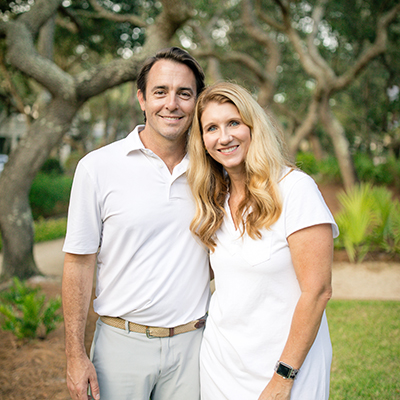
Angela Davis
Angela is a Mental Health Counseling Intern who lives in Orlando, Florida with her husband Jim and their 4 children. She received her Masters of Arts in Counseling from Reformed Theological Seminary in Orlando. In addition to counseling, she speaks for Family Life’s Weekend to Remember Marriage conferences. Before starting a career in counseling, Angela was on staff with CRU for 14 years where she worked with college students in various locations around the world.

Jim Davis
Jim Davis is teaching pastor at Orlando Grace Church (Acts 29). He is the host of the As in Heaven podcast on The Gospel Coalition podcast network and serves as a writer for The Dechurched Initiative. Jim writes frequently for The Gospel Coalition, Acts 29, and Family Life. He and his wife, Angela, speak for Family Life’s Weekend to Remember marriage getaways.
About the Host

Dave and Ann Wilson
Dave and Ann Wilson are hosts of FamilyLife Today®.. Dave and Ann have been married for more than 38 years and have spent the last 33 teaching and mentoring couples and parents across the country. They have been featured speakers at FamilyLife’s Weekend to Remember® marriage getaway since 1993 and have also hosted their own marriage conferences across the country.
Episode Transcript
FamilyLife Today® with Dave and Ann Wilson – Web Version Transcript
This content has been generated by an artificial intelligence language model. While we strive for accuracy and quality, please note that the information provided will most likely not be entirely error-free or up-to-date. We recommend independently verifying the content with the originally-released audio. This transcript is provided for your personal use and general information purposes only. References to conferences, resources, or other special promotions may be obsolete. We do not assume any responsibility or liability for the use or interpretation of this content.
How to Communicate With Your Teenager: Jim & Angela Davis
Guests:Jim and Angela Davis
From the series:You’re Listening. Why Aren’t They Talking? Jim & Angela Davis (Day 2 of 2)
Air date:October 6, 2026
Jim (00:04):
There is something between the ages of about 13 to 25 where our kids seem less inclined to listen to us. And that is when we need other people in their lives saying the same things because I can say something to my teenage boys or girl and I might get an eye roll. Our youth director says the same thing and he’s the wisest person to ever walk the earth. And so what does it look like to live in a community where it’s not all the pressure’s on me to have this one really amazing large talk with my kids about these things, but where we’re in a community where these kinds of conversations happen more naturally?
Dave (00:39):
That’s good. Welcome to FamilyLife Today where we want to help you pursue the relationships that matter most. I’m Dave Wilson.
Ann (00:52):
And I’m Ann Wilson. You can find us at FamilyLifeToday.com. This is FamilyLife Today.
Dave (01:06):
Okay. We got Jim and Angela Davis back in the studio today talking about curious listening and how that applies to marriage and parenting.
Ann (01:14):
And friendships too. I feel like they are. I mean, Jim’s a pastor. Angela’s a therapist.
Dave (01:21):
All I’m going to say is if you do what we talk about today with your kids and your marriage, it will transform your home. That’s a big promise, but it is true. This is going to be a good day.
Ann (01:39):
Well, I’m thinking of Genesis 3 and the fall. Think about that. God knows exactly what happened, what Adam and Eve had done. And yet He comes at them and here’s what He says, “Where are you? Who told you, you were naked and what have you done?” He already knows everything. He’s very aware.
Dave (02:00):
I don’t think He’s wondering, “I wonder where they are in the garden?”
Ann (02:01):
Yeah. I wonder where they are? So why do you think God said that? Why did He ask those three questions?
Jim (02:07):
It was revealing. I believe He did that for our benefit, not for His benefit, but He is asking questions to reveal more significantly the gravity of the situation, the whys behind their choices, and He uses questions.
Ann (02:25):
Angela, how do you apply that with your kids? Do you guys ask a lot of questions now more than you ever have?
Angela (02:32):
Try to, we want to.
Ann (02:32):
You do?
Jim (02:33):
We want to. All right. Can I be very vulnerable here?
Dave:
Please.
Jim:
When we were first asked to come on the show, they said, “Would you come and give us wisdom on parenting teenagers and discipling them?” And Angela and I talked and we said, “We feel like we’re in a season where we’re seeing shortcomings and we’re working on them, but we didn’t feel like we could authentically come and do a whole episode on what you can learn from Jim and Angela on parenting and discipling teenagers.” So this is an area that we’re leaning into.
Angela:
Yeah.
Dave (03:04):
Well, what are the shortcomings? You said you have them.
Jim (03:07):
Yeah. So your question was something about asking our kids good questions.
Ann (03:12):
Yeah, what kind of questions are you asking?
Jim (03:13):
We’re wanting to get better at that. And part of it is with four kids, two jobs, it’s tense. There’s this tense feeling in our home and we’re trying to figure out how do we make our home a nice, calm place?
Ann (03:29):
And what you just said, probably 80% of parents are resonating. Yes, that’s exactly what it is in our home too.
Dave (03:36):
I mean, if you had five-year-olds, they’re like tense. You want to talk about tense.
Ann:
Oh, a two- and three-year-old.
Jim (03:40):
You add a bunch of hormones.
Angela (03:42):
The attitudes of teenagers. Sometimes you feel like you’re walking on eggshells. You just want to have a normal conversation, but it’s like, how do I even get in there?
Ann (03:50):
And you love them. You think they’re amazing, but it’s just this navigation process.
Angela (03:54):
Yes, that’s right. And so you hear things through the grapevine as parents, you’re like, huh, I really want to talk to my kid about that, and I’ve got a judgment already and I want to just tell them what I think that this was a bad idea. And that happened a couple weeks ago, and I wanted to come in and just be like, hey, this was a bad idea. But instead I was just like, tell me about this and that. I didn’t even act like I knew anything. Just coming in with questions. Hey, how did this go? Tell me about that day and what were you doing? It changed my tone. I wanted to come in with that mom judgment tone and instead I was like, okay, no, we’re going to come in.
Dave (04:31):
Did they talk?
Angela (04:31):
Just with curious questions. Yes. Now I didn’t get everything and that’s okay.
Ann (04:36):
Well, we had a son come in. I knew he wasn’t doing well spiritually. Came in from prom, been out all night at a buddy’s house, reeking of alcohol. And let me tell you, my mind went off any kind of track of, I’m so curious. I’m like, you are so dead right now. I’m like, what in the world you come in here reeking of alcohol? And this was not typical of him and our other kids too. And I just lost control.
Angela (05:10):
Yes.
Ann (05:11):
And he’s like, I just need to go to bed like, bed, you think you’re going to go sleep this off? You’re going to be doing work all day.
Dave (05:17):
She had him in the front yard.
Ann (05:20):
And so he’s digging holes because I’m having him plant bushes. He’s digging these holes. And then these tears are falling off his face into the ground. And that was one of those total remorse. And I should have gone to be with Jesus for a while and just to get myself back on track.
Angela (05:43):
100%. You have to regulate yourself so that you can talk.
Ann (05:47):
And so as a parent listening—
Dave (05:48):
I don’t know, it worked. We literally sat in his church yesterday and listened to him preach. I mean, he grew up obviously.
Ann (05:56):
But I had to apologize. I had to apologize later for my reaction or response to the situation.
Jim (06:03):
And an apology is powerful.
Ann:
It is. Yes.
Jim:
So that’s not to be dismissed.
Dave (06:08):
But do you remember, I don’t know if you’ve read For Parents Only, Shaunti Feldhahn’s book.
Jim (06:14):
I know of it, but I have not read it.
Dave (06:15):
It says For Men Only, For Women Only. And she has this little gem. Again, it’s a smaller book and it’s really a subtitle. I don’t know what it would be, but it’s something about raising teenagers. And I’ll never forget one. And again, she interviews all these teenagers all based on research. She’s a Harvard trained researcher and says, “Parents, here’s what you need to know.”
Angela (06:35):
She curiously listened to them all.
Dave (06:36):
Yeah, exactly.
Ann (06:37):
Oh, good one.
Dave (06:38):
She says in the book, first chapter, number one complaint of teenagers about their parents is, guess what?
Jim (06:45):
They don’t listen.
Dave (06:46):
They don’t listen. So why do you think teenagers say that? You think it’s really true?
Jim (06:51):
They’re people with the same core needs that we have to be seen, to be soothed, to be safe and secure. That’s the one I always forget.
Dave (07:00):
We can learn it in one day. You should be able to know this married to the woman.
Jim (07:05):
That’s fair. But for us, one of the things that more recently, I talk about the defensive side of parenting and the offensive side. There are times kid comes home, been drinking alcohol, whatever, that’s some defensive parenting. And not to say curious listening can’t happen, but you also have boundaries that we need to and consequences and that’s good, right, and normal. But we’ve been thinking through not only how can our house be less tense at times, but how can we create spaces for individual times where we can listen? So since my heart attack, I walk more. I have this routine of walking in the beginning of the day, the end of the day, whatever. And my daughter likes to walk with me. And I love that. And I’ve really intentionally thought this is not going to be advice time if she doesn’t ask for it. I am only listening.
(07:54):
I’m only asking questions. And that’s been a really sweet kind of time for that. With my 18-year-old, we’ve been more recently started having weekly lunches. He can leave his school as a senior. And so I’ll take him out to a lunch that he enjoys, and I try to do the same thing. Car time, we don’t drive our kids around as much anymore, but when we get to, that can feel like a pain, and it is in many ways. But the less I’m driving my kids, the more I miss it because we have that built in time to ask questions.
Angela (08:24):
And then I think one of the biggest times is the wee hours of the night. When they open up and they start wanting to talk, we have to be willing to stay up for that.
Jim (08:34):
Are you saying this to Dave and Ann or are you saying this to me?
Angela (08:37):
Oh yeah. There’s really only one of us that does that, but that’s okay. You’ve got your other built-in places.
Ann (08:42):
Yeah. Dave and I are night people, so that was easier for us. But if you’re a morning person—
Dave (08:47):
Ann always had food on the counter. Right. If there’s food, we could sit and talk.
Ann (08:50):
They sit and then they’ll eat and then they’ll just naturally talk.
Jim (08:54):
That’s really good.
Angela (08:56):
Yeah. I’m going to add that to my routine because I don’t add the food. Now it’s there and they probably go get it, but just to have it out.
Jim (09:02):
Put the trough out.
Ann (09:02):
They’ll just sit there and their friends too. They’ll sit and just talk.
Angela (09:06):
So true.
Ann (09:06):
But I love, Jim, that you have like, okay, so I’m not a night person, but you have put that in your schedule, like that walking piece. If my dad would’ve walked with me and just asked me questions, and he did, my dad ended up taking me out to lunch for the first time. I was 16 years old. I was the youngest of four, never really asked me anything in my life. And the only reason he took me out was because my mom was taking her brother to chemo. And I remember we’re done eating. It’s just so awkward. Let’s just finish. I’m 16. I don’t know my dad. And he orders another cup of coffee. I’m like, “Ugh.” And then he’s like, “Let’s get dessert,” which my mom would never do. So we sat there eating this cake and he started asking me questions. One of the sweetest things that I can ever remember is him just wanting to know about me.
(10:01):
And so for our kids, for our parents to be curious—
Angela (10:05):
That’s still making you cry right now.
Ann (10:07):
Totally is.
Angela (10:08):
What a core emotional moment for you.
Ann (10:11):
And he would do that then.
Dave (10:12):
Did you see how she listened?
Ann (10:14):
It’s because she’s a good counselor. She’s curious. But I think that’s really important for us as parents just to not have the agenda. And you guys, it gets worse when they get to be adults and they’re married. You have so many things you could tell them how their lives could be amazing if they would only listen to you. Sure. And yet what they’re wanting is just to talk and say, “Here’s what’s going on for us to ask those questions.”
Dave (10:39):
Yeah, really ask a lot of—I mean, we’re adult to adult now. Our kids are—our oldest is in his 40s.
Ann (10:45):
He just turned 40.
Dave (10:47):
He just turned 40. You got to be kidding me.
Angela (10:48):
Wow. You guys don’t look like you have a 40-year-old.
Jim:
I was just going to say the same thing.
Dave (10:51):
I don’t know how we feel it, but I mean, all of them, they love it when we ask questions. “What’d you do today? What’s going on with your job?” Anything. It’s just really interesting. They’re not interested in hearing us talk anymore.
Angela (11:05):
Yeah. Our kids grow and their needs always change, but that need does not change. It’s one of the few things.
Dave (11:12):
Hey, let me ask you this about teenagers. Again, one of the things I—and maybe it’s because I was afraid to ask hard questions, but one of the things I found that worked with my boys is if I wanted to dive into something pretty touchy, sensitive, girls, I don’t know, sexual temptation, I found I could do it with a couple buddies rather than just my one son. There’s a couple guys over at midnight and I know them. They’re in our church. They’re good guys. I’d say, “Hey, Tim and CJ, hey, so how hard of a struggle is porn these days?” They were more apt to talk because they were like two-on-one or three on one.
Jim (11:52):
I do feel like we have—I’m trying to be very general because these are kids and I don’t want anybody to be able to identify—there are certain kids we’ve done better jobs with than others. That’s as most specific as I can be. It’s kind of like all of the above. It’s accumulation. It’s not one big talk. It’s accumulation. And I say that in areas that I feel like I’ve done that well, and I’m hearing that in certain areas that I don’t feel like I’ve done as good a job, but it’s accumulation of all these talks, smaller things, maybe some larger ones, certainly when things come up, having conversations about it. So I was listening to an atheist psychologist and this atheist psychologist said, “Because of evolution, our kids are wired to leave the home. And because of that, they don’t want to listen to their parents between the ages of about 13 and 25, and that’s why you need other people saying the same things to them.” I thought, “Huh, okay.
(12:52):
I disagree with how you got there, but I really agree with where you got.”
Ann:
I think that’s true.
Jim:
I would just say, “Hey, God’s design is that kids leave the home. That design has been marred by sin, and there is something between the ages of about 13 to 25 where our kids seem less inclined to listen to us. And that is when we need other people in their lives saying the same things, because I can say something to my teenage boys or girl, and I might get an eye roll. Our youth director says the same thing and he’s the wisest person to ever walk the earth. And so what does it look like to live in a community where it’s not all the pressure’s on me to have this one really amazing large talk with my kids about these things, but where we’re in a community where these kinds of conversations happen more naturally?
Dave (13:37):
That’s good.
Ann (13:37):
That’s really good. And it’s true. It’s hard to be as curious when it’s an emotional topic. And so we are very intentional about surrounding our kids with other people that we’re saying the same thing, and it just drove us crazy. We’d go to bed and like, “We said the same thing for the last four years.”
Angela:
Right? I know.
Ann:
But they finally heard it and who cares?
Jim (13:59):
Yeah. Who cares how? Yes.
Ann (14:00):
Yep.
We’ve traveled around the world, and I’m always amazed that families around the world bring incredible joy and impact, but they also really struggle with the same issues.
Dave (14:15):
Yeah. I mean, it’s amazing. They all have the same issues. The wife doesn’t like her husband. The husband doesn’t like his wife. They can’t resolve conflict. You name it. They don’t know how really to make Jesus the center of their marriage. It’s the same things we struggle with.
Ann (14:28):
Exactly. But families make a difference in the world. A family centered on Jesus impacts everyone.
Dave (14:35):
That’s why we do what we do. Every single day we’re trying to help marriages and families here, there, around the world, find Jesus as the center of their marriage and find hope. And then not just see their marriage transform but transform their neighborhood. Let me invite you to join us in this mission. What’s that mean? Pray for us. We need your prayers. But also, I don’t know if you know this, but this ministry is a donor-supported ministry. In other words, people give financially to make this happen, and we would love to have you as a partner.
Ann (15:08):
Because we can’t exist without you, without monthly partners reaching families for Jesus.
Dave (15:13):
So if you’d like to join, here’s all you need to do. Go to FamilyLifeToday.com, click on the donate button right there. And man, wouldn’t it be a joy to be a partner with you? You can help change the world.
Hey, I’m going to read something you put in your book proposal. Curious listening is marked by five practices. We’ve talked about a couple, but non-judgment, open-mindedness, patience, empathy, and presence. Any one of those you want to hit?
Jim (15:47):
I’ve curated those from other sources. We didn’t create these things, but we need to come up with a better acronym, but right now it’s Nope P, as I remember it. So it’s non-judgmental. It’s not that we don’t have views, but we’re suspending our judgments just to understand the person. You asked for one, but I might just walk through real quick. Non-judgmental, open-ended questions. We talked about this, not yes or no questions, but questions that are going to give us a little more insight. We’re patient. We’re okay with awkward silences. We’re trying to draw them out. We’re trying to create an atmosphere without distractions. Well, that’s actually present.
Angela (16:26):
We’re not getting defensive when we’re patient.
Jim (16:28):
We’re not getting defensive when we’re patient.
Angela:
That’s a big one.
Ann:
Yeah.
Jim:
We’re not thinking to respond when we’re patient. But then empathy’s an interesting one because there are—I’m not looking to throw a match on a gas fire here.
Dave (16:42):
Do it. I want to throw a match on it.
Jim (16:43):
So in certain circles, empathy is being painted as a bad thing. I don’t know how much y’all have observed this, but empathy, it’s like, no, we can’t be empathetic because then we’re going to feel what they feel and be led astray. They would say things, we need to be courageous, we need to be bold. Well, it’s a yes and for all of these things, but we can’t throw the baby out with the bath water. And in Hebrews, when the author of Hebrews says, “For we do not have a high priest who is unable to sympathize with our weaknesses,” that word sympathize literally in Greek means suffer with.
Ann (17:14):
Wow.
Jim (17:14):
That’s what empathy is. We’re suffering with somebody. We’re trying to feel what they feel. So empathy is such an important part of it. And then I feel like present, this is what you do every day.
Ann (17:26):
Well, let me say too, I think that’s what Jesus did display, that empathy piece. He wasn’t condoning their sin, but he was still empathetic with what they were going through. And I think it’s both. It’s very important, and I think it’s really important for our kids to see that because if we’re not empathetic, I think our kids can see us as just being judgmental, especially teenagers. So both have to be on display.
Jim (17:49):
And we have to know, I love, again, back to that quote, “You can’t be curious and critical at the same time.” I think just being aware, which one am I? There’s no half and half. There’s no 60 / 40. Where am I right now? The other thing that I’ve done, and this works in the tense moments, and it works when I’m just tired of hearing somebody talk. I might be somebody outside the family, and we have those moments, but I ask myself, “All right, Jim, what would it look like to be curious right now?” It sounds so simple, but that one question, it kind of reshapes my mind, gives me new questions, and then I have this desire to be empathetic that I didn’t have before.
Ann (18:25):
I like that. And then what about the last one, the being present?
Angela (18:29):
Oh, being present. Well, I think it’s just giving someone your full attention. They have your face; your facial expressions are mirroring them. That makes you ask good questions, and that makes the person feel like you’re present with them.
(18:42):
You’re not looking at your phone or glancing over here or there. You actually have my 100% undivided attention, and that goes so far these days because our attention spans are just so short now with our phones, right? To be locked in and really give you my eye contact, it’s a rare thing these days.
Jim (18:59):
Even if you are a good multitasker.
Angela (19:01):
Yes. Even if you are. As women, I feel like we think we can be present and still be cooking or doing whatever, but it’s different.
Dave (19:07):
I think we told you, we just did a marriage—we call them summits at our church—and we did three talks. So the first talk is on cell phones and marriage. I’m like, “We’ll do this one quick and then we’ll get to the other two because the third one was on God’s plan for sex, and then identity and how we try to find our identity from our spouse, not from God.” After the conference, I was roaming around the lobby and there’s hundreds of couples and I talked to four or five couples and I’m curious listening. “Hey, what’d you think? Which session do you like the best?” Every person I talk to says cell phones. Cell phones are like, “We are so distracted. You said whatever you pay your attention to, you’re attracted to. I am not attracted to my spouse because my attention is on this little device.”
(19:54):
That is a thing.
Angela (19:55):
Yes.
Dave (19:56):
Ann calls this my other girlfriend. “Oh, you’re looking at your other girlfriend right now, attacks or whatever.”
Ann (20:01):
But I’m just as guilty with all of that.
Dave (20:04):
But that presence, think about that with our kids. You ever seen Simon Sinek’s little thing about this? He has a little wheel.
Angela:
No.
Jim (20:11):
I feel like I have, but I can’t remember.
Dave (20:12):
He just basically says, “We have a real issue with this. If you have this in your hand, you’re saying to anybody you’re with, you’re not the most important person to me.” And he even says this, “If you put it on the table, even turned over at lunch, you have just said to your friend, you don’t matter.” He goes, “Get rid of the phone.” This is a guy saying you need spaces in your life where you’re present in somebody’s life, and the phone is not even near you.
Angela (20:35):
Well, that’s what counseling is, right? We go in a room, and we have somebody’s undivided attention, and they’re just focused on me, asking me questions.
Ann (20:42):
It feels good.
Angela (20:43):
Yeah, it feels really good. We need those spaces outside of a counseling room. We need people in our lives who are doing that.
Jim (20:50):
One thing that I’ve started to really realize is the gift that you’re giving somebody. What a gift it is just to listen. And this goes into marriage, parenting, location, occupation.
Dave (21:02):
Look them in the eye, body posture, everything.
Jim (21:02):
Think about the billions of dollars that are spent in America in the therapy realm. In 2015, we joined the FamilyLife Speaker team, and I started in 2016 asking, anytime I’d meet a mental health specialist, I’d ask him this question. If everybody, all your clients had somebody in their life that loved them, listened well—
Angela:
That’s good questions.
Jim:
—and asked good questions, how many of those people would still be your clients? And in the general therapy range, there’s certain psychiatrists and things that would be different, but general therapy, I got somewhere between zero and 20% of those people would still be my clients because they don’t have that in their life. I mean, would you say this, I don’t know what percentage you would come up with, but that resonates with you.
Angela:
For sure.
Jim:
And it just made me realize in my marriage, with my kids, as a pastor, but let’s even stay with spouse and kids, this is such an unbelievable gift that we can give people that unfortunately I need to remind myself so often that it is a gift and that I do want to give it to them.
(22:09):
But when it goes well, and there’s lots of time in our home that it doesn’t, but when it goes well, it’s really beautiful.
Ann (22:16):
My best friend and I used to walk four to five times a week. We’d go for about four miles.
Dave (22:20):
They still would. She moved.
Ann (22:22):
We talked the entire time. I felt seen.
Dave (22:25):
I’d be driving down the road and look at them, like there they are.
Ann (22:29):
But it was amazing of how healing that was. And I felt like this was incredible.
Jim:
You felt the four S’s.
Ann:
And then we’d pray at the end of that walk. And you’re right, Angela. I think that that filled me up. Jim, I’m not sure I would need to see a counselor after that because it was therapy. Therapy for my soul, my wellbeing, all of it.
Dave (22:52):
I mean, I’ll end with this. Think about this. If our homes felt like for our spouse and our kids, this is the one place on the planet I feel seen, soothed, safe, and secure.
Angela (23:07):
Yes.
Dave (23:09):
I mean, when you said that, I just thought, what do they feel when they drive in the driveway? They should feel like “Ahh.”
Angela (23:15):
It’s a haven.
Dave (23:16):
They’re going to ask me questions. The TV’s not going to be on the whole time. It’s like the phones are going to be put away. I’m going to be seen. I’m going to feel like I am valuable here, right?
Angela:
Yeah.
Jim (23:28):
They’re not going to come home and look necessarily how quickly can they leave to go to somebody else’s house. And maybe, and this is kind of a metric we may or may not be watching, they’re going to begin to invite their friends into that space.
Dave (23:43):
Yeah. That’s really good.
Ann (23:46):
Okay. You may not know this, but we want to hear from you.
Dave (23:50):
Yeah, like literally hear you.
Ann (23:53):
You can leave us a voice message with your questions, concerns, praise reports, or whatever. Maybe Dave said something that you totally disagree with.
Dave (24:04):
Why’d you have to pick on me? Maybe it’s you said something.
Ann (24:06):
Maybe, probably.
Dave (24:07):
Or maybe it was inspiring. See, I was nice.
Ann (24:11):
No, I know you’re always nicer than me.
Dave (24:13):
I don’t think so. Or maybe you just want us to answer a question or explore a certain topic. Whatever you want to say, you get to call and say.
Ann (24:23):
All you have to do is go to speakpipe.com/FamilyLifeToday. Again, that’s speakpipe.com/FamilyLifeToday or get the link in the show notes.
Dave (24:37):
Again, it’s speakpipe.com/FamilyLifeToday.
Ann (24:45):
FamilyLife Today is a donor-supported production of FamilyLife®, a Cru® ministry; celebrating 50 years of helping you pursue the relationships that matter most.
If you’ve benefited from the FamilyLife Today transcripts, would you consider donating today to help defray the costs of producing them and making them available online?
Copyright © 2026 FamilyLife. All rights reserved.
www.FamilyLife.com