

How to Make Friends as an Adult–Jennie Allen
Making friends as an adult is hard. Making friends after you’ve been hurt? Even harder. Besides, everyone’s busy, tired, overscheduled, and heading home. Author Jennie Allen explores why meaningful relationships often get squeezed out by modern life—and why waiting for community to happen usually doesn’t work. If your friendships feel stuck in the group-text stage, Jennie stands ready to talk candidly about disappointment, betrayal, and the temptation to stay guarded. After all, what if protecting yourself is also keeping you lonely?


Show Notes
-
Get Jennie's book "Find Your People: Building Deep Community in a Lonely World" on our shop.
-
Learn more about Jennie on her website jennieallen.com
-
Get more information about the IF:Gathering
-
Janelle Breitenstein’s 5-session video series on mom anger at familylife.com/momanger
- Thanks to the Christian Standard Bible for sponsoring this episode. Learn more at CSBible.com.
- Follow us on all social platforms: Facebook | Instagram | YouTube
- Find resources from our podcast at shop.familylife.com.
- Download FamilyLife's app!
- Help others find FamilyLife. Leave a review on Apple Podcast or Spotify.
- Check out all the FamilyLife's podcasts on the FamilyLife Podcast Network
About the Guest

Jennie Allen
Jennie Allen’s passion is to inspire a new generation of women to encounter the invisible God. She loves words, believing that God uses them to heal souls and to reveal Himself to people. She is the author of the popular DVD-based studies Stuck and Chase.
Jennie serves alongside her husband, Zac in ministry in Austin, Texas. They have 4 children.
About the Host
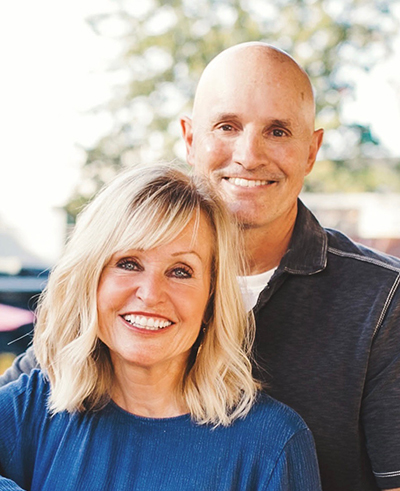
Dave and Ann Wilson
Dave and Ann Wilson are hosts of FamilyLife Today®.. Dave and Ann have been married for more than 38 years and have spent the last 33 teaching and mentoring couples and parents across the country. They have been featured speakers at FamilyLife’s Weekend to Remember® marriage getaway since 1993 and have also hosted their own marriage conferences across the country.
Episode Transcript
FamilyLife Today® with Dave and Ann Wilson – Web Version Transcript
This content has been generated by an artificial intelligence language model. While we strive for accuracy and quality, please note that the information provided will most likely not be entirely error-free or up-to-date. We recommend independently verifying the content with the originally-released audio. This transcript is provided for your personal use and general information purposes only. References to conferences, resources, or other special promotions may be obsolete. We do not assume any responsibility or liability for the use or interpretation of this content.
How to Make Friends as an Adult
Guest:Jennie Allen
From the series:Jennie Allen: On Finding Your People (Day 2 of 3)
Air date:July 9, 2026
Dave (00:04):
So many people tell me that friendship—deep, deep friendship—is a girl thing, not a guy thing. Women want it, they love it, they’re good at it. Men don’t want it, they’re bad at it. We’re just not into it.
Ann (00:17):
And here’s what I hear from wives, is they’ll say, “I have friends, but my husband has no friends.”
Jennie:
Yeah.
Ann:
And I hear that a lot, and they’re frustrated; because they say, “My husband says I’m his friend and that’s all he needs.” And that’s frustrating to the women, too, because they know their husband needs a friend.
Dave (00:42):
Welcome to FamilyLife Today where we want to help you pursue the relationships that matter most. I’m Dave Wilson.
Ann (00:48):
And I’m Ann Wilson. You can find us at FamilyLifeToday.com. This is FamilyLife Today.
Dave (01:01):
Well, we’ve got Jennie Allen in the studio. She wrote a book about friendship and relationships called Find Your People. Jennie, welcome back.
Jennie (01:08):
Thanks; great to be here.
Dave (01:09):
So I heard you already pipe in. You jumped right in there to say—
Ann (01:13):
Yes, that was awesome.
Jennie:
I knew I wasn’t supposed to talk yet. I was just so agreeing with you.
Dave:
That’s all right.
Jennie:
I keep hearing that.
Ann (01:17):
Because women are saying that to you?
Jennie (01:19):
Yes, because I hear that a lot.
Dave (01:21):
You hear what? What do you hear?
Jennie (01:22):
That women are pursuing this and eager to do it, and their husbands are slower to do it.
Dave (01:27):
Do you think that’s true? I mean, I’m the only guy in the room that knows whether it’s true or not, but I want to ask the two women. Do you think that’s true? Like you’re married to men. Do your husbands pursue it? Do other men pursue it?
Ann (01:38):
I feel like you have so many friends, and you’re super extroverted. And watching my brothers and my dad, who are both coaches, they were all each other’s best friends, but my dad had a lot of friends. He’s a lot like you. I don’t know if my brothers do, though.
Dave (01:53):
What do you think, Jennie?
Jennie (01:54):
I think there’s lots of personalities. I mean, I think it’s pretty complicated. I think for a lot of men, they have bought the lie that we talked about in the last show about the individualistic hero complex where—
Ann (02:07):
I can do it myself.
Jennie (02:08):
And I think it’s sometimes harder for men to be as transparent and vulnerable. And so I do think, probably, men, their view of friendship and relationships looks a little bit different. For my husband, he loves to do things with men. He took one of his friends to Mavs game in Dallas recently, and they didn’t talk a lot. He came home and said that was like—”I had so much fun with Kirk.” And then Kirk told his wife, “I don’t think Zach likes me very much. We didn’t talk very much.” But to Zach, it was like sitting there, watching a game with someone, and not having to talk, made Kirk his best friend. That was how Zach felt.
Dave (02:41):
I am the same way.
Ann (02:43):
Okay, so this is the joke about—
Jennie (02:44):
I mean, it’s just nuances.
Ann (02:46):
The joke among women—and I say this, even at the Weekend to Remember® marriage conferences—Dave will go golfing for hours. I’ll say, “Oh man, you went with John. What’s going on with his life? How’s Betsy?” And you’ll be like, “I don’t know. We had a blast. We didn’t talk about that stuff.”
Dave (03:01):
I knew he got a new driver.
Ann (03:03):
But I don’t know if men need to, up front.
Dave (03:05):
Well, here’s why I brought it up. Because there’s husbands listening, dads, there’s obviously, moms and wives. I’ve always joked: I have a motorcycle and I love going on a ride with a guy because you don’t talk. You stop at a stoplight, and you say, “Hey man, what’s up?” “Good.” Boom. You take off, and you come home and go, “Man, that was awesome.” But here’s what’s going on. I think we are so insecure. We cover it up. Deep down, we want a guy—we want a guy—but we’re afraid to go to dark places, to say, “Here’s what I’m struggling with. Here’s what I’ve been thinking about.” And so we sort of cover it up and act like, “Yeah, men don’t really need guys. That’s a women thing.” It is a guy thing as much. I mean, obviously, I’m not a woman.
(03:46):
I don’t know how it works for you, but I know that we long for it. We’re scared of it.
Jennie:
Yeah.
Dave:
I’m not talking for every guy, but I think it is scary.
Jennie (03:54):
You know, one thing we talked about on the last show, too, is women feel that way too. I think we’ve got some universal problems. Now, one thing I have seen in my sons and in my husband—because they’re the ones I’m closest to—is they tend to move towards shame in a different way than women do.
Dave (04:12):
Oh, let’s talk. What are you saying?
Ann (04:14):
What do you mean by that?
Jennie (04:14):
So when they feel ashamed, they close up. When women feel ashamed, they have a feeling and they notice it, and they want to talk about it. Now, I am saying things really drastically. The reality is I actually bond very well with women when I’m running beside them, like when we’re doing things beside each other.
Ann:
Me too. You can do both.
Jennie:
What we’re saying is this is partly the way we have been raised, and our differences in our gender, but it’s also partly our personality. And that there’s always going to be—there’s not a hundred percent accuracy to all of this—but in general, what I’ve seen is that women like to talk more about what’s really going on.
Ann:
And what they feel.
Jennie:
And men, it’s a little more awkward to get there; but I think that’s changing. And what I’m seeing in the generation coming is actually, they’re actually pretty good at authenticity.
(05:03):
They’ll do that part pretty quickly. They’re not prone to a whole chapter in the book, which is accountability. And so I think that’s part of the magic of the local church—and the magic of a small group—is that’s a forum where you actually have some structure to talk about deeper things. One thing I talk about in the book is I think it’s important for, especially, spouses to read this together, partly because I’m suggesting a way of life. It’s not just—
Ann (05:29):
That’s a great idea.
Jennie (05:29):
It’s not just a way to think. I’m suggesting a whole way of living, that it would be a communal way of living. I’m not suggesting you add something to your plate. I’m suggesting that already on your plate are relationships that you have not cultivated, and how do you do that as you are going? That’s the thing we’ve missed, and the muscle we’ve really lost. So if you’re going to do that, it is so hard. And one thing I’ve heard over and over again is if one spouse is doing that, and the other one isn’t—and that one, the one that isn’t, or is introverted, or more confused by it—can get really resentful and feel like that person is just running out in front of them, the other. And sometimes, it’s hard, because this is actually something people really fight over a lot, whether—
Ann (06:06):
Oh, absolutely.
Jennie (06:07):
—because someone might be like, “I want to go out every week at night with my friends.”
Dave (06:11):
Oh, that’s me.
Ann (06:11):
Yeah. Totally.
Jennie:
And then the other person’s feeling like, “You know what? I have to do this, this and this when you go. “That feels like a lot, and I don’t really want to go out. So that’s where I think you have to get creative, and really put it on paper, and say, “This is what fills my tank. This is what I need to live this part of life that God has called me to.” And so if you just shut someone down, because they are pursuing friendships in your marriage—and some of you are going to send this to your spouse, and you’re going to be like, “You need to listen to this episode,” if you’re shutting that person down, because they’re pursuing relationships in their life, and you don’t want to, that’s not biblical. We’ve got to have this in our life. We’re in a culture, where we’re not going to get water down at the river every single day and washing our clothes together.
(06:50):
So we do have to be intentional about how we find it, and how we get it. And those conversations just need to be had like everything in marriage—like finances, like sex, like everything else. You have to lay it out and go, “Okay, how are we going to each bring our expectations to this?”
Dave (07:03):
So what’s that look like? You used the term, communal. You talked last time about village. What’s your vision? What do you think it looks like? What do you think God’s vision is for a marriage and a family, communally?
Jennie (07:14):
I think it can look a million different ways.
(07:16):
I heard a story, last night, about a couple that is older now; but when they first got married, the wife decided that she didn’t want to work because she wanted to volunteer, and that that was important to her. And so the husband didn’t make much money, but they were like, “You know what? Yes, we’re going to do this.” Now, she ended up taking on basically, a full-time job, where she cared for a woman in their church, that needed constant care every single day when they’re first married. That was a choice they made of generous living, of just saying, “You know what? We’re going to be generous with what time we think we can be and with what convictions we can be.” For me, it looks like, early on when our kids were young, having lots of people over. We would have meals at our house, and we would invite five couples and their kids over, and our kids would help host. That was one way we did it.
(08:03):
The thing is, it’s endless. One thing that I’ve wanted to do forever is to have one Sunday a month, where we just make so much food that anyone can bring anyone they want. And it’s simple like chili or soup, and my name for it was going to be Soup Kitchen Sunday. And like you literally can bring anybody you want. I’m just going to make a bunch of cornbread and soup. You can be creative with this, but it just means putting people in your life, noticing people in your life, and doing life not in an isolated way. If you are married to an introvert, and you’re listening, you’re like, “Yes, yes, but he will never do this,” or “She will never do this.” I would just say every introvert is actually better at this than they think. Introverts are actually very intentional and deep.
(08:46):
They don’t want to be at a party, but they are great over a meal with another couple.
Ann:A one-on-one.
Jennie:
Right; or one-on-one. And so find what works for you. It doesn’t have to be a big party. It could be—for us, one season in our life, we just basically said “We’re going to get a sitter every night on this night, and once a month, we’ll go by ourselves; and every other time, we’re going to bring a couple with us and meet a couple for dinner.” But we had that sitter, and then we had a list—we made a list of all the names of people we would like to spend time with over the next few months. We would just text people from that list and say, “Hey.” But it didn’t take a lot of thought, because we already had the sitter, and we already had a plan.
(09:20):
So my thing is, just make a plan. You can do that as a couple together. You can sit down, lay out “This is how we want to live. These are the priorities we want to have,” but it can look endless ways.
Ann (09:30):
I just think we don’t have those conversations very often because the demands of life, and kids, and jobs, and stress. But if I sat down with you, Dave—if you, as a listener, sit down with your husband and just say, “Let’s just talk about friendship. What would you like that area of your life to look like?” That’s not something people do very often.
Dave (09:47):
Yeah. And I think we’ve talked about it. I think a lot of couples, and maybe, it’s the man or the woman, are afraid of the intimacy that comes when you invite people into your life. I mean, I can’t tell you how many times in 30 years, as a pastor, a couple would come up, and they actually want to meet with me for marriage counseling. I’d always joke and go, “You don’t want to meet with me. I’m the guy that says, ‘Stop doing that and grow up.’ You want to meet with somebody”
Ann:
Walk with Jesus.
Jennie:
Listens and cries.
Dave:
Yeah. But as I even talked to them, there at the front of the church, or if they did come into my office—often, this happened—”So who else in your life knows about this struggle?” They look at each other, “Well, no, we’re not going to share that with anybody.”
(10:25):
“You have nobody in your life. I’m your person, that you don’t even know.”
Jennie:
That’s not okay.
Dave:
And that’s so many couples and I’m like, “Why not?” I think it’s work, it’s energy. They’ve been hurt. You’ve said that. I’ve been hurt. We all pull away. And yet, I think your whole book is about, you got to find your people. It’s going to be hard work, but you got to do it or you’re going to die.
Jennie (10:44):
One of the gifts of village life that I researched and saw, constantly, was nobody could hide from each other, right? Everybody was stuck together. You see generations of people, they never moved.
Ann (10:54):
The windows are open. You can hear them fighting.
Jennie (10:56):
Yes. And in my interviews, it was so fun; because I mean, the stories people would tell about their childhoods: growing up in India, growing up in the slums of Nairobi, and Africa, and all the places that they grew up, that I interviewed people. And one was in Mexico and just precious. And one of the things that was consistent across all those countries was—and this was in our lifetime. This wasn’t decades or generations ago. This was in our lifetime—everyone had abuelas that knew their name, that knew their family. I know abuela is a grandmother, but if you’ve ever seen In the Heights, the idea in much of Latin culture is that there’s an abuela that is kind of mothering that whole street, right? They are everybody’s abuela. I kept hearing stories like that. We were in the slums of Nairobi, and this is Jay from Kenya.
(11:43):
“My grandmother, we didn’t have anything. We lived in the slums, but she would put on a pot of whatever we could afford. And if kids came in, she fed them and they called her ‘Grandmother.’” This was how the culture has been. And so I think what we’ve done is we’ve lost all that for the sake of convenience. Because of wealth, we’ve been allowed convenience and therefore, we have to choose—and I say, “wealth,” I just mean we’re not in slums, right? We’re not in a village with no doors and huts where we’re washing our clothes together, right? So probably, everybody listening to this, to some degree, fits in that category. We have what we need to survive the day and therefore, we don’t borrow anything from our neighbors. We don’t need anything from anyone else. We Amazon what we need and it’s there within two hours or 12, and so it’s just changed the way we depend on people.
(12:29):
At the same time, we’re also lonely, and anxious, and depressed, and sad. So there’s something really broken.
Ann (12:35):
It’s not working.
Jennie (12:36):
And we do need each other. And so my suggestion is to admit that need. And as believers, it’s the greatest context for this, right? Because we actually can admit that need because of Romans 8:1. “There is therefore now, no condemnation for those who are in Christ Jesus.” I say that line is the most important line you learn in community; because, if it’s a safe place, if you say your sin, if you say what you’re struggling with, it has to be met with no condemnation, or everybody’s going to recoil. Everybody’s being brave and saying, “I’m going to say this thing.” But then when you feel like nobody else feels that way, you recoil. And so we’ve got to be people that are aware of our own sin and not afraid of others’ sin. It does; it changes everything.
Ann (13:26):
Your kids are fighting again Somebody spilled something sticky, coffee’s cold and suddenly you’re angry before 9:00 AM. If you’ve ever wondered, “Why do I keep reacting this way?” you’re not alone.
Dave (13:41):
And you forgot there’s poop everywhere. So here’s the deal. We’ve got author and mom of four, Janelle Breitenstein. She did a five-session video series designed just for you moms to help you get to the root of your anger. And let me tell you, Janelle has brutal honesty, humor, biblical truth, and practical help, and she explores triggers, fears, and whether anger could ever be godly and why our kids bring out so much in us.
Ann (14:09):
We all need this. So sign up free at FamilyLife.com/MomAnger.
Dave (14:19):
So what do you do—and you’ve mentioned it—when you’re hurt? You’ve gone there, you’ve tried with a group of people, or maybe even in your marriage, or maybe another couple. I think we’ve all felt it. I know I’ve felt it. You said you felt it. You wrote about it. I read several stories in there, where you were hurt. Usually, we pull back—because community didn’t work. It was hard.
Ann (14:41):
Didn’t you have a friend that told you that you don’t ever need anything?
Jennie (14:44):
Yes. A lot of the stories I tell in the book are failures on my part. I haven’t been good at this, and I hope that gives people confidence that you can grow in this, that you don’t have to stay where you are today.
Ann (14:56):
What do you think they meant by that, though, when they said, “You don’t need anything?”
Jennie (15:00):
I think it’s that I was a pastor’s wife, and I was so hurt by people that would use those things against me, that would not keep those secrets, or they would, in the right moment, gossip about it for the right purpose. And I just felt so wounded, and I had recoiled. And so I went into the next decade of my life very guarded. It was very hard for me to be vulnerable, and I think that came from previous hurt. But I also think it just came from, it was exhausting. And my personality, somewhat, looks at the glass and it’s always half full. Let’s focus on that, and I don’t want to share.
Ann (15:37):
Just keep going.
Jennie (15:37):
Just keep going, and I don’t want to be a burden. I don’t want to suck the oxygen out of the room. I don’t want to make it all about me. I don’t want to complain. I want to be optimistic. And it became a good, healthy, in my mind, pattern until I got to counseling and they said, “Actually, you’re just coping. That’s not healthy. That’s pretending that everything’s okay when it’s not. You’re not grieving, you’re not mourning, you’re not feeling angry if you should.” And I had to do work, even personally in my life, with counseling to get to a place where I could even name what I was struggling with; because there was such a guard up, even against my own self, right? I was protecting myself from myself.
Ann (16:14):
So you wouldn’t even allow yourself to feel those things.
Jennie (16:16):
I didn’t allow myself to feel.
Dave (16:18):
Are you going to go there? Let’s hear it.
Jennie (16:19):
Basically, I walked through a season where it was hard, and it was in every category of life. And again, there were issues in our marriage, there were issues with our kids, there were issues publicly in the ministry that I lead. It felt like I could not survive, and the pressure was everywhere. And so what my counselor said was:
(16:41):
“You had to be a Navy SEAL,” like to get through that season,—where my husband was in depression, and we were open about this, and checked out; and I was alone with a brand-new son from Rwanda, adopted; with a ministry that was skyrocketing publicly, and costing me more than I ever meant for it to cost; and yet, I felt called to it. My husband and my community felt like I was called to it. So it was three years where I had to be a Navy SEAL. I was holding my family together; I was holding this ministry together; I was holding everything together. And that’s just three of the multiple other big things I could name. I look at that season of my life, was I wrong? Could I have crumbled? Could I have grieved or mourned? And the counselor was like, “No, some seasons you just have to get through it.”
Ann (17:25):
You just have to just survive it.
Jennie (17:27):
And I think that was a turning point for me, where I started to go, “Okay, I can grieve some things now. I can start to admit that I’m not a superhero, and I’m scared, and I feel alone. I can start to say those things that I didn’t feel like I could say.”
Dave (17:41):
Did you do that with people?
Jennie (17:43):
I’ll tell you one of the most life-changing things that I’ve done, that has helped me more than anything, is I’ve been part of a little cohort of people, that are practicing this way of life. I think being in a small group—this is a different group that we meet once a month on Zoom—where that is the agenda of the day; that we say the thing that is hard—has helped me say it in other places. Does that make sense?
Dave:
Yeah.
Jennie:
And I think that’s sometimes why a counselor can help you with self-awareness. And I think what that group did, and what counseling did, was taught me: one, why it was harmful to keep living in that way; and then, two, how to do it. I had to practice and it was awkward.
Ann (18:19):
Give us an example of what that looked like with that Zoom call.
Jennie (18:21):
So our first gathering was—we went to a retreat center—so many of us knew each other, but not everyone. And so we spent—it was seven of us—we spent two days together, kind of sharing life and just—and I highly recommend if you want to start a small group, get away together for two days, if you can. Because something about getting away and out of normal life helps you to connect in that way. And the first question was, tell your life story in 20 minutes. So I took everybody into the pressure that I felt at work. Well, that is a very vulnerable thing to share, for a lot of reasons, for me. One, everybody sees my work. I am online, lots of people follow me. My work is very public. And so in doing that, that was a huge risk. Also, I feared complaining and why I never shared about it was I feared complaining about something that was so obviously good.
(19:07):
God is so good in this, and I’ve gotten to see people’s lives change all over the world. I’m so blessed to get to do what I do. And so I never say that it’s hard because that just feels bratty. It was all risky, but that I told in that 20 minutes I decided to tell my work story. Well, about five minutes in, because I never share that, because I’m a Navy SEAL and because I just do the job.
(19:30):
Five minutes in, I am screaming at the top of my lungs, I am bawling my eyes out. I am standing up. I have all this pent-up anger of just how hard this has been. I didn’t know I had that. I knew that I wasn’t enjoying work. I knew that I, in the same way that I used to, I knew I had some issues with work I wanted to figure out. I didn’t know I was angry until I started sharing it. And then I’m so embarrassed. And at the end, what he has everybody do is say, “So how does that make you feel to hear Jennie’s story?” And there were so many sweet comments, but one person said something that hurt me. Then he turns it back to me and says, “How does it feel to hear what they think?”
Ann (20:05):
Who’s the “he”? A counselor?
Jennie (20:06):
Yes.
Ann:
Is in there with you guys?
Jennie:
Yes, he’s in there with us. I look back at them and I say, “It hurt my feelings that you said that.” Now, you got to understand; everything about this moment is vulnerable. I don’t know everyone in the room super well, but it was a breakthrough, because when I said that, they started crying. They spoke to the thing that I feared. Again, it’s why I say use your words in the book because when I said, “Hey, you responded that way to my story,” because basically that person said, I mean, you can imagine what they said, some of you were thinking it, they said, “God isn’t trying to punish you. He’s giving you this good thing.”
Ann (20:42):
“Stop whining.”
Jennie (20:43):
They didn’t say quite like that. They weren’t that mean, but they said something that made me feel that way. And so I was able to say, “You know what? That was so hard for me to share, and that hurt me that you responded that way.” And then that person goes, “Will you forgive me? I am so sorry, and you’re so right.” And what that did was built a culture of trust. Normally, I would have walked away and just been hurt. Instead, I said it because he made me say it. But we don’t need a counselor to make us say these things. This is not rocket science, y’all. And that’s what I hope the book does is it just gives you little handles of ways to say things that maybe were not accustomed to saying, but they’re basic. It’s just saying what we feel, and being candid, and then allowing the truth.
(21:23):
The truth does rise up. I knew the truth. I knew God wasn’t punishing me. I knew the truth. The truth wasn’t the problem in my head. It was feelings that I had been stuffing for years that I needed to get out, and feel loved, and understood, and seen.
Ann (21:35):
How did it feel after that whole process? What did you feel like, even in all the conversations that took place?
Jennie (21:41):
I have a great story. So those people, those seven people have, in the last year, become some of my very dearest friends because largely in this group I have worked through my feelings with work. I was speaking at a very large conference in January and it was 65,000 college students at Passion and it was kind of the culmination of just pressure and things we had worked through and talked through and I was in a different place at that point and yet, I think I said to one of them like, “I wish y’all could be there.” They all came. They all sat in my section. There’s a video of them going nuts when I get up there, like just standing up, screaming their lungs out. What I got by being vulnerable is I got them. I got this incredibly committed group of people, that they’re committed to me not because of what’s right in my life.
(22:34):
They’re committed to me because of what is broken, and I’m trusting God with. The reward is so big, and the reward is so good, if we do this; but it is brave, and it is scary, and it is messy.
Ann (22:45):
But there’s something beautiful about they know you, they know the good, they know the ugly, they know what you struggle with. I think that’s the perfect picture, and they’re cheering for you and that’s what we need. We need to find someone, that sees us for who we really are, and they’re continuing to cheer for us.
Jennie (23:03):
My friend Kurt Thompson, I’ll quote him again, and he’s in the book a lot too. He says that the main thing we want to know is that someone’s not going to leave the room.
Ann (23:11):
Yes.
Jennie (23:12):
They were all just looking for friends that don’t leave the room. And I think that’s what they did was they stayed. They stayed in my mess. They stayed with my anger toward God even, which wasn’t my prettiest moment.
Ann (23:23):
And we don’t all share that, especially in ministry.
Jennie (23:25):
Right. And where they weren’t perfect, they apologized and they asked for forgiveness and we felt safer because of that, right? I mean, I think after that, I was the second person to share. After that, everybody said, “I feel so safe now that I know I can say, ‘Hey, that hurt me,’ or ‘That didn’t go well.’” And I think that’s the sadness in relationships right now, is we’re all kind of bumping up against each other. And when we get hurt, we just go find somebody else and we quit. And the reality is we’re supposed to need each other and stay for a long time.
Ann (23:53):
I love your quote in the book: vulnerability is the soil for intimacy, and what waters intimacy is tears. You’ve experienced that.
Jennie (24:01):
Yes. Oh, I’ve experienced it. It’s worth it.
Dave (24:07):
Great having Jennie Allen back on the show with us. And again, her book is called Find Your People: Building Deep Community in a Lonely World.
Ann (24:15):
We all need that. You can get your copy by clicking the link in the show notes at FamilyLifeToday.com.
Dave (24:22):
We meet a ton of couples who say FamilyLife helped them when they needed it the most. And that’s what being a FamilyLife Partner is all about, helping others find that same encouragement and tools that you found right here.
Ann (24:35):
And we’d love for you to join us. So click the donate button at FamilyLifeToday.com and become a partner today.
Dave (24:45):
FamilyLife Today is a donor-supported production of FamilyLife®, a Cru® ministry; 50 years of helping you pursue the relationships that matter most.
If you’ve benefited from the FamilyLife Today transcripts, would you consider donating today to help defray the costs of producing them and making them available online?
Copyright © 2026 FamilyLife. All rights reserved.
www.FamilyLife.com