

Loving Kids From Hard Places: A Foster Parenting Story–Peter Mutabazi
What happens when a boy once called “garbage” becomes a father to more than 40 kids? On FamilyLife Today, Dave and Ann Wilson talk with Peter Mutabazi about trauma, foster care, forgiveness, and the gritty reality behind every foster parenting story. From poop-covered walls to late-night ice cream talks, Peter shares hard-earned wisdom for anyone wondering if love, patience, and faith can really change a child’s future.


Show Notes
- Host a high-impact church event without starting from scratch by using code STRONGFAMILIES between June 16–30 to get a FREE video-based study and planning support when you buy 10+ workbooks go to shop.familylife.com
- Get Peter's book Now I am Known: How a Street Kid Turned Foster Dad Found Acceptance and True Worth on our shop.
- Thanks to the Christian Standard Bible for sponsoring this episode. Learn more at CSBible.com.
- Follow us on all social platforms: Facebook | Instagram | YouTube
- Find resources from our podcast at shop.familylife.com.
- Download FamilyLife's app!
- Help others find FamilyLife. Leave a review on Apple Podcast or Spotify.
- Check out all the FamilyLife's podcasts on the FamilyLife Podcast Network
About the Guest

Peter Mutabazi
Peter Mutabazi is an entrepreneur, an international advocate for children, and the founder of Now I Am Known, a corporation that supplies resources that encourage and affirm children. A single father of one son and foster dad to many, Mutabazi is a former street kid who has worked for World Vision and the International Committee of the Red Cross, and has appeared on media outlets such as the BBC and the TODAY show. A passionate and popular speaker, he currently lives in Charlotte, North Carolina.
About the Host
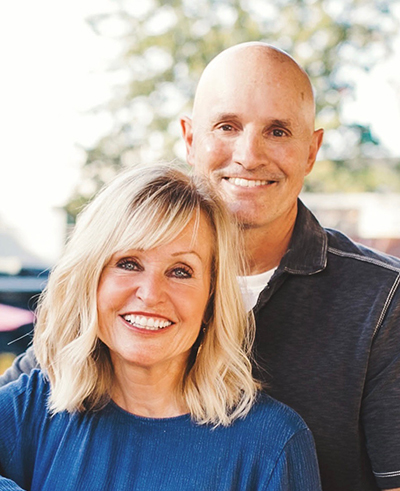
Dave and Ann Wilson
Dave and Ann Wilson are hosts of FamilyLife Today®.. Dave and Ann have been married for more than 38 years and have spent the last 33 teaching and mentoring couples and parents across the country. They have been featured speakers at FamilyLife’s Weekend to Remember® marriage getaway since 1993 and have also hosted their own marriage conferences across the country.
Episode Transcript
FamilyLife Today® with Dave and Ann Wilson – Web Version Transcript
This content has been generated by an artificial intelligence language model. While we strive for accuracy and quality, please note that the information provided will most likely not be entirely error-free or up-to-date. We recommend independently verifying the content with the originally-released audio. This transcript is provided for your personal use and general information purposes only. References to conferences, resources, or other special promotions may be obsolete. We do not assume any responsibility or liability for the use or interpretation of this content.
Loving Kids From Hard Places: A Foster Parenting Story
Guest: Peter Mutabazi
From the series: A Foster Parenting Story (Day 1 of 2)
Air date: June 22, 2026
Peter (00:04):
The one parenting tools works for one child but doesn’t work for the other because this child went through different trauma. This one came from a different trauma. This one came at a different time in your marriage life. This one came at a different time in marriage. So each child is always different. And if we can, yes, love on them for sure, but begin with love isn’t enough that we have to do more for our kids, especially for us as foster parents and adoptive parents to love our kids despite of what they go through, despite of the challenge that they have, that we get to be the best parents we can.
Ann (00:42):
Welcome to FamilyLife Today, where we want to help you pursue the relationships that matter most. I’m Ann Wilson.
Dave (00:49):
And I’m Dave Wilson and you can find us at FamilyLifeToday.com. This is FamilyLife Today. All right. Welcome to FamilyLife Today. You know what, Peter? I love saying your name.
Ann (01:11):
Wait, his last name, you’ve been saying it for like three days.
Dave (01:12):
Well, Peter’s one thing. I can say that. But I’ve been walking around all morning going, Mutabazi, Mutabazi. And you’ve been on here before, but some of our listeners or watchers don’t know your story. But we’re going to talk a little bit about your latest book, Love Does Not Conquer All—and here it is—And Other Surprising Lessons I Learned as a Foster Dad to More Than 40 Kids. That puts you in a category of most interesting man in the world. What do you mean a foster dad to 40 kids?
Peter (01:40):
Well, that means you get kids and then they go home and then they get adopted and they send you more. Make sure you always have kids at all times.
Ann (01:48):
What’s unique is you’re a single dad. You’re a single foster dad.
Peter (01:51):
I’m single. I’m hoping one day someone on this show might look, come and say, “That guy. I’m going to go after him.”
Dave (01:58):
Well, give us your journey. I mean, last time you were here, you told us the beginning of your story, which obviously has a lot to do with why you’re doing what you’re doing.
Ann (02:06):
I think I cried half the time that Peter was telling his story because it’s so miraculous. It’s really unbelievable. And we’ll put a link to that in our show notes so people can go and watch the original long version of your story.
Dave (02:20):
Well, you have to tell it again, shorter version.
Peter (02:21):
Well, in a short fashion. Well, I come from Uganda and grew up poor of the poorest. As a kid, I had to go fetch water three to four miles away. As a kid, I never had one meal a day. As a kid, I never slept on a mattress until I was 16 years old. As a kid, I never had a pair of shoes. I never had a second pair of clothes only for one to Sunday and that was it. And so for me, there wasn’t something in life that showed there was hope for me. At age of four, I began to realize that we were poor, but my father was the most abusive human being you could imagine. So on one side you have poverty, on the other a mean dad.
Ann (02:57):
And how many siblings do you have?
Peter (02:59):
I’m the oldest of five. But also too, the abuse was really difficult because it wasn’t coming just towards me, but it was coming towards my mother. So I had one parent that loved me but could not protect me or protect my siblings. So that was life for me. So at the age of 10, I ran away and became a street kid. And it’s on the streets of Kampala that I met a stranger after five years of living on the streets that changed my life, that he saw the best in me that I didn’t even know I had.
Ann (03:25):
You’ve got to share just a couple little stories of this stranger that you met because it’s miraculous of just how that encounter came about.
Peter (03:35):
Right. So as street kids we would always steal, and we’ll steal food from people who used us. Most people on the streets weren’t kind. So for us, we never associated kindness with something, anything good. If someone was kind, you had to run away because if it was a woman, they’re going to ask for sexual favors. If there’s a man, they’re going to do something towards you. So kindness was always aware of run for your life. So when I followed this man and I wanted to steal from him, he did something unique that nobody else had ever done. He said, “Hey, put my food down.” And he followed by asking me, “Hey, what is your name?” So I said, “My name is Peter.” And took a few steps back because I thought he’s going to do something, so I better be ready to run, but he did not.
(04:17):
And so he fed me for one year and one day he said, “Hey, I got two options for you. I can feed you once a week or you can go to a school where there’s food.” And I said, “Food, I’ll go. “
Ann (04:30):
You didn’t care about the school so much?
Peter (04:31):
No. For me, what he said, if you go to school, there’d be three meals. I had never in my entire life had three meals a day. So for me, I always dreamt that in heaven, like if there’s heaven, it’s a place you can have three meals. Literally, that’s what I thought. And I went, not because I wanted to be anything, to me I was like, one, he’d been there for me for that long. Two was there’s no place you can have three meals. So it was more of curiosity. I’m going to check it out. And sure enough, there was food and that’s what changed my life.
Ann (05:01):
Tell our listeners, too, where did the faith component come in?
Peter (05:05):
Well, the faith came in later. So he was really kind and that bothered me like, why is this guy so nice? So kind.
Dave (05:12):
Did he do that to other boys as well or just you?
Peter (05:14):
Just me. And he would give us enough food to feed about five kids, but also, we would always go in the group. So that is how he would always feed us. So for me, faith wasn’t something that I wanted to hear about because my father was very, very religious. He was Roman Catholic. I could not believe someone who can pray and beat the kids a few minutes later. So for me, I associated abuse with religion.
Ann (05:42):
So you wanted no part of that.
Peter (05:43):
No part. No part. Because it reminded me of the abuse from my father until this man took me to his home and then once he’s home, they had a table and the table had food and, on that table, they put one extra seat, and they put my name on it.
Dave:
Did they really?
Ann (06:02):
Did he have kids?
Peter (06:03):
Yes, he had kids, five kids. So putting that name on their table, that really gave me a glimpse that you belong, you belong. But also too, he really shared with me the life of Joseph. He had one story he would always tell me like, Peter, every time I wanted to give, I was like, “Peter, what did Joseph do? ” I’m like, “Hold up. Why? Why does that story always have to come?” And I had to memorize the words. So the words were, “For what you meant for evil, God used it for good to save a life.” So once they put the name on the table, that gave me a clue of what a family looked like because I didn’t have anything to compare what a good father is, what a good family is. So now they became my ideal. Like, wait a minute, if he has this family, if he cares for them, he went to school.
(06:47):
So then for me, school became important. So I excelled in school and that’s really how I got to where I am because watching him love his family and also include me in that family is what gave me the zeal to want to go back and do better in a way.
Ann (07:03):
So after that, where did you go from there?
Peter (07:06):
So then I went to high school, I went to University of Uganda and then I went to University in England and that’s how I came to United States as a student.
Dave (07:12):
So you were actually, if I go back, you were a 15-year-old first grader.
Peter (07:17):
Yeah. Exactly.
Dave:
Is that true?
Peter:
Yes.
Dave (07:18):
Yes. So you started at that age at the beginning?
Peter (07:21):
At the beginning. And what didn’t matter for me was I didn’t care that these were little. There was food. For me, what kept in school had nothing to do with school.
Ann (07:29):
It’s called survival instincts.
Peter (07:32):
Food. Food kept coming. I said, “Okay, I’ll stay. I’ll stay. These kids, they can call me whatever they want to call me, but food is coming.” And that’s how I survived.
Dave (07:42):
I mean, there’s something there when you think about if we’re trying to reach people with the love of God and they have physical needs, start there.
Peter (07:50):
Correct.
Dave (07:51):
You can talk all you want about God. They’re probably not able to hear it if their stomach is empty. You know what I’m saying? Is there something to that? Because that’s what you experienced.
Peter (08:00):
Absolutely. And also as a foster parent, it’s hard to have a child who’s holding food. They’re holding food for—the only reason is they know there’s no food tomorrow. How do you tell that child, God loves you so much when one worry is no food tomorrow, no food tomorrow. So anything I got to gather, I got to keep. And I think when we meet people’s needs, I think they get to be in a place where to feel this need is taken care of. Now, what more can I learn? And until people are in that place, then we can hear them. Then they can hear the gospel, but also too, they get to know their tummies are full, that God loves them in a way that He’s providing for them.
Dave (08:41):
So what happens when you get here?
Peter (08:42):
So I get here. So my first day I flew from Uganda to Los Angeles. The family that took me in took me for dinner. I go to eat and I had never seen that much food in my time.
Ann (08:55):
Was this the first time in the United States?
Peter (08:57):
Yes, that first night. So I was like, “There’s so much food.” But as I was eating, I noticed there were people who were passing by with buckets of food. These were waiters. So I asked, “Hey, where’s that food going?” And they said, “Well, it’s going to be thrown away.” And in those moments, I began to, not angry but more of confused about God’s love. Like, “God, how could You love us, but You could give so much to others to throw away, but others can die for lack of beans and potatoes.” Because in my family, we’d lost members of my family for lack of beans and potatoes. So for me, I think I was really struggling with my faith watching the food and wondering, “God, how can we love You the same way?” Or “”How can You say You love us the same way?”
(09:42):
And that’s kind of when for me, Psalm 139 just again came back to my head for the Lord says before the word is on my tongue that you know when I stretch, when I rise. So for David to say, God, you know every little instinct of my life, I was like, hold on. If this man had 300 wives, is that true? I mean, he had everything you could think of, but in Psalm 139, he does not talk about what he had, but the simple things; that you knit me in my mother’s womb. To me, those words really helped me to know God loves me not based on the food, but for I’m fearfully and wonderfully made.
Dave (10:25):
As a pastor, I have definitely felt the tension of serving marriages in our church. I mean, it’s a passion of ours and couples aren’t falling apart, but they’re not really connecting either. So things can look fine on the surface or on the outside, but there’s always some drift happening underneath. And you see this as a leader and you know marriages need support, but figuring out what to do, often it can feel overwhelming. So we’ve walked with a lot of churches through this and most just need a simple place to start.
Ann (10:57):
And we have that for you. So if you thought about doing a marriage event but didn’t want to build it from scratch, this is a great way forward. When you purchase 10 or more workbooks, we’ll include the full video study. Just use the code StrongFamilies. Did you hear that? StrongFamilies.
Dave (11:17):
That’s one word.
Ann (11:17):
Yep. Through June 30th. And you can go to FamilyLifeToday.com and click the link in the show notes and just again, enter the discount code StrongFamilies.
Dave (11:27):
Let me tell you, strong families don’t happen by accident. Sometimes all it takes is one intentional step to help couples reconnect again.
Ann (11:39):
I would say if you’re a parent listening to this and you haven’t taken your kids around the world just to see how other people are living; it opens their eyes. Because when I’ve gone and I’ve come back—I remember I had been in Nepal to some of the villages in Nepal up on the mountains where there’s nothing. We come in as guests, and they were so proud to hand us a boiled egg that they had had and that was a luxury to have that. And then I remember coming back at Christmastime going to this mall close to where we live and it felt so terrible to me of our surplus and how we take it for granted that I had to go home because it’s exactly what you said is like, oh, this just doesn’t make sense. And some people are living in such poverty, and we have this surplus of things that we don’t even need.
(12:33):
And I think it’s good for kids to understand like there’s a whole world out there that not only need Jesus and the gospel, but they need food and they need provision and they need love and as we’re talking about this.
Peter (12:49):
Yes, gratitude, to step back—
Ann (12:51):
Gratitude, that’s it.
Peter (12:51):
To step back and say, “God, you love me. I cannot believe when you open that closet and you count how many shoes are in there to stop and say, God, wow, you love me. To go to that pantry, open that fridge and say, wow, this food. And I love encouraging young kids to say, look back to your mom and dad and say, “Mom, thank you that I have a meal” because some kids have nothing to eat or to be grateful for, for us to be so—so that’s why for me, Luke 12:48 convicted me to who much is given much is required. I felt I was the wealthiest man on the planet.
Ann (13:26):
Did you feel like that really?
Peter (13:27):
Oh yes. But then I had an apartment and I had an extra bedroom.
Ann (13:34):
What were you doing to make money?
Peter (13:35):
Well, so I was speaking, that’s what I could ask—
Ann:
Telling your story.
Peter:
—telling my story and speaking and raising funds for kids and also doing odd jobs.
Ann (13:44):
Yeah. Was this through Compassion then?
Peter (13:45):
Yes, with Compassion.
Ann:
Compassion ministry.
Peter:
Right. So then for me, I don’t know too much even like I felt I was the wealthiest man on the planet. So one day I am traveling with some of the pastors in Kenya and there’s one pastor holding a picture and he’s like, “We just got a baby and I love this baby.” And I’m like, “Oh, that child is black. You’re white. How does that work?”
(14:07):
And then he’s like, “Well,” explained about foster care. And as he was explaining that the light bulb went up, those are my people. That was me as a little boy, hopeless not knowing where’s my mom, where’s my next future. But I didn’t know they would allow me to be a foster parent. I travel over the world. I never seen a black person who was adapting in Uganda or in Ethiopia. I believe the lie that you have to be married and you have to be Caucasian. Literally, that’s what I thought to be a foster parent you have to be. So for me, I walked into the foster care, I said, “Hey, is there a way you could allow me to mentor teenagers?” Teenagers who can hang out with teenagers for an hour. That was my whole goal. I said, “Sure.” I go in and the social worker looked at me and said, “Have you ever thought of being a foster dad?” I said, “Yes, but I’m not qualified.” I didn’t say the other things.
(14:55):
I just said, “I’m seeing or say, hey Peter, you can be.” Literally it was on a Monday. I said, “You have to give me papers to sign to assure me that I can be a foster parent.”—on a Monday. On Thursday, I started licensing class because I knew I had been given so much and I knew I was in a position to love, to provide, but also to the trauma I had gone through that I can really come alongside these kids and say, “It’s going to be okay.”
Ann (15:23):
But you knew, you felt that in your spirit.
Peter (15:24):
Absolutely.
Ann:
“This is what I’m supposed to do.”
Peter:
My call, no looking back, no doubting, just this is my call and that’s what I did. Since then I’ve had 47. It’s been a rollercoaster I can tell you. I don’t know when it’s going to turn. I don’t know when it’s going to go up. It’s just a roll coaster.
Dave (15:40):
How many are in your house right now?
Peter (15:42):
Right now, six.
Dave (15:43):
Six. And you’ve adopted-
Peter (15:45):
Three. So I adopted three and I’m now in process of adopting the other three.
Dave (15:48):
Really? So those are never going away.
Peter (15:50):
No, and I would like two more.
Dave (15:51):
I mean, they might get married, they might—
Peter (15:53):
—get older.
Dave (15:53):
They’re yours.
Ann (15:54):
Having children is not easy. Having our own bio children is not easy. Having foster kids who have come in with trauma, now we’re talking a whole nother level of not easy, just because of the trauma they’ve carried in. And so you have seen a lot.
Peter (16:11):
A lot in every shape, form, size, name it. I’ve seen it. I have seen it. I can give you one example. So I got a six-year-old kid. He needed a home at 3:00 in the morning. He comes in. So I say, “Hey, there’s a bathroom over there.” He goes, uses the bathroom, he does number two. He picks up number two; he smears in the entire—
Ann (16:33):
No.
Peter (16:34):
Yes, in the entire room. So I’m sitting there, something’s smelling wrong. So I walk in and literally it’s just everywhere.
Dave (16:44):
On the walls.
Peter (16:44):
On the walls. But this kid is just six years old, and he just came into your home like 10 minutes ago. What do you do? How do you respond? So for me, the only thing I could think about was, I got to call a social worker to pick up this child. I cannot deal with this.
(17:01):
But before I could call the social worker, I needed to put him in a place where he cleaned up. So I let him clean up and then I put him in a chair somewhere and I said, “You know, I’m not going to harm you. You’re just here and I want to make sure you’re okay.” And the kid looks at me, he said, “I knew you were going to do something bad to me. So I didn’t want you to do anything to me.” I mean, my heart sunk. My heart sunk right there and then that I realized that someone had touched him in the wrong way, that he was trying to protect himself. He had nothing to do with making my house—
Ann (17:38):
Right. There was a reason behind it.
Peter (17:39):
Absolutely. And I didn’t call the social worker, of course. I was like, “No.” And I had to sit with that little boy and find another way for him to feel safe and to see him really thriving and doing well, you get to know that when we meet children where they are, when we love them as who they are rather than who we want them to be, that we get to be the hands and feet of Jesus. Loving as kids is who they are, not what I want them to be, has truly been a joy. So talk about trauma. I know it. I can smell it.
Ann (18:11):
Well, what made you write this book literally? Love Does Not Conquer All.
Peter (18:17):
So I wrote that book and I gave that title, Love Does Not Conquer All. For me who has so many followers, sometimes you hear people say, “I cannot wait to just have the man love on them.” And you’re like, “That’s fun. Absolutely.” But it’s the opposite. Loving someone who does not even know what love means. How do you translate that? How do you love them constantly when they are rejecting you?
Ann (18:39):
Yes, even parents with their own bio kids experience this.
Peter (18:41):
Absolutely. Yeah. So for me, I think when I became a foster parent, I didn’t have tools or someone walk through with me that way. So I thought with my experience, let me write for people who want to adopt kids, people who want to force, even people who want to have their own kids, that when we learn that we don’t transfer or project our own self
(19:01):
where we grew up and project on our kids, we get to love on them. We get to see them as different kids. The one parenting tools works for one child but doesn’t work for the other because this child went through different trauma, this one came from a different trauma. This one came at a different time in your marriage life. This one came at a different time in marriage. So each child is always different. And if we can, yes, love on them for sure, but begin with love isn’t enough that we have to do more for our kids, especially for us as foster parents and adoptive parents to love our kids despite of what they go through, despite of the challenges that they have, that we get to be the best parents we can be.
Dave (19:39):
I mean, have you ever gotten to the place of just total exasperation?
Ann (19:45):
I was going to say that, Dave, but they drive me crazy.
Dave (19:47):
I mean, the poop on the wall is one thing. I don’t know if I could handle it, but even worse. I mean, if you get like, this is driving me crazy.
Peter (19:58):
Oh yes. Yeah.
Ann (19:58):
Just their outright rebellion and attitude.
Peter (20:02):
Oh yes. But here’s for me what works best for me. I thought I was a believer until I became a foster parent. Then I realized how far of a faith man I am because I realized that I give that middle finger to Jesus, to God every day, but he does not strike me. And there’s the same attitude that I need to have towards my kids. To love them, that’s what I signed up for, to love them despite they’re calling me every word you could think of. Sometimes I got kids who put holes in my wall and I’m about to say, “But we put two more last week. Can we just go somewhere else differently?”
Dave (20:33):
So I mean, they literally kicking or punching the wall?
Peter (20:37):
Yes!
Dave (20:38):
And what do you do?
Peter (20:39):
Usually after that we go for ice cream and then we go to Hobby Lobby, and they pick up their whatever painting they can to cover that hole.
Ann:
Hobby Lobby.
Peter:
That reminder, “Hey, there’s a hole here.”
Ann (20:53):
Even if it’s at knee level.
Peter (20:54):
Yes, absolutely.
Dave (20:56):
So do you really go get ice cream?
Peter (20:57):
Yes.
Dave (20:58):
So what’s going on there?
Peter (20:59):
To talk to a human being who’s mad, agitated, feeling unseen and hard, it’s like talking to a wall. It does not help at all. I’ve learned as a foster parent to put my kids to the place they can hear me is the best place I can be able to parent and help them out. So for me, an ice cream is another way that shows my child to feel “Dad is here, I’m okay. And what I did last minute is not defining what I am right now.” And so for me as a parent to step back and say, “I want to hear you, and I want to be there for you. And I want to make sure that the focus isn’t what you just did, but the focus is what’s going on? Tell me.” And putting them a place where they can hear me, see me is the best way to have that good communication.
(21:47):
And sometimes it’s the ice cream.
Dave:
Yeah.
Ann (21:49):
That’s really smart. And I usually say to parents, especially as you’re getting into teenage years, but I think when you’re in foster care or adopting a child, the phrase “Don’t take it personally” is a big deal. I know as a parent, I took so many things personally and it wasn’t about me. So most of the time, almost all the time, it was about something they were dealing with.
Dave (22:14):
It was about me.
Ann (22:15):
Sometimes it was. It was displaced. But I think that is true that we take it so personally. How could you? But by diffusing it, taking them to ice cream or taking them out to lunch and not making it be about this disrespectful thing—you might get to that later, but in the moment, you’re asking, “What’s going on?”
Peter (22:36):
Yeah. You’re making sure they are seen and heard and you’re validating their feelings. I don’t know any child who was ripped out of their home. They were never told why. They brought them to a stranger’s home. For me to expect that they should love me and do that—
Ann (22:51):
—doesn’t even make sense.
Peter (22:52):
Exactly. That’s unreasonable. Sometimes for us as foster parents, we get to step back and say, “I want to hear my child, but I want to validate what they are feeling.” I don’t like the way it’s coming out of their mouth for sure, but at the same time, that sense of I want to hear them, that it really helps us. And also removes me from—think about I come from a world where if you yelled at me, all I could hear was my father. That it’s easy to push the buttons and bring back my childhood trauma.
Ann (23:22):
Oh, I can’t imagine.
Peter (23:23):
So think about if that raised my brain, well, I’m going to bring my childhood trauma in my parenting style, but by me stepping up and say, “It’s not about me,” I’m not bringing my father into my child’s behavior.
Dave (23:36):
Well, it’s been a long time since we had Peter on FamilyLife Today and I’m so glad he’s back.
Ann (23:41):
Me too. His story, just him reminding us of all that he went through is pretty traumatic. I feel so wiped out emotionally.
Dave (23:52):
That’s amazing what he’s doing now.
Ann (23:54):
That’s what I mean. It’s so cool.
Dave (23:55):
God is the God of resurrection. He gives you a new life, and a new purpose and his life is a calling. The book we’ve been talking about today is Love Does Not Conquer All: And Other Surprising Lessons I Learned as a Foster Dad to More Than 40 Kids. You can get the book at FamilyLifeToday.com. Just click on the link in the show notes and we’ve got Peter back tomorrow.
Let me just say this. We meet a ton of couples who say FamilyLife helped them when they needed it the most. And that’s what being a FamilyLife Partner is all about, helping others find that same encouragement and tools that you found right here.
Ann (24:31):
And we’d love for you to join us. So click the donate button at FamilyLifeToday.com and become a partner today.
Dave (24:45):
FamilyLife Today is a donor-supported production of FamilyLife®, a Cru® ministry; 50 years of helping you pursue the relationships that matter most.
If you’ve benefited from the FamilyLife Today transcripts, would you consider donating today to help defray the costs of producing them and making them available online?
Copyright © 2026 FamilyLife. All rights reserved.