

Parenting Children with Disabilities: Hope for the Hard–Emily Jensen and Laura Wifler
You didn’t plan this road…and some days it’s heavier than you can explain. Emily Jensen and Laura Wifler talk honestly about parenting children with disabilities: including the grief, the grit, and the quiet beauty most people miss. Emily and Laura don’t tidy it up, but they do point to a steadier way to carry what can feel impossible.


Show Notes
-
Ge your copy of Risen Motherhood: Gospel Hope for Everyday Moments on our shop.
-
Get to know more about Emily and Laura at → risenmotherhood.com
-
Become a monthly partner with FamilyLife Today — your gift is matched for a full year (double your impact!)
- Thanks to the Christian Standard Bible for sponsoring this episode. Learn more at CSBible.com.
- Follow us on all social platforms: Facebook | Instagram | YouTube
- Find resources from our podcast at shop.familylife.com.
- Download FamilyLife's app!
- Help others find FamilyLife. Leave a review on Apple Podcast or Spotify.
- Check out all the FamilyLife's podcasts on the FamilyLife Podcast Network
About the Guest
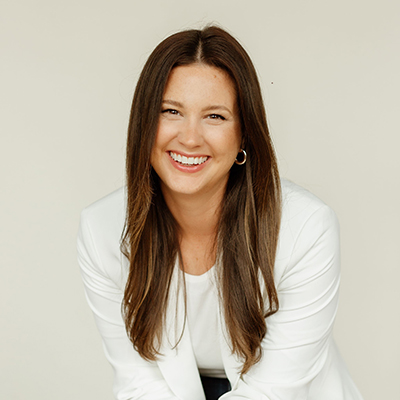
Emily Jensen
Emily A. Jensen is an author, a podcaster, and the cofounder and content director of Risen Motherhood. Her first book (coauthored with her podcast partner and sister-in-law) Risen Motherhood: Gospel Hope for Everyday Moments, has sold more than 100,000 copies. Her latest book, He is Strong: Devotions for When You Feel Weak, releases in October, 2023. Emily lives in central Iowa, with her husband and their five children. You can find out more at emilyajensen.com or follow her @emilyajensen on Instagram.

Laura Wifler
Laura Wifler is a writer, podcaster, and co-founder of Risen Motherhood and is based in central Iowa. She has authored multiple bestselling, award-winning books for children, including, “Any Time, Any Place, Any Prayer,” and “Like Me,” and is the co-author of the Risen Motherhood book. You can find her on Instagram, @laurawifler.
About the Host
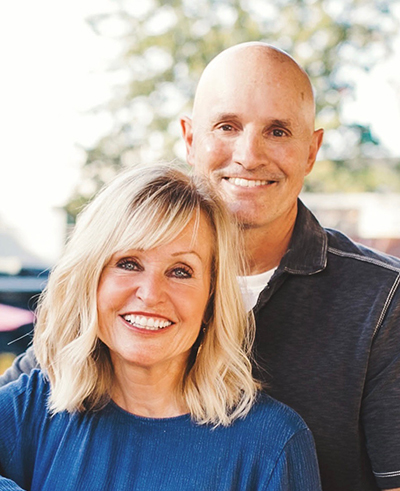
Dave and Ann Wilson
Dave and Ann Wilson are hosts of FamilyLife Today®.. Dave and Ann have been married for more than 38 years and have spent the last 33 teaching and mentoring couples and parents across the country. They have been featured speakers at FamilyLife’s Weekend to Remember® marriage getaway since 1993 and have also hosted their own marriage conferences across the country.
Episode Transcript
FamilyLife Today® with Dave and Ann Wilson – Web Version Transcript
This content has been generated by an artificial intelligence language model. While we strive for accuracy and quality, please note that the information provided will most likely not be entirely error-free or up-to-date. We recommend independently verifying the content with the originally-released audio. This transcript is provided for your personal use and general information purposes only. References to conferences, resources, or other special promotions may be obsolete. We do not assume any responsibility or liability for the use or interpretation of this content.
Parenting Children with Disabilities: Hope for the Hard
Guests:Emily Jenson and Laura Wifler
From the series:Hot Mess to Hopeful: Risen Motherhood for the Worst Days
(Day 3 of 3)
Air date:May 6, 2026
Laura (00:04):
When my daughter was diagnosed, I felt pity for her, all that stinks. I would confess that I have felt those things, and I think that’s a very natural first response. But then I think when we back up, when we think about it biblically and apply the gospel, we can remember that every person on the planet is made in the image of God and therefore they have inherent worth simply because they’re made in the image of God.
Dave (00:33):
Welcome to FamilyLife Today, where we want to help you pursue the relationships that matter most. I’m Dave Wilson.
Ann (00:39):
And I’m Ann Wilson, and you can find us at FamilyLifeToday.com. This is FamilyLife Today.
Dave (00:52):
So I thought the way to start today is a word I hate.
Ann (00:55):
What is it?
Dave (00:55):
Weak. I don’t want to talk about weak. I want to be strong. I want to go in a weight room. And I want to throw up some pounds. I don’t want to walk around like “He’s a weak man.” I want to be a strong man.
Ann (01:05):
That’s true for women too. We don’t want to be weak. And yet we’re going to talk about that.
Dave (01:10):
Yeah. And actually, I’m being facetious because when we’re weak, He is strong.
Ann (01:14):
Exactly.
Dave (01:16):
And it is a beautiful thing.
So we’ve got Emily Jensen and Laura Wifler back at FamilyLife Today in Orlando with two of your eight kids between you.
Emily (01:25):
That’s right.
Laura:
Yeah. We each brought our oldest son to do a little Orlando adventure after we got done recording.
Ann (01:31):
And we’re going to talk about two of your books. You’ve each written a book. And Emily, you’ve written He is Strong.
Dave (01:38):
See, I like the title.
Ann (01:39):
Me too. He is Strong: Devotions for When You Feel Weak. I’m just going to tell you, as a listener, if you’re a woman, you need to get both of these books. The other one is a children’s book called Like Me: A Story about Disability and Discovering God’s Image in Every Person.
Dave (01:58):
Well, here’s the thing. If people know you, then they know this, but very unique that your related family. You married her brother.
Ann (02:08):
Emily married Laura’s brother.
Dave (02:09):
And you both have a child with disabilities. And you’ve even said doctors tell you that’s very unique, right?
Laura (02:15):
Yeah. It’s incredibly unusual. We were told it’s like lightning striking twice, because we both have children with disabilities, and yet they’re unrelated as far as doctors can tell. But I think Emily and I would both say that God has decided that, and that there is some intention there, and so we trust Him with that. But yeah, it’s definitely kind of a wild story.
Ann (02:37):
Can you take us back to that? How many kids did you have? What went on in your lives? What did you feel? Take us back.
Emily (02:44):
Sure. So our son with disabilities is the fourth in our lineup of five. And I had a really typical pregnancy with him, a typical birth. And so it wasn’t until he was about three to six months old that we noticed some things that were a little strange about him. He smiled and laughed, but he only rolled over once, and then he never really rolled over again. He would kind of scoot to get around. He was not sitting up on his own. He had a hard time holding his head up. And so we went to the doctor and just said, “What’s going on here? This seems a little odd,” but we weren’t super concerned. And she had a really hopeful prognosis. “Oh, it’s your fourth child. He’s probably really laid back. He’ll catch up. We don’t really notice anything.” And eventually, when he was around a year old, after we’d done MRIs and we’d done all this testing, we found out through genetic tests that he had a very rare genetic syndrome.
(03:38):
And so he has like one piece of a chromosome that’s like flipped upside down and it’s affected everything about him developmentally. And his doctor at the time said, “Oh, he’ll be walking into preschool. He might be a little bit behind but get him in therapy. Everything will probably be good.” Well, he was not walking into preschool. In fact, he did not walk until he was seven. So he’s only been walking for a year. He had a wheelchair. He’s still totally nonverbal, so he does not talk at all. He uses a communication device occasionally and he has just really significant delays in every area. And so I would say our grieving process, my husband and I, it’s almost been a little bit abnormal because at the beginning we had such a good prognosis and such hope. And then every year that would go by, we would go, ” Whoa, the gap is widening so much between him and his peers.”
(04:35):
It’s a lot harder than we ever would have thought. His disabilities are a lot more serious than we ever would have thought. And then He is Strong. This book was kind of after a cascade of events, but one of those for me was he had his first seizure, and he ended up being diagnosed with epilepsy. And so adding these major medical things to something that was already extremely tough, really, it was just like I got the rug pulled out from under me and my life and it made me face my own weakness. And so that’s a little bit of our story, but Laura, you guys kind of have a little bit of a different story if you want to share.
Laura (05:12):
Sure. Yeah. I was pregnant with my daughter. She is my youngest of my three children and there was maybe a couple things at the end of pregnancy that clued us in that perhaps she would have disabilities or perhaps she would have just kind of had like a failure to thrive in utero. And so at about two months old, we had thought we were in the clear, but I just noticed—since she was my third child, I felt like there’s some things that—I’ve had these other children. I know that she’s not doing the same things. Things like eye contact and smiling that she wasn’t doing. And then we also, of course, had heard, hey, she might have disabilities. But it seemed like she didn’t right away. So at two months old though, I really lobbied pretty heavily for genetic testing because my mom gut just said something is off.
(05:55):
And we ended up being able to get that. And she was diagnosed about three or four weeks later. We were told that she has a genetic abnormality, which is kind of similar to my nephew, Emily’s son, but actually wholly and completely different in the sense that for her, she has a duplication and inversion of 540 genes. So very different than a single. It’s, again, unrelated, things like that, and yet it affects her globally. But we knew that right from the outset. And the doctor said, Hey, she’s the only one in the world with what she has. We’ve never seen anything like this.
Ann:
Really?
Laura:
Yes, the only one.
Ann (06:32):
Whoa.
Laura (06:33):
I know, pretty wild. They said, “But we can look at some children who are somewhat similar to her, and we can make some predictions.” So we got about five pages of all the things that could potentially be complications for her. And that set us down a very big high medical need situation and we were doing surgeries and scans and all the things. They also told us in that time that she would likely never walk or never talk. And they said, “We can be hopeful, but probably that’s where your expectations need to set.” So time passes and years go by and eventually I’m so thankful to be able to tell you for her, she is able to walk, and she had a walker and she had leg braces.
Emily:
She runs.
Laura:
She runs. She’ll do like a Somersault, and she’s still affected globally, so you can tell, but she really has great movement.
(07:22):
And then also, with talking, she has started to talk.
Ann (07:26):
How old is she now?
Laura (07:26):
She is in kindergarten. She’s six years old.
(07:29):
So she’s talking and definitely has intellectual disabilities and is delayed there, but overall she’s doing much better than any doctor ever predicted, which we’re so thankful for. So yeah, our stories are very different. Out of my daughter’s story, I wrote the book Like Me, and that’s a kid’s book that was just really designed to help educate children who perhaps don’t have a lot of familiarity with other children with disabilities. And to just show them what it looks like to have a friend with disabilities and to teach them what the Imago Dei is, which I know is a concept a lot of parents want to teach. So of course, I also was thinking of my nephew Jones as I wrote that book too, and both Emily and I have a lot of touch points with others with disabilities. And so it seems like God’s been writing that into our stories for a long time.
Ann (08:17):
I’m thinking as I look at you two, isn’t it sweet that you have each other? What has that been like? Have you needed one another in these days?
Emily (08:26):
Yeah, absolutely. It’s been a gift in the midst of a really hard situation, definitely a provision from God. I mean, I think that one of the things that’s hard about being a parent to a child with a disability is that when you look at other families, it’s night and day and you almost can’t compare.
(08:46):
I was telling Laura—we were talking about coming to Florida and all these different things and I said, “Oh, I just don’t think we could bring our son here and do some of these things.” And that’s a real limitation for our family. It’s not as easy as just, “Well, we’ll pick up and go somewhere.”
Ann:
—as a family.
Emily:
—as a family. We have emergency medication that needs to come, and you’ve got to worry about sensory things and what are you going to do when there’s a meltdown and is it worth it? There’s just so, so many challenges. And so you look around at other families and can get really discouraged
(09:16):
By some of the limitations and challenges that are there and how “easy” it feels like other families have it and they don’t even understand how easy they have it. And so what’s been nice is Laura’s not only my sister-in-law, but she’s also my best friend. And I think it would be so hard if I felt like, oh, she’s doing these things as a mom and she doesn’t understand my challenges or when my son has a meltdown or he pulls my hair or he does whatever, she’s not going to get it. But she does get it. And it’s such a gift that we can just like make eye contact with each other and she’s like, “I know, I got it. It’s fine.” Or we can kind of bond over, “Oh, I had to carry my kid screaming out of this place.” And it’s way different than you’re taking your two-year-old screaming—
Laura (09:59):
—carrying a seven-year-old.
Emily:
Yeah, that’s very different than a two-year-old.
Dave (10:01):
And people are looking at you like “You’re a bad mom.”
Emily (10:03):
And they’re wondering what’s going on. Yeah. They’re telling you tips on how to raise your kid.
(10:08):
So it’s been a gift.
Laura:
It has been a gift. And I think that—I know what we have is rare; obviously very, very rare. But I think that it’s been incredible to me to see what it’s like to have a child with disabilities in the day and age that we live in and how different it is than it used to be. And I think there’s a lot of hope. And it’s something that I think with disabilities, often it’s different than a different type of grief because let’s say you go through a death in the family; horrific, horrible.
(10:37):
But you also—there’s a finality to it. And you say, “Okay, how are we going to move on? How do we learn to live within this knowledge?” But with disabilities, it’s very much an unfolding, day by day of, for me, the news was maybe a little better than what I was told. But for Emily, the news actually got harder for her. And there’s so much hope that you hold as a parent for your child with disabilities and you want to believe, well, they’re going to be basically just like normal or close to normal. That’s what you tell yourself, but then there’s this slow waking up to the reality that, no, this is how far off they are. And you don’t know what that—like still today, Emily and I don’t know what that is. We’re waiting and every day we’re walking forward, we’re discovering new challenges, new painful moments, new milestones that just rip your heart out because your child didn’t get them, and you need community.
(11:28):
And so that’s where going back to having a child in this day and age, there are a lot of resources for great community. And I really think no mom should be walking this, or dad should be walking this path alone. And churches are doing more. I think I’ve seen more of them connecting families. There’s online organizations. Something incredible is on Facebook, there’s a group of parents that have children that are somewhat similar to my daughter. And they’re not the same, but there’s this group where we can share maybe not Christian faith, but we can share, “Oh, well, this is something medically that my child experienced.” “Oh, my child’s 14. Here’s what it looks like for us.” And so there’s been some camaraderie that can even be developed. And so for any parent who’s out there and has a child with disabilities, I would just encourage them to seek out groups, seek out friendships and relationships and don’t walk the path alone because you don’t have to.
Ann (12:19):
And I’m guessing as you think of your future with your husband, like your future will be different as all of your kids get older and like you may not be alone.
Emily (12:30):
Absolutely. And I think that’s something that it’s hard to wrestle with, but it’s also something that you accept and plan for. And it’s really made a sweet, I guess, dreaming and camaraderie even with my own husband that we’ll talk about someday when we live in Florida and Jones is with us and he’s in the back of the Jeep with the top down and we’ll drive him around.
Ann:
That’s so cute.
Emily:
And you have to have fun with it because it’s—
Laura:
You have to laugh.
Emily:
It’s hard. It is hard to imagine the caregiving. And I think one thing that’s helped me and us over the years is just staying in the grace that we need today.
Ann (13:10):
The gospel.
Emily (13:11):
Yes!
Ann (13:11):
You always are talking about how does the gospel relate to my situation?
Emily (13:13):
Because I’m not in that position yet. I’m not raising a 30-year-old at home yet, and God will give me grace for that when that comes. And I think if there’s anything this journey has taught me is that I don’t know what tomorrow looks like. I do not know what tomorrow will hold, but today’s worries have enough for today. And so all I can lean on today is for the grace that I need to get through this challenge that’s in front of me now. And so yeah, be realistic, think about the future, imagine that, laugh together, cry together, figure out what are we going to need to be prepared for that to happen. There’s a lot of practical things we’ve had to do, but ultimately, I try not to live in that worry because I’m not there yet.
Laura (13:53):
Well, and on a related note, I think that that is such good advice. And I think too, recognizing that we are not to grieve the things we haven’t been asked to grieve yet. And so often when we get that diagnosis or any bad news, right, our minds go straight to the worst-case scenario. And I remember when my daughter really received worst case scenario diagnosis. I mean, that was what I was told from the best geneticist that that hospital had to offer. And right away, I’m like, “Oh my gosh, we’re going to have to remodel our entire house and we’re going to have to figure out an in- home care and I’m never going to be alone ever again.” And all these things and we just like spiral out of control. It’s really easy to do that. And I had to back up and say, “Okay—just like what Emily’s saying—that’s not my reality yet.” And so live in the present moment and trust that there’s enough grace for today.
(14:42):
There’s grace awaiting you tomorrow. And I think that it helped sometimes because I would look at a friend who was suffering something different, but just as hard, a friend who was going through a really horrific death in their family, or maybe they lost a child or they had a stillbirth, something that I personally have never experienced. And you know how you look at a friend and you’re like, “How are you doing this?” You say, “I can’t even imagine.” And that’s actually because you’re not supposed to be able to imagine because you haven’t gotten the grace that that friend has. It is a special grace design just for them. And God has that same thing for you as a parent to a child with disabilities. And that helped me so much, just what Emily’s talking about of knowing that man, I look ahead to the future, and it can get bleak kind of fast or kind of feel—I can feel jealous of my peers and feel like, that stinks.
(15:35):
Why don’t I get that? But then I remember that my life is pretty full now. My life is really beautiful now. My life has joy right now. And so I can trust that God’s going to have that stuff waiting for me someday.
Dave (15:50):
For 50 years, God has been using FamilyLife to strengthen homes, restore marriages, and help families flourish. And every single story of hope we celebrate today began the same way—with someone choosing to give generously so that another family could be reached.
Ann (16:07):
Families still need that same support right now, but they’re carrying heavy burdens and aren’t sure where to turn. And that’s why monthly partners are so essential. When you become a FamilyLife partner, your steady, faithful support allows us to connect with so many families, and we get to offer biblical wisdom, practical guidance, and life-changing resources rooted in God’s Word.
Dave (16:34):
And who doesn’t want that? So right now, every new monthly gift will be matched for an entire year, doubling the impact of your generosity. So would you consider becoming a monthly FamilyLife Partner? If so, just go to FamilyLifeToday.com or you can call us at 1-800-FLToday.
Ann (16:58):
I talk often with parents who have kids with special needs or some sort of disability and the other siblings are kind of remarkable as a result.
Laura (17:09):
Oh, you just spot them, can’t you?
Ann (17:10):
Yes, exactly. What does that look like for your families? Is that true?
Laura (17:14):
Absolutely. I mean, I think that it has really shaped our family culture. I don’t want to toot my own horn, and we are not at the end yet, so I don’t have proof in the pudding, so I need all that to be out there. But I do consistently feel like I see in my children a compassionate heart being developed; one of fairly endless patience, of understanding, and even—and I see this in Emily’s children as well, and even some other cousins that we have in our family that are close with us—just a heart for those that are overlooked. And I have seen my kids just go up to a young girl in a wheelchair who is nonverbal and is at our school and just lay their hand on her shoulder.
Ann (17:58):
That’s so sweet. That makes me cry.
Laura (18:02):
Yeah, I know. Me too. I’m tender with it, too. And just because they understand in a very unique way that that other person is the Imago Dei and they deserve—what we say in our home is they deserve dignity paired with compassion. And so oftentimes I think when it comes to seeing others with disabilities, we can often say, “We have pity.” When my daughter was diagnosed, I felt pity for her. I felt like all that stinks. I felt self-pity for me. I have felt pity for Emily. I will confess that I have felt those things, and I think that’s a very natural first response. But then I think when we back up, when we think about it biblically and apply the gospel, we can remember that no, every person on the planet is made in the image of God, and therefore, they have inherent worth, value, and dignity.
(18:53):
So for my kids to go up and spend time with another kid isn’t based on whether they’ll be more popular. It’s not based on whether they’re going to have more friendships or more success or be better at sports, wherever it is. Instead, they know, or I’m hoping that they continue to learn to know that that person deserves their presence simply because they’re made in the image of God. And that we can feel for someone, that we can say, “I’m sorry this happened.” We can still recognize the effects of the fall. We don’t ignore those, but we can still give them that worth and value through spending time with them, through speaking to them, through smiling, even when maybe we don’t get a response back that we feel like is appropriate socially, or even if we feel uncomfortable or awkward. That’s something I talk to my kids all the time: “This life isn’t about you.”
(19:36):
We say in our home, “My life for yours.” And what that means is that Christ gave his life for us and therefore now we can give our life to others. And that’s not in some self-sacrificial martyr way, but in a way that says, “This life isn’t about me feeling comfortable.” And I think when we get around people with disabilities, you learn real quick that I’m going to feel uncomfortable and awkward. They probably feel fine. So anyway, Emily, what would you add? Anything?
Emily (20:00):
Yeah. It’s interesting watching it through a child’s eyes because they can hold sorrow and joy together, I think a lot better than an adult can sometimes. And so it’s even been interesting watching our kids see our son have a seizure, and they have that fear and processing through all of that. And 10 minutes later, they’re in the backyard playing football and they’re laughing again and they can kind of transition in and out of that. And they feel the weight of it, but they don’t carry it in the same way that we do as an adult. And so sometimes I think about childlike faith and what it looks like to accept what God has given and have sorrow for the sad things and have joy in the good things and be able to have both and like to still laugh. So I learned that from my kids a lot.
(20:53):
And I’m actually a sibling of someone with a disability and that’s my youngest brother, my only sibling. And so it’s deeply affected my life. It’s deeply shaped me. And it’s hard for me to translate that to my own kids sometimes to know that’s happening in their life too. But we’ve seen a lot of things like what Laura said.
There’s a kiddo in my twins’ grade that their teacher was asking, “What in the world?” They were playing with a kiddo who doesn’t talk the same way and is on the spectrum, some different things, and they just went right over and played. They were taking turns every other day playing with him at recess. And they had a teacher pull them aside, and it wasn’t until the teacher kind of pointed out, “That’s really great that you’re doing that,” that they even really noticed. And it was just like an instinctive for them to go to the kiddo who was different because they’re comfortable with that, right?
(21:47):
That’s like their brother. And I just appreciate the comfort that there is with someone who looks different, sounds different. There’s just not a big barrier in approaching them and talking with them and it’s a gift. I don’t think they have any idea.
Laura (22:02):
But so much of that is, and not to toot our own horn, but it’s top down, it’s taught. And that I think is what’s exciting for families who maybe don’t have closeness with a child with disabilities. So many families here, I know a lot of my friends will say, “Well, your daughter’s like the only one I know” or that Eden and Jones, our kids. Or maybe, but then once their children go to school, there’s actually quite a few kids typically in a public school these days that will have disabilities because of integration that happened 20 some years ago. And so now children are being exposed a lot younger to other kids with disabilities. And so it’s so important that we do have a lot of conversations around this topic and that parents are teaching that Imago Dei, and where children find their identity and worth and how they can value other people, and teaching them, too, to have comfort and familiarity with disabilities and adaptive equipment and saying, knowing what to say when they see something that maybe feels foreign to them or different and knowing what to say when a child maybe acts out in anger in a way that they don’t understand. Those conversations are really important for families to start having at a pretty young age to start, I don’t know, just building some of those little blocks.
(23:10):
It doesn’t have to be this big like, let’s sit down, but over time.
Ann (23:12):
Somebody should write a children’s book about this.
Emily (23:16):
Yeah, seriously should.
Dave (23:19):
I was going to say, Laura, I actually read it.
Laura (23:21):
Did you?
Dave (23:22):
Part of me is just going to skim it because I’m like, “Hey, we’re interviewing and we read everything.” I read the whole thing.
Laura (23:27):
Cool.
Ann:
It’s really good.
Dave (23:28):
And it’s really so helpful. I was thinking kids, nobody’s telling them what you’re telling them. And I’m even looking in the pictures, thinking those are your siblings, right? Doing some of that, taking care of—
Laura (23:39):
Yes.
Ann:
It’s really sweet.
Laura:
Yeah. Actually, it’s very much written as an autobiography of our own life.
Dave:
That’s what I figured.
Ann (23:44):
And it’s beautiful. I feel like every home should have that. And honestly, Emily, this devotion, I mean, I could go through and read that—and it’s not just about having a child with a disability.
Emily (23:56):
No, it’s not. That was more just the inspiration behind it. Yeah. I thought to myself, what would someone who’s feeling weak need, which is really what I need. And it’s just a truth from scripture, relatable, easy to understand, applicable, and then questions that are ultimately turning you back to God, because that’s what the title is all about.
Ann (24:14):
They don’t turn you inward.
Emily (24:16):
No, it’s about God. He is strong.
Ann (24:18):
Yeah, He turns you—
Dave (24:18):
It’s not even we are strong. It’s He is strong.
Emily (24:20):
He is strong.
Ann (24:20):
It’s really good.
Dave (24:24):
Another great day with Emily Jensen and Laura Wifler. And man, again, their book is called Risen Motherhood: Gospel Hope for Everyday Moments.
Ann (24:33):
And you can get your copy by clicking the link in the show notes at FamilyLifeToday.com.
Dave (24:43):
FamilyLife Today is a donor-supported production of FamilyLife®, a Cru® Ministry, celebrating 50 years of God’s faithfulness as marriages grow stronger and families flourish in Him.
If you’ve benefited from the FamilyLife Today transcripts, would you consider donating today to help defray the costs of producing them and making them available online?
Copyright © 2026 FamilyLife. All rights reserved.
www.FamilyLife.com