

Personality Differences in Marriage: Turning Friction into Fuel–Mike & Dr. Juli Slattery
Author and psychologist Dr. Juli Slattery and her husband Mike get real about staying married when your personalities pull you apart. After 32 years and a candid counselor report, they share the hard-won wins and time-tested strategies. Juli and Mike share practical moves to turn daily friction into spiritual growth and closer, Christ-centered unity.


Show Notes
- Learn more about Juli and Mike's ministry at authenticintimacy.com
- Don't miss the boat on romance! Secure your spot on the Love Like You Mean It Marriage Cruise. Head over tolovelikeyoumeanit.com before June 30, 2026, and use promo code COUNTDOWN27 to score exclusive stateroom discounts!"
- Thanks to the Christian Standard Bible for sponsoring this episode. Learn more at CSBible.com.
- Follow us on all social platforms: Facebook | Instagram | YouTube
- Find resources from our podcast at shop.familylife.com.
- Download FamilyLife's app!
- Help others find FamilyLife. Leave a review on Apple Podcast or Spotify.
- Check out all the FamilyLife's podcasts on the FamilyLife Podcast Network
About the Guest

Juli Slattery
Dr. Juli Slattery is a widely known clinical psychologist, author, speaker and broadcast media professional. She’s the president and co-founder of Authentic Intimacy. She hosts a podcast called Java With Juli, where she answers tough questions about relationships, marriage, spiritual, emotional and sexual intimacy. She has authored eight books, including 25 Questions You’re Afraid to Ask About Love, Sex, and Intimacy; Sex and the Single Girl; Pulling Back the Shades (coauthored with Dannah Gresh); Surprised by the Healer and Passion Pursuit (both coauthored with Linda Dillow); and Finding the Hero In Your Husband. She and her husband, Mike, have been married since 1994, have three sons, and live in Colorado Springs.

Mike Slattery
Mike Slattery is the Director of Ministry Relationships and Finance for Authentic Intimacy. Before joining Authentic Intimacy in 2022, Mike worked in corporate America in finance and relationship management, including 17 years with Charles Schwab in the Retirement Plan Services Division. Mike earned a BA in Marketing at Palm Beach Atlantic University and a Master of Business Administration from Florida Institute of Technology. He has been married to Juli Slattery since 1994. They have 3 adult children, and they all live in the Cleveland, Ohio area.
About the Host
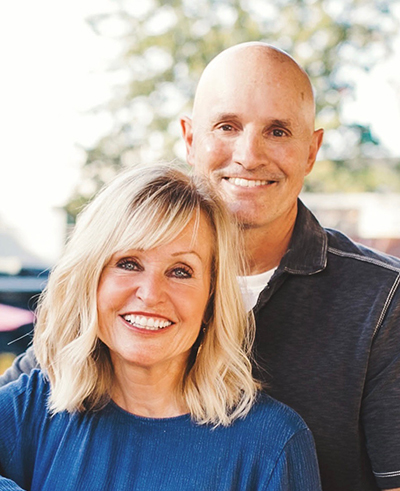
Dave and Ann Wilson
Dave and Ann Wilson are hosts of FamilyLife Today®.. Dave and Ann have been married for more than 38 years and have spent the last 33 teaching and mentoring couples and parents across the country. They have been featured speakers at FamilyLife’s Weekend to Remember® marriage getaway since 1993 and have also hosted their own marriage conferences across the country.
Episode Transcript
FamilyLife Today® with Dave and Ann Wilson – Web Version Transcript
This content has been generated by an artificial intelligence language model. While we strive for accuracy and quality, please note that the information provided will most likely not be entirely error-free or up-to-date. We recommend independently verifying the content with the originally-released audio. This transcript is provided for your personal use and general information purposes only. References to conferences, resources, or other special promotions may be obsolete. We do not assume any responsibility or liability for the use or interpretation of this content.
Personality Differences in Marriage: Turning Friction into Fuel
Guests:Mike and Juli Slattery
From the series:Personality Differences in Marriage: Turning Friction into Fuel
(Day 1 of 1)
Air date:June 8, 2026
Juli (00:04):
Marriage is not made of two exactly compatible people. That’s not the greatest marriage. How God designed marriage is two imperfect people who are very different pursue God in such a way that they become one, where they really can honor and delight in each other and delight in the things that used to drive them crazy.
Dave (00:32):
Welcome to FamilyLife Today, where we want to help you pursue the relationships that matter most. I’m Dave Wilson.
Ann (00:38):
And I’m Ann Wilson and you can find us at FamilyLifeToday.com. This is FamilyLife Today.
Hey, we have an exciting week coming up because we—
Dave (00:55):
We’re going on the boat.
Ann (00:56):
Yeah, we are.
Dave (00:57):
Back on the Love Like You Mean It® cruise, you’re going to hear talks that we heard all week long back in February on the Love Like You Mean It cruise. So you’re going to love these sessions, but hey, we’re going back out on the ocean next February and you want to be a part of it with us.
Ann (01:13):
And so here’s the deal. You’re going to listen to these talks and you’re going to have some serious FOMO like, oh, I wish I was there. You can be. And now through June 30th, you can get a deal.
Dave (01:24):
Yeah. The code is Countdown27. You get exclusive savings and you get to be on the boat at a deal. And I’m a guy that loves deals.
Ann (01:32):
And all you have to do is visit FamilyLifeToday.com.
Dave (01:36):
So you got to go to FamilyLifeToday.com, use the code Countdown27.
Ann (01:41):
And so today we get to go back on the cruise and we’re going to hear a talk that Mike and Juli Slattery gave. And a lot of you have heard Juli. She’s been on with us so many times.
Dave (01:51):
Mike is amazing.
Ann (01:52):
And hilarious.
Dave (01:53):
They talked about the differences in their marriage. I don’t know what they’re talking about. I mean, we’re just exactly the same. But all of us have differences, and the question is, how do we navigate that? Well, you’re going to find out today.
Juli (02:07):
So Mike and I have been married for almost 32 years. Yeah, thank you. And 32 years ago when we got married, we were so different. Now 32 years later, we’re still so different. As a matter of fact, we are so different that a few years ago we went to go see a marriage counselor. And the first thing the counselor did was give us a personality test to fill out. And so when we met with him, he’s got my profile here and Mike’s profile here and he looks at them and he goes, “Frankly, I don’t know how you guys are still married.” The true story, he says that.
Mike (02:46):
And we paid him, which I don’t know why we paid him for that advice. That was really bad. I want to cancel that check.
Juli (02:50):
I didn’t know whether I should feel good about the fact that somehow, we beat the odds or if it’s like, all right, doomsday’s coming. Yeah. So this session is going to be all about some of the things that we’ve learned over the years about navigating differences and how do you actually become closer in spite of those differences that want to pull you apart. I remember back to when I first met Mike, I was 20 years old.
(03:15):
And I was at 20 that uptight girl. I mean, I was so uptight. I was always afraid of making mistakes. And so when I run into this guy who is pure fun, he makes me laugh every day and he just like this casual surfer dude who’s like, “Yeah, we’ll figure it out tomorrow,” I was totally drawn to that. Yeah. It was like a new world for me. I’d be like, “Oh, I can’t eat a cookie. I don’t want to get fat.” And he’d be like, “No, eat three cookies.” I’m like, “No one gave me permission to eat cookies.” So it was all about the cookies, Mike.
Mike:
All about the cookie.
Juli:
Yeah. So I was drawn to that, but once we got married, that same strength of him being fun-loving didn’t seem very much like a strength anymore. It didn’t work out so much when it was the day to do housework and fun Mike was still playing video games.
(04:12):
So we had to work through some of those differences, and they created conflict in our marriage and a lot of what we’ll be sharing with you today is how we are still navigating those differences.
Mike (04:24):
Yeah. As Juli mentioned, those are so super attractive when we’re dating like, “Oh, the cute girl who’s really disciplined, she’s really smart,” this is not so fun anymore when we’re kind of going through. But it was really fun. We learned to work through that. So if you know anything about Juli, she’s an Enneagram five, so I don’t know if you guys are familiar with that. That’s somebody who’s very detail oriented or excuse me, not detail oriented. I’m that guy. She’s somebody who’s very deep, who’s very focused and she’s very concerned about other people. So one of the things I always tease her about, well not to tease her, but this is her, I always say she gets into submarine and she goes really deep, like a thousand foot down and she just reads her Tozer books and her Watchman Nee and all these deep, deep things, deep thoughts.
(05:02):
And I feel like I have to put on my scuba gear and go down there, bang on the hatch, time to come up. It’s like trying to get her to come up and be with normal people because she’s that smart, nerdy girl who’s down there bringing all the deep stuff. But that was something that we’ve learned. And once again, her not being in the details, that was something that we experienced early on in our marriage.
Juli (05:22):
But you can have differences in so many different areas of your marriage: how you spend money, how you parent children, what you do on the holidays, your philosophy of work versus rest, all these things that usually don’t go away. We are having some of the same conflicts over differences now than we did when we were first married. And so a lot of what we want to talk to you about today is how do we navigate those differences? And so I’m going to talk about two reasons why differences in your marriage is actually a blessing to you, not just something to tolerate. And then we’re going to go over five practical things that you can do in your marriage to have your differences actually be something that is building and edifying you instead of something that’s tearing you apart. Sound good?
(06:11):
Okay. So let’s talk about why differences are actually good. They’re not just, “Oh no, I married the wrong person, but this is what God wants is for us to be different and to work together.” And there’s a couple reasons of that why. So the first one is that differences are part of God’s plan to balance you, to balance each other. So Mike prayed in his prayer that God created Adam and said, “This is not good for Adam to be alone. So I’m going to bring a teammate for him, a helper for him to cover for where he’s weak.” And so from the very beginning before sin ever entered the world, God had in his mind, marriage would be between two people who are different and who need to balance each other out. And we have seen this to be really true in our marriage. Our perspectives are so different that it can cause tension and cause us to argue, but in hindsight it actually makes us more balanced people.
(07:11):
So that’s the first reason why God essentially created marriage for us to have differences that we need to navigate. The second reason is because differences are the only way that you will learn what love is.
(07:25):
So in our culture, in American culture, we kind of say the best romantic relationship or the best marriage is somebody that you’re compatible with. But in reality, what God says is no, no, no, it’s not all about compatibility, it’s about working towards unity because when you have to work towards unity with somebody who has a very different script of life than you do, it means you have to learn to listen, you need to learn to be unselfish, you need to communicate well. It means you need to die to self and boy, none of us want to do that naturally. But every time Mike and I have a difference in marriage, it’s not just about how are we going to make the best decision, it’s even more importantly like, what does God want to do in our hearts instead of camping out kind of in, you got to come over and join me or agree with me or he even saying that it’s about how can we learn to love each other well through our differences.
(08:22):
So we’re going to go through five specific, very practical things that we need to return to on a regular basis and that you can use as you’re navigating the differences between you and your spouse. All right, you ready for number one? Yeah. Yep. Okay, here we go. Okay, number one, return to the greatest common denominator. Okay. Now this is not a math course or anything.
Mike (08:45):
I went to public schools. There’s no math on this.
Juli (08:46):
There you go. There’s no math in this.
Mike:
No math.
Juli:
But what I’m saying there is that through our differences we actually had the same end goals in mind. So when we were parenting our kids, like he might take a road of being more strict with them and more structured and I might take the road of being more empathic and shepherding them, but at the end of the day, we agree on the fact that we want to raise three young men who love the Lord, who have good character, who are loyal, who know how to work hard. We agree on that. We just had different philosophies of how to get there. And so even to use a metaphor to flesh us out even further, we now live in the great state of Ohio. Do we have any Buckeyes in here? All right, here you go.
(09:34):
O H.
Audience:
I O.
Mike (09:35):
I O. There we go.
Juli (09:36):
All right there we go. And we’re not going to talk about that blue school that is—no, no blue, no blue.
Mike (09:43):
Security, right here. There’s one right here. Get them. We love our brothers in Michigan.
Juli (09:47):
Yeah.
Mike (09:48):
And sisters.
Juli (09:49):
There you go. So if we were to take a road trip from our hometown in Ohio all the way to Miami, there’s lots of different ways we could do that. You could just get on the freeways, go straight through, get there as quickly as possible, no sleep that night and we’ve done that before. Or you can say, “Hey, let’s relax and just take our time getting down there. Let’s stop in Savannah and St. Augustine and enjoy some vacation time.” Or you might hate freeways and you’re like, “I just want to take the back country roads, and it’ll take us two months to get there, but that’s okay.” But the point is regardless of the road we take, our final destination is going to be Miami and so we agree on that. And so we’ve found that it’s been really, really important if whenever we’re disagreeing about something to really go back to what do we have in common?
(10:41):
We’re on the same team. What is the goal that is represented in our discussion that we can agree on and then we can start working on how we’re going to get there.
Mike (10:50):
Yeah. And there was a counselor that we went to. We went to a lot of counselors.
Juli (10:53):
We did go to lot of counselors.
Mike (10:54):
We’re still going, supporting the cause. But we went to one counselor, and it was really cool. He framed it this way. He goes, Mike, Juli is a very linear and clear thinker. She’s going to want to go A, B, C, D, all the way to like the end of the alphabet.
Juli (11:07):
The way you should. That’s how they teach it, right? Yeah.
Mike (11:10):
I don’t know about that.
(11:12):
God didn’t say that. God’s more of a creator, but really it was like, “Hey, Mike, you start on A, you guys both start at the same place, but you’re going to do a little C, maybe touch on E, maybe come back to a smidge on B but then go to G.” Eventually you’re going to get to Z, but you guys are really on two different schedules in doing that. But once again, the ultimate goal is that you’re going to end up in the same place. And that really came through in parenting, in finance, in work, in rest. That kept coming up. Juli’s tackling it this way and I’m looking at different ways. Still common denominator trying to get to the end goal, the same end goal, but we’re approaching it very, very differently and that caused a lot of conflict.
Juli (11:51):
Yeah. And I had to have confidence that Mike would get to Z even though he went to save route and patience. But the greatest common denominator that Mike and I have and that many of you as married couples have is we both love the Lord and our lives belong to the Lord and we believe that he is the one who gives wisdom, that he’s our good shepherd who leads us and guides us. And so whenever we start to splinter, that’s one of the first things we want to do is remember that we love God. And so even as we would choose in conflict to pray together, it’s a way of saying, let’s go back to what unites us. And when we go back to God in our differences, here’s the thing, the one who unites us in Jesus Christ is so much greater than anything that could divide you.
Mike (12:38):
Amen. Amen.
Juli (12:39):
And so it’s really about just going back to Him and again and again, and that’s our greatest common denominator.
So the second thing that we’re learning to do is to nurture curiosity. When Mike and I have a disagreement, my normal reaction, and his too, is to be defensive and to be like, “Nope, you’re wrong about that. I’m right. Let me prove to you why you’re wrong. I can give you a full account for why my way is better.” And those of you who have done that throughout your marriage, you enter into conflict with the desire to win the argument or to get your way, you know it doesn’t work very well. You can actually win the argument and lose your marriage because you’re not working toward unity. And so working towards unity has looked more like me being curious about why Mike thinks the way he does.
(13:30):
So for example, one of the core differences we’ve always had is I like to be on time or early preferably. All right I hate being late and you can guess that God put me with a guy for whom time is quite relative, right?
Mike (13:48):
I arrive exactly when I’m supposed to, just like a wizard so I don’t know what’s your issue.
Juli (13:55):
All right, this would drive me crazy. Like particularly on Sunday morning, I really like to get to church on time because the lights are still on, you can find a seat, you haven’t missed any of the worship. And so church starts in five minutes, and we live 15 miles away and Mike’s like, “I’ll get you there.”
Mike (14:16):
Hey, we’re meant to break the land speed record on Sundays.
Juli (14:19):
No, we are not. So you can see we’ve got this difference and we had conflict over this difference for many, many years and then at one point—32, yeah. So at one point we started talking about this in a different level and asking each other like, why? I mean, why would you not want to be on time at church? The Lord is waiting for us there.
Mike (14:43):
No, He’s everywhere, honey. He’s everywhere. You can’t put Him in a box. Come on, come on.
Juli (14:51):
No, but seriously why?
Mike (14:52):
Going to all these Christian camps, I learned all this stuff. Just kidding. I love her. I’m going to pay for that later, just so you know. I love you. I love you.
Juli (15:01):
The Lido Deck has cuts, honey.
Mike (15:01):
Lido deck. Here I go.
Juli (15:06):
So why?
Mike (15:08):
Oh, come on.
Juli (15:09):
Seriously. I mean-
Mike (15:10):
Oh, this is a counseling session right here. Okay, here we go.
Juli (15:13):
We’re nurturing curiosity.
Mike (15:16):
That’s right.
Juli (15:16):
There you go.
Mike (15:17):
Help us understand. The people want to know.
Juli (15:19):
They do.
Mike (15:20):
Curious minds. I don’t like to be controlled by you. Uh-oh.
Juli (15:28):
Oh my goodness.
Mike (15:29):
Can I get that Lido deck guy, wherever. I’m really going to need that? I don’t like to be put in a box. I like to have a little freedom.
Juli (15:37):
So why? I just keep asking.
Mike (15:39):
Is there a couch I can lay on up here?
Juli (15:40):
Yeah.
Mike (15:41):
This is Freud I got up here helping me now. It’s not in the notes.
Juli (15:44):
There you go. We’ll go back to the notes.
Mike:
All right; got a little hot.
Juli:
Yeah. So you can see we still have work to do apparently. Yeah.
Ann (15:55):
This is FamilyLife Today and you’ve been listening to Mike and Juli Slattery, a talk that they gave on the cruise.
Dave (16:01):
And we’re going to go right back to them.
Juli (16:06):
All right. So the third one is to appreciate the good in each other. When we look at marriage, you have to understand that you are married to two versions of your spouse because every personality trait that your spouse has, has a corresponding strength and weakness. And so one of the things I love about Mike is he is fun. He is funny. That’s a strength, but that can also be a weakness at times. When you’re trying to have a serious conversation, bring you down the submarine with me.
So here’s what we’re going to do. We’re going to go through a couple of personality traits and then call out the strengths and weaknesses of that personality trait. So I want you to raise your hand if you have this personality trait, a perfectionist. We’ve got some perfectionists here, all right? So the great thing about perfectionists is they are very detail oriented and they’re not going to let anything fall between the cracks.
(17:03):
You can trust them. They’re dependable, but the weakness is they can be overly critical or rigid, inflexible. So how about confidence? How many of you would say, yeah, confidence is kind of a natural personality trait.
Mike (17:19):
Why are you picking all of mine?
Juli (17:20):
I don’t know. Yeah. We can get to some of mine. That means that your confident spouse is going to be very decisive; but it also means that the weakness can be that they might be arrogant or impulsive because they immediately make decisions without looking back.
How about adaptable? How many of you have the character quality of being adaptable? See, I do. Yep. Along with me. Here we go. So we’re flexible, but we’re also indecisive. So if you’re married to someone who’s adaptable, you might have to ask them 12 times where they want to go to dinner and they still won’t answer. It’s like, “I don’t care. Wherever you want to go.”
Mike (17:58):
I wish somebody would make a restaurant called “Whatever.” So when I asked Juli, “Where do you want to go to dinner?” Whatever. “Hey, I know where to go.” Sorry.
Juli (18:07):
There you go.
(18:10):
So here’s the thing. I’m married to two different aspects of Mike, the positives and the negative. There are seasons of marriage, and you all can probably relate to this where all you can see is the weakness. You totally forgot about the strength that drew you to your spouse in the first place. You camp out mentally in the weakness. You wake up with a spirit of, “I’m not sure I want to keep doing this. This is too difficult.” That’s not where God wants us to be. We have the opportunity to choose which version of our spouse you’re going to camp out in mentally. The Scripture tells us very clearly what we should be focused on. It says in Philippians chapter four, “Whatever is true, whatever is noble, whatever is right, whatever is pure, whatever is lovely, whatever is admirable, if anything is excellent or praiseworthy, think about such things.” Now notice it doesn’t say if everything is excellent and praiseworthy.
(19:07):
Some of us are waiting for that: “If anything is excellent and praiseworthy” and every single one of you in this room have things about you that are excellent and praiseworthy. And our marriages should be the place where we are most focused on the blessing that God has given us. Now that doesn’t mean we don’t address problems, but it does mean that we want to have a posture of heart that is grateful for the strengths of our spouse. Did you say anything more about that?
Mike (19:36):
I think we’re going to number four.
Juli (19:37):
All right. Let’s go number four.
Mike (19:39):
There we go.
Juli (19:39):
Okay. This one’s a little bit tricky. We’ll take some time to explain what I mean by this, but you really want to specialize in what you’re good at, in your strength, without becoming polarized. So we have this strength and weakness and we’re good for each other because he likes to talk and I like to listen. But if we are too camped out in this and we become polarized, neither of us will grow because I will never learn to be vulnerable and to use my voice and be courageous to say things that I need to say and you will never learn to ask questions and be quiet for a little bit.
Mike:
What’s that?
Juli:
Yeah, there you go.
Mike (20:17):
I’m sorry. Is this to get me to the Lido deck sooner? –push back, I don’t know. All right.
Juli (20:23):
So what we want to do is, yes, he’s got one strength, I have another, but we actually want to start learning from each other and moving more towards the middle. And this can happen in all kinds of different character traits that you might have in marriage.
Mike (20:36):
And one of the areas that this happens for us constantly, constantly. So we go to counseling, this is a thing that keeps coming up is I’m very detailed and I like to kind of say, “Hey, let’s do things in a certain way.” And Juli is really, she’s a hard worker, but she also will like work, work until she falls over and that sometimes it goes back and then basically, she’s always trying to please people, but she over commits. And I always feel the just tension like, “Hey, let’s keep in a box. Let’s stay to the script.” But she’s like, “Oh, I signed up for this. I signed up for this.” And then we don’t have time to do stuff, and I get very frustrated and we go back and forth on that. And when that happens—
Juli (21:10):
Yeah, when that happens, neither of us are growing because I don’t want Mike to get in my way of the things I want to get done. And so when he tries to help me out with that, I feel like he’s controlling me. And then he’s like, “Wait, our lives are too busy. This is all your fault.” And then we get polarized like that instead of learning from each other. And over the years you really have helped me learn to relax. I know you don’t see the progress, but it’s there and hopefully—
Mike (21:39):
Your Oura ring doesn’t say that.
Juli (21:40):
Yeah, I know that’s true. Yeah.
Mike (21:41):
It says you’re stressed all the time. Anyway—
Juli (21:46):
You really want to work on not polarizing.
Mike:
That’s right.
Juli:
And then the fifth thing that we would encourage you to do is invite help in correction. Now, we’ve already mentioned several times in the last hour how we’ve gone to counselors at different seasons of our marriage and even though this is my field, I’m a trained psychologist, I know that I need eyeballs on our marriage. I need people that would speak into my life and my heart. We will not grow without that. And so there are two specific times where Mike and I know we will need to go in for counseling. One of them is if we have an impasse that we can’t work through. We have a disagreement about a decision we have to make, a heavy decision, not just where we’re going for dinner, but we have a disagreement about a big decision we need to make, and we’ve gone through all these steps.
(22:39):
We’ve prayed together, we’ve been curious, we’ve been learning about each other, but at the end of the day, we have to either choose A or B and we just can’t get there. And so we would go to a third party, whether it’s a counselor or a pastor or a mentor to help speak life and perspective into this when we so disagree.
The second reason we would go to counseling is because we can’t identify when we’re polarizing. We know something feels wrong, but counseling has really helped us learn to be balanced instead of just pitting you against me. And every marriage has sort of underlying problems that pop up every now and then, but they’re deep-rooted kind of dynamics that you’ve formed over time, and it really does require somebody who has discernment and insight to be able to call that forth and show you how you can keep growing together.
(23:30):
Marriage is not made of two exactly compatible people. That’s not the greatest marriage. How God designed marriage is two imperfect people who are very different pursue God in such a way that they become one, where they really can honor and delight in each other and delight in the things that used to drive them crazy. And so that would be our hope and our prayer for you.
Dave (23:56):
I tell you what, what a great time we had today with Mike and Juli Slattery, the talk they gave on the cruise last February. And again, let us remind you we’re going back out on that boat this February and you do not want to miss it. There’s a sale going on right now through June 30th, but we’d love to have you on the boat. Here’s how you can come join us. Go to FamilyLifeToday.com. Use the code Countdown 27 because you’ll get a great deal there and jump on the boat with us in February.
Ann (24:24):
So again, go to FamilyLifeToday.com and those savings are now through June 30th.
Dave (24:29):
And we’ll be back tomorrow to hear from an old friend of ours. What’s his name again?
Ann (24:34):
And I think maybe you’ll know his name too.
Dave (24:36):
Bob Lepine.
Ann (24:38):
Woo who.
Dave (24:38):
You don’t want to miss tomorrow.
Ann (24:45):
FamilyLife Today is a donor supported production of FamilyLife®, a Cru® ministry celebrating 50 years of helping you pursue the relationships that matter most.
If you’ve benefited from the FamilyLife Today transcripts, would you consider donating today to help defray the costs of producing them and making them available online?
Copyright © 2026 FamilyLife. All rights reserved.
www.FamilyLife.com