

Why Does God Let Bad Things Happen? On Keeping Faith When It Does: Tim & Aileen Challies
On a peaceful fall day, Tim & Aileen Challies’ son, a seminary student engaged to be married, suddenly collapsed during a pickup game on campus. He would never come home. In this candid conversation, Tim & Aileen share what followed: shock, isolation, a marriage grieving in different languages, and the search for God in the silence. When the unthinkable happens, you may find yourself asking, “Why does God let bad things happen?”—and wonder if your faith is strong enough to hold you. Or maybe, you’ll discover it’s holding you.


Show Notes
- Order your copy of "Seasons of Sorrow: The Pain of Loss and the Comfort of God" in our shop
- Visit Tim's blog at challies.com
- Follow Tim on facebook: @challies
- Set sail on the Love Like You Mean It Marriage Cruise! Now through 3/31/26, use promo code CruiseMadness27 and enjoy exclusive savings on your stateroom.
- Thanks to the Christian Standard Bible for sponsoring this episode. Learn more at CSBible.com.
- Follow us on all social platforms: Facebook | Instagram | YouTube
- Find resources from our podcast at shop.familylife.com.
- Download FamilyLife's app!
- Help others find FamilyLife. Leave a review on Apple Podcast or Spotify.
- Check out all the FamilyLife's podcasts on the FamilyLife Podcast Network
About the Guest
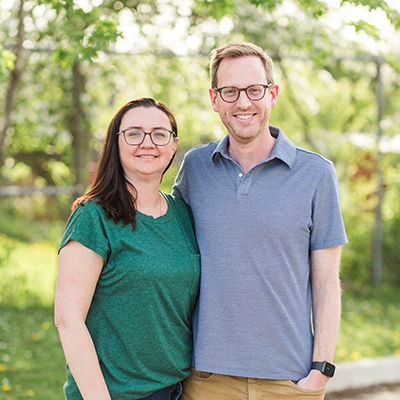
Tim and Aileen Challies
Tim Challies, a pastor, noted speaker, and author of numerous articles, is a pioneer in the Christian blogosphere. Tens of thousands of people visit Challies.com each day, making it one of the most widely read and recognized Christian blogs in the world. Tim is the author of several books, including Visual Theology and Epic: An Around-the-World Journey Through Christian History. He and his family reside near Toronto, Ontario.
About the Host
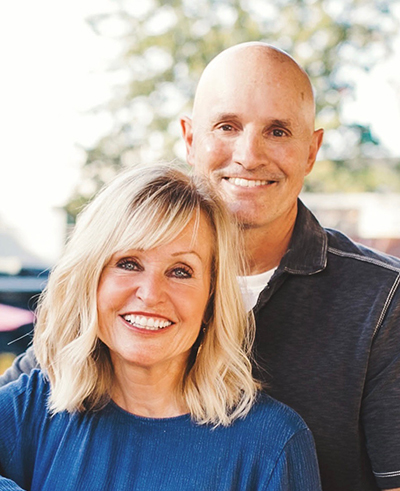
Dave and Ann Wilson
Dave and Ann Wilson are hosts of FamilyLife Today®.. Dave and Ann have been married for more than 38 years and have spent the last 33 teaching and mentoring couples and parents across the country. They have been featured speakers at FamilyLife’s Weekend to Remember® marriage getaway since 1993 and have also hosted their own marriage conferences across the country.
Episode Transcript
FamilyLife Today® with Dave and Ann Wilson – Web Version Transcript
This content has been generated by an artificial intelligence language model. While we strive for accuracy and quality, please note that the information provided will most likely not be entirely error-free or up-to-date. We recommend independently verifying the content with the originally-released audio. This transcript is provided for your personal use and general information purposes only. References to conferences, resources, or other special promotions may be obsolete. We do not assume any responsibility or liability for the use or interpretation of this content.
Why Does God Let Bad Things Happen? Keeping Faith When It Does
Guests: Tim and Aileen Challies
From the series: Seasons of Sorrow (Day 1 of 2)
Air date: March 2, 2026
Dave (00:04):
I have to say, standing at my little brother’s gravesite had to be one of the hardest things I ever had to do. I can’t imagine being my mom.
Ann (00:15):
I think your mom carried that for the rest of her life.
Dave (00:18):
Oh, yeah.
Ann (00:19):
And it marked her. I watched my parents go through that same loss with my sister; it changes someone forever, especially as a parent, as you go through it. I was a sister, and it marked me; and you are a brother, and it marked you. It’s hard.
Dave (00:49):
Welcome to FamilyLife Today, where we want to help you pursue the relationships that matter most. I’m Dave Wilson.
Ann (00:55):
And I’m Ann Wilson, and you can find us at FamilyLifeToday.com. This is FamilyLife Today.
Dave (01:16):
So today, we’re going to talk about hope and grief—walking through grief—comfort in grief. We’ve got a couple in here who’s walked that journey. Tim and Aileen Challies are here. Welcome, guys.
Tim: Thanks.
Ann (01:30):
Tim, you’re a famous blogger. You started blogging before blogging was cool, even.
Dave (01:34):
You made blogging a thing.
Tim (01:35):
I don’t know it was ever cool; but yes, I’ve been doing it for a very long time now.
Dave (01:39):
Yeah, and it’s challies.com—
Tim (01:41):
Yes.
Dave (01:41):
—and thousands a day [view]. I’ve been reading some of your blogs. I’d love to talk about several different—I mean, if you guys want to spend the whole day here in Orlando, we could do this all day—but obviously, this book we’re going to talk about today, Seasons of Sorrow: The Pain of Loss and the Comfort of God. Tell us your story.
Tim (02:02):
Maybe the place to begin is with the Lord granting us three lovely children. Nick was born within a couple years of us getting married. He was joined a little bit later by Abby, Abigail, who was born about two years after Nick; and then, finally Michaela. Nick is, I think, who we’re here to speak about today. Nick went to be with the Lord in November of 2020.
Dave (02:25):
Yeah, take us back to that day. Obviously, I’ve read it through Seasons of Sorrow, which you sort of wrote chronologically, right?—from sort of that moment on—but take us back to November 2020.
Tim (02:37):
Nick was a student at the Southern Baptist Theological Seminary. He was newly- engaged to a sweet young lady named Ryn. He was doing just really well in life. He was an Assistant Resident Advisor at his college, and so he had to lead the students in some games. They went to a park to play a game. For reasons that we still don’t really know, he just collapsed and was gone; nobody could revive him. That entered us into this season of grief, the season of loss.
The way I work things through in life is to write about it. That’s how I write through joys, and pains, and everything in between. Even on that first evening, as we were trying to figure out what to do, we eventually managed to find a flight that would take us down to Louisville, so we could be with our daughter down there. I just started to write. Eventually, over time, that writing sort of led into the beginning of Seasons of Sorrow.
Ann (03:29):
Aileen, what was that like? I’m assuming you guys got a call?
Aileen (03:34):
Yeah. The first thing we knew that something was wrong, Abby’s fiancé—then, her boyfriend—texted me, actually, and just said that Nick had collapsed; and they weren’t sure what was going on. I was on the couch at home. I remember leaping to my feet; and we didn’t know, at that point, how serious it was. Abby was there; but she hadn’t texted us, at that point, at all.
Ann (03:56):
Was she with him? Were they both with him?
Aileen (03:58):
Yeah, both Ryn and Abby were with him.
Ann (04:00):
That is a parent’s nightmare: you don’t even know what’s going on, first of all; and then, how did you find out?
Aileen (04:07):
Well, it was also in the middle of a pandemic; so the borders were closed at the time as well.
Tim (04:11):
At that point in time, the borders were largely closed; at least, it was forbidden to drive across the borders. There were all these other complications. We found out—what Aileen said—that there were some things going on. And then, eventually, we got a call from the hospital—a doctor who had said that they had done everything they could; but unfortunately, there was nothing more they can do—and Nick was gone.
That came as a complete shock and surprise to us. There was no reason to think Nick had been ill. There was nothing he did, nothing he took, nothing that had been done to him.
Ann (04:43):
He was a healthy young man.
Tim (04:44):
A healthy young man; literally, his heart stopped for reasons that are unknown and undiagnosed.
Ann (04:50):
You guys were living in Toronto at that time. Your kids are in the United States; you’re in Canada, and you can’t get to the United States?
Aileen (04:59):
We couldn’t drive—we could fly—but we couldn’t drive over the border.
Ann: Okay.
Tim (05:03):
At this point in time, almost all the flights are canceled, right? Almost all the airlines have grounded their fleets. Thankfully, we were able to, eventually, get a flight that would take us down in relatively short order.
Ann (05:15):
We’ve been talking a lot about your son, Nick; but we want to know him. If you had to share—“This is who our boy was…”—what would you say?
Aileen (05:27):
Yeah, that’s actually one of the hardest questions I get asked. I can talk about myself and my grief, but to talk about Nick is really hard for me. He was my firstborn; he was born in March of 2000. He was my first baby, so I didn’t know what I was doing at all; but he was really the most delightful little guy. He was always smiling; he was exuberant; he loved garbage trucks when he was little, a typical boy.
(06:09) As he grew up, he was always so very introspective. He was always looking at himself and trying to figure out how he could do life better, I think. He was always concerned about doing the right thing. He was one of the kindest people I know. He was very sarcastic, in a typical Canadian fashion, which I think sometimes came across as a little bit abrasive. And he was very, very quirky, which was always delightful.
He didn’t have the easiest time in high school, I would say; but he was always very firm in his faith. He came to Christ at, I think, about 13; and never really looked back at that point. When he went off to Boyce College, he had determined that he wanted to be a pastor; and he went there, determined to serve well. I think he did. He met Ryn down there, who has become a daughter in so many ways, which I am so very thankful for. Nick chose so well in Ryn. She really was perfect for him.
Ann (06:59):
And they were engaged.
Aileen: They were engaged. They had been engaged for about three months, I think, before he passed away. They were in the midst of planning their wedding. He had his faults, and he had his insecurities; but he really was just a wonderful, wonderful person. I miss him.
Tim (07:17):
I’m sure, if Nick would want to be remembered for anything, it would simply be as a forgiven sinner, who loved the Lord, and received His forgiveness. And truly, in his own way, wanted to live for His glory. He was a sinner saved by grace.
Dave (07:33):
What if the questions you’re too embarrassed to ask are the ones your marriage needs answered?
Ann (07:40):
Marriage After Dark is FamilyLife’s newest podcast, where a real married couple talks openly about healthy God-honoring sex. Yes, the stuff you’d never ask your pastor or your friends.
Dave (07:54):
Yeah; so for more, go to FamilyLife.com/MarriageAfterDark because intimacy shouldn’t stay in the dark. Again, that’s FamilyLife.com/MarriageAfterDark.
Dave: Walk us through the grief journey, as a parent; and maybe, even as a married couple.
Tim (08:18):
We learned that people process grief very differently. If we talk about love languages, as we do, we could talk about grief languages, where we just process things very differently:
• Some need to externalize it all; that’s how they work through it.
• And some do that through the written page.
• Some do that through just speaking.
• Some people process, entirely, internally.
• Some people want to read vast amounts of literature on it; and just try and put the pieces together, in that theoretical sense. I had somebody write me recently, who lost a child. She said she’s read 22 books on grief since her child died. I know many other people, who would never pick up a book of grief again in their lives.
We all process it differently.
(09:02) And then, we found out that a lot of it is related to role. A dad is going to process grief different from a mom, or a man differently from a woman, or a brother than a sister; all of that makes sense. I think the challenge comes: “You’ve got to be careful you’re not expecting everyone to process it in the same way you’re processing it,”—as if—“This is the, objectively, right way to do it,” and “If you do it differently: “There must be something wrong with you.” I think we encountered that a few times, where we just had to give the other person a lot of room to grieve in their way.
Aileen (09:32):
That was probably the best piece of advice that we got very, very early on. We had a dad who wrote you a letter in the very beginning. He laid out a lot of those things: “You need to give your wife space, because she’s going to take a lot longer than you will to grieve this. You’re going to just grieve it very differently.” That was the one thing that stuck out, a ton, right in the very beginning; and was so helpful to us in our marriage. Because then, we could look, and say, “Okay, it isn’t that he doesn’t care anymore,”—because that’s the temptation when he’s, not moved on, but just moved forward faster than you, as a wife, that it feels like: “He doesn’t care anymore.” To realize that, “No, he’s just different than I am. I have to give him that space. It isn’t that he doesn’t care.”
That was super important for me, just to remember.
Ann (10:18):
What did that look like for you, Aileen? Because Tim, you’re writing.
Aileen (10:23):
I wouldn’t say that I’ve processed it completely. I find that, if I dwell on it too much, it consumes me.
Ann (10:30):
You’re overwhelmed.
Aileen (10:31):
I need to glance at it; and then, go on my way and do the rest of life; and then, come back to it again. I’m processing it in tiny little increments, where Tim just poured it all out in a year. It’s just a very different way of dealing with it. I just know myself well enough to know that, if I were to do that, I don’t know that I would recover.
Ann (10:51):
I totally agree. When my sister passed away—she’s my best friend; she was 45; I was 39—and I’m still a mom; I still have life to do. I think that I would have been so overwhelmed, exactly; that I’m afraid that I couldn’t have even gone on, because you get swallowed up in your grief. It’s that same kind of idea of there’s little chunks of it at a time.
I found worship felt so overwhelming. It was so beautiful; but it felt like it was coming, head on, exposing my soul and exposing the pain. I couldn’t sing. I could listen, but I couldn’t get words out.
Aileen (11:33):
I think that’s very typical.
Ann (11:35):
You do.
Aileen (11:35):
We’ve talked to a fair number of people now. Music, for whatever reason, speaks to your soul in ways that other things don’t. That was the hardest—and continues, at times, to be the hardest part of church for us—is certain songs and certain types of worship really we battle through that—not battle; it’s a good thing—but it’s just a hard thing.
Ann (11:55):
You feel that, too, Tim?
Tim (11:57):
We have all these wonderful songs that we sing as Christians, and the best of our songs tell a story. So many of the great hymns of the faith begin with our sin, and they move to our salvation; and then, they speak of the glories to come and the blessed, joyful reunions we’re going to experience. Now, it’s one thing to sing those songs when you’ve never had a grievous loss. It’s another thing to sing those songs when you’re—not just this abstract reunion—but it’s a reunion with your child; a reunion with your spouse; a reunion with your sister.
I found I could sing the first two or three stanzas of a song just fine; but as it progresses into those truths—the joy of heaven, the joy of reunion—that’s where I would so often break down. I just learned to cry in worship—cry in singing—and that just has to be okay. I think there’s something just deep and worshipful, even, about that expression of emotion.
Ann (12:51):
That’s healing. I think there’s a healing in that as well.
Dave (12:54):
Yeah; I know that, when Ann was walking through her sister’s death, I played in the band. I’d be on stage, playing the worship. But I remember the first time I wasn’t in the band; I was standing beside Ann, and I was like, “Oh, my goodness, she is weeping.” I was always participating, so I didn’t experience it like that. I’m like, “It is an emotional”—like you said—”the lyrics, and the music, and the art just digs deeper.”
Tim (13:23):
Yeah; that’s the power of music. Music is taking truths, but wrapping them in this packaging, that just engages the whole person in a different way. That’s why music can be used so well and so poorly; because you can use music to really manipulate people—manipulate them through their emotions—but also, when you’re combining the greatest truths with just powerful lyrics/wonderful music, that is just a great packaging. It makes sense when you look at the glories of what’s to come in the book of Revelation. How much of it is about singing?
Dave (13:54):
I remember, one day, I was preaching at one of our campuses at church. My son was preaching at a different campus. I got done earlier, and I came and snuck in the back to hear my son preach. As they went into a worship song after the message, I saw this couple, 20 rows ahead of me, who were pretty cold, it looked like. For some reason, my eyes caught them. I’m like, “Ah, they’re struggling.” Ann and I do marriage stuff and conferences, so I caught this. As this song continued, I saw his arm go around her. They embraced during this worship song. I thought, “None of that happened in the message”; but in that moment of music and ascribing worth to God—something that the spoken word couldn’t do—did. I’m guessing that’s what you’re saying: “Grief, especially when you’re feeling you need God’s comfort, it sort of hits you that way”?
Tim (14:51):
Yeah. I would say, even to broaden it even a little bit more, a well-constructed worship service, from beginning to end, tells its own story. You begin with—let’s say a call to worship; you’re telling people—“You’ve been living in this world, let’s just block off this hour-and-a-half; and we’re just going to focus on the Lord,” You’re calling people to worship; and then, you start to sing. And then, maybe, you’re confessing your sins together; and you’re receiving God’s forgiveness together. You’re singing some more; and then, there’s this truth poured out through the message. And then, those final songs are always the most glorious of all; because it’s just the culmination of everything.
Dave (15:24):
—the response.
Tim (15:24):
Yeah, the response. And now, you’re just being sent out, back into the world for another week. There’s a promise: “We’ll be back here again next week, and we’ll do this thing again.”
Dave (15:31):
There’s the pastor in you coming out, right there.
Tim: There you go.
Dave: There you go.
Tim (15:33):
Worship is such an important way of recovering from loss. We’ve said so often: “How could we have done this without the local church?” “How could we have gone through this, endured what we’ve endured, without the church?” That’s the people of the church—it’s all these good things; all these ways the church cares for you—but it’s the worship of the church that we needed so badly.
Dave (15:54):
How did you walk through your journey with community? How was community a part of that?
Aileen (16:00):
It was COVID.
Dave (16:01):
Oh, my goodness; you’re right.
Tim: —in Canada.
Dave (16:04):
—“in Canada” means—
Tim (16:04):
—it was different than the experience, if you live south of the border; and then, depending on your state, very, very different experience than it would be.
Aileen (16:15):
When Nick passed away, we had to come home. We had to quarantine for two weeks, and that meant nobody passed our doorstep.
Dave (16:22):
Wow!
Aileen (16:23):
So we were, essentially, by ourselves for two weeks; then, we could have his funeral. We did two weeks at home; had his funeral; and then, the next day, we made the decision to fly out to Banff, Alberta.
Ann: Could anyone go to the funeral?
Tim (16:35):
Actually, the day of his funeral was the day a new law came in, where you could not have more than 50 people at a funeral. We talked to the funeral home; and we said, “Well, we’re hosting it at a church. If you would be willing to just leave the property, then we can call it a church service,”—which means we can have a thousand people in this building—”So can you just leave?“ They said, “Well, that’s not what we do. We bring the casket to the church, and we stay with it.” I said, “Well, just leave.” They left; and that meant we could call it a worship service, and we could have people. But after that point, they wouldn’t have done that again. And so yeah, we would have had 50 people there.
Ann (17:16):
And did a lot come?
Tim (17:17):
Yeah; yeah—I don’t know how many—but the room was full.
Aileen (17:21):
They all had to be socially-distanced and separated, so there was no receiving line and all that other stuff.
Tim (17:25):
You asked about community. I want to say two things: first, the Christian community—both our local church community and the wider Christian community—were absolutely incredible. We benefited so much from their love and their care; they surrounded us. They prayed for us—more than anything, they prayed for us—sometimes, we just really felt upheld by prayer; and that was absolutely wonderful.
I do want to say, as well, that our local community—not Christians in our community—but just our neighbors were every bit as helpful and engaging. They were praying for us; they were caring for our needs—and going to the store for us and bringing us food—it was just lovely to see a local community come together as well—not just a Christian community—but just people being lovely, being helpful, giving.
Dave (18:13):
And was that something that was helpful for you, as a husband and wife? As you walk through this, you’re now walking through it—we already said, “alone,”—and you’re processing it differently. How did it impact your marriage?
Aileen (18:26):
One of the things we’ve learned about grief is that it is, in a lot of ways, very lonely. A lot of that is because it’s something you just have to kind of do on your own, because everybody’s so unique and individual. That’s one thing we hear about, a ton, is people talk about how lonely grief is.
In terms of our marriage, I think we’ve done well, but we’ve definitely processed it separately. I don’t know that we’ve processed it together. And a lot of that is—some of that’s personality—some of that’s my inability to face it, flat-on, and stare it down the way Tim has. But I think our marriage is still strong, coming out of it. But I don’t know that we’ve—”Would you say we’ve processed it together?”
Tim (19:04):
We haven’t gone to a grief retreat, with the two of us, and just really confronted it in that way. I think neither do we really feel the need for it. I think we’ve processed it together in the sense that we’re married, and we’ve lived through it together, and we’ve talked about it lots, and all of that.
But I agree with what you say about the loneliness of grief. I think a lot of that is because you simply can’t express so much of what’s going on inside. You realize that death is a stranger in this world—your mind/your heart just don’t have the capacity to really understand it and to make sense of it—we weren’t created, by God’s design, to experience loss. It’s really beyond us. And so when it comes time to say—somebody will say, “How are you feeling?”—”I don’t know. I can’t/I just don’t have the words.” I work with words all day, and I don’t have the words to express what’s really going on in my heart. So, of course, it’s going to be lonely. If I can’t really express it, they can’t really bring comfort; it’s just the nature of it.
Ann (20:01):
And yet, when I was reading—these are your words—”It’s too much today. It’s too heavy, too sad, too sorrowful. I’m drowning; I’m overwhelmed; I’m going under. I need an angel to come and minister to me in this garden of grief.” It goes on; but I remember reading that. I think, if you’ve experienced grief, everybody resonates with that, of just the authenticity and rawness of those feelings.
I can’t imagine for you, Aileen—if even you probably knew how Tim was doing, through reading his writing—or did you read it?
Aileen (20:42):
No; I did read some things that came out; but often, I just simply couldn’t. It was too much for me.
I’m going to go really quickly back to the concept of loneliness. I think, in some ways, in grief, God uses that to have us rely solely on Him. When you talk about that particular passage, and the idea of the angels coming to minister, we saw so many times where God gave us what we needed, the support that we needed in whatever moment that we were really struggling in. It wasn’t people we were relying on to comfort us in that way. It really ended up being the Lord, and Him giving us what we needed in those moments. I think that’s, in part, why grief feels so lonely; but that it turns us to God, and wanting Him to be the One who’s going to give us that comfort.
Dave (21:29):
If there’s a married couple, listening right now, who’s gone through a tragedy like this—either one of you—what would you say to them? How would you speak words to them?
Tim (21:41):
I think the first thing we’d want to communicate is: “You can do it.” That was something someone communicated to us, early on. It was just helpful to have them say that; because they were saying, “We went through it; and you will emerge into something beyond, that’s still okay. This isn’t the end of your life; this isn’t the end of your calling.” I think the specific words he used were: “You’ll never get over it, but you’ll learn to get on with it,” which means you’ll never—of course, you’ll never forget your child; you’ll never fully recover from your loss—but you will get on with life. There will be a new normal waiting for you, eventually; and you’ll come to it. That was just really encouraging. We want people to know: “You can do this. The Lord will equip you; He’ll bless you.”
And then, I think, probably: “Just to be very, very patient and kind to one another”; would you say?
Aileen (22:24):
Yeah, that’s where I was going to go next: “Just to be super patient with yourself. It’s okay that you’re struggling with this; it’s not something that is easy.” I think, so often, you feel like you’re not a good Christian; because you’re battling feeling this way. And we’ve learned that we have to walk in tandem—the grief is there, and the joy is also there—and you have to learn to walk with them, both present. You can’t assume—the days that the grief takes over—that those days are days that you’re not a faithful Christian, because that’s just not true at all.
Tim (22:57):
Yeah, the Bible gives us just this wonderful picture of Jesus grieving—Jesus standing outside the tomb of his dear friend, Lazarus—and we all know the shortest verse in the Bible: “Jesus wept.” It’s just so comforting to know that Jesus wept. And then, we go on reading the New Testament; and we find that He can truly sympathize with us because He has been tempted. He’s gone through all the humanity we’ve been through, all the experiences of humanity. We do have a God Who’s sympathetic, and a God Who’s with us in our grief, and Who knows what it is to experience loss. Presumably, Jesus lost His father somewhere along the way as well—He lost Joseph, we presume—and so He knows what it is to grieve. It’s okay to truly, truly grieve; because these things truly are horrendous and truly inconsistent with the way God made this world to be.
Ann (23:55):
It was great today; wasn’t it?—to talk to Tim and Aileen Challies—and again, their book is called Seasons of Sorrow: The Pain of Loss and the Comfort of God.
Dave (24:04):
And you can get your copy in the show notes at FamilyLifeToday.com. I’m telling you: “This book will really help you walk through seasons of sorrows; so you don’t want to miss this one,”—FamilyLifeToday.com.
Ann (24:15):
We know life is full of challenges, and families today need biblical truth more than ever; isn’t that true?
Dave (24:22):
That is true.
Ann (24:24):
And as a FamilyLife Partner, your monthly gift helps bring the truth into homes every single day through podcasts, events, and resources.
Dave (24:33):
So let’s make a lasting difference together. Become a Partner today; just go to FamilyLifeToday.com and click the “Donate” button.
Ann (24:45):
FamilyLife Today is a donor-supported production of FamilyLife®, a Cru® Ministry.
Celebrating 50 years of helping you pursue the relationships that matter most.
If you’ve benefited from the FamilyLife Today transcripts, would you consider donating today to help defray the costs of producing them and making them available online?
Copyright © 2026 FamilyLife. All rights reserved.
www.FamilyLife.com