

Life After the Phone Call: If God Is Good, Why Did My Child Die? Tim & Aileen Challies
On what should have been his son’s wedding day, Tim & Challies stood at a graveside and read the wedding speech he never got to give. Months earlier, 20-year-old Nick had collapsed and died without warning. If God is good, why is the future we imagine buried? When the life we plan is gone and peace feels like a promise meant for someone else, is faith strong enough for the life we’d never choose?


Show Notes
- Order your copy of "Seasons of Sorrow: The Pain of Loss and the Comfort of God" in our shop
- Visit Tim's blog at challies.com
- Follow Tim on facebook: @challies
- Set sail on the Love Like You Mean It Marriage Cruise! Now through 3/31/26, use promo code CruiseMadness27 and enjoy exclusive savings on your stateroom.
- Thanks to the Christian Standard Bible for sponsoring this episode. Learn more at CSBible.com.
- Follow us on all social platforms: Facebook | Instagram | YouTube
- Find resources from our podcast at shop.familylife.com.
- Download FamilyLife's app!
- Help others find FamilyLife. Leave a review on Apple Podcast or Spotify.
- Check out all the FamilyLife's podcasts on the FamilyLife Podcast Network
About the Guest
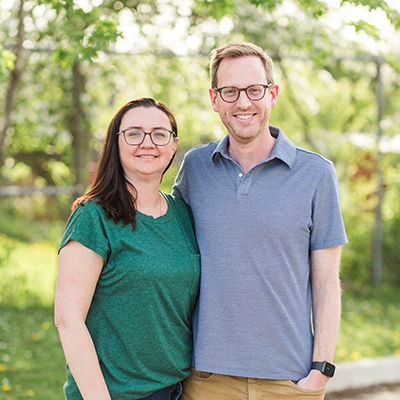
Tim and Aileen Challies
Tim Challies, a pastor, noted speaker, and author of numerous articles, is a pioneer in the Christian blogosphere. Tens of thousands of people visit Challies.com each day, making it one of the most widely read and recognized Christian blogs in the world. Tim is the author of several books, including Visual Theology and Epic: An Around-the-World Journey Through Christian History. He and his family reside near Toronto, Ontario.
About the Host
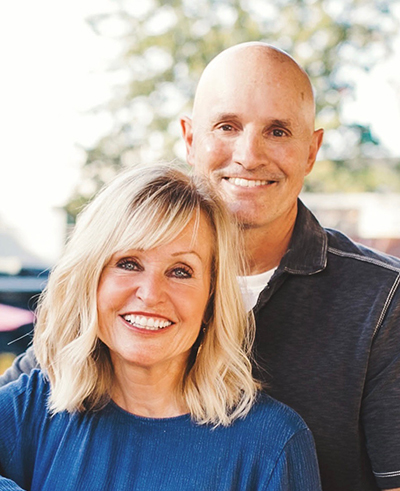
Dave and Ann Wilson
Dave and Ann Wilson are hosts of FamilyLife Today®.. Dave and Ann have been married for more than 38 years and have spent the last 33 teaching and mentoring couples and parents across the country. They have been featured speakers at FamilyLife’s Weekend to Remember® marriage getaway since 1993 and have also hosted their own marriage conferences across the country.
Episode Transcript
FamilyLife Today® with Dave and Ann Wilson – Web Version Transcript
This content has been generated by an artificial intelligence language model. While we strive for accuracy and quality, please note that the information provided will most likely not be entirely error-free or up-to-date. We recommend independently verifying the content with the originally-released audio. This transcript is provided for your personal use and general information purposes only. References to conferences, resources, or other special promotions may be obsolete. We do not assume any responsibility or liability for the use or interpretation of this content.
Life After the Phone Call: If God Is Good, Why Did My Child Die?
Guests:Tim and Aileen Challies
From the series:Seasons of Sorrow (Day 2 of 2)
Air date:March 3, 2026
Dave (00:04):
One of my favorite verses in the Bible, John 14:27, you’re going to recognize it: “Peace I leave with you.” Jesus said, “My peace I give to you, not as the world gives to you, do I give to you. Let not your hearts be troubled, neither let them be afraid.” It’s such a beautiful promise from Jesus that there’s a peace that we can access that only comes through Him.
Ann (00:29):
I don’t think there’s a person on the planet that doesn’t need that verse, or those words, because we’ve all experienced grief, trauma, anxiety. Especially in our culture today, I feel like more than ever before, culturally-speaking, across the globe, this means a lot.
Dave (00:49):
I think one of the questions is: “How?”
Ann (00:58):
Welcome to FamilyLife Today, where we want to help you pursue the relationships that matter most. I’m Ann Wilson.
Dave (01:05):
And I’m Dave Wilson. And you can find us at FamilyLifeToday.com. This is FamilyLife Today.
Dave: Tim and Aileen Challies are here to talk about a lot of things, but definitely peace. Welcome back to FamilyLife Today.
Aileen (01:25):
Thank you.
Dave (01:25):
We talked, yesterday, about Tim’s book, Seasons of Sorrow: The Pain of Loss and the Comfort of God, talking about you walking through the death of your son, Nick. If you’ve missed yesterday, go back and listen to that; and you can read all about this and your journey at challies.com, which is just a beautiful blog.
We talked, obviously, yesterday about your journey. But here’s where I want to ask you: the passage I just read, where Jesus talks about this peace, how did you access that? Did you experience a peace in the middle of walking through the last couple years of this journey of grief?
Tim (02:06):
Yeah, I think we really did come to a point of peace. I think we got there through an understanding of God’s sovereignty—that this is God’s world—we sing that hymn: This Is My Father’s World. We just chose to believe that that was true: “If this is truly God’s world, and God is truly King/He’s truly sovereign in this world, then in some way, Nick’s death was God’s plan. The God, who numbers our days—we might’ve assumed God had numbered Nick’s days at 80 years or 90 years—turns out God had numbered his days at 20 years. We just had to believe that this was God’s plan and God’s will. Once we were submitted to God’s sovereignty in the death of Nick, then we found hope; because we knew this was God behind this. That gave us, I think, just a whole lot of peace and comfort.
Ann (03:00):
Aileen, I’m thinking about you, as a mom, with this 20-year-old boy. It was sudden—he just collapsed and passed away instantly—it sounds like.
Dave (03:10):
You’re in Canada, and he’s in Louisville.
Ann (03:12):
And your daughter was also going to school there. So was there any point that you were questioning God: “What are You doing? What’s happening right now?”
Aileen (03:26):
If you had asked me, four or five years ago, I would’ve said, “Yeah, absolutely. That would’ve been my first instinct, would be to question.” I, very early on, determined that God’s sovereignty was this course—and I didn’t like it—but I didn’t deny God’s right to choose that. I think that peace was very much stemmed from that, the understanding that it was God’s right to choose this. I didn’t like it, but it was His right to do so.
Dave (03:57):
The question would be: “How much did you struggle with that?” Nick was going to get married—he’s engaged—and just months before, he’s gone. As a pastor, and as a theologian and a writer, yeah, we understand God’s in control. He’s sovereign; it’s His will. But did you push back? Did it feel, at days where it was just dark, like, “Man, I understand this; but man, it’s hard to experience it right now”?
Aileen (04:24):
I think you have to separate out the two.
Dave (04:26):
That’s good.
Aileen (04:27):
Because there were days that it was dark, and days where it was incredibly hard—but it wasn’t because we didn’t trust God and His sovereignty in it—it was because of what had happened. They’re two different things. If we didn’t trust the Lord, then, that would be much harder.
Tim (04:44):
We had to realize things like: “Well, we might’ve had an 80-year plan for Nick’s life,” or “We might’ve imagined Nick having children and grandchildren.” That was only ever fantasy; that was never reality. The reality was Nick would live 20 years and go to be with Jesus, and that’s God’s plan. God does no harm; God can only do what’s good and what’s best. So that’s the best plan for Nick.
We just had to say, “That’s His right to do that. And why would we contest that? There’s no reason to contest that: God’s good.” We had to readjust our understanding of just how this world works and how God’s sovereignty plays out. But I don’t think we ever came to a point of anger with God; or a point of accusation with God, to say, “God, You’ve done something wrong.” We just had to say, “No, God’s done something good here. He makes it clear in his Word: God will only do what’s good—ultimately, for good—in the lives of His precious people.”
Ann (05:38):
I struggled when my sister passed away. She left four kids, who were from nine to twenty. I remember saying to God: “I see no sense in this; I can’t see a good thing in it.” And later, I saw some amazing beautiful things that God brought out of it. I can remember, finally, saying—I was in my bathroom on the floor, crying and telling God everything I was feeling—I, finally, said, “But I will submit and give all of this to You; because (1) I know You love me; I know You love her; I know she’s with You. (2) I know that God; and I don’t feel any good thing, at this point. But I will walk with You, and I will trust You.”
I remember sharing that with a young woman at the time; she goes, “Oh, you lost your faith.” I said, “No, I didn’t lose my faith. I’m just communicating, out of the feelings: the anguish, and the grief, and the lament.” Did you experience that? Is that important for us to go through that?
.
Tim (06:45):
Yeah, I think what you’re describing is certainly not a loss of faith. Our faith, at times, has to become more complicated than we thought it was. We realize—look, we sing these nice hymns: “All to Jesus I surrender…”; and then, God does something in our lives. We think, “Okay, maybe, I don’t actually surrender.” Or “Take my life and let it be consecrated Lord to Thee,”—what a nice thing to sing; and then, the Lord takes your child. “Okay, well, you said you surrender to Him. So what are you going to do with that? Are you now going to say, ‘God, You did something wrong?’ All God has done is what we told Him to do. We said, ‘Take my life….use me however You will, God. I’m Your servant; You use me.’”
Some of us have to go through hard things. I think that’s what God calls us all to do, in all of our sorrows and all of our pains, to receive them—to understand: “As a father has compassion upon his children, so the Lord has compassion to those who fear Him,”—”Okay, God is somehow even expressing love and compassion through this situation,” which feels so hard, which is so hard. I’m just choosing to receive it; to say, “This is from God. I’m going to turn it out to others, in love and service to them, and trust that God will bless that.”
Ann (07:54):
I think that’s the beauty of your book. It’s the beauty of the Psalms, too, where we see the honesty and the openness—the dialogue of David to God—of what that looked like. But in the end, he’s going back, and saying, “But I will trust You.”
Tim (08:10):
And we have to go through that. What you describe—that process of getting to the point of submission—I think that’s, often, the difference between what you thought it was to follow Jesus and what Jesus is actually going to call you to do to follow Him. It’s so easy to follow the Lord on the best of days; but then, you go through these really hard things. You just have to work it out, in your heart, over time: “If this is what it means to follow the Lord, can I do this with joy; and can I love and serve Him in this?” And then, you emerge, from the far side, truly loving Him more, and serving Him better, and submitting to Him.
Aileen (08:45):
I am very thankful that, one day, we will know the purpose in our suffering as well; because that hope in knowing, sometimes, gives me a great deal of comfort.
Tim (08:56):
We wanted to distinguish very quickly between why the Lord did this and how God is going to use this. So what we didn’t want to do is say, “Well, look; this good thing happened: this person came to faith, after hearing Nick’s story; so that’s why God did it.”
Ann (09:11):
Why do we do that?!
Tim (09:12):
I know; that’s so simplistic. If God is truly as great, and as beyond all we think, as He truly is, then He must be up to a thousand things or ten thousand things. We can truly look for these evidences, and say, “Look what God did; that is a wonderful thing” But that’s not necessarily why He took Nick at this young age. Let’s just leave that part as part of God’s mysterious providence. We’ll rejoice over every way God uses it; and we’ll trust that, in eternity, God will show us: that illustration of turning over the tapestry; so you’re seeing not just all the knots and the mess, but you’re seeing the full work of art God has created.
Ann (09:48):
Is that a bad thing to say to a grieving person?—”Well, God’s going to use it.”
Aileen (09:52):
Yes.
Tim (09:53):
Yeah, I think it can be very hurtful; because in that moment, it’s cheapening the death of the person to say, “Well, God’s going to use it.” In that moment, they don’t want God to use it. They want their child back; they want their parent back; they want their sister back. Someday, you can get there; but in the moment, you just need to be with them. You just need to bring them some sweet, comforting Scriptures. You need to read Psalm 23 with them. Take a cue from Job’s friends: they were at their best before they opened their mouths.
Dave (10:21):
We’re talking about this peace. Paul says, in Philippians, it’s a peace that is not just a peace that we experience in the world; it’s beyond. I’m sitting here, thinking, “You’ve experienced it,”—I’m not saying it doesn’t fleet, at times—but how do you access that? How have you—I know sovereignty’s part of it; so some of it is: “I got to understand truth,”—but is there another journey you’ve taken to access the peace of God?
Aileen (10:48):
Honestly, a lot of it came down to a foundation of theology. I had grown up, as a Christian, with a good solid foundation of theology. So when I needed to, I could access those truths that I knew. That was very much important to give me that peace, as we moved forward.
Dave (11:12):
Before we continue, let me just say this to the listener: “At FamilyLife, we really believe strong families can change the world.” And when you become a FamilyLife Partner, you help make that happen.
Ann (11:22):
I don’t know if you realize this: your monthly gift helps us equip marriages and families with biblical tools that they can count on.
Dave (11:30):
Yeah, that’s a pretty good deal. And we also want to send you exclusive updates, behind-the-scenes access, and an invitation to our Private Partner Community, which is pretty cool. So join us; let’s reach families and marriages together.
Ann (11:43):
And you can go to FamilyLifeToday.com and click the “Donate” button to join today.
Dave (11:53):
Can you talk a little bit about a theology of suffering?—because that’s foundational to walk through suffering. If your theology’s not a part that God will allow suffering in your life, you’re not going to be able to get through it. What would you say is a theology of suffering?
Tim (12:10):
I think the building blocks, for us—at least, through this time of suffering—were God’s sovereignty and God’s goodness. The sovereignty of God: God is King over this world. He rules this world; this is His world. There’s nothing that happens within this world that isn’t, in some way, His will—permitted by Him, decreed by Him—however you want to understand that. And then, the second pillar would be God’s goodness: understanding that God’s character is good. God only ever does what is good; God can do no evil. He can will no evil; He can want no evil; and so on.
If we have those building blocks in place, then we look at something sorrowful like the loss of a child, and we say, “Okay, these things are true—my son died—but I know God is powerful. So He was, in some way, connected to this; and God is good. He’s not bringing about bad things through this.”
The theology of suffering, built on those twin pillars, is one that just calls me to bow the knee to God’s sovereignty, and say, “This God, who’s so much bigger and greater than I am, has decreed this. And this God, who’s so much better, and kinder, and good-er than I am, has acted out of His goodness in this way. So what is my response going to be? I just have to bow the knee to God, and say, ‘I may not see how You’re good in this. I may not see why You chose to express Your sovereignty in this way; but I’m just a little guy, who has some days”—I fell over, the other day, putting my pants on; that’s the kind of guy I am—“and here’s this great big God, who created this universe. Who’s more likely to have this one right?”
(13:47) We are so thankful that we had gotten our theology in place before we went through this. We didn’t know, at the time, we were preparing ourselves to suffer in this way. After you suffer a great loss, that is not the time to be asking a question—“Is God really good or not? I’ve never really studied the Scripture,”—you want to have that in place before you go through it—or “Is God really sovereign over this world? Or are He and Satan sort of locked in this battle, and either one could come out ahead?” You want to know, before you go into your times of suffering: “Who’s truly sovereign in this world?” So just preparing yourself by studying the Word, studying the doctrine of the Christian Church—so important.
Dave (14:26):
I probably don’t have time to read it—but I think it’s chapter 30—”Angels Unaware”; I just found that so beautiful. Talk about that; maybe, just tell the story. You’re at the gravesite; and wasn’t that, maybe, the day they were going to be married?
Tim (14:43):
Yeah, yeah. We were doing well in our process through grief. But you do come to these dates and times that are unusually hard. We came to the day when Nick would’ve been married. It was very, very hard because—I think the way I express it is—that we had grieved what we had lost; but on that day, we were grieving what would never be. That should have been the day of his wedding. We went to a nearby florist and picked up a little boutonniere, just the kind that he would’ve worn at his wedding, to take to the graveside. We went to the cemetery, and it was just bare empty; nobody around. I had written a speech I wanted to give at his wedding. I wanted to read it; but I was just too sorrowful, too broken-hearted. We just stood at the grave; and we were just so downcast that day, just weeping, together.
In our sorrow, somebody spoke my name, and we turned around. There was this couple approaching from behind us. They came up and introduced themselves and told us that they read my website—they know who we are—and their son is buried just a few rows over. They just wanted to know if they could pray for us. There, on that absolute hardest of days—just in the moment—God had these people show up to minister to us. It was just so, so powerful; and this clear indication that the Lord was with us.
Aileen (16:16):
Neither of us really remember what they prayed, to be honest with you. I think we were both standing there, just sort of slack-jawed, that the Lord had given us this in that moment. I often distinguish between the concept of knowing something and feeling something. You can’t trust your feelings, but you know. And this was the first time I felt that the Lord was caring for me. I knew, up until that point, God was caring for me; but this was the first time I had actually felt the Lord was directly caring for me. It was such a blessing that day, because Tim had been doing really well; but that day, he was really, really struggling. And then, you just feed off each other in those moments.
Tim (16:55):
We’ve often remembered that day is just one of those—one of those days, one of those moments—where God came through in an unusual way and just really, really blessed us. I’m so thankful to that couple. We’ve not seen them before; we’ve not seen them since. Neither one of us were in the habit of going to the cemetery on Saturday mornings. But I’ve often thought that, in our grief, we sometimes long for a miracle: “God just do something miraculous”; but God did no miracle. He did something, I think, is even better: He just wove these lives together; so we would be there, and they would be there.
Ann (17:28):
That was a miracle; to me, that is a miracle.
Tim (17:32):
Whatever it is, God just brought these circumstances together in such a way that nobody could deny God had done this. God had arranged this in just the perfect way. We might long for a voice to boom from the sky or something. But you know what? God sent His people to do His mission on His behalf. What a blessing that God, sometimes, enlists us to do that as well, that we can be the people there to comfort others in their sorrow.
Dave (17:57):
It comforted you in such a powerful way that you were able to, then, read what you wrote to Nick, right?
Tim (18:04):
Yeah.
Ann (18:04):
You ended up reading.
Dave: You were at a point, where, “I can’t even read this”; and now, after that, it’s like, “Oh, I think I can.”
Tim (18:09):
Yeah; it just really strengthened us and helped us in that moment. We walked away from that experience, still sad; but also, just overwhelmed with joy. It was just such a clear indication of God’s love and God’s care for us.
Dave (18:24):
It was a couple that’s in that—what do you call it?—”the sacred—
Tim (18:28):
—“sacred circle of the sorrowing.” That’s a phrase I ran across in an old, old book. After Nick died, I went back, in time, in my reading. I’m a voracious reader. I went back to the 1800s, largely—and found these authors then—because the death of a child is pretty rare in our era; but in that era, it was extremely common. There was such good writing about it, and I found one author just speaking of the “sacred circle of the sorrowing,” these people, who are bound together by the shared grief, the common loss of a child.
Ann (18:57):
Can you read what you read that day?
Tim (19:02):
—to Nick?
Ann (19:03):
Yeah. Is that too personal?
Tim (19:05):
I could try:
I suppose every parent can attest that it’s not just a bride who dreams of her wedding day, and it’s not just a groom who dreams of his; but their parents as well. So this is a day Aileen and I have dreamed about, a day we’ve prayed toward. This is a day of such joy, such anticipation, such celebration.
Nick, when you were tiny, no more than a few days old, I began to pray for a future spouse. I began to pray that God would set aside a wonderful godly woman just for you, that He would first call her to Himself and that He would then lead her to You. I prayed that prayer when you were a tiny baby in my arms; when you were a little child, tattling about the house; when you were a gawky teenager, heading out the door to high school; and when you were a scared young man we were leaving behind at college.
(19:47) It was not long after you arrived at Boyce that we began to hear the name, Ryn—after you dealt with some early rejection, and I’d say even well-deserved rejection for coming on just a little too fast and a little too strong—you caught your bearings; you regained your confidence, and you found your wife. This day is an answer to so many prayers. What a delight it has been to get to know your bride. Mom and I always knew you would pursue a woman of character, a woman who loved God and the people created in His image. And truly, you outdid yourself.
(20:31) Ryn, we often wondered what it would be like to welcome another daughter into our family; but we couldn’t have imagined just how easy you would make it, and what joy you would bring. We couldn’t have imagined how quickly you’d become one of the girls, our girls. We’re humbled that you’d be willing to join our family and take on our name. We’re thankful that you’re willing to dedicate your life to our son, even as he dedicates his life to you. You have gained yourself a husband, who I can honestly say is one of the finest men I know. He’s patient and kind; he’s dutiful and honorable; he is slow to sin and quick to apologize. His giftings are many, and his shortcomings are few. I’m so excited that you two have chosen to build a life together.
Nick, Solomon says, “A wise son brings joy to his father.” I can truly say that, among all the many joys God has granted me in this life, few have been greater than the joy of being your dad. Few pleasures have blessed me more than watching you grow in wisdom, and in godliness, and in favor with God and man.
(21:20 I’m thrilled to see the man you have become and the man you are becoming. I’m thrilled to see the ways you’ve grown in distinctly Christian character. I’m thrilled to see you work so hard to get a strong start in ministry and to prepare yourself for a lifetime of service to others. I’m so very proud of you. One of my highest honors is considering you not only a son, but also a friend; not only a protege, but also a mentor. “He who loves wisdom makes his father glad”; and truly, my boy, you make my heart overflow with gladness, with joy, with pride.
At this point, I think I’m supposed to offer some words of counsel, some words of wisdom born from nearly a quarter century of being married. So here it goes:
Treat each day as its own little life. Each morning marks the creation of a new day, and each evening marks its passing away. We cannot live in the past, and we cannot live in the future. We can only ever live in the day God has created for us.
The key to living life well is to live each day well. So begin each day as a fresh opportunity to bring glory to God, and close each day as if you’ll never see another. Let no sin linger from one day to the next; no bitterness put down roots in the night. Let no promise remain unfulfilled, and withhold no good from the other when it’s in your power to do it. If there are duties to be done, do them today. And if there are praises to be offered, offer them today. If there are sins to be confessed, confess them today. And if there are amends to be made, make them today. Yesterday is in the past, and tomorrow is never guaranteed; there’s only ever today.
And speaking of today, today is the day to celebrate you and to celebrate your marriage. Instead of closing with a traditional toast, I’d like to close with a biblical blessing with the words of God Himself: “Now, may the God of peace Himself sanctify you completely. And may your whole spirit, and soul, and body be kept blameless at the coming of our Lord Jesus. He who calls you is faithful; He will surely do it. The grace of our Lord Jesus Christ be with you. Amen.
Ann (23:25):
That was beautiful.
Tim (23:27):
Thank you.
Ann (23:28):
And you ended up reading it at his gravesite.
Dave (23:46):
It was great to have Tim and Aileen Challies with us, talking about the book, Seasons of Sorrow: The Pain of Loss and the Comfort of God.
Ann (23:54):
It was just a good reminder, wasn’t it?
Dave (23:56):
Yeah, there is pain; and there is comfort. Today’s conversation was about that. The book is about that as well, and you can get it at FamilyLifeToday.com; just click on the link in the show notes.
Also, the conference for the blended ministry—it’s called Blended & Blessed®—is
April 18, 2026. Again, you can click on the link in the show notes to go to that, or you can even watch it with a free at-home livestream.
Ann (24:23):
And I don’t know if you have checked out the blended ministry that we have, here, at FamilyLife. If you’re in a blended family/if you’re in a second marriage, we have so many tools for you that can help you with parenting, with your marriage, with so many things.
Dave (24:45):
FamilyLife Today is a donor-supported production of FamilyLife®, a Cru® Ministry.
Celebrating 50 years of helping you pursue the relationships that matter most.
If you’ve benefited from the FamilyLife Today transcripts, would you consider donating today to help defray the costs of producing them and making them available online?
Copyright © 2026 FamilyLife. All rights reserved.
www.FamilyLife.com