

Emotional Confidence: Managing Emotions with Science and Scripture–Alicia Michelle
You’re doing all the right things: faith, family, showing up. But underneath? You’re exhausted, reactive, and not sure why it keeps spilling out sideways. Podcaster and author Alicia Michelle gets into the roots most people avoid—how old wounds, buried emotions, and survival patterns quietly shape your marriage, parenting, and faith—and why ignoring them isn’t working anymore.


Show Notes
- Get Alicia's free 7-day video training for Christian women who want more calm, clarity + confidence.
- Listen to Alicia Michelle’s podcast The Christian Mindset Coach for continued learning and support @ aliciamichelle.com
- Find Alicia's book "Emotional Confidence: 3 Simple Steps to Manage Emotions with Science and Scripture" at aliciamichelle.com/book
- Become a monthly partner with FamilyLife Today — your gift is matched for a full year (double your impact!)
- Thanks to the Christian Standard Bible for sponsoring this episode. Learn more at CSBible.com.
- Follow us on all social platforms: Facebook | Instagram | YouTube
- Find resources from our podcast at shop.familylife.com.
- Download FamilyLife's app!
- Help others find FamilyLife. Leave a review on Apple Podcast or Spotify.
- Check out all the FamilyLife's podcasts on the FamilyLife Podcast Network
About the Guest
Alicia Michelle
Alicia Michelle, ACC, CPLC is an ICF-certified Christian life coach and NeuroCoach, author of “Emotional Confidence”, popular conference speaker, and multi-award-winning podcast host of the top-ranked podcast “The Christian Mindset Coach with Alicia Michelle”.
Through her coaching and courses Alicia has equipped tens of thousands of women with practical brain-and-biblically-based tools to manage emotions and rewire toxic thought patterns for more calm, confidence and joy. She loves to travel, cook, draw, paint and savor life with her beloved husband, four kids and three dogs.
Connect with Alicia on Facebook, Instagram or YouTube at @aliciamichellecoach, listen to her podcast on your favorite podcast player, or download her free resources at her site.
About the Host
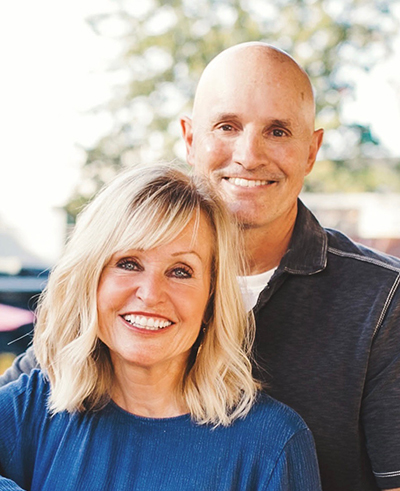
Dave and Ann Wilson
Dave and Ann Wilson are hosts of FamilyLife Today®.. Dave and Ann have been married for more than 38 years and have spent the last 33 teaching and mentoring couples and parents across the country. They have been featured speakers at FamilyLife’s Weekend to Remember® marriage getaway since 1993 and have also hosted their own marriage conferences across the country.
Episode Transcript
FamilyLife Today® with Dave and Ann Wilson – Web Version Transcript
This content has been generated by an artificial intelligence language model. While we strive for accuracy and quality, please note that the information provided will most likely not be entirely error-free or up-to-date. We recommend independently verifying the content with the originally-released audio. This transcript is provided for your personal use and general information purposes only. References to conferences, resources, or other special promotions may be obsolete. We do not assume any responsibility or liability for the use or interpretation of this content.
Emotional Confidence: Managing Emotions with Science and Scripture
Guest:Alicia Michelle
From the series:Emotional Confidence: Managing Emotions with Science and Scripture (Day 3 of 3)
Air date:May 20, 2026
Alicia (00:04):
I feel like there’s this pressure in the church right now to be joyful all the time. Be happy, be joyful. Okay, joy is a fruit of the Spirit. Yes, we are. That’s part of living in Christ. But if we are skipping over and pushing down all the things that are making us not feel joyful, then that’s not a real joy. That’s just faking it.
Dave (00:30):
Welcome to FamilyLife Today, where we want to help you pursue the relationships that matter most. I’m Dave Wilson.
Ann (00:36):
And I’m Ann Wilson, and you can find us at FamilyLifeToday.com. This is FamilyLife Today. Okay, so we have one more day with Alicia Michelle, talking about her book, Emotional Confidence, and just the title, 3 Simple Steps to Manage Emotions with Science and Scripture.
Dave (01:01):
And we get to apply all that to marriage and parenting and even parenting adult kids. So you don’t want to miss this one. Let’s go.
Alicia (01:13):
I think in marriage, when you have disappointments, there does come a point where God—and God’s had to bring me to this point of like, “So you’ve committed to this person for the rest of your life. You love this person”—and you do. You love them. They’re wonderful—”but then there’s this little part right here, right? So are you going to let this little part grow so that it is blocking the light of all these other beautiful parts of your relationship? Because guess what, Alicia? You have control over that. You get to decide if this disappointment that is real and plausible”—okay, sure—”if that is going to rule your marriage.” So we have that individual choice, as painful, as excruciating it can be to say, “God, I am disappointed. Show me how to release this because I don’t want to live in this place anymore.
(02:04):
I don’t want this to poison my marriage.”
Dave (02:07):
I think most wives would say this, and I know husbands would too. They would say, “I’m disappointed, but it’s not a little thing.”
Alicia (02:15):
Sure. If there is something immoral, abuse, we’re not saying, “Well, that’s a disappointment. You better just suck it up and work through the Lord with that.” No.
Ann (02:25):
That’s a glaring siren.
Alicia (02:26):
That’s a glaring sign that you—
Dave (02:27):
We’re saying get safe.
Alicia (02:28):
—we need help. You need to get safe. Absolutely. But that’s different. This is the stuff like, “I really wish that he would talk to me more about this. I really wish that we dated more like we did when we first got to know each other.” Things that are meaningful and really hit home and are hard, but is that a moral lack that’s happening in the marriage? Not really.
Ann (02:52):
I’m glad we made that distinction too.
Alicia (02:54):
Yeah, I’m glad you did because that’s important. We’re certainly not saying just deal with it if it’s—yeah.
Ann (02:58):
And I think too, Dave, what happens in a woman’s heart, I don’t know if this happens with men, but as women have kids that are getting older, some of our marriage stuff gets put on the sideline because the stuff that our kids are going through trumps it.
Alicia:
Yes, yes, yes.
Ann:
And we as women, I don’t feel like you do this as much as I do. And maybe some men do.
Dave (03:19):
No, but we watch it happen.
Ann (03:21):
But it trumps—
Dave (03:21):
And we feel like, “Hey, I’m over here.” There’s a sense of that.
Ann (03:22):
We’re worried about our kids. We’re thinking about it. If a woman puts her head down at night, if she has little kids, she can start thinking, “I failed. I failed. I failed.” If you get older kids, you’re thinking, “I failed and my kids”—you could take it personally like, “I’ve created this,” but they are struggling, man, with some big issues and it can suck the joy out of your life as a mom. And you forget about your husband because it sucked the joy and energy out of your life. How can we apply it to this? How can the ADD apply to that woman?—or man?
Alicia (03:59):
It’s just, again, saying that this is the reality, this is who I am. I know for me as a young mom, that was one of the hardest points of my life, period. Relentless is the only word that I used to describe it.
Dave (04:14):
You’re sleeping four hours a night.
Alicia (04:15):
I was sleeping four hours a night and homeschooling.
Ann:
You had three boys and a girl.
Alicia:
Three boys and a girl.
Ann (04:19):
And you homeschooled.
Alicia (04:20):
Yeah. My husband traveled 50% of the time. One of my children is on the spectrum. Let’s just keep adding to it. And that’s not just like poor Alicia. We all have our own things, but it builds up. And so I would say to that mom that it’s okay to recognize that this is happening.
Dave (04:35):
Did you cry much?
Alicia (04:38):
There were certain points when I did cry, but I remember, and you’ll probably get this as a husband. I remember saying at a breaking point with some of these things, again, the relentless side, “I can’t do this anymore. This is so hard.” Having this kind of conversations with my husband. And his answer was, which is a guy answer, and I love you. I know you’re listening. I love you. He would say, “What do you want me to do about it? Do you want me to quit my job?”
Dave (05:03):
There you go. Been there, done that.
Alicia (05:06):
Right? And he’s like, “What do you want me to do? What do you want me to do?” And I’m like, “But it’s still hurt.” “What do you want me to do?” So then at that point, the tears are there, but you’re like, “All right, I guess I’ll put the tears away because what am I supposed to do?”
Dave (05:21):
Why are you laughing?
Ann (05:23):
You would say the exact same words. I’ll quit my job.
Alicia (05:26):
“I’ll just quit my job then and we’ll just”—and I’m like, “That’s not the answer. I just want you to hear that this is hard.” All you want them to do is hear that it’s hard, right?
Ann (05:36):
Yes. And acknowledge, “I see you.”
Alicia (05:39):
Yes. I see the pain that you’re doing. I see it. So interesting, you brought the adult children stuff up. This is that conversation we’ve had in the Bible study recently with these other couples is young families, right? The young age is that. I’m stuck in the mud. Please help me. I need help.” But after the kids get a little older, they’re more independent. It’s like there’s a lot more space and time for it to come up. And they’re not little things, but they are those disappointments that were like, “Maybe I thought this would have changed. I thought that maybe this would happen.” Or just the changing roles of the empty nest and things happening. So there’s just this whole other dynamic that comes up emotionally at that stage.
Ann (06:19):
What’s that look like for you guys?
Alicia (06:21):
It has been freeing because we’re like, “Hey, let’s go out to eat. We don’t have to think about it,” or “Let’s go away for the weekend. The kids can handle the house.” And that’s beautiful. So that kind of stuff is coming back that was not there. But there is the little things that pop up that you’re more aware of. But I think the beauty of that is we’ve had the maturity and the time to know, okay, this is annoying, but this is not everything. This is not something I want to focus on. The growth has happened in both of us. So we’re more able to kind of slough things off and just truly love each other and focus. We understand the value of our thoughts, I think more. Again, what do I want this to be about? So it’s a new phase and I’m sure it’ll be different when everybody leaves.
Dave (07:08):
Oh yeah.
Alicia (07:08):
A lot more quiet.
Dave (07:10):
It’s quiet. One of the reasons I ask you if you ever cry is because I have guys in my men’s group who say, “My wife cries every day.” I’m like, “What?”
Alicia (07:19):
Well, I cry a lot more now for sure.
Dave (07:22):
I mean, everybody’s different. Is crying a good or bad thing with emotions? You’re the emotion coach.
Alicia (07:26):
So good. Yes. Okay.
Dave:
What do you do with that?
Alicia:
So let’s talk about that. Yes. Crying is very helpful. Now, let’s talk about crying versus crying, right? So crying and releasing tension physically, there are hormones that are released through our tears that are stress hormones to help us calm down.
Ann (07:47):
Isn’t that crazy? I never knew that.
Alicia (07:49):
Yeah.
Ann (07:50):
Stress hormones are being released.
Alicia (07:52):
Stress hormones are being released through our tear ducts. If you analyze—
Ann (07:54):
Bruce, did you hear that with your daughters?
Bruce – Control Room (07:57):
Oh, they have so many hormones coming—or what was it? What’d you say?
Ann (08:01):
Stress hormones—
Bruce – Control Room (08:02):
Oh man, they have it.
Ann (08:03):
—are being released.
Dave (08:05):
I mean, you got little girls.
Alicia (08:06):
Oh yes.
Ann:
He has all girls. That’s good for you to know that there’s stress hormones.
Dave (08:12):
Yeah. I want to know what’s going on in the—what do we call it?—the control booth in there. Bruce, Chancel, any thoughts? Any questions?
Bruce – Control Room (08:18):
Yeah. Well, we’ve been talking about relating it to parenting for sure. Yeah, the emotions. I was saying what’s true that often we have to talk about that with our daughters just this past weekend. One of our daughters wouldn’t eat because we watched a YouTube video of where they had to eat worms for losing the game. And then she was afraid that there were worms in the food. And so my wife, Maria, was having to tell her like, “What’s true?” Because she’s very emotional at the table, can’t eat, and it’s becoming this big deal. And I’m there just going, “Just eat. You have to eat. Just obey me.” And Maria’s like, “Now we have to think. It’s true. Is it true that there are worms? No, it’s true that there are not worms in there.” Didn’t exactly work, but it was a start.
Ann (09:03):
Interesting.
Alicia (09:03):
Yeah, that is so interesting. And especially for younger kids when they don’t have as developed of a frontal lobe, which is the logical part of the mind, the emotion is just going crazy. And of course that’s activated again during with extra hormones in the teenage years.
Ann (09:22):
Look what you have to look forward to, Bruce.
Chancel – Control Room (09:26):
Something else I was thinking about was just, what does emotional growth look like, not just emotionally, but spiritually and relationally. What does success look like? How would you define success of that?
Alicia (09:40):
I think success is different for each person, but I think, in terms of spiritually, it would be that I feel more safe and comfortable and it’s easier for me to talk to God about my feelings. Here’s the thing that I think is the gift in all of this with emotions in God, is that we all say, “I want to see God more every day. I want to see him show up in my life.” Guess what?
Ann (10:04):
He already has.
Alicia (10:05):
You have these emotions happening every day. What if this is an invitation from Him to say, “I want to be in your real life.”
Ann (10:12):
Oh, interesting.
Alicia (10:13):
“I really care about you. Come to me.” What if the come to me verse that we all quote, what if it’s not just when you’re desperate?”
Ann:
Come to me. Let’s say it.
Dave (10:22):
Yeah. Matthew 11 where Jesus says, “Come to me, all you are weary and heavy laden. I will give you rest.” I mean, at the end of the day, we have to. That’s our only hope. That’s our source, right?
Alicia (10:33):
Yeah. He is the one who’s going to give us rest. And what if that rest is not just a frantic plea? “God, please help me. God, please give me strength.” How often do we just pray that? What if that strength and the hope and the peace comes from entering into this place of emotional conversations with God? And the ADD tool is a great way to do that.
Dave (10:54):
Yeah. I know when I worked through the anger stuff in my life, I didn’t do ADD. I did ABC.
Alicia (11:01):
Okay.
Dave (11:01):
And I even thought this at my church. I’m like, okay, here’s what I’ve learned to do. First of all, acknowledge that you’re angry. Because a lot of times in church world, we want to think anger is a sin.
Alicia (11:12):
Oh, yes.
Dave (11:12):
You know what I mean?
Alicia (11:13):
And it can be if it’s—
Ann (11:16):
It says in scripture, “In your anger, do not sin.”
Dave (11:18):
Yeah. But we want to sort of skip it like, “Well, I’m not angry.” When everybody in the room’s like, “Yeah, you are.” And we’re like, “We think it’s sin.” It’s like, no, no, no. Admit it. Yeah, I am. I’m getting pretty hot right now. B for me was the extension cord, backtrack to the first emotion. There’s an emotion I skipped. Were you hurt? Are you frustrated? Fear sometimes, you just skip fear and go to anger. Whatever it is, go back and go, “Oh, I … ” And then C is confess it appropriately. In my day, we were told, let it all hang out. And if you’re anger, just go for it. That was a really bad advice because anger expressed in a hot way is not an appropriate way to do it. There’s a way to do it and say, “I was angry. I realized when you said this to me an hour ago, it hurt.
(12:07):
I didn’t process it. I just yelled. I want to talk about that. Can we talk about that? You said that I’m not a good husband, whatever. That really hurt.” And then hopefully your wife or spouse is going to go, “Yeah, I didn’t mean to say it that way. Here’s what … ” Anyway, I don’t know. It’s ADD, ABC. I mean, it’s a different thing, but I learned that really helped me get a—
Ann (12:30):
Yeah, that was good.
Dave (12:30):
—get underneath what you said earlier, the what’s boiling inside me? There’s something going on there.
Ron Deal – Senior Director at FamilyLife (12:41):
Hey friends, it’s Ron Deal, Senior Director at FamilyLife. Did you know that for 50 years, FamilyLife has been working around the world and in your backyard to teach couples, parents, and families how to love God and love one another? And thousands of churches utilize a FamilyLife resource to teach biblical principles for life and love in their community. And thanks to people like you, this work continues to help people pursue the relationships that matter most with God and with others. Become a FamilyLife Partner today because right now every new monthly gift is matched for an entire year. Double your gift at FamilyLifeToday.com or call us at 1-800-FLToday. That’s 1-800-FLToday.
Ann (13:31):
I’m still stuck back on the, our tears are releasing hormones. You talk about a God thing.
Alicia (13:39):
Isn’t that amazing.
Dave (13:39):
Does that make you want to cry more?
Alicia (13:41):
Oh, and then there’s that verse in Psalms, and I’m not going to know the exact—
Ann:
Yes.
Alicia:
He collects all our tears in a bottle.
Ann (13:46):
Yeah.
Alicia (13:47):
So when we learn these cool things about our body, how he made us, we see that he does want us to learn how to help ourselves release the stress. And so this kind of goes back to two things. First, I feel like there’s this pressure in the church right now to be joyful all the time. Be happy, be joyful. Okay. Joy is a fruit of the Spirit. Yes, we are—that’s part of living in Christ. But if we are skipping over and pushing down all the things that are making us not feel joyful, then that’s not a real joy. That’s just faking it.
Ann:
Faking it.
Alicia:
And then we don’t understand why we’re just feeling disconnected from God, or we feel like we have to show up with a certain way. But the thing is, is that we can have these emotions and we need to work through them, but he’s also given us what I call emotional prep tools to be able to enter into it.
(14:35):
Because in that moment when you’re angry, the last thing you feel like doing is saying, “Oh, I’m acknowledging that I’m angry.” You’re just mad. So the reality is, how can I use the tools that God has made inside my body to help me calm down enough to do that? Because when we’re stuck in an emotion, it’s that primal subconscious part of our brain that is just reacting, responding, shutting down. The logical mind is like on 20% is what the stats say, 20%. So this is why we can’t think logically. We’re just like, “Wah.”
Ann (15:09):
And think about, you’re right, with kids whose brains haven’t even developed all the way.
Alicia (15:14):
Right.
Ann (15:15):
And isn’t it true? I mean, our boys would be like, “We’re not fully developed till 25, our brains. Is that true?
Alicia (15:22):
Boys take longer.”
Ann (15:24):
So be patient.
Alicia (15:25):
Yeah.
Ann (15:26):
And yet you have the emotions many times of the girls.
Alicia (15:29):
Yes. So that balance has to happen. So the logical mind comes back on once we can calm our bodies down. So our nervous system is either in two positions: the parasympathetic, which is the rest and digest, the calming side, or the sympathetic, which is the fight or flight side, which we’re pretty familiar with at this point. A lot of us have heard of fight or flight. So when you’re in an emotion, the fight or flight side is activated and that’s not the logical mind. That’s the emotional, let’s going to protect myself, kind of mind. We can use tools to kick on the parasympathetic.
Ann (16:07):
What is the parasympathetic?
Alicia (16:07):
So the parasympathetic is the side of the nervous system that is a calming side. It’s what our body’s always trying to go back to. It’s that normal stasis where we’re not in survival mode. So we can use all parts of our body, physical, emotional, spiritual, even taste and touch. There’s different ways that we can access that. We talked about tears. Tears is one way that we can relax and let the emotions out and for that body to come down. It can be something as simple as taking a deep breath, learning some different breathing techniques. We’ve heard about those before or like running fingers on your skin to kind of activate. There are these little parts of our skin—I’m not going to remember the exact term, but when you run your fingers on them, it actually, again, releases these calming hormones to our body telling us to relax, to calm down.
Ann (16:57):
That’s why we do it to our kids when they’re going to sleep. I’ll do that with our grandkids. Yes. I’m just kind of touching their skin real lightly. So it’s calming.
Alicia (17:06):
Yes. It’s calming. So turning on the calm. If we feel like we’re in a place where we can’t go through a method like ADD to work through it, we can turn on the calm. And the book gives 18 different kinds of ways to do that, but you start to learn what are the ways that work for me. So I kind of go to this one or that one. That makes it easier.
Ann:
What helps to calm you? What do you do?
Alicia:
Deep breathing, the box breathing specifically, which is breathe in for counts of four, hold for four, breathe out for four, and then hold for four. That helps. That’s where I usually start. Swaying or rocking is really helpful. I’ve just been using that more lately. So just kind of, we do this with babies. Moms know, even if you’ve never been a mom, you pick up a baby, you instantly start just moving.
(17:48):
That’s really helpful. To me, the things with the skin is really helpful. Interestingly, sometimes the overwhelm we feel, that emotion, we can kind of ask ourselves, do I need to get this out?
(18:04):
Like expel it, or do I need to go inward? So that’s a question I always ask is like sometimes working out or just like, I’m so frustrated right now. I need to go. I’m not going to sit here and take a deep breath. That’s not helping me. I need to go work out or run or get it out of me. So maybe that’s what I need to do. And when you know when we come back, exercise, of course, is one of those that kicks on the endorphins, which turns on the parasympathetic too. So that’s a good question to ask. Do I need to just work this out or do I need to go inward and feel that comfort in order to feel calm?
Ann (18:35):
What does the comfort look like when you go inward?
Alicia (18:37):
The comfort would be the things we’ve been talking about, the breathing, that kind of stuff.
Ann (18:41):
I see what you’ saying.
Alicia (18:42):
That’s inward. But the outward is like—
Ann (18:43):
Physical.
Alicia (18:44):
—you all felt that way. And maybe men—do you think men feel that side more? The expelling. You’re like, you don’t want to sit around and just—
Dave (18:52):
Different guys, different things but yeah, there’s often, times I just go work out and I feel great, the endorphins. But when you were just saying the breathing thing, I literally just did it.
Alicia (19:02):
Did you?
Dave (19:03):
I’m sitting there going four counts. I’m like, wow.
Alicia (19:07):
And that’s what’s interesting is that—
Dave:
Oh, I didn’t hold. I just did four, four.
Alicia:
The holding part, because we think we want to just keep breathing in, breathing in, but it’s the exhale and holding, because the muscles are relaxing, that’s signaling the calm to come into our body. So the holding at the bottom and at the top of that breath is a big part of that calm.
Dave (19:27):
I feel the—
Ann (19:28):
Oh, yeah.
Alicia (19:28):
So do cycles of four of those, four times four. I just, that’s easy to remember.
Ann (19:33):
Alicia, have you done those calming exercises with your kids?
Alicia (19:36):
Yes.
Ann (19:36):
Have you taught that to them?
Alicia (19:38):
Yes, I’ve taught them a few.
Ann (19:39):
Yeah.
Alicia (19:39):
I mean, of course, you guys know as parents, sometimes they’re like, “Yeah, mom, whatever.” And my son is here today, I’m sure, watching us going, “Oh yes, mom has probably talked to us about some of those.” But I think it’s important to talk to them about them, yes, but at the right time, right? Not when they’re in the middle of a freak out and you’re like, “Go take a deep breath and let’s learn how to do this.” So we can teach them those tools though.
Ann (20:03):
I was thinking of Sissy Goff and David Thomas who are both counselors. You’ve heard of them.
Alicia:
Yeah, sure.
Ann:
David says have a room where they can release their steam to be that outward, but then Sissy has all these calming techniques. So I like that. And as adults, I think that’s good too. What do you think you do?
Dave (20:21):
I don’t know. You’re going to tell everybody, I guess.
Ann (20:23):
No, I have no idea.
Dave:
Go ahead.
Ann:
I don’t know.
Dave (20:27):
Well, I mean, the bad thing I probably do is I work. I just push it away and I go work.
Alicia (20:32):
That would have been my MO before.
Ann:
Really?
Alicia:
For sure, working.
Dave (20:35):
And then working out really helps me. If I could do it every day, I would. I would.
Ann (20:42):
I think working out is good for me. My time with God too. I think I get so many of my emotions out now with Him.
Alicia (20:50):
Yeah, yeah.
Ann (20:50):
Where I’m talking, I’m mad, I’m frustrated. Good friends do that too, that you’re processing.
Alicia (20:56):
Yeah, journaling is huge. It’s a big part of that.
Dave (21:00):
And I love, honestly, listening or playing worship music.
Ann (21:04):
Me too.
Dave (21:06):
I really do. I can get lost in a great worship song.
Alicia (21:10):
Agreed.
Ann (21:10):
I wonder—yeah, that’d be really interesting to know scientifically what happens in our bodies because if God has created music—I mean, He’s the author and creator of music. And think about what that can do to us, what we feel, what we experience, and especially worship music then takes you to this higher plane. That’s an interesting one too.
Alicia (21:32):
No, that is cool. So not on that level, but on a different level, it’s the concept of going to the beach. Do you ever wonder why when you go to the beach, you just feel so relaxed afterwards? So there is science that says that when we’re at the beach, several things are happening, which turn on the parasympathetic. First, the color of the water is very calming. It’s very soothing to see that. The sound, the repetitive sound, of course, is calming. It’s turning on these calming waves in our brain. The sensory of just being in a place with not a lot of noise, it’s this dull kind of sound around you.
Ann (22:08):
With seagulls and then the waves.
Alicia (22:10):
And if we’re a person who, of faith, we might see God in that. We might see the consistency of the waves as God’s love. So there’s just all these things happening at once. And sometimes we don’t have to think about it. You just go to the beach, and you feel better. It’s our body responding.
Dave (22:24):
I mean, I think for a lot of people that would be golf as well—if you’re hitting the ball well, but it’s nature.
Alicia (22:29):
Or anything where you just feel kind of vibed in.
Ann:
Like nature.
Dave (22:35):
I mean when you get to a beautiful golf course, you’re like, it’s stunning.
Alicia (22:38):
Yeah.
Dave (22:38):
This is so beautiful. And the sun and then you hit a ball into the woods, and it all goes away.
Ann (22:46):
We’re talking about some of the pathways that we used to talk about of connecting to God. It’s nature. It’s music.
Alicia (22:52):
Yes. Prayer, writing, yeah.
Ann (22:54):
Yeah.
Alicia (22:55):
Kind of all the senses. He’s made us to be able to connect with Him in all our senses.
Ann (22:59):
But I love that you’re combining the science, the beauty of God and His word and His Spirit with all that He has created. And you’re helping us learn how to deal with our emotions, which are always up and down. What a great ministry God has given you.
Alicia:
Thank you.
Ann:
And it started flat on your back.
Alicia:
It did.
Dave (23:20):
This has been good stuff.
Alicia (23:21):
It did. Yes.
Dave (23:22):
This is going to help a lot of people.
Alicia (23:23):
Thank you. Yeah. It starts like all, most ministries from a place of why? How did I end up here? And God reworking it and bringing such beauty out of it. And I think that’s what comes from all this. We can learn about all these things, about our emotions, but at the end of the day, we’re using them to grow closer to Him. It’s an opportunity to grow closer to Him like we’ve said. His truth is always going to reign over our emotions. We can feel it. It’s still real, but at the end of the day, it’s a chance to submit to Him, to let Him take it, to let Him do what He needs to do with it. Yeah.
Ann (23:59):
That’s so good.
Dave (24:00):
That’s awesome.
Ann (24:01):
Thank you for everything. So you also have a podcast.
Alicia (24:05):
I do. Yes. It’s called The Christian Mindset Coach with Alicia Michelle. And I just celebrated seven years of podcasting.
Ann:
Congrats.
Alicia:
Thank you. It’s been a great journey.
Dave (24:17):
Yeah, we were on not too long ago.
Alicia (24:18):
You were. You guys were on.
Dave (24:20):
That was fun. Okay, so you can get a book. Go to FamilyLifeToday.com, click on the link in the show notes. Again, it’s called Emotional Confidence. Great title, by the way.
Alicia (24:27):
Thank you. Thank you.
Dave (24:28):
Because I want to be confident in my emotions. 3 Simple Steps to Manage Emotions with Science and Scripture. I’d say go to FamilyLife Today right now and get it.
Ann (24:38):
Thanks.
Alicia:
Thank you.
Ann:
This has been really good, Alicia.
Alicia:
Thanks so much.
Dave (24:45):
FamilyLife Today is a donor-supported production of FamilyLife®, a Cru® Ministry, 50 years of helping you pursue the relationships that matter most.
If you’ve benefited from the FamilyLife Today transcripts, would you consider donating today to help defray the costs of producing them and making them available online?
Copyright © 2026 FamilyLife. All rights reserved.
www.FamilyLife.com