

Kia Stephens on Father Wound Healing
Could your father wound affect your marriage? Maybe it surfaces in struggling with trust, low self-esteem, or difficulty forming healthy boundaries. Kia Stephens helps you learn how to heal, using practical tools to overcome insecurities and find wholeness with God.


Show Notes
- Host a high-impact church event without starting from scratch by using code STRONGFAMILIES between June 16–30 to get a FREE video-based study and planning support when you buy 10+ workbooks go to shop.familylife.com
- Connect with Kia Stephens and catch more of their thoughts atkiastephens.comand onFacebook,InstagramandX@kianstephens.
- Thanks to the Christian Standard Bible for sponsoring this episode. Learn more at CSBible.com.
- Follow us on all social platforms: Facebook | Instagram | YouTube
- Find resources from our podcast at shop.familylife.com.
- Download FamilyLife's app!
- Help others find FamilyLife. Leave a review on Apple Podcast or Spotify.
- Check out all the FamilyLife's podcasts on the FamilyLife Podcast Network
About the Guest
Kia Stephens
Kia Stephens is the founder of Entrusted Women, which she created to equip Christian women communicators of color. A contributing writer for iBelieve.com, Beloved Women, Proverbs 31 Ministries, and Crosswalk, she is a recurring speaker at She Speaks, the Beloved Women’s Conference, and the Entrusted Women’s Conference. Kia’s writing has been featured on (in)courage and Ann Voskamp’s blog. She has also been a featured guest on the Proverbs 31 Ministries Podcast, Chrystal’s Chronicles with Chrystal Evans Hurst, Better Together with Barb Roose, and The Dream of You Podcast with Jo Saxton.
About the Host
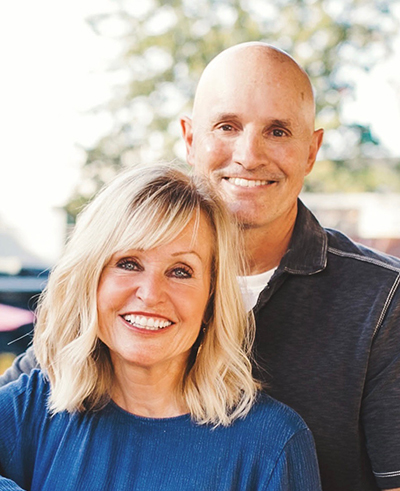
Dave and Ann Wilson
Dave and Ann Wilson are hosts of FamilyLife Today®.. Dave and Ann have been married for more than 38 years and have spent the last 33 teaching and mentoring couples and parents across the country. They have been featured speakers at FamilyLife’s Weekend to Remember® marriage getaway since 1993 and have also hosted their own marriage conferences across the country.
Episode Transcript
FamilyLife Today® with Dave and Ann Wilson – Web Version Transcript
This content has been generated by an artificial intelligence language model. While we strive for accuracy and quality, please note that the information provided will most likely not be entirely error-free or up-to-date. We recommend independently verifying the content with the originally-released audio. This transcript is provided for your personal use and general information purposes only. References to conferences, resources, or other special promotions may be obsolete. We do not assume any responsibility or liability for the use or interpretation of this content.
Kia Stephens on Father Wound Healing
Guest:Kia Stephens
From the series:Overcoming Father Wounds (Day 2 of 2)
Air date:June 16, 2026
Kia (00:04):
So I fly and I go and pick my dad up and tears are streaming down his face, and he says, “You know I owe you and your mother an apology because alcoholism robbed me of my life.”
Ann:
Whoa.
Kia:
And I sat there just stunned because I saw the remorse. My response could have been, “Well, you’re darn right. You’re exactly right.” But what I said was, “It’s okay, Dad. We all have things that we got to work through.”
Dave (00:52):
Welcome to FamilyLife Today where we want to help you pursue the relationships that matter most. I’m Dave Wilson.
Ann (00:58):
And I’m Ann Wilson and you can find us at FamilyLifeToday.com. This is FamilyLife Today.
Dave (01:12):
So today we’re talking about something I was thinking about it this way. It’s like most people are walking around with this little thing they’re carrying, and they don’t even know they’re carrying it, but it’s a weight.
Ann (01:25):
I see it as not just a weight; I see it as a wound that’s open and we’re sick inside. We don’t even know what normal feels like.
Dave (01:34):
And our listeners are like, “What in the world are you talking about? Did you name this wound?” Yeah, it’s actually called the father wound. And Kia Stephens is back with us. She was with us yesterday talking about her book, Overcoming Father Wounds. Kia, welcome back.
Kia (01:48):
Hey, it’s great to be back with you talking about such an upbeat topic. I’m so glad to be here.
Ann (01:55):
No, I’m really excited about this because as we said, most of us, I would guess, are walking around with wounds. I had a great dad. He was present.
Dave (02:06):
He was a good man, very good man.
Ann (02:07):
He was a really—not a believer for years and years. And we had hard conversations about this. I would get mad, he would get mad, but I still had a wound, but at least we could talk about the wound. A lot of us, like you had said yesterday, your dad wasn’t able to receive maybe the words that you were saying or, even, you couldn’t have the relationship you longed for. And I think that’s true for a lot of people.
Dave (02:33):
Let’s start here. How would a person know if they have it? Like can you define it or help us understand: “Well, I don’t think I have that, but maybe I do?”
Kia (02:42):
Yeah. And you were saying Ann, that you thought a lot of people had a father wound. It’s actually one in three children grow up with father wounds. And father wounds are synonymous with father absenteeism. So we know that a father can be absent for a myriad of reasons. It could be divorce, abandonment, abuse, incarceration, drug addiction, alcoholism, as it was in my case, alcoholism.
Dave (03:07):
And it could even be working too much.
Kia (03:08):
Yeah, that’s what I was going to say—a physically present father but emotionally absent. And so if you’re listening and you’re seeing one of those qualifiers, and there are additional ones, then you may in fact have a father wound. In my research, I read this book by Dr. Charles Whitfield. He’s now deceased. He lists inside of this book several needs that need to be met in the child’s life. So things like love, attention, validation, acceptance, trust, affirmation, safety, security. These are some needs that you need to grow up with that secure attachment style that we were talking about. And there are some needs, I believe, that the father specifically provides, right? Because naturally, we think about these gender roles of like the mother is the nurturer, but the father provides security. The father affirms the femininity of the daughter. If the father is not in the home to do those things, then the daughter is left to do it for herself.
(04:29):
Often with costly results, as we see with the statistic: daughters who grow up without a father in the home are X amount more likely to have a teenage pregnancy, or they’re X amount more likely to experiment with drugs and alcohol and risky behavior or get involved in crime. I would venture to say that if we examine the lives, and it has been done—it’s been done with prisoners—how many of them did not have a father?—did not have a father.
Ann (05:06):
As you were saying all those statistics, I was recalling, I think I was eight years old when I went in the room—and my dad always kissed me goodnight and so I went into the room where he was to say goodnight to my parents. I remember saying, as an eight-year-old, “Maybe I’m too old to do this now.” And my dad said, “Well, maybe you are, ” and it was the last time he ever hugged and kissed me. And I remember, I went to bed that night, and I had this void like, “I wish I wouldn’t have said that, and I hope he still does,” but he didn’t know. At that point I had already had a lot of sexual abuse in my background. So his hugs, his kiss at night, which was just totally appropriate and beautiful, were the only times I had had affection that was not distorted.
(05:58):
And so I’m thinking of the fathers who, even as their girls become teenagers and you’re in that awkward stage because she’s becoming a woman, let me just say, “She needs your appropriate physical touch and affection.” Because I went on, I was so promiscuous. You talk about this in the book of, even, some of the signs of possible father wounds and our needs not being met. But dads, your little girls need this from you in an appropriate way.
Kia (06:28):
Yeah. I actually read a book Bringing Up Girls by Dr. James Dobson. He talks about that. He talks about the awkwardness, and fathers not wanting to touch their daughters or hug their daughters because they are starting to look like a woman; and so there’s a little bit of uncomfort with that, but that is the time.
Ann:
That is the time.
Kia:
More so than when they’re little. Yes, do it when they’re little, but when they are teenagers, and they’re developing, and they’re turning to the opposite sex to define them and to give them the value and the affirmation, when a daughter has received that from her father, and she gets a subpar comment or statement from a male, she can easily say, “I don’t need it.”
Ann (07:13):
Yes.
Kia (07:13):
“I don’t need that.”
Dave:
“I’ve got it.”
Kia:
“I’ve already got it. My dad already told me who I am. I already know that I’m beautiful. I already know that I’m confident.”
Dave (07:22):
It’s like you—I’ve said it this way, you’re driving your car and you’ve got a full gas tank. You drive by a gas station, you don’t stop. But when you’re almost on empty, you’re pulling in; and you get in trouble, like you said. And let me just add this, boys need it from their dad, too—
Kia:
Exactly.
Dave:
—not just daughters—a hug, affection in an appropriate way, a look that says, “I believe in you and I see you and you’ve got what it takes.”
Ann (07:44):
And if a father’s not at home, a grandfather, too.
Kia (07:47):
Right, that’s right. Life is how life is, and families are not perfect. These parents or parental figures that we’ve set on pedestals because we love them. They’re our parents. They’re our parents. We see no flaws. They’re our parents. But when you get old enough, you can say, “Well, my dad was a great provider. He was not affectionate.” “My dad was affectionate, but he wasn’t attentive, and he didn’t come to that volleyball game,” or “My dad was a leader in church, but he was absent when he came home. He watched TV all day. He never asked me about my day,” or “My dad had an affair,” or “My dad hit my mom,” or “He called her a name,” or “For most of the time he was even, but every now and then, he would get upset and fly off at the handle. He never hit anybody, he never cursed, but it scared me because I’m sensitive.”
(08:50):
When you get older, you’re able to—hopefully, prayerfully, with counseling and some help—you’re able to look at it holistically and with balance and say, “This is true, but this is also true,” and “This is how it has impacted me in my life.”
Ann (09:13):
Hey, we’re hearing from many pastors that couples in their churches aren’t falling apart, but they’re not really truly connecting either. And there’s this quiet drift happening.
Dave (09:24):
And I know you see it happen because we see it happen every week and you know marriages need support without making things complicated. If you’ve thought about running a marriage or parenting event but didn’t want to build everything from scratch, this is one of the simplest ways to do it.
Ann (09:40):
So when you purchase 10 or more workbooks, you’ll get the full video-based study included plus planning support.
Dave (09:47):
Here’s what you do. Go to FamilyLifeToday.com and just click on the link in the show notes and enter the discount code StrongFamilies. And that’s one word: StrongFamilies.
Now, how did you heal? And I know we’re all still on a journey, but you’ve got some closure.
Kia (10:08):
I have gotten some closure, and then there’s some more things that opened up.
Dave:
That’s how it goes.
Kia:
When you’re writing a book, it’s kind of like right before you birthed the book baby.
Ann:
Oh yeah.
Kia:
I was like, “I don’t even know why I’m writing this book in the first place. I don’t know if I believe this anymore.” I’m just keeping it 100. That’s where I was. But a friend of mine pointed out about this book, and I wasn’t even intentional in doing that, that the title says “Overcoming” and the i-n-g is present progressive, which means it’s happening right now. I’m in the process of overcoming. There is—
Dave:
—in real time, and in the future, yeah.
Kia:
Yes. It’s not a period. And so I want to preface anything I say from this point forward with the fact that i-n-g is present progressive. I don’t want anyone to feel like, “I’m not far enough,” or “I’m just starting out,” or “I’m too far gone,” or “There’s nothing God can do with me,” or “Look at all these wounds.”
(11:09):
If you’ve identified, “I got trust wounds and love wounds and affirmation wounds and security wounds. I’m completely jacked up. There is nothing that God can do with me.” I want to bring you back to the i-n-g. I’m still in the i-n-g state, but some of the tools that I’ve used, definitely that forgiveness letter was really powerful for me, and prayer, and counseling. I think there’s something to be said about having someone who is clinically trained that is outside of your circle of friends, and they’re paid to keep your information confidential, that can provide insight into your life. Counseling is about $150 a session so that may be overwhelming. I would say start with your church. I actually did that with my church. I’m fortunate that my church had a program; it’s called Renew. So it’s not available to the public, but it is a merge of psychology and Christianity, which I think is so needed.
(12:15):
So you look at things like your traumatic childhood experiences, and you look at your wounds, your family of origin and then you begin to trek through like your dominant thoughts. And you do a process called cognitive behavioral therapy where you identify the thoughts that are driving your behavior. The natural tendency is to say, “I am going to change my behavior.” You can’t do that. You have to change your thoughts, and then your thoughts will automatically change your behavior. But we can’t change our own thoughts because we’re not God. So you have to turn to the Word of God. I’m thinking about, what is it, Romans chapter 12?
Ann:
Two
Kia:
—12:2, “Do not conform to the patterns of this world, but be transformed by the renewing of your mind.” You renew your mind with the Word of God. So the blend of the cognitive therapy and the Word of God is identifying: what is the dominant thought that is driving this behavior?
(13:14):
I must perform to feel loved. I must be told that I’m pretty to feel beautiful. I must drive the relationships in order to feel important and feel loved. Just identifying those apart from the Word of God might not be enough because they can sound like truth. That’s where you need the Bible. That’s where you need to pray and spend time with the Lord. The Holy Spirit is a wonderful counselor, and He will say, “That’s not true,” over time. Year one, “That’s not true.” Year two, “That’s not true.” Year three, “That’s not true.” Year four, “That’s not true.” Year five, you’re like, “Hey, I think that’s not true.” That’s how it’s been for me, but it’s been a roller coaster where you see growth and change and then you go back around the wheel and you’re like, “Have I changed at all?”
Ann (14:14):
It’s so funny you say that. I was talking to a woman not too long ago about—she said, “I know you’ve gone through and healed from sexual abuse.” I said, “Healing, because the first time I really dug down deep, I thought ‘There it is. I’m free. I’m done.’ And then it resurfaced and I thought, ‘What is this? Lord, I thought this was done. I gave it to you. I thought you healed it.’” And I feel like He’s so gracious in giving us pieces of it that we can stomach.
Kia (14:46):
Because we can’t handle all of it.
Ann (14:48):
We can’t handle it all at once.
Kia (14:49):
It’s too much.
Ann (14:50):
And so that’s why when we get married, new things arise. When we have kids, some things arise. And so God just continues. He’s so gracious, isn’t He, in His healing?
Kia (14:58):
And when you’re talking, that brings to mind my favorite scripture, it’s Philippians 1:6 that says “Being confident in this, that He who has begun a great work—”
(15:11):
He started it—”shall be faithful to complete it until the day of Christ Jesus.” So as long as we’re on that continuum, if I’m not where I’m supposed to be, or if I haven’t gotten to where I want to be emotionally and mentally, it’s okay. I’m tracking towards perfection. I will be perfected. So I offer that as encouragement. I thought that, too. I’m kind of a check it off the box type of person.
Ann:
Me, too. “Done! Did that!”
Kia:
“Healing. Boom. We got that. Praise God. Okay, what’s next? What are we having for dinner?” That’s not reality, and also that’s not comforting. It is not comforting in the church when we do that to people like, “Oh, you’re still grieving your divorce. Well, isn’t God good all the time? All the time, God is good. Why are you sad? Because we have the fullness of joy over here.”
Ann (16:07):
As we talked yesterday—
Dave (16:08):
If you have more faith, you’ll have more joy.
Ann (16:09):
Yeah. For the people that are in the thing that we talked about, “I don’t want to deal with it,” you said it’s like a snake in the corner. I would say, and I bet you would say this too, Kia, isn’t God so gracious that He gives us what we can handle in the moment. He’s not going to overwhelm you. It can feel like that at times emotionally, but He’s so gracious that He’s right there with us.
Kia (16:29):
It’s so true. I’m in a season of—I say that I’m in a character-building season. That’s what I give people because I know they can handle that and they probably couldn’t handle everything else. So I always say—
Dave (16:41):
That season’s never going to end.
Ann (16:43):
Dave, I feel like God dealt with you. Yours was pretty quick though. Well, I shouldn’t say quick. I feel like God did so much healing in you as you journeyed through your forgiveness with your dad.
Dave (16:56):
Yeah, but—
Ann (16:57):
I mean, it was still a few years.
Dave (16:57):
—like you’re just saying it’s still triggered. I still was doing ridiculous things to try and get seen and everything you just said about the lies or the beliefs or the statements you live your whole life believing. I need to perform to be loved. If you don’t know what those are, that’s why it’s so critical like a counselor or somebody to help you identify: these are the statements that are not true, but you’ve lived with, that have led you to bad behaviors. Because like you said, we don’t connect the behaviors to, there’s a root and that root is a thinking root and God’s the only one that can change that by the Word of God.
(17:39):
So I literally, as a preacher, I literally went on stage with an extension cord wrapped around me and said, “Here’s what we do. I’m good.” And I was like, “No, this is plugged in somewhere. You got to go back. And figure out.” You got to find out what that is and then say, “God, I need you to do work there.” So I think I’m still in it. I think we all are. It never ends, but yeah, God has done an amazing healing for me. And I think He’s then said, “I want to use that to heal others. Tell your story.” Like you’re telling your story.
Ann (18:10):
Yeah. So Kia, I’m thinking about your dad, after writing this book. Did he read it?
Kia (18:17):
No.
Ann (18:18):
Well, what does he think even about the title?
Kia (18:20):
Sure. Well, the book is like 95% Kia and maybe 5% dad. And so I sent an e-copy of the book to my mom. She read the whole thing and actually went through the exercises. And then with my dad, I knew he wasn’t going to read it. So I fly 800 miles to Texas—that’s my hometown—and I go and pick my dad up and take him to a Mexican restaurant. I pull out my little pink laptop, because that’s where my book was at the time, in between some chips and some salsa and I’m like, “Dad, I want to read my book to you.” And so I read a little bit and he said, “Yep, that’s the way it happened.” My dad has a thick Creole accent. And so then I read a little bit more and I was like, “Are you okay with that?”
(19:06):
And he said, “Yep, that’s the way it happened.” And so then I read a little bit more and I get to the part where my dad wasn’t there for anything. He missed every volleyball game. He never interrogated my dates. He never took me to a football game. He didn’t do this. He didn’t do that. And I look up and I’m getting ready to say, “Dad, are you okay with that?” and tears are streaming down his face and he says, “You know, I owe you and your mother an apology because alcoholism robbed me of my life.” And I sat there just stunned because I wasn’t expecting, I wasn’t prepared and I saw the remorse. I saw the awareness of what alcoholism had done to not only him but to me and I’d never seen that. But I think the beauty in that moment was that one, I didn’t need him to say that. I was at peace and two, that God had showed me my own depravity, because when he said it, my response could have been, “Well, you’re darn right.
(20:24):
You’re exactly right.” But what I said was, “It’s okay, Dad. We all have things that we got to work through.”
Ann (20:34):
What a grace moment.
Kia (20:36):
It was, and I’m so glad I didn’t miss it. I could have flubbed it completely. I could have destroyed him had I not been changed by the transformative power of Jesus Christ. Had my life not been dipped in the blood of Christ Jesus, I could have crushed him. But thanks be to God, I realized in that moment: you and your dad are on an even playing field. His battle was alcoholism. Your battle was insecurity, low self-esteem, lying. That was your battle, but we all got them.
Ann:
We all got them.
Kia:
We all got battles. And so I’m grateful for that moment. And today, we have a working relationship, not perfect but working.
Ann (21:22):
Let me ask you, for the person who has blown it—maybe they had that conversation, they didn’t let their parent off the hook. What would you say to them now? Because they’re thinking, “Oh, I did blow it. I gave them everything. I let them have it.”
Kia (21:36):
That’s the beauty of the cross. It’s like second chance after second chance, after second chance, after second chance. It’s never final. Even with the forgiveness letter, I’ve had people write forgiveness letters to their fathers who are dead and gone, six feet under. You can still get your heart right, and certainly, if your parents are still living. I heard this quote that said, “If your parents die, they’re still your parents.” No matter what type of father or mother they are, when they’re gone, they are gone. And you want to make sure that you did everything. What does the Bible say? Make every effort to keep the peace with one another, to live in peace with one another. Do your part, do your part and trust that God will do His.
Dave (22:30):
I would end today saying for you today it starts. I don’t even know how you ended up listening today. Maybe you listen every day, maybe somebody handed you this. I think God’s been speaking the last two days to somebody that’s journeying like we have with this father wound. And I would say this, get on your knees right now and pray and say, “God, I can’t do this. I need your help.” And then number two, start the letter, just start the letter. You may not finish it today. Start it. Start the journey and say, “God, help me go on this journey.” At the end of this journey, and we haven’t even used this word yet, but we all know it because we felt it. There’s freedom.
Kia (23:07):
Yes.
Dave (23:08):
There is freedom. You’re in bondage. Unforgiveness, bitterness, revenge, vengeance. The Lord said, vengeance is mine. He’s got this. You’re in bondage and I’ve been in that bondage, and you cannot become the man or woman God wants you to become, He’s created you to be. And this holds you. The day I forgave my dad—I didn’t know it at that moment—I was finally free to sort of step into the man and husband and dad and create a legacy I could never do. It started the day I forgave my dad and it’s still journeying and you need to take that journey today.
All right. What a great day with Kia Stephens talking about father wounds.
Ann (23:48):
Ooh, her book is called Overcoming Father Wounds: Exchanging Your Pain for God’s Perfect Love.
Dave (23:54):
And you can get a copy. Just go to FamilyLifeToday.com and click on the link. And I’m telling you what, I would get a book for yourself, but also this is one you want to hand out to other people because father wounds is a real guilt that we all struggle with. You can go to FamilyLifeToday.com and click the link in the show notes to get Kia’s book, Overcoming Father Wounds.
Ann (24:17):
We know life is full of challenges and families today need biblical truth more than ever. And as a FamilyLife Partner, your monthly gift helps bring the truth into homes every single day through podcasts, events, and resources.
Dave (24:33):
So let’s make a lasting difference together. Become a partner today. Just go to FamilyLifeToday.com and click the donate button.
Ann (24:45):
FamilyLife Today is a donor supported production of FamilyLife®, a Cru® ministry celebrating 50 years of helping you pursue the relationships that matter most.
If you’ve benefited from the FamilyLife Today transcripts, would you consider donating today to help defray the costs of producing them and making them available online?
Copyright © 2026 FamilyLife. All rights reserved.
www.FamilyLife.com