

Helping Our Kids Build a Faith of Their Own: Collin Outerbridge
Your kid is being shaped by something. Friends. Teachers. Coaches. Screens. Algorithms. And everybody’s got an opinion about what matters. Dr. Collin Outerbridge gets practical about raising Christian kids in today’s culture when you can’t—and shouldn’t—control every influence. How do you help your kids build a faith that’s actually theirs, without wrapping them in spiritual bubble wrap?


Show Notes
- Learn more about Dr. Collin Outerbridge and Nona Church.
- Listen to Collin Outerbridge’s podcast: pod.link
- Watch Collin Outerbridge’s Kids These Days series on YouTube.
- Learn more about how digital screens influence us: familylife.com.
- Find resources from these episodes: shop.familylife.com.
- Find more content and resources on the FamilyLife app: familylife.com/app/.
- Leave a review for FamilyLife Today on Apple Podcasts: podcasts.apple.com.
- Listen to and review FamilyLife Today on Spotify: open.spotify.com.
- Explore the FamilyLife Podcast Network: familylife.com/podcast/.
- Weekend to Remember marriage getaway: weekendtoremember.com.
- Thanks to the Christian Standard Bible for sponsoring this episode. Learn more at CSBible.com.
- Follow us on all social platforms: Facebook | Instagram | YouTube
- Find resources from our podcast at shop.familylife.com.
- Download FamilyLife's app!
- Help others find FamilyLife. Leave a review on Apple Podcast or Spotify.
- Check out all the FamilyLife's podcasts on the FamilyLife Podcast Network
About the Guest

Dr. Collin Outerbridge
Collin and Stacey planted Nona Church in Orlando, Florida with a heart to build a diverse community of faith to serve the Lake Nona Community. The son of Caribbean immigrants and a southeast Orlando native, Pastor Collin is passionate about creating churches that are multicultural and multi-generational, reflecting the diversity of our city.
Pastor Collin received his M.A. from Fuller Theological Seminary in Pasadena, CA and holds his Doctorate of Ministry with a dissertation focus on Generation Z and the future church.
Pastor Collin and Stacey are childhood sweethearts and the proud parents of their four children.
About the Host
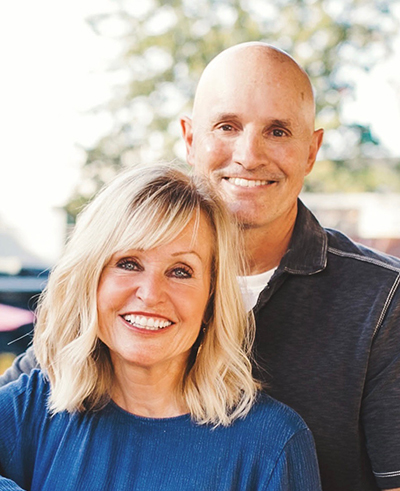
Dave and Ann Wilson
Dave and Ann Wilson are hosts of FamilyLife Today®.. Dave and Ann have been married for more than 38 years and have spent the last 33 teaching and mentoring couples and parents across the country. They have been featured speakers at FamilyLife’s Weekend to Remember® marriage getaway since 1993 and have also hosted their own marriage conferences across the country.
Episode Transcript
FamilyLife Today® with Dave and Ann Wilson – Web Version Transcript
This content has been generated by an artificial intelligence language model. While we strive for accuracy and quality, please note that the information provided will most likely not be entirely error-free or up-to-date. We recommend independently verifying the content with the originally-released audio. This transcript is provided for your personal use and general information purposes only. References to conferences, resources, or other special promotions may be obsolete. We do not assume any responsibility or liability for the use or interpretation of this content.
Raising Christian Kids in Today’s Culture: Your Kid is Being Discipled
Guest:Dr. Collin Outerbridge
From the series: Why Kids Leave the Faith—and Can Parents Do Anything About It? (Day 2 of 3)
Air date: September 29, 2026
Ann (00:01):
Hey, before we dive in, I just want to remind our listeners that our vision for families at FamilyLife.com is to follow Jesus to impact children, parenting, marriages, not just here, but around the world. We can’t do that without you.
Dave (00:18):
Yeah, and it’s why we do what we do, but you probably don’t know this. We have hundreds, even thousands of financial partners, people that pray for us, but also say, “I don’t want to just pray. I want to be a part of this ministry, and I’m going to give part of my income every single month to FamilyLife to help this ministry impact the world.” So you can be a partner with us. In a sense, you’re impacting others just through our voice and through this program.
Ann (00:42):
And we need you.
Dave (00:44):
Yeah. And if you’re sitting there thinking, “Man, I didn’t even know they had monthly supporters like that.” Yes, we do. And they literally are partners. We are partnering together to change the world for Jesus Christ. So here’s how you can do that. Just go to FamilyLifeToday.com, click on the donate button and become a partner.
Okay. I just want to say, if you’re a parent, put down whatever you’re doing right now.
Ann (01:08):
Lock in.
Dave (01:08):
Put down the dumbbells, turn off—
Ann (01:10):
No, they can do that while they’re listening.
Dave (01:12):
Okay, you can keep working out, but you might want to pull off the side of the road and—
Ann:
Take notes.
Dave:
Yeah. I mean, engage because we’ve got some real help for parents. And by the way, this could be for kids as well.
Ann (01:25):
Well, even if you’re a single person, this applies to us of how we’re being influenced today and how God can shape us or the world can shape us.
Dave (01:34):
Yeah, this is all about how to help your kids, who may be little now, be men or women of God when they’re adults. Cue the music.
Ann (01:51):
Welcome to FamilyLife Today, where we want to help you pursue the relationships that matter most. I’m Ann Wilson.
Dave (01:58):
And I’m Dave Wilson, and you can find us at FamilyLifeToday.com. This is FamilyLife Today.
We’ve got Dr. Collin Outerbridge back with us, who’s a pastor right here where we live in Lake Nona, Florida, talking about raising kids. And you’ve got four.
Collin (02:21):
I do.
Ann (02:21):
High school sweethearts.
Collin (02:22):
High school sweethearts. We got married at 21.
Dave (02:25):
Now, were you a follower of Christ then as well?
Collin (02:27):
Yeah. So I’ve been able to be in a family, raised in a Christian home since the time I was born. Jesus is all I knew, but I really didn’t come to faith and really have my faith become my own until I was a junior in high school. And my faith really came alive, I think, practically when I became a college student and was mentored by another college student a couple years ahead of me who was really invested and involved in my life. And it was actually the ministry of Cru where things became real to me and where Jesus became not just a part of my story, but the center for everything.
Ann (03:01):
Did you think you’d be a pastor?
Collin (03:03):
Not at all. This was not the plan. I did not have any imagination in my mind that I would spend my days doing the work that I do, but I’m very, very grateful that we get to not only plant a church and lead a church here in the city, but also, I get to do that with my wife. It’s a great joy.
Dave (03:22):
Let’s get into what we’re talking about. Give us a quick review. You did a sermon series, Kids These Days, and you really started to help parents understand, how do we reach the goal we’re hoping; that our sons and daughters someday will be men and women of God. You walked into Daniel 1. King Nebuchadnezzar had a strategy. What were the first two we hit real quick?
Collin (03:44):
Daniel, chapter one, the first seven verses give us the full strategy for how the enemy tries to undermine our kids. The first step is to fictionalize the faith: what one generation believes, the next generation forgets, and the third generation denies. And the second step is to gather the influencers, because if you can get the influencers to buy in to something that is counter to God’s best, it’s only time before the culture follows.
Dave (04:12):
As parents, should we be trying to put other influencers in front of our kids?
Collin (04:18):
Absolutely, especially as our kids enter into adolescence. We know that the primary ways in which kids hold onto faith is, one, by looking at their parents, but secondly, by walking with community. And at some point, usually around 12, 13, 14, that’s when kids begin wanting to, and naturally wanting to separate from mom and dad, kind of find their own way. And as parents, we are responsible for who influences our kids. And in many ways, gathering the right people around them—the right coaches, the right friends, the right families—that help validate the values that we have in their life, to serve as other voices, really can make a difference.
Ann (04:58):
We were so intentional about that even with our three sons; we kind of handpicked people that discipled them.
Dave (05:06):
Well, I mean, first we prayed.
Ann (05:07):
Yeah, I was going to say, absolutely.
Dave (05:07):
We literally, when they were like two and three, we were praying daily. I picked a day a week to fast. I still do, 37 years later. I thought I’d do it for a couple months when our oldest was born. But part of that fast and part of that prayer was, would you bring men into their life? And yeah, CJ has Frank. Frank is an attorney. He’s still in CJ’s life. CJ’s 37; and Ryan and Rob. I mean, these guys, I remember one day our youngest was in the basement with Rob. Rob was probably in his 30s at the time, maybe. Yeah, probably early 30s. He’s down there with Cody, our youngest and about four or five other guys. And again, he’s an answer to prayer. He’s mentoring our son, just like you said. That’s a positive influencer. You kept going in this sermon and you’re like, okay, that wasn’t just all of the strategy.
(05:58):
That was just two of five. So give us some more.
Collin (06:00):
The next one is to reeducate our kids. And so if you notice in Daniel chapter one, King Nebuchadnezzar commissions Ashpenaz to teach these new Hebrew boys that have just been taken from their home and brought to Babylon to learn the language and the literature of the Babylonians. And I think that there’s a really key insight here, that we have to be aware that our kids are impressionable. Our kids are constantly soaking up like sponges, the information that’s given to them. And so Daniel would’ve grown up in a Hebrew school where he was learning the language of the Torah, where he was studying the language of his people. And now as he’s transferred into Babylon, they’re going to teach him a new language. And in many ways, the goal is that this Babylonian language will permeate through his life and his home and he won’t teach his kids Hebrew.
(06:58):
And two generations later, no one can read the Torah. And so I think we need to be aware that, as parents especially, we have to be cued in and locked in on the educational framework that our kids are finding themselves in. There’s an interesting research study that shows that children spend about 15,000 hours in formalized education from the time they’re in kindergarten until they graduate high school. If a family goes to church 40 times a year, if a family checks their child into kids’ ministry or to youth ministry 40 times a year, that number is about 520 hours of Christian instruction that they’re receiving—
Ann (07:39):
—compared to—
Collin (07:40):
—compared to 15,000 hours of an educational framework that may be diametrically opposed to the values, and to the worldview, and to the matters of importance that a family might hold. And here’s what is even more terrifying, I think. The Bureau of Labor and Statistics had a study where they identified that parents usually spend about 20 minutes a week paying attention to and engaged in the homework of their child. We’ve got to be aware and cognizant of where our kids are attending school, what the voices are in the life of our kids, and asking the question, what is the language that they’re being taught and what is the literature that they are reading? Because that will shape and form them in ways that either orient them towards receptivity to the good and beautiful truth of the good news of Jesus or lead to a discouragement or a disconnection from those very things.
Dave (08:37):
So what have you guys decided? Because I know a lot of parents are listening going, “Well, that’s why I chose Christian school. That’s why I chose homeschooling,” which could be a great choice, but what if you don’t choose that? Is that a good choice?
Collin (08:50):
Yeah. Well, I think that there are amazing parents that have their kids in public school, amazing parents that have their kids in a private Christian school and amazing parents who choose to homeschool their kids as well. I think the real answer is not so much where do I send my child? The question is how involved am I in their education?
Ann (09:07):
You’re saying we can’t be passive.
Collin (09:09):
Yeah, we cannot be passive in either situation. I see some parents who kind of outsource the spiritual formation of their child to the private Christian school—
Dave (09:19):
Or the church.
Collin (09:19):
—or to the church, when the reality is, we’ve got to raise our hands and say, “I am responsible for the education of my child.” We can use whatever resources are available to us or what works with our family dynamic to accomplish that. But the real question is what kind of conversation are we having at the dining room table?
(09:38):
What kind of conversation are we having as we’re driving to and from club practice? What trips are we taking as a family? What moments are we sharing where we’re creating dynamics and spaces for our children to really get a picture of how good and how beautiful God is? Our kids are attending a private school, but Stacy and I are firm believers that when they come home, we’re going to look at the curriculum, we’re going to look at the things that they’re learning. And there are times where we want to actually give our kids a different imagination for what it looks like to follow Jesus than what their school is providing. And we wouldn’t know that unless we were involved. As parents, we must be active and engaged in the education of our kids and see this as a primary responsibility.
Dave (10:25):
I mean, like what you just said, you used a good word, call. It’s the call of God on a Christian parent’s life. This is what you’re called to do. Take us to your dinner table. Have you had any conversations?
Collin (10:35):
Oh yeah, a ton of conversations. So we do some simple things at our home. The first thing we do is high/low. We sit around the table, everybody shares their high for the day, everybody shares their low for the day. And the rule at our table is when one person is speaking, no matter who it is, we all have to lean in and listen. And let me tell you, it is different when a 13-year-old is sharing their high and a 6-year-old has to listen to middle school girl drama. It’s not something he’s necessarily interested in, right? Or a six-year-old who is still developing sentence structures and learning word economy, right? We can sit there for quite some time, but that creates, I think, the conditions for the other conversations that Stacy and I might have at bedtime. It’s really daily research for us. How are our daughters doing?
(11:21):
How are our boys handling that bully? Or are they the ones who are bullying? And it creates a moment for us, later on in the evening, to have a one-on-one conversation if we need to, or just to file that away so that when we’re driving to school the next day or when we’re doing a pickup, if we need to have a one-on-one conversation, we can with our kids. So we have a built-in research kind of portal, if you will, that happens at the dining room table.
(11:43):
I think a second thing that’s really important for us is creating rhythms. So our family, we’re significantly committed to the concept of Sabbath. We believe that God has called us to identify a window of time, as a family, where we stop working. This is actually a way that we remind ourselves, and our kids are reminded, that the world keeps on spinning and God is still in control even when we are at rest. We have some traditions around Sabbath that our kids lean into as well. So for us, that happens from Friday night till Saturday. We get home and we always have a feast. And it could be the feast is we went to Chick-fil-A because mom and dad are tired, right? Or the feast could be a meal that we’ve made, and we share gratitude on Friday night.
(12:32):
And so we’re trying to create daily, weekly, and then annual opportunities and milestones for our kids that help supplement what we hope is the valuable influences in their life from their youth directors, their small group leaders, and as well as the school they attend.
Dave (12:52):
Hey, Dave Wilson here to talk about the Love Like You Mean It marriage cruise that you got to be on with Ann and I. It’s epic, it’s life changing, it’s marriage changing, and it’s a lot of fun in the sun. It’s on a boat and we work on marriages. So hey, it sells out and you don’t want to miss it. So here’s how you can get in. Go to LoveLikeYouMeanItCruise.com, LoveLikeYouMeanItCruise.com, use the promo code FamilyLife. That’s one word, FamilyLife that gives you a discount. Go to LoveLikeYouMeanItCruise.com, promo code FamilyLife. We will see you on the boat.
Ann (13:28):
When you put your kids in a private school or even a Christian school, you assume that everything they’re learning is great. Our kids have been both public and private. And so some of the conversations surprise me of some of the things they were. It could be something on legalism like, “Hey, this is what happened at school today, and this teacher said this to me.” And that may not be something that Dave and I—we’re not legalistic people, and so we’d have a conversation about that. I think that’s really wise, because you just think, I know that when our kids were in Christian school, I became less active and participating in everything. I just assumed that it would be great.
Dave:
We outsourced it, yeah.
Ann:
Yeah. And I think it’s really important for you to do that no matter where your kids are, even if they’ve been hanging out with the neighbor kids in the neighborhood all day.
(14:18):
That’s really important like, “Hey guys, what happened today? What’d you guys talk about?” Those are just great conversations.
Dave (14:24):
Yeah. I love your idea of Sabbath.
Ann (14:25):
Me too.
Dave (14:26):
I mean, I know that as a pastor, I preached it and often didn’t do it, and it’s the ten commandments.
Ann (14:33):
And you couldn’t do Sunday because we couldn’t.
Dave (14:35):
So you did Friday night, Saturday, and we went to Israel and sat with Jewish families through Shabbat, and it was powerful. And we rushed back to the states like, “We’re doing that.” You have to be intentional or you’re not going to stop. You’re just going to run from one to the next and wise families say, “Nope, I’m not going to get caught up in that whirlwind,” right?
Collin (14:58):
Yeah. And let me encourage families here when it comes to Sabbath, because I think we can hear, “a 24-hour window,” where that’s not possible. And I think that the key is, start with what you can start with. Our weekends are not hanging out at home on Saturday, twiddling our thumbs, and I don’t have an acoustic guitar, like singing worship songs. That’s not our reality. But we’ve asked the question, what can we do? And let’s start with what we can do. And so our kids know Friday night, nobody’s going out. We’re at home together, and that is Sabbath dinner. And we might invite some friends in to join in with us, but I would just encourage parents, if 24 hours seems like an impossibility, don’t punt on Sabbath. Do what you can in the season that you’re in and trust that God will fill the gaps.
Dave (15:46):
Yeah, that’s big.
Ann (15:47):
It was big for us when our kids were in middle school and high school. They were in so many sports. We just weren’t eating together because of their practices. So we ended up for a time, we had dinner at nine o’clock. That sounds insane, but they had snacks along the way. It was the only time with high schoolers we could gather, and it was sweet because it was great catch up for all of us.
Dave (16:07):
Let’s go back to the book of Daniel.
Collin (16:09):
So the next step after we look at the education element is that the enemy’s desires to keep us dependent and comfortable. So if you look at Daniel chapter one, Ashpenaz is told to gather the influencers, to reeducate them, and then to feed them from the king’s table. Now, a cursory reading of this, and we don’t think much of it, but it is actually incredibly strategic by Nebuchadnezzar, because if he can get these Hebrew boys to eat from his table, that means that they’re going to get some really good food, right? The rest of their community, they’re not in that position. The rest of their community, they’re looking for scraps in the streets, but these boys are enjoying a medium rare ribeye every single night. And what can oftentimes happen when we think about faith being undermined in the life of our kids, and really even in our own lives—because this isn’t just a strategy for kids, it’s a strategy for all of us—is that when we become more connected in love with the world that we’re in, as opposed to the kingdom that we belong to, when our eyes are more focused on what’s in front of us instead of eternity, we begin to compromise.
(17:20):
And the king knew that. The king knew if he could get these Hebrew boys to fall in love with Babylon, then they would fall out of love with their Creator, their Maker, and their people. I think the encouragement for all of us is to ask this critical question: am I living a life that would inspire my kids to believe that there is more to this life than this life? Are they seeing me live with extravagant generosity? Do they believe that mom and dad are more concerned about eternity than they are what happens this weekend? I think that when we take an inventory of our life, it can be a lot easier to fall in love with the king’s table than it is to fall in love with the King of kings who invites us to an eternal table that oftentimes involves suffering, oftentimes involves sacrifice, oftentimes involves doing the right thing instead of the easy thing, but our kids are watching.
(18:13):
I think it’s an important reminder for all of us that our kids take their cues from us when it comes to how important God really is.
Ann (18:20):
I loved your C.S. Lewis quote that says, “Prosperity knits a man to this world.” You think that’s true?
Collin (18:27):
Oh, absolutely.
Ann (18:28):
Yeah.
Collin (18:28):
And I think Hebrews 13 reminds us that we’re not of this world, that we belong to an eternal king. And yeah, I think that the continual evaluation that we have to take on, especially in the West, especially in North America, is we have to ask this real critical question. Am I excited about the fact that Jesus is coming back? Do I want him to come back? Is eternity really where my heart is longing for? Do I wake up thinking about eternity or do I wake up thinking about the comfort that I can find in a moment?
Dave (19:02):
Now, what’s that look like in your home?
Collin (19:03):
Things like Sabbath, again, are core because I am indexed towards working hard. My wife is the same way. And so for us, making these choices that disrupt our lives to remind us that this life is not the most important life, or the only life is really, really essential. I’d say the second thing that we love to do with our kids that’s been really, really helpful is—this is going to sound kind of weird, but we take them to old churches when we travel. We just recently went on a trip with our son. Old churches have cemeteries around them. We don’t have those in most churches nowadays, but those cemeteries remind us of the brevity of life, the temporality of all of it. We end up talking a lot about heaven and eternity with our kids. Another thing that we do that I think is really important for families as well, is to get our kids around people that are older on in life who are thinking about death because it seems more apparent.
(20:06):
Normalizing those interactions, having our kids spend time with their great-grandparents, and taking them on trips to spend time with them, it creates the kind of environment and culture, I think, where our kids are open to realizing that heaven isn’t just a concept or idea, but it’s a destination. When we talk about that, it creates some opportunities for us to think about what we do have in life and what God has called us to steward, and how we can be generous with those things because there are more important things than the shoes that are on our feet or the outfit that we’re wearing. Although those things are important and valuable, they’re not the most valuable.
Ann (20:40):
I’m kind of amazed. I’m thinking about these young men. How old do you think they were? What was your guess?
Collin (20:45):
Yeah, so they were teenagers.
Ann (20:46):
Right.
Collin (20:46):
So probably 13, 14, 13 to 17, somewhere in that range.
Ann (20:50):
So I’m thinking of my own three young teenagers and they’re presented a banquet, a feast. Every night they’re presented this, and they didn’t eat it. It’s pretty remarkable that they didn’t.
Collin (21:04):
It is remarkable. I think that there’s a key principle here, and that principle is, are we willing to say no to good things so that we can say yes to greater things?
Dave:
That’ll preach.
Collin:
Do we create conditions where our kids are seeing us do that?
Ann (21:21):
That’s the key, I think.
Collin (21:22):
That’s a key element.
Dave (21:23):
Yeah. I think one of the things that we try to do, and we even took our name Wilson and said, “What are the values, acrostic?” And the W was “work hard.” And one of the things we tried to do is, if you want nice things, you’ll work for them. I would say this from the stage sometimes on Sundays in a sermon, “If you’ve got daughters or sons in your house, don’t hire a lawn company. You’ve got a lawn company. Get them out there to mow the yard.” I’ve had parents come up and be like, “Dude, quit doing that. We just do a lawn company.” I’m like, “You’re not teaching.” So I mean, our boys, and I’m not saying every family should do this, but part of that good things come when you work hard is they both, two of our sons were concrete workers in high school and roofers.
(22:10):
They worked on roofs. And we had parents say, “Do you realize how dangerous that is?” They came home exhausted, dirty, and we’re like, “This is part of the future plan.” It’s a bigger vision to say, “We want children that know how to work hard to get—if you want nice things, work.” It shouldn’t be handed to you, right? You didn’t hand your daughter a phone.
Collin (22:32):
No. And there’s kind of a running comment in our home, “This is Mom and Dad’s money, not yours.” And I think it’s an important thing for our kids to recognize, “Hey, you’re invited to enjoy these good things, but you’re not entitled to these good things.”
Dave:
Yeah, that’s good.
Collin (22:49):
And we want our kids to see us sacrificially be generous. And so one thing that we do is I actually do my tax returns with my daughter, my two oldest daughters, every year. And at the end of the year when we’re finalizing our end of year giving, I have my two oldest sit with me so they know how much money Mom and Dad gives away, because I want them to see that we say no to things we could have because we want to invest in kingdom work that is eternal and that matters more. Because eternally minded people don’t happen by accident. It happens by intention.
Dave (23:25):
I remember when one of our sons—I don’t remember which one—was in high school, I showed him, “Here’s the check I write for the house every month, a mortgage. Here’s the check I write”—again, back then writing checks—”check for mortgage, check to God.” I said, “I always want the check to God to be bigger than this,” because it is a very sizable investment, a house. I remember he looked and said, “Are you crazy?” because he now had an understanding of money and thousands of dollars to him was like, “That is nuts, Dad.” I’m like, “That’s what matters. Your heart is where your treasure is, and this represents that.”
Another great conversation with Collin talking about next generation faith. You want more about him, just go to the link in the show notes@FamilyLifeToday.com. I tell you what, I think there’s a pretty good book out there that helps parents raise their kids to follow Jesus.
Ann (24:21):
No Perfect Parents.
Dave (24:23):
It’s our book. It came out a couple years ago, but if you’d like to get that and walk through the four different seasons of raising kids to become adults who fall in love with Jesus—at least that’s our hope—you can get it at FamilyLifeToday.com. Just look up the link.
Ann (24:45):
FamilyLife Today is a donor-supported production of FamilyLife®, a Cru® ministry; 50 years of helping you pursue the relationships that matter most.
If you’ve benefited from the FamilyLife Today transcripts, would you consider donating today to help defray the costs of producing them and making them available online?
Copyright © 2026 FamilyLife. All rights reserved.