
172: Beautifully Blended: Devotions and Resources for Every Kind of Blended Family
Ron Deal speaks with Gayla Grace about her new book, Beautifully Blended: 101 Devotions to Encourage Couples in Blended Families. This book offers support and advice with relatable anecdotes, along with a devotion, prayer, and Bible reading for each day.
Every day dynamics in blended families are addressed with answers to common situations that often create struggle, such as stepparenting, co-parenting, marital conflict, and challenges in relationship-building. Grace offers practical tips that provide hope for blended families by encouraging them to trust God, seek His wisdom, persevere through challenges, offer grace freely and often, count their blessings, and recognize God’s redeeming power in relationships.


Show Notes
About the Guest
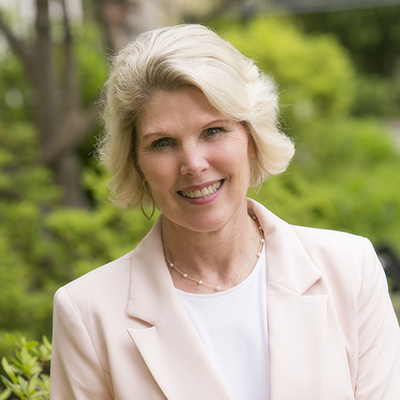
Gayla Grace
Gayla Grace serves on staff with FamilyLife Blended, a division of FamilyLife, is the founder of Stepparenting with Grace, and co-founder of Sisterhood of Stepmoms.
She is a writer, speaker, and coach on stepfamily life and is passionate about equipping blended families. She holds a master’s degree in Psychology and Counseling and is the author of Stepparenting With Grace: A Devotional for Blended Families and co-author of Quiet Moments for the Stepmom Soul and Unwrapping the Gift of Stepfamily Peace.
Gayla and her husband, Randy, have been married since 1995 in a “his, hers, and ours” family. She is the mom to three and stepmom to two young adults. Gayla and Randy are recent empty nesters and live in Conway, AR.
Twitter: @GaylaGrace
Instagram: @FamilyLifeBlended
Facebook: @FamilyLifeBlended
Website: www.familylife.com/blended
Gayla Grace serves on staff with FamilyLife Blended, a division of FamilyLife, and is passionate about equipping blended families as a writer and a speaker. She is author of Stepparenting with Grace: A Devotional for Blended Families and co-author of Quiet Moments for the Stepmom Soul. Gayla holds a master’s degree in Psychology and Counseling. She and her husband, Randy, have been married since 1995 in a “his, hers, and ours” family. She is the mom to three and stepmom to two young adults.
About the Host

Ron Deal
Ron Deal is Director of FamilyLife Blended®️ for FamilyLife®️ and President of Smart Stepfamilies™️. He is a family ministry consultant and conducts marriage and family seminars around the country; he specializes in marriage education and stepfamily enrichment. He is one of the most widely read authors on stepfamily living in the country.
Episode Transcript
FamilyLife Blended®
This content has been generated by an artificial intelligence language model. While we strive for accuracy and quality, please note that the information provided will most likely not be entirely error-free or up-to-date. We recommend independently verifying the content with the originally-released audio. This transcript is provided for your personal use and general information purposes only. References to conferences, resources, or other special promotions may be obsolete. We do not assume any responsibility or liability for the use or interpretation of this content.
Season 7, Episode 172: Beautifully Blended: Devotions and Resources for Every Kind of Blended Family
Guest: Gayla Grace
Air Date: September 8, 2025
Gayla (00:02):
Have relationships outside of your family, especially for women. Sometimes we carry a lot of responsibilities within our family, and we can become a little too pulled in. And then sometimes I kind of shudder when I hear stepmom say, well, I quit my job to be a stay-at-home mom with these stepkids. Well, okay, but you got—
Ron:
Hope it goes well.
Gayla:
Right. You need to have some interest. You need to have some friends outside of your stepfamily because there’s days that you just need to have other relationships to turn to.
Ron (00:41):
Welcome to the FamilyLife Blended podcast. I’m Ron Deal. We help blended families, and those who love them, pursue the relationships that matter most. And why do we want to do that? Well, because there’s great joy in loving God and loving others, and we think, pretty sure it makes the world a better place. Gayla Grace is with me today in the studio.
Gayla (01:03):
Good to be here, Ron.
Ron (01:04):
Always love having Gayla with us. Today we’re going to be talking about her new book. Beautifully Blended. If you don’t know who Gayla is, that’s because you don’t listen to FamilyLife Blended podcast or haven’t tuned into much of the things that we offer because she is a regular content expert and contributor to so much of what we do around here. She hosts the Women and Blended Families livestream; a monthly event that’s on YouTube and all of our social media channels. And as I mentioned, she has updated her book previously titled Stepparenting with Grace, now called Beautifully Blended. She’s expanded that devotional. So excited for this to come out.
Gayla (01:43):
Thank you.
Ron (01:43):
Our listeners and viewers, you will want to get a copy as quickly as possible. Gayla, tell us why did you write this book in the first place, even going back a number of years, but why update it?
Gayla (01:54):
Well, when I first wrote it, I was a brand-new stepmom and did not know how to be a stepmom. I was raised in a traditional family. Stepfamily life was so foreign to me, and I went looking for a devotional for stepmoms, could not find one. Now remember, this is almost 30 years ago.
Ron (02:12):
Oh, you’re not that old. It was just a couple of years ago.
Gayla (02:16):
No, and at that time, of course, I couldn’t have written one. I didn’t know how to be a stepmom or how to do stepfamily life but over the years as I became a little more educated in what stepfamily life looked like, picked up some tips and tools. Randy and I did a lot of small groups using some of your material and I began to just be more confident. But I also began to see stepfamilies need help and I felt like a devotional would still be a good thing to have out there. And so I went and got an agent, and we worked with some publishing houses and published that first one on Stepparenting with Grace. But now it was really directed more for stepparents. That was the hardest role for me, was my stepmom role, even though I have bio kids too. And so then when we revised it, I wrote more devos specifically for marriage and then I edited a lot of the devotion so that they spoke to the couple, not just to the stepparent.
Ron (03:14):
So it’s shifted from—
Gayla (03:15):
It has shifted.
Ron (03:15):
—a stepparent’s devotional to a couple’s devotional.
Gayla (03:18):
Right, and that’s why we renamed it to really help it be a broader title and to speak more to the couple, not just the one who is the stepparent.
Ron (03:27):
Well, I’ve referred people to your book for years and now I’m even more excited to know and to recognize that couples are going to get a lot out of it as well. We’re not going to assume anything with our viewers and listeners today. Why don’t you back up, tell us a little bit about your family, just set the stage for that journey that you’ve been on.
Gayla (03:47):
Sure. Randy and I had both been married before and divorced. In fact, we were both married for 11 years and divorced. And then when we came together and married, we both had two kids. My girls were three and five, so pretty young.
(04:02):
Randy had a son and a daughter. He had a son that was five and a daughter that was ten. So we both had primary custody of our kids and overnight went from two kids to four and trying to figure out how do you do life now as a stepfamily?—learn to parent together? And then six years into marriage, we had a child together, our son Nathan. And as you know that term, “his, hers, and ours” is kind of what defines our family. And as I mentioned earlier, we will celebrate 30 years of marriage in October.
Ron (04:31):
Which is such an accomplishment. It really is. I mean it’s just fantastic. And I’m sitting here thinking about how your perspective has changed. When you were going back over the devotional and you were adding new, but you were also looking at the old, was there anything that you said, “Ooh, boy, I want to change that”?
Gayla (04:48):
Well, I remember even when it went through the editing stage, the editor telling me, “Gayla, there’s a lot in here about how hard this is.” And I said, “It is hard! There’s a lot of hard in stepfamily life.” I still see that, but I do feel like I tried to curb some of the pain to make sure there was always hope. There is always hope. It doesn’t matter what the circumstances are and some of them are very challenging, and you can’t cover all the different dynamics in a book, but you can certainly address enough of them. And there’s a lot of stories in there. There’s a lot of real-life stuff, our stories, other people’s stories just to help illustrate different things that can be a part of stepfamily life.
Ron (05:28):
You mentioned the hard, were there any particular hurdles that your family faced?
Gayla (05:33):
We did. I mean our biggest hurdles were just Randy and I trying to figure out how to parent together because in a traditional family you come together as a couple and then you have a child together and then you learn to parent together. But in a blended family, at least one person’s already been parenting. Now for us, Randy had a 10-year-old. My oldest was five. I didn’t know how to handle a 10-year-old, and she was a girl, and she had a biological mother over here. And so there was naturally some of that loyalty conflict that we talk about and just the dynamic between Randy and I because we parented very differently and we hadn’t had good instruction of the biological parent needs to be the one who parents his own child in the beginning. And we didn’t necessarily follow that rule and it backfired on us. And then we had to back up and we had to start over, and we had to go to counseling. I mean Ron, we had to get help.
(06:25):
And we did though, and it made a difference for us. But that was the first hurdle. Then we got through that. We figured out how to parent to gather. We began to form relationships together with one another, with our kids, stepkids but then eight years in my stepchildren’s mom got sick. She got cancer and was much more serious really than we realized in the beginning. Within a year of her diagnosis, she died, and her children were 14 and 19. So my stepson Peyton, 14 and Adrian 19, those are such vulnerable ages for kids and that was a huge hurdle because especially for them, my kids still had a biological mom in the home all the time and it was really hard for all of us. Everybody was grieving in trying to figure out how to manage that.
Ron (07:12):
I know we’ve talked about that. We’ve featured that element of your story in some of our previous podcasts. Let’s talk a little bit more about the book and how it’s structured. You have it divided into sections, topics. That’s the way it’s structured?
Gayla (07:28):
Right, right.
Ron (07:28):
So why did you pick those topics? Why do that?
Gayla (07:31):
Well, I picked the topics because I thought they were things that were most relevant to stepfamily dynamics that might want some additional help on; but the difference in this book is all of them are grouped together. So for instance, one of them is on trusting God. We’ll talk about that; that’s one I started with. All of those 10 or 11 devotions are together now, so you can read all of them at the same time. Then there’s a set of questions at the end that pertains to that topic and it was done that way so that for those who might want to use it in a group study, then you can do that and there’s some questions and you can read through all of them together and then you can go through the questions and talk about specifically, how is that in your family, how’s it going and how did any of the devotions help with that?
But it’s also written in a way that can be done together as a husband-wife, not just one or the other, but both could read it together and then talk about those questions at the end.
Ron (08:25):
I love both of those options for people. Husband and wife, it’s bringing you closer together. It’s getting you centered in God, scripture, a biblical concept, and it’s giving you an opportunity to then connect with each other about how you lead the family going forward. But the group study, that’s a great idea. Stepmom’s can get together and do this or couples could get together and just read and then discuss when you come together.
Gayla (08:52):
Right, and I have heard with Stepparenting with Grace that sometimes that they done together as a couple. They were read together, then they were talked about together. So definitely written towards where a husband-wife could read through them together because it’s not just the stepparent that has a hard journey, Ron. Sometimes it’s the biological parent parenting alongside that stepparent.
Ron (09:11):
It is definitely a team sport.
Gayla (09:13):
It is, right.
Ron (09:14):
So you want to be able to go through it together. And by the way, I just want to say that’s a huge bonus benefit of this book, this material. I mean people are reading, they’re going to get some truth and it’s going to help them get centered in truth and think forward based on that. But it’s the sharing with other people, a spouse or with a group of people—
Gayla (09:35):
Right.
Ron (09:36):
—that adds a whole community aspect to it in terms of its draw and how that strengthens you, listening to other people trying to figure out how to apply the same idea, “Oh, it worked differently for them,” “Oh, maybe that would work for us.” It’s all of that, the intangible that comes about as a result of conversation that’s so helpful.
Gayla (09:53):
And just hearing that some of the things that are going on in your home are also going on in their home. And so you’re not necessarily doing anything wrong, you’re just experiencing stepfamily life. And it helps. I’m certainly a huge advocate of small groups because Randy and I, it really helped our marriage to be part of one in the early years.
Ron (10:21):
I just want to mention in addition to the topics you already mentioned, that the book talks about step parenting, jealousy, self-care, grandparents, setting boundaries, co-parenting, coping with difficult people—I don’t know what’s that one about?—and waiting on God. I mean obviously those are a lot of things that are just sort of everyday life for the average blended family. Not everybody faces them in the exact same way, but it definitely—are common themes that people can sort of anticipate and expect.
Gayla (10:51):
Right, and then also stories, real life stories of different situations of how this has played out even. A lot of them are from our personal journey, but then also where I’ve done some coaching with stepparents and stepcouples and just been able to also acknowledge similar situations that come up most frequently.
Ron (11:10):
Did you have a favorite story that sort of stands out? I mean, I know that’s hard to pinpoint sometimes.
Gayla (11:16):
Well, I do have one and it actually, let’s see, the title of it had something to do with the power of play, I think. And so it’s about how to lighten up in your home a little bit. And it’s specifically where my stepdaughter was a middle schooler and comes home from school and says they needed chaperones at a canoeing field trip. I’m thinking, “Seriously, do I want to go do this with a bunch of middle schoolers?” But my stepdaughter had asked me, of course I’m going to go, and we have some great memories, but let me just say we ended up in the water.
Ron (11:51):
Is that right?
Gayla (11:52):
Yes, cold, murky water and it was—
Ron (11:57):
Now was that a funny moment or was that like a painful moment?
Gayla (12:00):
No, it was funny. I mean, we both were fine with it. I’m sure it was probably a hot day, and we were fine with it, but to this day, we have memories of that—my stepdaughter and I do, and that was during a period where more on the early years of our stepfamily life.
Ron:
That’s good.
Gayla:
And it just helped create some memories for us, some experiences, some fun that my stepdaughter and I could have together.
Ron (12:23):
That’s so important. That’s all about building those relationship memories and togetherness and you’re adding middle ground to the equation of your relationship—
Gayla (12:34):
Right.
Ron (12:34):
—when you have something you can point to. So play, having fun, and it sounds like you had to push yourself into; canoeing would not have been top of your list
Gayla (12:44)
With a bunch of middle schoolers, I mean, seriously.
Ron (12:48):
Right, enough said, enough said.
Gayla (12:49):
No, it wouldn’t have been but I’m very glad I went. And what’s funny is to this day, she loves to kayak.
Ron (12:54):
Is that right?
Gayla (12:55):
Yes. She loves to just get out on the water and maybe that was even started at an early age with a little canoeing adventure.
Ron (13:02):
Wow.
Gayla (13:02):
Yeah.
Ron (13:03):
Alright, that’s good. That’s good to know. You got a section on perseverance in the book, talk about that.
Gayla (13:08):
I do. I’m a big believer that you got to play the long game in stepfamilies. If you are not prepared to persevere, and for this to take longer than you want it to for relationships to come together, you’re going to be disappointed. And I really do talk about the value of digging in and persevering when it gets hard because it’s probably going to get hard. If you decide early, “I’m going to keep going. I’m going to push into my faith. I’m going to find some tools. I’m going to read Ron’s Smart Stepfamily book,” just things that are going to help you, then that can make a huge difference as you persevere when it gets hard.
Ron (13:54):
Again, wrapping around to the theme that we’ve already talked about, the power of the devotional for a couple. So part of persevering, I think is being anchored together.
Gayla (14:04):
Right.
Ron (14:06):
With an insider and an outsider—the biological parent being the insider in relationship with their children and the stepparent being the outsider who’s trying to find their way into the family story and be accepted and embraced and all of that—it’s so easy for the insider-outsider, bioparent-stepparent to be at odds about what’s happening in their own family. I mean, this is the stories that we hear all the time. “Well, you see it that way, and I see it this way. You must be wrong.” “No, you must be wrong.” Now we’re pointing fingers and it’s a blame game.
Gayla (14:36):
Right.
Ron (14:37):
Sometimes when you come together around a little tool like your book and it shows both of you what’s happening and why, gives you some background that takes it out of the realm of, “Your fault. No, it’s your fault,” now, all of a sudden, it’s us standing side by side, facing whatever that thing is that we have to look at.
Gayla:
Together.
Ron:
Now, I just would love for our listener, our viewer, to just notice how powerful that moment is, that shift from you and me against each other to you and me together, facing whatever is out there.
Gayla (15:13):
And I think the other thing that the stories can do is help illustrate the viewpoint from one or the other. So whether you’re the stepparent or the bio parent, you’re going to see it from both sides throughout the book because I am both.
Ron (15:25):
That’s so good.
Gayla (15:26):
And I wrote it from that perspective that at times as a biological mom, parenting along Randy as my husband, but stepdad to my two girls, we didn’t always agree on things. And there’s some of that in there and how we had to work through and understand his role as a stepdad, my role as a stepmom and how we come together. So yeah, you hear it from both angles.
Ron (15:49):
That’s good. You talked about fun stories and play and that sort of thing. You also have a section on laughter and fun. Why is that important?
Gayla (15:57):
Because in blended families, our kids have been through hard already. They’ve either been through divorce or death, some kind of ending of a relationship back here, and then they’ve moved into a new stepfamily, which they don’t get a choice about. Maybe they have new stepsiblings, and we have to be the ones, the adults to provide some little lighthearted fun for them. Just step out of the hard some of the time and provide some fun and memories and family time together. Maybe one of you in the couple relationship is better at that than the other. Honestly, Randy’s the stronger one here. I’m the serious one, and I really had to defer to him at times and let him just kind of be that little comedian or whatever that set the stage to lighten things up a little bit when I was being too serious. And I just think sometimes we forget that. Yes, we’ve been through hard, but so have our kids. We as the adults need to set the stage and the tone that it’s okay to have some fun in family life.
Ron (17:03):
So very important. That is such a good observation. And it softens. I mean, we talked about it’s hard. There are challenges, so you got to have moments that offset that.
Gayla (17:14):
Right.
Ron (17:15):
And I’m not talking about denying the problems, avoiding issues. I’m not talking about any of that, but it’s just about recognizing or at least finding the lightheartedness that softens the conflict.
Gayla (17:28):
And even it might be understanding your stepkids enough to know when they are beginning to dig too deep in the heart or the seriousness, and what can you do to help them talk about it, to help bring them out of that, to see that life is still good, even on days that we feel the burdens and the heaviness of what we’ve walked through.
Ron (17:56):
Let me ask you a blessings question, okay? And two vantage points. One, writing this book. How has that been a personal blessing for you? Maybe just writing down your thoughts or reflecting on things. Has it brought a blessing to you? And the second is, how long have you been married?—30—
Gayla (18:14):
It’ll be 30 years in October.
Ron (18:15):
So 30 years coming up. What blessings have you experienced with the long game?
Gayla (18:22):
In writing the book I’ve heard from stepparents and others who have told me what a blessing it’s been and how they could relate to some of the stories. And it was helpful to hear the hope. Isn’t that what we want?
Ron (18:38):
Oh my goodness.
Gayla (18:38):
—as writers?
Ron (18:40):
I know this is true for you, so I’ll say it for me. That’ll feed my soul for a long time.
Gayla (18:44):
Right.
Ron (18:45):
—hearing that somebody received some encouragement, was edified—
Gayla (18:51):
—benefited from our pain.
Ron (18:52):
Benefited from our pain, oh my goodness.
Gayla (18:55):
And hopefully we’re pointing them toward God,
(18:58):
and toward hope and answers in a relationship with the Lord. And that was definitely a benefit. Personally, you take a risk in a stepfamily. It’s a risk to love stepchildren who you don’t know if they’re ever going to love you back or want a relationship with you. You take a risk even with your spouse who you have a longer history with your biological kids when you come into marriage, if you’ve had bio kids, but you have to take a risk and say, “I’m going to make my marriage the foundation of this family even though I have less time here.” And in those risks though, I’ve seen huge blessings.
(19:38):
Doesn’t mean that Randy and I haven’t had times we weren’t sure our marriage was going to make it. We have, and certainly we’ve had times where the stepfamily dynamics were hard and we weren’t sure how they were going to play out, but the benefits start—maybe not in the first one or two years, really. You got to get a little further into integration, and you do begin to see. With me, it was my stepchildren being able to know they could rely on me and check on me at odd times or just know that they could call me, even as adult stepchildren now—just the relationship that I have with them, but also the relationships we’ve seen form between stepsiblings. So my daughter and Randy’s daughter, my daughter Jamie lost her birth order. She was my oldest. She became a middle child. So she and Randy’s oldest daughter, they kind of had fireworks for a while.
(20:31):
And it took us a little bit to figure out, well, it’s because Adrian’s being big sister, Jamie wants to be big sister and all of that. It just was a change for her. They are such sweet friends now.
Ron:
Great.
Gayla:
So it’s not just the biological rewards you see, but these other siblings come together and really begin to have relationship and want to be in relationship. We have a family chat now that one of the kids started that includes all of us in there. And it’s so fun to just see spontaneous chats that get thrown in there, just that we didn’t instigate, but that our kids have been the ones to instigate.
And then just recently celebrated Mother’s Day and talking to my stepson, I asked him, because it’s been now almost 20 years, I think, since their mom died, and I was talking to him about how my mom died eight years ago, and I said, “I still miss her on Mother’s Day. I still think about her. It’s still sad for me.” And I said, “Is it like that for you with your mom? Do you still miss her a lot and think about her?” And he said, “I do, but Gayla I have you now.”
(21:37):
“And that’s who I think about as my mom.” Oh my goodness.
Ron:
Oh gosh. Wow.
Gayla:
Right, right. And those are the rewards that you don’t necessarily expect. You don’t know how those relationships are going to play out, but if we do the long game and we trust God to grow these relationships and ask for His blessing, I believe that God answers that.
Ron (22:01):
And of course, nobody gets every dream, every fulfillment of everything they’ve ever dreamed for their life or their family.
Gayla (22:09):
No, exactly. Right.
Ron (22:10):
But there definitely can be blessings. I imagine because I know there’s somebody listening and watching right now who’s going, “I cannot even fathom that I will experience that kind of blessing in our family.” Was there a season in your life? I mean, I know there was, we’ve talked enough, I’ve heard enough of your story. Go back to that time and just what did it feel like, and knowing what you know now, what would you say to that part of you, that self?
Gayla (22:39):
Yeah. It was the season when I felt so much like an outsider as a stepmom. And I remember thinking, “These kids don’t even care if I’m in their family or not. They don’t care. They don’t want me to be the one to pick them up from school,” or “Why am I even here?” And oh, I remember pouring out my heart to God and just feeling like, “I don’t want to keep doing this, but I don’t want to go through another divorce either.”
Ron (23:05):
Feeling—I mean, what a bind to be in that spot. Can’t win for losing—
Gayla (23:09):
Right.
Ron (23:10):
—go forward in this family, it’s just going to be horrible, but leave and get another divorce, don’t want to do that either.
Gayla (23:16):
No, no. And you just have to dig in and say, “God, I believe you’ve put me in this family for a reason, and you’ve put me in my stepkid’s lives for a reason. If nothing else than to try to demonstrate the life of a believer and continuing to persevere when it would be easier to walk away. And I had to really dig into my faith, and I really had to trust that my behavior was going to be such that it pleased the Lord even if I didn’t get anything in return from others in my family.
Ron (23:51):
And sometimes sticking in and digging into integrity like that is the thing that gets us through our super hard moments where we can’t see what’s on the other side.
Gayla (24:01):
And the other thing I would say is have relationships outside of your family, especially for women. Sometimes we carry a lot of responsibilities within our family, and we can become a little too pulled in. And then sometimes I kind of shudder when I hear stepmom say, well, I quit my job to be a stay-at-home mom with these stepkids. Well, okay, but you got—
Ron:
Hope it goes well.
Gayla:
Right. You need to have some interest. You need to have some friends outside of your stepfamily.
Ron:
That’s a good word.
Gayla:
Because there’s days that you just need to have other relationships to turn to.
Ron (24:38):
These last few moments have reminded me, but I’d love for you to talk more. You end the book talking about God’s redeeming power. Why land the plane there?
Gayla (24:50):
Because in the middle of our story, we don’t see that. We don’t see that there’s going to be redemption in this relationships. And Ron, I don’t want to paint this perfect picture because we still have struggles in our relationships. We still have times, especially with adult kids, Randy and I look at each other.
Ron (25:09):
You just have new problems now that they’re adults, yes.
Gayla (25:12):
Right, and we don’t all think alike, but God has redeemed relationships from where they were. Our kids want to be together for the most part. We have a little trip we’re planning for our 30th anniversary because Randy and I started marriage with kids. We are celebrating as a family, and everybody is coming. I mean, what a blessing. So I do believe it probably will take longer than you want for relationships to come together. Just know that and be willing to persevere and grow your spiritual maturity in the process because that will help you persevere.
Ron (25:51):
Thank you so much for pouring yourself into your writing and your speaking and all you’re doing for other people, and thanks for refreshing this book. It’s a great resource and I really appreciate you doing it.
Gayla (26:06):
Thank you. I’m excited about it getting out.
Ron (26:08):
I have to tell our viewer, our lister that I endorsed this and here’s what I said: “Compact doses of grace for your blended family.” Think about that. If you could just have a little shot in the arm every day of something that just points you in a direction, gives you some encouragement, says, “You know what? This too will pass.” And this is normal and you’re not crazy, and all of those little, okay, thank you. That’s what this book is really all about.
Well, both Gayla and I are going to be hanging out in Nashville at our next Summit on Stepfamily Ministry. That’s coming up October 23 and 24. This is for 2025. I hope you or someone from your church is planning to join us. This is the premier blended family ministry equipping conference. We’re going to be talking about all things stepfamily ministry and the local church.
(27:03):
So we want you to be there. The show notes will give you a link. You can learn all about it. We’d love for you or somebody from your church to be a part of it.
A quick reminder that FamilyLife is a donor-supported ministry. We can’t do this without you. All gifts are tax deductible, and you help us build smart stepfamilies around the world. And speaking of which, when this podcast releases, Nan and I are actually going to be in New Zealand helping FamilyLife New Zealand, our partner organization there, helping them expand marriage and blended family ministry throughout that country. So I would appreciate you just saying a little bullet prayer right now for the two of us while we’re doing a speaking tour and talking with pastors and leaders while we’re there. I would really appreciate it. Gayla, thanks again for being with me.
Gayla (27:53):
Thank you. Good to be here.
Ron (27:54):
Yep. Next time I’m going to be talking with Dan and Stephanie Holmes about families with a child or a spouse on the autism spectrum. You don’t want to miss that one. That’s next time on FamilyLife Blended.
Thanks for watching or listening. And thank you to our production team and donors who make this podcast possible.
FamilyLife Blended is part of the FamilyLife Podcast Network. Helping you pursue the relationships that matter most.
We are so happy to provide these transcripts to you. However, there is a cost to produce them for our website. If you’ve benefited from the broadcast transcripts, would you consider donating today to help defray the costs?
Copyright © 2025 FamilyLife. All rights reserved.
www.FamilyLife.com