

Blended Family Issues: What’s Really Wrong? Ron Deal
You’re thrilled about your new family. Your kids? They’re still grieving the old one. And suddenly, every little conflict feels personal. What if some blended family issues aren’t really about attitude or acceptance—but loss? On FamilyLife Today, author and stepfamily expert Ron Deal joins Dave and Ann Wilson to unpack the grief kids carry, the loyalties pulling them apart, and why healing takes more than a new marriage.


Show Notes
- The Smart Stepfamily: 7 Steps to a Healthy Family by Ron Deal.
- Life in a Blender by Ron Deal.
- FamilyLife Blended Resources.
- Thanks to the Christian Standard Bible for sponsoring this episode. Learn more at CSBible.com.
- Follow us on all social platforms: Facebook | Instagram | YouTube
- Find resources from our podcast at shop.familylife.com.
- Download FamilyLife's app!
- Help others find FamilyLife. Leave a review on Apple Podcast or Spotify.
- Check out all the FamilyLife's podcasts on the FamilyLife Podcast Network.
About the Guest

Ron Deal
Ron Deal is Director of FamilyLife Blended®️ for FamilyLife®️ and President of Smart Stepfamilies™️. He is a family ministry consultant and conducts marriage and family seminars around the country; he specializes in marriage education and stepfamily enrichment. He is one of the most widely read authors on stepfamily living in the country.
About the Host
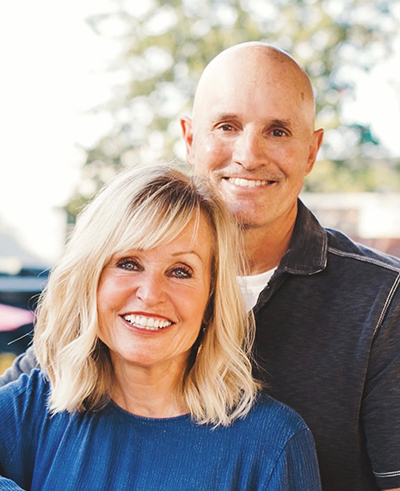
Dave and Ann Wilson
Dave and Ann Wilson are hosts of FamilyLife Today®.. Dave and Ann have been married for more than 38 years and have spent the last 33 teaching and mentoring couples and parents across the country. They have been featured speakers at FamilyLife’s Weekend to Remember® marriage getaway since 1993 and have also hosted their own marriage conferences across the country.
Episode Transcript
FamilyLife Today® with Dave and Ann Wilson – Web Version Transcript
This content has been generated by an artificial intelligence language model. While we strive for accuracy and quality, please note that the information provided will most likely not be entirely error-free or up-to-date. We recommend independently verifying the content with the originally-released audio. This transcript is provided for your personal use and general information purposes only. References to conferences, resources, or other special promotions may be obsolete. We do not assume any responsibility or liability for the use or interpretation of this content.
Blended Family Issues: What’s Really Wrong?
Guest:Ron Deal
From the series:Why Isn’t This Working? (Day 2 of 2)
Air date:November 19, 2026
Ann (00:00):
I really think one of the greatest passions of my life is growing spiritually stronger, going deeper, learning more, connecting to Jesus more. And maybe you feel like that too, like you just want more, you want to learn more, you want to grow and you want to go deeper. And you can by going to FamilyLife.com/StrongerFaith, and we’ve got resources there that can help you grow in your faith. I really hope that you’ll check it out because I’m sure that you’re going to find something that’s going to help you and you’re going to love it. So go again to FamilyLife.com/StrongerFaith.
You were six when your parents got divorced.
Dave (00:43):
Oh, you want to go back there?
Ann (00:45):
Yeah, I do.
Dave (00:46):
All right.
Ann (00:46):
And then you were 13 when your dad got remarried and you entered into a blended family. What were some of your first memories of that?
Dave (00:55):
Well, I’ve shared it here before. My first memory was I met my stepmom on a trip to Europe with my dad and my stepmom. He was an airline pilot. It was sort of cool. We could fly free around the world. And so we went to Europe and Italy, and I did not know it till years later, it was their honeymoon.
Ann (01:23):
Welcome to FamilyLife Today where we want to help you pursue the relationships that matter most. I’m Ann Wilson.
Dave (01:29):
And I’m Dave Wilson and you can find us at FamilyLifeToday.com. This is FamilyLife Today.
I did not know it till years later it was their honeymoon. And so the first night they give me a hotel room across the hall from them. We’re in another country. I’m 13 years old; I’m scared to death. And I go over and knock on the door and sleep on their floor in their bedroom because I was so scared.
Ann (02:00):
On their honeymoon night.
Dave (02:00):
Not knowing this is their honeymoon night. I mean, can you imagine? And I mean, they never said anything like, “You can’t do this.” It was just like, “Oh yeah, come on in.” But that’s my first memory and I didn’t even know it at the time. I am stepping into a whole new reality and I have no idea. I don’t think any of us did. I don’t think my dad did or my stepmom.
Ann (02:23):
I’m sure most people are. It’s new.
Dave (02:26):
Yeah. It’s like we are now in a new reality and how do we navigate that? And every family’s that way. We were that way when we got married. But if you think about a blended family or a stepfamily, man, oh man.
Ann (02:37):
Just gets a little more complicated.
Dave (02:39):
It’s complicated. So they need help. And we’ve got help in the studio with us today. We’ve got Ron Deal who directs our blended ministry here at FamilyLife. Welcome back to FamilyLife Today, Ron.
Ron (02:49):
Hey, thanks guys. Always good to be with you. You do such a great job hosting FamilyLife Today. I appreciate what you do.
Ann (02:55):
We appreciate you.
Dave (02:57):
You’re being kind because what you do in this blended area is the best in the world. I literally say this to people anytime I talk about what you do and what FamilyLife has through your part of this whole ministry is blended. And talk about how do you help families that are blending? It’s a new reality. What’s that look like?
Ron (03:18):
Yeah. Well, let’s talk about that. I also want to let people know that, like you said, we do have so many resources now. I have to just say, the Christian community has been slow to kind of jump on this bandwagon to create resources for blended families from a biblical perspective, but I’m so proud of FamilyLife. We’ve been creating all kinds of resources and I tell people now, now you’ve got too many options. You’re going to have to decide what avenue you like to get it. Are you a reader? Are you a watcher? Are you a listener? Because we have all of that stuff. We’ve got podcasts, the FamilyLife Blended podcast. We’ve got books and resources.
Dave (03:51):
Yeah, haven’t you written like 48 books or something now, Ron?
Ron (03:54):
Yeah, maybe not that many, but a number of them. We have so many things that people can choose now. And we’re talking today about this online course that we have. I am thrilled about because it’s so accessible. You could be anywhere and move at your own pace. And the one we’re talking about is well-blended. It’s a collection we’ve kind of pulled from events that we’ve done and podcasts that we’ve produced and different things and we’ve put it all together in a very structured way. So again, through your computer, sitting at home, at your pace and your convenience, you can move through this course, and it’s just really been fun putting this together and making it available.
Dave (04:32):
Well, let’s talk a little bit about what’s in the course. I know yesterday we talked about, you took my Beatles song, All You Need is Love. And you said, nope, you need more than love. You need faithfulness and trust. And I actually spent a great day talking about that and even listening to a clip from the online course. What else is loaded in this course?
Ron (04:52):
Yeah. So one of the things we talk about in well-blended is the journey of finding family unity, connecting relationships, building those, and some of the challenges that happen along the way. Our listeners may know that every year in the spring we put on a live event that’s also a live stream event. It’s sent all over the world and you can participate from wherever you live and it’s called Blended and Blessed. Each one of those over the last five years has been collected and is available online as well as a small group study, something you can go through as a couple. And then we do a new event with new speakers, a new theme every year. Well, in 2018, our Blended and Blessed event, we had a panel discussion and we’re going to hear a couple of clips today that are in the well-blended online course that came out of that panel discussion.
(05:42):
The first couple you’re going to hear is Andy and Heather, and they’re talking about some of the challenges that they faced building family unity.
Heather (05:52):
Andy and I, we’ve been married almost 11 years, and we were blessed to have a stepfamily ministry at the church we were attending at the time. And so we went through the class, and we read Ron’s book and we thought that was going to be our map. But as we would leave class, we would talk and we were like, those poor suckers, we love each other and we love God and we are not going to have problems like those people. Our kids get along. We go to the park. This is going to be great. And Andy’s ex-wife, when she left him, she left the family. So his girls haven’t seen their mom in over 13 years. I’ve never met her. And I considered myself a good mom, a good single mom. And I thought, wow, I am going to go in, I am going to love these girls, I am going to be their mom, and this is going to be great.
(06:38):
And I grew up watching the Brady Bunch and I naively thought—
Ron (06:44):
That’s going to be us.
Heather (06:45):
—that’s going to be us. And then we got married and everything changed. And I tried to force the dream in my head because the dream in my head was a good dream. It was kids getting along. It was a husband and wife walking with God and serving God, but I forgot about the loss. And a couple years in, it dawned on me that a stepfamily is founded on loss. A stepfamily cannot occur without a death, divorce or un-partnering occurring. And while remarrying and meeting Andy and the first godly man in my life was a second chance at love. And I felt like God was giving me what I deserved because I forgave my ex-husband. I was walking with Him. I was getting what I deserved. But I forgot that even though the remarriage is a second chance at love for him and I, it’s a permanent reminder to our kids that their mom and dad will never be together again.
(07:49):
And what was started in love was a reminder of loss.
Andy (07:54):
Things can be moving along well, and it will catch you by surprise because it’s been going in a good direction. And I think that at times the marriage actually cements the reality of the situation for people. That’s when it really starts to set in. I think it was said earlier today too, like when you move in, you’re sharing a house and a bathroom now with maybe somebody you don’t like. And so for us, the reality, just coming back from the honeymoon, right? You come back, you find out, okay, the six kids have been fighting, the step dog has peed on the rug, the whole deal, right?
Ron (08:35):
That’s a metaphor.
Andy (08:36):
It’s like the sky’s falling. I’m glad we had that 48 hours together.
Dave (08:41):
Yeah. I’ve actually never thought about the step dog.
Ann (08:45):
Honestly, what they talked about is so wise. I wouldn’t think about as a stepmom coming in, the loss. The kids are experiencing incredible loss and it’s important to be there and sit there and to really realize what they have gone through. That would be hard as a stepparent coming in when you’re super excited.
Ron (09:07):
Exactly. Ann, just imagine you’re excited to spend time with Dave and hold his hand and kiss him on the cheek or smack him on the lips or whatever. And in that moment when you’re giving him a big old kiss, it sort of dawns on you, “Oh, wait a minute. His kids are watching, my kids are watching, and this is evidence that mom and dad are never going to get back together again.” How divided would you feel in that moment? There’s a part of you that wants to move towards your husband and enjoy that. And at the same time, you’re maybe feeling a little guilty about it. How odd is that dynamic? That’s one of those push-pull dynamics that’s fairly common in blended families, especially in the early years. And it makes people just sort of think twice, “Do I kiss him? Do I hold his hand?
(09:53):
Do I show that affection in front of the children or is that somehow creating some angst for them?”
Dave (10:00):
Yeah. Honestly, I never even thought about it as a stepson to my stepmom. She probably was thinking that. And is this going to be a trigger for your stepson or daughter?
Ann (10:14):
Especially when you’re so loyal to your mom.
Dave (10:16):
Yeah. And you’re so, I’ve never considered—again, that’s what Blended is all about is things we never think about are the reality for families that are trying to blend. And again, you’re talking about let’s do this blended well. So it makes it even difficult.
Before we continue, let me just say this to the listener. At FamilyLife, we really believe strong families can change the world. And when you become a FamilyLife Partner, you help make that happen.
Ann (10:45):
And I don’t know if you realize this, but your monthly gift helps us equip marriages and families with biblical tools that they can count on.
Dave (10:54):
Now that’s a pretty good deal. And we also want to send you exclusive updates, behind the scenes access and an invitation to our private partner community, which is pretty cool. So join us and let’s reach families and marriages together.
Ann (11:07):
And you can go to FamilyLifeToday.com and click the donate button to join today.
Ron (11:15):
So Dave, I would kind of kick it back to you. It may not have been your experience, but I’m curious if you saw affection between your dad and your stepmom, did you ever feel a little strange about that?
Dave (11:26):
I can see it right now in my mind’s eye. I mean, this is on a boat, on a lake with my dad and my stepmom and seeing them kiss as I was getting on the skis behind the boat. I mean, that’s how real the visual is in my mind and thinking that is so weird. I don’t remember seeing my mom and dad kiss. I do remember seeing my stepmom and dad kiss.
Ann (11:50):
What did you feel?
Dave (11:51):
And it felt funny at first. I can feel it. It was like, oh, they like each other. They have a romance in their life that I don’t think my mom and dad, at least I didn’t see that because I was seeing the loss, the end of something that now has been rebirthed in a new relationship, and it felt a little weird to me. Am I supposed to celebrate this or am I mad about this?
Ron (12:21):
Yeah. So you can imagine if your dad and stepmom happened to catch your face in that moment, instead of a big smile, mom and dad love each other, it was maybe a question mark on your face, sort of a, huh, I’m not sure where to put this or how do I think about this? That’s that push-pull moment where we have different levels of motivation towards being family. You as a child even have a different level of motivation towards the happiness of their marriage. And it’s just an odd little circumstance. Now for somebody listening right now who’s in a blended family marriage, they’re thinking, “Okay, great. What do we do about that? How do we fix how our kids feel about us being in love with each other?” Well, obviously you don’t fix that on your timing, but what you can do is be sensitive to it, be aware of it.
(13:10):
And I can imagine somebody even turning with a catch a child’s reaction and just saying it out loud. “Right then I was kissing your mom and I kind of think maybe you felt a little strange about that. You know what? It’s okay. That’s all right. It’s really all right. Kids in blended families often experience that. So it’s all right with me. I’m just curious, what were you feeling?” And then you open a door to a conversation that’s perhaps about loss, perhaps about, “Oh, I don’t know. I just sort of feel weird.” Or “Honestly, I never saw my parent kiss my other parent the way they just kissed you and I’m not sure what to do with this. I like you.” I mean, you can have those sort of candid conversations with somebody. Here’s the thing, you’re creating avenues for trust to be built. You’re showing yourself to be someone who’s not freaked out or skittish by a kid’s reaction to you kissing your partner.
(14:10):
You’re not fragile and the child and you can talk about this.
Ann (14:15):
I love that, Ron, because I’m imagining many stepparents coming in could feel rejection and when they feel rejection from the children, then they pull away.
Ron:
Take it personally.
Ann:
Yes, they take it personally and then there’s strain in the relationship. So just having that conversation and if the kids are making a face or they’re not happy about it, probably that whole thing is you can say to yourself, “This isn’t necessarily about you. They’re struggling with their own things.” I think that’s really good though to bring it out in the open and to talk about it in a way that’s making the kids feel like, “Hey, what are you feeling? That could be really weird.”
Dave (14:57):
Now is that something you sort of cover in the online course to help?
Ron (15:02):
It is, as a matter of fact. In fact, we got another clip, Dave. Perfect lead in. Thanks for that. So in this well-blended course that people can do on their own from home, in this panel discussion with Andy and Heather, we also had another couple, Stanley and Myrna, and let’s listen to them talk about, because they felt that push-pull in their family too.
Stanley (15:26):
Well, I think one of the things that you maybe kind of alluded to is that you have to be persistent and consistent and intentional in trying to bring together because we came together because we fell in love and the kids kind of came on as part of the package deal. They did not have really a big voice in that. And so what do you do along the way to bring everybody together? One of the things we did in our family, and that is to really be intentional because our kids were older. Some families, what they’ll do, they’ll go on family vacation together. And when they’re small, you can bring the kids along, but when they’re older and on their own, they don’t necessarily have to follow your lead there.
Ron (16:06):
Good point.
Stanley (16:06):
But one of the things we do is that we have a family dinner once a month there. So an intentional way for us to bring together. Sometimes everybody shows up, sometimes maybe one or two of the kids show up there, but we just have a time for relaxing and bonding and basically trying to build those connection points.
Ron (16:24):
I’m hearing there, we call those rituals, points of connection. We’re going to keep doing this. This is part of the new us and we’re going to just keep doing that. I’m also hearing once a month, that’s not very often. It’s hard to make progress, I would think. Yeah? So was it slow going and how did you be okay with it being slow going?
Stanley (16:42):
Well, like I said, when the kids are older like that, you’re not trying to force anything. You want to be intentional, but also not force anything. So therefore you want to make it available and try to make it so that they can come per se, because if you try to do something once a week and they’re all living their own life, it’s going to be really tough for them to do that.
Ron (17:02):
Yeah. How about you guys? Hetzlers, you guys, any rituals that you’ve kind of built along the way, even if by accident that have been helpful?
Heather (17:09):
Yeah. It was interesting because I came in with a lot of rituals and traditions with my kids and Andy did not. And my kids were protective. They didn’t really want to share some of those rituals with their step siblings. So we ended up… I think that’s one of the things that we really tried to be flexible and intentional. And so we’ve kind of created a lot of different traditions in our family. And the one thing that we’ve had to let go of is that holidays are when you’re together, not just the date on the calendar. And so for Thanksgiving, we don’t have the kids most Thanksgiving, so we do turkey bowling. And now during just the week of that last week in Thanksgiving, we pick a day and we go bowling with the kids. And the first couple years they complained and they didn’t want to go.
(17:51):
And now are we going? What day are we going? I want to make sure I schedule it. And they look forward to it. And then we do some things for their birthdays that are special and we’ve just tried to learn to kind of…
(18:02):
Holidays are just difficult, especially when you have a child who is missing another parent, whether they’re deceased or they’re just not in their life. And so we’re very sensitive. We invented this thing called Daughter’s Day for Mother’s Day because my kids wanted to celebrate me, but my stepdaughters have a really hard time every Mother’s Day because their mom’s not there and I never want to force them to celebrate me as their mom. But now 10 years in, they do recognize me. But we just celebrate all the women in our house. So Mother’s Day, Andy celebrates all the women in the house, and we just did the flip on Father’s Day. We do Son’s Day and so we celebrate all of our sons. And so we make it more about the people than the role, and we’ve just learned to have to be flexible on that.
Dave (18:46):
Wow. As I hear that, I’m triggered. It’s like—
Ann (18:49):
Really? In what way?
Dave (18:51):
I would get on a plane on Christmas morning every year to fly from Ohio where my mom and I lived to see my dad. It was a ritual. And again, I could fly free. I remember back in those days, we’re talking in the ’60s, nobody’s on the plane. There was nobody flying. It was me and some flight attendants, and they took care of me because they felt sorry for me. What’s this 10-year-old, 9-year-old, 11-year-old boy doing on a flight by himself on Christmas day? I remember I really hated it because I went from a white Christmas in Ohio to palm trees and I didn’t like palm trees for Christmas, but I do also, Ron, when I was listening to that, I also remember when I would go down at 14 and 15 years old, now I had a stepmom and she understood what I was going through and she made it good.
(19:42):
I remember she was—
Ann (19:43):
Did she create new traditions?
Dave (19:44):
Yeah. She was full of joy. She had Christmas presents for me. We never talked about it, but I know now that she saw, “Man, this poor kid, this is Christmas day and he has to travel from his mom to his stepmom and his dad. I’m going to make it a good memory.” And it became a good memory. But again, so many families don’t even know how to navigate that whole thing. So this is what you’re talking about, right?
Ron (20:08):
Yeah.
Ann (20:08):
Well, I thought Dave too, it was really helpful to listen to the panel just to get ideas like, “Oh, that’s a good idea.”
Dave (20:14):
Yeah.
Ron (20:15):
Love the creativity that they came up with and love that your stepmom, Dave, did the same thing. She found a way. She saw the need. She had some compassion for this transition that you were forced into making on Christmas day of all days.
Dave (20:30):
Even as I was listening to it, Ron, I’m thinking there are blended families who have never had this conversation until right now. They just heard it on this broadcast. They’re going to get the online course and it’s going to force them to go, “Hey, there’s something we need to talk about that we have never talked about.” It just hit me how valuable this can be for a blended family.
Ron (20:48):
Yeah. And I love the thing about building little points of connection for people. Sometimes when the people hear, somebody’s listening to us right now and they’re realizing, “Oh, we have a tradition. I just never thought of it in that way. And it happens every Sunday night, blah, blah, blah, whatever it is. It happens every Thursday when we pick up the kids from school, da, da, da. Or maybe it’s every other week when the kids come back from the other house, we always go get ice cream.” Yes, those are important points of connection, and they begin to help children switch from one home to the next. And it’s a reminder that, “Okay, I’m with these people and this is how life works in this home and these people care for me.” And yeah, don’t underestimate the power of those little moments to help further your family.
(21:32):
Now, a couple things that I just had to comment on based on what we just heard. Remember Heather’s comment, the kids complained at first. We held onto some of our old traditions that were single parent home traditions, and then we had to begin to create some new ones and the kids complained at first and they just kept going, kind of a gentle persistence, right? And then they started asking, “When are we going to do that thing?” All right, now you know this has meaning. It’s become a tradition. It’s helpful for people and it’s a part of our new us.
(22:02):
Okay, listen to that, guys. That’s how you develop a new family identity is you got to have something that’s us. And it’s all those little things put together, of course, over time, but when it crystallizes and it becomes something we expect from one another, we hope for, we look forward to, okay, all right. Now I know where I belong and with whom I belong. That’s a really good moment in the life of a blended family.
Dave (22:29):
Yeah. Again, I guess you’re taking me back, Ron.
Ann (22:35):
He always does this. It’s his counseling ways.
Dave (22:37):
That’s what Ron’s doing. He’s putting me on the couch right now. No, listening to these families talk on this online course is reminding me of two things. One, what I lost, but also what I did gain in my stepmom and dad. Again, they’re gone now and my mom’s gone, but I’m thinking of the new families in this current reality that have something I never was offered. An online course, like you said earlier, conferences, books, podcasts, you name it are available. But man, just listening to this course, I just though, man, what a blessing this is going to be for families. I’m just one guy, but I’ve lived it as the son in a blended family. And I would just say that you don’t want to miss this opportunity. This is going to spark some conversations that are literally going to change the future for your family.
Ann (23:28):
And Ron, once again, thank you for all you’re doing. You’re impacting so many.
Ron:
Thank you.
Ann:
Hey, so if something on a day’s episode just clicked with you, we want you to know that you are not alone. Nope. Because every single marriage has its fair share of just highs, but also lows.
Dave (23:49):
You’ve heard our highs and you’ve heard a lot of our lows, but the question is, where do we go to get help? That was our question. Let me tell you, we are so thankful that you listened today and we have a resource that we would love to share with you as a free guide that will be filled with helpful marriage wisdom from real life couples who’ve been right where you are.
Ann (24:10):
So you can grab your copy today at FamilyLife.com/MarriageHelp. Again, did you hear that? Go to FamilyLife.com/MarriageHelp for your free guide full of marriage tips. Another great day with Ron Deal. Every time is a great day with Ron Deal.
Dave (24:32):
Every time.
Ann (24:33):
You can learn more about FamilyLife Blended and the conferences, the podcast, articles and everything else at FamilyLifeBlended.com.
Dave (24:45):
FamilyLife Today is a donor-supported production of FamilyLife®, a Cru® ministry; 50 years of helping you pursue the relationships that matter most.
If you’ve benefited from the FamilyLife Today transcripts, would you consider donating today to help defray the costs of producing them and making them available online?
Copyright © 2026 FamilyLife. All rights reserved.
www.FamilyLife.com