

Help! I’m Ruining My Kids: A Gospel Guide for the Mom Who’s Desperate for Change–Abbey Wedgeworth
You swore you wouldn’t parent like that—and then it falls out of your mouth. Again: the reactions, the tone, the patterns you thought you escaped. Abbey Wedgeworth, author of Help! I’m Ruining My Kids: A Gospel Guide for the Mom Who’s Desperate for Change, gets brutally honest about where that comes from—and whether it can actually change. Abbey speaks to the fear you’re passing things down…and the surprising ways those cycles start breaking.


Show Notes
-
Find out more about Abbey Wedgeworth and her books atabbeywedgeworth.com
- Thanks to the Christian Standard Bible for sponsoring this episode. Learn more at CSBible.com.
- Follow us on all social platforms: Facebook | Instagram | YouTube
- Find resources from our podcast at shop.familylife.com.
- Download FamilyLife's app!
- Help others find FamilyLife. Leave a review on Apple Podcast or Spotify.
- Check out all the FamilyLife's podcasts on the FamilyLife Podcast Network
About the Guest

Abbey Wedgeworth
Abbey Wedgeworth a wife, mother, writer, and speaker located on the South Carolina coastline. She is passionate about bible literacy and discipleship and loves to see how the gospel transforms how people think and live. Abbey is the author of Held: 31 Biblical Reflections on God’s Comfort and Care in the Sorrow of Miscarriage, the host of the Held podcast, and the curator of the Gentle Leading Advent Devotional for Moms. You can find more from Abbey at on Instagram at @abbeywedgeworth or at abbeywedgeworth.com.
About the Host
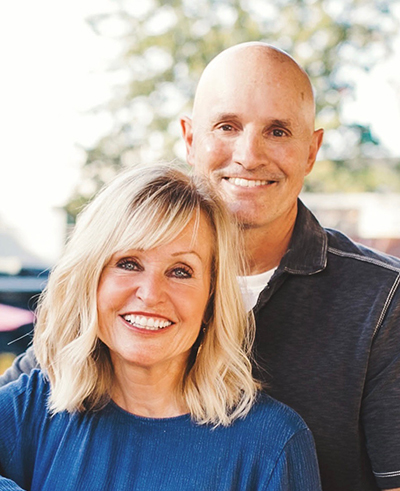
Dave and Ann Wilson
Dave and Ann Wilson are hosts of FamilyLife Today®.. Dave and Ann have been married for more than 38 years and have spent the last 33 teaching and mentoring couples and parents across the country. They have been featured speakers at FamilyLife’s Weekend to Remember® marriage getaway since 1993 and have also hosted their own marriage conferences across the country.
Episode Transcript
FamilyLife Today® with Dave and Ann Wilson – Web Version Transcript
This content has been generated by an artificial intelligence language model. While we strive for accuracy and quality, please note that the information provided will most likely not be entirely error-free or up-to-date. We recommend independently verifying the content with the originally-released audio. This transcript is provided for your personal use and general information purposes only. References to conferences, resources, or other special promotions may be obsolete. We do not assume any responsibility or liability for the use or interpretation of this content.
Help! I’m Ruining My Kids: A Gospel Guide for the Mom Who’s Desperate for Change
Guest:Abbey Wedgeworth
From the series:The Mom Guilt Spiral (Day 3 of 3)
Air date:May 1, 2026
Abbey (00:04):
The problem we have with the Word of God, not being able to engage it, not having time for prayer or Bible study, I think it is less an issue of how much time we have and more an issue of what we believe about it. Michael Kruger says, the Word of God doesn’t just say things, it does things. And if you are a mom who’s desperate to be different, that is it. We are changed. We are literally changed by the Word of God. If you want to be different, you will find a way to get in the Word.
Ann (00:41):
Welcome to FamilyLife Today, where we want to help you pursue the relationships that matter most. I’m Ann Wilson.
Dave (00:47):
And I’m Dave Wilson, and you can find us at FamilyLifeToday.com. This is FamilyLife Today.
Ann (01:00):
We have Abbey Wedgeworth back with us today for our third and final day.
Dave (01:04):
You are liking this conversation way too much.
Ann (01:07):
I love her because she’s incredibly honest, frank, real, but she always points us back to the hope of the gospel and what Jesus has done for us.
Dave (01:17):
Yeah. So let’s go. How do you stop the sins of the Father, Exodus 20, from going into the third and fourth generation because it’s going to happen unless we stop it.
Abbey (01:33):
Yeah.
Dave (01:33):
I mean, I never understood that growing up that even as a young dad, when I read that verse, it’s not like this might happen. It’s going to happen.
Abbey (01:42):
Yeah.
Dave (01:42):
Good and bad, but especially for me, bad. It’s like I don’t want my bad to go in. And I came from a lot of bad, so I’m bringing that in.
Abbey (01:50):
Yeah.
Dave (01:51):
And I get a chance to say, “Okay, I got to stop this.” But as a mom or as a dad, and we identify: these are some negative things that I got from my family of origin and I’m going to send them right through unless I do something, how do you stop it?
Abbey (02:07):
Well, first of all, I think it’s like claiming that redemption is possible. I’ve learned so much science behind this that’s super interesting. But we have to believe that redemption is possible. And patterns are only patterns until they’re broken. You bring it to light, you talk about it, depending on the subject matter it is really helpful to find someone who’s licensed in this. This is not prescriptive because it doesn’t work for anyone, but I did a particular type of trauma therapy and there was this sin pattern I’ve been struggling with for seven years and I did two sessions of this kind of trauma therapy, and it just wasn’t an issue anymore.
Dave:
Really?
Abbey:
And I prayed for deliverance from it forever and that was God’s means of deliverance.
Ann (02:47):
Yeah. I’ve gone through some of that too. It’s incredible of how helpful, how quickly you can discover some things, and it changes. God’s using that therapy to help heal those wounds.
Abbey (02:59):
And the other thing that can heal wounds, we experience those wounds and gaps in the context of community. It happens at the hands of others, and it’s healed at the hands of others. There’s a story I tell in the book about we were in a small group setting where we all took a week to share our stories. I got to a portion of my story that is the source of some of my trauma, and I got a high heart rate notification on my watch because it just was telling the story in front of a group of people. I just thought I’m going to leave this room with less friends than I walked in with. And I can remember there was a good friend of ours who was an educator, a real strong guy. And I just remember looking over and Dylan’s, the veins in his head were bulging and his fists were clenched.
(03:45):
And some of the people in the room were teary. I finished telling my story and he looked up and he said, “I am so angry about what happened to you.” And it happened in a school setting. And so I think as an educator in particular, he was just so mad. But experiencing the way Dylan saw that story changed the way I told it. And the next time we were in a small group setting and I told that story, I did not get a high heart rate notification. My nervous system was unaffected as I told it, and it’s because I had experienced having a compassionate witness to my story. And so it’s so important that we process with other people. And there were ways that particular event was coming out sideways with my kids.
Ann (04:32):
Can you share what happened?
Abbey (04:33):
Sure. Yeah. I was really bullied in fifth grade, and this was my first experience with suicidal ideation was as a fifth grader. It was truly horrible. My mom kindly got a job at a different school in the district so that I could transfer because it was so hard. But I saw some of the behaviors that I was bullied for in one of my sons and I was extremely impatient with those behaviors in him. And it was because I think in some way thought I was protecting him from experiencing what I had experienced by putting these behaviors to death. And I treated it like an emergency when I saw them so hard on him, so ungracious. The tragedy was I was his bully. I was being the very thing I wanted to protect him from in the name of protecting him. And then processing this story and changing the way I saw it when I learned to have compassion for fifth grade Abbey, who wasn’t responsible for what happened to her.
(05:34):
I could parent with a softer eye towards my son as he approached that age. It sounds woo-woo, but it’s not.
Ann:
It’s not.
Abbey:
Because we need to have compassion for ourselves and have compassion for our kids.
Ann (05:50):
Yeah. Because Jesus does.
Abbey (05:51):
Yes.
Ann (05:52):
It is the gospel where you’re now seeing it through the eyes of a Father who loves you, who knows you.
Abbey (05:59):
Yes.
Ann (06:00):
But it took a friend whose veins were bulging to realize that was wrong. What happened to me was wrong. And there’s something that’s very enlightening and healing when another person says that to you.
Abbey (06:18):
And I could stop protecting that little girl or berating her, like get it together when I learned to have compassion for her.
Ann (06:27):
We’ve said this before as we’ve interviewed people, but Dave and I have done those timelines with groups of people. It brings such intimacy to a group because you’re sharing, you can share the highs and the lows, but also when you’re listening to a friend, we’re trying to speak life and the gospel into areas that maybe have been such wounds. And so we encourage people, as you listen, try to listen with the eyes and the ears, see and hear the way God would hear and see. And so we’ll do that same thing, like “What happened to you was so wrong and I’m so sorry.” And instantly that person is just weeping because it’s validation of maybe it wasn’t all me or it wasn’t my fault.
Abbey (07:17):
And we tend to withhold that from ourselves, I think, because we think if I am kind to me, I won’t change. We so rely on shame as a motivator.
Ann (07:26):
It’s so true.
Abbey (07:27):
But what leads us to repentance? The kindness of God. And so I think it’s so important. We can be kind to ourselves without excusing sin.
Ann (07:36):
So what did that look like when you realized you were doing that to your son? You were the bully.
Abbey (07:41):
Yeah. I think really, I realized in hindsight as I healed. I didn’t connect those dots until I was doing some of that trauma work, but I noticed a marked difference in my ability to bear with him and to be patient. And I actually developed a refrain, like I just committed to when I saw those behaviors to just say, “I love you.” Because that’s what we really need. We’re acting out in immaturity or whatever, like to just be loved. And so I started just saying, “I love you all the time” instead of like, “Will you stop? It’s so annoying,” or whatever. And that was my liturgy for combating that, for doing it differently.
Ann (08:23):
Oh, that’s such a good way to see it. As a parent, we should have liturgies for each child sometimes.
Abbey (08:29):
Oh, well, yeah, I call them training refrains, but I just am like, “Okay, I’m going to make a choice of how I’m going to respond to this, so I don’t respond out of my flesh.”
Ann (08:40):
Give us some examples. Do you have any?
Abbey (08:42):
Yes. Okay. So “Try again” is a liturgy that I use that keeps me from spouting off shame speech.
Ann (08:52):
So if they say something or do something like, “Mom, go get me that drink.”
Abbey (08:58):
I’ll say, “Ooh, let’s try again.” Which is not, “You’re so disrespectful.” And 90% of the time they just do it right the next time.
Ann:
Yeah.
Dave (09:08):
They know what they should say. Yeah.
Abbey (09:09):
Try again as a protective one for me. I mean, we had them when my whole kids book series is based on this, like the hitting and biting stuff where if they use a body part in a way that is not God honoring, I’ll just say, “Who made your mouth or who made your hands?” And they’ll say, “God,” and I’ll just say, “You’re made on purpose for purpose. Let’s walk how we’re supposed to. Let’s walk how he asks us to.” And it just protected me from parenting out of like, “That hurts mommy,” or the manipulative piece or yelling at them or “I’ll show you how that feels,” and biting them back. Whatever resource we might reach for, it can be really helpful to devote some time to saying, “How do I want to respond to this? How would God want me to respond to this?”
Ann (09:53):
That’s good and it’s very intentional. Because if we’re not intentional, some old habits and old wounds will come to the surface.
Abbey (09:59):
Yeah, and eventually they become habits, new habits where even when you’re tired, that’s your go-to. My friend Trish is so wise and she says, “Anger is the tool we reach for when we don’t feel like we have the tool we need in parenting.” And so I think in the moments that are calm, you can arm yourself with some tools, lay some ground rules with your kids even of like, “Hey, when this happens, here’s what we’re going to do.”
Dave (10:24):
And you talk about it in the last section of your book, we’re in progress.
Abbey (10:28):
Oh yeah.
Dave (10:29):
I mean, that’s a good reminder because we want to be all there and it’s good to know they’re in progress. We see it. Guess what? So are we. We can get better. We will get better.
Abbey (10:40):
People in process.
Dave (10:41):
Give yourself grace. Let God mold you and shape you and transform you. It’s not going to happen probably today. But man, I’m going to be better today than I was yesterday. And if that keeps happening, where will I be in 10 years? Where will they be in 10 years?
Abbey (10:53):
I love that reminder. And it’s so important to pay attention to and look for the progress, look out for God to be making good on His promise that He’s making us more like Jesus, because the art of celebration is so important.
Ann (11:08):
What do you mean by that?
Abbey (11:09):
Well, there was a day where I said to my kids—this is one of my refrains—”I’m going to step away and talk to Jesus before I talk to you in a way that I’ll have to apologize for.” So I’ll step away and talk to Jesus. And I did this. I went outside on our porch and I was so—my skin felt too tight. I was so riddled with anger in this moment, and I was berating myself for not being more self-controlled at this stage of the game. And then I thought, “Wait a minute, I stepped away.”
Ann (11:41):
I was going to say.
Abbey (11:42):
Yeah, that is self-control. And so we get what we pay attention to, we find more of what we’re looking for. And so in that moment, a moment where I was berating myself became, “Oh my goodness, Jesus, thank you for your enabling grace. You’re changing me. You gave me self-control.” And it turned into this moment of joy where I had thought that I had failed and really had succeeded in walking away and not yelling at my kids. And that fuels change to be like, “I am changing.” If you are a gym person and you start seeing gains, you want to keep lifting. So we have to pay attention to those.
Ann (12:17):
I’m telling you that act right there, you just gave your kids as you’ve modeled something to do when they’re in a fight with their spouse in the future.
Abbey (12:25):
Yes. I’m going to take a second.
Ann (12:26):
Yeah. You know what? I’m not going to respond right now. I want to talk to Jesus.
Dave (12:30):
We got Bruce in the sound booth in there.
Ann:
Bruce and Chancel.
Dave:
He’s got little girls. What thoughts you have? What questions?
Control Room / Bruce (12:38):
Well, what’s going through my mind is something that happened last night. So I really appreciate this talk of compassion for yourself.
Ann (12:45):
Bruce, wait, share the ages of your girls.
Control Room / Bruce (12:48):
10, 7, 4, and 1.
Abbey (12:51):
Man, you’re headed toward so much estrogen.
Control Room / Bruce (12:55):
Well, I grew up with sisters. It’s like, it’s just my life.
Ann (12:59):
He’s a great dad.
Control Room / Bruce (12:59):
But no, I’ve been really needing to hear this because I could wallow in conviction because last night Maria came to me and I was in my happy place. I was doing a crossword puzzle on the couch.
Abbey (13:11):
About right here is the difference between dads and moms.
Control Room / Bruce (13:14):
Kids are asleep, listening to some jazz, and I’m just finally a moment to myself. But she came to me and she said, “What if I can’t do it all? ” She said, “What if I can’t be a stay-at-home mom and do all the doctor’s appointments and do this and do that?”
Ann (13:29):
And she’s homeschooling.
Control Room / Bruce (13:31):
Yeah, yeah. She did all that, but I was not in a place. So I just said, “I’d probably just go to bed and think about it tomorrow.” That’s all I said to her. I mean, she came to me vulnerably. She is a stressed-out mom and what does her godly husband tell her? Go to bed. I’ll probably go to bed and think about it tomorrow because I didn’t want to—and you know what though? She was so gracious. She—
Dave (13:56):
She went to bed.
Control Room / Bruce (13:57):
—didn’t get mad at me. I went in the bedroom, and she was there reading the Bible and stuff, and she’s been kind to me. I don’t know.
Abbey (14:03):
I think sometimes it’s a ministry in and of itself, Bruce, for someone else to not be panicking.
Control Room / Bruce (14:10):
Yeah, but it wasn’t me not panicking. It was me. I can’t handle your problems right now.
Ann (14:14):
Avoiding.
Control Room / Bruce (14:15):
Yeah. So I really appreciate the idea of the sweet conviction of the Holy Spirit, but also Christ is compassionate, so it’s okay for me to be compassionate. And like you said, not an excuse to sin, but explain it. And it’s good to be married to a godly woman who will have grace for my deficiencies.
Ann (14:38):
What do you wish you would’ve done, Bruce?
Control Room / Bruce (14:40):
I wish I would’ve put the crossword puzzle down and listened and said, “Tell me about it.”
Dave (14:47):
Yeah. When you said that, I thought I would’ve done the exact same thing you did and now I think I’m old enough to know I would say—and again, if I’m in the moment, I don’t think I have the power to do it.
Ann (14:58):
And if our kids are little.
Dave (14:59):
But if I was in a sane place, I would’ve said, “Sit down. Just sit right here. Tell me about it. Let me hear.”
Abbey (15:06):
I love that you’d respond open-endedly because that’s probably the most important piece is for her to just be able to talk it out.
Dave (15:11):
Tell me more is three great words.
Abbey (15:12):
Say more about that.
Ann (15:13):
I would’ve liked Dave to say, “Come here. Tell me everything.” Oh, that would’ve been music to my ears.
Dave (15:21):
She’s saying that like it never even one time happens.
Abbey (15:24):
Well, listen, David, we had a night like that a couple nights ago where—I have a lot on my plate in this season.
Dave:
Sure.
Ann (15:34):
I mean, you’re a mom of these boys.
Abbey:
Yeah, we’re also homeschooling.
Ann:
You’re writing, you’re homeschooling, you’re an author.
Abbey (15:40):
Yeah. But I looked at David and had tears in my eyes and he said, “Do you need a hug?” And I was like, “I need a hug.” And I really needed it. And I mean, that’s under a science thing too. That hug, that reassuring touch, reset my nervous system. Oh, so much power. So I think we don’t have to have the right things to say all the time, but to just have a compassionate witness is so powerful.
Dave (16:06):
No, you mean you don’t give your wife, like I did one day a five by seven card with 10 ways she could get her life better. I literally did that.
Abbey (16:14):
That seems like this is a lot more work than Bruce and David are trying to do. They got crossword puzzles.
Control Room / Bruce (16:20):
I thought of that though. I did. I was like, yeah.
Dave (16:22):
Bruce has heard that story, but Abby, if you’d never heard it all—
Abbey (16:25):
I have; I have.
Dave (16:26):
—you need to know is what she did. She ripped it up and threw it in my face.
Abbey (16:29):
I love her so much.
Dave (16:30):
I mean, that taught me a lesson.
Ann (16:32):
I said “This is from Satan.
Abbey (16:34):
If there’s somebody listening though who’s like Bruce’s wife, this is kind of what I was thinking through the other night. I think those moments where we’re like, “I can’t do it all. It’s all too much,” whatever. We want to make some giant readjustment and change everything. And really, it’s just I think sometimes an invitation to recalibrate.
Ann (16:52):
I think that’s what she did by getting in the Word.
Abbey (16:54):
Yeah, that’s it.
Dave (16:59):
For 50 years, God has been using FamilyLife to strengthen homes, restore marriages, and help families flourish. And every single story of hope we celebrate today began the same way with someone choosing to give generously so that another family could be reached.
Ann (17:16):
Families still need that same support right now, but they’re carrying heavy burdens and aren’t sure where to turn. And that’s why monthly partners are so essential. When you become a FamilyLife Partner, your steady, faithful support allows us to connect with so many families, and we get to offer biblical wisdom, practical guidance, and life-changing resources rooted in God’s Word.
Dave (17:43):
And who doesn’t want that? So right now, every new monthly gift will be matched for an entire year, doubling the impact of your generosity. So would you consider becoming a monthly FamilyLife Partner? If so, just go to FamilyLifeToday.com or you can call us at 1-800-FLToday.
Ann (18:08):
One of the things I’ve always loved about you, Abbey, is your love for prayer. You talk about this in the book and the word. And as moms are listening to this with little kids and they’re like, “I don’t even know how in the world I can do that. ” How would you encourage them?
Abbey (18:24):
Well, here’s what I would say. Moms, you are the most creative people on the planet. All you do all day is problem solve. You are a professional problem solver. You see it, you see the need, you figure out how you’re going to make it happen, you’re juggling a thousand things, you’re a professional. Necessity is the mother of invention. And when we know that something is a need, we will get creative. So I think the problem we have with the Word of God, not being able to engage it, not having time for prayer or Bible study, I think it is less an issue of how much time we have and more an issue of what we believe about it. Michael Kruger says, the word of God doesn’t just say things, it does things. And if you’re a mom who’s desperate to be different, that is it.
(19:11):
We are changed. We are literally changed by the Word of God. So if you want to be different, you will find a way to get in the Word. That being said, invention is important and required because it doesn’t have to look any certain way.
Ann (19:25):
And you shouldn’t be comparing yourselves to how other women do it.
Abbey (19:28):
No.
Ann (19:29):
It’s going to look different. Who are you and how has God wired you to make this happen?
Abbey (19:33):
Yes. And the time that you have, the ages your kids are, whatever. There have been years where I read through the Bible cover to cover. There have been years where I read one book of the Bible for the whole year. When my kids were little, I used what I call the three-to-five method. Three to five verses, three to five minutes. You take what you have and if you don’t think you have time to read the Bible, look at your screen time report.
Dave (19:55):
Yeah.
Abbey (19:56):
Because if you’ll just sub out one time that you would’ve opened Instagram,
(20:00):
And listen to the dwell app or the Bible app or read three to five verses, that’s getting in the Word. And the Lord can do a lot with a little. With prayer, it’s helpful to me too. I have what I call the parka prayer method, which is just like taking each line of the Lord’s prayer and inserting your own stuff in there. And I have it written out because before you know it, you’re thinking about your grocery list or who needs to be where at what time. And you just go through each thing like, okay, we’re going to start with praise. We’re going to hallow God’s name. And then you keep going, lead us not into temptation. Lord, how might I be tempted today? I know that this child is going to scream when we get ready to do his math homework. Prepare me, Lord.
(20:41):
I know what my temptation is in that moment. And then you’re armed. And that is how we are changed.
Ann (20:48):
And I think we don’t always believe that God answers prayer. I think that’s why we don’t do it because we don’t think it’s going to work, because we don’t see direct maybe prayers answer the way we want.
(20:59):
But He does answer. And I think one of the best things that happened to me as a mom with three little boys was, I learned to pray without ceasing. I learned that it’s like a constant dialogue with God all day long because I’m so needy, I’m so broken, I’m so desperate. And He became my best friend. Like, look, did you see this? Like Jesus, can you—Lord, I need your help. Father, I can’t do it. I mean, it was a constant dialogue. And when I would get in the car, the boys know first thing that’s going to happen, mom’s going to pray. So they don’t pay attention to me. I’m just praying out loud about everything. And I still have that. My kids are gone, but I still talk to God all day long.
Dave (21:42):
Yes, she does.
Ann (21:43):
Because I didn’t have these long, half hour, hour to be with God. I was just with Him all the time and He’s with me all the time.
Abbey (21:51):
Yep. One of my sons the other day was like, “Mom, sometimes when you pray out loud to Jesus, you sound so angry.” I was like, “You know what? I’m so glad you noticed that because guess what? God receives me any kind of way.” And I’m talking to Jesus like that, being like, “What are you? ” And I’m not talking to you like that. I think that one of the most powerful things prayer could do for us as moms in the moment is it removes the belief that we’re alone.
Ann (22:17):
Exactly. We’re never alone.
Abbey (22:18):
We’re never out of options and we’re never by ourselves. And prayer is that battle cry of like, you’re with me, you said you would help me, help.
Ann (22:28):
Yeah. You said it, Lord. Lord, your Word says—
Abbey (22:32):
Yes. My friend Jenny always says, “Abbey, you don’t have some Dollar Tree Holy Spirit. That’s the power that raised Jesus from the dead and He’s with you when they’re splashing the water out of the bath. So hang in.”
Ann (22:43):
And if your kids see you talking with God in a rejoiceful way, fun, hard, angry, sometimes, frustrated—
Abbey (22:51):
They can go to God anyway.
Ann (22:52):
—welcome to relationship.
Abbey (22:54):
That’s it.
Ann (22:54):
And our Father receives us just as we are.
Abbey (22:57):
Yeah.
Dave (22:57):
Well, it’s been fun watching you two moms talk.
Ann (23:00):
And you too.
Dave (23:01):
No, it really has. I mean, so many moms are going to relate to this program and dads, but man, oh man, this has been really helpful.
Ann (23:09):
Abbey, this is really a good and needed book. Our listeners are—
Dave (23:14):
Yeah, you can get the book just while we’re talking about it. Go to FamilyLifeToday.com, click on the link in the show notes and get Help! I’m Ruining My Kids.
Ann (23:22):
Do you have questions?
Abbey (23:23):
Yeah, there’s a group discussion guide questions in the box. And it was really important to me to put those in there because community is such an important piece when we think about how to change—
Dave (23:33):
Go through this with other moms.
Abbey (23:33):
And there are fun icebreakers.
Ann (23:35):
Are they?
Abbey (23:36):
Yeah, I worked real hard on this.
Ann (23:38):
We haven’t seen those. We haven’t seen the actual book yet, so this is exciting.
Abbey (23:42):
I’m excited. I think I was talking with a friend the other day who just was so grieved and was remembering, because I feel a little cringe marketing the book. But I thought, you know what? I love this reader too much to let myself get in the way of her hearing this good news. And this is really what I needed to hear. What I need to hear all the time is nothing is beyond redemption, not you, not your kids, not your kids’ experience of your sin and shortcomings. God is at work. Even if you don’t feel like there’s a lot of hope.
Ann (24:11):
I would’ve picked up this book as a mom and gone through it with my friends. And even if you’re an older mom with kids gone, grab some other women of all mothering ages and bring them into your home and say, “You guys, I’ve got the best book.”
Abbey (24:25):
I love that. And it’s never too late to repair.
Ann (24:27):
Exactly.
Abbey (24:28):
Never too late. Never too late.
Dave (24:30):
Come back next time when you get another book.
Abbey (24:33):
I know. At this point, my career is just about trying to see y’all.
Ann (24:36):
I’m good. Just write to see us. I love it. Thanks, Abbey.
Dave (24:45):
FamilyLife Today is a donor-supported production of FamilyLife®, a Cru® Ministry, celebrating 50 years of helping you pursue the relationships that matter most.
If you’ve benefited from the FamilyLife Today transcripts, would you consider donating today to help defray the costs of producing them and making them available online?
Copyright © 2026 FamilyLife. All rights reserved.
www.FamilyLife.com