

Master Your Emotions (Even If You’ve Tried Everything): Alicia Michelle
You love Jesus—but your reactions still hijack your day, your marriage, your parenting. Alicia Michelle, author of Emotional Confidence: Three Simple Steps to Manage Emotions with Science and Scripture, gets why you feel stuck between what you know and what you feel. She’ll help you name what’s really driving your emotions, and why willpower alone keeps failing.


Show Notes
- Get Alicia's free 7-day video training for Christian women who want more calm, clarity + confidence.
- Listen to Alicia Michelle’s podcast The Christian Mindset Coach for continued learning and support @ aliciamichelle.com
- Find Alicia's book "Emotional Confidence: 3 Simple Steps to Manage Emotions with Science and Scripture" at aliciamichelle.com/book
- Become a monthly partner with FamilyLife Today — your gift is matched for a full year (double your impact!)
- Thanks to the Christian Standard Bible for sponsoring this episode. Learn more at CSBible.com.
- Follow us on all social platforms: Facebook | Instagram | YouTube
- Find resources from our podcast at shop.familylife.com.
- Download FamilyLife's app!
- Help others find FamilyLife. Leave a review on Apple Podcast or Spotify.
- Check out all the FamilyLife's podcasts on the FamilyLife Podcast Network
About the Guest
Alicia Michelle
Alicia Michelle, ACC, CPLC is an ICF-certified Christian life coach and NeuroCoach, author of “Emotional Confidence”, popular conference speaker, and multi-award-winning podcast host of the top-ranked podcast “The Christian Mindset Coach with Alicia Michelle”.
Through her coaching and courses Alicia has equipped tens of thousands of women with practical brain-and-biblically-based tools to manage emotions and rewire toxic thought patterns for more calm, confidence and joy. She loves to travel, cook, draw, paint and savor life with her beloved husband, four kids and three dogs.
Connect with Alicia on Facebook, Instagram or YouTube at @aliciamichellecoach, listen to her podcast on your favorite podcast player, or download her free resources at her site.
About the Host
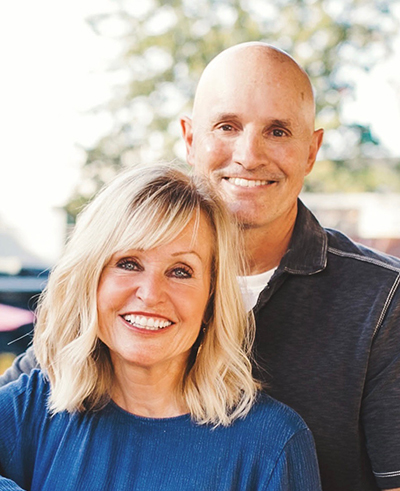
Dave and Ann Wilson
Dave and Ann Wilson are hosts of FamilyLife Today®.. Dave and Ann have been married for more than 38 years and have spent the last 33 teaching and mentoring couples and parents across the country. They have been featured speakers at FamilyLife’s Weekend to Remember® marriage getaway since 1993 and have also hosted their own marriage conferences across the country.
Episode Transcript
FamilyLife Today® with Dave and Ann Wilson – Web Version Transcript
This content has been generated by an artificial intelligence language model. While we strive for accuracy and quality, please note that the information provided will most likely not be entirely error-free or up-to-date. We recommend independently verifying the content with the originally-released audio. This transcript is provided for your personal use and general information purposes only. References to conferences, resources, or other special promotions may be obsolete. We do not assume any responsibility or liability for the use or interpretation of this content.
Master Your Emotions (Even if You’ve Tried Everything)
Guest:Alicia Michelle
From the series:Emotional Confidence: Managing Emotions with Science and Scripture (Day 1 of 3)
Air date:May 18, 2026
Alicia (00:04):
There was this shift now where I said, “How many other people have these inner thoughts that are driving them?—Where they know truth. They know that God loves them. They know that they’re enough in Christ. But why are they still”—and I’m including me in the they—”why are they still not living from that? Why are they still living in this emptiness and feeling not enough?”
Dave (00:33):
Welcome to FamilyLife Today, where we want to help you pursue the relationships that matter most. I’m Dave Wilson.
Ann (00:39):
And I’m Ann Wilson. You can find us at FamilyLifeToday.com. This is FamilyLife Today.
Dave (00:53):
Okay. We’re talking emotions today.
Alicia (00:54):
Yeah.
Dave (00:55):
So I’m going to leave and let you two women.
Alicia (00:58):
I was wondering what your part was going to be in this.
Dave (01:00):
A conversation about emotions.
Ann (01:02):
You know what? We’re going to talk to you. Alicia Michelle is with us and she’s going to analyze our emotions. Specifically, maybe yours, Dave.
Alicia (01:09):
There you go.
Dave (01:10):
All right.
Alicia (01:12):
I am looking right at you right now.
Dave (01:12):
Okay. I’m done. I’m done. Let’s talk emotions.
Alicia:
Let’s do it.
Dave:
Honestly, I’m joking. I’m so excited because I don’t think—
Alicia (01:20):
She’s liking that.
Dave (01:22):
I mean, I wouldn’t categorize that men aren’t emotional and women are because we all are. But you’re an emotional coach. Tell us what that means.
Alicia (01:33):
It just means I help people learn how to manage them with confidence. So it doesn’t mean that we aren’t going to have the crazy ups and downs. It just means that we can learn how to have skills and practical things to understand how our body works, but also how to connect with God through this process. So that’s what I love doing because I feel like we all have emotions, like you said, in different degrees, and we’ve had a lot of things that may have told us we shouldn’t talk about them or we shouldn’t deal with them or they’re not something God wants us to even have and just focus on truth. And I think there’s a middle road in there somewhere.
Ann (02:11):
Well, even the title of your book, Emotional Confidence:—which you just said—Three Simple Steps to Manage Emotions—listen to this part—With Science and Scripture. And we’ve been on your podcast before, Alicia, but you also get into brain science in a lot of the things you talk about; which I thought, wow, that’s interesting because you’re hitting brain science, you’re hitting science, you’re hitting scripture and Jesus. Those don’t always all go together.
Alicia (02:39):
Right. No. As somebody who has always been, I want to know the reason why behind something. To me, as I started when God transitioned me to look more into this area, which I’m sure we’ll talk about in a second, I wanted to understand how were these emotions happening in my body? If God made our bodies and He designed our brains, then doesn’t it make sense that we should understand things like neuroscience, understand how thoughts are formed, understand what happens to our body when we’re feeling an intense emotion, so that we can partner better with the Holy Spirit to manage them well.
Dave (03:13):
And I’ve never once had that thought. When you were saying that I was like, “Yeah, we really should, shouldn’t we?” I’m sort of kidding. But there were a lot of decades of my life as a young man. I didn’t. Honestly, if I sat down and you were counseling me, you would say, “Dave, you avoided it all those years.” Partly because of trauma in my childhood and I learned to shut down emotions and perform. Just perform.
Alicia:
Yes! Absolutely.
Dave:
Get the job done. Don’t even think about it. And I’ve learned as I’ve matured, everything you just said is so true.
Alicia (03:50):
Yeah.
Dave (03:50):
We have to dive into what’s going on underneath and understand it if we’re going to be the people God called us to be. Is that true?
Alicia (03:57):
Well, my story is the same as yours, basically.
Dave:
Really?
Alicia:
Because for most of my life, I did push emotions down. I didn’t want to have anything to do with them. They got in the way of me needing to perform and to just get stuff done. And what do you do with an emotion when you don’t—it won’t go away. You can’t change a situation. Like you said, there have been things in the past where it was like, if I go there, that means I have to open up this whole area and what do I do with that? So it’s easier to just keep going.
Ann (04:26):
It’s too traumatic. I’ve talked to so many people that say, “I don’t want to go to a counselor because I don’t want to open up the whole past because I don’t know if I can survive that.” Because of the emotional trauma that they faced.
Alicia (04:38):
Absolutely. Often there is a lot of emotional trauma there, but even if it isn’t, there’s the idea of, “Okay, great, God. I know there’s stuff in there, but again, what do I do with it?” And so that’s why I love helping people understand the practical tools to say, “Here it is, Lord. How can I walk through this well with excellence, understanding how you made my body, not shaming myself for feeling this, but also not letting it ruin my life.” There is an in between that I know you have for me. So help me to figure out how to partner with you to do that, how to even grow closer to you through that.
Ann (05:13):
Some people might be thinking, “Why are we talking about this? Because this affects our marriages.”
Alicia:
Amen. Yes.
Ann:
It affects our parenting. It affects everything in our families and even how do we help our kids with these big emotions. So yes, this totally fits in.
Dave (05:28):
I mean, if there’s anything I’ve learned as a husband—and I didn’t know this when I first got married, maybe a lot of us don’t—I have to understand Ann’s emotions and lean into what she’s feeling, what she’s thinking. I didn’t want to do that. I’d be like, “You’re good, right? Please just be good.”
Alicia (05:49):
Just go deal with that on your own, honey. Just go there.
Dave (05:51):
We’re good. You’re good, right? Okay, good. I’m going to go do life.
Ann (05:54):
And I’m like, “What are you feeling?” And he would say, “I don’t know.”
Alicia (05:58):
I know.
Ann (05:59):
And so this really applies—
Dave (06:01):
What do you mean you know?
Alicia (06:04):
Well, just you know. My husband is more of a quiet guy and so sometimes I have a hard time understanding what he is feeling and just I think men in general, it’s harder for them to understand what’s going on inside.
Dave (06:18):
So what do you do with that with your husband?
Ann:
Wait, wait, let’s get to your story.
Dave:
Because you’re a coach. Yeah. I mean, you can tell us how you got into it, but I mean, right away there’s husbands listening going, or wives going, “Yeah, that’s my husband. So what do I do with that? What do you do?”
Alicia (06:31):
Well, I think you can only handle you. So even if like with that original thing when you just said a second ago to Ann, I want to know what you’re feeling. I need to understand your emotions. Well, before you can even understand her emotions, she needs to know what’s going on and how to process it. So yes, that question comes up of how do I fix him? How do I get him to talk about his feelings? Of course. But the first question is, let’s focus on what’s happening in you and understanding you so that if that time comes, understand how to express it even and be more sympathetic and compassionate as part of it.
Ann (07:04):
Because that expressing part is really important too.
Alicia (07:07):
Oh yes, definitely.
Luke Middendorf, President of FamilyLife (07:14):
Hi friends. I’m Luke Middendorf, President of FamilyLife, and I’m glad you’re here for FamilyLife Today. Wherever you are today, we’re glad you found us. Through this program, events like the Weekend to Remember® and a growing network of local guides building into families every day. God is changing lives around the world. That’s happening because of you. This month, every dollar you give is matched dollar for dollar. Would you give today? Go to FamilyLifeToday.com or call 800-FLToday. Thank you.
Dave (07:53):
Okay. I guess we got to go back and say, okay, what’s your story?
Alicia (07:57):
How’d we get started in this? I’ve always been someone who’s been very emotional. The official, I guess, term is a highly sensitive person, HSP, if you’ve heard of that term before, but had no idea what to do with it. I was always just very driven, very performance, very perfectionistic, that kind of stuff. So I don’t got time to deal with the other things, and that worked for me for a really long time. Until I noticed when I got married, there’s tension that builds and things are overall fine, but then there’s these little things that keep building, things that don’t get resolved, things that can’t change. Like my husband was traveling a ton and I had a lot of young kids by myself and all this pressure on me. That all came to a head in 2017 when I suddenly started getting a really bad headache out of nowhere and I don’t have headaches.
(08:49):
I was about to go on a mission trip down to Mexico, went down there and it got really, really bad to the point where I had to go to the leader and say, “I need to have somebody else help me find some medicine or something,” but nothing was helping it. And so finally about 2:00 AM one morning, it was the second night there, I went outside into the desert and I just, I heard that voice of God to say, “You need to go home, and you need to go home right now.”
Ann (09:18):
Wow.
Alicia (09:18):
“God, I’m leading a Bible study. We have already short staffed. This is not possible.” Next morning, I went back to the leader and I said, “I think I need to go home.” And he’s like, “Okay, no problem.” So they drove me to the border. My husband picks me up. It was a Saturday, thankfully, because when you have a headache and it’s a Saturday, you pretty much go to the ER. That’s the only thing you can do. So I got to the ER, and they took scans and did all this stuff and said, “You’re having your vertebral artery dissection. How are you even standing here? We don’t even know how you are walking around. We need to send you to a specialty hospital.” I was like, “What are you talking about? ” They kept asking me, “Were you doing bungee jumping? What were you doing in Mexico?” And I was like, “I’m on a mission trip. I’m a mom. Nothing.” But they said, “The injuries that we see in your neck right now are on par with someone in an accident or someone who had been doing bungee jumping and they had their neck snap.” They kept asking me all these questions. Long story short, I ended up in the hospital for a week. A few days later, the other side had a dissection, went back to the hospital.
Dave (10:22):
Dissection, I didn’t know until I read your book, it folds in.
Alicia (10:26):
Yeah. So an aneurysm is a vessel that would expand outward. A dissection is where the vessel collapses inside of itself and the inner lining separates from the outer lining. Blood clots start to form. The vertebral arteries are in your neck. And so there was some blood clots that were forming. I did have a few mini strokes while I was there in the hospital. So I spent the next nine months on my back. Just I could not do anything. I had everything taken away from me. Everything.
Dave:
And you’ve got—
Ann:
Four kids.
Alicia:
Four kids. We were homeschooling at the time. My husband was out of work at the time. We’d been out of work for 15 months, but it was a God thing because I could not get out of bed. I could not feed myself. I had to have injections five times a day to keep my blood thin.
(11:09):
All of these things. If I didn’t have my husband there, he completely had to take over everything. So interestingly, as soon as I started getting better, that’s when the job offer finally came through. So God works.
Ann (11:22):
But I’m thinking of you too, Alicia, because I’m a doer, I’m a go-getter, and so are you. And here you are on your back. You can’t even be a mom, really.
Alicia (11:33):
No. I couldn’t do anything. And that is a very sobering place to be. When God takes everything away, you have nothing but just the aloneness with the Lord. And it was just like, “You need to change. I’m going to give you a second chance here, but it’s not hacks.” It’s not like, “Oh, I just need to sleep a little bit more.” Because people have been telling me for years, you sleep—oh, I was sleeping four hours a night for probably about 15 years.
Ann (11:59):
Wait, what?
Alicia (11:59):
Yeah. I went to bed at 12:30 and woke up at 4:30.
Ann (12:01):
Why?
Alicia (12:02):
Because I had so much to do, quote unquote. That was how I felt like I was at least able to do something in my life is just get stuff done. So that just had built up. So it was more than just like, oh, you need to sleep. It was like, what is keeping you stuck in this pattern where all that you are doing is just to perform, to please? There’s something in there. And so as I began investigating that, learning more about that, learning about the science, especially how the mind works, I ended up becoming certified as a neuro coach, understanding how that works and how to help others. I realized I’d been working with women up to that point already, but there was this shift now where I said, “How many other people have these inner thoughts that are driving them?—where they know truth.
(12:51):
They know that God loves them. They know that they’re enough in Christ, but why are they still”—and I’m including me in the they—”why are they still not living from that? Why are they still living in this emptiness and feeling not enough?”
Ann (13:03):
I used to say that all the time. Even going to seminary, I felt like I knew all the right answers. I know what the Bible says about identity, how much He loves me, how He’s with me. I couldn’t get that head knowledge to get down into my heart to feel it.
Alicia (13:18):
Exactly.
Dave (13:19):
Okay. You got to answer the question. I mean, everybody’s asking, “Okay, why?” Because that is everybody’s journey.
Alicia (13:26):
Isn’t that so cool? So I began understanding how the brain works. So to make it very simple, if we think of the brain as the subconscious part of our brain, we’ll call it that, and the logical prefrontal cortex. So in the subconscious part of our brain, there are these patterns that we’ve developed and these patterns and habits are very helpful. It helps us know how to pick up a glass, knows how to use a fork because our brain has learned how to do that. And it’s like running a little computer program every time we do that. But around the ages of nine to eleven, the brain starts creating those same patterns around identity, specifically around love, worth and enough. So without us even realizing it, we’re starting to see, what is happening in my life that makes me feel loved? What is happening in my life to make me feel worthy?
(14:17):
Well, if you live in a place where maybe your looks have made you feel worthy or somebody told you that if you got good grades, so those patterns start to be developed and the brain just says, when you’re in that stimulus where I need to feel loved, oh, well, this works. So you just do it. So it’s this almost automatic patterning. Well, maybe we get to an age where logically we go, “Oh, I learned this about me, about what Jesus says about me.” That’s not the same. So there’s this battle happening.
Ann (14:43):
Okay. I have to stop us. Nine to eleven, what was going on in your life that began to kind of cement in those thoughts on identity?
Dave (14:54):
Nine to eleven, you know me with remembering my childhood. I mean, dad’s gone, brother died, little brother.
Alicia (15:02):
Wow.
Dave (15:03):
Just mom and I.
Ann (15:04):
I mean, but that was before, but nine through eleven, I’m thinking this is when you just go off in sports.
Dave (15:10):
Yeah. I was just going to say sports and music. Yeah, music started at eight, saw the Beatles movie and boom, that was it. But yeah, sports and music were my ticket to be loved and enough and approved. Yeah.
Ann (15:25):
Okay. I want to hear yours too, Alicia.
Alicia (15:26):
That’s fascinating.
Ann (15:27):
Because mine, I was 11 and I had become the MVP of my gymnastics team. But it’s also when I was that age, when I came home with some medals—and some of our listeners have heard this—I had done the best I had ever done on this huge, regional statewide gymnastics meet and I had everything set out on display. I’m the youngest of four and I said—my dad came home and I was in bed and I told my mom, “Have him wake me up when he sees all of this” because we’re such a sports family, performance family. And my brother, oldest brother came in at the time too, and he was older in his 20s and they said to me, “Don’t ever”—I had a third in the all-around or a fourth. They said, “We are the Barons. We are the best. Don’t come home unless you have a first place.” And so I mean, think about 11 years old. We just don’t try our best.
Alicia (16:26):
No.
Ann (16:26):
We have to be the best. And their hearts were good. I had a great family and they’re thinking this is going to motivate her.
Alicia:
Exactly.
Ann:
But I’m thinking neurologically what happened that day and it just—
Alicia:
Wow.
Dave (16:38):
So that gets sort of cemented in.
Ann (16:40):
Okay. What about you, Alicia?
Alicia (16:43):
So for me, to be fair, it could go nine to thirteen, even extends a little further, but still the same range. I think I learned from very early on that grades mattered. And my sister, who is an amazing woman—she and I are super close, so I can say this to her now—but she was always the cute, funny one who got all the attention. And I was the smart, serious work hard one. So I kind of realized this is my role. I get really good grades and I get attention. And also about that time, interestingly, we were talking about just events in life, because I’d never really thought about this before, but there was a girl—I think it was like, that’s like what, third, fourth, fifth grade? There was a girl who was my best friend who out of nowhere, I just didn’t even see it.
(17:30):
She just said, “I’m not your friend anymore. I don’t like you.” And she turned all of my friends against me.
Ann (17:35):
Oh, that is pretty typical for girl life too.
Alicia (17:37):
Yeah. So I remember feeling so betrayed and like out of left field. And I know that is one of the deepest fears that I have is that somebody will just kind of blindside me—
Ann (17:51):
Like betray you.
Alicia (17:51):
Like betray you or blindside you with that information. And so I think interesting, I think looking back on that, that really has been something I’ve had to work through, if that makes sense.
Ann (18:00):
I think this would be an interesting conversation with a spouse.
Alicia (18:03):
Yeah.
Ann (18:04):
That those nine to thirteen, what were some of the core things that you remember that maybe have shaped your fears or identity?
Alicia:
It’s a powerful conversation.
Ann:
Even for teenagers, that’d be really interesting.
Dave (18:15):
Well then what do you do with it? Because I’m like, okay, yeah.
Ann (18:18):
Yeah. You started going into that so help us.
Dave (18:20):
I want to be a performance guy. Okay, so—
Alicia (18:24):
Yeah.
Ann (18:24):
Me too.
Alicia (18:24):
That’s such a great question because I don’t think you have to get rid of the performance or the excellence or living in that way.
Ann (18:31):
But the lie.
Alicia (18:32):
But the lie that’s developed, the lie that this is all that I am. So as part of this training, I have learned how to do a technique called brain priming. So we go back to where did this come from? What are the specific words that are being said? It’s not a two second kind of conversation. It takes some time to figure out what that is. We can identify when these incidences occurred, why it makes sense. And this whole process actually is kind of where the ADD model, which I know we’re going to talk about, where that came from, because it’s acknowledging why it makes sense that you went through that and why you felt that way, discerning what is the lie. What is the lie and what is the truth in that? And then deciding, what are we going to do with that? So we create a script, a brain priming script.
(19:18):
The great news about the brain is that because it is neuroplastic, it can change. Our brains are not the same they were six months ago. We’re always getting new neurons. We get 1200 new neurons every day. Because of that, we can change these patterns, which to me is like the most beautiful example of that verse in Lamentations that says, “His mercies are new every morning.” We have a chance to rework these things. So the brain priming process is to take this script of things that I help as a person trained to do this, I help them create what this is, understanding what are the things that you need to hear from God to help that heal. Like for me, it might have been about betrayal, like we talked about being enough. I don’t have to excel in sports to be—I can excel in sports, but I don’t have to do that to be worthy.
(20:07):
So reworking on that, and then the science shows us that it’s not 30 days to change a habit. It’s actually 61 to 64 days.
(20:15):
So what happens after 30 days is that if you think of a neural network as a highway, so it’s like the highway is being dismantled. Every time we have a thought, it’s being strengthened, so it’s being built up. If we decide to not have that thought anymore and we have a different thought, the brain says, “Oh, we’re building something new. Okay, we’ll start pulling off this old one and building this other one over here.” About 30 days, 50% of the time it’s choosing the old highway and 50% of the time it’s choosing the new highway.
Ann (20:42):
That’s fascinating that our brains can do that.
Alicia (20:45):
We feel like we’re making change, but the fact is 50% of the time you still got the old highway going. So we have to go all the way to 60 to 64 where that old highway is gone and the new one comes. And I love taking people through this process because the stuff that starts to change in them, it’s such a subtle thing. I don’t tell them, like at certain points of the process, you see certain things happening, but suddenly they’ll start seeing themselves, “Oh wow, I was not afraid to stand up to her and just—” It was a second nature to not have that conversation or, “Oh, yeah, it’s okay if I lost that game. I’m fine.”
Ann (21:19):
It reminds me of Romans 12:2, which is, “Don’t be conformed to this world, but be transformed by the renewing of our minds.”
Alicia (21:27):
Yes.
Ann (21:28):
I mean, it’s exactly what’s happening. You’re being transformed by creating this new neuro pathway.
Alicia:
Amen. Exactly.
Ann:
And God can help. I mean, we have the Holy Spirit in us who can help us. That happened in our marriage where I was in that rut of constantly thinking about how Dave was doing things wrong.
Alicia (21:45):
Exactly.
Ann (21:46):
It took me a while, which makes sense with this, the whole how long it takes to take to change a habit.
Dave:
It might have taken her more than 60 days.
Ann:
It was like years, probably years.
Alicia (21:55):
Well, but think about it. Why did it take longer or why does it take longer for us? Because for you, there was that conflict happening of, I want to think differently, I want to talk differently about him, but this is still happening. So it’s like this ongoing tension both are being built, so to speak, at the same time.
Ann (22:13):
Yeah. Interesting.
Dave (22:14):
So how did it work for you? I mean, are you still back in the bed at night? I mean, you’re nine months—
Alicia (22:20):
That was awful.
Dave (22:23):
That was crazy. Was that a life-changing future? Not physically, but emotionally, vocationally, everything.
Alicia (22:31):
Oh yeah, yeah. So everything changed for me in terms of what I felt God calling me to focus on. Before I had been writing and talking to women about homeschooling and marriage and family, things like that, which there’s nothing wrong with that. He just had shifted now. Wow, there is this whole need for amazing Christian women who love Jesus, gone to every Bible study, know all the things, but are still crippled because they’re stuck in these patterns. How can we help them find freedom? And I know that that process of renewal I had to go through and sometimes even when I start seeing some of these patterns start to build up again, it’s like, thankfully God has given me the ability to notice now and the tools to say, we’re not dealing with that and we’re not going back. So it’s definitely been a life change for me and given me the freedom and the confidence, I guess, to not be afraid to deal with it.
Dave (23:30):
What was your lie that you identified?
Alicia (23:33):
I think the biggest one was that I have to be perfect to be loved. I have to perform to be loved. That was probably my biggest one because I would go to sleep and only stop working when I felt—this is so crazy—when I felt like my brain could not even focus or think at all, like when my eyes and my head started hurting so much. Have you ever gotten to that point where you’ve just worked yourself so far? So I would get to that point, and I would not let myself stop until I got to that point because I was like, “Well, then you obviously haven’t worked hard enough. There’s more for you to do today.” I remember thinking that over and over and over.
Ann (24:08):
Like you had to be to the point of exhaustion.
Alicia (24:11):
Yeah, because that’s working hard. You just have to get it all done.
Ann (24:18):
I think this is a super interesting conversation with Alicia Michelle.
Dave (24:23):
Of course you do. It’s about emotions.
Ann (24:24):
I know.
Dave (24:25):
But I loved it too.
Ann (24:26):
Did you?
Dave (24:26):
Oh yeah. This is going to be great for guys and women.
Ann (24:29):
Yeah. We’re going to get into it more tomorrow too.
Dave (24:31):
Yeah. Her book’s called Emotional Confidence, and you can get it at FamilyLifeToday.com and just click on the link in the show notes. And she’ll be back with us tomorrow.
Ann (24:45):
FamilyLife Today is a donor-supported production of FamilyLife®, a Cru® Ministry celebrating 50 years of helping you pursue the relationships that matter most.
If you’ve benefited from the FamilyLife Today transcripts, would you consider donating today to help defray the costs of producing them and making them available online?
Copyright © 2026 FamilyLife. All rights reserved.
www.FamilyLife.com