

Stepdad: The Unsung Hero | Ron Deal and Gil Stuart
Stepdad: It can be a role full of landmines–and at the same time, a role vital and unsung. Author Gil Stuart offers ideas to do it wholeheartedly and all-in within the complexities of your blended family.


Show Notes
-
Become a monthly partner with FamilyLife Today — your gift is matched for a full year (double your impact!)
- Thanks to the Christian Standard Bible for sponsoring this episode. Learn more at CSBible.com.
- Follow us on all social platforms: Facebook | Instagram | YouTube
- Find resources from our podcast at shop.familylife.com.
- Download FamilyLife's app!
- Help others find FamilyLife. Leave a review on Apple Podcast or Spotify.
- Check out all the FamilyLife's podcasts on the FamilyLife Podcast Network
About the Guest

Gil Stuart
“Always Forward” is Gil’s motto. His desire is to share heartfelt concern for people during life’s testing challenges through the eyes of Christ. Gil spent 30 years in the property / casualty insurance business which provided a real world prospective to his present career as a counselor. Gil has pastored, lead small groups, raised teenagers, seen them launched as well as crash. He is a co-author of Restored and Remarried with his wife Brenda, about their personal story of blending a step family of 7 kids.
Their ministry, Restored and Remarried grew from sharing their own story. They have encouraged blended family couples via TV and radio, live seminars, workshops, intensives, and retreats. They produced a DVD to accompany their small group materials for stepfamilies and a podcast series to encourage others in their journey offering practical tools. They offer “tips, tools and tingles” through their Social Media outlets.
The Stuart’s are a counselor / coach team in the areas of marriage / remarriage and stepfamily dynamics. Gil especially loves to encourage stepdads by letting them know they are in good company with a “dude by the name of Joseph” who happened to be Jesus’ stepdad. Another tool of encouragement is Gil’s video series – Unsung Hero’s – an 8 part series dedicated to men being a dad in the stepfamily arena.
Gil integrates biblical context into matters you interact with daily so solid mental health can be part of the counseling experience addressing body, soul and spirit.
Gil and Brenda live in Brush Prairie, WA on a little lane called Glory Road. Their 7 kids, they lovingly refer to as “Those People” and have the pleasure of feeding sugar to a few grandkids.

Ron Deal
Ron Deal is Director of FamilyLife Blended®️ for FamilyLife®️ and President of Smart Stepfamilies™️. He is a family ministry consultant and conducts marriage and family seminars around the country; he specializes in marriage education and stepfamily enrichment. He is one of the most widely read authors on stepfamily living in the country.
About the Host
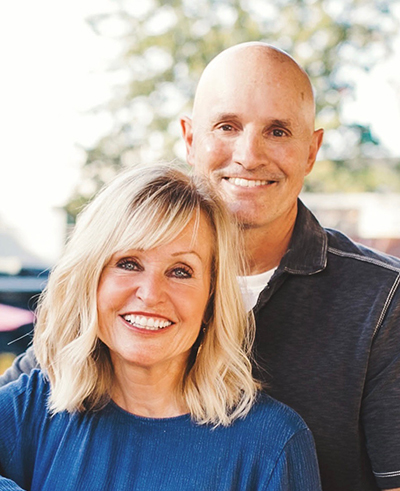
Dave and Ann Wilson
Dave and Ann Wilson are hosts of FamilyLife Today®.. Dave and Ann have been married for more than 38 years and have spent the last 33 teaching and mentoring couples and parents across the country. They have been featured speakers at FamilyLife’s Weekend to Remember® marriage getaway since 1993 and have also hosted their own marriage conferences across the country.
Episode Transcript
FamilyLife Today® with Dave and Ann Wilson – Web Version Transcript
This content has been generated by an artificial intelligence language model. While we strive for accuracy and quality, please note that the information provided will most likely not be entirely error-free or up-to-date. We recommend independently verifying the content with the originally-released audio. This transcript is provided for your personal use and general information purposes only. References to conferences, resources, or other special promotions may be obsolete. We do not assume any responsibility or liability for the use or interpretation of this content.
Stepdad: The Unsung Hero
Guests:Ron Deal and Gil Stuart
From the series:Stepdads, a.k.a. Unsung Heroes (Day 1 of 2)
Air date:May 25, 2026
Gil (00:04):
Reverse betrayal is the aspect of that I have a loyalty to my own children who I don’t get to see as much because of the parenting plan. And in that time, I’m actually connecting with my stepchildren and I’m actually starting to like them and they’re starting to actually bond with me. And so doing, I actually feel like I’m betraying my own children.
Ann (00:32):
Welcome to FamilyLife Today, where we want to help you pursue the relationships that matter most. I’m Ann Wilson.
Dave (00:38):
And I’m Dave Wilson, and you can find us at FamilyLifeToday.com. This is FamilyLife Today. So we just spent a couple days with a couple unsung heroes.
Ann (00:56):
Yeah, we did.
Dave (00:57):
I mean, it’s our son, Austin and his wife, Kendall. And of course we’re a little biased. We think they’re heroes. But they’re unsung heroes because they adopted two kids that we were with for the weekend.
Ann (01:07):
Yeah. And they started out fostering these kids and I don’t think we always give credit to foster parents, adoptive parents, stepparents—all of these people are giving life to children.
Dave (01:19):
I mean, they’re heroes because they step in and fill a role that they don’t have to. And I’m not kidding. As I looked over at Holden and Rhyder, I mean, they’re too young to know, but I thought their life is radically different because of these two heroes, their mom and dad, who have taken their life. And today we get to talk a little bit about blended families and people that step in to take care of people that they’re a hero to.
Ann (01:44):
And today we’re going to listen to a portion of the FamilyLife Blended podcast. Ron Deal was talking with Gil Stewart about step-fathering and ministering to stepdads, which is always a great topic.
Dave (01:55):
So we’ve got Ron Deal with us today. He’s the director of our FamilyLife Blended ministry, as many of you know here at FamilyLife. And we’re going to listen to a conversation he had with Gil Stuart, who’s a stepfamily educator, coach, and counselor. Gil and his wife, Brenda, have authored a book and a curriculum called Restored and Remarried. And they also have a video curriculum for stepfathers called Unsung Heros.
Ann (02:16):
And that’s what we’re going to be talking about today. And even though this discussion is specifically about stepdads, it has a really broad application for all stepparents and also parents as well.
Ron (02:38):
Okay, Gil, let’s shift and talk a little bit about some of the content you’ve got in this. Just give guys a bit of a preview. So you got seven different main topic sessions. The first one is, “You’re Not My Dad.” Now, many dads listening are going to go, “Yeah, I’ve heard that.” Or maybe they haven’t heard those words, but they felt that from their stepchildren. What’s going on and what do they do about it?
Gil (03:03):
Well, in that particular episode, “You’re Not My Dad”—with all of the segments, just to kind of give you a heads up on this, I don’t do this in a studio with a green screen. I actually went out on site and had conversations with the camera about the issue. And so this particular topic, “You’re Not My Dad,” I did in a garage with a buddy of mine who owns two Camaros. And I’m not a car guy, but we got down to an illustration. Here’s these two Camaros that are classic cars—one’s orange, one’s green. They are the same, blah, blah, blah. So I know I’m a dad, but I’m not your dad. And so the perspective here was they may look the same, but they’re not. And depending upon whether the child’s dad is still around or if they’ve checked out, what kind of dad are you going to be?
(03:53):
There’s an opportunity for redeeming the perspective of what is really, truly a dad. Maybe the biological dad’s doing a great job. Well, super. If they’re not, here’s your opportunity. So I’m just trying to make it really clear with the guys. It might look the same, but it’s not. And you might know how to handle a kid, but if it’s your biological child, yeah, you’ve got a little more leeway, but with a stepkid, you’ve got to create relationship before you’re going to get that respect that you think you deserve.
Ron (04:23):
I like what you put in there. When that moment comes, when that child’s looking at you like, “Hey, you’re not my dad. You got nothing on me.” That you suggest sort of a line, or maybe we would call it a posture. You might not even say this to the child, but you sort of carry the posture of, “Well, I agree. I’m not your dad. That’s factually true, but I am your mother’s husband.”
Gil:
Yeah.
Ron:
Now what does that lend to a stepdad in that moment that he didn’t have if he can’t lean on his wife and his marriage?
Gil (04:53):
Well, it’s a posture of humility that this is the role that I am in. And hopefully this is where the wives listen in and go, “Whoa, I got to have my husband’s back because if I don’t, he’s a hero out in the middle of the battlefield being a dad and he’s getting shot up. So no wonder he’s a little”—I don’t know how to say this lightly—”no wonder he’s a little worked up.” This is where it’s an appeal to the guy, stand your ground, but do it gently, firmly, and be relentless. That’s a heroic stance. And so I am your mother’s husband, gives me a little bit of a position of authority, but if it’s not backed up by mom, I’m a little handcuffed.
Ron (05:40):
You’re right. It pulls back to that partnership between husband and wife and how they work together and support each other. The second session is what you call “Reverse Betrayal,” not getting time with your own kids. You want to explain that a little bit?
Gil (05:55):
Well, reverse betrayal is the aspect of that I have a loyalty to my own children who I don’t get to see as much because of the parenting plan. And in that time, I’m actually connecting with my stepchildren and I’m actually starting to like them and they’re starting to actually bond with me. And so doing, I actually feel like I’m betraying my own children.
Ron:
Yeah.
Gil (06:17):
And that is like a major knot of how can I do this and do that at the same time and realizing that I am now in somewhat of a situation to where if I start showing love and affection and connection with my stepkids, I’m actually, I hate to say it this way, but I’m actually scoring points with my wife and that actually is very endearing to her. But then I kind of insert, and I don’t do a lot of time on it, but I do spend a little bit of time where you’re as a father stuck in the middle of what’s basically referred to as parent alienation. I spend a little bit of time on things you shouldn’t say to a child that’s in an alienated position because here I am in this betrayal position, but now not only on top of that, I’m dealing with an alienation problem where I’m being made out to be the bad guy and I’m not.
(07:08):
So there are books and videos, and I know you’ve done some really good work around parent alienation, but it’s really just basically, “Hey, here’s some things you shouldn’t do if you’re in that place while you’re even dealing with this internal feeling like you’re betraying your children on top of.” So it’s a really tough place.
Ron (07:25):
Man, I’ve seen that a bunch and I’ve just heard from so many men who, this is referring to people who are biological dads and stepdads, and you just start weighing out the time that you get with your own children versus stepchildren. And I’ve seen guys go one of two ways. I’ve seen guys go, “You know what? It’s easier for me to not deal with that pain, to just essentially walk away from my kids in my first marriage and throw myself totally into my stepchildren and I exchange one family for the second and then your biological children go neglected as a result of that. ” But it’s sort of a coping mechanism for the guy so he doesn’t have to deal with this feeling guilty thing. And then I’ve seen guys go the other way where they feel so guilty in spending more time with their stepchildren than they get with their biological children that they start withholding themselves from their stepchildren, even when the opportunity is there.
Gil:
I’ve done that.
Ron (HYPERLINK “https://www.rev.com/transcript-editor/shared/upPIsjF8ArYBHvTkFxupb_dyhu9ElxR-TUPHn-2O6G7PaThePVWykpx7KKcSmrBhSmMQ_B3aI5MaNoQK2oTXec1BffA?loadFrom=DocumentDeeplink&ts=500.8″08:20):
Well, tell us, you’ve done that. I mean, talk around how it felt, and it seemed like, I’m sure, that was the only right thing to do.
Gil (08:28):
Well, that’s why I called it reverse betrayal because I felt like, I’m betraying my children, but I want to do this. And then by doing so, I’m holding myself back.” Here’s my wife kind of going, “Their father has left; he’s not involved with their life like you could be. What’s wrong with you?”
Ron (08:45):
Yeah. “Where’d you go?”
Gil (08:46):
“Where did you go? Here’s all these things that I knew you as the reason why I said, ‘Yes, I’ll remarry this man.’ Where’s the guy that I married who would step up?” And that creates internal friction all the more. So yeah, it’s a place of going, “Oh man, this is—what do I do here?” And so yeah, when I was in that place, it was like I was one foot in and one foot out and it was torturous. But then when I submitted to it, then it was like, yeah, that’s where things really began to work. And the beauty of it was I continued to stay on the battlefield for my kids’ heart while connecting with my stepkids. And that was the best thing for the marriage.
Ron (09:27):
You say in Unsung Heroes, the only way through this internal conflict is through vulnerability. Explain.
Gil (09:34):
Well, vulnerability is not a weakness, it’s a strength. We need to reframe that perspective because vulnerability basically comes from the Greek foundation, or I think it’s Latin, which talks about courage. And the concept of is that courage grows strength from a wound. Let me repeat that. Courage grows strength from a wound. You’re wounded, your children are wounded and somebody has to step up with courage and be vulnerable and call it what it is because it’s kind of that concept. If you can’t name it, you can’t change it. And in a way, you may be stating the obvious, but somebody’s got to step up and do it. And until you do, nobody’s going to lead.
Ron (10:18):
So for example, this might look like being vulnerable with your wife about this internal conflict and just how you are having this internal debate. “I’m not really sure what to do here. I feel this if I do that. I feel this way if I go that way. I just need you to know this is what’s going on with me.” Is that what it sounds like?
Gil (10:36):
That’s what it sounds like. And that takes courage.
Ron (10:39):
It takes a lot—it does, a lot of courage.
Gil (10:42):
Because I don’t want to express weakness in that because we’re the adults. We’re supposed to know what to do. Really? You ever been a stepdad before? Probably not. Was there a handbook on it? No, there’s not. There’s a few good things. I think there’s one or two, although I’ll take that back, Ron. You did a really good job on that a few years ago with that.
Ron (10:59):
Now your video series is another contribution.
Gil (11:01):
The Smart Stepdad stuff. But it’s kind of like, what do I do? Well, be vulnerable, be open because when you do, your wife now becomes your ally rather than a perceived enemy.
Ron (11:13):
You’re right. You invite her into the struggle with you instead of just somebody who’s on the outside judging you because of what they see. They don’t quite understand what’s going on in the inside. And they can’t also help you explore, what could we do so you get more time with your kids? Or there might be some practical things that you could talk through at that point, but without the vulnerability—
Gil (11:33):
—you don’t get that.
Ron (11:34):
—you don’t get there.
Gil (11:35):
You remain as an “I,” not a “we.” And if you try to take this on by yourself, you’ll get shot up. You really will.
Dave (11:48):
Man, as we celebrate 50 years of ministry, we continue to hear stories of how God is transforming families through FamilyLife.
Ann (11:56):
Like Andrew and Eileen, for example. When they married, they were so full of hope.
Dave (12:02):
Weren’t we all?
Ann (12:03):
But life storms came fast: a newborn, family tension, and strains on their marriage; and their home just felt heavy, but God wasn’t finished. Through FamilyLife’s Weekend to Remember® and Love Like You Mean It® cruise, they rediscovered Christ’s design for marriage. And they were even, listen to this, able to help Andrew’s parents reconcile after years of distance.
Dave (12:28):
Which is really what it’s all about.
Ann:
It’s crazy.
Dave:
God changes our marriage so we can impact others. Well, here’s the thing, thousands of couples are facing storms like this right now, and some are quietly hurting, some are on the brink of divorce, and some need hope today. And I’ll tell you what, this ministry is supported financially from partners like you who say, “I believe in this and I want to give.” And right now, every monthly donation will be matched for a full year doubling the impact of your gift.
Ann (13:02):
So we really hope and pray that you’ll consider joining us. All you have to do is visit FamilyLifeToday.com or call 1-800-FL Today, and together we can shape the next generation of families who walk with Christ.
You’re listening to FamilyLife Today, and we’re listening to a portion of the FamilyLife Blended podcast with Ron Deal and his guest, Gil Stuart.
Dave (13:31):
We love supporting families with a variety of structures and today is an exciting day because we’re focused on blended families.
Ron (13:43):
Okay, let’s jump to another one. You talk about in this series your rules, and you caution people about doing too much too soon.
Gil (13:52):
Yeah. So in that one, we set it up at a playground and I’m talking about pushing a swing and doing underdoggies and all that kind of stuff. But really the simplicity of it is if you don’t have a respectful relationship with that kid, you could actually be pushing them and demanding too much of their obedience or respect too soon. If you don’t have that foundation built, you could actually be demanding something that you probably are do, but if you haven’t earned that as the stepparent or the stepdad, you could actually do damage rather than instilling trust and honesty and transparency. And actually you are a trusted entity. And that starts with just be a friend to the kid, or that crazy uncle. I say to a lot of my stepparent clients when you’re in that role, just be the crazy uncle, allow them some extra space.
(14:46):
And then when you do get into a disciplinarian issue, that’s when the two of you and your spouse, their biological mother, you pull together. And at that point in time, you have each other’s backs, but if you push too soon, too much, the kid’s going to come, so to say, flying out of that swing and you’re going to do some damage that you may not be able to repair for a long time.
Ron (15:09):
As I watched this session, I reflected on a conversation I had with a stepdad who came to me at one point and said, “I am so frustrated. I’m trying to bond with this young man. I know what he likes. And one of the things you and I have recommended in the past to people, start with building that friendship or find common interests and connect into what the child is interested in. ” And so he said, “I’m trying. I’m doing that. This kid loves football. He loves sports. I’m inviting him to go throw the football with me in the backyard and he won’t do it. ” And he says, “And I know he does that with his father. I know that’s something he enjoys. Here I am making offers. He won’t go. ” Some time went by, he comes back and he goes, “I figured it out.
(15:50):
I’m asking him to give me something that’s very special with his dad. He just can’t do it. He just can’t give that part of him. Also, to me, he feels guilty about that.” I’m like, “Dude, you nailed it. You had the best of intentions. You’re on track in terms of strategy, find something the kid likes, but in that particular space, it’s poisonous for that child to give that to you. So you’re going to have to find something else you guys have in common. And maybe eventually one day he’ll come around and he’ll start sharing that part of himself with you, but that’s got to be his call. Can’t be yours.”
Gil (16:26):
Yeah. And that could be years down the road because that allegiance between the child and the biological parent is way strong. Even if that biological dad is really messing it up and isn’t participating with that kid, that might be your opportunity. But even if they’re doing a horrible job and the biological parent backs out, that kid still wants to love that parent. And yeah, I like what your illustration was because that’s something special between the kid. And if that’s the case, respect that and honor that because you do want the child to have a good relationship with their parents.
Ron (17:05):
To use your analogy, if you press him on that, like he should be giving me that part of himself, is equivalent to pushing him out of the swing. It’s too much, too soon, and it’s going to damper their relationship.
Gil (17:20):
It’ll backfire.
Ron (17:22):
Yeah, yeah.
Gil (17:22):
Yeah.
Ron (17:23):
You know, this really kind of brings us to the next point that you talk about, and it’s, allow the kid to love and don’t make them pick sides. Is this also for biological dads and for stepdads?
Gil (17:35):
Of course.
Ron (17:36):
Yeah.
Gil (17:37):
The answer is yes. If I am creating a place to where I am pushing that kid to pick one side or the other, what happens underneath is that I’m actually sitting that kid up to be resentful and that is poisonous all the way around.
Ron (17:54):
What are some typical ways guys inadvertently push kids to choose?
Gil (17:59):
Well, I think you may have heard it as well as I as where they push kids to say, “You’re supposed to call me Dad,” or “You’re supposed to call her Mom.” And it’s not that. So let the kid choose what—I think one of the things we did within our own family was, “Hey, when we’re out in public, how do you want to be introduced and how do you want to introduce me?”
(18:19):
Obvious statement, but it doesn’t seem so obvious when you’re out in public. That’s a difference of being in the stepfamily, but if I don’t allow that child to recognize me or their biological parent for who they are and that it’s okay to love me as much as their other parent, then I’m actually causing them to be in a squeeze to have favoritism, one toward the other. And in that case, I’m actually creating a power struggle. Well, who loses? Everybody loses.
And so I think there was a session that you had talked, years ago, Ron, where I think it was a stepmother situation to where the child was given permission by the stepmom. She did just a brilliant idea of saying, “Well, Sally, if you need to go over to your mom’s house and hate me, then that’s okay. But when you’re here and you’d—we actually have a good relationship, I’ll understand.” That mom, and a dad in this case, has done that child a marvelous favor by taking the pressure off and allowing them to love rather than be stuck between a rock and a hard place, so to say, in a squeeze. The kid may not have the maturity to know how to navigate that, so don’t put them there.
Ron (19:33):
That is an unsung hero, that woman you just talked about. And I think dads and stepdads are making those decisions day in and day out that in effect is taking the shorter end of the stick. And yes, that’s what heroes do.
Gil (19:48):
It’s exactly what they do.
Ron (19:49):
And it’s so unfair if you step back from it and you say, “In the scales of life, that just doesn’t seem right,” yet, but this child needs us to give them that. And so it’s beautiful.
Gil (20:02):
Yeah, yeah.
Dave (20:11):
Well, we’ve been listening to a portion of the FamilyLife Blended podcast with Gil Stuart and Ron Deal, who’s the host of that podcast. And Ron now joins us in the studio. Ron, let me ask you, as you think about unsung heroes, here’s what I thought, 30 plus years in the NFL, the guys I’m working with and their wives, everybody thinks they’re our heroes. They’re it. They’re at the top of their profession. They’re not really heroes. What you and Gil were talking about are really the heroes of our world.
Ron (20:40):
You’re exactly right. It’s the people who bless other people’s lives by making sacrifices of their own that really are the unsung heroes. And yeah, this conversation’s an important one because there are, as you said at the beginning, there are foster parents, there are adoptive parents, and there are stepparents who are making sacrifices every single day.
Ann (21:02):
Ron, one of the things I really appreciate you is the practicality that you bring into every household. But let me ask you, as you had this conversation with Gil, was there anything that really stuck out to you?
Ron (21:15):
When he talked about what he calls a reverse betrayal, and in particular, I was thinking about a stepfather who is also a biological dad, and as life would have it, just because of the way circumstances are, he is spending a whole lot more time stepparenting his stepchildren than he is able to do parenting his own children. So time with stepkids versus time with biological kids. I mean, think about that. Your heart’s in both places, and yet at the same time, you really want your children to benefit from you in their life. And maybe there’s circumstances that are beyond your control. You’re just not getting much time with them. And by the way, that’s an easy, rewarding relationship, right? Our relationship with our kids is—we feel good about that. They feel good about that. But the hard work is happening with the stepchildren, and that’s less rewarding, but that’s where he ends up having to be a good bit of his time.
(22:10):
That’s a difficulty. And then you feel guilty about that. You feel like you’re cheating your own children, and there’s not much you can do about the circumstances. So that is really difficult, and that just really captured my heart.
Ann (22:36):
Hey, isn’t it always great to have Ron Deal with us?
Dave (22:39):
Always great. And Ron is the best in the world at navigating blended families, because blended families come with unique challenges, but here’s the deal, you don’t have to navigate them alone.
Ann (22:50):
Yeah. And if you miss the recent Blended and Blessed® event, listen to this. We have a new All-Access Pass that gives you the opportunity just to experience it on your own schedule. You’ll hear practical encouraging teachings from trusted voices like Ron Deal, Davey and Kristi Blackburn, Gayla Grace, Kathi Lipp, Cheryl Shumake, and Brian Goins, who are all really focused on helping your blended family thrive.
Dave (23:17):
So you can watch it together as a couple, or here’s a great idea, use it with your small group. Plus, each session includes helpful discussion questions to guide meaningful conversations and real-life application, which is always a really good, helpful thing.
Ann (23:31):
Okay, so did you hear all this? Don’t miss this chance to strengthen your relationship and your family. Just make sure you get your Blended and Blessed All-Access Pass today.
Dave (23:42):
Just click the link in the show notes at FamilyLifeToday.com.
Ann (23:45):
I don’t know if you know this, but we at FamilyLife would love to pray for you. I think one of the greatest gifts that we can give people is to pray for them. And I know sometimes it feels like it’s not that much or like, “Oh, I’ll pray for you,” but let me tell you, that is everything. And we have a team here at FamilyLife that would love to pray for you. You can go to FamilyLife.com/Prayforme. Again, that’s FamilyLife.com/Prayforme. And I promise you, somebody’s going to be praying for you so be specific with what your needs are. Tell us exactly how we can pray for you, what’s going on, and we will do that. And here’s the best part, God answers. God hears, God sees and He is there for you, and we want to be there for you too. So go to FamilyLife.com/Prayforme.
Dave (24:45):
FamilyLife Today is a donor-supported production of FamilyLife®, a Cru® Ministry, 50 years of helping you pursue the relationships that matter most.
If you’ve benefited from the FamilyLife Today transcripts, would you consider donating today to help defray the costs of producing them and making them available online?
Copyright © 2026 FamilyLife. All rights reserved.
www.FamilyLife.com