

Strong Stepfamilies Start with Strong Stepfathers | Ron Deal & Gil Stuart
Being a stepfather can feel like bathing cats with your hair on fire—but your thoughtful navigation of the dynamics in your home can make a difference that lasts for decades. Author Gil Stuart offers tips on stepfathering thoughtfully, and shaping the kind of family you all long for.


Show Notes
-
Become a monthly partner with FamilyLife Today — your gift is matched for a full year (double your impact!)
- Thanks to the Christian Standard Bible for sponsoring this episode. Learn more at CSBible.com.
- Follow us on all social platforms: Facebook | Instagram | YouTube
- Find resources from our podcast at shop.familylife.com.
- Download FamilyLife's app!
- Help others find FamilyLife. Leave a review on Apple Podcast or Spotify.
- Check out all the FamilyLife's podcasts on the FamilyLife Podcast Network
About the Guest
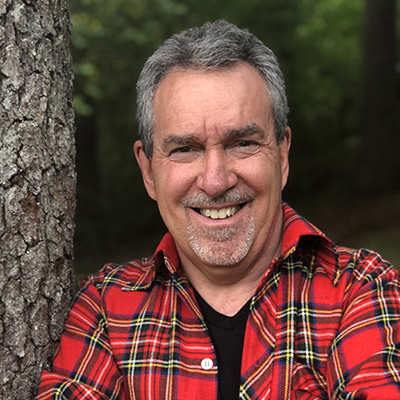
Gil Stuart
“Always Forward” is Gil’s motto. His desire is to share heartfelt concern for people during life’s testing challenges through the eyes of Christ. Gil spent 30 years in the property / casualty insurance business which provided a real world prospective to his present career as a counselor. Gil has pastored, lead small groups, raised teenagers, seen them launched as well as crash. He is a co-author of Restored and Remarried with his wife Brenda, about their personal story of blending a step family of 7 kids.
Their ministry, Restored and Remarried grew from sharing their own story. They have encouraged blended family couples via TV and radio, live seminars, workshops, intensives, and retreats. They produced a DVD to accompany their small group materials for stepfamilies and a podcast series to encourage others in their journey offering practical tools. They offer “tips, tools and tingles” through their Social Media outlets.
The Stuart’s are a counselor / coach team in the areas of marriage / remarriage and stepfamily dynamics. Gil especially loves to encourage stepdads by letting them know they are in good company with a “dude by the name of Joseph” who happened to be Jesus’ stepdad. Another tool of encouragement is Gil’s video series – Unsung Hero’s – an 8 part series dedicated to men being a dad in the stepfamily arena.
Gil integrates biblical context into matters you interact with daily so solid mental health can be part of the counseling experience addressing body, soul and spirit.
Gil and Brenda live in Brush Prairie, WA on a little lane called Glory Road. Their 7 kids, they lovingly refer to as “Those People” and have the pleasure of feeding sugar to a few grandkids.

Ron Deal
Ron Deal is Director of FamilyLife Blended®️ for FamilyLife®️ and President of Smart Stepfamilies™️. He is a family ministry consultant and conducts marriage and family seminars around the country; he specializes in marriage education and stepfamily enrichment. He is one of the most widely read authors on stepfamily living in the country.
About the Host
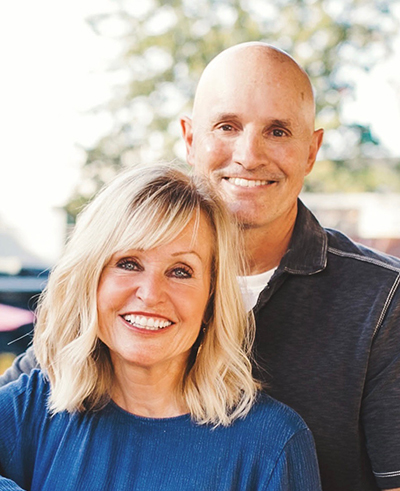
Dave and Ann Wilson
Dave and Ann Wilson are hosts of FamilyLife Today®.. Dave and Ann have been married for more than 38 years and have spent the last 33 teaching and mentoring couples and parents across the country. They have been featured speakers at FamilyLife’s Weekend to Remember® marriage getaway since 1993 and have also hosted their own marriage conferences across the country.
Episode Transcript
FamilyLife Today® with Dave and Ann Wilson – Web Version Transcript
This content has been generated by an artificial intelligence language model. While we strive for accuracy and quality, please note that the information provided will most likely not be entirely error-free or up-to-date. We recommend independently verifying the content with the originally-released audio. This transcript is provided for your personal use and general information purposes only. References to conferences, resources, or other special promotions may be obsolete. We do not assume any responsibility or liability for the use or interpretation of this content.
Strong Stepfamilies Start with Strong Stepfathers
Guests:Ron Deal and Gil Stuart
From the series:Stepdads, a.k.a. Unsung Heroes (Day 2 of 2)
Air date:May 26, 2026
Gil (00:04):
We are the one with the influence. Are we going to use it for good or for evil? I mean, when you think of what the Scripture says, the power of the tongue is for life or for death. So what are we saying? Is it going to bring life or is it going to bring death to the stepfamily environment? What a place for a hero to step up.
Ann (00:29):
Welcome to FamilyLife Today, where we want to help you pursue the relationships that matter most. I’m Ann Wilson.
Dave (00:35):
And I’m Dave Wilson, and you can find us at FamilyLifeToday.com. This is FamilyLife Today.
I would say one of the best parts of FamilyLife—you know what I’m going to say?
Ann (00:55):
There’s so many.
Dave (00:55):
There’s so many, but I mean, today we get to talk a little bit about FamilyLife Blended. I grew up in a stepfamily and there are people listening, saying, “My life, my marriage, my family is totally different than the nuclear family. Please speak to what I’m living through.” And that’s why I think it’s critical to have what we have at FamilyLife Blended.
Ann (01:14):
Me too. And I think our listeners are going to like today because we started talking yesterday about stepparents and we’re going to hear more from the FamilyLife Blended podcast in a moment, but first we’re joined by Ron Deal.
Dave (01:25):
We’ve got him here. Ron Deal, the director of blended. Welcome, Ron.
Ron (01:28):
Hey guys, thank you. It’s always good to be with you. I love what we’re doing here at FamilyLife. We are helping single parents who are dating and thinking about another family in the future, and we’re helping blended families go the distance.
Dave (01:43):
And talk about what we’re going to hear today, a conversation you had. It’s part two.
Ron (01:47):
Yeah. So we’re visiting with my good friend, Gil Stuart. He and his wife, Brenda, are stepfamily educators. They’ve spoken at our Summit before. They’ve spoken at our Blended and Blessed® livestream event. They’re really high-quality people. And Gil came out with a video curriculum for stepfathers specifically, and it’s called Unsung Heroes. We started yesterday with part one. If people didn’t get to hear that, we’d love to have them go back and listen. We’re going to hear a little bit more from Gil today about that material and what he’s trying to do to encourage and equip stepfathers.
Now, let me just set up this next clip that we’re going to hear. So he and I were talking about some of the challenges, and he wanted to talk about the rock and a hard place that sometimes stepfathers find themselves in. And it looks like this. “I love my kids and I love my new wife.
(02:36):
And sometimes those relationships seem to compete with one another. And I feel stuck in the middle like I can’t win for losing and somebody’s always disappointed.” That’s a tough spot to be in. And what’s a stepdad to do? That’s where we pick up this conversation.
(03:03):
Okay, rock and a hard place. We’ve kind of hinted around that one a little bit. That’s another topic you—
Gil (03:08):
Yeah, that particular segment was probably my favorite because “Rock and a Hard Place,” we shot it at a little place called Depot Bay, which is on the Oregon coast. And it had a lot of nostalgia for me, but we set it up because this little cove called Depot Bay is the world’s smallest harbor. And anyhow, the rock and the hard place is basically these boats, these fishing boats go out of the channel that’s really tumultuous in a stormy weather. And on one side is a concrete wall that’s been there for like a hundred years. And then literally a sheer cliff that kind of jets out and into the water, kind of like an iceberg. And if you don’t know where it’s at, you’re going to get stuck between a rock and a hard place and it’ll sink your boat. So you really have to watch what you’re doing.
(03:57):
Well, what was the metaphor here was, as fathers, we can get stuck between a rock and a hard place. And with no undue respect to our wives or to our children, sometimes our wife can be the hard place, and our children can be the rock. What it really is speaking to is I am going to get tested between the allegiance to my wife and the bond to my children.
(04:20):
And that is a rock and a hard place. And that happens so many times to where here’s the new family forming and the new marriage forming or years go by and, “Hey, we’re supposed to go to such and such an event.” Who are you as a father going to side with? Well, now I’m in the place to where I’m in a rock and a hard place and ultimately the place to go is sometimes our kids will put the pressure on us to say, “Well, Dad, you’re supposed to do this with us” because of history and the bond and therefore I am now in a vice. I am between a rock and a hard place. And so again, a lot of the—which I’ve kind of forgotten to mention, in each one of the segments I set it up with, “Well, here’s the circumstance, here’s the problem.
(05:04):
Here’s some guys that I kind of interviewed, other stepfathers.” I’m not shooting all this off the top of my head. So I interviewed a lot of other stepfathers who have gone before me and some that are behind me and I got their feedback and then we come up with some solutions. And in this situation, the solution was God first, family and marriage second, and then the children.
(05:25):
Because the children, whether it be a biological family or stepfamily, is they’re trying to wedge in between me and my wife. And in a stepfamily, that becomes even more intense because of that bond. And that’s why the rock and the hard place is so significant. I think women can get in this situation as moms and stepmoms as well, but as dads, I think it’s a little different and a little more significant for us because there’s just things that are expected of us.
Ron (05:52):
Yeah. Now I want to push this a little bit because I know we got some ladies listening. And going back to what we were talking about earlier, if she doesn’t fully understand that rock and hard place experience for him, she could be making what she feels to be a simple request of time or energy from her husband into their marriage, but it could be really costing him also that time and energy invested in his kids. If she can join him in this experience and be his partner in that, they can find solutions together, find a balance together. But if she doesn’t even realize that it feels like a simple request on her part, but it really is coming at a great cost for him, I think that could create resentment.
Gil (06:40):
Very easily, because if you tie that specifically to the rock and the hard place and reverse betrayal, this guy is now in a no-win situation.
Ron (06:48):
That’s right.
Gil (06:49):
And that will really be harmful to the marriage, which is really the strongest bond for the whole system in the stepfamily. So yeah, if she’s not aware of him being in this predicament, then she may not have any empathy for what he’s experiencing and then therefore it will harm their relationship, and she may not know why. And if he doesn’t know how to put this into words, he may not know why.
Ron (07:14):
All right. Let’s merge this conversation with our next subject, number six that you talk about in this series, is don’t shoot your emotions off was sort of the takeaway that I had. When you’re trying to work towards emotional safety in relationships, you got to be in charge of your own emotions, so they don’t inadvertently become volatile.
Gil (07:34):
Well, it’s the segment that I call “Creating an Emotional Safety Zone.” And so I’m actually out shooting a 44 Magnum gun and I’m—
Ron (07:41):
I want to know what you were shooting at, by the way. I couldn’t see exactly where all the bullets were going.
Gil (07:46):
Oh, they were going up into a canyon where there’s nothing. I was down in central Oregon with one of my sons who has a few things to shoot off. But basically, it’s kind of like the idea is that when we are frustrated and our emotions get the best of us, and we truly are in that environment of our own pain, our own confusion, we inadvertently can flip our lid and then shoot off our mouth and do way more damage than we actually may be realizing.
(8:18):
So who is responsible? Me. The only person who can regulate my emotions is me and I have to be self-aware of what’s going on there. So in that case, I have to be the adult. Again, I’m the one being the hero here. I can’t expect that kid to do it. As they grow, then yeah, the expectations grow, for sure. But in the place of, rather than shooting my mouth off with what’s going on, how would it look like if I stopped and maybe confessed my own emotions, that takes vulnerability, plus validate what that other person is feeling. In the moment, those two things are the most powerful things that can happen is confession and validation, and that helps me control my mouth.
(09:05):
Is it easy? Absolutely not, because it’s much easier to pull the trigger and say something harmful and do damage that may take, again, days, months, years, or maybe never be repaired, and then the opportunity is lost. So it is creating an emotional safety zone because we are the one with the influence. Are we going to use it for good or for evil? I mean, when you think of what the Scripture says, the power of the tongue is for life or for death.
Ron (09:31):
Yes.
Gil (09:32):
So what are we saying? Is it going to bring life or is it going to bring death to the stepfamily environment? What a place for a hero to step up.
Dave (09:44):
Man, as we celebrate 50 years of ministry, we continue to hear stories of how God is transforming families through FamilyLife.
Ann (09:53):
Like Andrew and Eileen, for example. When they married, they were so full of hope.
Dave (09:59):
Weren’t we all?
Ann (10:00):
But life storms came fast: a newborn, family tension, and strains on their marriage; and their home just felt heavy, but God wasn’t finished. Through FamilyLife’s Weekend to Remember® and Love Like You Mean It® cruise, they rediscovered Christ’s design for marriage. And they were even, listen to this, able to help Andrew’s parents reconcile after years of distance.
Dave (10:25):
Which is really what it’s all about.
Ann:
It’s crazy.
Dave:
God changes our marriage so we can impact others. Well, here’s the thing, thousands of couples are facing storms like this right now, and some are quietly hurting, some are on the brink of divorce, and some need hope today. And I’ll tell you what, this ministry is supported financially from partners like you who say, “I believe in this and I want to give.” And right now, every monthly donation will be matched for a full year doubling the impact of your gift.
Ann (10:58):
So we really hope and pray that you’ll consider joining us. All you have to do is visit FamilyLifeToday.com or call 1-800-FLToday, and together we can shape the next generation of families who walk with Christ.
You’re listening to FamilyLife Today, and we’re listening to a portion of the FamilyLife Blended podcast with Ron Deal and his guest today, Gil Stuart.
Dave (11:28):
Yeah. Talking about heroes, and I’ll tell you what, that last little part about the tongue, that applies to all of us—
Ann (11:32):
Everyone.
Dave (11:34):
—at all times, but especially as he said in the blended family. So let’s go back and hear some more.
Ron (11:41):
I want to come back to this idea of not really knowing what’s going on with me. I have a great deal of compassion for men around this because I too had the same experience. Quick little story. When I was in graduate school, studying marriage and family therapy, I did really well with the book studies and everything that led up to it and the concepts and putting it all together, being able to articulate that. And then we went into our clinical supervision experience. And the first thing we had to do is practice with another co-student, repeating back emotions and listening skills and working on that stuff. We had to do it on video, had to bring it into our class session, play the video in front of everybody, including the professor and all the other students, and we would help each other, how well did you do?
(12:26):
I was horrible. I was absolutely horrible at this. It’s sort of like I knew words in my head, but I could not identify the feelings and emotions that another person was laying out for me. And I also couldn’t do it for myself. We men we’re really good at anger, we’re really good at passion. So everything else in between is like a mystery to us. I had to work super, super hard, not only at being a clinician, but this directly impacted my marriage, right? My ability to just listen to my wife and hear what she’s really saying, not what the words are, but what is the heart of this thing? I had to work on that. That was a discipline, Gil, I did not know I was going to have to have when I got married. I had no idea I was going to have to figure that out and gain a vocabulary and learn how to attune into my wife or my children or what other people are saying.
(13:19):
It does take work. And if you’re one of those guys listening to us right now going, “Man, I know that’s me. I just got to work at this.” Do you have a suggestion or two about how guys can start down this path?
Gil (13:31):
A couple things there. John Gottman’s, one of his one-liners is that the masters and the disasters of relationship practice a couple things. And one of them is to become a master at listening. But it’s also interesting, another researcher behind it was a fellow by the name of Dan Wile who passed away a couple of years ago. And Dan made an interesting statement. It is impossible to listen until you feel heard. If both people are not being able to feel heard, they can’t listen. That is a standoff. And with the couples that I work with, it’s like in the moment, and even in my relationship with my wife, if I’m not feeling heard, I’m having a really hard time listening with not just my ears, but with my heart. And the way through that, again, is confession. I have to humble myself. There is an aspect of humility because humility is power under control.
Ron (14:25):
Right.
Gil (14:26):
You think about the ability to really listen till somebody feels heard, that is a gift. That is a treasure. So for me to be on purpose, humbling myself until that other person feels heard, could be a game changer. Well, somebody’s got to start that process, and it should be you.
Ron (14:45):
So much emotional maturity. The net result here is creating a safer place for the exchange to take place and you can get farther together rather than have it escalate into something that pushes you apart.
Gil (14:58):
Right. One of the things I recall often is that we can go faster by ourselves, but we can go farther together.
(15:06):
And when we are together, we’re going to get further because we have one another’s back. It’s kind of that concept from the Scripture about one can turn a thousand, two, two can turn 10,000. And in the stepfamily environment, you might feel like it’s you and your wife against these throngs, as Brenda and I lovingly refer to our children as “those people.” But in that case, when somebody creates that emotional safety zone, it’s through listening and validating, “Is this what you’re saying?” “Are you saying that?” Or “Let me make sure, did I hear that right?” No commentary, no criticism, just shut up and listen and then give it back to them as a paraphrase, not parenting, because that’s disrespectful.
Ron (15:52):
Paraphrase, not parenting. I like that. That’s good. Okay. In the last session you’ve got in this series, you’re doing some reflecting. You’re helping people reflect on where they’ve been in their journey, maybe thinking through pitfalls to avoid. What would you share with us about that session?
Gil (16:08):
That session is kind of the wrap up. I’m kind of telling you what I told you in all of the segments. And we set this one up at a place called Beacon Rock on a trail, and there’s just all these switchbacks. The concept here is that we’re talking about the summary of what has been accomplished, what we are putting in practice, but there’s this one liner toward the end of the segment that I basically say, “The mountain, she’s a cheat.” Which means, and it comes from a story from a buddy and I who did a hike, years ago, out in Yosemite National Park. And we thought we were summiting and every time we got to another summit, there was another summit. It was like, “Ah, the mountain, she’s cheating me. ” And my friend, he’s a writer, so it just came off of him. And I thought, how much that really is true.
(16:58):
You can be moving forward and think, “Ah, I’m going to achieve” and no, there’s another summit. I feel cheated. I worked so hard as a dad to get to this point and that there’s another summit. The mountain, she’s a cheat. Don’t give up, is really the message in that last segment because you could be so close to summiting and if you stop, you won’t ever know.
Ron (17:26):
Yeah. Oh, that’s good. You won’t know how close you were and you won’t get there.
Gil (17:30):
You won’t know how close you were. And being in the stepfamily and stepdad now for 19 and 19 years and two months and so many days, there are things where I feel like, “Well, did I accomplish anything?” And then I think of my youngest stepson, he and I got off on the wrong foot. And now there’s genuinely love there, but that’s taken 19 years.
Ron (17:53):
Yeah. Yeah. A lot of work.
Gil (17:57):
It’s good work, but it’s not impossible work. And I think that’s the summary of the point. So anyway, that was kind of the gist of that last session is just a word of warning, but also a word of encouragement to say, “If you’re doing the right thing, keep doing it because you might be closer to summiting and achieving that pinnacle.” There’ll be another one just to be realistic. There’ll be another one.
Dave (18:30):
We’ve been listening to a portion of our FamilyLife Blended podcast with Ron Deal and Gil Stuart. And Ron, as you think about what Gil just said there at the close, what thoughts come to your mind?
Ron (18:42):
Well, let me just tell you the rest of the story, if you will. We recorded this with Gil some time ago. Since then, we’ve actually recorded another podcast with he and his wife, Brenda, in which they just celebrated their 20th wedding anniversary and get this, guys. At their wedding, a number of their children—there’s seven kids between the two of them—a number of their kids no showed their wedding.
Dave (19:05):
Really?
Ann (19:05):
Whoa.
Ron (19:05):
You want to talk about painful and discouraging and disillusioning and oh my goodness, this is not a good way to start a blended family. Okay. Fast forward 20 years, they just had, not a recommitment ceremony, but more of a celebration of their marriage and their family ceremony where everybody came together. Now the adult children who love one another, stepsiblings dearly who love and respect Gil and Brenda as parent and stepparent, they had a big, huge family celebration. We interviewed them about that, and they just were overflowing with joy about what God had done in their marriage and their family. Now listen to this. He’s just talking in that last clip about climbing and you think you got there and then you’re not there but keep going because there’s joy in the journey. And I just witnessed in their own life, that very thing come to fruition.
(19:57):
And I got to tell you, it’s just really, really a great principle for people to hold onto. We’re all struggling with something today. Something in our life is not as we would have it. And what do we do? We got to trust God. We got to keep going. We got to keep doing the next right thing and trusting that somehow what seems maybe not making much progress is in fact making progress with God’s blessing on it.
Dave (20:22):
Yeah, that’s what I—Ron, as I heard the close of what Gil said there, my first thought was don’t quit. You might be right there. I’m not a mountain climber, but I did climb once. I was with my son this weekend and he reminded me. He was 10 years old and we went in the Colorado mountains and our guide said, “There’s a lake at the top of this mountain.” We kept going, going, I’m not kidding, like hours. I finally sat down and said, “You’re wrong. This is the wrong mountain. There’s no lake up there, and I quit.” And he said, “I’m telling you, it’s about 500 yards away.” And I said, “I don’t believe you.” And he walked 500 yards and I heard him yell, “There it is.” And so we found a lake and I thought there’s so often we don’t realize we could be that close and we give up on our marriage, we give up on our blended family, we give up on our child and it’s like, don’t quit.
(21:13):
Keep walking.
Ann (21:15):
Well, isn’t that what happened to all of us? Like for us, when each of our kids got married, we’re like, “There it is.”
Dave:
They’re done. We’re done.
Ann:
We’re at the top. Like, “Oh wait, we aren’t done.”
Ron (21:25):
We aren’t done. Yeah. All of us as parents, I felt the same way, Ann. It’s sort of like, okay, got my kids, 18 now, out, now going through school. Now that we got jobs, now they got lives. Okay, I’m finished. Wait, parenting adult children is a challenge and now you have to learn a whole new set of boundaries and principles. And yeah, whether you’re step parenting or whether you’re parenting your own biological children, there’s always another little portion of the climb that is in front of us. And wow, I don’t know about you guys, but I’m just trying to trust God and take the next step.
Ann (22:01):
I think my prayer life has gotten better since my kids have become adults. I remember a friend saying as our kids got older, she said, “Say less, pray more.” And that’s kind of become my model of continually praying at all times, as Paul would say. And that’s been really helpful because it’s stressful, man.
Ron (22:20):
It is.
Dave (22:21):
Yeah. And if there’s a life principle, I know we all have heard it before, but it’s not how you start. It’s how you finish. Ron, when you said his kids no show, the wedding, a lot of people just, they give up like, “This is never going to get better.” And there they are 20 years later because they took step after step, they did the work. It’s how you end that matters, not how you start. And God can show up and do a miracle.
Ann (22:59):
Hey, isn’t it always great to have Ron Deal with us?
Dave (23:01):
Always great. And Ron is the best in the world at navigating blended families because blended families come with unique challenges, but here’s the deal, you don’t have to navigate them alone.
Ann (23:13):
Yeah, and if you missed the recent Blended and Blessed event, listen to this. We have a new All-Access Pass that gives you the opportunity just to experience it on your own schedule. You’ll hear practical encouraging teachings from trusted voices like Ron Deal, Davey and Kristi Blackburn, Gayla Grace, Kathi Lipp, Cheryl Shumake, and Brian Goins, who are all really focused on helping your blended family thrive.
Dave (23:39):
So you can watch it together as a couple, or here’s a great idea, use it with your small group. Plus, each session includes helpful discussion questions to guide meaningful conversations and real-life application, which is always a really good, helpful thing.
Ann (23:54):
Okay. So did you hear all this? Don’t miss this chance to strengthen your relationship and your family. Just make sure you get your Blended and Blessed All-Access Pass today.
Dave (24:04):
Just click the link in the show notes at FamilyLifeToday.com.
Ann (24:07):
I really think one of the greatest passions of my life is growing spiritually stronger, going deeper, learning more, connecting to Jesus more. And maybe you feel like that too, like you want to learn more, you want to grow and you want to go deeper, and you can by going to FamilyLife.com/StrongerFaith. And we’ve got resources there that can help you grow in your faith. I really hope that you’ll check it out because I’m sure that you’re going to find something that’s going to help you and you’re going to love it. FamilyLife.com/StrongerFaith.
Dave (24:45):
FamilyLife Today is a donor-supported production of FamilyLife®, a Cru® Ministry, celebrating 50 years of helping you pursue the relationships that matter most.
If you’ve benefited from the FamilyLife Today transcripts, would you consider donating today to help defray the costs of producing them and making them available online?
Copyright © 2026 FamilyLife. All rights reserved.
www.FamilyLife.com