

The Father’s House: A Conversation on What’s Holding You Back with Rachel Faulkner Brown & Karen McAdams
Is your relationship with God not what you thought it’d be? Podcasters Rachel Faulkner-Brown and Karen McAdams have ideas to help you find Father’s House—and live your life from that well-loved space.


Show Notes
-
Become a monthly partner with FamilyLife Today — your gift is matched for a full year (double your impact!)
- Thanks to the Christian Standard Bible for sponsoring this episode. Learn more at CSBible.com.
- Follow us on all social platforms: Facebook | Instagram | YouTube
- Find resources from our podcast at shop.familylife.com.
- Download FamilyLife's app!
- Help others find FamilyLife. Leave a review on Apple Podcast or Spotify.
- Check out all the FamilyLife's podcasts on the FamilyLife Podcast Network
About the Guest
Karen McAdams
At 17 years old I walked the aisle of the big white church and prayed “the prayer” to get my golden ticket. But it was another 17 years before I ever heard the Lord speak to me personally, and when He did I was completely blown away! That day was a catalyst in my life that undid me in every good way and began my healing journey, unraveling decades of carrying the heavy burden of shame from childhood trauma. Now, whether I am teaching bible studies or doing inner healing prayer, I am passionate about leading women to the Truth that sets them free, empowering them to lay down the masks and walk in the beauty, power and authority they have as daughters of the Most High. I am greatly blessed to have three amazing strong men in my life, my husband Kevin who I have been married to for almost 25 years and my sons, Connor (23) and Cade (21)!
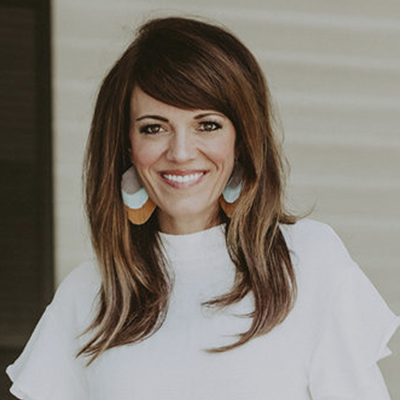
Rachel Faulkner-Brown
Rachel Faulkner Brown is a powerful Bible teacher and storyteller marked by vulnerability, passion, and
humor. With two husbands in Heaven and one here, she has walked a road most will never wander and
still chooses to inspire joy and hope wherever she goes. As the Executive Director of Be Still Ministries, Never Alone Widows and a national speaker for Folds of Honor Foundation representing Gold Star families, she is committed to helping women encounter the person of Jesus everywhere she goes. Rachel and her husband, Rod, a pastoral coach and consultant, reside in Alpharetta, GA with their two children.
@rachelfaulknerbrown
www.rachelfaulknerbrown.com
About the Host
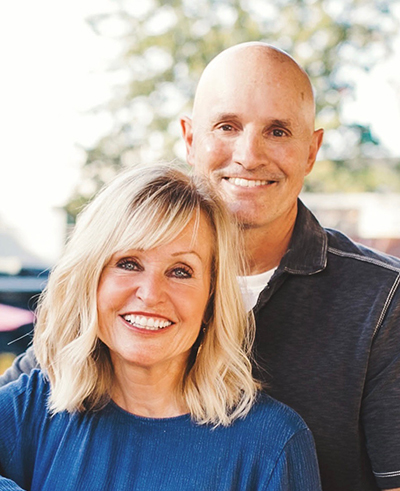
Dave and Ann Wilson
Dave and Ann Wilson are hosts of FamilyLife Today®.. Dave and Ann have been married for more than 38 years and have spent the last 33 teaching and mentoring couples and parents across the country. They have been featured speakers at FamilyLife’s Weekend to Remember® marriage getaway since 1993 and have also hosted their own marriage conferences across the country.
Episode Transcript
FamilyLife Today® with Dave and Ann Wilson – Web Version Transcript
This content has been generated by an artificial intelligence language model. While we strive for accuracy and quality, please note that the information provided will most likely not be entirely error-free or up-to-date. We recommend independently verifying the content with the originally-released audio. This transcript is provided for your personal use and general information purposes only. References to conferences, resources, or other special promotions may be obsolete. We do not assume any responsibility or liability for the use or interpretation of this content.
The Father’s House: A Conversation on What’s Holding You Back with Rachel Faulkner-Brown & Karen McAdams
Guests:Rachel Faulkner-Brown and Karen McAdams
From the series:Father’s House: What’s Keeping You? (Day 2 of 2)
Air date:May 22, 2026
Karen (00:04):
This resurrection life is not a timid, grave-tending life. And that’s how most of us live. It’s adventurously expectant, greeting God with a childlike, “What’s next, Papa?” because we know You’re good. We know You’re faithful. We know You’re never going to leave us. We know that no matter what happens, comes our way, I’m not alone. You’re with me.
Ann (00:33):
Welcome to FamilyLife Today, where we want to help you pursue the relationships that matter most. I’m Ann Wilson.
Dave (00:39):
And I’m Dave Wilson, and you can find us at FamilyLifeToday.com. This is FamilyLife Today. So I’ve said this many times, and I’m going to say it again. I think the two most important beliefs a person can ever carry are what we believe about God—theology, ology, belief about Theos, God—and identity.
Ann (01:08):
I agree.
Dave (01:08):
Belief about my ID, who I am, right?
Ann:
Yes.
Dave:
I think every decision we make, literally—little ones, big ones—every day is based on what we believe is true about our Father, God, and what we believe is true. And that means bad decisions when it’s based on a false identity and a false theology, and good ones when we understand we are safe and loved.
Ann (01:28):
I totally agree.
Dave (01:29):
So we’re going to dive into that because there’s nothing I like talking about more—because I think we miss this. And as a pastor, I think I’ve missed it even teaching it because it’s clear in the word, but we can blow it up. So who do we have in the studio?
Ann (01:43):
We have Karen McAdams and Rachel Faulkner-Brown back with us in the studio. It’s so fun to have you. Welcome back.
Karen:
Thank you.
Rachel (01:50):
Oh, it’s a dream for us. I mean, this is our favorite thing to talk about, our favorite thing to teach on. I mean, we could just talk for hours because I was telling you earlier, Ann, I just said there’s just nothing that we love to talk about more than how much He loves us and how good He is. And I think you were talking about identity and theology. And I think most of us have had things happen in our past that just muddy the waters. Whether it’s religion, whether it’s wounds, whether it’s trauma, most of us have had things that have caused us to believe lies about who Papa is and then who Father God is and then who we are in light of that. And I think Father’s House is just a journey to help uncover who He really is. And also to uncover that little girl—for us, we’re teaching to women 90% of the time, but to help her discover who she was always meant to be.
(02:47):
That’s why we have the little girl on the cover because at nine years old is when a little girl looks in the mirror and she sees the things that are wrong with her.
Ann (02:54):
So do you think as a 50-year-old, we often see that nine-year-old and what we thought about ourselves?
Karen:
Yeah.
Ann:
And when you’re referring to Father’s House, you’re talking about this eight-session study that you two have created. It’s a video study.
Rachel (03:09):
Yeah. It’s plug and play, digital, all digital. You just download it and then watch the videos. You can do it alone. Ideally, you would do it in community.
Karen (03:16):
Yes, because healing takes place in community.
Rachel (03:18):
It does. And just being able to share what’s so unique about it too, Ann, is that every week has what we would call an activation after each session. So you’re watching the video. So you’re getting this teaching, this biblical truth; you’re hearing stories, which are connecting the truth to your heart. And then you get to have an encounter with a living God that most of us have never been taught to see. An encounter leads to revelation, leads to intimacy. And that is—intimacy is the holy grail of Christian life. I mean, it’s like everybody wants it. Everybody wants to write a book on how to get it. They don’t know how to get it.
Ann (03:54):
Dave, do you think that’s true for men?
Dave (03:55):
This isn’t a male female thing, I don’t think.
Karen:
No.
Rachel:
It’s not.
Dave:
But I think there are guys listening that often go, “Head knowledge is enough. I don’t need to feel some encounter.” Again, I’m sort of exaggerating—
Rachel:
No, I get it.
Dave:
—for that guy that may be pushing back a little bit, but explain to him—and maybe her, because there’s women that have the same thought as like, “Do I really need an encounter? What do you mean by experience God’s love?”
Karen (04:22):
Well, I just wanted to address that for a moment because—
Dave (04:25):
You’re going to correct me right now. Go ahead.
Karen (04:26):
No, no, no. I just think you say you don’t need feelings in men.
Dave:
I’m talking for some other—
Karen:
In general, sorry.
Dave:
Some other guy!
Karen:
To generalize to somebody else.
Dave:
A friend who
Karen:
Not you.
Dave:
Yeah.
Karen:
But we say that and yet you’re feeling things all the time. Our subconscious informs us much faster than we can logically think through something, right? So something happens to us and we wonder “Why in the world?” We’ve all said this, “Why did I get so triggered by that?” Right? Because subconsciously we’re experiencing something that has its roots in our past. And so when we exclude this very human experience of feelings and we say, “No, all I need to do is know it intellectually.” We’re missing out on how He wired us. He wired us for feeling.
Dave (05:16):
Talk to the guy, or maybe a woman that—
Ann (05:18):
I love having women in here today.
Dave:
This is great.
Karen (05:21):
I mean, I will argue this point until I’m blue in the face. Because it changed my life.
Rachel:
Oh yeah.
Dave:
Of course.
Karen:
It changed my life when I felt the feeling of being loved, rather than just intellectually knew I was loved.
Rachel (05:32):
Yeah. I grew up with parents who’d been raised by depression babies. And so they were just pulling themselves up by their bootstraps and let’s just move on. Let’s not try and feel a feeling.
Ann (05:43):
Yeah, we just gut it out and put the feelings aside.
Rachel (05:45):
We just need to put food on the table. And then you taught another generation how to just do the same thing and let’s don’t talk about anything hard because that kind of upsets the apple cart. And my parents had no idea. I mean, they were just doing what they knew. And so I grew up super—I did not have an emotional vocabulary. I couldn’t have told you what a feeling felt like for love nor money. And so you—
Ann (06:10):
And which is amazing too because you get married at a young age and lose two husbands. We didn’t even say that at the beginning of this program.
Rachel (06:18):
Yeah. But I have this high capacity for joy and yet don’t experience really any other emotion but joy. It’s like, let’s just be happy all the time in all this bad stuff.
Karen (06:27):
I’m not sure that would be such a bad thing. I mean, you agree, Ann?
Rachel (06:31):
Yeah, but it created a very shallow spirituality, and you cannot be a healthy Christian and not feel. There is absolutely no way to be an emotionally healthy Jesus follower without having emotions.
Dave (06:49):
I agree. Connect these dots. Yeah. And again, I’m thinking of the guy, because I’ve done this and I’ve even watched it from the stage because I play in the band, and we’re singing a worship song, and I’ll look out there and see—and I’ll just say men. I’m sure there’s some women.
Rachel:
Sure.
Ann (07:03):
Oh yeah, there’s a lot of women.
Dave (07:04):
Who are sort of locked up emotionally. I’ve said, many times, later like, “We’re not doing a concert! Sing.” But they’re just looking at us. And those are the same guys that if you take them to an NFL football game, they are chest bumping each other, raising their arms, shouting when their team scores a touchdown. You talk about emotion, it’s there. You put them in a church and say, “Go ahead, express emotion.” They’re locked. It’s like separate, like, “No, this is different.” Why is there a struggle for some—and I’m going to say men, but women too—to unleash some emotion when it’s going vertical to praise their Father.
Karen (07:43):
Is it that they’re locked up or is it that they’ve never experienced the joy of being loved; therefore they have nothing to give back?
Dave:
That could be it.
Karen:
I mean, it’s one thing to try and get somebody to worship God. “Well raise your hands,” whatever you think that expression looks like, but if it’s not coming out of a place—so if you’ve never received it, you have nothing to emote.
Rachel (08:05):
Well, and here’s the thing too, we teach this to women all the time. I mean, even in this first week of love, it’s like, “How do you receive a compliment when somebody tells you, you look beautiful?” I would say 95% of women would say, “Oh, this old thing. Oh my blah, blah, blah.”
Ann (08:21):
Oh yeah. This was our first years of marriage.
Rachel (08:23):
Yeah. Oh, absolutely. We do not know how to receive, and it translates to Jesus and Father God and Holy Spirit. It is like if you do not learn how to receive from humans—I mean, I will say too, this is the problem with most of us is that we have looked to our daddies on earth, if we had daddies, we have looked to them and we’ve said, “Oh, Father God’s like him.” And maybe he wasn’t a good dad, or maybe he abused us, or maybe he was just silent. My dad was very quiet growing up.
Dave (08:53):
Or he walked away.
Rachel (08:53):
Yeah, or he walked away. And so you’re like, “Well, Father God’s going to leave, and so I can’t trust Him.” And my dad did the best he could, but it wasn’t like he was telling me every morning I woke up, “Baby, you are beautiful to me.” And so I think fathers give identity and it’s a tall order. And at the same time, that’s why we have therapy and inner healing if you don’t have a good dad. But at the end of the day, I mean, I do think it is such a real thing for people to connect the dots. “How did I relate to my earthly dad?”
Karen:
Yeah.
Rachel:
Because mothers play the role; they relate to the Holy Spirit. Jesus is our friends and then Father God is dads. So it’s really interesting. We help people to connect those dots from their childhood because most people do not connect those dots.
(09:40):
We were listening to a song this week, the detour is the journey. We so think all of these things have happened in our life are detours, and it’s like, they’re really not. It’s part of the journey.
Karen:
That’s right.
Ann (09:52):
I mean, when you look at biblical characters that we love, our heroes, look at Joseph. And what he had gone through with being imprisoned and he’s gone through so much, and it was part of the journey. Yeah. That’s
Rachel (10:03):
Yeah. It was.
Karen:
That’s right.
Dave (10:04):
Yeah. And so much of, as I walked through the Father’s House—and I know it’s not for me, it’s for women, but I—
Rachel:
It’s for you.
Ann (10:09):
Everybody can learn from it.
Dave:
I’m kidding. I’m kidding.
Karen (10:10):
You’re invited.
Rachel (10:11):
We’ve got some sleeper men that have taken it.
Dave (10:13):
I would just say it really is for both men and women.
Rachel (10:15):
It is, yeah.
Dave (10:16):
I know you wrote it and you do women’s conferences, but I’m reading through this stuff. I’m like, “Oh my goodness.” It’s about theology, who is God, and identity. But I mean, you start with—and I’m going to just quote you, and I want you to just riff on this: what it means to be lavishly loved and fully forgiven. And I’ll tell you something, I’ll do something real quick.
Karen (10:36):
Uh-oh. We’re breaking out the guitar. What’s happening?
Rachel:
Wow, this is so fun. Ooh.
Dave (10:42):
No, there’s a line in a song. I know you know it because it became a very famous worship song.
Ann:
It still is.
Dave:
But I remember the first time I ever heard it, probably two years ago or a year and a half ago, I thought “What a beautiful lyric.” “I’ve never been more loved than I am right now. Wasn’t holding You up, so there’s nothing I can do to let You down.”
Rachel (11:07):
Yeah. So good.
Dave (11:08):
“It doesn’t take a trophy to make You proud. I’ve never been more loved than I am right now. You are Jireh, You are enough.” Listen to that lyric. “Jireh, You are enough.” I mean, the first time I heard that lyric whenever it came out, “I’ve never been more loved than I am right now.” I thought, “Do I believe that? Do we believe this?”
Karen (11:42):
Yeah. And just literally sing that over and over and over again to yourself and you start to connect. “It doesn’t take a trophy to make you proud.”
Dave:
Right.
Karen:
There’s nothing that you can do to make Him love you any more than He does right now or any less. It’s not just a love that accepts us and says, “And you just go on doing what you’re doing and I’m just going to love you anyways.”
Ann:
Exactly.
Karen:
It’s a love that says, “I’ve got something so much better for you. There’s a life that you can have, lived in my presence that’s going to change everything about your life. It’s going to set you free from shame,” that we talked about in the last episode. “It’s going to set you free from your identity that you think you are. Let Me tell you who you really are.”
Dave (12:30):
Man, as we celebrate 50 years of ministry, we continue to hear stories of how God is transforming families through FamilyLife.
Ann (12:39):
Like Andrew and Eileen, for example. when they married, they were so full of hope.
Dave (12:44):
Weren’t we all?
Ann (12:45):
But life storms came fast: a newborn, family tension, and strains on their marriage and their home just felt heavy, but God wasn’t finished. Through FamilyLife’s Weekend to Remember® and Love Like You Mean It® cruise, they rediscovered Christ’s design for marriage and they were even—listen to this—able to help Andrew’s parents reconcile after years of distance.
Dave (13:11):
Which is really what it’s all about.
Ann:
It’s crazy.
Dave:
God changes our marriage so we can impact others. Well, here’s the thing, thousands of couples are facing storms like this right now, and some are quietly hurting, some are on the brink of divorce and some need hope today. And I’ll tell you what, this ministry is supported financially from partners like you who say, “I believe in this and I want to give.” And right now, every monthly donation will be matched for a full year, doubling the impact of your gift.
Ann (13:44):
So we really hope and pray that you’ll consider joining us. All you have to do is visit FamilyLifeToday.com or call 1-800-FLToday, and together we can shape the next generation of families who walk with Christ.
Let me ask you both this. If I would’ve asked you before you’ve gone through this transformational gospel experience with Jesus—if somebody would’ve said, “Who are you?”—because I’ve said this with the Detroit Lions wives one year. I started the Bible study as the season started, and I said, “Introduce yourself without saying who you’re married to or any accomplishments that you’ve done.” There was silence. No one knew how to answer that question.
Rachel:
Yeah, absolutely.
Ann:
So if you had to say, “My identity was found in … ,” what would you have said before Jesus?
Rachel (14:45):
Oh, 100% being a mom.
Karen (14:47):
Yep.
Rachel:
100% being a mom. And what’s so interesting—I’ll never forget going to MOPS the first time after I’d just quit my job and had Davis, my first child. And I remember they asked me to introduce myself, and I was like, “What do I do? I don’t have a job. I’m just a mom.” And I remember thinking, “I’m just a mom.” I was successful. I was like an executive. I drove a car.
Ann:
I did pageants.
Rachel:
But it’s funny, I remember, even then, feeling like my identity had been stolen because I wasn’t in a job, and then it wasn’t enough to just be a wife. It wasn’t enough to just be a mom. It was like, “Wait, that was what I did.” Everything is about what we do. It’s not about who we are.
Ann (15:33):
Would you have said the same thing, Karen?
Karen (15:34):
Oh yeah, same, for sure. I remember going to the pediatrician and we’d always say, “What do you do? ” And I would be like, “Well, I’m just a mom. Why do you have to ask this question?” It’s so uncomfortable. If you’re not “working,” and some reason we denigrate being a mom to like—I don’t know. But anyways, we just define ourselves around our work. And even then, “mom” is a form of work.
Ann:
And accomplishments.
Rachel:
Yeah. Yeah. It’s what we do.
Dave (16:01):
Of course, men do it.
Rachel (16:02):
Oh yeah.
Dave (16:03):
That’s how we’re known.
Rachel (16:06):
Well, and it’s interesting, what I’ve started asking people at parties or dinners, where we are, it’s like, “What do you love to do?” Because to me, that question takes a hard right turn to who they really are. “What do you love to do?” instead of like, “What do you do?” It’s just a tiny tweak.
Dave:
Yeah, that’s good.
Karen (16:25):
Yes. Well, and then the other question is, “How are you known by the Father?”
Dave (16:31):
How do you answer that one? How are you known?
Karen (16:34):
What the Lord’s been saying recently to me is I’m an attendant of the bride.
Rachel (16:37):
Yeah.
Karen (16:38):
I help others encounter him as the bride.
Dave (16:41):
Wow.
Rachel (16:41):
Yeah. Every time I do any kind of thing, there’s just this supernatural gift of faith that the Lord has given me. And I think faith is a conduit of heaven. And so as we step out in faith and take risks, I think that’s what identity has allowed me to do, is it’s allowed me to be risky and that’s the currency of heaven. Faith equals risk. And to me, that is like how He moves through me to other people with—whether it’s words or comfort or hugs, so that other people can come in.
Karen (17:15):
But I think what’s important is, see, knowing that identity for her and me knowing this identity, it enables us to then line our lives up in what we do. And that’s how we’re meant to live, right? What we do comes from who we are.
Ann (17:30):
The other thing that it does is it helps you not to compare with other people.
Karen:
Yeah.
Rachel:
Oh, totally.
Ann:
Because we live in a culture with our social media that we’re being bombarded with what other people are doing. And I mean, if you talk to younger people and you ask them, “What do you want to do?” with their lives, they’ll say, “I want to be an influencer.” Which an influencer is a good thing, but a lot of it has to do with “I want to be like that person.”
Karen:
Totally.
Ann:
And when to think, I remember saying that to our kids like, “God has something so unique for you.”
Rachel:
Oh yeah, absolutely.
Ann:
“You’re different from your brother. The way you think is different. The way you respond is different. I cannot wait to see what God has planned for you.” And that way you get out of the, “Oh, mine’s different than yours.”
(18:14):
And “I’m going to celebrate you.” Because together, it’s the body of Christ and it’s the gifts of the Holy Spirit are all working together.
Rachel (18:21):
Well, and every person who takes Father’s House, we want them to walk away confidently saying, “I’m His favorite.”
Karen:
That’s right.
Rachel:
And if you cannot confidently say, “I’m God’s favorite,” then you don’t know who you are, because you are His favorite, and that doesn’t make Karen any less favorite. And that’s the thing about Christianity and following Jesus and demonstrating the gospel. When you get lifted up, everyone around you gets lifted up. But in our culture, when you get lifted up, everyone gets pushed down.
Karen:
That’s right.
Rachel:
And that is so counterintuitive to the kingdom. And honestly, Jesus was preaching the kingdom and that’s it, for us. We want to preach the kingdom.
Karen (19:05):
I’m just feeling for people that are listening, thinking, “Well, I don’t know what my identity is.”—and let you know, it’s okay because He knows exactly where you’re at. He knows the journey that you’re on and He will do everything in His power to unveil to you who you really are.
Ann (19:22):
And ask Him.
Rachel (19:23):
Absolutely.
Karen (19:24):
Absolutely.
Ann (19:25):
I remember hearing a talk on this. It was actually, we were at dinner with some friends and he was talking about this, and I was like, “I want to know my identity. Who am I? What does God call me?” And it was just this interesting—and soon as I said that I’m like—I was just praying privately in the car—”Lord, what’s that look like? Who do you call me?” And then I had this thought come to my mind, and I’m like, “What was that? That wasn’t anything.” But in my mind, I heard “warrior of women.”
Rachel:
Oh yeah.
Karen:
Wow.
Ann:
Which I’m like, “Oh, that was a joke. What is that?” Because I hadn’t—like, “What?” And then I told Dave that, like, “That’s an interesting thing.”
Dave (20:00):
I mean, as soon as it came out of her mouth, I’m like, “That is exactly who you are.”
Rachel:
Oh, totally.
Dave:
I was like, “I could have told you that, but of course I’m too much into me.” But I mean, seriously when it came to my mouth, it was like—
Karen (20:10):
But had you told her that?
Dave (20:11):
Yeah.
Karen (20:12):
It would never have been the same.
Ann (20:14):
And I think we wonder, was that the Father?
Rachel:
Oh, of course.
Ann:
And so even to say, does that align with scripture? Is that what other people are saying? Does that correlate with my passions and my gifts?
Rachel (20:28):
Yeah. Yeah.
Dave (20:28):
You guys know this better than anybody. I should say you gals know this better than anybody. When you understand your identity, which again, as I’m looking at even your chapter titles and read through them, that you’re fully forgiven, you’re lavishly loved. You are radically righteous. I mean, we didn’t even get into that.
Rachel:
I know.
Dave:
That is deep theology.
Rachel:
That’s the best.
Dave:
But when you really grasp that’s really true about me—it’s what Paul said, Ephesians 2:10, “You are God’s masterpiece,” Poiema, work of art.
Rachel:
Yeah.
Dave:
When that is true—I remember doing a sermon years ago where I said, “When you understand that you’re accepted by the King of kings, you can walk in any room and not need the acceptance of the people in the room.”
Karen:
That’s right.
Dave:
So you walk in the room with confidence, with—so often we walk in rooms and there’s a bit of fear.
(21:18):
I got to win her over, or I’m not sure.
Ann (21:20):
They all have friends. I don’t.
Dave (21:21):
You walk in a room sort of like, “I am God’s chosen.”
Karen:
It’s a subtleness.
Dave:
And it’s not I’m a better than anybody else. I can bring something to this room.
Ann:
I can love lavishly.
Dave:
And I can speak out what God says to me, to say, “I’m not going to live timid. I’m going to live bold.” And that’s in theology and identity.
Karen (21:39):
There’s kind of, our lead scripture for the study is Romans 8:15-17 in The Message. It says, “This resurrection life,”—that’s what we’re talking about here—”is not a timid, grave-tending life.” And that’s how most of us live.
Dave (21:53):
Oh, I read that. It’s in there.
Karen (21:53):
It’s adventurously expectant, greeting God with a childlike, “What’s next, Papa?” And that’s really the invitation to all of us, is to wake up every morning, instead of saying, “God, what do you want me to do for You?” He’s saying, “No, just go, what’s next?” Like, fling the doors open wide. This life, when I’m with You, we can be adventurously expectant because we know You’re good, we know You’re faithful, we know You’re never going to leave us. We know that no matter what happens, comes our way, I’m not alone. You’re with me.
Ann (22:25):
And we are his beloved daughter.
Rachel (22:27):
We are, and we’re in union with Him. And that’s been a big thing for us. It’s like, when I study cake baking and I look at all the ingredients that go into the cake, I cannot, once that cake is baked—
Karen (22:39):
I’m sorry; but “When I study cake baking”—
Rachel (22:40):
When I study cake baking.
Dave (22:42):
I was just thinking, I just did that last week.
Ann:
That was very, that was very impressive.
Karen:
When did you study cake baking?
Ann:
She watches the cooking channel.
Rachel (22:43):
When you study baking, you’re just like, I mean, don’t miss the point here, people listening, but it is so fascinating because we are in Christ. And if we’re in Christ, we’ve been baked in just like that baking powder is baked into that cake. You cannot separate out that baking powder, which means I get to do so immeasurably more than I can ask or imagine in every situation because I’m baked in. There’s no separation.
Ann:
And it doesn’t mean
Dave (23:16):
So I’m never going to think of Jesus the same way.
Rachel:
I know. You shouldn’t. Well, and it changes everything.
Ann (23:21):
And it doesn’t mean that our lives will be free from conflict, free from pain or suffering.
Rachel:
No, no.
Ann:
But he’s with us.
Karen:
That’s right.
Ann:
And we are in him.
Rachel (23:31):
That’s right.
Ann (23:31):
Never alone.
Rachel (23:31):
Yeah. It’s amazing.
Dave (23:37):
Great being with Karen and Rachel again. And just a reminder, their book is called Father’s House: The Path That Leads Home.
Ann (23:44):
I really love them. I think you’ll love this book too. And you can get your copy by clicking the link in the show notes at FamilyLifeToday.com.
Dave (23:53):
Hey, if this conversation encouraged you today, maybe it gave you some fresh hope or a new way to think about your marriage or family. Don’t keep it to yourself.
Ann (24:02):
Right. Right now, share this episode with a friend, a couple, or someone you know who could really just use it and just text them the link or tell them about FamilyLife Today. And it’s super easy and it might make a big difference for them.
Dave (24:16):
And hey, while you’re on the podcast app, whether it’s Apple or Spotify or wherever you listen, would you take a quick second to leave a rating and a review?
Ann (24:27):
Yeah, because it really helps more people discover these honest, hope-filled conversations about God’s plan for relationships. And hey, thank you so much for being part of this. We’re really grateful for you.
Dave (24:43):
FamilyLife Today is a donor-supported production of FamilyLife®, a Cru® Ministry, celebrating 50 years of God’s faithfulness as marriages grow stronger and families flourish in Him.
Ministry.
Helping you pursue the relationships that matter most.
If you’ve benefited from the FamilyLife Today transcripts, would you consider donating today to help defray the costs of producing them and making them available online?
Copyright © 2026 FamilyLife. All rights reserved.
www.FamilyLife.com