

The Missing Piece: A Conversation with Karen McAdams and Rachel Faulkner Brown.
Throughout her broken childhood, podcaster Karen McAdams sensed she was missing something. But even after coming to know God, her sprint from shame kept her away from the heart of God. Along with her co-host Rachel Faulkner-Brown, Karen shares part of her own story that fueled the duo’s new study, Father’s House: The Path that Leads Home.


Show Notes
-
Become a monthly partner with FamilyLife Today — your gift is matched for a full year (double your impact!)
- Thanks to the Christian Standard Bible for sponsoring this episode. Learn more at CSBible.com.
- Follow us on all social platforms: Facebook | Instagram | YouTube
- Find resources from our podcast at shop.familylife.com.
- Download FamilyLife's app!
- Help others find FamilyLife. Leave a review on Apple Podcast or Spotify.
- Check out all the FamilyLife's podcasts on the FamilyLife Podcast Network
About the Guest
Karen McAdams
At 17 years old I walked the aisle of the big white church and prayed “the prayer” to get my golden ticket. But it was another 17 years before I ever heard the Lord speak to me personally, and when He did I was completely blown away! That day was a catalyst in my life that undid me in every good way and began my healing journey, unraveling decades of carrying the heavy burden of shame from childhood trauma. Now, whether I am teaching bible studies or doing inner healing prayer, I am passionate about leading women to the Truth that sets them free, empowering them to lay down the masks and walk in the beauty, power and authority they have as daughters of the Most High. I am greatly blessed to have three amazing strong men in my life, my husband Kevin who I have been married to for almost 25 years and my sons, Connor (23) and Cade (21)!
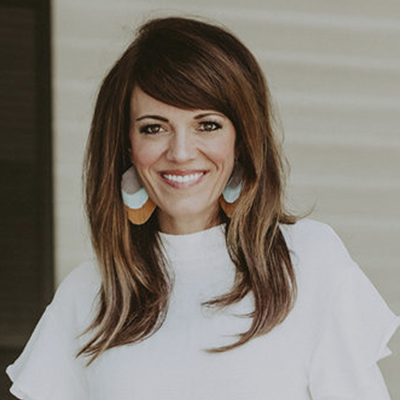
Rachel Faulkner-Brown
Rachel Faulkner Brown is a powerful Bible teacher and storyteller marked by vulnerability, passion, and
humor. With two husbands in Heaven and one here, she has walked a road most will never wander and
still chooses to inspire joy and hope wherever she goes. As the Executive Director of Be Still Ministries, Never Alone Widows and a national speaker for Folds of Honor Foundation representing Gold Star families, she is committed to helping women encounter the person of Jesus everywhere she goes. Rachel and her husband, Rod, a pastoral coach and consultant, reside in Alpharetta, GA with their two children.
@rachelfaulknerbrown
www.rachelfaulknerbrown.com
About the Host
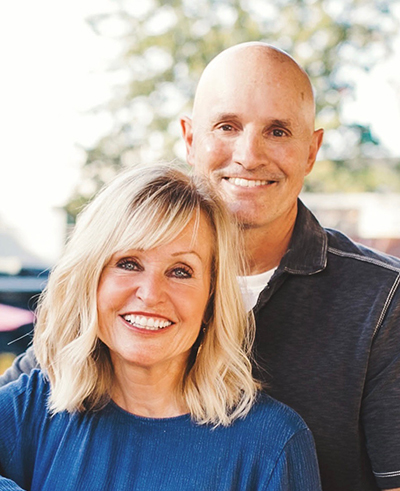
Dave and Ann Wilson
Dave and Ann Wilson are hosts of FamilyLife Today®.. Dave and Ann have been married for more than 38 years and have spent the last 33 teaching and mentoring couples and parents across the country. They have been featured speakers at FamilyLife’s Weekend to Remember® marriage getaway since 1993 and have also hosted their own marriage conferences across the country.
Episode Transcript
FamilyLife Today® with Dave and Ann Wilson – Web Version Transcript
This content has been generated by an artificial intelligence language model. While we strive for accuracy and quality, please note that the information provided will most likely not be entirely error-free or up-to-date. We recommend independently verifying the content with the originally-released audio. This transcript is provided for your personal use and general information purposes only. References to conferences, resources, or other special promotions may be obsolete. We do not assume any responsibility or liability for the use or interpretation of this content.
The Missing Piece: A Conversation with Karen McAdams and Rachel Faulkner-Brown
Guests:Rachel Faulkner-Brown and Karen McAdams
From the series:Father’s House: What’s Keeping You? (Day 1 of 2)
Air date:May 21, 2026
Karen (00:04):
Jesus, to me, was the kind One of the Trinity. The problem is that women, men alike don’t understand that Jesus and the Father are just alike.
Ann (00:24):
Welcome to FamilyLife Today, where we want to help you pursue the relationships that matter most. I’m Ann Wilson.
Dave (00:31):
And I’m Dave Wilson, and you can find us at FamilyLifeToday.com. This is FamilyLife Today.
Ann (00:44):
I recently picked up a Bible study workbook, and it said, “Do you long to experience God? Not just learn more about Him, but that He’s the Living God who wants to encounter you in your life.” And then it said, “Do you want more freedom, love, identity, intimacy, purpose, revelation?” I mean, “Yes! This is exactly what I want!” And so I’m pretty excited.
Dave (01:07):
By the way, she usually reads these kinds of things out loud.
Ann:
To you.
Dave:
She loves to read these to me. And anytime I’m reading something, “Read it out loud to me.” I’m like, “Why?” I just want to have this moment.
Ann (01:18):
You said it the other day, like you’re reading your Bible. I’m like, “Read it out loud to me.”
Rachel:
Oh, that’s so cute.
Ann:
And you’re so bugged by that. But as I was reading this, I thought “I want all of those things.” And so—
Dave (01:28):
Who doesn’t. Of course, we do.
Ann (01:30):
Yeah, you do too, right?
Dave (01:31):
Oh yeah. It’s not a woman thing, even though I’m the only guy in the studio today. I feel a little like—
Rachel (01:35):
It never stops.
Dave (01:37):
Yeah. It never stops.
Ann (01:38):
It’s so fun for me though because I raised three sons and so it’s like I get to meet with my sisters today. So we have Karen McAdams and Rachel Faulkner-Brown with us today in the studio. I’m so excited. Welcome to FamilyLife Today.
Rachel (01:52):
We love y’all already; feel like family.
Dave (01:54):
I mean, I’m excited too. I just spoke at a men’s breakfast and there’s something that happens when men are alone, but when women get together and talk about what we’re going to talk about today, I think it’s going to be dynamic.
Ann (02:04):
Well, and what I was reading and referring to at the beginning of the program was their video-based, eight-session study, which is called Father’s House: The Path That Leads Home.
Rachel (02:14):
Yeah.
Ann (02:14):
And so you two wrote this together.
Rachel (02:17):
Yeah. Well, it’s so fun. I was thinking about how women are multipliers and like you give us a house and we make a home.
Dave (02:28):
Hey, are you saying guys don’t do that?
Rachel (02:29):
Well, y’all do that kind of too.
Karen:
We just decorate it better.
Dave (02:33):
I could tell, you don’t think we do it as well.
Rachel (02:35):
We birth children and we multiply things. I mean, we have help, obviously, but it is neat to do this with another woman because it is rare in ministry to have a relationship like we have. And we’re better together. I mean, I honestly never want to go anywhere without Karen. It’s a little—I wouldn’t call it codependent, but maybe a little.
Karen (02:57):
We’ve been to counseling over it. No, I’m teasing.
Dave (02:59):
Well, how’d you two meet? I mean, how did this start?
Rachel (03:02):
I was on the podcast, so all your listeners have heard a little bit of my story: widowed twice, remarried Rod, moved to Atlanta.
Dave (03:09):
Wait, wait, wait. You just—
Rachel (03:10):
I know.
Dave (03:11):
—widowed twice like it’s no big deal.
Karen (03:13):
She likes to go right past that.
Rachel (03:15):
Well, I mean, they’ve already heard it if they listen.
Ann (03:17):
Well, and if you haven’t, go back and listen to this.
Dave (03:20):
Yeah, because you did walk through the trauma of losing your first husband, then your second.
Rachel (03:24):
Yeah. But when I was dating Rod, a friend had a little shower for us. And Karen and her husband were there.
Dave:
You didn’t know her before?
Rachel:
No, I’d never met her, but Rod had traveled with her 25 years ago on a ski trip at First Baptist Atlanta, and they’d had this great time. And oh, here’s Karen back, and now Rod has a wife so we can all get together as couples. And I go to this dinner party.
Dave (03:47):
Hey, wait it sounded sort of funny. He traveled with Karen.
Rachel (03:51):
It was like a singles trip, like a single ski trip back in the day. Of course, Karen and Ken were married, and they came and had a blast. But anyway, we’re sitting at this dinner, and it was like no one else was there. Karen and I somehow get on the topic of grace.
Karen (04:04):
—grace.
Rachel (04:07):
And we’d had this just powerful encounter with the gospel of grace. She in a different way. And we didn’t even really know how similar our stories were at that point. I’m kind of the brother in the field in the prodigal story. Karen is a little bit of the prodigal.
Ann:
She was the prodigal.
Karen (04:22):
I was the prodigal. But I was so not willing to admit that for years and years and years. I mean, to say that is like the admission of all admissions, right? Because when I would read that story, I thought it was a story about a good son and a bad son. And I’d had no idea that there was a problem with the good son, that he wasn’t able to receive on the basis of the father’s goodness rather than his own goodness.
Ann (04:45):
And does that mean that you always saw yourself as the bad daughter?
Karen (04:49):
Oh yeah.
(04:49):
And wanting to be the good Christian girl. For me, I grew up in a home—my family wasn’t, they weren’t believers. Rachel comes from a steeped, I mean born into the church pew, and whereas for me I wasn’t. But I was one of those kids that I think I looked around—especially, pivotal moment, when I was in third grade, we just moved to Atlanta—and that was like church land. Everybody went to church and I saw those people, those girls that lived in those families, I thought they had ideal families. They had ideal lives. They knew how to quote scripture. They went to Bible camp. They did—
Rachel:
—VBS.
Karen:
Yeah, did VBS. I didn’t even know what those things meant. And I wanted what I saw in this one particular family. It was actually the woman, my best friend’s mom, led my mom to the Lord, but not before I had grown up in brokenness.
(05:46):
My mom was an alcoholic. There was just a lot of dysfunction in our family, coupled with at a very early age I was sexually abused at the church that we did attend for a short time.
Ann (06:00):
By someone in the church?
Karen (06:01):
By someone in the church, yeah. And it robbed my identity. For all of us, I really believe we can look back at a point in our life, and we can say “That’s where the enemy came and hijacked my identity.”
Ann (06:15):
And was it a secret?
Karen (06:16):
Oh, huge secrets.
Ann:
No one knew.
Karen:
No one knew for years, for many, many years. And so what happens—I think you and I have pretty similar kind of past—what happens when your identity’s hijacked and when you’re living in shame, you develop a false identity because you’re terrified “If anybody finds out who I really am,” or what you believe you really are, the lie the enemy sold you, you won’t be liked.
Ann (06:39):
Right.
Karen (06:40):
You can’t be loved. You’re not worthy of love.
Ann (06:42):
You cover it all up.
Karen (06:43):
Yeah. You do anything and everything to kind of protect this identity. For me, that meant kind of really becoming a performer, an achiever, very similar to you. And that works for a while. At least we think it’s working. It’s getting us a little bit of recognition in that attempt to try and get love. And of course, you don’t know when you’re that little. You don’t know what I’m doing is I’m trying to get love. I’m trying to get an identity. I’m trying to become somebody. And so it just put me on this hamster wheel and I didn’t know Jesus. So finally when I was 17 years old, I was at a church rally that I’d been invited to at that big, white church down the street. And remembering those moments are so good for you. And I just remember the offer of Jesus, but I didn’t get it.
(07:36):
It was like, “I’m so desperate to know I won’t go to hell for what I’ve done.” So I walked the aisle, and I prayed the prayer and I thought, “Okay, I’ll get to heaven one day. And they say I can have a relationship with Jesus, but He doesn’t speak. So how do you have a relationship with this non-speaking person?” Right? I mean, truly, like we call it a relationship and yet have no idea. Nobody teaches you how to hear from God. And so for me, I was great at performing for people. So I thought that’s what you do. You perform for God. And if people had high standards, then God’s standard was unreachable. And so I lived, tried to live up to that for a while. And then what happens when you can’t meet a standard? For me, I just gave up. I didn’t try meeting it anymore. And so when you’re not living that way, you’re living in the world and you’re living for the darkness.
(08:32):
And so for me, my life was very much defined by just trying to achieve in the world through success. I became a CPA, but all the while, this shame-based identity was turning to men to try and get my needs met. And all that’s doing is what? Heaping more shame on me.
Ann (08:52):
More guilt.
Karen (08:52):
More self-hatred really. And I turned to a lot of alcohol for my anxiety and my insecurities, ended up having two really tough relationships, got engaged twice and made it as far as 10 days away from the wedding aisle on one of them. One of them went to prison and I spent three years going to prison and visiting this fiancé in prison. And anyways, life is pretty much a bust.
Ann (09:17):
And here you—
Karen (09:19):
I was a Christian.
Ann (09:19):
Yeah, I was going to say, and you walked down the aisle to give your life to Jesus. I can so relate to that.
Karen:
Thank you.
Ann:
And I was so sincere when I gave my life to Jesus. I was like, “I want you to have everything.” But I couldn’t get out of the shame part of that hidden, “I’m so unworthy. I’m more unworthy than anyone in the room, but I will strive to be the best.”
Karen:
That’s right.
Dave (09:46):
And some of that—I’m just a guy making an observation. I’m that guy. All three of you have abuse in your background. And that was a part of her identity, she thought that, and you have—I can’t even imagine going back to the same church.
Ann (10:03):
Recently, you just did.
Karen (10:03):
Yeah. Just a few months ago to confront my past, to give the little girl inside of me a voice that never had that voice, to stand up for myself and to say, “What happened here wasn’t right.” And just to kind of reclaim that territory that was stolen, of my innocence. But I think the thing that’s so sad, that’s why we’re so passionate about Father’s House and about this journey to the Father’s heart is because while Jesus, to me, was the kind One of the Trinity, right?
Ann:
Yes.
Karen:
He was the approachable One. He’s the One that died for my sins. The problem is—and we run into this all the time—is that women, men alike, don’t understand that Jesus and the Father are just alike.
(10:51):
And that Father is not angry. He’s not disappointed. He’s not disgusted in you because, “Oh, by the way, you’re the prodigal.” I remember reading that story through the lens of the Father’s love—the prodigal son’s story—and realizing for the first time that he wasn’t waiting to give him a lecture. He didn’t even let the son get the apology out before he is just torn away all of those filthy rags. “Bring the robe, bring the shoes, bring the … “
Ann:
The ring,
Karen:
“Bring the ring, bring it all.” And the son can’t even get the apology out. It never dawned on me He wasn’t waiting for my professional apology before He would love me, that He loved me while I was away from Him. He loved me while I was laying in the pigpen.
Ann:
He was with you.
Dave (11:41):
Where did you discover that? One of your chapters is “Lavishly Loved.” You’re talking about that right now. How did you two discover that? Because a lot of people that are listening have still never—
Rachel (11:52):
No.
Dave (11:53):
I know I hadn’t for years after being a follower.
Ann (11:56):
For a listener, I would ask you this question. If you had to write down just a few words that describe God, like what would you write? I remember doing this with a friend. She said, “Describe God to me.” And I said, “I see Spirit. Oh, I see”—I can imagine all these words that are going around in that Spirit, words like just, holy, righteous.” And as I’m picturing, I’m like, “Hmm, I’m not saying loving. I’m not saying grace.”
Rachel:
And maybe angry is in there.
Ann:
Yeah, exactly. And I said, “Oh!” It made me realize, “Oh, this is interesting. I would put those words with Jesus, but I wouldn’t put them with God.” And so as a listener, like ask yourself that or maybe even ask your kids, “How do you view God?”
Karen (12:39):
Yeah. Here is a really good litmus test, is how do you see what happened in the garden?
Ann (12:44):
Oh.
Karen (12:45):
When they sin and the father comes into the garden after them—
Dave:
Adam and Eve.
Karen:
—do you hear pounding footsteps? Do you hear screaming, “Where are you? What have you done?”
Dave:
Like a pointed finger.
Karen:
And that’s how I used to see that story until the day he changed that story. And suddenly I realized that he came in with a broken heart saying, “Where are you? What have you done?”
Ann (13:11):
Knowing.
Karen (13:13):
“Where are you?” You know that brokenness of a, like, “Why have you withdrawn from Me?” And even just the fact that He put them outside of the garden to protect them.
Ann (13:24):
I never knew that for years.
Karen (13:25):
And I thought He kicked them out, the belts pulled out belt.
Ann:
The belt!
Karen:
But I’m serious. It’s like, it’s the same story, just read through a different lens. The words are all still the same, but we bring a lens to Scripture. And so the question is, what is the lens you bring? And so for me, I didn’t know how much that lens was affecting me, until a moment we were in—I was in a ministry called Cloudwalk. My husband and I were in a small group, and the gentleman there, his name’s Larry Green—incredible! And he asked the question, he said, “How do you experience the Father’s love?” And it was the words Father’s love, not Jesus’s love. And so I said to him, “Well, I experienced Jesus’s love.” And I thought that was enough.
Ann (14:12):
That’s a good answer.
Karen (14:13):
Yeah. I experienced Jesus’s love. And he said, “Well, I want you to close your eyes and ask the Father, how do you experience his love?” And y’all, I had this vivid image, vivid, vivid scene unfolds in my mind, and it’s a bizarre scene. I see myself walking out into an ocean, only the ocean water never goes above my knees. And all of a sudden, it was like Spirit just downloaded in me. “If Father’s love is as deep as an ocean, then you’re wading in it.” I knew exactly what He meant. He looks at me and he says, “Karen, have you ever experienced the Father’s blessing?” So again, I’m like, “I don’t know what you’re talking about!”
Ann (14:50):
Yeah. What does that even mean?
Rachel (14:52):
We don’t know what we don’t know.
Karen:
I remember saying to him, “I mean, I have a nice father.” I’m so stupid. I didn’t really know what he meant. And he said, “Well, what we’re going to do is we’re going to ask the Father how He wants to bless you.”
(15:05):
It was this man Larry, it was my husband, and one other man. No other women were there that day, and they just started speaking blessings over me. Well, y’all, in the middle of this moment, I’m now seeing myself back at the church where I was being sexually abused. I’m in my first communion gown, and I see the Father come and kneeling down in front of me on one knee. And I’m thinking, “Why in the world am I seeing this? This is so bizarre.” And I’m trying to listen to the blessing, but it’s kind of like almost like it’s not going in. I want to receive this, but I don’t know why I’m seeing this, but I can see His beard, not His face, but just knew it was the Father kneeling in front of me. And my husband says, “I have a picture, Karen.
(15:50):
It looks like you’re about eight years old. You’re in a short, white dress and I see the Father kneeling down in front of you on one knee and He says, ‘You are so beautiful.’” And He touched my eyes and said, “I’m giving you new eyes to see yourself the way I see you.”
(16:09):
In that moment, how I identified the Father, how I saw Him completely changed because He came to me at my ugliest, most shameful—you know!
Ann:
Yeah.
Karen:
—most debilitating moment of my life.
Ann (16:23):
And He gave you a different image. Instead of the old image of abuse in your old church, He now—you have this whole new image of the Father.
Dave (16:31):
Did it stick?
Karen (16:32):
Oh, yes.
Dave (16:33):
Because I know there’s guys like me going, “Oh, that’s awesome. That’s beautiful. Does it stay?”
Karen (16:38):
You have no idea how much it’s done. Now there was a lot of unlearning—
Ann:
—and healing probably.
Karen:
There was the kind of the heart shift, “You are not Who I thought you were.” This is the kind of Father I would climb up in His lap. This is the kind of Father that holds me when I fail, not pushes me away until I’ve repented enough and done enough, stood on my head enough times to get Him to turn the chair back around. So that changed, but I didn’t have the theology. I didn’t have the understanding of just how messed up my theology was. And He began to heal that by then bringing the truth. I know a lot of people, God can heal you through just simply the truth. For me, I needed that encounter to really get to my heart. Otherwise, I think a lot of us live out of the left side of our brain. I mean, that’s why churches are full of people that are still broken and hurting and not transformed because they haven’t had an encounter.
(17:37):
And that’s why the study is very encounter driven. It provides opportunities for you to see God with the eyes of your divine imagination.
Dave (17:46):
Yeah. I even loved how you had the Papa’s letter, letter from Papa. That was beautiful.
Ann (17:50):
And all the Scripture was beautiful.
Rachel (17:51):
Yeah. A human has to answer three questions before they can really move into higher levels of knowledge. And the first one is, “Am I safe?” And Karen and I and you, and we all stopped there. And the second question is, “Am I loved?” And the third question is, “How can I learn from this?” It’s very difficult to move past if you don’t feel safe to get to the place where “Am I loved?” And so we want women to experience an encounter with Papa and with Father God where they’re like, “I know that I know that I know that I’m safe,” and “Now I can know that I know that I know that I’m loved.” And then when things do happen, “How can I learn from this?” And “How can I bring others into this with me?” Which is what Jesus and Father God have healed for us.
Karen (18:41):
I think the problem is in so much of the way I was raised and what we were exposed to, is that the question most people ask is, “What can I do for you, God?”
Ann (18:52):
Yes.
Karen (18:52):
They’re looking to what they can do before they ever find out who they are, whose they are, and how loved they are. We skip—yeah, “For God so loved the world.” We can quote John 3:16, but we haven’t experienced His love and it’s literally a daily need.
Ann (19:09):
Yes.
Ron Deal – Senior Director at FamilyLife (19:14):
Hey friends, Ron Deal here, Senior Director at FamilyLife. Did you know according to the Barna Group’s latest report on the family, only 14% of married parent families could be categorized as resilient; only 14%. And 60% were struggling or fragile. For 50 years, the international ministry of FamilyLife has been working to strengthen marriages and families through our live events and church-based resources, but the culture seems to be winning the war on the family. Become a FamilyLife Partner today and build resilient, flourishing marriages and families in your corner of the world who then exemplify the love of God throughout the world. And right now, because of generous donors, every new monthly gift is matched for an entire year. Double your gift at FamilyLifeToday.com or call us at 1-800-FLToday.
Ann (20:15):
Well, I remember I gave a talk because this has been transformative to me, in terms of I was giving a talk, and I had the game Kerplunk. Do you remember that game?
Rachel:
Yeah.
Ann:
You put all the marbles at the top and then you have—
Dave (20:26):
You got to explain it. There’s young listeners who have no idea.
Ann (20:29):
No, it’s still out. You still can go buy it. All the marbles at the top. And then you have these like toothpick, long—what are they called?
Rachel (20:36):
Like pickup sticks.
Ann (20:37):
Yeah. Pickup sticks like going back and forth so that the marbles can’t get to the bottom. And I remember saying, “I can’t get God’s love. It’s up here in my brain,” like all the marbles. It’s up here. We went to seminary because I’m like, “I need to understand God’s love.” And so intellectually, analytically, I could understand God’s love. I could never feel it. I couldn’t get the marbles down into my heart to experience and feel God’s love, not knowing that the pain of my past was destroying my image of God, of who He says that I am.
Dave (21:10):
And I think we also hear wrong teaching about God’s love.
Karen (21:17):
So it’s conditional, even though we call it unconditional.
Dave (21:18):
Yeah. I mean, just a few weeks ago, my youngest son was preaching a sermon and isn’t it interesting how God can speak to you through your kids. He’s up there teaching a passage, the one you just mentioned, Luke 15, prodigal son story, that I bet you in 30 years of preaching, I’ve preached at least 10 times. Every 18 months, you got to bring your congregation back to the story. And Cody makes this comment that I’ve never thought of, and I’ve studied it in the Greek. Trust me, I should have seen this. And it was a simple comment. I don’t even know if he came up with it or he read it somewhere, but he just said, “What if the son was coming home; instead of the father running to meet him, the older brother met him.” He just made this comment and he goes, “His view of the Father’s love would be so distorted.” Because the older brother would say, “Dude, you can’t be walking here.”
Ann:
You don’t deserve to come back here.
Rachel:
Oh, absolutely.
Dave:
There’s no way you’re back here unless you do this or this or this.
Karen (22:11):
Go take a shower first to make sure that—
Dave (22:14):
Again, when he said that simple thought, I thought “That is how most of us view the Father’s love. It’s not a father waiting at the mailbox longing to love us.” It’s that. It’s works. It’s religion.
Karen (22:25):
It’s even the way we categorize the story, and we call it the prodigal son’s story when in Eastern cultures they characterize it as the story of the running father. So the whole story is reoriented to look what the father has done.
Dave:
Which would never happen in that culture.
Karen:
Yeah. I’m like, we highlight it as though the son—
Ann:
—is bad.
Karen:
That’s right. When honestly, the reality is the only one that’s enjoying themself that day is the one that was willing to receive. And so the good son, turns out he’s the—I hate to call him the bad son, but you know what I mean? He doesn’t get grace and that is grace. That is the perfect—I always say to Rachel, “What would we have done if that story was not in the Word?”
Ann (23:25):
Okay, I’m just going to say I love Karen McAdams and Rachel Faulkner-Brown.
Dave (23:30):
They bring energy.
Ann (23:31):
They do.
Dave (23:32):
And wisdom and insight.
Ann (23:33):
Yeah. And their book is called Father’s House: The Path That Leads Us Home.
Dave (23:38):
And you can get your copy by clicking the link in the show notes at FamilyLifeToday.com.
Ann (23:43):
We would love to pray for you. I would personally love to pray for you, and we even have a team at FamilyLife that can pray for you. Just go to FamilyLife.com/Prayforme.
Dave (23:55):
Hey, if this conversation encouraged you today, maybe it gave you some fresh hope or a new way to think about your marriage or family, don’t keep it to yourself.
Ann (24:03):
Right. Right now, share this episode with a friend, a couple, or someone you know who could really just use it and just text them the link or tell them about FamilyLife Today. And it’s super easy and it might make a big difference for them.
Dave (24:18):
And hey, while you’re on the podcast app, whether it’s Apple or Spotify or wherever you listen, would you take a quick second to leave a rating and a review?
Ann (24:28):
Yeah, because it really helps more people discover these honest, hope-filled conversations about God’s plan for relationships. And hey, thank you so much for being part of this. We’re really grateful for you.
Dave (24:45):
FamilyLife Today is a donor-supported production of FamilyLife®, a Cru® Ministry, celebrating 50 years of helping you pursue the relationships that matter most.
If you’ve benefited from the FamilyLife Today transcripts, would you consider donating today to help defray the costs of producing them and making them available online?
Copyright © 2026 FamilyLife. All rights reserved.
www.FamilyLife.com